Contents
Download PDF
pdf Download XML
2813 Views
171 Downloads
Share this article
Research Article | Volume 2 Issue 2 (July-Dec, 2021) | Pages 1 - 5
Product Design and Analysis of Engineered Ergonomic Electromechanical Grip Wrench
 ,
1
Faculty of engineering, Atma Jaya Catholic University of Indonesia, Indonesia
Under a Creative Commons license
Open Access
Received
Aug. 11, 2021
Revised
Sept. 21, 2021
Accepted
Oct. 19, 2021
Published
Nov. 20, 2021
Abstract

Recent world economic situation enables the fluctuation of market demand, asserts the enhancement of engineering tools design to uplift its efficiency. Tools design requires modification to explore new methods of working way more productive, meeting the market and customer demand trend. Exerting the conventional wrench product design as a portfolio of improvement initiative, this paper digs the opportunity of the ergonomic grip design, with the research methodology presented in injecting the product redesign concept to an advanced design with electro-mechanical mechanism. As a result, the proposed design is analysed, which alerts that the optimized design approach could be implemented.

Keywords
INTRODUCTION

Industry of machinery tools contributes an specific role to supply the engineering equipment for the national economy contribution. The philosophy of machinery as an area of knowledge in the last 15 years is actively studied by domestic and foreign scientists primarily in terms of identifying common patterns and principles of machinery development, due to the emergence of new technologies, changes in scientific, technical and engineering activities. Philosophical reflection of machinery reveals not only its essence, but also the attributive properties of a man, society and culture [1].


Customer nowadays triggers product decisions purchase according to subjective factors such as convenience, simplicity and pricing. Customer spends their capital on what feels right and are often unable to provide an explanation of their reason. While there is no simple formula to design a product that can be exactly successful in the market, inclusion of the needs of the target population in the design stage is an essential part of the process cycle. The design of the product is trusted to be one of the most necessary factors influencing the triumph of the product in a market, the interaction of the market atmosphere and the new product execution strategy, includes the product itself (e.g. product design, product advantages) [2]. Above explanations becomes the reason that encourages our research on upgrading engineering tools product redesign.


A wrench (or spanner) is a tool used to provide grip and mechanical advantage in applying torque to turn objects usually rotary fasteners, such as nuts and bolts or keep them from turning [3]. The most common shapes are mentioned as open-ended spanner and ring spanner. The term wrench refers to various types of adjustable spanner. In United States, wrench is the standard term and its most common shapes are known as open-end wrench and box-end wrench [4]. In American English, spanner refers to a specialized wrench with a series of pins or tabs around the circumference (these pins or tabs fit into the holes or notches cut into the object to be turned.) In American commerce, such a wrench may be called a spanner wrench to distinguish it from the British sense of spanner. Higher quality wrenches are typically made from chromium-vanadium alloy tool steels and are often drop forged [5].


Researcher gather the quantitative data for conventional product design that exists currently, basis on the collective research, design, development, machining and distribution-marketing costs. Each project was aligned qualitatively according to the main type of particluar involved-product design (e.g., furniture, CNC processing, engineering tools), engineering design, engineering plus industrial design and graphic design. The project deliverables were also rated qualitatively and quantitatively: first consideration, whether the project will be implemented (put and run into production), then second, its financial and business perspective and finally indirect benefits such as learning design-management skills [6].


This paper explains and provides the development and analysis stage of new wrench product design due to formulation of bio-electromechanical mechanism and ergonomic aspect consideration. Nevertheless, the new design zooms on design of grip mechanism to minimize the required human-energy along the operation of tools and with the proposed materials to be used, its material also analyzed with some analysis parameter.


Literature Review

Following the history of the development of tools, which is identical to the history of mankind, Kapp established that rebuilding the environment, man unconsciously reproduces his organs, their shape, function and he knows himself, based on these artificial creatures. The process of organ projection is a gradual transition from the natural body in itself to the artificial body for itself [7], it can be both unconscious, instinctive and conscious, rational and systematic. The process of knowledge of machinery and human self-knowledge, which is always due to artificial organs and mechanical devices according to the concept of E. Kapp can be represented schematically as follows (Figure 1).


The concept of multipurpose product design is based on a broader research area of product family design. Product family design is a way to achieve cost-effective mass customization by allowing highly differentiated products to be developed from a common platform [8]. Function-based modular product architecture aims to identify the common modules for cost effective design [9]. The idea of product platform can be extended for flexible products with similar base module and variable functions to satisfy a larger set of customer needs [10]. 


Viswanathan et al. [11], categorized the guidelines for multi-purpose product design, a qualitative content analysis of product reviews was performed on the customer reviews collected from a randomized sample of 28 mechanical and electromechanical multipurpose products. The textual information in the reviews is cleaned up and analyzed using the formalized content analysis technique. They summarized two general rules were used to choose the products suitable for analysis: (1) the product must have at least two major purposes and (2) the product must have at least 10 reviews written by purchasers. The customer reviews provided by vendor-verified purchasers were copied to a text document. The main steps in the content analysis procedure implemented in this study are: the elimination of unwanted data, preparation of the data, initial sorting of the data and the inter-rater analysis [11].


In regards of customer satisfaction survey, Viswanathan et al. [11], conducted further investigation on the insights gained from the content analysis. The survey was designed to address customer preferences about the purpose, structure and cost of a multipurpose product.


The information was collected from a 100 participants via paid survey collection tool surveymonkey.com. The survey specifically investigated different aspects of multipurpose products such as: why they prefer it, how they carry it and what functions they prefer. The survey results indicated that most people prefer multipurpose products when they like to be prepared for unexpected situations [11].


Based on the results from the content analysis and the survey, the following guidelines about purposes, functions and interfaces, structure and cost are formulated to aid designers in the development of new multipurpose products [11]:


  • Purposes: Identify the target population for the product and determine the purposes accordingly. Use a strategic search for the purposes desired by the users-a review of the customer feedback on similar products could provide useful insights. Anticipate all possible purposes of the product, both intended and realized – it is critical to consider as many purposes as possible 


Figure 1: Stages of knowledge of machinery and human self-knowledge by E. Kapp


  • Functions and Interfaces: The interfaces between functions should be efficient and the functions should not interfere with each another. While adding multiple functions to the product, do not compromise on the quality of the products or execution of the primary function (s)

  • Structure: The product architecture positively or negatively affects the product’s intended or realized purposes. The structure of the product should also allow ease of assembly, ease of cleaning and ease of storage

  • Cost: Wherever possible, keep the cost same or lower than the individual products. The higher cost is justified only when the product is very well made


Above four development criteria of new product development should be the basis and or the fundamental aspect this paper aims for. Purpose, function and interface, structure and cost are considered when applying product redesign concept to a conventional wrench to an advanced one.


MATERIALS AND METHODS

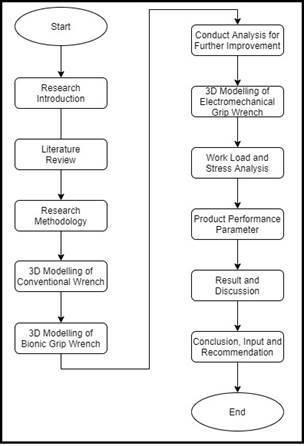
In research methodology phase, the overall process started with 3D mechanical drawing of conventional wrench product, 3D mechanical drawing of non-electrical bionic grip wrench and design the 2D and 3D engineering drawing of electrical-mechanical bionic grip wrench. Inventor software was used and we perform the stress analysis of the nuts gripper, considering it’s as a critical functional component. Figure 2 shows the development stage flowchart.


Figure 2: Research methodology

Research introduction was firstly explained the importance of product redesign or existing product modification to adapt recent world economic situation, where customer and market demand fluctuates in daily period. This thing should be an important one for the organization could meet the stakeholder expectation, while the literature review provides supporting theory for product redesign concept and its application used on world-wide.

The writer explores the current design of conventional wrench before the improvement (the exsisting design). Then, we did some research regarding the updated wrench product design that exists in the market. We realize it still has another room for enhancements and we try to dig in more deep for the concept of rotary motor that could grip the nuts with its electro-mechanical bionic grip then fasten the nuts with rotary force, resulted by the motor and the power source. We used the Inventor program to do the 3D modeling and make some stress analysis as a result came from the nuts grip and fastening for the critical parts of the product. This step will consider the manufacture-ability of this product redesign and decide the most suitable material to use.

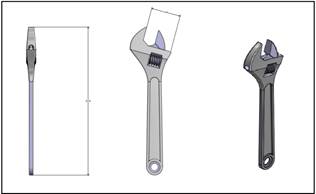
Figure 3 shows the conventional wrench product that will be the object of the research.

RESULTS AND DISCUSSION

The result of this paper will deploy, introduce and analyze the new proposed product design that uplifts the bionic grip wrench with its specification with electrical-mechanical rotary motor. The stress analysis generated by Inventor Program literally will exhibit the force resulted from nuts grip and fastening of each six-eye sides grip. The idea and concept was gathered by the observation of the authors in order to minimize the effort required and produced by human.


With the consideration of time and motion study concept, the new design is proposed and to be future known as ergonomic electro-mechanical grip wrench, performing the rotary force to fasten the nuts after conduct the grip step and it is possible to do the fastening operation for following types of nuts: flange bolts, hex bolts, hexagon nuts and lock nuts. Figure 3 above evinces the current design (conventional wrench product) that still requires manual positioning and manual forces produced by the operator.


Figure 3:  Conventional wrench product design


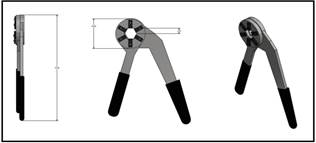
Figure 4:  Bionic Grip Wrench Design


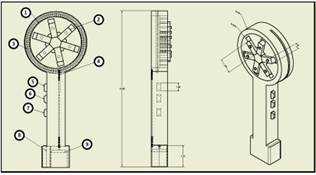
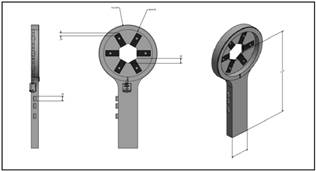
Figure 5:  Powered Bionic Grip Wrench Design


Figure 6: Powered Bionic Grip Wrench 3D Design


In the next step, authors observe the available design of bionic grip wrench, that exists in the market nowadays. This product design reduces the processing time to do the manual positioning for the nuts and bolts, as it has several sides on the material surface that needs to be fit before do the fastening. Figures 4 shows the design of bionic grip wrench that successfully reduce the lead time of tool manual positioning. It helps to reduce some cycle time in repetitive work happened.


To continue into the next stage of development, the authors observe the opportunity and further possibility to reduce and or even eliminate the waste of the manual operation. Learnt and explored that, after the bionic arm grips the nuts or the bolts, it is still requires the human effort to do the bolt and nuts fastening by rotating the tools, manually. Hence, the authors initiate the new design proposal that applying the motor (rotary motor) to perform rotary force after material grips been done, yet the force will do the nuts and bolts fastening to the work object surface. It reduces the human manual effort by utilizing electrical-mechanical power that generates rotary force of the wrench to the bolts and nuts. Figures 5 and 6 shows the proposed design to eliminate the problems stated above.


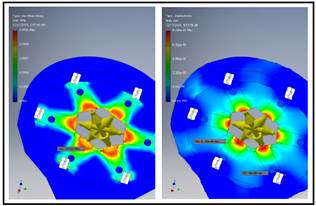
Figure 7:  Product’s Maximum Stress and Displacement Analysis


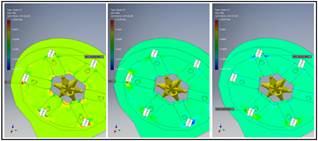
Figure 8:  XX, XY, XZ Section Stress Analysis


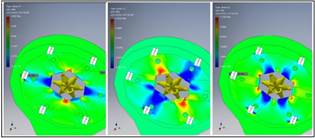
Figure 9:  YY, YZ, ZZ Section Stress Analysis


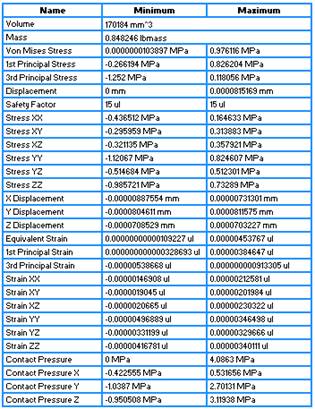
The inventor program reveals proposed electro-mechanical bionic grip’s material is steel on yield strength 30,022.8 pounds per square inch (psi), means the maximum stress that can be applied along material. The ultimate tensile strength shows 50,038 psi that means the maximum force before the material fractures. Table 1 shows the summary of the product’s performance parameter.

For the bionic grip arms section, Figure 7 shows the stress analysis performed by Inventor program. Analyzing the presented result, the product’s maximum stress is 0.9761 MPA with safety factor is 15. For displacement analysis, the maximum value is 8.152 mm, meanwhile, XX, XY and XZ section stress are shown on below Figure 8, with the value of maximum stress of 0.1646 MPa for XX section, 0.3139 MPa for XY section and 0.3579 MPa for XZ section.

YY, YZ and ZZ section stress are shown on Figure 9 above, with the value of maximum stress of 0.824 MPa for YY section, 0.5123 MPa for YZ section and 0.7329 MPa for ZZ section.


Table 1: Product Performance Parameter


CONCLUSION

The proposed design, 3-dimension mechanical drawing, yet stress and force analysis were performed by using the Inventor software. The result was proposed to eliminate the human manual effort that contributes longer processing time needed compared to manual grip positioning, rotary force performed by human motoric and design manufacturability. The stress analysis were performed especially in the side of bionic grip that directly contributing the main rotary force to fasten the nuts and bolts, with the maximum proposed torque is 45 NM, maximum screw diameter is 6 mm, maximum drilling diameter is 10/20 mm on steel or wood surface. The battery type use Lithium Ion with charger input 110V=240V AC, 1.5 A.

REFERENCES
  1. Gorokhov, V.G. “The concept of ‘technology’ in the philosophy of machinery and the feature of social and humanitarian technologies.” Epistemology and Philosophy of Science, vol. 28, no. 2, 2011, pp. 110–123.

  2. Cooper, R.G. and E.J. Kleinschmidt. “New products: what separates winners from losers?” Journal of Product Innovation Management, vol. 4, no. 1987, p. 170.

  3. Dheraaj, S. et al. “Innovative design of multi jaw wrench and its analysis.” International Conference on Manufacturing Excellence, 2002.

  4. Lu, X.S. and H. Zhou. “Pneumatic automation system optimal design.” Shanghai Science and Technology Literature Press, 2000.

  5. Agrawal, Brij N. and Max F. Platzer. “Standard Handbook for Aerospace Engineers.” McGraw-Hill Education, 2018, p. 128.

  6. Roy, R. “Can the benefits of good design be quantified?” Design Management Journal, vol. no. 59, 1994, p. 59.

  7. Balakleets, N.A. “Body and power in the concept of organ projection.” E. Kapp Bulletin of UlSTU, vol. no. 1, 2015, pp. 20–24.

  8. Jiao, J., T.W. Simpson and Z. Siddique. “Product family design and platform-based product development: A state-of-the-art review.” Journal of Intelligent Manufacturing, vol. no. , 2007, pp. 5–29.

  9. Stone, R. B., D. A. McAdams and V. J. Kayyalethekkel. “A product architecture-based conceptual DFA technique.” Design Studies, vol. no. 2004, pp. 301–325.

  10. Palani Rajan, P.K. et al. “An empirical foundation for product flexibility.” Design Studies, vol. 26, no. 4, 2005, pp. 405-438.

  11. Viswanathan, S. et al. “User preferences in the design of multi purpose products: A case study on the redesign of a utility tool.” International Design Engineering Technical Conferences and Computers and Information in Engineering Conference, 2016.

Recommended Articles
Research Article
Perceptions of Adolescent Pregnancy and Early Motherhood
Published: 30/12/2020
Download PDF
Research Article
Interaction of Modern Literature-Paintings and Poetry, Storytelling, Literature
Published: 27/01/2025
Download PDF
Research Article
The Impact of Communication Means on The Marriage Contract and its Discontinuation
...
Published: 27/01/2025
Download PDF
Research Article
Sheikh Ashour bin Youssef Kaskas (d. 2019 CE): His Life and Scholarly Endeavors
Published: 18/11/2025
Download PDF
Chat on WhatsApp
Flowbite Logo
Najmal Complex,
Opposite Farwaniya,
Kuwait.
Email: kuwait@iarcon.org

Editorial Office:
J.L Bhavan, Near Radison Blu Hotel,
Jalukbari, Guwahati-India
Useful Links
Order Hard Copy
Privacy policy
Terms and Conditions
Refund Policy
Others
About Us
Contact Us
Online Payments
Join as Editor
Join as Reviewer
Subscribe to our Newsletter
Follow us
MOST SEARCHED KEYWORDS
scientific journal
 | 
business journal
 | 
medical journals
 | 
Scientific Journals
 | 
Academic Publisher
 | 
Peer-reviewed Journals
 | 
Open Access Journals
 | 
Impact Factor
 | 
Indexing Services
 | 
Journal Citation Reports
 | 
Publication Process
 | 
Impact factor of journals
 | 
Finding reputable journals for publication
 | 
Submitting a manuscript for publication
 | 
Copyright and licensing of published papers
 | 
Writing an abstract for a research paper
 | 
Manuscript formatting guidelines
 | 
Promoting published research
 | 
Publication in high-impact journals
Copyright © iARCON Internaltional LLP . All Rights Reserved.