Contents
Download PDF
pdf Download XML
977 Views
202 Downloads
Share this article
Research Article | Volume 3 Issue 1 (Jan-June, 2022) | Pages 1 - 5
Detection of Human T Lymphotrophic Virus-I Tax Gene among Pregnant Women on Antenatal Visit to Plateau Specialist Hospital Jos, Nigeria
 ,
 ,
 ,
 ,
 ,
 ,
1
Department of Microbiology, Faculty of Natural Sciences, University of Jos, Plateau State, Nigeria
2
Department of Microbiology, Faculty of Life Sciences, Ahmadu Bello University (ABU) Zaria, Kaduna State, Nigeria
Under a Creative Commons license
Open Access
Received
Dec. 22, 2021
Revised
Jan. 8, 2022
Accepted
Jan. 30, 2022
Published
Feb. 10, 2022
Abstract

Human T Lymphotrophic virus type 1 (HTLV-1) is a complex oncogenic delta retrovirus with tax protein demonstrated to play important roles in HTLV-1 infectivity and the growth and survival of leukemic cells. This study aimed to detect HTLV-1 tax gene among pregnant women on antenatal visits to Plateau Specialist Hospital, Jos, Nigeria. A total of 188 pregnant women participated in this cross-sectional study. In total, 5ml each of sera and plasma were obtained from 10ml blood of each participant and analyzed for antibodies to human T-lymphotropic virus 1/2 using enzymelinked immunosorbent assay (ELISA). Reactive ELISA samples were then subjected to reverse transcription polymerase chain reaction (RT-PCR) for detection of tax gene. Of the pregnant women who participated in this study, 6(3.19%) were positive to HTLV-1/-2 IgG antibodies. However, tax sequence was not detected after subjecting the ELISA reactive samples to RT-PCR. Though tax gene which plays important roles in viral oncogenesis was not detected in this study, routine screening of pregnant women for HTLLV-1/2 is strongly recommended as presently no treatment for HTLV infections.

Keywords
INTRODUCTION

Human T Lymphotrophic virus type 1 (HTLV-1) is a complex oncogenic delta retrovirus infecting millions of people worldwide[1]. Globally, more than 20 million persons are infected with HTLV [2] described mostly in endemic areas such as in parts of Southern Japan, Central and West Africa, the Caribbean, the Middle East and Melanesia [3,4] with overall prevalence of 5 -10%4. Infection with HTLV-1 is generally asymptomatic; however, 2%–4% of infected individuals develop a highly malignant and intractable T-cell neoplasm known as adult T-cell leukemia/lymphoma (ATL) with 1-2% TSP/HAM decades after infection [5]. HTLV‑1 infection symptoms may occur early in an individual's lifetime and generally have a long-term latent time period prior to tumorigenesis [6]. How HTLV-1 infection progresses to development of lymphoma is yet to be elucidated, however, studies [7,8] reported Tax protein to play a critical role.


        HTLV-1 genes, tax and HTLV-1 basic leucine zipper factor (HBZ), have been demonstrated to play important roles in HTLV-1 infectivity and the growth and survival of leukemic cells [7]. Tax modulates the expression of many viral and cellular genes through the CREB/ATF-, SRF- and NF-κB-associated pathways [8]. In addition, Tax employs the CBP/p300 and p/CAF co-activators for implementing the full transcriptional activation competence of each of these pathways [8]. Tax also affects the function of various other regulatory proteins by direct protein-protein interaction [8]. Through these activities Tax sets the infected T-cells into continuous uncontrolled replication and destabilizes their genome by interfering with the function of telomerase and topoisomerase-I and by inhibiting DNA repair [8]. Furthermore, Tax prevents cell cycle arrest and apoptosis that would otherwise be induced by the unrepaired DNA damage and thereby enables accumulation of mutations that can contribute to the leukemogenic process [7]. Together, these capacities render Tax highly oncogenic as reflected by its ability to transform rodent fibroblasts and primary human T-cells and to induce tumors in transgenic mice [8]. However, of concern here, shortly after infection, HTLV-1 enters into a latent state, in which tax protein and other viral genes expression is low in most HTLV-1 carriers. This low Tax level is evidently insufficient for exerting its multiple oncogenic effects on the host cells8. This become worrisome when a pregnant woman from a region where routine diagnosis of HTLV-1/-2 is not carried out during antenatal is infected thereby maintaining the virus in a generational cycle. 


In Nigeria, there are reports on the increasing prevalence of HTLV infections within the country. Nkup et al [9]. reported 2.13% prevalence of HTLV-1/-2 antibodies among pregnant women on antenatal visits in Jos.  Udeze et al. [10] working in Ilorin detected 1.1% prevalence of HTLV-1/-2 among pregnant women. Similarly, [11, 12] reported 0.5% and 16.7% prevalence of HTLV-1/-2 among pregnant women respectively. More studies on blood donors in Nigeria reported varying prevalence. [13, 14] found 7.0% and 3.6% seroprevalence of HTLV among blood donors in South-Western Nigeria respectively. Similarly, [15-18] reported 3.7%, 0.7%, 0.5% and 3.2% respectively in different parts of Nigeria. Zero HTLV prevalence has also been reported in Nigeria [19,20] and cases of coinfection of HTLV-1 and HTLV-2 21 and HTLV with other viruses commonly HIV 22.


In other West African countries like Ghana, HTLV-I studies in pregnant women have not been previously reported. However, HTLV-I seroprevalence rates of 4.2 and 11.29% among blood donors and human immunodeficiency virus (HIV)/AIDS patients in Ghana have been respectively reported 23a, 24b. Other studies among blood donors presenting to blood banks in the late 1990s in Ghana reported an HTLV-I seroprevalence of 0.5–0.7% 25, 26. 27 reported 1-2% seroprevalence of HTLV-I among urban and rural dwellers in southern Ghana. Currently in Ghana, neither blood donors nor pregnant women are screened routinely for HTLV-I antibodies.


These reports are indicative of endemicity of HTLV across West Africa, and most of the studies rely only on serological survey of the virus without follow up on the pathogenicity likely to occur over decades of infection. However, the present study aimed to detect tax gene, which has been reported to be a major determinant factor for disease progression in HTLV infected individuals [2].

MATERIALS AND METHODS

Study Design and Population

This study was a hospital-based cross-sectional study conducted among consented pregnant women on antenatal visits to Plateau Specialist Hospital Jos at various stages of their gestation period and of all age categories. 


Ethical Approval and Consent

Approval was obtained from the Health Research and Ethics Committee of Bingham University Teaching Hospital Jos under the number NHREC/23/05/00534. Informed consent was obtained from each participant before sample was collected. However, in cases of minors, (participants who are younger than 18 years) consent was obtained from their parents.


Collection of Blood Sample 

Ten milliliters (10ml) of venous blood was collected by venipuncture at the volar surface of the left arm of the participants. About 5ml of the collected blood sample was taken in a pre-labeled potassium ethylenediaminetetraacetic acid (EDTA) evacuated tube (BD vacutainer) while the remaining 5ml of the venous blood was transferred into a corresponding screw capped plastic tube without anticoagulant and centrifuged at 2500 rpm for 10 minutes. 


Serological Testing

Sera were examined by ELISA using anti-HTLV-1/2 IgG ELISA kit, (lot number DAT20181001, Diagnostic Automation, Inc) following the manufacturer’s instructions. 


Detection of HTLV-1 tax Gene Using RT-PCR

From the positive ELISA samples, DNA was extracted from peripheral blood mononuclear cell (PBMC) and subjected to reverse transcription PCR for the detection of HTLV-1 tax gene. The DNA for HTLV-1/2 was extracted (using Bioneer AccuPrep Viral DNA extraction kit, USA) following the manufacturer’s instructions. Briefly, samples were brought to room temperature and vortexed. Six (6) different tubes were brought out and to each tube, 300µl of lysis buffer and 20µl of proteinase K were added using automated pipette. This was followed by the addition of 200µl of the samples into each tube and labeled. The mixture vortexed, and incubated for 10minutes. After incubation, 300µl of isopropanol was added and vortexed for 1minute, then centrifuged for 10 seconds to down the liquid clinging to the walls and lid of the tube. Binding columns were fitted into the collection tubes and the liquid transferred into the binding column then centrifuged for 1min at 8,000 rpm. Following centrifugation, the binding columns were transferred to a new collection tube and 500µl of washing buffer added to the column followed by another centrifugation at 8,000 rpm for 1min and the binding column transferred to 2 ml collection tubes. To remove ethanol completely, the tubes were pin down once more at 13,000 rpm for 1 minute making sure that there was no droplet hanging from the bottom of the tubes. Finally, 50µl of elution buffer was added and allowed to stand for 3 minutes for the buffer to permeate the column. The DNA was eluted by spinning at 8,000 rpm for 1 minute and stored at -70°C in a freezer.


Amplification of Tax Gene

Primers (Forward ‘5-AGGGTTTGGACAGAGTCTT-3’; Reverse ‘5 AAGGACCTTGAGGGTCTTA-3’ 256bp)28 were first reconstituted by adding 150µl of water and mixing properly. Further dilution of the primers was made by mixing 90µl of water with 5µl of the forward and 5µl of the reverse primers. Synthesis of the cDNA was carried out by mixing the RT-Premix with 2µl of the diluted primers, 3µl of water and 30µl of the DNA extracted. Reverse transcription PCR was performed on cDNA samples. In order to determine the optimal annealing temperature, optimization was performed and 58°C was determined as the optimal annealing temperature. Reverse transcription PCR was performed using AB Applied Biosystems Thermal Cycler with RT-PCR (Rotor-Gene, Q USA). The PCR condition was a primary denaturation and enzyme activation step of 1 cycle of 15 minute at 95°C which was followed by 41 cycles of amplification including a denaturation step of 45seconds at 95°C, a 30 seconds at 58°C for annealing and a 45 seconds at 72°C for extension and a final cooling step of 30 seconds at 40°C. Sterile distilled water served as negative control. The amplified products were resolved on 1.5% agarose     gel          electrophoresis    (MetaPhorAgarose, Cambrex Bio Science) stained with ethidium bromide and bands visualized under UV transilluminator.       

RESULTS

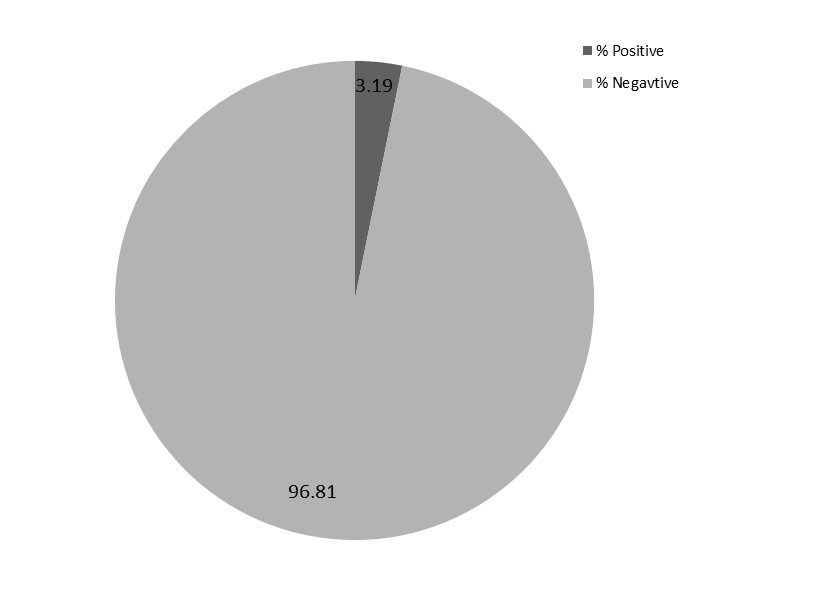
A total of 188 blood samples were collected from pregnant women on antenatal visits to Plateau Specialist Hospital Jos who consented to participate in this study. Their mean ages ranged from 15-45years and all participants were found to be healthy on routine antenatal visitations. Their samples were screened for Human T Lymphotrophic Virus type 1and 2 (HTLV-1/-2) IgG antibodies of which 3.19% (6/188) were positive (Figure 1). 


Figure 1: Prevalence of Human T Lymphotrophic Virus Immunoglobulin G (IgG) among pregnant women on antenatal visits to Plateau Specialist Hospital Jos, Nigeria


The 6 serological positive samples were subjected to reverse transcription polymerase chain reaction (RT-PCR) for detection of HTLV-1 tax gene, however, all the samples were negative for tax gene after the PCR procedures.

DISCUSSION

A total of 188 blood samples were collected from pregnant women on antenatal visits to Plateau Specialist Hospital Jos and screened for Human T Lymphotrophic Virus type 1and 2 (HTLV-1/-2) IgG antibodies. Of the 188 samples examined, 3.19% (6/188) were positive for HTLV-1/2 IgG antibodies. 


The 3.19% seroprevalence reported in this study is in agreement with the categorization of HTLV-1/2 endemicity among ethnic groups of African origin 29,30. For comparison, few studies on pregnant women reported varying results on the prevalence of HTLV-1/2 in Nigeria. In a mother-child pairs study conducted by Olaleye et al. [31] in Southwestern Nigeria, a prevalence of 4.3% among the mothers and 1.1% among children was reported. A similar study with pregnant women and commercial sex workers in 


Southwestern Nigeria reported a prevalence of 16.7% and 22.9% among pregnant women and commercial sex workers respectively 8. The present study is higher than the 2.13% reported by Nkup et al. [9] from Jos and the 1.1% reported in Ilorin by Udeze et al. [10] both in North Central Nigeria. A lower HTLV-1/2 antibodies prevalence rate of 0.5% was reported by Okoye et al. [11] in Enugu, South Eastern Nigeria. The implication of this infection in pregnant women is the likelihood of developing hematological malignancies in their life time and early onset of HTLV-1/2 associated diseases in children born from infected mothers. The prevalence rate observed in this study compared with reports from Southwestern Nigeria depicts somewhat different epidemiology of the virus in North central part of the country as ethnic, social, cultural, and other differences have all been noted to affect the distribution of the virus 10. More studies from Ghana reported 2.1% prevalence [32] and 0.66% by Monteiro et al. [33] from Brazil among pregnant women.


In Nigeria, molecular detection of HTLV-1 is challenging and most studies rely on serological diagnosis using enzyme immunoassay (EIA) which cannot distinguish HTLV-1 from HTLV-2. This study subjected the 6 ELISA reactive peripheral blood mononuclear cells (PBMC) collected from pregnant women to RT-PCR for the detection of HTLV-1 tax gene due to its high genetic stability. However, tax gene sequence was not detected. As there were no molecular studies on tax gene from Nigeria for comparison, Blanco et al. 34 reported HTLV-1 infection without detectable tax gene, but HTLV-I pol and env genes and LTR region were properly detectable [34]. In a similar study on HTLV-I tax detection by Dezzutti et al. [35] that screened 293 New York Blood Donors using a highly sensitive, nested-PCR method confirmed that no individuals tested positive for HTLV tax sequences or for antibodies to the HTLV Tax protein. Our result does not agree with the 11% prevalence rate of HTLV tax sequences in healthy blood donors from the New York City area reported by Zucker-Franklin and Pancake [36]. Though pregnant women are among the high risk population for contracting and transmitting HTLV-1, they do not have HTLV-I tax sequences in this study and could be the reason for the discrepancy in result reported. Geographical location, conditions of blood storage, processing, type of PCR and PCR conditions could as well influence the variation observed. 


More so, the fact that samples were negative for HTLV-1 tax sequences by PCR could suggests that individuals could have been exposed to the virus and antibodies immunity was effective in degrading the viral antigen making the gene unavailable for PCR detection therefore the need for strict surveillance is highly recommended.

CONCLUSION

The prevalence of 3.19% reported in this study further confirms the endemicity of HTLV-1/-2 in Nigeria and it is a potential public health concern. Although tax gene was not detected in this study, the implementation of screening test for HTLV-1/-2 among pregnant women should be a priority for proper management and prevention of HTLV progression to ATL.


Authors Contribution

NJY: Conceptualization, design, investigation and manuscript drafting. AM: Design, supervision, review and editing of final manuscript. IHI: Design, supervision, review and editing of final manuscript. GGA: Data curation, investigation, methodology, validation. MRI: Data analysis, interpretation and manuscript review, and editing. CNA: Data analysis, interpretation and manuscript editing. ASD: Drafting of work, critical revision and manuscript writing/ editing. All the authors approved the manuscript before submission.


Conflict of Interest

The authors declare no conflict of interest in publishing this article.

REFERENCE
  1. Gessain Antoine, et al. "Epidemiological Aspects and World Distribution of HTLV-1 Infection." Frontiers in Microbiology, vol. 3, 2012, p. 388.

  2. Taylor Graham P, et al. "HTLV-1 Transmission." Journal of Acquired Immune Deficiency Syndromes, vol. 38, no. 1, 2005, pp. 104–109.

  3. Vrielink Hans, et al. "HTLV-1/2 Prevalence in Different Geographic Locations." Transfusion Medicine Reviews, vol. 18, no. 1, 2004, pp. 46–57.

  4. Verdonck Kristien, et al. "HTLV-1: Recent Knowledge About an Ancient Infection." The Lancet Infectious Diseases, vol. 7, no. 4, 2007, pp. 266–281.

  5. Nicolas F, et al. "HTLV-1, the Other Pathogenic Yet Neglected Human Retrovirus: From Transmission to Therapeutic Treatment." Viruses, vol. 10, no. 1, 2018, pp. 1–25.

  6. Kannian Poornima, and et al. "Human T Lymphotropic Virus Type 1 (HTLV 1): Molecular Biology and Oncogenesis." Viruses, vol. 2, 2010, pp. 2037–2077.

  7. Enose-Akahata Yoshimi, et al. "Role of HTLV-1 Tax and HBZ in the Pathogenesis of HAM/TSP." Frontiers in Microbiology, vol. 8, Dec. 2017, pp. 25–63.

  8. Azran Irit, et al. "Role of Tax Protein in Human T-cell Leukemia Virus Type-I Leukemogenicity." Retrovirology, vol. 1, 2004, p. 20.

  9. Nkup J Y, et al. "Detection of Antibodies to Human T-cell Lymphotropic Virus 1/2 among Pregnant Women on Antenatal Visits to Selected Hospitals in Jos, Nigeria." Advances in Microbiology and Biotechnology Research Journal, vol. 1, no. 3, 2021, pp. 1–6.Udeze Ayotunde O, et al. "Serological Detection of Human T-cell Lymphotropic Virus Types I and II among Pregnant Women in Ilorin, Nigeria." Journal of Immunology, 2018, doi:10.1080/15321819.2018.1500374.

  10. Okoye Augustine E, et al. "Seroprevalence and Correlates of Human T-cell Lymphoma/Leukemia Virus Type 1 Antibodies among Pregnant Women at the University of Nigeria Teaching Hospital, Enugu, Nigeria." International Journal of Women's Health, vol. 6, 2014, pp. 849–855.

  11. Forbi Joseph C, et al. "Human T-Cell Lymphotropic Virus in a Population of Pregnant Women and Commercial Sex Workers in South Western Nigeria." African Health Sciences, vol. 7, no. 3, 2007, pp. 129–132.

  12. Williams C K, et al. "Human T-cell Leukaemia Virus in Africa: Possible Roles in Health and Disease." IARC Scientific Publications, no. 39, 1984, pp. 712–726.

  13. Terry A O, et al. "Seroprevalence of HTLV-I/II among Blood Donors in Osogbo, Nigeria." Sudan Journal of Medical Sciences, vol. 6, no. 3, 2011, pp. 177–182.

  14. Fleming A F, N. Yamamoto, et al. "Antibodies to ATLV (HTLV) in Nigerian Blood Donors and Patients with Chronic Lymphocytic Leukaemia or Lymphoma." The Lancet, vol. 2, no. 8345, 1983, pp. 334–335.

  15. Analo, H. I, et al. "Seroprevalence of HTLV-1 and HIV Infection in Blood Donors and Patients with Lymphoid Malignancies." Central African Journal of Medicine, vol. 44, no. 5, 1998, pp. 130–134.

  16. Durojaiye Ismail, et al. "Seroprevalence of Human T Lymphotropic Virus Antibodies among Healthy Blood Donors at a Tertiary Centre in Lagos, Nigeria." Pan African Medical Journal, vol. 17, 2014, p. 301.

  17. Yuguda, S., M. Manga, et al. "Seroprevalence of Human T-cell Lymphoma/Leukemia Virus Type-1 (HTLV-1) Antibodies among Blood Donors at Ibadan, Nigeria." Journal of Human Virology and Retrovirology, vol. 1, no. 5, 2017, pp. 1–5.

  18. Manga, M. M., A. Fowotade, et al. "Serosurvey of Human T Cell Lymphotropic Virus I/II among Blood Donors in Gombe (Nigeria)." Edorium Journal of Infectious Diseases, vol. 6, 2016, pp. 12–19.

  19. Anyanwu, N. C. J, et al. "Prevalence of Human T-lymphotropic Virus 1/2 in Nigeria’s Capital Territory and Meta-Analysis of Nigerian Studies." SAGE Open Medicine, vol. 7, 2019, pp. 1–8.

  20. Olaleye, D. O., et al "Evidence of Serological Cross-reactivities with Human Immunodeficiency Virus Types 1 and 2 and Human T-lymphotropic Virus Types I and II in Sera of Pregnant Women in Ibadan, Nigeria." International Journal of Epidemiology, vol. 24, 1995, pp. 198–203.

  21. Nasir, I. A., A. E. Ahmad, and et al. "Molecular Detection and Clinical Implications of HTLV-1 Infections among Antiretroviral Therapy-Naïve HIV-1-infected Individuals in Abuja, Nigeria." Virology: Research and Treatment, vol. 6, no. 3, 2015, pp. 31–35.

  22. Adjei, A. A., et al. "Prevalence of Antibodies to Human T-lymphotropic Virus Type I among Blood Donors in Accra, Ghana." Ghana Medical Journal, vol. 37, 2003, pp. 133–136.

  23. Adjei, A. A, et al. "Human T-lymphotropic Type-I Virus Specific Antibody Detected in Sera of HIV/AIDS Patients in Ghana." Japanese Journal of Infectious Diseases, vol. 56, 2003, pp. 57–59.

  24. Sarkodie, F, et al. "Screening for Viral Markers in Volunteer and Replacement Blood Donors in West Africa." Vox Sanguinis, vol. 80, 2001, pp. 142–147.

  25. Ampofo W., et al. "Prevalence of Blood-borne Infectious Diseases in Blood Donors in Ghana." Journal of Clinical Microbiology, vol. 40, 2002, pp. 3523–3525.

  26. Lal, R. B, et al. "Presence of Human T-lymphotropic Virus Types I and II in Ghana, West Africa." AIDS Research and Human Retroviruses, vol. 10, 1994, pp. 1747–1750.

  27. Hamedi, A, et al. "The Prevalence of Human T-cell Lymphotropic Virus Type 1 in Pregnant Women and Their Newborns." International Scholarly Research Network Obstetrics and Gynecology, 2012, doi:10.5402 /2012/975135.

  28. Carles, G, et al. "HTLV-1 Infection and Pregnancy." Journal de Gynécologie Obstétrique et Biologie de la Reproduction, vol. 33, 2004, pp. 14–20.

  29. Kazanji, Mirdad, et al. "Human T-cell Lymphotropic Virus Types I and II (HTLV-I/II) in French Guiana: Clinical and Molecular Epidemiology." Cadernos de Saúde Pública, vol. 19, 2003, pp. 1227–1240.

  30. Olaleye, D. O, et al. "Human T-Cell Lymphotropic Virus Type I and II Infections in Mother-Child Pairs in Nigeria." Journal of Tropical Pediatrics, vol. 45, 1999, pp. 66–70.

  31. Armah, H. B, et al. "Seroprevalence of Human T-Cell Lymphotropic Virus Type I among Pregnant Women in Accra, Ghana." Journal of Medical Microbiology, vol. 55, 2006, pp. 765–770.

  32. Monteiro, D. L. M., et al. "Prevalence of HTLV-1/2 in Pregnant Women Living in the Metropolitan Area of Rio de Janeiro." PLoS Neglected Tropical Diseases, vol. 9, no. 8, 2014, pp. 31–46.

  33. Blanco, S., et al. "Human T-Lymphotropic Virus Type 1 Infection in Absence of Tax Gene: A Challenge for Molecular Diagnosis." Infection, Genetics and Evolution, vol. 90, 2021, pp. 1047–1065.

  34. Dezzutti, C. S., et al. "Detection of Human T-Lymphotropic Virus (HTLV) Tax Sequences in New York City Blood Donors Seronegative for HTLV Types 1 and 2." Clinical and Diagnostic Laboratory Immunology, vol. 10, no. 4, 2003, pp. 715–717.

  35. Zucker-Franklin, D, et al. "Human T-cell Lymphotropic Virus Type 1 Tax among American Blood Donors." Clinical and Diagnostic Laboratory Immunology, vol. 5, 1998, pp. 831–835.




License
CC BY-NC-ND
Creative Commons Attribution-NonCommercial-NoDerivatives 4.0 International License
Detection of Human T Lymphotrophic Virus-I Tax Gene among Pregnant Women on Antenatal Visit to Plateau Specialist Hospital Jos, Nigeria © 2026 by Nkup Jude Yunzoom, Aminu Maryam, Inabo Helen Ileigo, Goyil Gloria Albert, Muhammad Rabiata Idris, Cirfat Nanya Amos, Awak Samirah David licensed under CC BY-NC-ND 4.0
All papers should be submitted electronically. All submitted manuscripts must be original work that is not under submission at another journal or under consideration for publication in another form, such as a monograph or chapter of a book. Authors of submitted papers are obligated not to submit their paper for publication elsewhere until an editorial decision is rendered on their submission. Further, authors of accepted papers are prohibited from publishing the results in other publications that appear before the paper is published in the Journal unless they receive approval for doing so from the Editor-In-Chief.
Himalayan Journal of Applied Medical Sciences and Research open access articles are licensed under a Creative Commons Attribution-Share A like 4.0 International License. This license lets the audience to give appropriate credit, provide a link to the license, and indicate if changes were made and if they remix, transform, or build upon the material, they must distribute contributions under the same license as the original.
Advertisement
Recommended Articles
Research Article
Evaluation of Serum Heat Shock Protein 70 as a Diagnostic Biomarker for Ectopic Pregnancy: A Comparative Case-Control Study
Published: 28/02/2026
Download PDF
Research Article
Assessing First Trimester Maternal Serum Pentraxin-3 Levels in Primary Unexplained Recurrent Pregnancy Loss: A Case-Control Study
Published: 28/02/2026
Download PDF
Research Article
Patent Ductus Arteriosus Medical Closure and Associated Co-morbidities in Premature Infants in Sulaymaniyah Neonatal Intensive Care Unit
...
Published: 28/02/2026
Download PDF
Research Article
Bones in Balance: Awareness of Rickets and Nutritional Deficiencies Among the Hamirpur Community
Published: 10/12/2024
Download PDF
Chat on WhatsApp
Flowbite Logo
Najmal Complex,
Opposite Farwaniya,
Kuwait.
Email: kuwait@iarcon.org

Editorial Office:
J.L Bhavan, Near Radison Blu Hotel,
Jalukbari, Guwahati-India
Useful Links
Order Hard Copy
Privacy policy
Terms and Conditions
Refund Policy
Others
About Us
Team Members
Contact Us
Online Payments
Join as Editor
Join as Reviewer
Subscribe to our Newsletter
Follow us
MOST SEARCHED KEYWORDS
scientific journal
 | 
business journal
 | 
medical journals
 | 
Scientific Journals
 | 
Academic Publisher
 | 
Peer-reviewed Journals
 | 
Open Access Journals
 | 
Impact Factor
 | 
Indexing Services
 | 
Journal Citation Reports
 | 
Publication Process
 | 
Impact factor of journals
 | 
Finding reputable journals for publication
 | 
Submitting a manuscript for publication
 | 
Copyright and licensing of published papers
 | 
Writing an abstract for a research paper
 | 
Manuscript formatting guidelines
 | 
Promoting published research
 | 
Publication in high-impact journals
Copyright © iARCON Internaltional LLP . All Rights Reserved.