This research assessed how waste discharges from abattoir affect water quality in Anwai river within Asaba region of southern Nigeria. The study which adopted the experimental design was conducted in Anwai river, where abattoir wastes are directly discharged into the river. Anwai river was divided into two main sections, by stratified sampling, as downstream and upstream, representing the experimental and control sites respectively. Samples of water were taken for 6 months from February 2020 to July 2020. Two water samples each were collected monthly from both downstream and upstream sections respectively giving rise to 24 water samples that were collected. The samples of water were taken between 7.am and 8.am and analysed in laboratory for Physico-chemical characteristics which are pH, electrical conductivity, temperature, total dissolve solid (TDS), calcium, phosphate, sulphate, dissolve oxygen, iron, ammonia, magnesium, total hardness, chloride, nitrate, BOD, sodium, COD, TSS and Microbial load. Results of laboratory analyses were further analysed with the mean, standard deviation, standard error of mean, t-test and linear regression statistics using the SPSS 15.0 version; while graphs were plotted using MS Excel. Results revealed that the water quality in Anwai river differ significantly between the downstream section and upstream section; while abattoir waste has significant impact on water quality and characteristics in Anwai river at 5% levels of confidence. Since abattoir waste impact on the water quality in Anwai river, the need for environmental management and pollution control is recommended to restore water quality and ecosystem functions within the river.
Keywords
Abattoir waste
Downstream
Slaughter house
Upstream
Water pollution.
Important Note
Key findings:
The study found significant differences in water quality between the downstream and upstream sections of the Anwai River, impacted by abattoir waste discharge. Physico-chemical characteristics and microbial loads were notably affected. Environmental management and pollution control are recommended to restore water quality and ecosystem functions in the river.
What is known and what is new?
The study builds on existing knowledge by focusing on the Anwai River in southern Nigeria, where abattoir waste directly impacts water quality. It confirms that this waste significantly alters water quality parameters, as evidenced by differences between downstream and upstream sections. The findings emphasize the necessity of environmental management and pollution control to restore the Anwai River's water quality and ecosystem functions, highlighting the urgency of addressing abattoir waste discharge to protect this vital water resource.
What is the implication, and what should change now?
The implications of this study are profound, indicating a clear need for immediate action to address the impact of abattoir waste on the Anwai River's water quality. Environmental management strategies must be implemented urgently to control and mitigate further degradation. This includes strict regulations and enforcement measures to prevent abattoir waste discharge into the river. Additionally, stakeholders should collaborate to develop sustainable waste management practices and alternative disposal methods for abattoirs. Public awareness campaigns can also educate communities on the importance of protecting water resources and reducing pollution.
Introduction
One important necessity for the existence of organisms is water. Therefore, it is very important to maintain any source and channel of water supply to all living things in our environment to avoid contamination, and also to ensure sustainability. Infering from the observations in studies by Terrumun and Oliver (2015) [1], when waste water is discharged into bodies of water, it results to deterioration of quality of water which receives the waste water.
In 2011, World Health Organization (WHO) [2] estimated that approximately 25% of the diseases facing humanity is due to continued exposure to water pollution (WHO, 2021). Water pollution can either be of a point source or non-point source. The point sources take place when contaminants are released into water body directly, from sources like industrial sewage, municipal wastewater pipes and abattoirs; while the later sources carries contaminants indirectly through environmental change such as contamination from urban run-off; [3].
Abattoir waste discharge causes great environmental damage, disturbances in the ecosystem and invariably affects human beings through the food chain (Naila, 2008) [4]. Abattoir waste is harmful to both organisms and their surrounding if precautions are neglected [1,5]. Apart from the generation of odour, increased quantities of suspended liquids and solids are parts of problems created by waste from abattoir [6]. Wastes from abattoir have been observed to contain more concentrations of organic matter because they contain blood, grease, manure, fats, undigested feed and hair [7,8].
Effluent from the abattoir could pose major environmental and health problem to the aquatic systems. The long and short term safety and health effect on man and livestock depend upon the physico-chemical characteristics of the pollutant and exposure to such polluted water. Aside bloods, other parts of the animals slaughtered are washed into bodies of water [9].
The release of waste from the abattoir is one of the major ways to water contamination in many regions like Nigeria where abattoirs are often sited close to rivers because of ease of water for processing the slaughtered animals. Study by Terrumun and Oliver (2015) [1] observed that abattoirs wastes are dangerous due to their high content of organic matter, trace heavy metals, salts, bacteria, viruses, other microorganisms and sediment. In similar studies by Akange, Chaha and Odo (2016), Elemile et. al. (2019) [10,11], abattoir effluents were found to contribute to increased concentrations of phosphorous, nitrogen and other nutrient elements in water. When washed into wetlands, streams, and rivers, it can lead to the reduction of oxygen, thereby threatening aquatic life and damage water supply [1]. Inappropriate animal waste disposal from abattoirs can also lead to animal diseases which are contracted by man when in contact with animal faeces [12] while possible health risk through water-borne pathogens can lead to public health and ecological dangers [13].
Within Nigeria, many abattoirs are sited near bodies of water and as such, the untreated wastes are channeled into rivers and other water bodies. Whether the water flows or not, it is the same water that is used in processing the meat from the abattoir. The contaminants are therefore leached into the groundwater causing more pollution [14].
Several studies have reported deposited waste within man’s surrounding from abattoirs, or disposed straight into rivers which some of them serve as water source to the abattoirs [11,1]. Effluents compositions from abattoirs are very dangerous to the surroundings and water bodies. Evidence from empirical studies by Elemile et. al., (2019); Ogbomida, Kubeyinje and Ezemonye (2016) and Osibanjo and Adie (2007), [11,15,16] revealed that activities in the abattoir are accountable for the pollution of surface and underground water bodies, reduction of air quality, and quality of health of inhabitants within the environment.
This study therefore aims at assessing how waste discharges from abattoir affect water quality from Anwai river, examine the seasonal implications, and make recommendations for effective management and sustainable use of water from Anwai river. In this regards, the study emphasized on the following objectives: (i) To examine the properties of effluents in Anwai river at both downstream and the upstream sections. (ii) To find out if water qualities differ between the two sections of Anwai river. (iii) To determine how abattoir waste impacted on water quality in Anwai river. (iv) To empirically determine the seasonal quality of water in the two sections of Anwai river.
Study Area
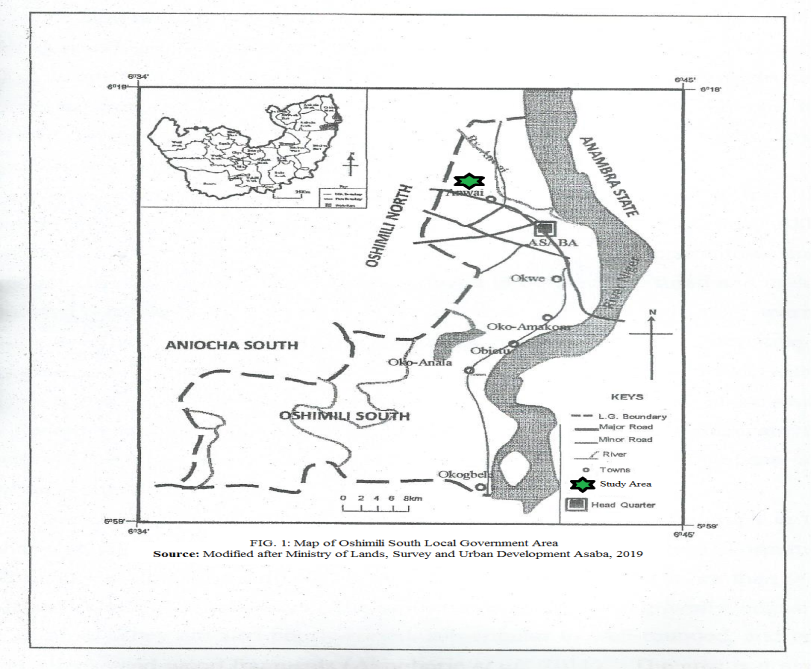
This research took place in Anwai River within Delta State of Nigeria. Anwai is located between latitudes 6015'N and 6020'N and also between longitudes 6023'E and 6006'E. Anwai River is typical of inland fresh water. It flows from Otulu area through Ugbolu into river Niger (Fig. 1). As at the 2016 population estimation it has grown to approximately 60,000 inhabitants. This growth in population led increased desire for cow meat as protein source, which has invariably led to more abattoir waste being generated within the settlement. The area has undulating and gentle slope with a relatively low terrain. (Akpoborie, Nfor, Etobro and Odagwe, 2011). The area is characterized with tropical equatorial climate. The region experiences annual rainfall of about 2000mm, with temperature range of between 310C and 31.50C; and relative humidity between 55% and 90% depending on the hour of the day and season of the year. The vegetation is typical of tropical rainforest and fresh water swamp. As part of the people’s prevailing numerous economic activities, trade in slaughtered cattle take place along the adjoining land areas of Anwai River.
Fig.1
Materials and Methods
This research adopted the experimental design approach. The systematic sampling was applied to collect water samples from two sections of the river being downstream and upstream respectively. The downstream sampling point being the entrance of waste materials from abattoir into river at 5 m distance, while the upstream sampling point is 50 m from the abattoir to serve as control point. Samples collection was from February to July 2020, between 7.am and 8.am on the days animals were butchered in the abattoir, about the time the effluents from the abattoir were already in contact with water from the river. The total samples collected were 24 (2 water samples each month from both upstream and the downstream sections respectively).
Collections of samples were made with clean plastic containers which were thoroughly washed with deionized water before usage. The labeled sample containers were put in ice bag cooler and carried to the laboratory for analysis on pH, temperature, total dissolve solid (TDS), electrical conductivity, nitrate, phosphate, sulphate, magnesium, dissolve oxygen, chloride, sodium, iron, ammonia, calcium, Microbial load, BOD, total hardness, COD, TSS and turbidity.
The water samples were first subjected to laboratory analysis using standard methods. Results from laboratory analysis were first compared with WHO Threshold of 2011, and then statistically analysed using graph, mean, standard deviation, standard error of mean, t-test and linear regression statistics using the SPSS 15.0 version.
Results
Abattoir wastes impact on water qualities in rivers. In this research, water quality in Anwai River was observed to have been affected by effluents from abattoir, thereby changing the water characteristics. This change in properties may have impacted on the components of the ecosystem.
Table 1: Physical and chemical attributes of water in Anwai river and WHO threshold of 2011
S/N
Paramers
Downstream
(Experimental Site)
Upstream
(Control Site)
WHO Threshold
2011
1
Temperature (oC)
29.12
25.64
29.80
2
pH
5.02
6.43
6.5-8.5
3
Electrical Conductivity (us/cm)
112.24
68.45
100
4
Total Dissolved Solid (mg/l)
46.27
28.14
500
5
TSS (mg/l)
27.51
16.76
5.00
6
N Nitrate (mg/l)
2.24
1.02
10
7
Phosphate (mg/l)
2.36
0.91
100
8
Sulphate (mg/l)
1.88
4.21
200
9
Dissolved oxygen (mg/l)
3.02
7.01
5.00
10
Turbidity (NTU)
7.48
12.13
5.00
11
C Chloride (mg/l)
1.23
8.13
250
12
Iron (PPM)
0.42
3.01
0.30
13
Calcium (PPM)
16.20
4.73
75
14
Sodium (PPM)
9.02
6.23
200
15
Magnesium (PPM)
11.26
5.16
0.20
16
BOD (mg/l)
2.36
5.71
3.00
17
Ammonia (mg/l)
4.65
0.88
1.50
18
Potassium (PPM)
8.32
4.01
75
19
Total coliform (count/100)
38.18
22.35
10
Source: Authors’ field work, 2020.
Table 1 presents the physical and chemical attributes of water in Anwai River. At downstream section where waste from abattoir enters into Anwai river, the, electrical conductivity (112.24us/cm), temperature (29.12oC), sodium (9.02ppm), TDS (46.27mg/l), nitrate (2.24mg/l), TSS (27.51mg/l), phosphate (2.36mg/l), calcium (16.20PPM), magnesium (11.26PPM), total coliform (38.18count/100), ammonia (4.65mg/l) and potassium (8.32ppm) were higher. The higher values of concentrations could be due to the waste released into river from the abattoir. While the temperature, TDS, nitrate, phosphate, sodium, calcium and potassium are within WHO threshold limit, the electrical conductivity, TSS, magnesium, total coliform and ammonia are higher than WHO threshold limit.
Similarly, the pH (6.43), sulphate (4.21mg/l), dissolved oxygen (7.01mg/l), turbidity (12.13NTU), chloride (8.13mg/l), BOD (5.71mg/l) and iron (3.01ppm) were higher in upstream sector. The lower values of concentrations could as well be because of the waste released into river from the abattoir. For instance, the lower pH range of water at downstream indicates that acid content of water increased due to discharge of waste from the abattoir into the river. There is observed variation in water qualities between the two sections of the river. Despite the observed variations in quality, concentrations of parameters also varied from the WHO threshold of 2011.
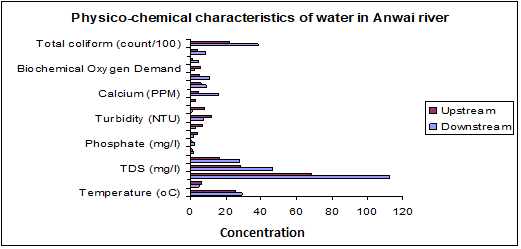
Fig.2: Physico-chemical properties of water in Anwai River
Figure 2 shows that temperature, nitrate, electrical conductivity, phosphate, TDS, TSS, calcium, sodium, magnesium, total coliform, ammonia and potassium were higher in the downstream than upstream section; while the pH, sulphate, dissolved oxygen, turbidity, chloride, BOD and iron were higher in upstream section.. The observed variation could possibly be because of waste from the abattoir into the downstream section of Anwai river. This could be inferred from the observed mean, standard deviation, and standard error mean values of 17.30, 26.65, 6.11; and 10.75, 10.11, 2.32 for downstream and upstream sections respectively (appendix 1).
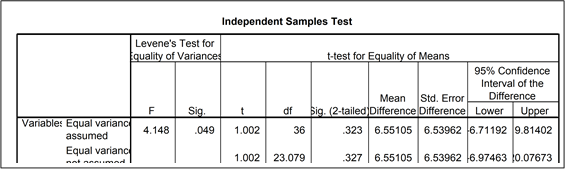
The t-test statistic was used to test the difference in the quality of water between the two sectors of Anwai river. From the results in appendix 2, the t-value is 1.002, F-value is 4.148 and significant value is 0.049; the mean difference of 6.551 is therefore significant. This revealed that discharge from abattoir significantly effeced the quality of water in Anwai river. This implies that the downstream differs from the control (upstream) being suggestive of abattoir discharge impact as a factor.
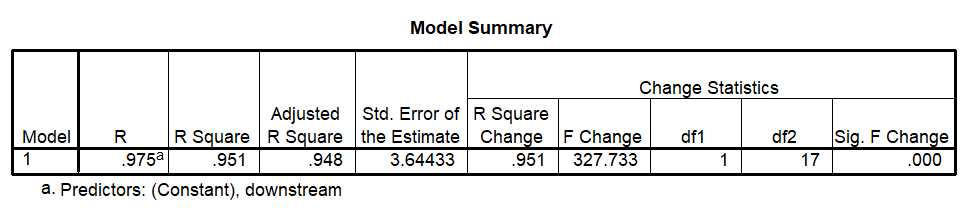
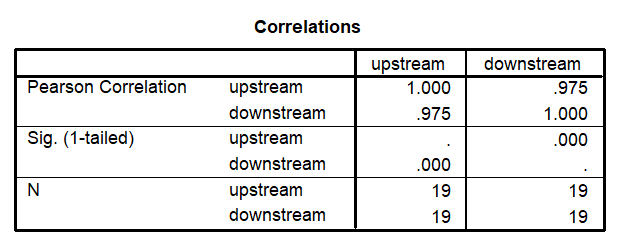
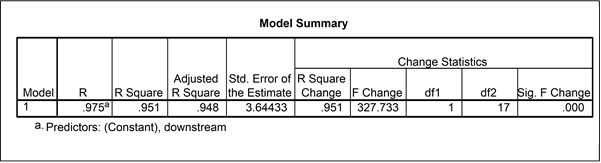
The linear regression statistics was used to test the relationship between abattoir waste and water quality in Anwai river. From the results in appendix 3, the R-value is 0.975, R Square change-value is 0.951, F change-value is 327.733 and significant F change-value is 0.000. The regression statistics is significant at 0.05 confidence level. This revealed that discharge from abattoir significantly impact water quality in Anwai river, by changing the concentration levels of parameters in the water. The correlation values also affirm that abattoir waste has impact on water quality in Anwai River.
Dicussion
Whenever effluents are introduced into bodies of water, they act as foreign bodies, thereby affecting the water quality (Oruonye, 2015). Wastes discharged from abattoir into the Anwai river affect its water quality. This research has shown that water quality in Anwai river has been affected by effluents from abattoir, thereby changing the concentrations of both chemical and physical properties. This change may have affected the major components and attributes of the ecosystem. This finding corroborates the observations reported in a study by Terrumun and Oliver (2015) [1].
At the section where wastes from the abattoir enter into Anwai river, the electrical conductivity, temperature, phosphate, TDS, nitrate, calcium, TSS, sodium, magnesium, ammonia, total coliform and potassium were higher. The higher values may be due to the introduction of waste into the river. This finding corroborates result of findings in a study by Zhang et al., (2015) [17]. While the temperature, TDS, nitrate, calcium, sodium, phosphate and potassium are within WHO threshold limit, the electrical conductivity, TSS, ammonia, total coliform and magnesium are higher than those of WHO threshold limit (WHO, 2011). Concentrations of parameters in water have been observed to be above the limit of WHO threshold in studies by Terrumun and Oliver (2015) [1].
On the other hand, the pH, sulphate, dissolved oxygen, chloride, iron; BOD and turbidity were higher in upstream section. Higher BOD was observed in studies by Elemile et al., (2019). The lower values of parameters within downstream section could as well be because of the waste from abattoir. For instance, the lower pH of water at downstream indicates that acid content of water increased due to discharge of waste from the abattoir into the river.
The observed variations in concentrations of parameters between the two sections of the Anwai River could possibly be because of waste from the abattoir. The test results revealed that water properties within downstream section are affected. This has implications on water quality in Anwai River.
Conclusion and Recomendations
This study has revealed that whenever effluents are introduced into bodies of water, they act as foreign bodies, thereby impacting on the natural quality of water. Abattoir waste discharged into Anwai river has impact on its water quality. In this research, water in Anwai River has been affected by effluents from abattoir, thereby changing the physico-chemical status of the water. This change in properties may have implications on the water ecosystem’s components.
At the downstream sector where abattoir waste enters into Anwai River, the electrical conductivity, nitrate, TDS, sodium, TSS, temperature phosphate, calcium, magnesium, ammonia, total coliform and potassium were higher. The higher concentration of physico-chemical attributes of water within downstream section is probably because of abattoir waste; while the concentrations of parameters in water were observed to be above the limit of WHO threshold. Irrespective of the observed difference in water qualities between the two sections of Anwai River, the observed differences in water quality at both experimental and control sites were not significant.
Since abattoir waste has impact on water quality, the need for environmental management and pollution control is recommended to restore sustainable water quality and ecosystem functions within the river. The essential importance of river Anwai goes beyond the pollution against aquatic lives which can lead to migration and extinction of many species of organisms that inhabit the river ecosystem; The river also play vital role in the supply of water for agricultural production and other domestic use.
Funding: No funding sources
Conflict of interest: None declared
Ethical approval: The study was approved by the Institutional Ethics Committee of Delta State University
References
Kwadzah, Terrumun Kenneth, and Oliver Terna Iorhemen. "Assessment of the impact of abattoir effluent on the water quality of River Kaduna, Nigeria." World Journal of Environmental Engineering 3.3 (2015): 87-94.DOI:10.12691/wjee-3-3-3
World Health Organization. (2011). Guidelines for Drinking-water Quality, 4th ed. Geneva: World Health Organization.
Krantz, D., & Kifferstein, B. (2005). Water Pollution and Society. Accessed from http://www.unich.edu/ngs265/society/waterpollution.html. Retrieved 30th March, 2020.
Naila, U. A Study of Environmental Impacts of Abattoirs on Water Bodies. A Case of Nyabugogo Abattoir Facility in Kigali City, Rwanda. Diss. Msc. Thesis from University of Dar es Salaam, 2008.
Igbinosa, Isoken H., and Ita E. Uwidia. "Effect of abattoir effluents on the physicochemical properties of a receiving watershed in an urban community." Ife Journal of Science 20.2 (2018): 219-228.DOI: 10.4314/ijs.v20i2.2
Mittal, Gauri S. "Treatment of wastewater from abattoirs before land application—a review." Bioresource technology 97.9 (2006): 1119-1135. https://doi.org/10.1016/j.biortech.2004.11.021
Kosamu, I. B. M., J. Mawenda, and H. W. T. Mapoma. "Water quality changes due to abattoir effluent: A case on Mchesa Stream in Blantyre, Malawi." African Journal of Environmental Science and Technology 5.8 (2011): 589-594. DOI:10.5897/AJEST11.042
Oruonye, E. D. "Challenges of abattoir waste management in Jalingo Metropolis, Nigeria." International Journal of research in Geography 1.2 (2015): 22-31.
Akan, Joseph C., Fanna I. Abdulrahman, and Emmanuel Yusuf. "Physical and chemical parameters in abattoir wastewater sample, Maiduguri Metropolis, Nigeria." The Pacific Journal of Science and Technology 11.1 (2010): 640-648. https://citeseerx.ist.psu.edu/document?repid=rep1&type=pdf&doi=421a30cf40db8f8467e1b43ddacdae73a7e3e155
Odo, J. I. "Impact of Wurukum abattoir effluent on river Benue Nigeria, using macroinvertebrates as bioindicators." International Journal of Aquaculture 6.22 (2016). (doi: 10.5376/ija.2016.06.0022)
Elemile, Olugbenga Oluseun, et al. "Assessment of the impact of abattoir effluent on the quality of groundwater in a residential area of Omu-Aran, Nigeria." Environmental Sciences Europe 31 (2019): 1-10. https://doi.org/10.1186/s12302-019-0201-5
Tekenah, W. E., P. I. Agi, and B. B. Babatunde. "Analysis of surface water pollution from abattoirs and the interrelationship between physico-chemical properties (A case study of the New Calabar River)." Journal of Environmental Science, Toxicology and Food Technology 8.5 (2014): 10-18. https://www.academia.edu/download/49003122/Analysis_of_surface_water_pollution_from_abattoirs_and_the_interrelationship_between_physico-chemical_parameters_1.pdf
Nafarnda, W. D., et al. "Bacteriological quality of abattoir effluents discharged into water bodies in Abuja, Nigeria." International Scholarly Research Notices 2012 (2012). https://doi.org/10.5402/2012/515689
Muhirwa, Déogratias, et al. "Characterization of wastewater from an abattoir in Rwanda and the impact on downstream water quality." (2010). https://repository.udsm.ac.tz/items/5c76de37-911c-417f-a4b0-2ee0a4df5be1
Ogbomida, Emmanuel Temiotan, Bawo Kubeyinje, and Lawrence Ikechukwu Ezemonye. "Evaluation of bacterial profile and biodegradation potential of abattoir wastewater." African Journal of Environmental Science and Technology 10.2 (2016): 50-57.DOI: 10.5897/AJEST2015.1945
Osibanjo, O., and G. U. Adie. "Impact of effluent from Bodija abattoir on the physicochemical parameters of Oshunkaye stream in Ibadan City, Nigeria." African Journal of Biotechnology 6.15 (2007). DOI: 10.5897/AJB2007.000-2266
Zhang, Xiaohong, Yiyun Wu, and Baojing Gu. "Urban rivers as hotspots of regional nitrogen pollution." Environmental Pollution 205 (2015): 139-144. https://doi.org/10.1016/j.envpol.2015.05.031
Appendices:
Appendix 1: Descriptive statistics for the differences in the quality of water between the downstream and upstream sectors of Anwai River.
Downstream: 1
Upstream: 2
Appendix 2 Table 4.2: Independent samples test results for the water quality in Anwai river at the downstream and upstream sections.
Appendix 3: Regression statistics for the impact of abattoir waste on the quality of water in Anwai River
License
Creative Commons Attribution-NonCommercial-NoDerivatives 4.0 International License
All papers should be submitted electronically. All submitted manuscripts must be original work that is not under submission at another journal or under consideration for publication in another form, such as a monograph or chapter of a book. Authors of submitted papers are obligated not to submit their paper for publication elsewhere until an editorial decision is rendered on their submission. Further, authors of accepted papers are prohibited from publishing the results in other publications that appear before the paper is published in the Journal unless they receive approval for doing so from the Editor-In-Chief.
Himalayan Journal of Agriculture open access articles are licensed under a Creative Commons Attribution-Share A like 4.0 International License. This license lets the audience to give appropriate credit, provide a link to the license, and indicate if changes were made and if they remix, transform, or build upon the material, they must distribute contributions under the same license as the original.
Advertisement
Recommended Articles
Research Article
Mating behaviour of Cavariella aegopodii
Nidhi Dhatwalia
Published: 19/07/2024
Download PDF
Cite
x
APA
Dhatwalia, N. (2024). Mating behaviour of Cavariella aegopodii. Himalayan Journal of Agriculture, 5(1), 1-7.
MLA
Dhatwalia, Nidhi. "Mating behaviour of Cavariella aegopodii." Himalayan Journal of Agriculture 5.1 (2024): 1-7.
Chicago
Dhatwalia, Nidhi. "Mating behaviour of Cavariella aegopodii." Himalayan Journal of Agriculture 5, no. 1 (2024): 1-7.
Harvard
Dhatwalia, N. (2024) 'Mating behaviour of Cavariella aegopodii' Himalayan Journal of Agriculture 5(1), pp. 1-7.
Vancouver
Dhatwalia N. Mating behaviour of Cavariella aegopodii. Himalayan Journal of Agriculture. 2024 Jan;5(1):1-7.
Download PDF
Research Article
The Role of Indigenous Microbes and Earthworm in the Bioconversion of Dairy Wastewater Solids into Organic Fertilizer
Marlina ,
...
N. Meynadhea
Published: 17/01/2024
Download PDF
Cite
x
APA
None, M., Rahayu, N. A., Badruzzaman, D. Z., Hidayati, Y., Harlia, E., Kurniawan, E. & Meynadhea, N. (2024). The Role of Indigenous Microbes and Earthworm in the Bioconversion of Dairy Wastewater Solids into Organic Fertilizer. Himalayan Journal of Agriculture, 5(1), 1-7.
MLA
None, Marlina, et al. "The Role of Indigenous Microbes and Earthworm in the Bioconversion of Dairy Wastewater Solids into Organic Fertilizer." Himalayan Journal of Agriculture 5.1 (2024): 1-7.
Chicago
None, Marlina, N. A. Rahayu, D. Z. Badruzzaman, Y.A. Hidayati, E. Harlia, E. Kurniawan and N. Meynadhea. "The Role of Indigenous Microbes and Earthworm in the Bioconversion of Dairy Wastewater Solids into Organic Fertilizer." Himalayan Journal of Agriculture 5, no. 1 (2024): 1-7.
Harvard
None, M., Rahayu, N. A., Badruzzaman, D. Z., Hidayati, Y., Harlia, E., Kurniawan, E. and Meynadhea, N. (2024) 'The Role of Indigenous Microbes and Earthworm in the Bioconversion of Dairy Wastewater Solids into Organic Fertilizer' Himalayan Journal of Agriculture 5(1), pp. 1-7.
Vancouver
Marlina M, Rahayu NA, Badruzzaman DZ, Hidayati Y, Harlia E, Kurniawan E, Meynadhea N. The Role of Indigenous Microbes and Earthworm in the Bioconversion of Dairy Wastewater Solids into Organic Fertilizer. Himalayan Journal of Agriculture. 2024 Jan;5(1):1-7.
Download PDF
Research Article
The Effect of Green Marketing Mix on Purchasing Decisions by Greenly Salad Consumers in Surabaya
Almira Parahita Soekarno,
...
Sigit Dwi Nugroho
Published: 30/01/2023
Download PDF
Cite
x
APA
Soekarno, A. P., Hendrarini, H. & Nugroho, S. D. (2023). The Effect of Green Marketing Mix on Purchasing Decisions by Greenly Salad Consumers in Surabaya. Himalayan Journal of Agriculture, 4(1), 1-7.
MLA
Soekarno, Almira P., Hamidah Hendrarini and Sigit D. Nugroho. "The Effect of Green Marketing Mix on Purchasing Decisions by Greenly Salad Consumers in Surabaya." Himalayan Journal of Agriculture 4.1 (2023): 1-7.
Chicago
Soekarno, Almira P., Hamidah Hendrarini and Sigit D. Nugroho. "The Effect of Green Marketing Mix on Purchasing Decisions by Greenly Salad Consumers in Surabaya." Himalayan Journal of Agriculture 4, no. 1 (2023): 1-7.
Harvard
Soekarno, A. P., Hendrarini, H. and Nugroho, S. D. (2023) 'The Effect of Green Marketing Mix on Purchasing Decisions by Greenly Salad Consumers in Surabaya' Himalayan Journal of Agriculture 4(1), pp. 1-7.
Vancouver
Soekarno AP, Hendrarini H, Nugroho SD. The Effect of Green Marketing Mix on Purchasing Decisions by Greenly Salad Consumers in Surabaya. Himalayan Journal of Agriculture. 2023 Jan;4(1):1-7.
Download PDF
Review Article
Registration of Gute-19 (Late Set) Soybean Varieties (Late Maturity Class)
Adane Arega,
Alemayeh Dabessa
Published: 10/10/2020
Download PDF
Cite
x
APA
Arega, A. & Dabessa, A. (2020). Registration of Gute-19 (Late Set) Soybean Varieties (Late Maturity Class). Himalayan Journal of Agriculture, 1(1), 1-4.
MLA
Arega, Adane and Alemayeh Dabessa. "Registration of Gute-19 (Late Set) Soybean Varieties (Late Maturity Class)." Himalayan Journal of Agriculture 1.1 (2020): 1-4.
Chicago
Arega, Adane and Alemayeh Dabessa. "Registration of Gute-19 (Late Set) Soybean Varieties (Late Maturity Class)." Himalayan Journal of Agriculture 1, no. 1 (2020): 1-4.
Harvard
Arega, A. and Dabessa, A. (2020) 'Registration of Gute-19 (Late Set) Soybean Varieties (Late Maturity Class)' Himalayan Journal of Agriculture 1(1), pp. 1-4.
Vancouver
Arega A, Dabessa A. Registration of Gute-19 (Late Set) Soybean Varieties (Late Maturity Class). Himalayan Journal of Agriculture. 2020 Jan;1(1):1-4.
Chimeri, U. & Emmanuel, N. O. (2021). Abattoir Waste Discharge and Water Quality in Anwai River, Nigeria. Himalayan Journal of Agriculture, 2(1), 1-7.
MLA
Chimeri, Ukoji and Ndakara O. Emmanuel. "Abattoir Waste Discharge and Water Quality in Anwai River, Nigeria." Himalayan Journal of Agriculture 2.1 (2021): 1-7.
Chicago
Chimeri, Ukoji and Ndakara O. Emmanuel. "Abattoir Waste Discharge and Water Quality in Anwai River, Nigeria." Himalayan Journal of Agriculture 2, no. 1 (2021): 1-7.
Harvard
Chimeri, U. and Emmanuel, N. O. (2021) 'Abattoir Waste Discharge and Water Quality in Anwai River, Nigeria' Himalayan Journal of Agriculture 2(1), pp. 1-7.
Vancouver
Chimeri U, Emmanuel NO. Abattoir Waste Discharge and Water Quality in Anwai River, Nigeria. Himalayan Journal of Agriculture. 2021 Jan;2(1):1-7.


 Download PDF
 Download XML