Effect of Liquid Organic Fertilizer on Yield of Tomato (Solanum Lycopersicum L) Tymoti Variety
Muhammad Sholehkhuddin
1
,
Sutini
1
,
Didik Utomo Pribadi
1
1
Departement of Agro-technology, Faculty of Agriculture, UPN “Veteran” Jawa Timur, Jl.Raya Rungkut Madya Gunung Anyar Surabaya 60294 East Java Indonesia
Tomato (Solanum lycopersicum L.) variety tymoti is a hybrid tomato that is well adapted to the lowlands. Tomato productivity is still low when compared to the optimal productivity that can be achieved. The need for effort to add nutrient through the application of Nasa liquid organic fertilizer. The purpose of the study was to determine the effect of concentration of Nasa liquid organic fertilizer on the growth and yield of tomato plant of tymoti variety and to determine the most effective concentration. The research was conducted in a green house in Brejel Lor Village, Dawarblandong Districk, Mojokerto Regency, East Java in January 2023-April 2023. This research is a single factor experiment arranged using a Completely Randomized Design (CRD). This study is a single factor experiment arranged using a Completely Randomized Design (CRD). Nasa liquid organic fertilizer concentration treatment with 6 treatment levels repeated 4 times. The single factor used consisted of 6 levels, without Nasa liquid organic fertilizer (control) (P0), 1 mL/liter (P1), 2 mL/liter (P2), 3 mL/liter (P3), 4 mL/liter (P4), 5 mL/liter (P5). The Result showed that the threatment of Nasa liquid organic fertilizer concentration had a significant effect on the parameters of, age of flower appearance, fruitset percentage, total flower number, total fruit number, total fruit weight and analyzing of sugar content. The most optimal concentration was in the threatment of 3 mL/liter (P3).
Keywords
Tomato Plant
Concentration
Nasa Liquid Organic Fertilizer
INTRODUCTION
Tomato plants are popular horticultural crops in the world. Tomatoes have very many benefits, because they contain vitamins and minerals that are needed by the human body, the demand for market needs of tomatoes from year to year is increasing, so the need for efforts to improve the quality and quantity of tomatoes. Tymoti variety tomatoes are hybrid tomatoes originating from PT. East West Seed Indonesia is very well adapted to lowlands with an altitude of 60-350 Mean Sea Level (MASL). According to Daryanto et al. [1], the tymoti F1 variety has resistance to hot climates and viruses gemini disease. Tymoti tomato varieties have a short harvest life of 55 days after planting. Tomato productivity in East Java Province, Indonesia in 2017-2019 experienced fluctuating growth, in 2017 tomato productivity was 15.63 tons/hectare, in 2018 it was 16.40 tons/hectare and in 2019 it was 16.05 tons/hectare. The productivity of tomatoes is still low when compared to the optimal productivity of tomatoes which can reach 50 tons/hectare, so it is necessary to increase the yield of tomato plants, through fertilizing Nasa liquid organic fertilizer.
The liquid organic fertilizer used is Nasa liquid organic fertilizer produced by PT. Natural Nusantara (Nasa). Nasa liquid organic fertilizer applied to plants should pay attention to the concentration applied. According to Juhaeti and Lestari [2], the concentration of liquid organic fertilizer applied to plants is higher, the more nutrients received. However, if the application of liquid organic fertilizer with excessive concentration, it will cause symptoms of wilt in plants. Nasa liquid organic fertilizer contains macro nutrients and micro nutrients as well as growth regulators that can stimulate growth, flowering and fruiting and increase plant resistance to pests and diseases. According to Romansyah et al. [3] liquid organic fertilizer has the advantage of being able to quickly overcome nutrient deficiencies, being able to provide nutrients quickly and without problems in leaching nutrients and there are microbes that are good for plant growth.
MATERIALS AND METHODS
The research was conducted at Green House located in Brejel Lor Village, Dawarblandong District, Mojokerto Regency with an altitude of ±0.75 m above sea level with air temperatures ranging from 23℃-32℃. The research implementation time starts from January to April 2023. The tools and materials to be used are polybags measuring 40x40 cm, handsprayer, ruler, sieve, pruning scissors, drills, hoes, digital scales, ajir, raffia rope, labels, Tymoti F1 variety tomato seeds, Nasa liquid organic fertilizer, compost, Antracol fungicide, Urea fertilizer, SP-36 fertilizer, KCl fertilizer, Curacron 500 EC pesticide and Water. This study is an experiment with a single factor prepared using a Complete Randomized Design (RAL), namely the concentration treatment of Nasa liquid organic fertilizer with 6 treatment levels consisting of control treatment P0, 1 mL/liter 1, 2 mL/liter P2, 3 mL/liter P3, 4 mL/liter P4 and 5 mL/liter P5. The treatment was repeated 4 times, resulting in 24 experimental units. Each experimental unit consists of 3 polybags, each of which contains one tomato plant, so that there are a total of 72 sample plants.
The parameters observed are the age of flower emergence, the percentage of fruitset, the total number of flowers, the total number of fruits, the total fruit weight and the analysis of sugar content. The data were analyzed using a variety (ANOVA) based on a non-factorial Complete Randomized Design (CRD). If the treatment has a real effect, a follow-up test is carried out using the Honest Real Difference (BNJ) test with a level of 5%.
RESULTS
Age of Appearance of Flowers
The results of the variety analysis showed that the concentration treatment of Nasa liquid organic fertilizer had a very real effect on the age of the appearance of flowers of tymoti variety tomato plants.
Table 1 Showing a BNJ yield of 5%, the treatment of Nasa liquid organic fertilizer concentration of 3mL/liter P3 resulted in the fastest flower emergence age on average 19.92 hst, while the control treatment P0 resulted in the longest flower emergence age with an average 23.42 hst. Nasa liquid organic fertilizer can trigger the intake of nutrients needed by plants, especially the content of phosphorus elements that can stimulate plant development, especially the age of flowers. According to Afianto et al. [4], the factor that affects the ability of plants to flower is the availability of nutrients related to energy supply for flower development. This is also supported by Mahulete [5], said that element phosphorus is very influential on the total number of flowers, the age of the first harvest and production per plant.
Total Interest Amount
The results of the variety analysis showed that the concentration treatment of Nasa liquid organic fertilizer had a very real effect on the total number of flowers of tymoti variety tomato plants.
Table 2 the 5% BNJ result showed that the treatment of Nasa liquid organic fertilizer concentration of 4 mL/liter P4 resulted in the highest total number of flowers on average 51.58 florets and was significantly different from the control treatment P0 with the average number of flowers 46.33 florets, but did not differ significantly in the treatment of Nasa liquid organic fertilizer concentration of 3 mL/liter P3 and the treatment of Nasa liquid organic fertilizer concentration of 5 mL/liter P5. Nasa liquid organic fertilizer has phosphorus nutrients that stimulate flowering. According to Sari et al. [6], the flowering process in tomato plants is influenced by the availability of phosphorus nutrients in plants. This is in accordance with statement Wibowo [7], phosphorus nutrients are able to improve the structure of plant roots, which affects the ability of roots to take nutrients optimally.
Fruitset Percentage
The results of the variety analysis showed that the concentration treatment of Nasa liquid organic fertilizer had a significant effect on the percentage of fruitset of tymoti variety tomato plants.
Table 3. BNJ yield 5% treatment concentration of Nasa liquid organic fertilizer 3mL/liter P3 resulted in the highest percentage of fruitset with an average 66.27% and in real contrast to the control treatment P0 resulted in the lowest percentage of fruitset with an average 58.30%. Nasa liquid organic fertilizer contains potassium and phosphorus that increase the number of flowers and prevent flower loss. According to Sumaji [8], potassium plays a role in preventing flower loss and increasing fruit weight and quality, while the availability of phosphorus also affects flower formation and fruit ripening.
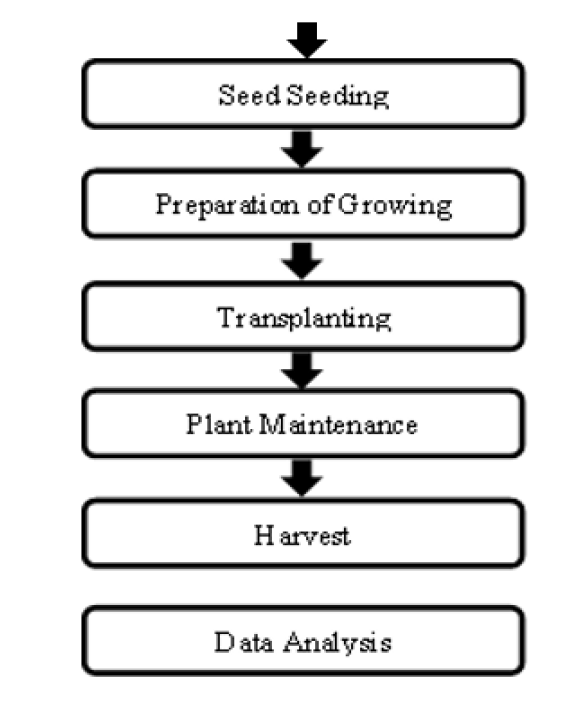
Figure 1: Stages of Research
Table 1: The Average Age of Flowers Appears
Treatment
Age of Appearance of Flowers
Nasa Liquid organic fertilizer concentration
Control (P0)
23,42 a
POC Nasa 1 mL/liter (P1)
22,83 ab
POC Nasa 2 mL/liter (P2)
21,83 ab
POC Nasa 3 mL/liter (P3)
19,92 b
POC Nasa 4 mL/liter (P4)
20,33 b
POC Nasa 5 mL/liter (P5)
20,25 b
BNJ 5%
2,51
Remarks: Numbers accompanied by the same letter show no real difference (BNJ 5%)
Table 2: Average Total Interest Amount
Threatment
Total Number of Flowers (Florets)
Nasa Liquid organic fertilizer concentration
Kontrol (P0)
46,33 a
POC Nasa 1 mL/liter (P1)
47,67 ab
POC Nasa 2 mL/liter (P2)
47,92 ab
POC Nasa 3 mL/liter (P3)
51,50 b
POC Nasa 4 mL/liter (P4)
51,58 b
POC Nasa 5 mL/liter (P5)
51,00 b
BNJ 5%
3,63
Numbers accompanied by the same letter show no real difference (BNJ 5%)
Table 3: Average Fruitset Percentage
Treatment
Fruitset (%)
Nasa Liquid organic fertilizer concentration
control (P0)
58.30 a
POC Nasa 1 mL/liter (P1)
59.96 a
POC Nasa 2 mL/liter (P2)
64.38 ab
POC Nasa 3 mL/liter (P3)
66.27 b
POC Nasa 4 mL/liter (P4)
63.38 ab
POC Nasa 5 mL/liter (P5)
61.47 ab
BNJ 5%
6,27
Numbers accompanied by the same letter show no real difference (BNJ 5%)
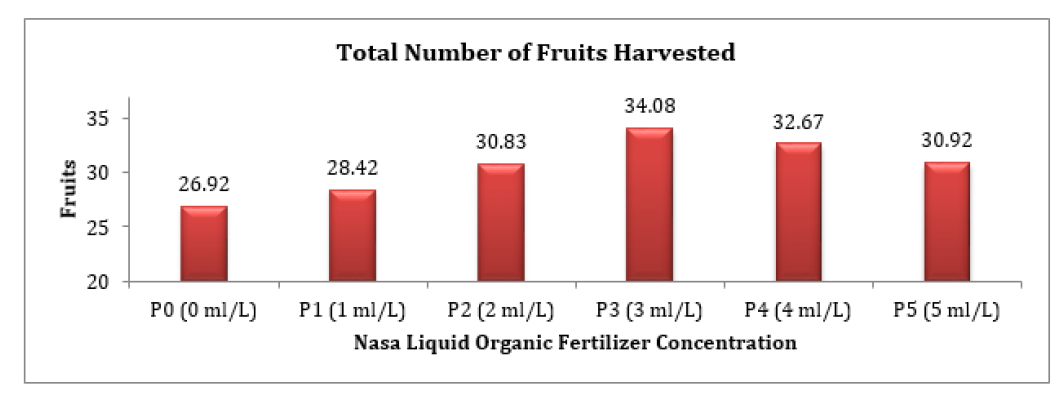
Figure 2: Average Total Number of Fruits Harvested
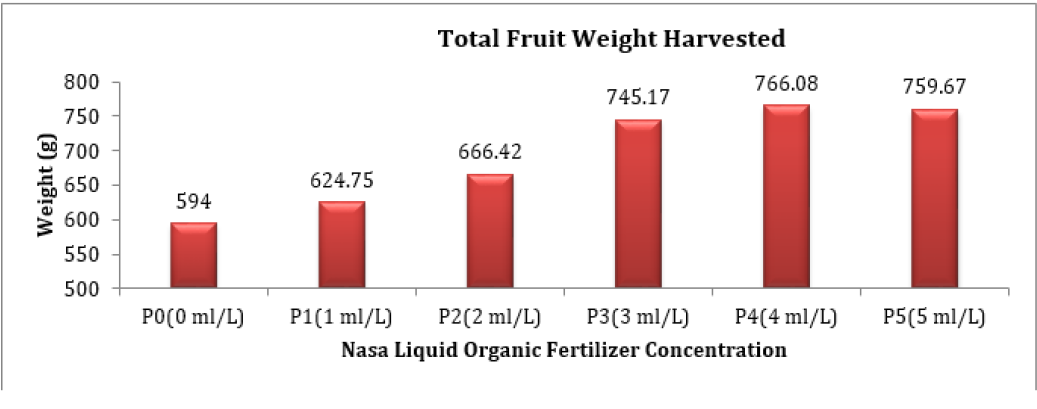
Figure 3: Average Fruit Weight Total Harvest
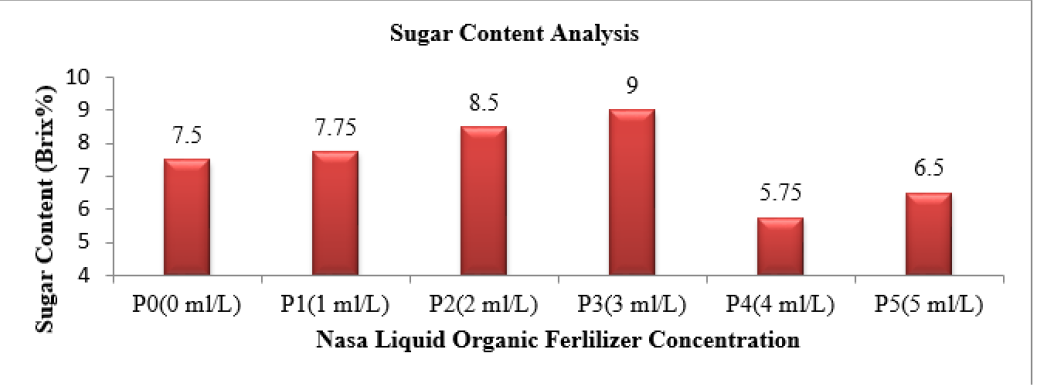
Figure 4: Average Sugar Content Analisis
Total Number of Fruits Harvested
The results of the variety analysis showed that the concentration treatment of Nasa liquid organic fertilizer had a very real effect on the total number of fruits harvested by tymoti variety tomatoes.
Total Fruit Weight Harvest
The results of the variety analysis showed that the concentration treatment of Nasa liquid organic fertilizer had a very real effect on the total fruit weight of the harvest of tymoti variety tomato plants.
Figure 3 showed a BNJ yield of 5% Nasa liquid organic fertilizer concentration treatment of 4 mL/liter P4 produced the highest total harvest fruit weight with an average 745.17 g and was significantly different from the control treatment P0 which only produced the lowest total harvest fruit weight with an average 594.00 g, but did not differ significantly from the treatment of liquid organic fertilizer concentration P3 with an average 745.17 g and P5 with an average 759.67 g. The results of weighing fruit weights show that the application of Nasa liquid organic fertilizer treatment can increase the total fruit weight of plants, one of the main factors in applying Nasa liquid organic fertilizer is the right concentration. According to Juanda et al, [9], said that Nasa POC is a liquid organic fertilizer which if its use is done with the right concentration, it can increase the process of nutrient absorption optimally, so that weight production for crop yields increases. This is in accordance with Sulichantini's statement [10], plants produce maximum production results if the nutrients provided are in a balanced amount and in accordance with plant needs. The availability of sufficient nutrients can increase production, especially the weight of fruits per plant.
Sugar Content Analysis
The results of the variety analysis showed that the concentration treatment of Nasa liquid organic fertilizer had a very real effect on the analysis of the sugar content of the fruit of tymoti variety tomato plants.
Figure 4 showed a BNJ yield of 5% Nasa liquid organic fertilizer concentration treatment of 3 mL/liter P3 produced the highest tomato sugar content on average 9.00 brix% and was significantly different from the Nasa liquid organic fertilizer concentration treatment of 4 mL/liter P4 produced the lowest tomato fruit sugar content on average 5.75 brix%, but not significantly different from the treatment of Nasa liquid organic fertilizer concentration of 2 mL/liter 8.50 brix%. Nasa liquid organic fertilizer contains element N, if too many elements cause low tomato sugar content, in Nasa liquid organic fertilizer treatment 4 mL/liter P4 produces the lowest sugar content, but shows the highest total fruit weight.
According to Tejada et al. [11], the formation of sugar content is influenced by the content of N elements absorbed by plants from the growing media, if the absorption of available N elements is higher, it will reduce sugar levels, because it can affect the synthesis of sugar related to the hydrolysis of flour into sugar.
CONCLUSION
The effect of organic fertilizer concentration treatment look for Nasa has a real effect on the results of the age parameters of flower appearance, fruitset percentage, total number of flowers, total number of fruits, total fruit weight and sugar content analysis. The concentration of Nasa liquid organic fertilizer 3 mL/liter P3 produces the age of flower emergence, the percentage of fruitsets, the number of total fruits harvested and the most optimal sugar content analysis, while the concentration of organic fertilizer search Nasa 4 mL/liter P4 produces the total number of flowers and the highest total harvest fruit weight.
Acknowledgment
The author thank to my lecturer Dr. Dra.Sutini, M, Pd and Ir.Didik Utomo Pribadi MP, besides that the author also thanked his fellow students of the UPN "Veteran" East Java Faculty of Agriculture who had helped in this research
REFERENCES
Daryanto, A. et al. "Penampilan Karakter Hortikultura Beberapa Varietas Tomat Hibrida di Rumah Kaca Dataran Rendah." Jurnal Agronomi Indonesia (Indonesian Journal of Agronomy), vol. 46, no. 2, 2020, pp. 150–153.
Juhaeti, T. and P. Lestari. "Pertumbuhan, Produksi dan Potensi Gizi Terong Asal Enggano Pada Berbagai Kombinasi Perlakuan Pemupukan." Jurnal Ilmu-Ilmu Hayati, vol. 15, no. 3, 2017, pp. 303–313.
Romansyah, E. et al. "Pembuatan Efektif Mikro Organisme Lokal (MOL) Em-Lestari Berbasis Limbah Buah-Buahan Lokal di Desa Guntur Macan Kecamatan Gunungsari." Jurnal Sinergi: Pengabdian Ummat, vol. 1, no. 1, 2018, pp. 17–21.
Afianto, A.K. et al. "Pengaruh Konsentrasi dan Interval Waktu Pemberian Pupuk Organik Cair Terhadap Pertumbuhan dan Hasil Tanaman Tomat (Lycopersicum escelentum L.)." Jurnal Plumula, vol. 8, no. 2, 2020, pp. 67–80.
Mahulete, A. "Pengaruh Konsentrasi Pupuk Organik Cair dan Pemangkasan Tunas Air/Wiwilan terhadap Pertumbuhan dan Produksi Tanaman Tomat (Lycopersicum escelentum Mill.)." Jurnal Budidaya Pertanian, vol. 10, no. 2, 2014, pp. 88–92.
Sari, K.A. Respon Pertumbuhan, Hasil dan Kualitas Hasil Tanaman Tomat (Solanum lycopersicum L.) terhadap Vermikompos dan Pupuk Sintetik. Universitas Bengkulu, 2016.
Wibowo, N.I. "Perlakuan Media Tanam dengan Pupuk Organik pada Tanaman Tomat (Solanum Lycopersicum L.)." Jurnal Agroscience, vol. 6, no. 1, 2018, pp. 48–49.
Sumaji, I. "Pengaruh Komposisi Media Tanam dan Pemberian Pupuk NPK Mutriara terhadap Pertumbuhan dan Produksi Tanaman Tomat Ceri (Lycopersicum escelentum Mill.)." Jurnal Ilmiah Mahasiswa Pertanian, vol. 2, no. 7, 2020, pp. 37–50.
Juanda, H., T. Nugrahini and Mahdalena. "Pengaruh Pemberian Pupuk Organik Cair Nasa dan Kompos terhadap Pertumbuhan Tanaman Kenaf (Hibiscus Canabinus L.)." Jurnal Agrifarm: Jurnal Ilmu Pertanian, vol. 7, no. 1, 2018, pp. 6–9.
Sulichantini, E.D. "Respon Pertumbuhan dan Hasil Dua Varietas Tomat Terhadap Pemberian Pupuk Organik Cair Super Aci." Jurnal Agro, vol. 40, no. 2, 2015, pp. 24–28.
Tejada, M. et al. "Effect of Different Green Manures on Soil Biological Properties and Maize Yield." Bioresource Technology, vol. 99, no. 6, 2008, pp. 1758–1767.
None
License
Creative Commons Attribution-NonCommercial-NoDerivatives 4.0 International License
All papers should be submitted electronically. All submitted manuscripts must be original work that is not under submission at another journal or under consideration for publication in another form, such as a monograph or chapter of a book. Authors of submitted papers are obligated not to submit their paper for publication elsewhere until an editorial decision is rendered on their submission. Further, authors of accepted papers are prohibited from publishing the results in other publications that appear before the paper is published in the Journal unless they receive approval for doing so from the Editor-In-Chief.
Himalayan Journal of Agriculture open access articles are licensed under a Creative Commons Attribution-Share A like 4.0 International License. This license lets the audience to give appropriate credit, provide a link to the license, and indicate if changes were made and if they remix, transform, or build upon the material, they must distribute contributions under the same license as the original.
Advertisement
Recommended Articles
Research Article
Mating behaviour of Cavariella aegopodii
Nidhi Dhatwalia
Published: 19/07/2024
Download PDF
Cite
x
APA
Dhatwalia, N. (2024). Mating behaviour of Cavariella aegopodii. Himalayan Journal of Agriculture, 5(1), 1-7.
MLA
Dhatwalia, Nidhi. "Mating behaviour of Cavariella aegopodii." Himalayan Journal of Agriculture 5.1 (2024): 1-7.
Chicago
Dhatwalia, Nidhi. "Mating behaviour of Cavariella aegopodii." Himalayan Journal of Agriculture 5, no. 1 (2024): 1-7.
Harvard
Dhatwalia, N. (2024) 'Mating behaviour of Cavariella aegopodii' Himalayan Journal of Agriculture 5(1), pp. 1-7.
Vancouver
Dhatwalia N. Mating behaviour of Cavariella aegopodii. Himalayan Journal of Agriculture. 2024 Jan;5(1):1-7.
Download PDF
Research Article
The Role of Indigenous Microbes and Earthworm in the Bioconversion of Dairy Wastewater Solids into Organic Fertilizer
Marlina ,
...
N. Meynadhea
Published: 17/01/2024
Download PDF
Cite
x
APA
None, M., Rahayu, N. A., Badruzzaman, D. Z., Hidayati, Y., Harlia, E., Kurniawan, E. & Meynadhea, N. (2024). The Role of Indigenous Microbes and Earthworm in the Bioconversion of Dairy Wastewater Solids into Organic Fertilizer. Himalayan Journal of Agriculture, 5(1), 1-7.
MLA
None, Marlina, et al. "The Role of Indigenous Microbes and Earthworm in the Bioconversion of Dairy Wastewater Solids into Organic Fertilizer." Himalayan Journal of Agriculture 5.1 (2024): 1-7.
Chicago
None, Marlina, N. A. Rahayu, D. Z. Badruzzaman, Y.A. Hidayati, E. Harlia, E. Kurniawan and N. Meynadhea. "The Role of Indigenous Microbes and Earthworm in the Bioconversion of Dairy Wastewater Solids into Organic Fertilizer." Himalayan Journal of Agriculture 5, no. 1 (2024): 1-7.
Harvard
None, M., Rahayu, N. A., Badruzzaman, D. Z., Hidayati, Y., Harlia, E., Kurniawan, E. and Meynadhea, N. (2024) 'The Role of Indigenous Microbes and Earthworm in the Bioconversion of Dairy Wastewater Solids into Organic Fertilizer' Himalayan Journal of Agriculture 5(1), pp. 1-7.
Vancouver
Marlina M, Rahayu NA, Badruzzaman DZ, Hidayati Y, Harlia E, Kurniawan E, Meynadhea N. The Role of Indigenous Microbes and Earthworm in the Bioconversion of Dairy Wastewater Solids into Organic Fertilizer. Himalayan Journal of Agriculture. 2024 Jan;5(1):1-7.
Download PDF
Research Article
The Effect of Green Marketing Mix on Purchasing Decisions by Greenly Salad Consumers in Surabaya
Almira Parahita Soekarno,
...
Sigit Dwi Nugroho
Published: 30/01/2023
Download PDF
Cite
x
APA
Soekarno, A. P., Hendrarini, H. & Nugroho, S. D. (2023). The Effect of Green Marketing Mix on Purchasing Decisions by Greenly Salad Consumers in Surabaya. Himalayan Journal of Agriculture, 4(1), 1-7.
MLA
Soekarno, Almira P., Hamidah Hendrarini and Sigit D. Nugroho. "The Effect of Green Marketing Mix on Purchasing Decisions by Greenly Salad Consumers in Surabaya." Himalayan Journal of Agriculture 4.1 (2023): 1-7.
Chicago
Soekarno, Almira P., Hamidah Hendrarini and Sigit D. Nugroho. "The Effect of Green Marketing Mix on Purchasing Decisions by Greenly Salad Consumers in Surabaya." Himalayan Journal of Agriculture 4, no. 1 (2023): 1-7.
Harvard
Soekarno, A. P., Hendrarini, H. and Nugroho, S. D. (2023) 'The Effect of Green Marketing Mix on Purchasing Decisions by Greenly Salad Consumers in Surabaya' Himalayan Journal of Agriculture 4(1), pp. 1-7.
Vancouver
Soekarno AP, Hendrarini H, Nugroho SD. The Effect of Green Marketing Mix on Purchasing Decisions by Greenly Salad Consumers in Surabaya. Himalayan Journal of Agriculture. 2023 Jan;4(1):1-7.
Download PDF
Review Article
Registration of Gute-19 (Late Set) Soybean Varieties (Late Maturity Class)
Adane Arega,
Alemayeh Dabessa
Published: 10/10/2020
Download PDF
Cite
x
APA
Arega, A. & Dabessa, A. (2020). Registration of Gute-19 (Late Set) Soybean Varieties (Late Maturity Class). Himalayan Journal of Agriculture, 1(1), 1-4.
MLA
Arega, Adane and Alemayeh Dabessa. "Registration of Gute-19 (Late Set) Soybean Varieties (Late Maturity Class)." Himalayan Journal of Agriculture 1.1 (2020): 1-4.
Chicago
Arega, Adane and Alemayeh Dabessa. "Registration of Gute-19 (Late Set) Soybean Varieties (Late Maturity Class)." Himalayan Journal of Agriculture 1, no. 1 (2020): 1-4.
Harvard
Arega, A. and Dabessa, A. (2020) 'Registration of Gute-19 (Late Set) Soybean Varieties (Late Maturity Class)' Himalayan Journal of Agriculture 1(1), pp. 1-4.
Vancouver
Arega A, Dabessa A. Registration of Gute-19 (Late Set) Soybean Varieties (Late Maturity Class). Himalayan Journal of Agriculture. 2020 Jan;1(1):1-4.
Sholehkhuddin, M., None, S. & Pribadi, D. U. (2023). Effect of Liquid Organic Fertilizer on Yield of Tomato (Solanum Lycopersicum L) Tymoti Variety. Himalayan Journal of Agriculture, 4(2), 1-4.
MLA
Sholehkhuddin, Muhammad, Sutini and Didik U. Pribadi. "Effect of Liquid Organic Fertilizer on Yield of Tomato (Solanum Lycopersicum L) Tymoti Variety." Himalayan Journal of Agriculture 4.2 (2023): 1-4.
Chicago
Sholehkhuddin, Muhammad, Sutini and Didik U. Pribadi. "Effect of Liquid Organic Fertilizer on Yield of Tomato (Solanum Lycopersicum L) Tymoti Variety." Himalayan Journal of Agriculture 4, no. 2 (2023): 1-4.
Harvard
Sholehkhuddin, M., None, S. and Pribadi, D. U. (2023) 'Effect of Liquid Organic Fertilizer on Yield of Tomato (Solanum Lycopersicum L) Tymoti Variety' Himalayan Journal of Agriculture 4(2), pp. 1-4.
Vancouver
Sholehkhuddin M, Sutini S, Pribadi DU. Effect of Liquid Organic Fertilizer on Yield of Tomato (Solanum Lycopersicum L) Tymoti Variety. Himalayan Journal of Agriculture. 2023 Jul;4(2):1-4.


 Download PDF
 Download XML