Dairy farming business has good potential to be developed due to the increasing national milk consumption. So that to meet the nation's demand for milk consumption, the dairy farming industry must expand. The purpose of this study was to analyze financial and non-financial feasibility dairy farming, sensitivity and potential for developing a dairy farming. This research is located in Tropodo Village, Krian District, Sidoarjo Regency and was conducted in July 2022. The sampling technique was purposive sampling with a total of 10 respondents. The data collected in this study was analyzed by financial feasibility analysis method, sensitivity analysis and descriptive analysis. The result show that breeders was consider non-financial aspects is not a scary thing. The value of NPV in dairy farming bussiness was bigger than 0, Net B/C was bigger than 1 and IRR was greater than 6%. The Pay Period analysis of the dairy farming bussiness showed that the initial cash outflow of investment could be recovered less than 15 years. So that, dairy farming business in Tropodo Village Krian District Sidoarjo Regency was feasible to be developed. Meanwhile the result of sensitivity analysis show that the dairy farming bussiness still feasible to continue despite the input prices (feed) and the amount of ouput was increase 15%. Natural increases value was 46,44% (low), so to develop the dairy farming bussiness was not just dependent on the findings of feasibility studies, it also takes into account other factors like available natural and human resources and political direction.
Keywords
Milk
Feasibility Analysis
Sensitivity Analysis
Dairy Farming Development
INTRODUCTION
In line with the livestock goal of ensuring food security for communities, milk is a livestock product that plays a crucial role in addressing the nutritional needs of communities, particularly the protein demands of livestock. Through the use of new foundations such regional methods, the use of appropriate technology, efficiency, production and sustainability, livestock development is currently focused toward higher, independent and modern livestock development. 2020. Dairy farming is one of the animal businesses with the most potential for growth.
With consumption levels reaching 16.23 liters per person in 2019 and 16.47 liters per person in 2020, milk is one of the animal products in Indonesia. This amount of consumption keeps rising in step with population expansion, raising public awareness of raw material usage. However, the growth in milk consumption is not matched by the contribution of domestic milk production, despite the benefits of more nutrient-dense diet and an increase in income. Table 1 provides comparisons between the levels of national milk production and consumption.
East Java is a province that ranks first in milk production and the total population of dairy cattle at the national level. During the last five years, milk production in East Java has continued to increase. The increase in milk production is directly proportional to the increase in the population of dairy cattle. Table 2 shows the total population of dairy cattle and milk production in East Java in 2016–2020.
One area in East Java that has the potential for the development of a dairy farming business is Sidoarjo Regency. In Sidoarjo Regency, milk output and the number of dairy cows both rise yearly. The greatest rise in milk production, from 9744 to 11316 liters, happened in 2020. Table 3 shows the total population of dairy cows and milk production in Sidoarjo Regency.
To meet domestic milk demands, dairy cattle output and population need be increased. Due to the discrepancy between milk supply and consumption, some dairy products and their derivatives are only available through imports [1]. This demonstrates that Indonesian dairy farming has a lot of potential for growth. Consumer demand, milk sales price, regional carrying capacity for land for animal cages and pasture, and farmers' ability to invest cash in the business are all factors that must be taken into account for the development of the dairy farming industry [2].
On the other hand, there are a number of fundamental issues that make it difficult to increase the production of dairy cattle in Indonesia. Indonesia's dairy sector is mostly a small-scale rural family company [3]. Farmers often own 2-4 heads of cows, which makes it challenging to operate efficiently [4]. Small-scale livestock operations encounter issues such as low farmer incomes, insufficient or unprofitable selling prices for farmers' milk and comparatively high production expenses [5]. The more dairy cows kept by farmers, in accordance with the capacity for dairy cattle production, the more milk will be produced, claim Adibowo and Willcharo [6].
Conducting a feasibility study for the dairy farming industry is important, starting at the farmer level and moving up through production and marketing [7]. An examination of a firm or business to determine its viability is known as a business feasibility study. The advantages of a business feasibility study are a significant motivator for livestock business owners to maintain business continuity by identifying non-financial and financial aspects of a dairy farming business, avoiding resource waste and obtaining an overview of the most profitable and profitable business model [8]. Determine the most important procedures to take in order to accomplish business objectives, particularly to gain profits.
Uncertainty in feed costs can impact overall production costs and a decline in output volume and price might impact farmers' take-home pay. Due to the fact that this situation demonstrates how sensitive dairy farming is to changes in production inputs and outputs, sensitivity analysis is necessary to assess how sensitive the livestock industry will be in the event of an increase in production costs (input) and a decrease in the selling price of output. The rationale given above serves as the foundation for investigating the viability of developing a dairy farming enterprise in Tropodo Village, Krian District, Sidoarjo Regency.
Table 1: Comparison of National Milk Production and Consumption Levels (000 tons)
Indicator
National Milk Production and Consumption Level
2017
2018
2019
2020
Milk Production
928,1
951,0
944,5
947,7
Milk Consumption
4.163
4.356
4.332
4.386
Source: Secondary Data Analysis, 2022
Table 2: Total Dairy Cattle Population and Milk Production in East Java
Year
Milk Production (liter)
Population of dairy cattle (Head)
2016
492.461
265.002
2017
498.916
273.881
2018
512.847
295.809
2019
521.123
287.196
2020
534.152
295.141
Source: Ditjen PKH, Ministry of Agriculture, 2020
Table 3: Total Dairy Cattle Population and Milk Production in Sidoarjo Regency
Year
Milk Output (liter)
The Number of Dairy Cattle (head)
2016
7092
3632
2017
7742
3965
2018
8258
4498
2019
9744
5490
2020
11316
5909
Source: The East Java Livestock Service, 2021
MATERIALS AND METHODS
Research Techniques
The Goal, Setting and Timing of the Research: A dairy farmer in Tropodo Village, Krian District, Sidoarjo Regency, is the subject of this study. Activities to collect data and information pertaining to company development and dairy farming business feasibility commenced in July 2022.
Sampling Technique
The sampling technique was purposive sampling. Based on a few factors, targeted sampling was the sampling approach employed. First, the Sidoarjo Regency in East Java was chosen because it produces a lot of milk. The second is a group of Sidoarjo District sub-districts, specifically Krian District, which produces a lot of milk. Finally, Tropodo was chosen as the Krian District village with the highest amount of milk production. The following conditions apply to the chosen samples: the dairy farming operation must be owned by the farmers themselves rather than being under their management. The farmer operates a dairy farm where milk is the primary product. The criterion will be applied to a sample of 10 breeders.
Data Collecting Methods
Utilizing a questionnaire as the main data collection tool, field observations, interviews and other data collection techniques. Both primary and secondary data were gathered from the research item. The term "primary data" refers to information gathered from direct interviews with the participants in the research topic as well as through observations made at the research site in Tropodo Village, Krian District and Sidoarjo Regency. In the meantime, secondary data was gathered from pertinent organizations, literature reviews on company feasibility analysis (books, journals and prior study), which were confirmed and pieces from print and electronic media.
Data Evaluation
Non-Financial Analysis
Descriptive quantitative analysis is employed for the first goal, which is to examine the viability of non-financial dairy farming. The following are the in question non-financial elements
Aspects of the market, including prospects and potential for the growth of a cattle business in relation to customer demand and product supply
Technical considerations include all aspects of the business of dairy farming, including post-harvest handling and the preparation of livestock business and production input factors (cage, breed of cattle, purchase of animal feed and medicine and labor), as well as cultivation activities, disease management and post-harvest handling
Management facets, such as planning for corporate expansion, staff management and organizational structure
Legal considerations, such as the legitimacy and completeness of the dairy cattle business license documents on landowners' farms in Tropodo Village, Krian District and Sidoarjo Regency
Socioeconomic and environmental factors, including the contribution of dairy farming businesses carried out by farmers to the local community in providing food for employment as well as employment, contribution to development and regional income, as well as the impact of the business on the environment
A questionnaire guide and questions are provided by researchers. The assessment weight assigned to each respondent's response varies. In accordance with Anggraeni and Mariana [9], each accomplishment of a dairy farming business' non-financial components can be evaluated by assigning a score of 4, 3, 2, 1, or 0 to each answer option, as indicated in Table 4. Value of performance conversion for dairy farmers.
By calculating the score as follows:
Total Score: The sum of each criterion's scores (1).
Total Score/Number of Respondents (2) = Average Total Score
The determination of the level of perception is grouped by quantitative descriptive analysis into five categories, namely very bad, bad, not good, good enough and good, categorized based on intervals
Analyzing Finances
Quantitative analysis is used to determine whether a dairy farming enterprise is financially viable.
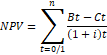
Net Present Value (NPV)
The difference between the present value of benefits and the flow of expenses is known as net present value, or NPV. This study can be used to determine the net value at a given point in time while also analyzing the flow of cash funds. If the NPV is positive (NPV> 0), it means that the business can be operated. In contrast, it is not practical to run the project if the NPV is negative. The formula for calculating NPV is:
Information
Bt: Benefit in year t
Ct: Cost in year t
t: Time invested in year t
i: Interest rate in year t
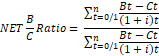
Net B/C Ratio
The ratio between the positive present value and the negative present value is known as the net benefit cost ratio (Net B/C Ratio). The business is chosen based on this criterion if the Net B/C Ratio is greater than 1. Conversely, if a company's Net B/C Ratio is less than 1, it is not chosen. Net B/C R is calculated using the following formula:
Table 4: Value of Performance Conversion for Dairy Farmers
Average
Quality
Description
0.00 – 0.80
E
Very bad
0.81 – 1.60
D
Bad
1.61 – 2.40
C
Not good
2.41 – 3.20
B
Enough
3.21 – 4.00
A
Good
Information
Bt: Benefit in year t
Ct: Cost in year t
I: Interest rate
N: The project's age in terms of farming
Internal Rate of Return (IRR)
IRR analysis is used to determine how profitable the money invested in the business is and how much return on its own capital, expressed in percent (%), if it is used to run a business. The business is feasible if the IRR is higher than the discount rate (IRR>DR). The business is not viable to operate, however, if the IRR is lower than the discount rate (IRR<DR). The formula for calculating IRR is:
Information
NPV1: Positive Present Value
NPV2: Present Value is Negative in NPV2
i1: the discount rate that results in NPV1
i2: the discount rate that results in NPV2
Payback Period
Knowing how long it will take for cash flow to cover a capital investment is helpful. Kasmir and Jakfar [8], state that while deciding whether to approve a transaction from a PP standpoint, the following criteria must be met the present PP is less than the investment period, by contrasting industry averages for comparable companies and consistent with business objectives The following is the payback period calculating formula:
Information
I: Investment Costs (Rp)
Ab: Annual net Benefit (Rp)
Break Even Point (BEP)
BEP analysis is often used to determine the break-even point of a business, namely the state of the business in a state of no profit and no loss. A business is said to be profitable if it moves above the break-even point.
BEP unit
Information
P: Price (Product price)
FC: Fixed Cost
AVC: Average Variable Cost
BEP Product Price
Information
TR: Total Revenue (Receipts)
FC: Fixed Cost
AVC: Average Variable Cost
Sensitivity Analysis
To analyze the third objective, which is to know the sensitivity of the dairy farming business, sensitivity analysis is used. Sensitivity means that the business is no longer able to generate profits over the life of the business (NPV 0).
Information
SA: Level of sensitivity to change
P*: Changes that occur in prices
NPV (+): Positive NPV that has been calculated before any changes
NPV (-): Negative NPV that has been calculated before any changes
Calculations to find sensitivity according to the following steps:
Change in NPV = Percentage change x NPV
% Change in NPV =
Sensitivity =
Business Development for Livestock
The Natural Increase (NI) approach is employed to examine the development potential. The remainder can be removed without endangering the local livestock population when Natural Increase (NI) is employed to replenish the livestock reserves. NI refers to an increase in the number of dairy cattle in a region as a result of a rise in the number of newborn calves (not due to the import of livestock from other regions). According to Adinata et al. [10], the following formula is used to determine NI:
Current Situation of Dairy Farming in Tropodo Village
One of the hubs for the production of fresh cow's milk in Sidoarjo Regency is Tropodo Village. Dairy cattle are livestock that are effective in using feed and are thought to be able to boost the revenue of farmers, in addition to regional conditions that encourage the development of the livestock company. Farmers in Tropodo Village raise the Friesian Holland (PFH) breed of cattle; it is an easy-to-manage breed with an average daily milk yield of 10-15 liters per head. The breed of cattle that are raised has a significant impact on the milk yields that farmers will acquire since these types of cattle are bred to be resistant to heat and poor quality feed, which would otherwise have an impact on milk yield and quality. Feeding occurred twice, in the morning and evening. As well as unlimited access to drinking water. Forage is a staple diet for dairy cows that can be found in a variety of places, including gardens, fields and rice fields. Pennisetum purpureum is a common grass in the gardens of most farmers. The farmer has two options if it's not available: buy grass or look for it in the neighborhood. Dairy cows are fed concentrated feed, a byproduct of processing agricultural products like rice bran and tofu dregs, in addition to pasture. Farmer's dairy cows are confined rather than grazing. There are two different types of cage systems in use. Cattle held by farmers are not grazed because of the little amount of land they own and the lack of grazing land. The cage is located behind the house. The cage construction is often a semi-permanent structure made of basic or concrete materials. The cage's ceiling is constructed of asbestos, while its floor is built of cement to prevent slipping. The floor is also made to be slightly inclined for cleaning.
In Tropodo Village, Krian District, Sidoarjo Regency, dairy farmers range in age from 30 to 60, with an average high school degree, more than 20 years of business experience and possess 20 to 40 heads of animals on average. Age at peak productivity, better education levels, dairy farming experience and the number of dairy cattle owned are a few factors that affect business production. It is envisaged that under these circumstances, farmers will operate more profitably, absorb technology advancements more quickly and make better economic judgments.
Dairy Farming Business in Tropodo Village, Krian District, Sidoarjo Regency: Non-Financial Feasibility Analysis.
Market Aspect
For farmers to be able to decide how much or the desired amount of livestock should be produced, the market element is the most crucial. Predicting milk consumption and production is being examined from a commercial perspective in order to calculate future supply and demand ratios. The data from the previous five years are projected for the following five years using software reviews and the quantity of consumption and milk production is obtained as shown in table 5.
The investigation's findings indicate that while fresh cow's milk consumption and production have both increased annually, supply has consistently lagged behind demand (supply). At the farmer level, the price of milk ranges from Rp. 8000 to Rp. 10,000. After being reduced to be fed to calves and consumed by them, the milk produced from dairy farms in Tropodo Village, Krian District, Sidoarjo Regency is typically delivered daily by collectors or milk carriers to the farmer's home. The respondents employed two channels, namely Channel I: Farmers Consumers for Fresh Milk Marketing and Channel II: Breeders Collectors Consumers. Producers should ideally be effective at using marketing channels, namely those that go from producers to consumers.Dairy farming in Tropodo Village, Krian District, Sidoarjo Regency is regarded as practical to implement due to the amount of demand that exceeds supply, the consistent selling price of milk at the farmer level and the choice of milk marketing channels. According to Praharsa et al. [11], a market analysis is regarded to be practicable if it satisfies a number of requirements. These requirements include the availability of market prospects for the growth of livestock businesses, which are characterized by the magnitude of a supply that is outstripped by a demand, competitive product selling prices and the most effective marketing approach.
Technical Aspect
The knowledge and abilities of dairy farmers provide insight into the performance of the industry. According to the GDFP standards, knowledge of the technical aspects of dairy farming covers five sub-aspects: breeding; management; cages and equipment; management; and animal health.
Table 5: Projected National Milk Consumption and Production Year 2023 – 2027 (in 000 tons)
Indicator
Projected National Milk Consumption and Production Year 2023 – 2027
2023
2024
2025
2026
2027
Milk production
1035,3
1059
1082,6
1106,2
1129,8
Milk consumption
5212.251
5434.571
5660.115
5891.732
6123.75
Source: secondary data processing, 2022
Table 6: Shows The Financial Recapitulations of the Dairy Farming Operations in Tropodo Village, Krian District and Sidoarjo Regency
Criteria
Value
NPV
13.197.151.650
B/C Ratio
3,8
IRR
23,15374
Payback Period
7,4
BEP
Price (Rp/Liter)
Production (Liter/Year)
Revenue (Rp)
25.457.892.360
(337)
2.329
Source: Primary data analyzed, 2022
Dairy farming is classified as practicable in Tropodo Village, Krian District and Sidoarjo Regency based on technical aspect requirements. Both effective and ineffective maintenance management practices by farmers have a significant impact on the success of a livestock enterprise. According to Anggraeni and Mariana [9], poor maintenance management may be the root of the low livestock productivity. Consequently, it's essential to use good dairy farming practices (GDFP).
Management Aspect
Planning, organizing, implementing and assessing the dairy farming industry are all part of management. The examination of the management of the dairy farming enterprise in Tropodo Village, Krian District, Sidoarjo Regency, produced results that are realistic. We need to strengthen business management, particularly in the area of labor management. Some respondents believe that the cattle industry is operated well and profitably because of the hereditary character of the industry. Because of the hereditary (traditional) business environment and businesses that inherit a developing tradition/culture, experience gained by farmers in the livestock business is one of the factors that affects business productivity. The impact of this is that, even though the experience of maintaining is long enough, the productivity of the business is low, so that the output (production) produced is also low [12].
Environmental and Socioeconomic Aspect
In Tropodo Village, Krian District, Sidoarjo Regency, the development of a dairy farming enterprise has a favorable effect on socioeconomic and environmental aspects by generating new jobs for the local population, including those of grass and hay seekers, cage youngsters and milk deliverers. Prices will be better, which is another benefit of infrastructure improvement to assist the growth of cattle enterprises. The utilization of tofu processing waste as animal feed is becoming a more ideal way to combine agricultural and animal husbandry. Dairy production is practicable from a socioeconomic and environmental standpoint in Tropodo Village, Krian District and Sidoarjo Regency. While it is still not done optimally for the management of livestock waste. hence necessitating a livestock waste management system to prevent environmental pollution.
Legal Aspect
If a business has a business permit from the local government through the pertinent institution, agency, department, or service, it is considered to be lawful. The impoverished category's legal aspect. Dairy farming is a small, medium and large-scale individual business in Tropodo Village. If the amount of animals owned is fewer than 5,000 heads, there are no rules or correspondence relating livestock business licenses in terms of local regulations. Because the dairy cattle business has not yet satisfied the conditions to submit an application for a business license, the dairy farming enterprise in Tropodo Village does not yet have a license letter relating to the legitimacy of a person's livestock enterprise.
Dairy Farming Business in Tropodo Village, Krian District, Sidoarjo Regency: Non-Financial Feasibility Analysis.
Table 7: Shows The Sensitivity Analysis for Changes in Milk Production and Feed Prices
Parameter
Condition
Normal
Increase in feed prices
Decrease amount of milk production
Net Present Value (NPV)
13.197.151.650
12.013.329.998
6.944.137.797
Net BCR
3.8
3.4
2.4
Internal Rate of Return (IRR)
23.15
21,56
16.87
Payback Period
7.4
9.4
9.4
Break Event Point (BEP)
a. BEP Production
(337)
(307)
(337)
b. BEP Price
2.329
2.423
2.740
Source: Primary data analyzed, 2022
Table 8: Dairy Cattle Population in Sidoarjo Regency 2016 – 2020
No
Type
Dairy Cattle Population
2016
2017
2018
2019
2020
1
Male
1135
1241
1631
1087
1293
2
Female
1130
1053
1507
1872
1985
3
Calf
1367
1671
1360
2531
2631
Total
3632
3965
4498
5310
5909
Table 9: Calculation of Natural Increase in Dairy Cattle
Description
Quantity
Number of calves born per year (head)
292
Number of broods per year (tail)
1985
Number of livestock population per year (head)
5909
Number of livestock deaths per year (head)
10
Percentage of calf births to number of broods
14,7
Percentage of calf births to population
4,94
Percentage of livestock mortality to population
0,17
Percentage of deaths to births
3,42
Natural increase
4,77
Source: Primary Data Analysis, 2022
To establish whether a firm can be deemed feasible and lucrative during the course of the business, a financial feasibility analysis analyzes the overall expenditures incurred and the advantages acquired. Break Even Points (BEP) analysis, Net Present Value (NPV) analysis, Benefit Cost Ratio (BCR) analysis, Internal Rate of Return (IRR) analysis and Payback Period (PP) analysis are a few of the financial analysis methods that can be applied. Fixed costs are expenses that must be incurred regardless of how much or how little of a product is produced. They are relatively fixed in number. Variable costs, on the other hand, are costs that change according to the volume of the production. Adding up all of the farmer's fixed and variable expenses yields the overall cost of a dairy farming operation. The equipment depreciation cost is Rp. 707.200, the pen depreciation cost is Rp. 3.291.667 and the total fixed cost for a dairy farming firm is Rp. 3.998,867.
All of the respondent farmers' expenses for the purchase of cattle breeds, feed, medicine and labor are classified as variable costs because their nature varies depending on the volume of the purchase. Breeders purchase animal seeds every two to three years, on average for Rp. 37,000,000, -. Depending on the breeder's requirements, the farmer's financial situation and the size of the cage, the livestock seeds can be female cows, calves, or heifers. Dairy cattle cost between Rp. 7,000,000, - and Rp. 9,000,000, - per head during the breeding calf phase, Rp. 12,000,000, - to Rp. 14,000,000, - during the virgin phase and Rp. 18,000,000, - to Rp. 20,000,000 per head during the dairy cow phase. Farmers must pay for feed in addition to the expense of cattle seeds (forage and concentrates). Pennisetum purpureum, Setaria anceps, Axonopus compressus, straw and maize husks make up the vegetation. The amount of fodder required on average is 60,830 kg/year at a cost of Rp. 59.305.400, -, while the concentrate is made up of tofu dregs, rice bran and cassava. While the average annual cost of additional feed or concentrate is Rp. 78,855,000, - or 1,025 kg. Cows are fed twice a day, in the morning and in the evening. Both male and female employees make up the workforce. This variation arises because there are numerous types of work stages in an agricultural business, which are also influenced by elements like regional conventions and habits. The cost of labor is Rp. 72,087,500 on average per year. The entire variable cost of the dairy farming enterprise in Tropodo Village, Krian District, Sidoarjo Regency is Rp. 251,927,900, - each year. Other expenses include transportation costs and power prices, which total Rp. 936,000, - and Rp. 3,744,000, - respectively. Total cost is the accumulation of all fixed and variable cost elements. The farmer's biggest expense is the variable cost component. With the expansion of the size of the businesses held by farmers, total production costs will also rise. In Tropodo Village, Krian District, Sidoarjo Regency, the variable cost of dairy farming is Rp. 251,927,900, - per year, while the fixed cost is Rp. 3,998,867, - per year. The respondents spent a total of Rp. 255.926.767, - in one year. The volume of milk produced during the lactation period multiplied by the price of milk generates revenue for the dairy cow industry. including the rejected sales of cows, bulls and calves. Dairy producers' total revenue is Rp. 532.170.000, -, which is calculated by multiplying the sales volume of milk produced—59,130 liters—by the milk's selling price, which is Rp. 9,000/liter. Both the seller, who is a dairy farmer and the buyer, who is typically a trader (milk delivery person) or cooperative, must agree on the selling price of milk. The farmer often handles all marketing from his or her home. Both the seller, who is a dairy farmer and the buyer, who is typically a trader (milk delivery person) or cooperative, must agree on the selling price of milk. The farmer often handles all marketing from his or her home. The quantity of revenue in the research sector fluctuates based on the volume of output and the going rate. In comparison to the prior year, milk prices increased significantly in 2020. This resulted from the COVID-19 viral pandemic's impact.
To ascertain whether a dairy farming firm is financially viable or not, a financial analysis must be done. Break Even Point (BEP) analysis, Net Present Value (NPV) analysis, Benefit Cost Ratio (BCR) analysis, Internal Rate of Return (IRR) analysis and Payback Period (PP) analysis are a few of the different financial analysis methods that can be employed. Table 6 summarizes the findings of the financial study of the dairy farming industry in Tropodo Village, Krian District and Sidoarjo Regency.
Because the NPV value > 0, Net B/C > 1, IRR > the current interest rate and the return on capital with a time limit of less than 15 years is greater than the prevailing interest rate, the dairy cattle business in Tropodo Village, Krian District and Sidoarjo Regency is financially feasible to be developed.
Analysis of Dairy Farming Companies in Tropodo Village, Krian District and Sidoarjo Regency's SensitivityChanges in the price of feed and the price of fresh milk have a huge influence because they are the two main variables that contribute the most to the input output flow of the dairy farming business. The outcome of this transition is that the dairy farming sector is fragile. As a result, a sensitivity analysis is required for the viability study of the firm. It was assumed that no additional factors would have an impact on this analysis (ceteris paribus). This study's example of a potential change in a variable shows how benefits might vary if production declines by 15% and feed prices rise by 15%.
When the amount of output (fresh milk production) is reduced by 15% while assuming fixed feed costs and the price of input (feed) is increased by 15% while assuming fixed feed costs, the dairy farming industry in Tropodo Village, Krian District, Sidoarjo Regency is still viable. The criteria index is still in the category or decision is viable and business operations can continue, despite a decline in the value of NPV, Net BCR and IRR. By employing alternate feed rations and local ingredients that are readily available, plentiful and less expensive, efforts can be made to address the issues that will be encountered in the future if there is an increase in production costs and a fall in output prices. entering the breeding stage for dairy cattle and culling unproductive cattle to increase the number of productive dairy cattle. The management of dairy cattle, which is adjusted to the management in accordance with the GDFP recommendations, must also be improved. The results of the sensitivity analysis show that the increase in feed costs is more susceptible to changes in the profitability of the dairy farming industry than the decline in output prices.
Dairy Cattle Farming Business Development
An increase in the number of dairy cattle indicates the development of the population of dairy cattle. Dairy cows, also known as milk-producing cows by the community, have significant connotations, such as serving as a source of daily income through milk sales as well as a means of future savings. The evolution of the dairy cattle population in Sidoarjo Regency will be examined in this study, as shown in Table 8.
The growing demand for meat and feed has led to a decrease in the number of animals, which has stoked farmers' interest in selling their cattle. An increase in the number of calves born can contribute to the rise in the number of dairy cattle. The traits of the breeder, the environment and company management practices can all affect the growth and decline of the animal population [13]. Furthermore, livestock business management cannot be separated from the socioeconomic traits of farmers, which will have an impact on the outcomes that farmers will eventually achieve, claim Indrayani and Andri.
According to the findings of interviews with numerous breeders, virus-related disease, poisoning and mortality due to the birthing process of cattle are the main reasons of death for dairy cattle in Tropodo Village, Krian District and Sidoarjo Regency. Cassava is a field-produced animal feed that contains the hazardous compound HCN and must be processed before being fed to livestock. Animals bloat because the grass is still damp. The length of the labor will also cause the mother of cattle and the child to pass away. The high mortality rate is typically brought about by farmers' negligence, which allows other animals to prey on livestock, weak babies and breeders' neglect of giving pregnant women and newborn babies extra care before and after birth.
The study's findings had a natural increase value of 4.77%. In this investigation, the NI value is quite little. Adinata et al. [10], state that NI falls into three categories: high (36.13–54.18%), medium (18.06–36.12%) and low (0–18.05%). The high and low values of NI are influenced by cattle mortality, birth rate and reproductive effectiveness.
If a number of challenges can be solved, the potential for building a dairy farming enterprise can be achieved. Heat stress, which negatively impacts the capacity of dairy cows to produce milk, is one of the challenges faced by dairy farmers in Sidoarjo Regency. The profitability of the dairy farming industry will be based on the amount of dairy animals produced. It is possible to increase production efficiency by managing the rearing of cattle better. Because it relates to the management of maintenance and suitable policy making in the implementation of their company, the amount of expertise and education of farmers can have an impact on the value of NI. According to Kusuma et al. [14], natural increase is closely related to population growth since a high NI indicates that the area has many productive adult females who are well-handled and managed. Afriani et al. [15], also state that reducing livestock mortality, increasing livestock births, keeping productive females and increasing the number of female cows can all boost the value of NI. Oktafiana et al. claim that regulating dairy cattle marriages, weaning procedures and optimizing the pattern of maintenance, primarily feed and livestock health, are other ways to increase the value of NI.
Increasing business scale or the number of animals is a strategy that may be used in Tropodo Village, Krian District, Sidoarjo Regency, as developing a dairy farming business is a plan that combines opportunities, resources available and barriers. Supported by the facilitation of land requirements, facilitation of capital access, improvement of dairy farmers' skills, convenience in dairy investment, formation of strong alliances, improvement of SSDN absorption through competitive pricing and benefiting farmers and expansion of milk market opportunities. It is anticipated that shifting from traditional to semi-intensive and intensive maintenance patterns may reduce risks to the livestock industry, such as animal disease outbreaks. Other initiatives, such as the prohibition of killing productive female cows, also contribute to the accomplishment of dairy cow self-sufficiency in addition to programs in reproductive technology that are still being developed. For the population to remain stable, this is crucial. According to respondents, farmers have access to a number of government programs that assist the viability of the dairy farming industry, such as the Farmer's Business Credit (KUR), which is unsecured, has a low interest rate and has flexible payment terms (can be paid at harvest). One strategy for increasing the livestock population is the use of dairy cattle. Farmers are able to use their products thanks to their relationship with the dairy cooperative. Farmer payments can also come in the form of milk loans for business purposes.
CONCLUSION
According to the findings of the non-financial examination of the dairy cow business in Tropodo Village, Krian District, Sidoarjo Regency, the business is viable from a legal, technical, management, socioeconomic and environmental standpoint.
Because the NPV value > 0, Net B/C > 1, IRR > the current interest rate and the return on capital with a time limit of less than 15 years is greater than the prevailing interest rate, the dairy cattle business in Tropodo Village, Krian District and Sidoarjo Regency is financially feasible to be developed.
Sensitivity analysis revealed that a 15% reduction in production and a 15% increase in feed input decreased the value of NPV, Net BCR and IRR, but were deemed reasonable and allowed for the continuation of business operations.
The value of organic growth as a result of the study's findings was 4.77%. Because it lies between 0 and 50%, the NI value in this study is modest. Programs for reproductive technology are still being developed. Other initiatives, such as the ban on killing productive female cows, contribute to the achievement of dairy cow self-sufficiency.
REFERENCES
Setiawan, F. Menuai untung dengan beternak sapi perah. Laksana, 2019.
Siregar, S. et al. "Peluang pengembangan usaha sapi perah di daerah dataran rendah Kabupaten Cirebon." Jurnal Media Peternakan, vol. 27, no. 2, 2004, pp. 77–87.
Swastika, D.K. et al. The status and prospect of feed crops in Indonesia. 2005.
Asmara, A., Purnamadewi, Y.L. et al. "Keragaan produksi susu dan efisiensi usaha peternakan sapi perah rakyat di Indonesia." Jurnal Manajemen dan Agribisnis, vol. 13, no. 1, 2016, pp. 14–25. https://doi.org/10.17358/jma.13.1.14
Rusdiana, Supardi. "Analisis finansial usaha sapi perah dengan cara bagi hasil (Paro) di peternak." Journal of Economic, Public and Accounting (JEPA), vol. 2, no. 1, 2019, pp. 67–85. https://doi.org/10.31605/jepa.v2i1.453
Adibowo, H. et al. "Daya saing usaha ternak sapi perah rakyat di Kecamatan Pujon Kabupaten Malang Jawa Timur." In Media Ekonomi, vol. 22, no. 1, 2014, p. 73. https://doi.org/10.25105/me.v22i1.2818
Nurmalina, R., Sarianti, T. et al. Studi kelayakan bisnis. PT Penerbit IPB Press, 2018.
Kasmir and Jakfar. Studi kelayakan bisnis. Kencana, 2016.
Anggraeni, A. and Mariana, E. "Evaluasi aspek teknis pemeliharaan sapi perah menuju good dairy farming practices pada peternakan sapi perah rakyat Pondok Ranggon." Jurnal Agripet, vol. 16, no. 2, 2016, p. 90. https://doi.org/10.17969/agripet.v16i2.5162
Adinata, Y., Sumadi, S. et al. "Sebaran populasi sapi Friesian Holstein di beberapa Kabupaten Provinsi Jawa Tengah dan Daerah Istimewa Yogyakarta." Buletin Peternakan, vol. 33, no. 3, 2013, pp. 129–142.
Praharsa, E., Bakar, A. et al. "Analisis kelayakan bisnis peternakan sapi potong di Kecamatan Cikancung Kabupaten Bandung." Jurnal Online Institut Teknologi Nasional, vol. 2, no. 2, 2014, pp. 145–156.
Warangkiran, G., Manese, M.A. et al. "Faktor-faktor yang mempengaruhi pendapatan usaha ternak sapi di desa Kanonang Raya Kabupaten Minahasa." Zootec, vol. 41, no. 1, 2021, p. 29. https://doi.org/10.35792/zot.41.1.2021.31595.
Ikun, A. "Faktor–faktor yang mempengaruhi tingkat populasi ternak kerbau di Kecamatan Biboki Anleu Kabupaten Timor Tengah Utara." Jas, vol. 3, no. 3, 2018, pp. 38–42. https://doi.org/10.32938/ja.v3i3.537.
Kusuma, S.B., Ngadiyono, N. et al. "Estimasi dinamika populasi dan penampilan reproduksi sapi peranakan Ongole di Kabupaten Kebumen Provinsi Jawa Tengah." Buletin Peternakan, vol. 41, no. 3, 2017, p. 230. https://doi.org/10.21059/buletinpeternak.v41i3.13618
Afriani, T., Agusta, M.P., Yurnalis, Y., Arlina, F. et al. "Estimasi dinamika populasi dan pembibitan sapi potong di Kecamatan Bayang Kabupaten Pesisir Selatan." Jurnal Peternakan Indonesia (Indonesian Journal of Animal Science), vol. 21, no. 2, 2019, pp. 130–142. https://doi.org/10.25077/jpi.21.2.130-142.2019
Advertisement
Recommended Articles
Research Article
Study of Marination of Broiler Chicken with Garlic on Water Holding City, Cooking Loss, Tenderness and Number of Bacteria
Lilis Suryaningsih,
...
Dicki Tri Utama
Published: 20/06/2025
Download PDF
Cite
x
APA
Suryaningsih, L., Gumilar, J., Setyadi Putranto, W., Wulandari, E., None, P. & Tri Utama, D. (2025). Study of Marination of Broiler Chicken with Garlic on Water Holding City, Cooking Loss, Tenderness and Number of Bacteria. Himalayan Journal of Agriculture, 6(1), 1-4.
MLA
Suryaningsih, Lilis, et al. "Study of Marination of Broiler Chicken with Garlic on Water Holding City, Cooking Loss, Tenderness and Number of Bacteria." Himalayan Journal of Agriculture 6.1 (2025): 1-4.
Chicago
Suryaningsih, Lilis, Jajang Gumilar, Wendry Setyadi Putranto, Eka Wulandari, Pratama and Dicki Tri Utama. "Study of Marination of Broiler Chicken with Garlic on Water Holding City, Cooking Loss, Tenderness and Number of Bacteria." Himalayan Journal of Agriculture 6, no. 1 (2025): 1-4.
Harvard
Suryaningsih, L., Gumilar, J., Setyadi Putranto, W., Wulandari, E., None, P. and Tri Utama, D. (2025) 'Study of Marination of Broiler Chicken with Garlic on Water Holding City, Cooking Loss, Tenderness and Number of Bacteria' Himalayan Journal of Agriculture 6(1), pp. 1-4.
Vancouver
Suryaningsih L, Gumilar J, Setyadi Putranto W, Wulandari E, Pratama P, Tri Utama D. Study of Marination of Broiler Chicken with Garlic on Water Holding City, Cooking Loss, Tenderness and Number of Bacteria. Himalayan Journal of Agriculture. 2025 Jan;6(1):1-4.
Download PDF
Research Article
Mating behaviour of Cavariella aegopodii
Nidhi Dhatwalia
Published: 19/07/2024
Download PDF
Cite
x
APA
Dhatwalia, N. (2024). Mating behaviour of Cavariella aegopodii. Himalayan Journal of Agriculture, 5(1), 1-7.
MLA
Dhatwalia, Nidhi. "Mating behaviour of Cavariella aegopodii." Himalayan Journal of Agriculture 5.1 (2024): 1-7.
Chicago
Dhatwalia, Nidhi. "Mating behaviour of Cavariella aegopodii." Himalayan Journal of Agriculture 5, no. 1 (2024): 1-7.
Harvard
Dhatwalia, N. (2024) 'Mating behaviour of Cavariella aegopodii' Himalayan Journal of Agriculture 5(1), pp. 1-7.
Vancouver
Dhatwalia N. Mating behaviour of Cavariella aegopodii. Himalayan Journal of Agriculture. 2024 Jan;5(1):1-7.
Download PDF
Research Article
The Effect of Marination Duration using Tamarind Paste (Tamarindus indica L.) on pH, Tenderness, Water-holding Capacity and Cooking Loss of Spent Layer Meat
Dina Ayu Wulandari,
...
Dicky Tri Utama
Published: 30/06/2024
Download PDF
Cite
x
APA
Wulandari, D. A., Suryaningsih, L. & Utama, D. T. (2024). The Effect of Marination Duration using Tamarind Paste (Tamarindus indica L.) on pH, Tenderness, Water-holding Capacity and Cooking Loss of Spent Layer Meat. Himalayan Journal of Agriculture, 5(1), 1-12.
MLA
Wulandari, Dina A., Lilis Suryaningsih and Dicky T. Utama. "The Effect of Marination Duration using Tamarind Paste (Tamarindus indica L.) on pH, Tenderness, Water-holding Capacity and Cooking Loss of Spent Layer Meat." Himalayan Journal of Agriculture 5.1 (2024): 1-12.
Chicago
Wulandari, Dina A., Lilis Suryaningsih and Dicky T. Utama. "The Effect of Marination Duration using Tamarind Paste (Tamarindus indica L.) on pH, Tenderness, Water-holding Capacity and Cooking Loss of Spent Layer Meat." Himalayan Journal of Agriculture 5, no. 1 (2024): 1-12.
Harvard
Wulandari, D. A., Suryaningsih, L. and Utama, D. T. (2024) 'The Effect of Marination Duration using Tamarind Paste (Tamarindus indica L.) on pH, Tenderness, Water-holding Capacity and Cooking Loss of Spent Layer Meat' Himalayan Journal of Agriculture 5(1), pp. 1-12.
Vancouver
Wulandari DA, Suryaningsih L, Utama DT. The Effect of Marination Duration using Tamarind Paste (Tamarindus indica L.) on pH, Tenderness, Water-holding Capacity and Cooking Loss of Spent Layer Meat. Himalayan Journal of Agriculture. 2024 Jan;5(1):1-12.
Download PDF
Research Article
The Role of Indigenous Microbes and Earthworm in the Bioconversion of Dairy Wastewater Solids into Organic Fertilizer
Marlina ,
...
N. Meynadhea
Published: 17/01/2024
Download PDF
Cite
x
APA
None, M., Rahayu, N. A., Badruzzaman, D. Z., Hidayati, Y., Harlia, E., Kurniawan, E. & Meynadhea, N. (2024). The Role of Indigenous Microbes and Earthworm in the Bioconversion of Dairy Wastewater Solids into Organic Fertilizer. Himalayan Journal of Agriculture, 5(1), 1-7.
MLA
None, Marlina, et al. "The Role of Indigenous Microbes and Earthworm in the Bioconversion of Dairy Wastewater Solids into Organic Fertilizer." Himalayan Journal of Agriculture 5.1 (2024): 1-7.
Chicago
None, Marlina, N. A. Rahayu, D. Z. Badruzzaman, Y.A. Hidayati, E. Harlia, E. Kurniawan and N. Meynadhea. "The Role of Indigenous Microbes and Earthworm in the Bioconversion of Dairy Wastewater Solids into Organic Fertilizer." Himalayan Journal of Agriculture 5, no. 1 (2024): 1-7.
Harvard
None, M., Rahayu, N. A., Badruzzaman, D. Z., Hidayati, Y., Harlia, E., Kurniawan, E. and Meynadhea, N. (2024) 'The Role of Indigenous Microbes and Earthworm in the Bioconversion of Dairy Wastewater Solids into Organic Fertilizer' Himalayan Journal of Agriculture 5(1), pp. 1-7.
Vancouver
Marlina M, Rahayu NA, Badruzzaman DZ, Hidayati Y, Harlia E, Kurniawan E, Meynadhea N. The Role of Indigenous Microbes and Earthworm in the Bioconversion of Dairy Wastewater Solids into Organic Fertilizer. Himalayan Journal of Agriculture. 2024 Jan;5(1):1-7.
Yanti, N. A., Hendrarini, H. & Amir, I. T. (2023). Feasibility Analysis and Development Dairy Farming Business in Tropodo Village, Krian District, Sidoarjo Regency. Himalayan Journal of Agriculture, 4(1), 1-8.
MLA
Yanti, Nurul A., Hamidah Hendrarini and Indra T. Amir. "Feasibility Analysis and Development Dairy Farming Business in Tropodo Village, Krian District, Sidoarjo Regency." Himalayan Journal of Agriculture 4.1 (2023): 1-8.
Chicago
Yanti, Nurul A., Hamidah Hendrarini and Indra T. Amir. "Feasibility Analysis and Development Dairy Farming Business in Tropodo Village, Krian District, Sidoarjo Regency." Himalayan Journal of Agriculture 4, no. 1 (2023): 1-8.
Harvard
Yanti, N. A., Hendrarini, H. and Amir, I. T. (2023) 'Feasibility Analysis and Development Dairy Farming Business in Tropodo Village, Krian District, Sidoarjo Regency' Himalayan Journal of Agriculture 4(1), pp. 1-8.
Vancouver
Yanti NA, Hendrarini H, Amir IT. Feasibility Analysis and Development Dairy Farming Business in Tropodo Village, Krian District, Sidoarjo Regency. Himalayan Journal of Agriculture. 2023 Jan;4(1):1-8.


 Download PDF
 Download XML