Aim: This study was designed to determine if there is a correlation between celiac disease in children with autism. Materials and Methods: 40(11 female and 29 male) autistic children aging 4 to 9 years (median age 6.5 years) and 40 healthy age- and sex- matched (11 female and 29 male ) were participated in this prospective study , all the patient & control were tested for IgG and IgA anti-tissue transglutaminase antibody and for IgG and IgA antigliadin antibody, none of the patients and controls had symptoms (or positive family history) suggestive of specific gastrointestinal diseases. Results: IgA anti-tissue transglutaminase antibody was found in 3 autistic child (7%) and 2 control (5%) p = 0.64, none of the patient and control were positive for other tests (IgG anti-tissue transglutaminase antibody, IgG and IgA antigliadin). Conclusions: The present study demonstrated that gluten sensitivity is not a major cause in those autistic children examined.
Keywords
Autism
Disorder
Study
INTRODUCTION
The term autism spectrum disorders (ASD) refers to a group of neurodevelopmental conditions defined by impairment in three areas: social interaction, communication or use of verbal and non-verbal language, and a stereotyped, restricted or repetitive pattern of behavior, interests and activities. Symptoms are generally obvious before the age of three years, but in most areas of the world these conditions are not diagnosed until a few years later. Aberrant development of social skills and impaired ability to engage in reciprocal social interactions are hallmark symptoms of ASD. Early social skill deficits can include abnormal eye contact, failure to orient to name, failure to use gestures to point or show, lack of interactive play, failure to smile, lack of sharing, and lack of interest in other children. Some children with ASD make no eye contact and seem totally aloof, whereas others show intermittent engagement with their environment and can make inconsistent eye contact, smile, or hug. Most children have some impairment in joint attention, which is the ability to use eye contact and pointing for the purposes of sharing experiences with others. These children show deficits in empathy for what another person might be feeling. They also demonstrate deficits in understanding what another person might be thinking, a lack of a theory of mind.Children with ASD vary in their verbal abilities. They can range from being nonverbal to having some speech. Speech might have an odd prosody or intonation and may be characterized by echolalia (imitative repetition of words), pronoun reversal, nonsense rhyming, and other idiosyncratic language forms.Play skills in ASD are typically aberrant, characterized by little symbolic play, ritualistic rigidity, and preoccupation with parts of objects. The child with ASD is often withdrawn and spends hours in solitary play, often with restrictive or repetitive interests and behaviors. Ritualistic behavior prevails, reflecting the child's need to maintain a consistent, predictable environment. Tantrum-like rages can accompany isruptions of routine.Intellectual functioning can vary from mental retardation to superior intellectual functioning in select areas. Some children show typical development in certain skills and can even show areas of strength in specific areas, such as puzzles, art, or music.Visual scanning of hand and finger movements, mouthing of objects, and rubbing of surfaces can indicate aheightened awareness of and sensitivity to some stimuli, whereas diminished responses to pain and lack of startle responses to sudden loud noises reflect lowered sensitivity to other stimuli.The incidence of AD has increased steadily over the past 15yr. There is evidence that the increase in the number of children identified with AD is likely related to changes in the definition of and diagnostic criteria for AD, as well as improvements in the recognition of AD at younger ages. Current estimates of the prevalence rate of all PDD (63.7/10,000) are approximately 1 in 150-160.ASD is diagnosed by the clinical examination. The gold standard diagnostic tools are theAutism Diagnostic Interview—Revised(ADI-R) and theAutism Diagnostic Observation Schedule(ADOS), which require referral to a trained professional for administration.Neuropsychologic and achievement assessment should include intelligence testing to establish overall cognitive function and eligibility for services. Intelligence, as measured by conventional psychologic testing, falls in the functionally retarded range in 30-60% of children with ASD. Deficits in language and socialization often make it difficult to obtain an accurate estimate of a child's intellectual potential.Critical elements of the evaluation should include a detailed developmental history with a review of communicative and motor milestones or other medical conditions associated with AD including fragile-X, Prader-Willi, Smith-Lemli-Opitz, Rett's, and Angelman's syndromes, fetal alcohol syndrome, tuberous sclerosis, neurofibromatosis, congenital rubella, or untreated phenylketonuria.The medical and genetic evaluation of children with PDD must consider a broad range of disorder such as Careful physical examination to identify dysmorphic physical features, Wood's lamp examination for tuberous sclerosis, Formal audiologic evaluation, Lead test; repeat periodically in children with pica, High-resolution karyotype and metabolic test and investigations accordingly.Celiac disease (CD) is an immune-mediated disorder elicited by the ingestion of gluten in genetically susceptible persons and characterized by chronic inflammation of the small intestine. It is considered an autoimmune condition because of the presence of anti–TG2 antibodies and the association with other autoimmune diseases (thyroid, liver, diabetes, adrenal). Celiac disease is triggered by the ingestion of wheat gluten and related prolamines from rye and barley. In most studies oats proved to be safe; however, a few celiac patients have oats prolamine–reactive mucosal T cells that can cause mucosal inflammation.(n)The genetic susceptibility to CD is confirmed by its high familialincidence (about 10% of first degree relatives of celiac patients are affected by the disease) and by its strict linkage with some human leukocyte antigen (HLA) class 2 alleles (up to 95% celiacs are HLA-DQ2 positive with the typical heterodimer DQA1*0501/DQB1*0201, whereas theremaining 5% are HLA-DQ8 positive HLA-DQB1*0302)(CD1). CD can manifest in any age group, from infants to the elderly. Retrospective analysis of clinical data shows that most adult celiacs had no sign of the disease during their childhood, thereby confirming that CD can develop in adulthood.25–28 About 20% of diagnoses occur in people over 60 years of age.29 CD prevalence is higher in females than in males worldwide, with a mean F/M ratio of 2 : 1.30 (CD 2) Clinical features of celiac disease vary considerably Intestinal symptoms are common in children whose disease is diagnosed within the 1st 2 years of life; failure to thrive, chronic diarrhea, vomiting, abdominal distention, muscle wasting, anorexia, and irritability are present in most cases Occasionally there is constipation, rectal prolapse, or intussusception. As the age at presentation of the disease shifts to later in childhood, and with the more liberal use of serologic screening tests, extraintestinal manifestations and associated disorders, without any accompanying digestive symptoms, have increasingly become recognized. The most common extraintestinal manifestation of celiac disease is iron-deficiency anemia, unresponsive to iron therapy. Osteoporosis may be present; in contrast to the situation in adults, it can be reversed by a gluten-free diet, with restoration of normal peak bone densitometric values. Other extraintestinal manifestations include short stature, endocrinopathies, arthritis and arthralgia, epilepsy with bilateral occipital calcifications, peripheral neuropathies, cardiomyopathy, chronic lung disease, isolated hyper transaminasemia, dental enamel hypoplasia, aphthous stomatitis, and alopecia. Some diseases, many with an autoimmune pathogenesis, are found with a higher than normal incidence in celiac patients. Among these are type 1 diabetes, autoimmune thyroid disease, Addison disease and others.(n) There is a general agreement that the best strategy for CD serological screening is the detection of IgA tissue transglutaminase antibodies (tTGA).86 These antibodies are the most sensitive test for CD (up to 97%), whereas IgA EmA are employed as a confirmatory test in tTGApositive cases due to their higher specificity (about 100% versus 91% of tTGA).CD3 Some 10% of patients whose disease is diagnosed earlier than 2yr of age show absence of IgA anti-TG2. For them, the measurement of serum antigliadin antibodies is generally advised. Antibodies against gliadin-derived deamidated peptides (D-AGA) have been assessed. Compared with conventional AGA, the peptide antibodies (IgG and IgA) have a greater sensitivity and specificity. A problem with serology is represented by the association of celiac disease with IgA deficiency (10-fold increase compared to the general population). Serum IgA should always be checked, and in the case of IgA deficiency, D-AGA, IgG anti-endomysium, or TG2 should be sought. Negative serology should not preclude a biopsy examination when the clinical suspicion is strong.Genetic tests have an increasing role in the diagnosis. Less than 2% of celiac patients lack both HLA specificities; at the same time, approximately one third of the “normal” population has one or the other marker; that means that the measurement of HLA DQ2 and/or DQ8 has a strong negative predictive value but a very weak positive predictive value for the diagnosis of celiac disease.The ultimate diagnosis of celiac disease relies on the demonstration of specific, though not pathognomonic, histopathologic abnormalities in the small bowel mucosa
Table 1: Diagnostic Criteria for Autism
A A total of six (or more) items from (1), (2), and (3), with at least two from (1), and one each from (2) and (3):
1 Qualitative impairment in social interaction, as manifested by at least two of the following:
a Marked impairment in the use of multiple nonverbal behaviors such as eye-to-eye gaze, facial expression, body postures, and gestures to regulate social interaction
b Failure to develop peer relationships appropriate to developmental level
c A lack of spontaneous seeking to share enjoyment, interests, or achievements with other people (e.g., by a lack of showing, bringing, or pointing out objects of interest)
d Lack of social or emotional reciprocity
2 Qualitative impairments in communication as manifested by at least one of the following:
a Delay in, or total lack of, the development of spoken language (not accompanied by an attempt to compensate through alternative modes of communication such as gesture or mime)
b In individuals with adequate speech, marked impairment in the ability to initiate or sustain a conversation with others
c Stereotyped and repetitive use of language or idiosyncratic language
d Lack of varied, spontaneous make-believe play or social imitative play appropriate to developmental level
3 Restricted repetitive and stereotyped patterns of behavior, interests, and activities, as manifested by at least one of the following:
a Encompassing preoccupation with one or more stereotyped and restricted patterns of interest that is abnormal either in intensity or focus
b Apparently inflexible adherence to specific, nonfunctional routines or rituals
c Stereotyped and repetitive motor manners (e.g., hand or finger flapping or twisting, or complex whole-body movements)
d Persistent preoccupation with parts of objects
B Delays or abnormal functioning in at least one of the following areas, with onset prior to age 3 years: (1) social interaction, (2) language as used in social communication, or (3) symbolic or imaginative play.
C The disturbance is not better accounted for by Rett's Disorder or Childhood Disintegrative Disorder.
(n)The etiology of autism is complex, and usually, the underlying pathologic mechanisms are unknown some sientist recognized the gut-brain connection as a basic theory in autism with possible link to celiac disease. In 1979 Panksepp described a neurochemical theory of autism He proposed that peptides formed from incomplete breakdown of food containing gluten and casien crossed a leaky gut membrane. once in the bloodstream these would pass across the blood-brain barrier where they exert opioid activity or from ligands with peptidase enzymes diminishing the breakdown of neurotransmitters. Iintensified opioid activity would result causing the abnormalities of perception, cognition, emotions and behaviours that observed in autism.Reichelt et al and Shattock et al also suggested that these food-derived gut peptides may directly or via formation of ligands lead to disruption of normal neuroregulation and brain development. Claims suggest a strict gluten free diet reduces the level of opioid peptides and improves autism in some autistics.In fact several researches fail to validate the hypothesis of possible link to celiac disease. Other rsearch groups have investigated the gasterointestinal conditions indicative of unusually porus of intestinal permrability DEufemia et al. Wakefield et al. reported an increase incidenc of ileal lymphoid nodular hyprplasia in ASD children , similar to that found in inflammatory bowel disease althuoph his sample only include those presenting with an abnormal bowel history. Waring and Klovrza examined the role of sulphur. Thier stydy confirmed that autistic children had high level of urinary sulphate and sulphite and low low plasma level of sulphate compared with age-matched controls and they suggest that a defficiency of sulphates would increase gut membrane permeability and may have a detrimental effect on gut enzyme activity and neurotransmitter metabolism . The aim of this study is to establish whether gluten sensitivity is possible pathophysiological factor in the development of autism in our patient.
MATERIALS AND METHODS
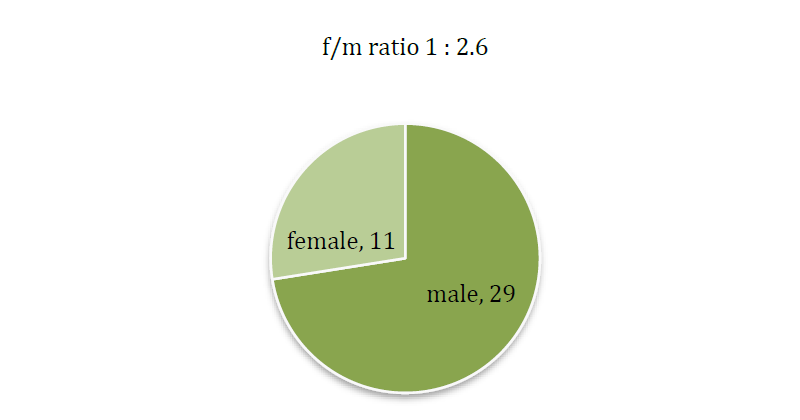
This a case control study of 40 autistic children attending neurology and psychiatric department in central teaching hospital of pediatrics in Baghdad for a period from first of april to firs of december 2012. The 40 autistic children was 11 girls and 29 boys Median age 6.5 years (range from 4 to 9 years). The diagnosis was carried out either by a qualified, psychiatrist or neurologist, according to Autism Diagnostic Interview Revised (ADI-R) and the Autism Diagnostic Observation Schedule(n). A written consent was obtained from their parent’s prior the start of the study, and then the parents were asked to complete a questionnaire regarding the childʼs medical and behavioral history. Another 40 (29 boy and 11 girls median age 6.5 years) healthy age- and sex-matched control volunteers were selected to participate in this study. Serum from patient and control are drawn by venipuncture and collected in plain tube and allowed to clot and serum separated by centrifugation and refrigerated at 2-8 °C until assay time. Anti tissue transglutaminase antibody (IgG & IgA) AND anti gliadin antibody (IgG & IgA) was measured by commercially available ELIZA kit. Human recombinant tissue transglutaminase is bound to microwells. Antibodies against this antigen, if present in diluted serum or plasma, bind to the respective antigens. Washing of the microwells removes unspecific bound serum and plasma components. Horseradish peroxidase (HRP) conjugated anti-human IgG immunologically detects the bound patient antibodies forming a conjugate/antibody/antigen complex. Washing of the microwells removes unbound conjugate. An enzyme substrate in the presence of bound conjugate hydrolyzes to form a blue color. The addition of an acid stops the reaction forming a yellow end-product. The intensity of this yellow color is measured photometrically at 450 nm. The amount of colour is directly proportional to the concentration of IgG antibodies present in the original sample.
RESULTS
IgA anti tissue transglutaminase antibody was found in 3 autistic children (7.5%) and 2 control children (5%) (p = 0.64), none of the autistic children and control was positive for IgG anti-tissue transglutaminase, none of the autistic children and control was positive for IgA & IgG antigliadin antibody. We did not find a significant differences in the level of anti tissue tranglutaminase and antigiadin antibody in between autistic children and control.
Table 2: The No of Patients
Parameters
case
Control
p-value
Total no.
40
40
-------
Anti-tissue glutaminase IgA
3 (7.5%)
2 (5%)
0.64
Anti-tissue glutaminase IgG
none
none
-------
Anti-gliadin AB. IgA
none
none
-------
Anti-gliadin AB. IgA
none
none
-------
Figure 1: f/m ratio in Autistic Child
DISCUSSION
This study was designed to determine whether CD is associated with autism in autistic children with no GIT disease in which they screened for anti-gliadin antibody and anti-tissue glutaminase antibody, among autistic children 3 (7.5%) patients was positive for IgA anti-tissuetranglutaminase ab and one (4%) of control while IgG AGA was negative in both patients and control.Results from our study demonstrated no significant differences in the incidence of abdominal pain, vomiting or chronic diarrhea, among autistic children compared with control children. However, a significantly higher number of autistics complained of constipation compared with control children, this may explained by the food selectivity among autistic children as most of them does not prefer eating vegetables and fruits.Our study support recent studies in which authors concluded that there is no significant differences between both cases and control groups In contrast, Barcia et al at The University of Brussels in 2008 retrospectively evaluated 150 autistic subjects (123 males, 27 females; mean age 6 years 8 months). Five subjects (3.3%) were diagnosed with CD, which was significantly higher (P = 0.014) than CD prevalence for the general pediatric population. Sponheim in 1991 also reported no connection between gluten and behavior in autistic and children with hyperactivity. Actually, Sponheim thought that a gluten free diet could be another negative factor leading to further social isolation in this group of highly socially handicapped patients and families. Moreover, Cunningham and Marcason concluded that there is insufficient evidence to support the beneficial effect of casein and gluten free diet in autistics. The association between celiac disease and central nervous system dysfunction has been known for several decades especially in relation to neuropathy, ataxia, migraine, and epilepsy. In fact, many new cases of celiac disease are detected following an initial presentation of neurological complaints, in case of autism several hypothesis proposed. The opiate hypothesis suggests that both gluten and casein are broken down to form metabolites with opiate agonist properties, which leak from the gut and pass into the central nervous system where they disrupt opioid activity in the brain, A second proposed mechanism suggests that gluten and casein can trigger inflammation in the gut leading to autoimmune illness or cross-reactivity with other potential central nervous system antigens. Analysis of data from small but representative groups of ASD patients has shown that approximately 30%–70% of autistic patients have circulating anti-brain autoantibodies, including autoantibodies to a serotonin receptor, myelin basic protein and unknown antigens from adult brain tissue extract. Separate epidemiologic studies suggest that a family history of autoimmune disorders is more common in children with autism compared to healthy control children. There is also increased incidence of asthma, allergy, autoimmune psoriasis and Type I diabetes in mothers of children with ASD and first degree relatives of children with autism are more likely to have an autoimmune disease compared to controls. Another consideration is that gut inflammation in celiac patients can precipitate underlying malabsorption of essential nutrients required for normal central nervous system function and this theory supported by several cases of children with autism reported in the literature who have significantly improved using nutritional interventions such as folate, o-3 fatty acids and cod liver oil. Gastrointestinal diseases are more common in children with a neurological disability and previous reports describe unexpected intestinal inflammation, with low-grade colitis and duodenitis with reduced disaccharides in children with autism.
Advertisement
Recommended Articles
Research Article
Risk Factors and Clinical Outcomes of Bacterial Conjunctivitis in Diabetic and Non-Diabetic Patients
Haider Mahmood Nimeh,
Ayad Abdulhafedh Jawad Al-Rubaye
Published: 06/12/2025
Download PDF
Cite
x
APA
Nimeh, H. M. & Jawad Al-Rubaye, A. A. (2025). Risk Factors and Clinical Outcomes of Bacterial Conjunctivitis in Diabetic and Non-Diabetic Patients. Himalayan Journal of Applied Medical Sciences and Research, 6(2), 1-6.
MLA
Nimeh, Haider Mahmood and Ayad Abdulhafedh Jawad Al-Rubaye. "Risk Factors and Clinical Outcomes of Bacterial Conjunctivitis in Diabetic and Non-Diabetic Patients." Himalayan Journal of Applied Medical Sciences and Research 6.2 (2025): 1-6.
Chicago
Nimeh, Haider Mahmood and Ayad Abdulhafedh Jawad Al-Rubaye. "Risk Factors and Clinical Outcomes of Bacterial Conjunctivitis in Diabetic and Non-Diabetic Patients." Himalayan Journal of Applied Medical Sciences and Research 6, no. 2 (2025): 1-6.
Harvard
Nimeh, H. M. and Jawad Al-Rubaye, A. A. (2025) 'Risk Factors and Clinical Outcomes of Bacterial Conjunctivitis in Diabetic and Non-Diabetic Patients' Himalayan Journal of Applied Medical Sciences and Research 6(2), pp. 1-6.
Vancouver
Nimeh HM, Jawad Al-Rubaye AA. Risk Factors and Clinical Outcomes of Bacterial Conjunctivitis in Diabetic and Non-Diabetic Patients. Himalayan Journal of Applied Medical Sciences and Research. 2025 Jul;6(2):1-6.
Download PDF
Research Article
The Role of Elevated CRP in Assessing the Severity and as a Prognostic Marker in Covid19 Patients
V. S. Sheshan,
...
Shekhar N. Chandra
Published: 04/07/2021
Download PDF
Cite
x
APA
S. Sheshan, V., Mulla Bahuddeen, M., None, M. & N. Chandra, S. (2021). The Role of Elevated CRP in Assessing the Severity and as a Prognostic Marker in Covid19 Patients. Himalayan Journal of Applied Medical Sciences and Research, 2(2), 1-4.
MLA
S. Sheshan, V., et al. "The Role of Elevated CRP in Assessing the Severity and as a Prognostic Marker in Covid19 Patients." Himalayan Journal of Applied Medical Sciences and Research 2.2 (2021): 1-4.
Chicago
S. Sheshan, V., M. Mulla Bahuddeen, Mahendra and Shekhar N. Chandra. "The Role of Elevated CRP in Assessing the Severity and as a Prognostic Marker in Covid19 Patients." Himalayan Journal of Applied Medical Sciences and Research 2, no. 2 (2021): 1-4.
Harvard
S. Sheshan, V., Mulla Bahuddeen, M., None, M. and N. Chandra, S. (2021) 'The Role of Elevated CRP in Assessing the Severity and as a Prognostic Marker in Covid19 Patients' Himalayan Journal of Applied Medical Sciences and Research 2(2), pp. 1-4.
Vancouver
S. Sheshan V, Mulla Bahuddeen M, Mahendra M, N. Chandra S. The Role of Elevated CRP in Assessing the Severity and as a Prognostic Marker in Covid19 Patients. Himalayan Journal of Applied Medical Sciences and Research. 2021 Jul;2(2):1-4.
Download PDF
Case Report
Mycosis Fungoides – A Case Report
Reema Bhatti,
...
Girija
Published: 20/10/2021
Download PDF
Cite
x
APA
Bhatti, R., Raina, D. & None, G. (2021). Mycosis Fungoides – A Case Report. Himalayan Journal of Applied Medical Sciences and Research, 2(2), 1-2.
MLA
Bhatti, Reema, Deepika Raina and Girija . "Mycosis Fungoides – A Case Report." Himalayan Journal of Applied Medical Sciences and Research 2.2 (2021): 1-2.
Chicago
Bhatti, Reema, Deepika Raina and Girija . "Mycosis Fungoides – A Case Report." Himalayan Journal of Applied Medical Sciences and Research 2, no. 2 (2021): 1-2.
Harvard
Bhatti, R., Raina, D. and None, G. (2021) 'Mycosis Fungoides – A Case Report' Himalayan Journal of Applied Medical Sciences and Research 2(2), pp. 1-2.
Vancouver
Bhatti R, Raina D, Girija G. Mycosis Fungoides – A Case Report. Himalayan Journal of Applied Medical Sciences and Research. 2021 Jul;2(2):1-2.
Download PDF
Research Article
A Critical Analysis of Spinal Block Anesthesia under Ultrasonographic Guided Technique: Is Levobupivacaine Alone Effective or on Adjuvant is Warranted?
Verma AK
Published: 20/09/2021
Download PDF
Cite
x
APA
AK, V. (2021). A Critical Analysis of Spinal Block Anesthesia under Ultrasonographic Guided Technique: Is Levobupivacaine Alone Effective or on Adjuvant is Warranted?. Himalayan Journal of Applied Medical Sciences and Research, 2(2), 1-4.
MLA
AK, Verma. "A Critical Analysis of Spinal Block Anesthesia under Ultrasonographic Guided Technique: Is Levobupivacaine Alone Effective or on Adjuvant is Warranted?." Himalayan Journal of Applied Medical Sciences and Research 2.2 (2021): 1-4.
Chicago
AK, Verma. "A Critical Analysis of Spinal Block Anesthesia under Ultrasonographic Guided Technique: Is Levobupivacaine Alone Effective or on Adjuvant is Warranted?." Himalayan Journal of Applied Medical Sciences and Research 2, no. 2 (2021): 1-4.
Harvard
AK, V. (2021) 'A Critical Analysis of Spinal Block Anesthesia under Ultrasonographic Guided Technique: Is Levobupivacaine Alone Effective or on Adjuvant is Warranted?' Himalayan Journal of Applied Medical Sciences and Research 2(2), pp. 1-4.
Vancouver
AK V. A Critical Analysis of Spinal Block Anesthesia under Ultrasonographic Guided Technique: Is Levobupivacaine Alone Effective or on Adjuvant is Warranted?. Himalayan Journal of Applied Medical Sciences and Research. 2021 Jul;2(2):1-4.
Taghlub, H. A., Mohammed, M. I. & Rahema, M. I. (2022). Autism and Possible Association with Celiac Disease. Himalayan Journal of Applied Medical Sciences and Research, 3(2), 1-4.
MLA
Taghlub, Husam A., Murtadha I. Mohammed and Muntasre I. Rahema. "Autism and Possible Association with Celiac Disease." Himalayan Journal of Applied Medical Sciences and Research 3.2 (2022): 1-4.
Chicago
Taghlub, Husam A., Murtadha I. Mohammed and Muntasre I. Rahema. "Autism and Possible Association with Celiac Disease." Himalayan Journal of Applied Medical Sciences and Research 3, no. 2 (2022): 1-4.
Harvard
Taghlub, H. A., Mohammed, M. I. and Rahema, M. I. (2022) 'Autism and Possible Association with Celiac Disease' Himalayan Journal of Applied Medical Sciences and Research 3(2), pp. 1-4.
Vancouver
Taghlub HA, Mohammed MI, Rahema MI. Autism and Possible Association with Celiac Disease. Himalayan Journal of Applied Medical Sciences and Research. 2022 Jul;3(2):1-4.


 Download PDF
 Download XML