Contents
Download PDF
pdf Download XML
1511 Views
394 Downloads
Share this article
Case Report | Volume 2 Issue 2 (July-Dec, 2021) | Pages 1 - 3
Thoracic Duct Injury in Accidental Stab Wound Neck - A Case Report
 ,
1
Regional Hospital, Reckong Peo, Himachal Pradesh, India
Under a Creative Commons license
Open Access
Received
Oct. 6, 2021
Revised
Nov. 28, 2021
Accepted
Dec. 19, 2021
Published
Dec. 31, 2021
Abstract

Chylothorax is characterised by accumulation lymphatic fluid in the pleural cavity. Thoracic duct injury and resulting chylothorax, due to penetrating injuries of neck are very rare. We describe a case of chylothorax with surgical emphysema left side chest extending to neck post accidental stab wound zone1of neck left lower anterior region.

Keywords
INTRODUCTION

The thoracic duct is the largest lymphatic duct in the body,[1] with a typical length of 45 cm and a diameter of 2 to 5 mm. It drains lymph from the whole body except the right hemithorax, the right side of the head and neck, and the right upper limb. Chylothorax is the term used for thoracic duct leak and collection into the pleural space.


The thoracic duct typically starts at the second lumbar vertebra at the cisterna chyli, ending at the junction of the left subclavian and jugular veins. A total of 1.5 to 2 liters of lymph flows through the thoracic duct per day [2,3]. The varied course of the thoracic duct and its site of leak dictates the side of pleural effusion. Hence, injury to the duct below the 5th thoracic vertebrae results in pleural effusion on the right side, and damage above this level occurs in a left-sided pleural effusion [4].


The etiology of chylothorax can either be congenital or acquired and further subdivided into traumatic and nontraumatic chylothorax. Arising from either blunt trauma, penetrating trauma or iatrogenic cases, this condition can be seen in various clinical settings. Nontraumatic etiologies of chylothorax include malignancy, inflammatory response and idiopathic causes [5]. Iatrogenic causes comprise most traumatic etiology of chylothorax while non-iatrogenic causes are exceedingly rare. [6] Penetrating and blunt trauma accounts for just 5% of traumatic chylothorax and 2% of the total number of chylothorax cases worldwide [7]. Pleural effusions secondary to penetrating chest trauma are much more commonly associated with hemothorax rather than a chyle accumulation. Most chylothorax occurs on the left side due to the native anatomy of the thoracic duct, which typically arises from the cisterna chyli and carries lymph superiorly, crossing to the left side of the spine at the level of T5 [8]. Management of chylothorax begins with draining the lymphatic fluid from the chest with either a thoracocentesis or tube thoracostomy for larger, rapid fluid accumulation [5]. Once the lymphatic fluid has been adequately drained from the chest, clinical focus shifts to controlling the leak. Management includes addressing the leak and also the etiology of the leak after diagnosis. Thoracic duct leak is classified into low output if the volume is < 1 liter and high volume if > 1 liter.


Low output chylothorax - Drainage of the fluid in symptomatic patients along with dietary control measures and concomitantly treating the underlying cause is the goal of treatment. Octreotide is often used to reduce the number of leaks and to avoid surgery. 


High output chylothorax - Most commonly seen post-surgically. Though conservative management is tried initially, many end up needing an intervention such as thoracic duct ligation or embolization [9].

CASE REPORT

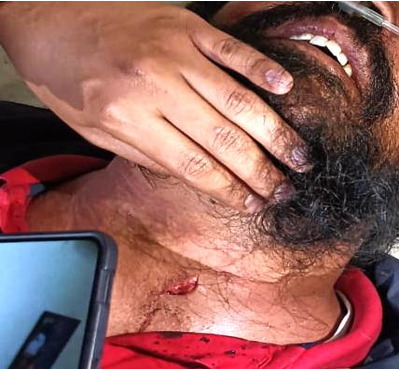
A 45-year-old male with no significant past medical history presented to the emergency room with a penetrating stab wound to zone one of the left side necks approximately 8 hours back. He was accompanied by his colleagues who worked with him. Patient was referred with history of penetrating trauma with knife on left side lower neck at worksite accidentally. On arrival, the patient had a GCS 15/15, blood pressure 130/70mmHg, pulse rate- 113/minute, spo2-85% without O2, respiratory rate-26/minute. Upon clinical examination, the wound was located above middle 1/3rd of clavicle, anterior to lower third of sternocleidomastoid left side of neck in  


Figure 1: Penetration Trauma, The Wound.

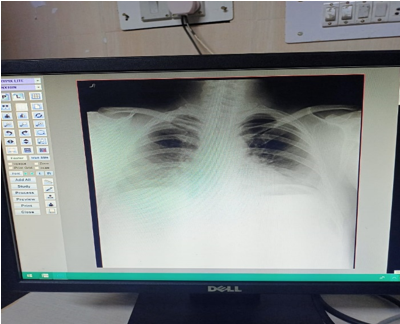
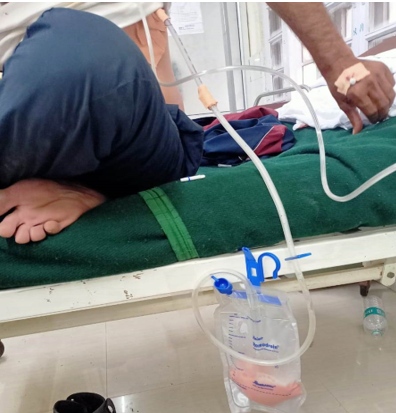
zone1, measured about 2.5cm–3 cm, incised wound, clean cut edges, gaping with no active bleeding no hematoma or any sign of vascular injury slight swelling was however present at injury site (Figure 1). On auscultation breath sounds were absent on left side chest and surgical emphysema was felt as crepitus while palpating on left side chest which was extending up to neck. Chest X-ray revealed left hemothorax with slight mediastinal shift (Figure 2). Patient was stabilized with IVF crystalloids 1 vac rush then at 110ml/hour, O2 inhalation, injection(inj.) diclofenac, inj tramadol, injemset, inj amoxyclav. Informed consent was taken and patient planned for intercostal drainage tube (ICD) insertion for haemo-pnemothorax. Part was cleaned and draped, local lignocaine 2% was infiltrated over superior aspect of rib in triangle of safety. ICD of size 32F inserted in 6th intercostal space in mid axillary line on left side chest and immediately gush of air with milky fluid was noted in under water seal. ICD was fixed and air tight dressing done. Approximately 400ml chylous drainage was noted within 1 hour (Figure 3). Diagnosis of thoracic duct injury was made and patient kept NPO on IVF and vitals monitored half hourly. Patient was kept in emergency department for observation. Chylous drainage of approximately 900ml was noted over 4 hours. Vitals of patient were stable but pnemothorax on chest and neck did not resolve. Spo2 of patient on O2 was 91% at 2L/minute. Patient kept in propped up position on oxygen and flow rate increased upto 4L/min to maintain saturation upto 94%. Telemedicine consultation was taken for further management, as tracheal and oesophageal injury could not rule out and in regional hospital setup nothing more could be done. Patient was referred with ICD to higher center for further evaluation & management. Patient was further referred from Shimla to Chandigarh then airlifted to Delhi and admitted in New Delhi were ENT, CTVS opinion taken. Patient was managed conservatively and discharged over 2-3 weeks as per information received from attendants.    


Figure 2: Chest X-Ray.


Figure 3: Chylous Drainage.


DISCUSSION

The thoracic duct is more like a vein histologically with the primary function of transporting chyle from the gastrointestinal tract into a systemic venous system. It carries almost 4 liters of chyle daily, most of which originates in the digestive tract. The flow rate can be up to 100 ml/kg/day, depending on the diet consumed. A combination of intrathoracic and intraabdominal pressures and arterial pulsations helps in maintaining lymph flow in the thoracic duct. Chyle is rich in chylomicrons, triglycerides, cholesterol, fat-soluble vitamins and also contains albumin in high concentrations (12-14 g/L). Thoracic lymph also contains lymphocytes, which account for 95% of the cell content, and this keeps chyle mostly sterile. Electrolytes and other enzymes levels resemble that of the plasma [10,11].


Conservative therapy is typically used initially but if there is an active chylous drainage from the wound, exploration and ligation of ductus is appropriate treatment. But, if the diagnosis is made only with a chylothorax, treatment should be attempted conservatively by drainage and early total parenteral nutrition initially. If spontaneous closure of the duct does not occur within 14 days, the decision of definitive surgery should be taken. Empirically, it is generally agreed that surgical correction of the fistula should be considered before the patient becomes severely malnourished. Presence of 1,000–1,500 ml/day of drainage for 5 days or 500 ml/day of chylous drainage for 14 days despite medical treatment necessitates surgical intervention [12,13].


Possible side effects after chylothorax depend on the size of the leakage, duration and mode of treatment applied. There may be cardiopulmonary problems, metabolic and immunological deficits due to loss of proteins, lipids and lipid-soluble vitamins [12,14]. The most common disturbances described are hypovolemia, hyponatremia, hypoproteinemia and hypocalcemia [14]. Thus, the intake and output of the patient and biochemical parameters should be monitored during nutritional support, and replacements should be provided accordingly. About half of chylothorax cases can be treated by conservative measures. [12,13]. Initially, a tube tracheostomy should be applied for decompression and drainage. Chylous drainage increases the electrolyte loss and nutritional requirements. Thus, adequate and sufficient nutrition should be provided. If the patient receives oral nutrition, lipid intake should be limited to 20–30 g/day and medium-chained triglycerides, which pass into the portal system without joining the lymphatic system, should be used. [13] Closed chest drainage prevents the accumulation of chyle in the pleural cavity and facilitates the monitoring of chyle output, whereas hyperalimentation and bowel rest significantly reduce chyle production [12]. Chyle formation is closely correlated with enteral fat. Most conservative regimens involve a low-fat diet supplemented with medium chain triglycerides to reduce chyle production. But it must be remembered that any oral feeding will increase the output of the chyle fistula. Therefore, complete gut rest and TPN appear to provide the best conditions for fistula closure and nutritional support when available. [15] When TPN is started early it helps to maintain rather stable and metabolically balanced condition. The duration of the trial of conservative management has not been so far uniformly stated.


CONCLUSION

In conclusion, a thoracic duct injury should be kept in mind, despite thoracic duct injuries secondary to penetrating    neck     trauma     are     rare.     Tracheal   and oesophageal injury could not be ruled out primarily in our case as wound was not explored initially. Management outcome of such rare patients is likely to review literature and help clinicians to treat such cases in future.

REFERENCES
  1. Derakhshan, A. et al. “Thoracic duct injury following cervical spine surgery: A multicenter retrospective review.” Global Spine Journal, vol. 7, no. 1, 2017, pp. 115S–119S.

  2. Weidner, W.A., and R.M. Steiner. "Roentgenographic demonstration of intrapulmonary and pleural lymphatics during lymphangiography." Radiology, vol. 100, no. 3, 1971, pp. 533–539.

  3. Macfarlane, J.R., and C.W. Holman. "Chylothorax." American Review of Respiratory Disease, vol. 105, no. 2, 1972, pp. 287–291.

  4. Doerr, C.H. et al. "Chylothorax." Seminars in Respiratory and Critical Care Medicine, vol. 22, no. 6, 2001, pp. 617–626.

  5. Kaiser, L., and I. Kron. Mastery of Cardiothoracic Surgery. 3rd ed., Lippincott Williams and Wilkins, 2013.

  6. McGrath, E. et al. "Chylothorax: Aetiology, diagnosis and therapeutic options." Respiratory Medicine, vol. 104, 2010, pp. 1–8.

  7. Huggins, J.T. "Chylothorax and cholesterol pleural effusion." Seminars in Respiratory and Critical Care Medicine, vol. 31, 2010, pp. 743–750.

  8. Defize, I.L. et al. "The anatomy of the thoracic duct at the level of the diaphragm: A cadaver study." Annals of Anatomy, vol. 217, 2018, pp. 47–53.

  9. Moussa, A.M. et al. "Thoracic duct embolization in post-neck dissection chylous leakage: A case series of six patients and review of the literature." Cardiovascular and Interventional Radiology, vol. 43, no. 6, 2020, pp. 931–937.

  10. Robinson, C.L. "The management of chylothorax." Annals of Thoracic Surgery, vol. 39, no. 1, 1985, pp. 90–95.

  11. Chalret du Rieu, M. et al. "Management of postoperative chylothorax." Journal of Visceral Surgery, vol. 148, no. 5, 2011, pp. e346–e352.

  12. Miller, J.I., Jr. "Anatomy of the thoracic duct and chylothorax." General Thoracic Surgery, edited by T.W. Shields, J. LoCicero, and R.B. Ponn, 6th ed., Lippincott Williams & Wilkins, 2005, pp. 879–888.

  13. Golden, P. "Chylothorax in blunt trauma: A case report." American Journal of Critical Care, vol. 8, 1999, pp. 189–192.

  14. Merrigan, B. et al. "Chylothorax." British Journal of Surgery, vol. 84, 1997, pp. 15–20.

  15. Karoganoglu, N. et al. "Isolated chylothorax after penetrating trauma." Acta Chirurgica Hungarica, vol. 38, 1999, pp. 67–69.

License
CC BY-NC-ND
Creative Commons Attribution-NonCommercial-NoDerivatives 4.0 International License
Thoracic Duct Injury in Accidental Stab Wound Neck - A Case Report © 2026 by Raj Kumar Negi, Sunil Kumar Negi licensed under CC BY-NC-ND 4.0
All papers should be submitted electronically. All submitted manuscripts must be original work that is not under submission at another journal or under consideration for publication in another form, such as a monograph or chapter of a book. Authors of submitted papers are obligated not to submit their paper for publication elsewhere until an editorial decision is rendered on their submission. Further, authors of accepted papers are prohibited from publishing the results in other publications that appear before the paper is published in the Journal unless they receive approval for doing so from the Editor-In-Chief.
Himalayan Journal of Applied Medical Sciences and Research open access articles are licensed under a Creative Commons Attribution-Share A like 4.0 International License. This license lets the audience to give appropriate credit, provide a link to the license, and indicate if changes were made and if they remix, transform, or build upon the material, they must distribute contributions under the same license as the original.
Advertisement
Recommended Articles
Research Article
Study of the Role of Serum Interleukin-6 in Inflammation among Pregnant Women with COVID-19
Published: 27/07/2021
Download PDF
Research Article
Evaluation of Serum Heat Shock Protein 70 as a Diagnostic Biomarker for Ectopic Pregnancy: A Comparative Case-Control Study
Published: 28/02/2026
Download PDF
Research Article
Assessing First Trimester Maternal Serum Pentraxin-3 Levels in Primary Unexplained Recurrent Pregnancy Loss: A Case-Control Study
Published: 28/02/2026
Download PDF
Research Article
Bones in Balance: Awareness of Rickets and Nutritional Deficiencies Among the Hamirpur Community
Published: 10/12/2024
Download PDF
Chat on WhatsApp
Flowbite Logo
Najmal Complex,
Opposite Farwaniya,
Kuwait.
Email: kuwait@iarcon.org

Editorial Office:
J.L Bhavan, Near Radison Blu Hotel,
Jalukbari, Guwahati-India
Useful Links
Order Hard Copy
Privacy policy
Terms and Conditions
Refund Policy
Others
About Us
Team Members
Contact Us
Online Payments
Join as Editor
Join as Reviewer
Subscribe to our Newsletter
Follow us
MOST SEARCHED KEYWORDS
scientific journal
 | 
business journal
 | 
medical journals
 | 
Scientific Journals
 | 
Academic Publisher
 | 
Peer-reviewed Journals
 | 
Open Access Journals
 | 
Impact Factor
 | 
Indexing Services
 | 
Journal Citation Reports
 | 
Publication Process
 | 
Impact factor of journals
 | 
Finding reputable journals for publication
 | 
Submitting a manuscript for publication
 | 
Copyright and licensing of published papers
 | 
Writing an abstract for a research paper
 | 
Manuscript formatting guidelines
 | 
Promoting published research
 | 
Publication in high-impact journals
Copyright © iARCON Internaltional LLP . All Rights Reserved.