Identification of epidemiological characteristics of patients admitted to ocular trauma ward in Shaheed Dr. Aso-Eye Hospital in Sulaymaniyahcity- Iraq in 2019
Background: Eye constitutes just 0.27% of the total surface area of the body and 4% of the facial area, but it is the third most prevalent part of the body affected by trauma after hands and feet. Ocular trauma is a significant public health problem and preventable cause of visual morbidity. It is common in developing countries and may lead to permanent visual impairment. It may occur at any age in either sex, especially among pediatric and elderly population. According to estimates of world health organization, the global annual incidence of ocular trauma is around 55 million and worldwide blindness in 1.6 million people is due to ocular trauma. The aim of this study is to evaluate the epidemiological factors of patients admitted for ocular trauma in Shaheed Dr. Aso eye hospital in Sulaymaniyah/Iraq. Patients and Methods: A retrospective study - case series study- file based was carried out in Dr. Aso eye hospital from 1st January to the 31st of December 2019. Approval paper had been taken from the manager of hospital which give the researcher the authorization to access to the case records. A descriptive design has been used as a one year retrospective study of patient files from 1/1/2019-31/12/2019 with analytic component. Questionnaire including; demographic, social, and information about the trauma were collected from the records. Mobile had been used to take the needed or deficient information's by direct calling of the patients. Results: The study showed that from 177 patients most of them was aged 0-10 years, 80 case (45.19%) and the lowest was 41-50 years 5 cases (2.82%), and that 134 of them was male (75.7%), and 43 was female (24.3%). The frequent injuries were play related 38 (21.5%) and the lowest was road accident and farm related 3(1.7%). The effects of residency on causes of ocular trauma most of cases registered in hospital was coming from outside Sulaymaniyah city 93 (52.5%), then from inside city 71 (40.2%), followed by outside governorate 13(7.3%), all these results had a significant relationship with causes of trauma. Conclusion: The play related is the most common cause of ocular trauma followed by home related, and the road related is the less common cause, and childhood period is the most common susceptible age for trauma, and there is strong significant relationship between the age and gender, and causes with gender, residence, anatomical site and mechanism of injuries.
Keywords
Epidemiology of ocular trauma in Shahed Dr. Aso-Eye Hospital
A retrospective study of ocular trauma
INTRODUCTION
Ocular trauma is one of the main causes of severe ocular morbidity [1]. Globally, more than 55 million eye injuries occur per year, while there are approximately 1.6 million people with blindness from ocular trauma, 2.3 million people who are bilaterally visually impaired, and 19 million people with unilateral blindness or visual loss [2]. Despite advancements in medical technology for sight preservation and restoration, eye injuries remain a major cause of visual loss [3]. The consequences of eye injuries on human suffering and the economic loss are underestimated [4]. Eye injury is an important worldwide condition leading to acquired severe monocular visual impairment in all age groups. A significant number of these patients sustained a severe injury and required hospital admission for either medical and/or surgical management with the reported incidence rate ranging from 8.6 to 89 per 100,000 population-years [5]. A need for hospitalization along with a subsequent severe visual disability increased the burden to both the family and the economic health care system. Therefore, eye injury prevention programs are important public health concerns that should be put forward. However, epidemiology and characteristics of hospitalized eye injury had considerable discrepancies between publications depending on ethnic, culture, or daily living patterns of each population [6]. The lack of information regarding eye injury types, mechanisms, activities or causative objects leads to an inability to determine effective preventive strategies [7]. The aim of this study is to evaluate the epidemiological factors of patients admitted for ocular trauma in Shahed Dr. Aso eye hospital.
MATERIALS AND METHODS
Patients and Methods
A retrospective study - case series was carried out in Sulaymaniyah governorate in Shaheed Dr. Aso eye hospital from 1st January to the 31st of December 2019. Approval paper had been taken from the manager of hospital which give the researcher the authorization to access to the case records. A descriptive design has been used as a one-year retrospective study of patient files from 1/1/2008-31/12/2008 with analytic component. Questionnaire including; demographic, social, and information about the trauma were collected from the records. Mobile had been used to take the needed or deficient information's by direct calling of the patients. The total number of the patient files were involved was 177 case record. Inclusions criteria included; patients with ocular trauma who admitted to the hospital and had a police report. Limitations of the study where the research is a new subject in Iraq and deficient information gained from the case records. Statistical analysis was done by using SPSS 25 pack for windows and Chi-square test(X2-test) used for comparing groups.
RESULTS
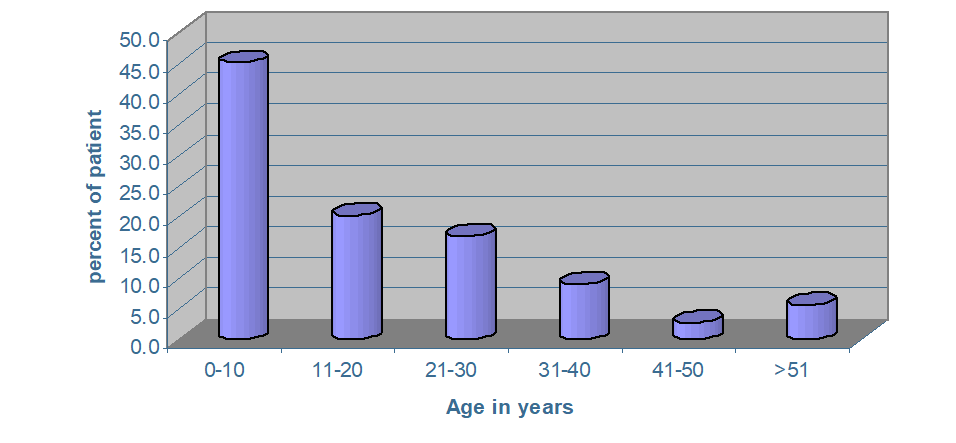
The study showed that from a 177 patient most of them was aged 0-10 years, 80 case (45.19%) and the lowest was 41-50 years 5 cases (2.82%), and that 134 of them was male (75.7%), and 43 was female (24.3%). as shown in Figure 1.
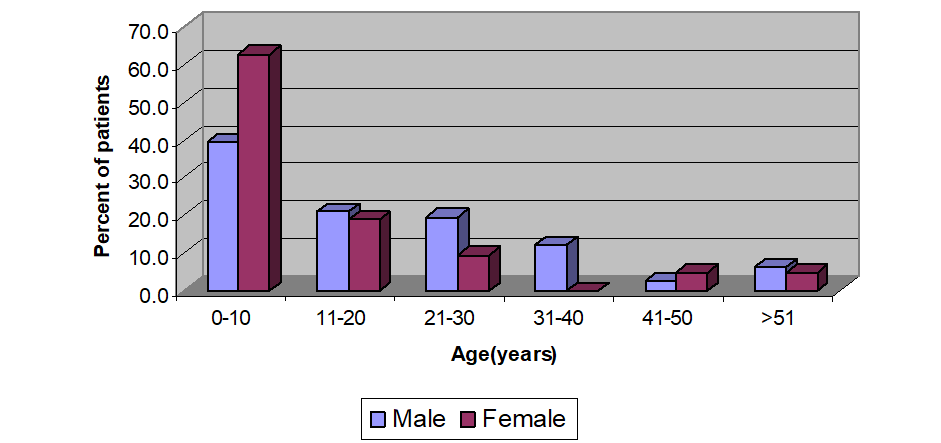
Most of injuries among females occurs in the age group 0–10 years, 27 case from 43 cases (62.8%), while among males also occurs in the age group 0-10, 53 case from 134case (39.6%). This relation was statistically significant.as shown in Figure 2.
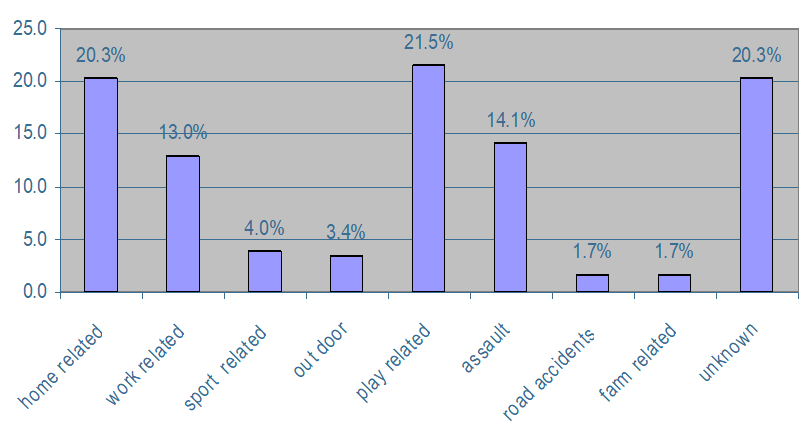
The frequent injuries was the play related 38 (21.5%) and the lowest was road accident and farm related 3(1.7%), as shown in Figure 3.
Figure 1: age distribution of patients
Table 1: Circumstances of the injury in male and female patients with ocular injury.
cause of injury
Male
Female
Total
No.
%
No.
%
No.
%
Home related
18
50
18
50
36
20.3
work related
22
95.7
1
4.3
23
13.0
sport related
7
100.0
7
4.0
out door
5
83.3
1
16.7
6
3.4
play related
29
76.3
9
23.7
38
21.5
Assault
21
84.0
4
16.0
25
14.1
road accidents
1
33.3
2
66.7
3
1.7
farm related
3
100.0
3
1.7
Unknown
28
77.8
8
22.2
36
20.3
Total
134
75.7
43
24.3
177
100
Figure 2: Age distribution of patients according to sex
Figure 3: Patient distribution according to causes.
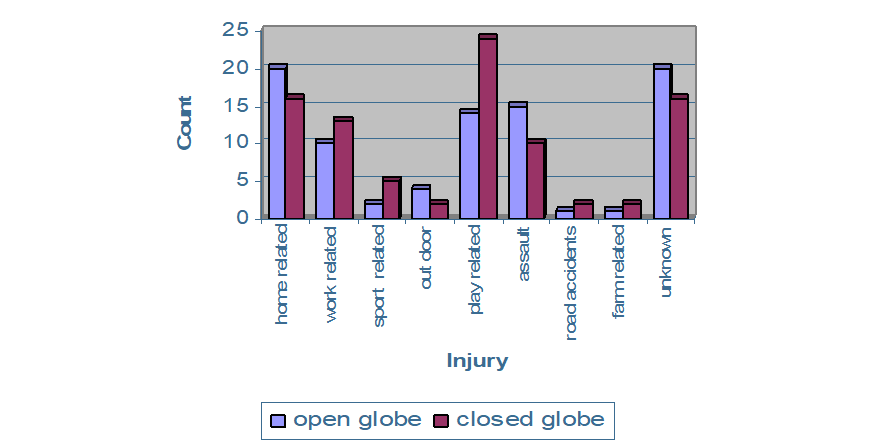
Figure 4: frequency of causes of eye injury by open/ closed globe
Frequency of causes of eye injury with types of trauma the frequent one was open globe injuries were home related 20 (23%), while closed globe was play related 24 (26.7%), this relation was statistically not significant as shown in Figure 4.
The relation between gender and causes revealed that home related injuries is equaled 18 (50%) in both male and female, work related commonly found among males 22 (95.7%), sport related found among males 7(100%), outdoor in male 5 (83.3%), play related among male 29 (67.3%), this difference was statistically significant as shown in Table 1.
The effects of residency on causes of ocular trauma most of cases registered in hospital was coming from rural areas of Sulaymaniyah city 93 (52.5%), then from urban area 71 (40.2%). The patients from other governorates were 13 (7.3%), 10 (76%) were urban origin and the rest from rural origin.
Table 2: Distribution of characteristics of cases
Mechanism of injury
Frequency
%
Lacerated
43
24.3
Blunt
66
37.3
Penetrated
33
18.6
Blast
11
6.2
Chemical
2
1.1
IOFB
22
12.4
Occupation
Gainer
45
25.4
Child
48
27.1
Student
61
34.5
Employee
8
4.5
House wife
8
4.5
Retired
2
1.1
Military
5
2.8
Residence
Sulimania center
71
40.1
Out
93
52.5
Outside governarent
13
7.3
Side of injury
Right
85
48.0
Left
83
46.9
Both
9
5.1
Type of trauma
Open globe
87
49.2
Closed globe
90
50.8
Management procedure
Conservative
73
41.2
Repair
102
57.6
Evisceration
1
0.6
Referred
1
0.6
Regarding the occupation, most of them was students 61 (34.5%), and lowest of them was retired 2(1.1%), and 71 (40.1%) of them in Sulaymaniyah center, 93 (52.5%) outside center, and 13 (7.3%) outside governorate. The right eye was affected in 85 (48.0%), versus 83 (46.9%) of the left eye, and the both eyes affected in 9 (5.1%). Ocular trauma was closed globe in 90(50.8%), versus open globe 87 (49.2%) of cases. The mechanism of injury, mostly by blunt mechanism 66 (37.3%), and lowest by chemical mechanism 2(1.1%). The management procedure, all of them managed in hospital especially by surgical repair 102 (57,6%1), except 1 (0,6%) was referred as shown in table 2.
Relationship between anatomical sites of tissues damage and causes of ocular trauma the most anatomical site affected by ocular trauma is cornea 111(62.7%), and lowest anatomical site is extraocular muscle and lacrimal tissues 5(2.8%), the orbit 7(3.9%), and all had a significant relationship with the cause of trauma as shown in table 3.
DISCUSSION
The current study revealed that the most common risky age group affected by ocular trauma is below 10 years (45.2%), and male affected more than female, in a ratio is 3.1-1. This disagree with El-Sobky HM in 2019 found that the all ages were found susceptible to ocular trauma irrespective of the sex. The incidence of ocular injury was higher in male individuals (69.1%) than in female individuals (30.9%) of all ages. Most ocular injuries (66.1%) were encountered in patients aged 30 years and younger versus to 24.3% of the patients were children.[8] This also disagree with SA Widjaja in 2021 found that the distribution of ocular trauma was most frequent in the middle age group of 21–50 years, with the highest proportion in the 21–30 years old group (20.9%), and children less than 10 years constitutes (8.8%) [9]. The current study revealed that the center of Sulaymaniyah city affected less than outside the city and governorate, and this disagree with Mallika PS in 2008 found that in developed countries, the incidence seems to be higher in industrialized areas than in non-industrialized areas [10]. The current study regarding age and residence agree with Kindie DA in 2018 found that the ocular trauma was observed mostly in children (65.67%), followed by adolescents (25.37%). The occurrence of ocular trauma is relatively low as the age increases. Also revealed that rural dwellers (76.12%) [11].
Table 3: Types of tissue damage according to the cause of trauma
P value (df)
Unknown (N=36)
Farm related(N=3)
Road accidents (N=3)
Assault (N=25)
Play related (N=38)
Outdoor (N=6)
Sport related (N=7)
Work related (N=23)
Home related (N=36)
Type of tissue damage
0.342(8)
22(61.1)
1(33.3)
1(33.3)
21(84)
27(71.1)
4(66.7)
6(85.7)
16(69.6)
22(61.1)
Ac
0.025(8)*
9(25)
1(33.3)
2(66.7)
10(40)
5(13.2)
4(66.7)
1(14.3)
3(13)
13(36.1)
Conjunctiva
0.038(8) *
24(66.7)
2(66.7)
1(33.3)
18(72.0)
22(57.9)
5(83.3)
14(60.9)
25(69.4)
Cornea
0.102(8)
6(16.7)
2(66.7)
2(66.7)
6(24)
11(28.9)
2(33.3)
2(28.9)
2(8.7)
5(13.9)
Eyelid
0.366(8)
1(2.8)
0(0)
0(0)
2(8)
1(2.6)
1(16.7)
0(0)
0(0)
0 (0)
Extra-ocular muscles
0.365(8)
17(47.2)
1(33.3)
1(33.3)
13(52)
14(36.8)
5(83.3)
1(14.3)
8(34.8)
14(38.9)
Iris
0.003(8) *
0(0)
0(0)
0(0)
1(4)
0(0)
2(33.3)
0(0)
1(4.3)
1(2.8)
Lacrimal
0.073(8)
4(11.1)
1(33.3)
0(0)
9(36)
4(10.5)
2(33.3)
0(0)
2(8.7)
5(13.9)
Lens
0.536(8)
2(5.6)
0(0)
0(0)
2(8)
2(5.3)
1(16.7)
0(0)
0(0)
0(0)
Orbital wall
0.003(8) *
1(2.8)
1(33.3)
0(0)
7(28)
2(5.3)
2(33.3)
0(0)
0(0)
3(8.3)
Retina
0.112(8)
7(19.4)
1(33.3)
0(0)
8(32)
3(7.9)
3(50)
1(14.3)
2(8.7)
6(16.7)
Sclera
0.008(8) *
7(19.4)
1(33.3)
0(0)
10(40)
2(5.3)
2(33.3)
1(14.3)
0(0)
6(16.7)
Uveal tissue
0.043(8) *
5(13.9)
1(33.3)
1(33.3)
9(36)
2(5.3)
1(16.7)
2(28.6)
1(4.3)
9(25)
Vitreous
20.3%,ng in 2017 found that overall, the most frequent ocular trauma setting was the workplace (39.6%) followed by the home (28.4%), and the most frequent activity was ironwork [12]. And the current study disagre with Shazia Qayum et al found that road traffic accident was the commonest cause of ocular trauma (34%) of cases followed by sports related, recreational related (29.7%), work related (20%), domestic (fall) accidents (9.4%), violence (6.3%) [13]. In the current study the most common mechanism of trauma in is blunt trauma and less common cause is chemical injury. This agree with R. Sterling Haring who found that being struck by or against an object is the most common cause of ocular trauma, & that the top causes of injury among that group are ocular foreign bodies, which are most common during the working years [14]. Maurya RP found that traumatic agents were blunt and sharp in 56% and 17% of cases, respectively and that the mechanical injuries were accounted for 89.3% of all eye injuries, and most common source was wooden object (24.9%) followed by metallic objects (20.9%). Traumatic agents were blunt and sharp in 56% and 17% of cases, respectively [15]. The current study found that the cornea is the most affected part of the eye to injury and this agree with Alem KD in 2019 who found that corneal tear was the most frequently observed finding (39.33%). [16] The present study found that the percentage of closed globe injury more than open globe because most common mechanism of injury is blunt trauma. This agree with Zungu T in 2021 found that most participants had closed globe injuries (n = 72, 70.6%), with over half the population injured by blunt objects (n = 62, 60.8%).[17] This disagree with Faiza SJ in 2023 found that it was found that 50% of injuries were open-globe injuries, 16.7% closed globe injuries and 25% orbital wall fractures. [18] The current study showed that the right side more affected by trauma than left side and This agree with Jac-Okereke in 2021 who found that the laterality of the eyes affected was as follows; right eye (48.1%), left eye (44.4%) and both eyes (7.4%). [19]
The current study showed that most of patient is managed by repairing and conservative ways, and only one patient was referred to other hospital and one Patient treated by evisceration but most of patient is managed by repairing and conservative ways. This disagre with Cillino who found that the most common primary surgery concerned reconstitution of the globe integrity with reposition or excision of ocular contents. All surgeries occurred within 5 hours of presentation to the hospital. The majority of primary repairs of open globe injuries involved suture of the wound with or without excision of prolapsed intraocular contents or lensectomy (58.9%). Four primary enucleations were performed for severely ruptured globes. All these injuries were due to assault. Six open globe injuries, four of which were from assault, required secondary enucleations. Among the open globe injuries, lensectomy was performed in nine cases (6.3%) during primary repair and in 14 cases (9.5%) as a secondary procedure. Forty-nine of the 146 open globe injuries required further surgery, 26 cases by vitreoretinal procedures. [20] The current study showed that the most common ocular trauma occurs in students especially in childhood period and this is disagree Mengistu HG in 2021 found that the prevalence of occupational ocular injury was 31.4% (95% CI, 27.2–35.5). Employment pattern (temporary workers) (AOR: 1.84, 95% CI: 1.14–2.95), health and safety training (AOR: 2.22, 95% CI: 1.06–4.66), non-use of eye safety device (AOR: 7.43, 95% CI: 4.44–12.43), and job category (woodwork (AOR: 0.56, 95% CI: 0.32–0.97), and brickwork (AOR: 2.19, 95% CI: 1.08–7.21) had statistically significant with occupational ocular injury. (21) Also disagree with Marta A in 2021 who found that Work-related accidents were responsible for 19.3% of injuries. Home was the most common location of trauma (46.3%). [22]
CONCLUSION
The play related is the most common cause of ocular trauma followed by home related, and the road related is the less common cause, and childhood period is the most common susceptible age for trauma, and there is strong significant relationship between the age and gender, and causes with gender, residence, anatomical site and mechanism of injuries.
Recommendations
Health education regarding eye injuries and how to keep and manage until reaching eye center is very important measures in school education and mass media.
REFERENCE
Toride, A., et al. "Visual Outcome after Emergency Surgery for Open Globe Eye Injury in Japan." Clinical Ophthalmology, vol. 10, 2016, pp. 1731–1736.
Zhang, Xi, et al. "A Retrospective Study on Clinical Features and Visual Outcome of Patients Hospitalized for Ocular Trauma in Cangzhou, China." Journal of Ophthalmology, 2017, pp. 1–6.
Wong, M. Y., et al. "Prevalence, Subtypes, Severity and Determinants of Ocular Trauma: The Singapore Chinese Eye Study." British Journal of Ophthalmology, vol. 102, 2017, pp. 204–209.
Kutlutürk Karagöz, I., et al. "Characteristics of Pediatric and Adult Cases with Open Globe Injury and Factors Affecting Visual Outcomes: A Retrospective Analysis of 294 Cases from Turkey." Ulus Travma Acil Cerrahi Derg, vol. 24, 2018, pp. 31–38.
Iftikhar, M., et al. "Changes in the Incidence of Eye Trauma Hospitalizations in the United States from 2001 through 2014." JAMA Ophthalmology, vol. 137, no. 1, 2019, pp. 48–56.
Wang, W., et al. "Epidemiology and Clinical Characteristics of Patients Hospitalized for Ocular Trauma in South-Central China." Acta Ophthalmologica, vol. 95, no. 6, 2017, pp. e503–e510.
Movahedinejad, T., et al. "A Study on Hospital Admissions for Eye Trauma in Kashan, Iran." Trauma Monthly, vol. 21, no. 2, 2016, e28073.
El-Sobky, H. M., et al. "Incidence and Pattern of Ocular Trauma Among Ophthalmic Patients in Menoufia University Hospitals." Menoufia Medical Journal, vol. 32, 2019, pp. 1430–1435.
Widjaja, S. A., et al. "Ocular Trauma Trends in Indonesia: Poor Initial Uncorrected Visual Acuity Associated with Mechanism of Injury." Open-Access Macedonian Journal of Medical Sciences, vol. 9, no. B, 2021, pp. 903–908.
Mallika, P. S., et al. "Pattern of Ocular Trauma in Kuching, Malaysia." Malaysian Family Physician, vol. 3, 2008, pp. 140–145.
Alem, Kindie Desta, et al. "The Pattern, Presentation, and Risk Factors of Ocular Trauma Among Patients Treated at Hawassa University, Referral Hospital." The Open Ophthalmology Journal, vol. 12, 2018, pp. 300–307.
Wang, Wanpeng, et al, et al. "Epidemiology and Clinical Characteristics of Patients Hospitalized for Ocular Trauma in South-Central China." Acta Ophthalmologica, vol. 95, 2017, pp. e503–e510.
Qayum, Shazia, et al. "Epidemiological Pattern of Ocular Trauma in a Tertiary Hospital of Northern India." International Journal of Biomedical Research, vol. 7, no. 7, 2016, pp. 420–422.
Haring, R. Sterling, et al. "Ocular Injury in the United States: Emergency Department Visits from 2006–2011." Injury, vol. 47, no. 1, 2016, pp. 104–108.
Maurya, R. P., et al. "The Epidemiology of Ocular Trauma in Northern India: A Teaching Hospital Study." Oman Journal of Ophthalmology, vol. 12, no. 2, 2019, pp. 78–83.
Alem, K. D., et al. "Profile of Ocular Trauma in Patients Presenting to the Department of Ophthalmology at Hawassa University: Retrospective Study." PLoS ONE, vol. 14, no. 3, 2019, e0213893.
Zungu, T., S. Mdala, et al. "Characteristics and Visual Outcome of Ocular Trauma Patients at Queen Elizabeth Central Hospital in Malawi." PLoS ONE, vol. 16, no. 3, 2021, e0246155.
Faiza, S. J., et al. "A Profile of Ocular Trauma Cases Visiting the Ophthalmology Department in a Tertiary Care Eye Centre." International Journal of Ophthalmology & Visual Science, vol. 8, no. 1, 2023, pp. 10–19.
Jac-Okereke, C. C., et al. "Current Pattern of Ocular Trauma as Seen in Tertiary Institutions in South-Eastern Nigeria." BMC Ophthalmology, vol. 21, 2021, p. 420.
Cillino, S., et al. "A Five-Year Retrospective Study of the Epidemiological Characteristics and Visual Outcomes of Patients Hospitalized for Ocular Trauma in a Mediterranean Area." BMC Ophthalmology, vol. 8, 2008, p. 6.
Mengistu, H. G., et al. "Prevalence of Occupational Ocular Injury and Associated Factors Among Small-Scale Industry Workers in Gondar Town, Northwest Ethiopia, 2019." Clinical Optometry (Auckland), vol. 13, 2021, pp. 167–174.
Marta, A., et al. "A 15-Year Retrospective Epidemiologic Study of Ocular Trauma in the North of Portugal." European Journal of Ophthalmology, vol. 31, no. 3, 2021, pp. 1079–1084.
License
Creative Commons Attribution-NonCommercial-NoDerivatives 4.0 International License
All papers should be submitted electronically. All submitted manuscripts must be original work that is not under submission at another journal or under consideration for publication in another form, such as a monograph or chapter of a book. Authors of submitted papers are obligated not to submit their paper for publication elsewhere until an editorial decision is rendered on their submission. Further, authors of accepted papers are prohibited from publishing the results in other publications that appear before the paper is published in the Journal unless they receive approval for doing so from the Editor-In-Chief.
Himalayan Journal of Applied Medical Sciences and Research open access articles are licensed under a Creative Commons Attribution-Share A like 4.0 International License. This license lets the audience to give appropriate credit, provide a link to the license, and indicate if changes were made and if they remix, transform, or build upon the material, they must distribute contributions under the same license as the original.
Advertisement
Recommended Articles
Research Article
Study of the Role of Serum Interleukin-6 in Inflammation among Pregnant Women with COVID-19
Aynar Talib Samad,
Yossra Saleh Khudhur
Published: 27/07/2021
Download PDF
Cite
x
APA
Talib Samad, A. & Khudhur, Y. S. (2021). Study of the Role of Serum Interleukin-6 in Inflammation among Pregnant Women with COVID-19. Himalayan Journal of Applied Medical Sciences and Research, 2(2), 1-6.
MLA
Talib Samad, Aynar and Yossra Saleh Khudhur. "Study of the Role of Serum Interleukin-6 in Inflammation among Pregnant Women with COVID-19." Himalayan Journal of Applied Medical Sciences and Research 2.2 (2021): 1-6.
Chicago
Talib Samad, Aynar and Yossra Saleh Khudhur. "Study of the Role of Serum Interleukin-6 in Inflammation among Pregnant Women with COVID-19." Himalayan Journal of Applied Medical Sciences and Research 2, no. 2 (2021): 1-6.
Harvard
Talib Samad, A. and Khudhur, Y. S. (2021) 'Study of the Role of Serum Interleukin-6 in Inflammation among Pregnant Women with COVID-19' Himalayan Journal of Applied Medical Sciences and Research 2(2), pp. 1-6.
Vancouver
Talib Samad A, Khudhur YS. Study of the Role of Serum Interleukin-6 in Inflammation among Pregnant Women with COVID-19. Himalayan Journal of Applied Medical Sciences and Research. 2021 Jul;2(2):1-6.
Download PDF
Research Article
Evaluation of Serum Heat Shock Protein 70 as a Diagnostic Biomarker for Ectopic Pregnancy: A Comparative Case-Control Study
Hala Ahmed Atiya,
Ayla Khedher Ghalib
Published: 28/02/2026
Download PDF
Cite
x
APA
Atiya, H. A. & Ghalib, A. K. (2026). Evaluation of Serum Heat Shock Protein 70 as a Diagnostic Biomarker for Ectopic Pregnancy: A Comparative Case-Control Study. Himalayan Journal of Applied Medical Sciences and Research, 7(1), 1-5.
MLA
Atiya, Hala A. and Ayla K. Ghalib. "Evaluation of Serum Heat Shock Protein 70 as a Diagnostic Biomarker for Ectopic Pregnancy: A Comparative Case-Control Study." Himalayan Journal of Applied Medical Sciences and Research 7.1 (2026): 1-5.
Chicago
Atiya, Hala A. and Ayla K. Ghalib. "Evaluation of Serum Heat Shock Protein 70 as a Diagnostic Biomarker for Ectopic Pregnancy: A Comparative Case-Control Study." Himalayan Journal of Applied Medical Sciences and Research 7, no. 1 (2026): 1-5.
Harvard
Atiya, H. A. and Ghalib, A. K. (2026) 'Evaluation of Serum Heat Shock Protein 70 as a Diagnostic Biomarker for Ectopic Pregnancy: A Comparative Case-Control Study' Himalayan Journal of Applied Medical Sciences and Research 7(1), pp. 1-5.
Vancouver
Atiya HA, Ghalib AK. Evaluation of Serum Heat Shock Protein 70 as a Diagnostic Biomarker for Ectopic Pregnancy: A Comparative Case-Control Study. Himalayan Journal of Applied Medical Sciences and Research. 2026 Jan;7(1):1-5.
Download PDF
Research Article
Bones in Balance: Awareness of Rickets and Nutritional Deficiencies Among the Hamirpur Community
Vishal Dhatwalia,
Swati Chandel
Published: 10/12/2024
Download PDF
Cite
x
APA
Dhatwalia, V. & Chandel, S. (2024). Bones in Balance: Awareness of Rickets and Nutritional Deficiencies Among the Hamirpur Community. Himalayan Journal of Applied Medical Sciences and Research, 5(2), 1-5.
MLA
Dhatwalia, Vishal and Swati Chandel. "Bones in Balance: Awareness of Rickets and Nutritional Deficiencies Among the Hamirpur Community." Himalayan Journal of Applied Medical Sciences and Research 5.2 (2024): 1-5.
Chicago
Dhatwalia, Vishal and Swati Chandel. "Bones in Balance: Awareness of Rickets and Nutritional Deficiencies Among the Hamirpur Community." Himalayan Journal of Applied Medical Sciences and Research 5, no. 2 (2024): 1-5.
Harvard
Dhatwalia, V. and Chandel, S. (2024) 'Bones in Balance: Awareness of Rickets and Nutritional Deficiencies Among the Hamirpur Community' Himalayan Journal of Applied Medical Sciences and Research 5(2), pp. 1-5.
Vancouver
Dhatwalia V, Chandel S. Bones in Balance: Awareness of Rickets and Nutritional Deficiencies Among the Hamirpur Community. Himalayan Journal of Applied Medical Sciences and Research. 2024 Jul;5(2):1-5.
Download PDF
Research Article
Assessing First Trimester Maternal Serum Pentraxin-3 Levels in Primary Unexplained Recurrent Pregnancy Loss: A Case-Control Study
Raniah Ibrahim Khaleel Yaseen,
Israa Hashim Abdalkareem
Published: 28/02/2026
Download PDF
Cite
x
APA
Yaseen, R. I. K. & Abdalkareem, I. H. (2026). Assessing First Trimester Maternal Serum Pentraxin-3 Levels in Primary Unexplained Recurrent Pregnancy Loss: A Case-Control Study. Himalayan Journal of Applied Medical Sciences and Research, 7(1), 1-6.
MLA
Yaseen, Raniah I. K. and Israa H. Abdalkareem. "Assessing First Trimester Maternal Serum Pentraxin-3 Levels in Primary Unexplained Recurrent Pregnancy Loss: A Case-Control Study." Himalayan Journal of Applied Medical Sciences and Research 7.1 (2026): 1-6.
Chicago
Yaseen, Raniah I. K. and Israa H. Abdalkareem. "Assessing First Trimester Maternal Serum Pentraxin-3 Levels in Primary Unexplained Recurrent Pregnancy Loss: A Case-Control Study." Himalayan Journal of Applied Medical Sciences and Research 7, no. 1 (2026): 1-6.
Harvard
Yaseen, R. I. K. and Abdalkareem, I. H. (2026) 'Assessing First Trimester Maternal Serum Pentraxin-3 Levels in Primary Unexplained Recurrent Pregnancy Loss: A Case-Control Study' Himalayan Journal of Applied Medical Sciences and Research 7(1), pp. 1-6.
Vancouver
Yaseen RIK, Abdalkareem IH. Assessing First Trimester Maternal Serum Pentraxin-3 Levels in Primary Unexplained Recurrent Pregnancy Loss: A Case-Control Study. Himalayan Journal of Applied Medical Sciences and Research. 2026 Jan;7(1):1-6.
Ahmed. Awheash, A., Abdulsalam Abdulhafidh Al–Qaysi, F. & M.Hassen, T. (2023). Identification of epidemiological characteristics of patients admitted to ocular trauma ward in Shaheed Dr. Aso-Eye Hospital in Sulaymaniyahcity- Iraq in 2019. Himalayan Journal of Applied Medical Sciences and Research, 4(2), 1-6.
MLA
Ahmed. Awheash, Abdullah, Fatin Abdulsalam Abdulhafidh Al–Qaysi and Tara M.Hassen. "Identification of epidemiological characteristics of patients admitted to ocular trauma ward in Shaheed Dr. Aso-Eye Hospital in Sulaymaniyahcity- Iraq in 2019." Himalayan Journal of Applied Medical Sciences and Research 4.2 (2023): 1-6.
Chicago
Ahmed. Awheash, Abdullah, Fatin Abdulsalam Abdulhafidh Al–Qaysi and Tara M.Hassen. "Identification of epidemiological characteristics of patients admitted to ocular trauma ward in Shaheed Dr. Aso-Eye Hospital in Sulaymaniyahcity- Iraq in 2019." Himalayan Journal of Applied Medical Sciences and Research 4, no. 2 (2023): 1-6.
Harvard
Ahmed. Awheash, A., Abdulsalam Abdulhafidh Al–Qaysi, F. and M.Hassen, T. (2023) 'Identification of epidemiological characteristics of patients admitted to ocular trauma ward in Shaheed Dr. Aso-Eye Hospital in Sulaymaniyahcity- Iraq in 2019' Himalayan Journal of Applied Medical Sciences and Research 4(2), pp. 1-6.
Vancouver
Ahmed. Awheash A, Abdulsalam Abdulhafidh Al–Qaysi F, M.Hassen T. Identification of epidemiological characteristics of patients admitted to ocular trauma ward in Shaheed Dr. Aso-Eye Hospital in Sulaymaniyahcity- Iraq in 2019. Himalayan Journal of Applied Medical Sciences and Research. 2023 Jul;4(2):1-6.


 Download PDF
 Download XML