Background: Hypertension is a leading modifiable risk factor for cardiovascular morbidity and mortality worldwide and is often termed the “silent killer” due to its asymptomatic onset. Awareness of hypertension and its lifestyle risk factors is a cornerstone of prevention, yet data from geographically unique high-altitude districts such as Shimla, Himachal Pradesh, remain limited. This study assessed community awareness, knowledge gaps, and misconceptions regarding hypertension, alongside socio-demographic determinants influencing awareness levels. Material and Methods: A descriptive, cross-sectional study was conducted among adults (≥18 years) residing in rural and urban areas of Shimla district between Feb 2025 and May 2025. A validated, bilingual (English/Hindi) questionnaire comprising socio-demographic details and 20 multiple-choice awareness questions was disseminated via Google Forms using convenience sampling. The survey link was circulated through social media, email, and local health networks. Knowledge scores (0–20) were categorized as very good (16–20), good (12–15), fair (8–11), and poor (0–7). Data were analyzed using SPSS version 25, applying descriptive statistics and Chi-square tests to examine associations between knowledge levels and socio-demographic variables, with p<0.05 considered significant. Results: A total of 400 participants completed the survey, with a mean age distribution skewed towards older adults (≥50 years: 32.5%). Males comprised 52.5% of respondents, and 60.0% resided in rural areas. Overall, 25.5% demonstrated very good knowledge, 39.5% good, 23.0% fair, and 12.0% poor. Highest awareness was recorded for identifying a sphygmomanometer as a BP measuring device (79.5%) and recognizing high salt intake as a modifiable risk factor (75.0%). Notable gaps included awareness of urban–rural prevalence differences (57.3%) and recommended screening frequency (61.8%). Knowledge was significantly associated with age (p=0.049), education (p<0.001), occupation (p=0.010), income (p<0.001), and residence (p=0.012), but not with gender or marital status. Conclusion: While a majority of adults in Shimla district exhibited good to very good awareness of hypertension and its modifiable risk factors, critical deficits persist in symptom recognition and preventive screening knowledge, particularly among rural, less-educated, and lower-income groups. Targeted, culturally relevant educational interventions and integration of routine blood pressure screening into community health activities are essential to bridge awareness gaps and mitigate the long-term cardiovascular disease burden in this high-altitude Himalayan setting.
Hypertension, or persistently elevated blood pressure, is one of the most significant non-communicable diseases (NCDs) affecting global health. Often referred to as the “silent killer,” it is a major modifiable risk factor for cardiovascular diseases, stroke, chronic kidney disease, and premature mortality. According to the World Health Organization (WHO), hypertension affects more than 1.28 billion adults worldwide, with a disproportionately high burden in low- and middle-income countries where health systems face challenges in early detection, long-term management, and patient education. In India, hypertension has emerged as a pressing public health issue, with prevalence estimates ranging from 25% to 35% among adults—figures that are steadily rising due to rapid urbanization, lifestyle transitions, and an ageing population [1-5]
A distinguishing challenge in controlling hypertension is its asymptomatic nature in the early stages, which often leads to delayed diagnosis and treatment initiation. Many individuals remain unaware of their elevated blood pressure until serious complications arise. Globally, it is estimated that nearly half of those with hypertension are unaware of their condition, and among those diagnosed, control rates remain unacceptably low. In India, the problem is compounded by inadequate screening practices, cultural perceptions that normalize high blood pressure in older age, and widespread misconceptions about risk factors, symptoms, and management strategies [6-9]
The etiology of hypertension is multifactorial, encompassing both non-modifiable determinants—such as age, genetic predisposition, and family history—and modifiable lifestyle factors, including high salt intake, physical inactivity, excessive alcohol consumption, obesity, and chronic stress. Dietary transitions toward processed foods, reduced physical activity due to mechanized work, and urban stressors have contributed to increasing rates across both urban and rural populations. While urban residents are often assumed to be at higher risk due to sedentary lifestyles, rural communities are not immune, particularly as economic changes influence diet and activity patterns [10-16]
Shimla district, located in the hill state of Himachal Pradesh, presents a unique socio-geographical profile that warrants focused investigation. The region’s mixed rural-urban distribution, evolving dietary habits, and occupational diversity—ranging from labor-intensive agricultural work to sedentary government service—create a complex interplay of hypertension risk factors. Moreover, in high-altitude areas such as Shimla, certain environmental factors, coupled with limited access to specialist healthcare, may further complicate detection and management. Despite the state’s relatively high literacy rate, empirical evidence on community awareness of hypertension and lifestyle risk factors in this setting remains sparse.
Understanding community-level awareness is critical for designing effective, context-specific interventions. Previous studies have shown that knowledge about hypertension—its definition, risk factors, prevention, and management—is often inadequate, particularly among lower socio-economic groups, the less educated, and older adults. These gaps contribute to delayed care-seeking behavior, poor adherence to treatment, and inadequate lifestyle modification, thereby perpetuating the burden of uncontrolled blood pressure and related complications.
Against this backdrop, the present study aims to assess the awareness, knowledge, and misconceptions regarding hypertension and its lifestyle risk factors among adults in Shimla district. Using a structured, bilingual questionnaire disseminated via a digital platform, the study also explores the association between awareness levels and socio-demographic variables, thereby identifying population segments that require targeted educational interventions. The findings are intended to inform region-specific public health strategies aimed at early detection, prevention, and control of hypertension, ultimately contributing to the reduction of cardiovascular morbidity and mortality in this Himalayan region.
This descriptive, cross-sectional study was undertaken to evaluate the awareness, knowledge, and misconceptions regarding hypertension and its lifestyle-related risk factors among adults in Shimla district, Himachal Pradesh, India. Given the district’s challenging mountainous terrain, scattered rural settlements, and growing urban pockets, data collection through conventional face-to-face surveys posed logistical difficulties. To ensure wide geographic coverage and convenience for participants, a structured, self-administered bilingual (English and Hindi) online questionnaire was developed and disseminated using Google Forms. This approach facilitated rapid, cost-effective, and safe data gathering, while enabling participation across varied socio-demographic groups within the district.
The survey was conducted over a three-month period from Feb to May 2025, providing sufficient time for questionnaire distribution, participant engagement, follow-ups, and data compilation.
The study population comprised adults aged 18 years and above residing in Shimla district, covering both rural and urban areas. Inclusion criteria required participants to be permanent residents of the district, able to comprehend either Hindi or English, and willing to provide informed consent. There were no exclusions based on gender, education, or occupation to ensure representativeness.
A convenience sampling method was employed. The survey link was shared via social media platforms (WhatsApp, Facebook, Instagram), community WhatsApp groups, email lists, and through networks of local healthcare providers, Anganwadi workers, and non-governmental organizations. To encourage diverse participation, outreach targeted various socio-economic strata, age groups, and occupational categories. A total of 400 participants responded, forming the final study sample after excluding incomplete or duplicate submissions.
The questionnaire was designed after an extensive literature review of previous hypertension awareness studies and WHO/National Programme for Prevention and Control of Cancer, Diabetes, Cardiovascular Diseases and Stroke (NPCDCS) guidelines. Expert validation was sought from two public health specialists and one practicing cardiologist to ensure relevance and clarity. The survey consisted of two major sections:
Socio-Demographic Profile
This section collected data on age, gender, marital status, education, occupation, monthly household income, and place of residence (urban or rural).
Hypertension Awareness and Lifestyle Risk Factors
This section comprised 20 multiple-choice questions (one correct answer each), covering:
Basic understanding of hypertension definition and diagnostic thresholds
Awareness of its “silent” nature and asymptomatic progression
Knowledge of modifiable and non-modifiable risk factors
Role of diet, salt intake, alcohol, weight, physical activity, and stress
Health-seeking behavior and frequency of blood pressure checks
Preventive measures and management strategies
Common misconceptions (e.g., only older adults are at risk, rural areas have fewer cases)
A pilot test was conducted on 25 adults from diverse backgrounds in Shimla to evaluate language clarity, comprehension, and completion time. Feedback led to minor modifications for better readability and cultural relevance.
Each correct answer was scored as 1, while incorrect or “not sure” responses received 0. The total possible score ranged from 0 to 20. Participants’ knowledge levels were classified as:
Very Good: 16–20
Good: 12–15
Fair: 8–11
Poor: 0–7
This classification facilitated stratified analysis of knowledge distribution across socio-demographic variables.
The study adhered to the ethical principles outlined in the Declaration of Helsinki. The first page of the Google Form included an informed digital consent statement, detailing the study’s objectives, voluntary nature, anonymity, and the absence of personal identifiers. Participants could exit the form at any stage without penalty.
Data from Google Forms were exported into Microsoft Excel for preliminary cleaning and verification. Statistical analysis was performed using SPSS software (Version 25.0).
Descriptive statistics (frequencies and percentages) were used to summarize demographic characteristics and question-wise responses.
Chi-square (χ²) tests were applied to examine associations between knowledge categories and socio-demographic factors (age, gender, marital status, education, occupation, income, and residence).
A p-value <0.05 was considered statistically significant.
This methodological approach ensured robust data capture, minimized recall bias, and allowed for meaningful interpretation of hypertension awareness patterns in Shimla district.
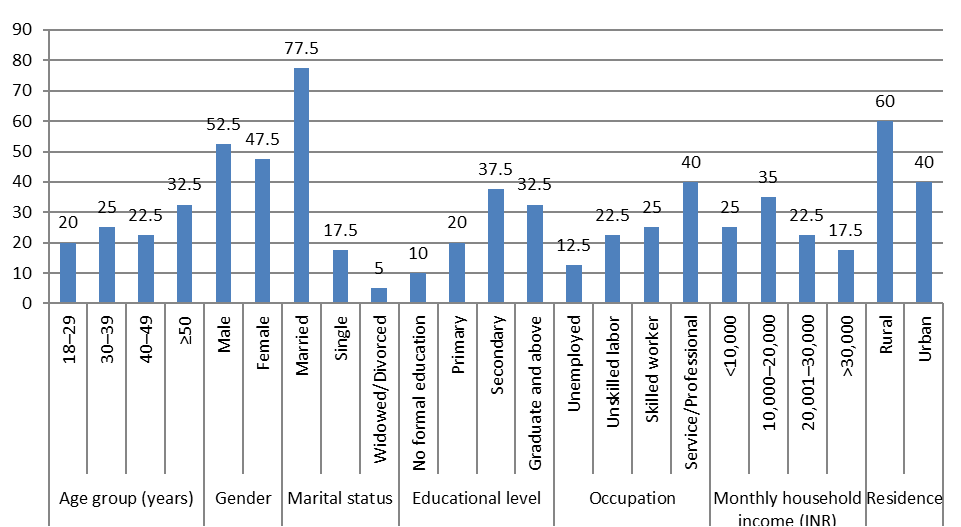
The study included 400 adults from Shimla district, with participants spanning a wide range of socio-demographic backgrounds. The largest age group comprised individuals aged ≥50 years (32.5%), followed by those aged 30–39 years (25.0%), 40–49 years (22.5%), and 18–29 years (20.0%). Males slightly outnumbered females (52.5% vs. 47.5%). The majority were married (77.5%), with smaller proportions being single (17.5%) or widowed/divorced (5.0%). Educational attainment varied, with 37.5% having completed secondary education, 32.5% holding graduate or higher qualifications, and 10.0% reporting no formal education. Occupationally, service/professional roles dominated (40.0%), followed by skilled workers (25.0%), unskilled laborers (22.5%), and unemployed individuals (12.5%). In terms of economic status, 35.0% reported a monthly household income of ₹10,000–20,000, while 25.0% earned less than ₹10,000, and only 17.5% exceeded ₹30,000 per month. A majority of participants resided in rural areas (60.0%), reflecting the district’s population distribution.
Overall, participants demonstrated moderate-to-good awareness of hypertension and its modifiable risk factors, with correct response rates ranging from 57.3% to 79.5%. The highest accuracy was recorded for identifying the correct device for blood pressure measurement (79.5%) and recognizing high salt intake as a modifiable risk factor (75.0%). Knowledge of salt’s role in raising blood pressure (73.5%), the link between uncontrolled hypertension and stroke (73.5%), and the benefits of regular walking (72.3%) was also high. However, certain gaps persisted—only 57.3% correctly identified that hypertension is more prevalent in urban settings, and just 59.5% recognized severe headache as a potential symptom of dangerously high blood pressure. While 69.0% understood the standard diagnostic threshold (≥140/90 mmHg), misconceptions remained regarding frequency of blood pressure checks, with only 61.8% recommending at least annual screening. These findings indicate a generally sound knowledge base but with notable deficits in symptom recognition and preventive screening practices.

Figure 1: Socio-Demographic Characteristics of Participants (n = 400)
Table 1: Awareness and Misconception Questions on Hypertension and Lifestyle Risk Factors Among Participants (n = 400)
Q. No. | Question | Options (Correct in Bold) | Correct (n) | Correct (%) |
1 | At what level is adult blood pressure generally considered high by health organizations? | a) 130/80, b) 140/90, c)150/100, d) 160/110 | 276 | 69.0% |
2 | Why is hypertension often called a “silent” condition? | a)It never causes harm, b) It happens only during sleep, c) It may have no warning signs, d) It only affects the elderly | 265 | 66.3% |
3 | Which organ is most affected by long-term uncontrolled hypertension? | a) Lungs, b) Kidneys, c) Heart, d) Skin | 289 | 72.3% |
4 | Which is a modifiable risk factor for hypertension? | a)Age, b) Family history, c) High salt intake, d) Genetics | 300 | 75.0% |
5 | How does eating too much salt affect blood pressure? | a) No effect, b) Raises it over time, c) Only raises it in men, d) Only raises it during exercise | 294 | 73.5% |
6 | Which daily habit is most effective in lowering blood pressure risk? | a) Skipping meals, b) Watching less TV, c) Regular physical activity, d) Eating more fried food | 283 | 70.8% |
7 | Which drink, if taken in excess, can directly raise blood pressure? | a) Water, b) Milk, c) Alcohol, d) Herbal tea | 268 | 67.0% |
8 | Being overweight affects the risk of developing hypertension by? | a) No effect, b) Increasing the risk, c) Only in old age, d) Only in women | 281 | 70.3% |
9 | How often should healthy adults have their blood pressure checked? | a) Once in 10 years, b) Only when feeling unwell, c) At least once a year, d) Daily | 247 | 61.8% |
10 | Which device is specifically used to measure blood pressure? | a) Thermometer, b) Glucometer, c) BP monitor (sphygmomanometer), d) ECG machine | 318 | 79.5% |
11 | Having close relatives with high blood pressure affects your risk how? | a) No effect, b) Increases your chance of getting it, c) Only in men, | 259 | 64.8% |
12 | Which serious health condition can be directly caused by uncontrolled hypertension? | a) Arthritis, b) Asthma, c) Stroke, d) Skin rash | 294 | 73.5% |
13 | Which type of food is best for preventing high blood pressure? | a) Deep-fried foods, b) Salty snacks, c) Fresh fruits and vegetables, d) Sugary desserts | 286 | 71.5% |
14 | Which symptom is most likely when blood pressure is dangerously high? | a) Itchy skin, b) Severe headache, c) Runny nose, d) Blurred hearing | 238 | 59.5% |
15 | Can regular walking help prevent hypertension? | a) No, b) Yes, c) Only fast walking, d) Not proven | 289 | 72.3% |
16 | Which environment generally has more cases of hypertension? | a) Rural areas, b) Urban areas, c) Same in both, d) Unknown | 229 | 57.3% |
17 | Can frequent intake of sugary drinks affect blood pressure? | a) No, b) Yes, c) Only in children d) Only in, women | 241 | 60.3% |
18 | Which cooking method is better for lowering blood pressure risk? | a) Deep frying, b) Steaming or grilling, c) Adding more salt, d) Using butter daily | 264 | 66.0% |
19 | How does long-term stress influence blood pressure? | a) No effect, b) Can raise it, c) Only lowers it, | 276 | 69.0% |
20 | What is the most reliable way to control blood pressure long term? | a) Medicine only, b) Lifestyle only, c) Healthy habits plus medical care if needed, d) Ignore unless symptoms appear | 269 | 67.3% |
Table 2: Knowledge Score Classification Among Participants (n = 400)
Knowledge Level | Score Range (out of 20) | Frequency (n) | Percentage |
Very Good | 16–20 | 102 | 25.5 |
Good | 12–15 | 158 | 39.5 |
Fair | 8–11 | 92 | 23.0 |
Poor | 0–7 | 48 | 12.0 |
Total | — | 400 | 100.0 |
Table 3: Association Between Knowledge Score and Socio-Demographic Variables (n = 400)
Variable | Category | Very Good n (%) | Good n (%) | Fair n (%) | Poor n (%) | χ² value | p-value |
Age group (years) | 18–29 | 28 (35.0) | 30 (37.5) | 15 (18.8) | 7 (8.7) | 12.64 | 0.049* |
30–39 | 26 (26.0) | 44 (44.0) | 20 (20.0) | 10 (10.0) | |||
40–49 | 20 (22.2) | 35 (38.9) | 25 (27.8) | 10 (11.1) | |||
≥50 | 28 (21.5) | 49 (37.7) | 32 (24.6) | 21 (16.2) | |||
Gender | Male | 58 (27.6) | 85 (40.5) | 46 (21.9) | 21 (10.0) | 2.18 | 0.536 |
Female | 44 (23.2) | 73 (38.4) | 46 (24.2) | 27 (14.2) | |||
Marital status | Married | 74 (23.9) | 125 (40.3) | 74 (23.9) | 37 (11.9) | 4.92 | 0.295 |
Single | 24 (34.3) | 26 (37.1) | 14 (20.0) | 6 (8.6) | |||
Widowed/Divorced | 4 (20.0) | 7 (35.0) | 4 (20.0) | 5 (25.0) | |||
Educational level | No formal education | 5 (12.5) | 10 (25.0) | 15 (37.5) | 10 (25.0) | 42.75 | <0.001*** |
Primary | 10 (12.5) | 25 (31.3) | 30 (37.5) | 15 (18.7) | |||
Secondary | 40 (26.7) | 65 (43.3) | 30 (20.0) | 15 (10.0) | |||
Graduate and above | 47 (36.2) | 58 (44.6) | 17 (13.1) | 8 (6.2) | |||
Occupation | Unemployed | 8 (16.0) | 18 (36.0) | 14 (28.0) | 10 (20.0) | 21.88 | 0.010* |
Unskilled labor | 14 (15.6) | 30 (33.3) | 32 (35.6) | 14 (15.6) | |||
Skilled worker | 24 (24.0) | 42 (42.0) | 22 (22.0) | 12 (12.0) | |||
Service/Professional | 56 (35.0) | 68 (42.5) | 24 (15.0) | 12 (7.5) | |||
Monthly household income (INR) | <10,000 | 14 (14.0) | 28 (28.0) | 36 (36.0) | 22 (22.0) | 34.21 | <0.001*** |
10,000–20,000 | 32 (22.9) | 56 (40.0) | 34 (24.3) | 18 (12.8) | |||
20,001–30,000 | 28 (31.1) | 38 (42.2) | 14 (15.6) | 10 (11.1) | |||
>30,000 | 28 (40.0) | 36 (51.4) | 8 (11.4) | 4 (5.7) | |||
Residence | Rural | 48 (20.0) | 90 (37.5) | 64 (26.7) | 38 (15.8) | 10.95 | 0.012* |
Urban | 54 (33.8) | 68 (42.5) | 28 (17.5) | 10 (6.2) |
When cumulative scores were assessed, 25.5% of participants demonstrated very good knowledge (scores 16–20), and the largest segment (39.5%) fell into the good knowledge category (scores 12–15). A further 23.0% exhibited fair knowledge (scores 8–11), while 12.0% were classified as having poor knowledge (scores ≤7). This distribution suggests that nearly two-thirds of the population possess at least good awareness of hypertension, yet a significant minority still require targeted health education interventions. The fair and poor knowledge categories—together representing over one-third of participants—indicate the persistence of knowledge disparities that could translate into gaps in prevention, early detection, and control of hypertension in the community.
Statistical analysis revealed significant associations between hypertension knowledge and several socio-demographic factors. Younger adults (18–29 years) had the highest proportion of very good knowledge (35.0%), while the lowest was observed among those aged ≥50 years (21.5%) (p=0.049). Educational attainment showed a strong positive correlation (p<0.001), with graduate-and-above participants achieving the highest proportion of very good scores (36.2%), compared to only 12.5% among those with no formal education. Occupation was also influential (p=0.010), as service/professional workers had better awareness than unemployed and unskilled labor groups. Economic status correlated positively with knowledge (p<0.001), with higher-income households more likely to achieve very good scores. Urban residents outperformed rural residents (33.8% vs. 20.0% in very good category; p=0.012). Interestingly, gender and marital status were not significantly associated with knowledge scores. These findings underscore the role of education, occupation, income, and urban living in shaping hypertension awareness, while highlighting rural and lower-education groups as key targets for intervention.
This community-based cross-sectional survey provides an in-depth assessment of awareness, knowledge, and misconceptions regarding hypertension and its lifestyle risk factors among adults in Shimla district, Himachal Pradesh. The findings reveal that while a substantial proportion of respondents demonstrated good or very good knowledge, significant gaps persist—particularly in recognizing subtle symptoms, understanding preventive screening frequency, and addressing misconceptions about environmental and demographic risk patterns. These knowledge deficits are especially pronounced among older adults, rural residents, those with lower educational attainment, and individuals from lower-income households, underscoring the persistent health education divide within the district.
The overall knowledge distribution in our study—where 65% of participants achieved good or very good scores—compares favorably with several previous Indian studies, where awareness rates have often ranged between 40–60% in mixed urban–rural samples [13-16]. This relatively higher awareness in Shimla could be attributed to the district’s high literacy rate, penetration of mobile-based information channels, and increasing public health campaigns under the National Programme for Prevention and Control of Cancer, Diabetes, Cardiovascular Diseases and Stroke (NPCDCS). Nevertheless, the fact that over one-third of participants fell into the fair or poor knowledge categories indicates that these campaigns have yet to achieve universal impact.
Our findings affirm the strong association between educational level and hypertension knowledge, consistent with prior studies, which have consistently shown that formal education enhances awareness of both non-communicable diseases and their lifestyle determinants [12-14]. Education not only improves comprehension of medical concepts but also facilitates access to and interpretation of health information from diverse sources, including digital media, print material, and healthcare providers. The occupational and income gradients observed in this study further reflect the socio-economic determinants of health literacy, wherein individuals in professional/service sectors and higher-income households are better positioned to access preventive health services and engage in informed lifestyle choices [14,15]
Rural–urban disparities, with urban residents outperforming rural participants in awareness scores, mirror patterns seen in other Indian hill states and national data [16-19]. This may be due to urban residents’ greater exposure to healthcare infrastructure, easier access to diagnostic facilities, and higher likelihood of encountering health promotion messages. However, rural populations—particularly in hilly regions like Shimla—face compounded challenges, including geographic isolation, limited specialist availability, seasonal accessibility issues, and cultural norms that may deprioritize preventive care. Targeted outreach in these communities, leveraging local health workers, Panchayat-led initiatives, and culturally relevant messaging, could bridge this gap.
Notably, the study uncovered specific conceptual weaknesses despite generally sound baseline awareness. For instance, only 57.3% correctly recognized that hypertension is more prevalent in urban settings, reflecting persistent misconceptions about rural immunity to lifestyle-related diseases. Similarly, less than two-thirds of respondents knew that annual blood pressure checks are recommended for healthy adults—a crucial gap given hypertension’s asymptomatic onset and the potential for early detection through routine screening. Symptom recognition was also limited; only 59.5% identified severe headache as a possible sign of dangerously high blood pressure, indicating that many individuals may underestimate or misattribute warning symptoms, delaying care-seeking.
Encouragingly, knowledge of key modifiable risk factors—such as high salt intake, physical inactivity, obesity, and excessive alcohol use—was relatively high, aligning with findings from previous studies [14,16,18]. This may reflect the increasing media coverage of lifestyle diseases and the integration of dietary advice into general health promotion campaigns. However, translating awareness into sustained behavioral change remains a critical challenge. Studies have shown that even among those aware of hypertension risks, adherence to low-salt diets, regular exercise, and weight control is often suboptimal, necessitating the integration of behavioral counseling and community-based support into public health strategies [17,19].
The association of younger age with higher knowledge scores in our study contrasts with findings from some Western populations, where older adults often report greater awareness due to more frequent health interactions.6,8,10 In India, however, younger cohorts—particularly those with higher education and internet access—may have greater exposure to online health information and social media campaigns. This generational shift in health information access presents an opportunity to harness youth engagement for intergenerational health promotion within households [17,19].
Our results reinforce the urgent need for context-specific, targeted educational interventions in Shimla. Mass media campaigns should be complemented by localized, interpersonal communication strategies, particularly in rural and low-literacy groups. Accredited Social Health Activists (ASHAs), Anganwadi workers, and community leaders could play pivotal roles in delivering consistent, culturally tailored messages. Furthermore, opportunistic blood pressure screening in community events, religious gatherings, and marketplaces could normalize preventive checks and address the gap in screening frequency awareness.
Strengths and Limitations
This study’s strengths include its relatively large and demographically diverse sample, use of a validated questionnaire, and exploration of multiple socio-demographic determinants of hypertension awareness. Conducting the survey via Google Forms enabled broad geographic reach across the district’s challenging terrain. However, certain limitations warrant consideration. The convenience sampling method may have introduced selection bias, as individuals with internet access and higher education levels may have been more likely to participate, potentially inflating overall awareness levels. Self-reported knowledge does not necessarily equate to healthy behaviors, and the cross-sectional design precludes causal inference. Moreover, while the questionnaire assessed awareness comprehensively, it did not evaluate actual blood pressure measurements, which would have provided insight into the relationship between awareness and hypertension prevalence.
Implications for Public Health Practice
These findings highlight the dual challenge of sustaining and enhancing existing awareness while closing the gaps among vulnerable groups. In Shimla, integrating hypertension education into routine primary care, school curricula, and workplace wellness programs could yield long-term benefits. Given the district’s unique geographical and cultural context, future interventions should also consider environmental factors such as altitude, seasonal work patterns, and dietary transitions. By aligning local initiatives with national frameworks like NPCDCS, and by prioritizing equity in health communication, Shimla can make significant strides in reducing the burden of uncontrolled hypertension and its complications.
This study highlights that while a majority of adults in Shimla district possess good to very good knowledge of hypertension and its modifiable lifestyle risk factors, substantial gaps remain in symptom recognition, preventive screening practices, and awareness of environmental risk patterns. Education, occupation, income, and urban residence emerged as key determinants of awareness, pointing to the persistent disadvantage faced by rural, lower-income, and less-educated groups. These findings underscore the need for targeted, culturally tailored health education and outreach programs, particularly in rural communities, to bridge the knowledge divide and promote early detection and effective prevention of hypertension. Integrating routine blood pressure screening into community health activities, enhancing public messaging through both mass media and interpersonal channels, and aligning local strategies with national NCD control initiatives will be critical to reducing the long-term cardiovascular burden in this Himalayan region.
Anchala, R., et al. “Hypertension in India: A Systematic Review and Meta-Analysis of Prevalence, Awareness, and Control of Hypertension.” Journal of Hypertension, vol. 32, no. 6, June 2014, pp. 1170–1177.
Grover, A., et al. “Prevalence and Associated Factors for Awareness of Hypertension in India: Findings from National Survey-4.” Journal of Family Medicine and Primary Care, vol. 11, no. 9, September 2022, pp. 5766–5775.
Jansari, K.R., et al. “Prevalence and Risk Factors of Hypertension among Young Adults in Urban Settings: A Cross-Sectional Study.” European Journal of Cardiovascular Medicine, vol. 15, no. 4, 2025, pp. 951–954.
Gupta, R., et al. “Hypertension Unveiled in the Himalayas: A Holistic Exploration of Public Awareness and Knowledge on Risk Factors, Preventive Measures, Treatment Options, and Complications among the Residents of District Kinnaur, Himachal Pradesh.” Himalayan Journal of Community Medicine and Public Health, vol. 4, no. 2, 2023, pp. 1–4.
Gunagi, P., and D.R. Harikanth. “Assessment of Knowledge of Hypertension and Its Risk Factors among Urban School Children of Belagavi: A Cross-Sectional Study.” International Journal of Community Medicine and Public Health, vol. 10, no. 5, 2023, pp. 1811–1816.
Savani, N.M., et al. “A Study to Assess the Prevalence and Risk Factors of Hypertension among the Bank Employees of Rajkot City, Gujarat, India.” National Journal of Community Medicine, vol. 11, no. 3, 2020, pp. 118–121.
Goswami, N.N., and A. Goswami. “A Study on Assessing Knowledge & Awareness on Nonpharmacological Measures for Treating Hypertension in Hypertensive Patients in India.” MedPulse International Journal of Pharmacology, vol. 12, no. 2, November 2019, pp. 10–13.
Bhardwaj, R., et al. “Prevalence, Awareness and Control of Hypertension in Rural Communities of Himachal Pradesh.” Journal of the Association of Physicians of India, vol. 58, July 2010, pp. 423–424, 429.
Mohammad, R., and D.W. Bansod. “Hypertension in India: A Gender-Based Study of Prevalence and Associated Risk Factors.” BMC Public Health, vol. 24, 2024, p. 2681.
Mahanta, B.K., et al. “A Cross-Sectional Study on the Impact of Mobile Medical Units on Hypertension Awareness and Management in Rural Himachal Pradesh and Uttarakhand.” International Journal of Community Medicine and Public Health, vol. 12, 2025, pp. 382–389.
Bansal, N., and M.S. Khalsa. “Assessing Public Awareness of Risk Factors and Management Strategies for Cardiovascular Diseases in Shimla District.” Scientific Research Journal of Medical Sciences, vol. 4, no. 2, July 2024, pp. 1–7.
Murarkar, S., et al. “Prevalence of Hypertension and Associated Risk Factors in Urban Slums: A Community-Based Cross-Sectional Study in India.” Indian Journal of Public Health, vol. 67, no. 3, 2023, pp. 474–476.
Ranjan, A., et al. “Determinants and Knowledge of Hypertension among Adult Population Visited in Out-Patients Department of a Tertiary Care Centre: A Cross-Sectional Study.” Discover Public Health, vol. 22, 2025, p. 163.
Paul, P.J., et al. “Prevalence and Factors Associated with Hypertension: A Community-Based Cross-Sectional Study among Adults in an Urban Area of Puducherry, South India.” International Journal of Community Medicine and Public Health, vol. 4, no. 5, 2017, pp. 1620–1626.
Kadloor, P., et al. “Prevalence of Hypertension and Associated Risk Factors in Urban and Rural Populations: A Cross-Sectional Study.” European Journal of Cardiovascular Medicine, vol. 15, no. 4, 2025, pp. 649–652.
Eslavath, R., and R. John. “Behavioural Risk Factors, Hypertension Knowledge, and Hypertension in Rural India.” International Journal of Hypertension, vol. 2020, 2020, p. 8108202.
Rathod, G.G., et al. “Assessment of Knowledge Regarding Hypertension and Its Preventive Measures among Students of Government Science College of North Gujarat Region, India.” International Journal of Advanced Medicine, vol. 7, no. 1, 2019, pp. 67–71.
Pathania, S., et al. “Assessment of Risk Factors for Hypertension among Undergraduate Students in a Medical College of Himachal Pradesh, India.” International Journal of Community Medicine and Public Health, vol. 11, no. 4, 2024, pp. 1550–1553.