Migration has become one of the major discussing issues at present world. Recently, this issue has become the most discussing issue in Bangladesh. This study investigated to find out the reasons and impact of migration outflows in Bangladesh. This study has been conducted from June 2020 to January 2021.Using secondary data, this paper attempted to explore the reasons of migration outflows andits impact on the socio-economic development in Bangladesh. Several reports on migration outflows, journals, articles, research papers were the sources of data. 5 returnee migrants were selected for collecting the supporting data through in-depth interview. As the study was qualitative based, the data were analyzed in descriptive and contextual methods. The findings of this study have revealed that there are two kinds of reasons of migration outflows, push factors and pull factors and these migration flows have a great impact on socio-economy of the country. Thus, this study has provided insightful information about the reasons and impact of migration outflows in Bangladesh which might help the future researchers in the field of migration and policy makers of migration.
Keywords
Migration outflows
Reasons
Impacts
Socio-Economy
Bangladesh
INTRODUCTION
Migration is that the movement by people from one place to a different with the intention of settling temporarily or permanently within the new location legally or illegally. The movement is usually over long distances and from one country to a different, but internal migration is additionally possible. Migration may be individuals, family units or in large groups. And immigration is that the movement of individuals into a rustic to which they are not native so as to settle there, especially as permanent or future citizens. Immigrants are motivated to depart their native countries for a spread of reasons, including an absence of local access to resources, a desire for economic prosperity, family re-unification, get away prejudice, conflict or natural disaster, or just the wish to alter one's surroundings. According to the Overseas Employment and Migrations Act, 2013, section 2(2), migrant means any citizen of Bangladesh who has migrated to a foreign country for the purpose of overseas employment in any work or profession and is staying in that country. Bangladesh reached the rank of a low-middle-income country in 2014 [1]. As the country grew economically, there was a significant increase in migration of Bangladesh over the last decade [2,3]. The urban population exploded from 14.1 million in 1981 to 35 million in 2005 and reached 53.1 million in 2014 [4,5]. The number of human resources migrating abroad stood at 6,087 back in 1976, but grew to1 million-plus in 2017 [6]. On average, 400,000-plus workers leave Bangladesh for overseas employment each year (ILO, nd.). The scenario migration in Bangladesh warrants an investigation on the reasons for such rapid migration to aid policy makers to balance urban-rural developments and its impact on the economy of the country. Thus, this study has made an investigation to find out the reasons and impacts of migration outflows in Bangladesh.
Migration Outflows in Bangladesh
Bangladesh could be a developing country from which an about eight million Bangladeshis are working abroad. Migration is playing awfully a critical role to the economy of Bangladesh. Most of those are recruited by the private recruitment agencies. The Bureau of Manpower Employment and Training (BMET) is to blame for the entire migration process in Bangladesh, including management of the method and ensuring of welfare of the migrants. In Bangladesh, there are more than 800 formal recruitment agencies. At present over five million Bangladeshis are currently working overseas and they are contributing greatly to their families, communities and therefore the country's economy through remittances. Migration is regarded as a viable livelihood option and one in all the key development issues for Bangladesh.
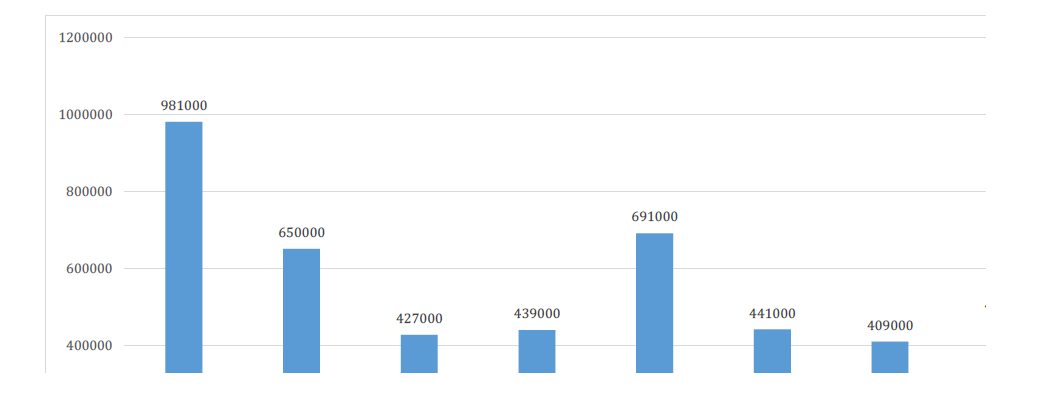
Figure 1: Total Annual Outflows of Migrant Workers from Bangladesh, (2007–2017)
Bangladesh experienced a huge flow of outbound migration in the fiscal year 2017. In this fiscal year, it crossed one million marks with Bangladeshis migrating primarily to Europe, South-East Asia and Gulf countries [7]. This is the largest migration number recorded for a single year and represents an increase of almost 34 percent over 2016. Unfortunately, there is no data to see how many of these outbound migrants have already returned, either prematurely or after completing their work tenure. In spite of high growth in migration for work, Bangladesh’s attempted labor market diversification strategy has not worked to the desired level so far, according to a BMET official. For instance, data shows that half of this 1 million-plus migrant worker have gone to a single destination country – Saudi Arabia. Bangladesh has not been successful in increasing its share in the labor marketing Hong Kong (China), Japan, the Republic of Korea, Singapore, Taiwan (China) and other destinations. However, efforts are still underway and the BMET’s work through signing memoranda of understanding and other bilateral agreements with countries like Japan are gaining momentum. Due to the global financial crisis and its impact on oil prices, there had been declining demand for less-skilled workers (Figure 2) and restrictions have been placed on the recruitment of Bangladeshi workers in different Gulf and South East Asian countries, including Saudi Arabia and Malaysia [8].
However, many countries in the Middle East countries (particularly Gulf States), South East Asia, East Asia and Western Europe demonstrated a need for professional, skilled and semi-skilled migrant workers to implement big projects and sustain economic growth. For example, aggressive mega-investment infrastructure projects such as a proposed US$500 billion mega-city, the Jeddah Tower and Riyadh Metro in Saudi Arabia; the United Arab Emirates Expo 2020 and Dubai Blue Water Island; Qatar’s World Cup 2022 developments; Bahrain’s The Avenues; the Kuwait Olympic Village; and Oman’s Ras Al Khar Eco-Resort Sur are good projects that could be aimed by the Bangladesh Government and private sector for sending human resources for overseas employment. To sum up Gulf Cooperation Council (GCC) countries need workers for the construction, hospitality and retail, care giving and medical sectors as well as in the research industry. As a result, migration flows from Bangladesh increased after aforementioned years of decline, with555,000 migrant workers heading overseas in 2015 and 757,000 going overseas in 2016.
Object of this Study
The objective of this study was to find out the reasons and impact of migration outflows in Bangladesh.
MATERIALS AND METHODS
This study attempted to find out the reasons of migration outflows and its impact on socio-economy in Bangladesh. This study has been conducted from June 2020 to January 2021 in Kushtia district in Bangladesh. The study is not based on any statistical rigor. And for this, there was no separate structured/semi-structured questionnaire, there was no code book and no instruction manual employed for the survey. Using secondary data, this paper attempted to explore the reasons of migration outflows and its impact on the socio-economic development in Bangladesh. Several reports on migration outflows, journals, articles, research papers were the sources of data.5 returnee migrants were selected for collecting the supporting data through in-depth interview. Each interview was supposed to last for more than 40 minutes if needed. All interviews were guided through a question set. The question set was not structured questionnaire typically used in regular sample surveys. They were rather checklists of questions that would allow the interviewer to probe interviewees. Although the study has tried to perceive, understand and catalog issues relevant to each interview regarding the use of data, there was a new line of questioning cropping up from interviewee responses to existing questions. And, several reports, journals, articles, research papers were the sources of secondary data of the study. As the study was qualitative based, the data were analyzed in descriptive and contextual methods.
Literature Review
There are variety of studies that target the socio-ethnic, political and economic issues associated with migration that has been happening in large scale in Bangladesh. These issues are important in recent decades.
There are some studies that examine the causes of migration. During a somewhat journalistic account, Hazarika [9], describes the character of immigration across the border from Bangladesh. Supported personal interviews and extensive traveling across and along the border, his account on Bangladeshi infiltration highlights the matter of high population pressure, devastation caused naturally and general destitution of individuals in Bangladesh as primary causes of migration. He also finds that a number of the migration are temporary and have a seasonal pattern. Using census data for 1971 and 1991, Kumar and Aggarwal [10], has showed that distance and urbanization are the numerous causes of internal migration while differences in earnings is that the most vital reason behind international migration. Gogoi [11], has further examined the role of per capita income, land-man ratio and distance in determining the flow of migration. While these two studies investigate causes of both internal and external migration, Roy [12], has discussed various economic incentives for migration from Bangladesh. He has argued that instead of a myopic consideration of relative earnings in current period, a more dynamic, life-time utility consideration may be a better explanation of trans-border migration. He also thinks that a major a part of the incentives for migration comes from elements outside the marketplace like purchase of land, encroachment of public land and forests, exploitation of common property resources, public goods and infrastructure etc. Social networks among the immigrants reduce the issues that arise out of asymmetric information and thus provide further incentives within the source country to migrate. Goswami [13], has presented his assessment of foreign immigration within the post-independence period.
Migration outflows in Bangladesh have numerous micro level effects on family or household. Most of the Bangladeshi migrants are temporary labor which is the predominant type of migration found in Asia, whereby millions of left- behind families maintaining a better living in their home countries by receiving remittance. Remittances sent by Bangladeshi outflows migrants make a significant contribution towards accelerating the socioeconomic development in the country. Islam et al. [14], have used the time series data and explored the socioeconomic impact of international migration on Bangladesh. Their results shows that co-integration exists between literacy rate and growth rate of remittance which improves the living standard of the people. The authors have also pointed out that migration outflows have not only opened the new economic opportunities but also generated decision-making power especially among female workers. Islam and Siddiqui [15], have explored the association between migration and socio-demographic characters by using the chi-square technique. Their findings have revealed that the age at the time of marriage, education, religion, living conditions and occupation status impact migration significantly. For a large number of rural households, remittances are a major source of earning to guarantee subsistence, with empirical studies revealing that remittances constituted half of the total income of these rural households [16]. A study conducted at the beginning of the decade looking at migrants from Bangladesh, has put the proportion of families economically benefiting at a figure of 56%, with 26.5% as losing and some 15.5%unclear [17]. Siddiqui has added that most of migrated people send remittance mainly to their family members’ alike wife, parents, brothers, sisters and relatives. The amount of money is not same every year. Rather, it varies from time to time. In the pre-migration period, it is found by using HCI (Head Count Index) that 21% of the migrant households were moderately poor, but it was reduced dramatically to 7% in the post-migration period. So, remittance raises the annual household income at the micro level and it has a great impact on the socioeconomic development in Bangladesh.
Reasons of Migration Out flows in Bangladesh
The primary factors that were attracting potential migrant respondents to overseas migration were favorable benefit packages and an increased income. Most of the returnee migrants have told in interview session that that they need salary-related data for confirmed jobs abroad. They have added that they want to migrate for better life; because their previous migration(s) were profitable enough. The returnee migrants have told in interview session that people migrate abroad for some specific reasons, such as good job opportunities, better living conditions, the feeling of having more political and/or religious freedom, enjoyment, education, better medical care, attractive climates, security, family links, better chances of marrying, better income etc. They have added that in their homeland they do not get or access the mentioned opportunities and for this, they prefer to migrate abroad.
Reasons of migration outflows in Bangladesh can be divided into two groups which include several numbers of factors.
Outflows migration which leads to flow the remittance play an important strategy for socio-economic development in Bangladesh. This paper has tried to explore the impact of migration outflows in Bangladesh. From the report of Bangladesh Economic Review, it is found that in the fiscal year 2007-08, about 981 lakh workers were employed at abroad, but the trend was decreasing in the fiscal year 2010 -11, which was account for 439 lakhs. But, in the fiscal year 2011-12, the amount of workers employment at abroad risen to 691 lakhs.
Table 1: Reasons of Migration Outflows in Bangladesh Found from the Secondary Sources
Reasons
Factors
Push Factors
Not enough jobs, few opportunities, Inadequate conditions, Desertification, Famine or drought, Political fear or persecution, Slavery or forced labor, Poor medical care, War, Poor medical care, Natural disasters, Death threats, Desire for more political or religious freedom, Pollution, Poor housing, Landlord/tenant issues, Bullying, Discrimination, Poor chances of marrying, Condemned housing (radon gas, etc.)
Pull Factors
Job opportunities, better living conditions, the feeling of having more political and/or religious freedom, Enjoyment, Education, better medical care, Attractive climates, Security, Family links, Industry, Better chances of marrying
Table 2: Number of Migration Outflows and Amount of Remittance in Bangladesh (2007-20017)
FY
No of Employment
Amount of remittance (In Million US$)
2007-08
981000
7914.78
2008-09
650000
9689.16
2009-10
427000
10987.40
2010-11
439000
11650.32
2011-12
691000
12843.40
2012-13
441000
14461.15
2013-14
409000
14228.30
2014-15
461000
15316.91
2015-16
685000
14931.14
2016-17
905000
12769.5
(Source: Bangladesh Economic Review)
However, recently, the migrant’s worker estimated 905 lakhs, which was higher than the previous year, which was an account for 685 lakhs. In 2007-08 period, the remittance earned was only USD 7914.781 million, after that, the trend was gradually increased up to fiscal year 2014-15 period, which account for US15316.91million, the highest remittance earned. Recently the table reveals that US dollar12769.5 in million remittances have been earned in 2015-2016 by the county which is lower than the previous year (US 14931.14) million in 2016-17). The number of migration outflows and the amount of remittance in Bangladesh has been presented in the Table 2.
The remittance of migration outflows is regarded as a vital driver for the advancement of social and economic development. And it creates a relationship of mutual dependence between sending and receiving countries.
It also facilitates to establish small scale enterprises atlocal level thus helping to community development. Then, it increases the flow of working capital for entrepreneurship development which creating the new job opportunity. [18]. Farid et al. [19], has stated that having considered the current situation, the workers remittance has been proved as the major determinant factor of socio-economic development of the Bangladesh. The World Bank report shows that remittance contributed in reducing 6% of poverty in Bangladesh. Hatemi-j and Uddin [20], has found that the remittance has a long run effect on poverty reduction in Bangladesh and poverty and remittance reinforce each other. Taylor [21], has stated that remittance can play an important role to reduce the credit constraints. Evidences support that there is a strong association between remittance and GDP in Bangladesh [22,23]. BBS [24], has showed that the remittances are becoming, if not only, the major sources of income among the 78 percent of remittancereceiving households. Migration outflows have positive impacts on socio-economic development of this country, in spite of having negative effects on trade and business in receiving country. But Chowdhury and Rabbi [25], have showed that remittance has the adverse effect of on trade competitiveness of Bangladesh because workers remittance is widely used for non-tradable sector as livelihoods and better quality of life, but not used for tradable sector [25]. It has a great impact on the quality of life of the people in Bangladesh, because it increases the income, education and life expectancy. Pradhan and Mahesh [26], have stated that the remittance has a significant effect on the improvement of quality of life in Bangladesh. Adams and Cuecuecha [27], has stated that international remittance for migration outflows increase the household investigate in human capital in developing countries. Migration outflows have effects on the families; sometimes it affects the power stricter of the family and it can have effects on women position at household at three dimensions. Migrated women can enjoy the economic decision-making power at the household compared to when they are not migrated.
CONCLUSION
Using secondary data, this paper has attempted to explore the reasons of migration outflows and its impact on socio-economic development in Bangladesh. The article has revealed that migration outflows has some particulars reasons like good job opportunities, better living conditions, the feeling of having more political and/or religious freedom, enjoyment, education, better medical care, attractive climates, security, family links,better chances of marrying, better income etc. and it has significant impacts on socio-economic development, for example, reducing the poverty, increasing the household expenditure, saving, leading to maintain the quality of life as well as gender equality.
REFERENCES
World Bank. (2016). “Helping Bangladesh reach middle-income country status”. Retrieved from http://www.worldbank.org/en/news/feature/2016/04/07/World_Bank_Group_s_New_Country_Partnership_Framework_helps_Bangladesh_Reach_Middle_Income_Country_Status.
Hossain, M. (2001). “Rural-urban migration in Bangladesh: A micro-level study”. In Brazil IUSSP Conference (pp. 20–24).
Rouf, M.A. and Jahan, S. (2007). “Spatial and temporal patterns of urbanization in Bangladesh”. In Urbanization in Bangladesh: Patterns, Issues and Approaches to Planning (pp. 1–24). Bangladesh Institute of Planners, Dhaka.
United Nations. (2014). World Urbanization Prospects: The 2014 Revision. “Population Division, United Nations”. ISBN 978-92-1-151517-6.
Biswas, R.K. et al. (2017). “Women’s opinion on the justification of physical spousal violence: A quantitative approach to model the most vulnerable households in Bangladesh”. PLOS ONE, 12(11), e0187884.
BMET. “Bureau of Manpower, Employment and Training. Bangladesh”. Retrieved from www.bmet.org.
Siddiqui, T. (2009). “International labour migration and remittance management in Bangladesh”. Dhaka: Refugee and Migratory Movements Research Unit (RMMRU), University of Dhaka.
Hazarika, Sanjoy. (1999). Rites of Passage. New Delhi: Penguin Books India.
Kumar, Pushpam and Aggarwal, Suresh Chand. (2003). “An Econometric Analysis of Causes of Migration in Assam”. Demography India, 32(1), 107–122.
Gogoi, Jayanta. (2005). "The Migration Problem in Assam: An Analysis." In Alokesh Barua (Ed.), India’s North-East: Developmental Issues in a Historical Perspective. New Delhi: Manohar Centre De Sciences Humaines.
Roy, Santanu. (2005). “‘Why Do They Come?’ Economic Incentives for Immigration to Assam.” In Alokesh Barua (Ed.), India’s North-East: Developmental Issues in a Historical Perspective. New Delhi: Manohar Centre De Sciences Humaines.
Goswami, P.C. (1984). "Foreign Immigration into Assam." In B.L. Abbi (Ed.), NE Problems and Prospects of Development. Chandigarh: Center for Research in Rural and Industrial Development.
Islam, S. et al. (2013). “Socio-economic impacts of international migration in Bangladesh”. Journal of Economics and Sustainable Development, 4(4). ISSN 2222-1700.
Islam, M.R. and Siddiqui, M.N.A. (2010). “Socio-demographic characteristics of female migrants and determinants of female migration”. Afro-Asian Journal of Anthropology, 1(1), 71–80.
Siddiqui, T. (2001). Transcending Boundaries: Labour Migration of Women from Bangladesh. University Press.
Woodruff, C. and Zenteno, R. (2001). “Remittances and microenterprises in Mexico”. UCSD Graduate School of International Relations and Pacific Studies Working Paper.
Farid, K. et al. (2009). “Trends in international migration and remittance flows: Case of Bangladesh”. Journal of Bangladesh Agricultural University, 7(2), 387-394.
Hatemi-J, A. and Uddin, G.S. (2014). “On the causal nexus of remittances and poverty reduction in Bangladesh”. Applied Economics, 46(1), 374–382.
Taylor, J. E. (1999). “The new economics of labour migration and the role of remittances in the migration process”. International Migration, 37, 63–89.
Akter, S. (2016). “Remittance inflows and its contribution to the economic growth of Bangladesh”. Retrieved from http://dspace.lib.niigatau.ac.jp/dspace/bitstream/10191/41800/1/62_215-245.pdf.
Paul, B.P. and Das, A. (2011). “The Remittance-GDP Relationship in the Liberalized Regime of Bangladesh: Cointegration and Innovation Accounting”. Theoretical and Applied Economics, 18(9).
BBS. (2017). Bangladesh Labor Force Survey.
Chowdhury, M.B. and Rabbi, F. (2014). “Workers' remittances and Dutch disease in Bangladesh”. The Journal of International Trade and Economic Development, 23(4), 455-475.
Pradhan, B.K. and Mahesh, M. (2016). “Impact of remittances on poverty: An analysis of data from a set of developing countries”. Economics Bulletin, 36(1), 108–117.
Adams Jr et al. (2010). “Remittances, household expenditure and investment in Guatemala”. World Development, 38(11), 1626-1641.
License
Creative Commons Attribution-NonCommercial-NoDerivatives 4.0 International License
All papers should be submitted electronically. All submitted manuscripts must be original work that is not under submission at another journal or under consideration for publication in another form, such as a monograph or chapter of a book. Authors of submitted papers are obligated not to submit their paper for publication elsewhere until an editorial decision is rendered on their submission. Further, authors of accepted papers are prohibited from publishing the results in other publications that appear before the paper is published in the Journal unless they receive approval for doing so from the Editor-In-Chief.
Himalayan Journal of Humanities and Cultural Studies open access articles are licensed under a Creative Commons Attribution-Share A like 4.0 International License. This license lets the audience to give appropriate credit, provide a link to the license, and indicate if changes were made and if they remix, transform, or build upon the material, they must distribute contributions under the same license as the original.
Recommended Articles
Research Article
Development of a Blended Learning Model to Increase Learning Effectiveness at University
Hairul ,
...
Darman Manda
Published: 10/12/2022
Download PDF
Cite
x
APA
None, H., Tolla, I. & Manda, D. (2022). Development of a Blended Learning Model to Increase Learning Effectiveness at University. Himalayan Journal of Humanities and Cultural Studies, 3(2), None-None.
MLA
None, Hairul, Ismail Tolla and Darman Manda. "Development of a Blended Learning Model to Increase Learning Effectiveness at University." Himalayan Journal of Humanities and Cultural Studies 3.2 (2022): None-None.
Chicago
None, Hairul, Ismail Tolla and Darman Manda. "Development of a Blended Learning Model to Increase Learning Effectiveness at University." Himalayan Journal of Humanities and Cultural Studies 3, no. 2 (2022): None-None.
Harvard
None, H., Tolla, I. and Manda, D. (2022) 'Development of a Blended Learning Model to Increase Learning Effectiveness at University' Himalayan Journal of Humanities and Cultural Studies 3(2), pp. None-None.
Vancouver
Hairul H, Tolla I, Manda D. Development of a Blended Learning Model to Increase Learning Effectiveness at University. Himalayan Journal of Humanities and Cultural Studies. 2022 Jul;3(2):None-None.
Download PDF
Research Article
A Study on the Current Situation and Innovation Strategies of Museum Cultural and Creative Product Development: taking Shanghai Museum as an Example
Shuyou Shi
Published: 30/04/2024
Download PDF
Cite
x
APA
Shi, S. (2024). A Study on the Current Situation and Innovation Strategies of Museum Cultural and Creative Product Development: taking Shanghai Museum as an Example. Himalayan Journal of Humanities and Cultural Studies, 5(1), 1-8.
MLA
Shi, Shuyou. "A Study on the Current Situation and Innovation Strategies of Museum Cultural and Creative Product Development: taking Shanghai Museum as an Example." Himalayan Journal of Humanities and Cultural Studies 5.1 (2024): 1-8.
Chicago
Shi, Shuyou. "A Study on the Current Situation and Innovation Strategies of Museum Cultural and Creative Product Development: taking Shanghai Museum as an Example." Himalayan Journal of Humanities and Cultural Studies 5, no. 1 (2024): 1-8.
Harvard
Shi, S. (2024) 'A Study on the Current Situation and Innovation Strategies of Museum Cultural and Creative Product Development: taking Shanghai Museum as an Example' Himalayan Journal of Humanities and Cultural Studies 5(1), pp. 1-8.
Vancouver
Shi S. A Study on the Current Situation and Innovation Strategies of Museum Cultural and Creative Product Development: taking Shanghai Museum as an Example. Himalayan Journal of Humanities and Cultural Studies. 2024 Jan;5(1):1-8.
Download PDF
Research Article
The Role of SEAMEO CECCEP in Creating Accessibility to Early Childhood Education in Indonesia
Ratna Wulan,
Elisabeth A. Satya Dewi
Published: 01/08/2024
Download PDF
Cite
x
APA
Wulan, R. & Dewi, E. A. S. (2024). The Role of SEAMEO CECCEP in Creating Accessibility to Early Childhood Education in Indonesia. Himalayan Journal of Humanities and Cultural Studies, 5(2), 1-8.
MLA
Wulan, Ratna and Elisabeth A. S. Dewi. "The Role of SEAMEO CECCEP in Creating Accessibility to Early Childhood Education in Indonesia." Himalayan Journal of Humanities and Cultural Studies 5.2 (2024): 1-8.
Chicago
Wulan, Ratna and Elisabeth A. S. Dewi. "The Role of SEAMEO CECCEP in Creating Accessibility to Early Childhood Education in Indonesia." Himalayan Journal of Humanities and Cultural Studies 5, no. 2 (2024): 1-8.
Harvard
Wulan, R. and Dewi, E. A. S. (2024) 'The Role of SEAMEO CECCEP in Creating Accessibility to Early Childhood Education in Indonesia' Himalayan Journal of Humanities and Cultural Studies 5(2), pp. 1-8.
Vancouver
Wulan R, Dewi EAS. The Role of SEAMEO CECCEP in Creating Accessibility to Early Childhood Education in Indonesia. Himalayan Journal of Humanities and Cultural Studies. 2024 Apr;5(2):1-8.
Download PDF
Research Article
Stamp Game Intervention to Overcome Numeracy Difficulties in Slow Learner Children
Florentina Nining Hastiani,
Adnani Budi Utami
Published: 30/05/2024
Download PDF
Cite
x
APA
Hastiani, F. N. & Utami, A. B. (2024). Stamp Game Intervention to Overcome Numeracy Difficulties in Slow Learner Children. Himalayan Journal of Humanities and Cultural Studies, 5(1), 1-4.
MLA
Hastiani, Florentina N. and Adnani B. Utami. "Stamp Game Intervention to Overcome Numeracy Difficulties in Slow Learner Children." Himalayan Journal of Humanities and Cultural Studies 5.1 (2024): 1-4.
Chicago
Hastiani, Florentina N. and Adnani B. Utami. "Stamp Game Intervention to Overcome Numeracy Difficulties in Slow Learner Children." Himalayan Journal of Humanities and Cultural Studies 5, no. 1 (2024): 1-4.
Harvard
Hastiani, F. N. and Utami, A. B. (2024) 'Stamp Game Intervention to Overcome Numeracy Difficulties in Slow Learner Children' Himalayan Journal of Humanities and Cultural Studies 5(1), pp. 1-4.
Vancouver
Hastiani FN, Utami AB. Stamp Game Intervention to Overcome Numeracy Difficulties in Slow Learner Children. Himalayan Journal of Humanities and Cultural Studies. 2024 Jan;5(1):1-4.
Islam, M. T. (2021). Causes of Migration Outflows and Its Impact on Socio-Economy in Bangladesh: An Exploring Study. Himalayan Journal of Humanities and Cultural Studies, 2(1), 1-5.
MLA
Islam, Md. T.. "Causes of Migration Outflows and Its Impact on Socio-Economy in Bangladesh: An Exploring Study." Himalayan Journal of Humanities and Cultural Studies 2.1 (2021): 1-5.
Chicago
Islam, Md. T.. "Causes of Migration Outflows and Its Impact on Socio-Economy in Bangladesh: An Exploring Study." Himalayan Journal of Humanities and Cultural Studies 2, no. 1 (2021): 1-5.
Harvard
Islam, M. T. (2021) 'Causes of Migration Outflows and Its Impact on Socio-Economy in Bangladesh: An Exploring Study' Himalayan Journal of Humanities and Cultural Studies 2(1), pp. 1-5.
Vancouver
Islam MT. Causes of Migration Outflows and Its Impact on Socio-Economy in Bangladesh: An Exploring Study. Himalayan Journal of Humanities and Cultural Studies. 2021 Jan;2(1):1-5.


 Download PDF
 Download XML