Contents
Download PDF
pdf Download XML
842 Views
270 Downloads
Share this article
Research Article | Volume 5 Issue 1 (Jan-June, 2024) | Pages 1 - 5
The Influence of ESG Rating Score for Stock Return Investment: Divided In Raw Return and Abnormal Return In 5th-Asean Country
 ,
1
School of Business and Management, Institut Teknologi Bandung, Indonesia
Under a Creative Commons license
Open Access
Received
Nov. 22, 2023
Revised
Dec. 10, 2023
Accepted
Jan. 5, 2024
Published
Jan. 17, 2024
Abstract

The aims of this research are to examine are the ESG rating score factor have any influence to stock return investment particularly in Raw Return and Abnormal Return in 5th-ASEAN Country (Indonesia, Malaysia, Philippines, Singapore, and Thailand) that listed in stock exchange their country from 2017 to 2019 periods. The research methodology used in quantitative with panel data regression analysis. The data consist about 255 firms with total data observation 717 sampling from all kind industries. The finding of result showed that the ESG rating score have influence positivity and statically significant with stock return investment both in Raw Return and Abnormal Return. This impact is accepted all null hypothesis development has same with most of previous literature studied. This implication should be aware in recently years to investor who investing in stock market to more concern about ESG practices in 5th-ASEAN Country.

Keywords
INTRODUCTION

In response to climate change which has the potential to have a significant impact on several elements, particularly environmental issues. The Intergovernmental Panel on Climate Change cautioned that global warming temperatures could rise by 1.5 degrees Celsius above preindustrial levels in the next one or two decades [1]. We are witnessing the warmest temperatures in recorded history, a threefold rise in sea levels, catastrophic global warming, and other irreversible climate change effects not seen in hundreds of thousands of years. That is why it is critical to developing an investment idea that is concerned not only with the profit element of the company but also with how to establish a sustainable, responsible investment. 


Increasing of investment from global investor and local investor on risk and return of stock market with particularly the environment, good corporate governance and non-financial factors put pressure on firms to increase their efforts and focus for financing non-financial aspect of the firm. Investors, employee, management, customers and government increasingly expect the firm to mitigate and report all of these factors effectively. Firms report their non-financial performance on the risky exposure broadly through three categories that is Environment, Social and Governance.


In recent years, there has been an increasing global interest in environmental, social, and governance (ESG) criteria, seen by both academia and policy makers. The number of Google Scholar results for the keyword "ESG" has increased steadily in recent years. In 2015, there were 8720 results, which grew to 9520 in 2016, 16400 in 2020, and 22100 in 2021. Furthermore, 96% of the policies pertaining to Environmental, Social, and Governance (ESG) have been formulated since the year 2000 [2]. The Policy Research Institute (PRI) discovered that as of August 2021, a total of 159 policy instruments have been either created or revised. The number exhibits a larger value in comparison to the entirety of the year 2020 [2].


In the following pages, we will elaborate on our assertion that conventional ESG ratings in emerging markets might be deceptive, primarily due to the absence of appropriate consideration from equity investor of the significance of ESG rating score. 


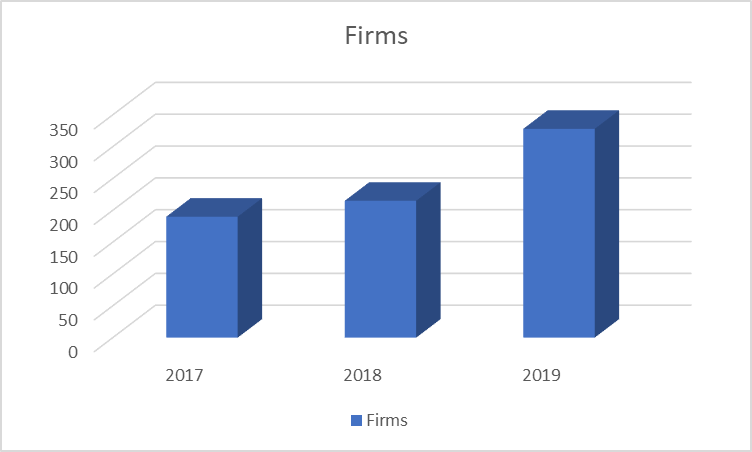
Figure 1: Total ESG rated Firms in 5th-ASEAN Countries done by Thomson Reuters


Considering the numerous aspects that influence EGS rating score in develop markets, they are show result the positive influence to generate higher return of stock investment. Otherwise, in the emerging market the effect of ESG rating score to stock return investment still few of researcher who interest in that topic. Therefore, we have initiative to finding a clear result of have their any influence. We prefer to use ASEAN member state public companies because we see a huge increasing trend of ESG scoring by Thomson Reuters-Refinitiv. In conjunction with that, we found the total of ESG-rated companies have grown more than 73% since 2017 as stated in Graph 1. Due to limited research that uses ESG scores and disclosure as fundamentals as well as research materials, this time we will discuss their impact stock return investment particularly in raw return and abnormal return by using panel data analysis on firms registered as members of 5th-ASEAN Countries.

LITERATURE REVIEW

Stock Return

Stock return been a focal point of financial research for decades, captivating the attention of investors, economists, and academics as well. This research delves into the extensive body of work that surrounds stock returns, offering an in-depth exploration of key theories, empirical findings, and influential factors that shape our understanding of this critical aspect of financial markets. A fundamental principle in finance, the risk-return trade-off, is encapsulated in Modern Portfolio Theory (MPT) by Harry Markowitz. In end of 1965’s The Efficient Market Hypothesis, was immerse and introduced by Eugene Fama serves as a cornerstone for stock return research. It posits that stock prices always reflect all available information, implying that it is impossible to consistently outperform the market. Early studies in this area focused on testing the various forms of market efficiency: weak, semi-strong, and strong. Empirical results have yielded mixed evidence, leaving room for both proponents and critics of the EMH. The analysis of the factor models is interesting in its own right. Surprisingly, much of the literature on stock return condonement imposes strong restrictions of constant, unit betas with respect to a large number of country and industry factors, as in the Heston and Rouwenhorst [3] model. We contrast the predictions of these models for stock return condonements with our risk-based models. While flexibility in the modelling of betas is essential in a framework where the degree of market integration is changing over time, this may not suffice to capture the underlying structural changes in the various markets. Therefore, in addition to standard models of risk like the Capital Asset Pricing Model (CAPM) and the Fama and French [4] model, we consider an arbitrage pricing theory (APT) model, where the identity of the important systematic factors may change over time.


ESG Development in 2000’s

The research regarding the corporate governance which held began in 2003 that publication by Gompers et al [5]. Only throughout the 1990s do the authors focus on the amount of shareholder rights for huge corporations. The compilation of the "Governance Index" should be addressed for two reasons, even though there is no mention of these stock return investment. First, it is one of the earliest attempts to establish empirical links between ESG themes and pertinent corporate indicators, such as company value. Second, this index allowed Klock et al. [6] to determine that governance had a considerable impact on investors. Clearly, the latter strategy is more market-driven than the one we shall employ, but the message is comparable. The researcher discovered that stock market investors evaluate antitakeover governance elements positively.


From the agency hypothesis [7], ESG measures would lessen the knowledge asymmetry that occurs between businesses and their investors. Moreover, Andersona, Mansib, and Reebc [8] investigated the connection between founding family ownership and agency theory. Investors face certain types of risks regarding their lending decision to a firm [9]. The researcher observed that original family ownership, which is typical of large, publicly traded companies, is linked to a lower stock return investment because there are typically mature company.


Recent ESG developments

Numerous studies have examined the relationship between ESG and stock market performance. Revelli and Viviani [10] conducted a meta-analysis in which they examined 85 previous studies and 190 experiments over a period of 20 years. According to their study, no conclusion can be drawn at the global level whether there is a positive or negative correlation between Socially Responsible Investing (SRI) and stock market performance. In addition, Friede et al. [11] have investigated approximately 2,200 unique studies that examine the connection between ESG and financial performance. They conclude that the vast majority of the studies show a positive or insignificant connection, but that there are large geographical differences. In Europe, the most relevant region for our thesis, 26.1% of the studies showed a positive relation, while 65.9% showed an insignificant relation. In a study based on global data from recent times, Sargis and Wang [12] find no connection between ESG and returns. In sum, the literature indicates that ESG investments have not given any positive or negative abnormal returns in recent years. Giese et al. [13] point out that variations in findings between different studies may be due to different methods and differences in databases. Bruno et al. [14] argue that the recent strong stock market performance of ESG strategies is caused by an increase in investor attention. The authors argue that the estimated ESG excess returns are up to four times lower than during high investor attention periods. According to the study, recent evidence focuses on stock market returns over recent periods, which leads them to appear higher for ESG strategies. According to the authors, ESG stock market outperformance appears when observing the raw returns only. The outperformance disappears when applying the classic risk adjustments, and common market factors and sector biases can explain the performance. If investors falsely assume the outperformance to be caused by the ESG factor, they suffer losses.


HYPOTHESIS DEVELOPMENT

H1.0: The overall ESG rating score has significant impact on raw stock return. Any of the three pilar has significant impact to the raw stock return.


H1.1: The overall ESG rating score has no significant impact on raw stock return. Any of the three pilar has no significant impact to the raw stock return.


The findings of past research offer mixed results. Derwall et al. [15] found that their high-ranked eco-efficiency portfolio had higher average returns compared to the low-ranked portfolio, Statman and Glushkov [16] found that ESG stocks were superior to conventional stocks. Kumar, Smith, Badis, Wang, Ambrosy and Tavares [17] also investigates US firms but listed on Dow Jones Sustainability Index and other US firms found evidence that companies with higher ESG scores generate higher returns.


H2.0: The overall ESG rating score has significant impact on abnormal stock return. Any of the three pilar has significant impact to the abnormal stock return.


H2.1: The overall ESG rating score has no significant impact on abnormal stock return. Any of the three pilar has no significant impact to the abnormal stock return.


Eccles et al [18] similarly found that the abnormal performance of their high-sustainability portfolio was 4.8% higher than for the low-sustainability portfolio. Other researcher, Kiesel and Lucke [19] employing event study methodology to find positive abnormal returns and reductions in credit default swap rates responding to ESG-related disclosure provided by Moody’s credit ratings.

MATERIALS AND METHODS

First, begin with literature review and previous research about is any influence the ESG rating score to stock return of all industry of firms to find research gap. Furthermore, arrangement and develop research objective by determined and analysis collecting the data and examine the regression model. Finally, the discussion and conclusion revealed. After we make an analysis for the panel data regression method we have selected that we used for fitted model are the generalized random effect model least square and continue with classic assumption test aim to fulfil The Gauss Markov theorem says that, under certain conditions, the ordinary least squares (OLS) estimator of the coefficients of a linear regression model is the best linear unbiased estimator (BLUE), that is, the estimator that has the smallest variance among those that are unbiased and linear in the observed output variables.


Regression Models

Raw Return i, t = a + þ1 ESG Rating i, t-1 + þ2 Prob i,t + þ3 RoE i, t + +εi … (1)


Abn. Return i, t = a + þ1 ESG Rating i, t-1 + þ2 Prob i,t + þ3 RoE i, t + +ε i ... (2)


Dependent Variable

Cumulative Raw Returns are based on the definition of a one-period simple return, the time-varying variable rt can represent the simple return for a holding asset from the time interval [t−1, t] [20].


Cumulative abnormal returns are based on CAPM methods to calculate these returns. The test the impact of trading activities and events on stock prices based on the buy-and-hold abnormal return (BHAR) or the cumulative abnormal return (CAR) models by Barbers et. al, and Ziobrowski, et. al, [21]. More efficient stock prices benefit shareholders by reducing information imbalance and improving liquidity.


Independent Variable 

ESG rating is the independent variable, and success and disclosure are the two metrics used to assess it. We use Refinitiv ESG rating score as a measure of ESG rating, which is regarded as a comprehensive evaluation of the company's sustainability impact due to its research transparency and in-depth insights [22,23].


Control Variable

Prob is operating profit deflated by revenue. RoE are return of equity this ratio measures the net income divided with total equity. This ratio describes how the efficient usage of equity to generate net income.


Table 1: Show the process of selection procedure firms in five major ASEAN country

Selection ProcessStock Return 

Total Number of Firms Average Years

Total Number of Firms Cumm. Years 
 
Criteria 1: Firms listed in ASEAN Exchanges 
Primary equities listed on Bursa Malaysia, Indonesia Stock Exchange, The Philippine Stock Exchange, Singapore Exchange, and The Stock Exchange of Thailand 
7552249 
Criteria 2: Non-financial firms
Exclude: Financial firms 
(-)(-) 
Criteria 3: Firms with ESG and financial data availability
Exclude: Firms with missing ESG and financial data
(451)(1,532) 
Final sample on ASEAN Firms304 717  


Sample Selection Criteria

The stock return from 2017 to 2019, for third years observation relating average the final sampling has consisted average 304 firms with total 717 data observation.


The firm’s data of selection for this research only smaller observation because in ASEAN Country was late from development ESG practice rather than major develop regional country such as Central ASEAN, Europe or US Country. But there is a progress to concern firms of ASEAN country to be engage with ESG practice. This is consistent with enterprise technology investment priorities, as 73% anticipate an increase in expenditure on digital technologies in 2021.

RESULTS

Descriptive Statistic

For Table 2 stock return we observation variable of mean cumulative raw return and abnormal return tend to be negative return are -0.054 and -0.036 from 2017 to 2019. This reason had influence by macroeconomic factor such as rising the interest rate of the FED therefore the foreign of capital flow find the more interesting return with low risk to develop countries particularly to US country [24]. For ESG rating score show the mean is 0.407 is below the 0.5 explain the ASEAN-5 countries which is leader in this area still development the implementation of ESG practices in the firms. The Prob is 0.146 and ROE is 0.147 that explain the ratio for generally investor looking for. We conclude that investor gain the stock return still low to generate interesting return who look the fundamental aspect performance and under-value of relative valuation.


Panel Data Regression Result

Table 3 show that the ESG rating score have positive and statically significant at 1% level influence the stock return which are the raw return and abnormal return. 


Table 2: Show Stock return Descriptive Statistics


Table 3: Fixed Effect GLS Regression: The Relationship of ESG Rating Score with The Stock Return


Note: The sample consists of 717 firm-year observations over the period 2017 to 2019. The dependent variable is the Raw Return (RR) (column 1) and Abnormal Return (AR) (column 2). The numbers refer to the estimated coefficient. *, **, and *** represent p-value smaller than 10%, 5%, and 1%, respectively.


The first step, we examine raw return to calculate each stock return does have ESG rating score yearly before (ESGt-1) to cumulative annual raw return (RRit) at the time. For the second step, we examine cumulative abnormal return does have have ESG rating score yearly before (ESGt-1) than we subtract the expected excess return ( from the cumulative realized raw return. To estimate the expected excess return ( we use the Capital Asset Pricing Model (CAPM) calculation.For Table 3 column 1 the coefficient of ESG rating score 0.2125 show the positive relationship and strong significant between Raw Return (RRit) at recent years have positive impact with firm who had better ESG rating score (ESGt-1) previous year. For table 3. column 2 the coefficient of ESG rating score 0.1491 show the positive relationship and strong significant as well between Abnormal Return (ARit) to firm who had better of ESG rating score (ESGt-1) previous year. This result finding is consistent with previous research in Europe, China and US countries indicates that better ESG rating score tends to have better stock return performance both of raw and abnormal return. Other probaly reason to explain ESG rating of firms might impact their stock return or stock return, we research about motivation and behaviour of investor to concern in sustainability investing. As a result, firms that prioritize the ESG practice may be more attractive to investor and probably gain benefit from increased of demand for their shares resulting increase stock prices. Other control variable is operating profit margin (Prob) and return of equity (RoE) show positive influence and statically significant to raw return (RRit) and abnormal return (ARit). The result is the key factor for investor to get higher return of stock because the factor measures of core financial performance that are profitability and effectiveness capital used from equity investor to generate the profit. The higher of it ratio the more profitable it firms who can lead indirectly to increase stock price over long periods. 

 

We include test of best linier unbiased estimator (BLUE) to fitted our model from error statistic process and the result of our model has free form from several issue in classic assumption statistic such as multicollinearity, heteroscedasticity, autocorrelation and normality issue.

CONCLUSION

In recent years, there is a growing trend for ESG practice is importance that recognizes with significance of the equity investors. The result for stock returns we examined the influence of ESG rating score to stock return that are raw return and abnormal return. The result finding shows the positive and strong statically significant influence ESG rating score to both of raw return and abnormal return which implies better of ESG rating score tend to gain higher stock return. We development the hypothesis H5 to H6 that show accepted the null hypothesis. We can conclude that the influence ESG rating score to stock return in emerging market especially in 5th-ASEAN Country has well done development in recently years.


These results have important implications for firms, debtors, investors, and policymakers. Debtors are seeking to analyze the creditworthiness of companies by evaluating their Environmental, Social, and Governance (ESG) performance. This assessment is used to determine the level of interest margin on loans and to measure the risk associated with lending to the company. Investors can use ESG performance as a criterion in their investment decision-making process, while policymakers can promote the adoption of ESG practices among corporations through regulatory measures and incentives.


Recommendation

For future research may get dive deeper for stock return which are the decomposition of single individual pillar of ESG rating score to examine any influence to stock return and conclude what the strongest influence pillar of ESG rating score. And for both cost of debt and stock return we can obtain to use Fama- French 5th factor models to get more detailed to explain the characterization of firms such as categorize firms based on size, book to market value, quality, momentum and volatility.

REFERENCES
  1. IPCC. (2018). Annex I: Glossary [Matthews, J.B.R. (ed.)]. In: Global Warming of 1.5°C. An IPCC Special Report on the impacts of global warming of 1.5°C above pre-industrial levels and related global greenhouse gas emission pathways, in the context of strengthening the global response to the threat of climate change, sustainable development, and efforts to eradicate poverty. Cambridge University Press, Cambridge, UK and New York, NY, USA, pp. 541-562. https://doi.org/10.1017/9781009157940.008

  2. PRI. (2021). Regulation database. Retrieved on 26.06.2022 from https://www.unpri.org/policy/regulation-database

  3. Heston, S. L., and Rouwenhorst, K. G. (1994). Does industrial structure explain the benefits of international diversification? Journal of Financial Economics, 36(1), 3-27.

  4. Fama, E. F., and French, K. R. (1993). Common risk factors in the returns on stocks and bonds. Journal of Financial Economics, 33(1), 3-56.

  5. Gompers, P. A., et al. (2003). Corporate governance and equity prices. Quarterly Journal of Economics, 118, 107–155.

  6. Klock, M. S., et al. (2005). Does corporate governance matter to bondholders? The Journal of Financial and Quantitative Analysis, 40, 693–719.

  7. Jensen, M. C., and Meckling, W. H. (1976). Theory of the firm: Managerial behavior, agency costs, and ownership structure. Journal of Financial Economics, 3(4), 305-360.

  8. Andersona, R. C., et al. (2003). Founding family ownership and the agency cost of debt. Journal of Financial Economics, 68, 263–285.

  9. Thompson, P., and Cowton, C. J. (2004). Bringing the environment into bank lending: Implications for environmental reporting. British Accounting Review, 36(2), 197–218. https://doi.org/10.1016/j.bar.2003.11.005.

  10. Revelli, C., and Viviani, J. L. (2015). Financial performance of socially responsible investing (SRI): What have we learned? A meta‐analysis. Business Ethics: A European Review, 24(2), 158-185.

  11. Friede, G., et al. (2015). ESG and financial performance: Aggregated evidence from more than 2000 empirical studies. Journal of Sustainable Finance and Investment, 5, 210–233. https://doi.org/10.1080/20430795.2015.1118917

  12. Sargis, M., and Wang, P. (2020). How Does Investing in ESG Companies Affect Returns? Morningstar, Inc., February 19.

  13. Giese, G., Lee, et al. (2019). Foundations of ESG investing: How ESG affects equity valuation, risk, and performance. The Journal of Portfolio Management, 45(5), 69-83.

  14. Bruno, G., et al. (2021). "Honey, I Shrunk the ESG Alpha": Risk-Adjusting ESG Portfolio Returns. The Journal of Investing.

  15. Derwall, J., et al. (2005). The eco-efficiency premium puzzle. Financial Analysts Journal, 61(2), 51-63.

  16. Statman, M., and Glushkov, D. (2009). The wages of social responsibility. Financial Analysts Journal, 65(4), 33-46.

  17. Ashwin Kumar, N. C., et al. (2016). ESG factors and risk-adjusted performance: A new quantitative model. Journal of Sustainable Finance and Investment, 6(4), 292-300.

  18. Eccles, R. G., et al. (2014). The impact of corporate sustainability on organizational processes and performance. Management Science, 60(11), 2835-2857.

  19. Kiesel, F., and Lücke, F. (2019). ESG in credit ratings and the impact on financial markets. Financial Markets, Institutions and Instruments, 28(3), 263-290.

  20. Tsay, R. S. (2005). Analysis of financial time series. John Wiley and Sons.

  21. Ziobrowski, et al. (2004). Abnormal returns from the common stock investments of the US Senate. Journal of Financial and Quantitative Analysis, 39(4), 661-676.

  22. Drempetic, S., et al. (2019). The influence of firm size on the ESG Score: Corporate sustainability ratings under review. Journal of Business Ethics, 1–28. https://doi.org/10.1007/s10551-019-04164-1.

  23. Duque-Grisales, E., and Aguilera-Caracuel, J. (2021). Environmental, social, and governance (ESG) scores and financial performance of multilatinas: Moderating effects of geographic international diversification and financial slack. Journal of Business Ethics, 168(2), 315-334.

  24. ASEAN Secretariat. (2019). ASEAN Financial Integration Report 2019. Retrieved from ASEAN.org.

License
CC BY-NC-ND
Creative Commons Attribution-NonCommercial-NoDerivatives 4.0 International License
The Influence of ESG Rating Score for Stock Return Investment: Divided In Raw Return and Abnormal Return In 5th-Asean Country © 2026 by Nur Ryshalti Pratama, Deddy Priatmodjo Koesrindartoto licensed under CC BY-NC-ND 4.0
All papers should be submitted electronically. All submitted manuscripts must be original work that is not under submission at another journal or under consideration for publication in another form, such as a monograph or chapter of a book. Authors of submitted papers are obligated not to submit their paper for publication elsewhere until an editorial decision is rendered on their submission. Further, authors of accepted papers are prohibited from publishing the results in other publications that appear before the paper is published in the Journal unless they receive approval for doing so from the Editor-In-Chief.
Himalayan Journal of Economics and Business Management open access articles are licensed under a Creative Commons Attribution-Share A like 4.0 International License. This license lets the audience to give appropriate credit, provide a link to the license, and indicate if changes were made and if they remix, transform, or build upon the material, they must distribute contributions under the same license as the original.
Advertisement
Recommended Articles
Research Article
The impact of organizational flexibility on improving institutional performance in Iraqi business organizations
Published: 22/01/2026
Download PDF
Research Article
Influence of Leadership on Poverty Reduction in the Devolved Government in Trans-Nzoia County, Kenya
...
Published: 30/06/2021
Download PDF
Research Article
Modelling Structure Job Quality, Job Design and Job Satisfaction
...
Published: 30/08/2022
Download PDF
Research Article
Accountability and Transparency of Village Fund Management in Lumajang District
...
Published: 28/12/2023
Download PDF
Chat on WhatsApp
Flowbite Logo
Najmal Complex,
Opposite Farwaniya,
Kuwait.
Email: kuwait@iarcon.org

Editorial Office:
J.L Bhavan, Near Radison Blu Hotel,
Jalukbari, Guwahati-India
Useful Links
Order Hard Copy
Privacy policy
Terms and Conditions
Refund Policy
Others
About Us
Team Members
Contact Us
Online Payments
Join as Editor
Join as Reviewer
Subscribe to our Newsletter
Follow us
MOST SEARCHED KEYWORDS
scientific journal
 | 
business journal
 | 
medical journals
 | 
Scientific Journals
 | 
Academic Publisher
 | 
Peer-reviewed Journals
 | 
Open Access Journals
 | 
Impact Factor
 | 
Indexing Services
 | 
Journal Citation Reports
 | 
Publication Process
 | 
Impact factor of journals
 | 
Finding reputable journals for publication
 | 
Submitting a manuscript for publication
 | 
Copyright and licensing of published papers
 | 
Writing an abstract for a research paper
 | 
Manuscript formatting guidelines
 | 
Promoting published research
 | 
Publication in high-impact journals
Copyright © iARCON Internaltional LLP . All Rights Reserved.