Organizations in Nigeria are faced with enormous conflict management challenges with its attendant consequence of absence of picketing which impacts negatively on the organizations’ performance. This research therefore established the nature of the impact of avoidance conflict management styles on the absence of picketing in Nigeria with particular emphasis on the Niger Delta. The objective of the study is to identify the impact of avoidance as a conflict management style on the absence of picketing in organizations. Survey research design was adopted for the study and the population of the study was 29,570 with a sample size of 506 respondents drawn from five major organizations operating in the Niger Delta participated in the study using Cochran formula. To ensure the soundness of the research instrument, the content validity was used to test for the validity of the instrument while the Split-halves method was used in testing for the reliability of the instrument. In testing the research hypothesis formulated in line with the objective, the F-test statistical tool was applied. The findings indicated that there was no significant positive impact of avoidance, as a conflict management style on absence of picketing in organizations in the Niger Delta in organizations in the Niger Delta (F—1.532: t ~ 1.412: p ~ 0.143>0.05: r ~ 0.110). The study concluded that managers in organizations in Nigeria should de-emphasize the use of avoiding conflict management styles to sustain absence of picketing. The study recommended that managers in organizations in the Niger-Delta region of Nigeria should adopt the use of the integrating, accommodating and compromising conflict management style as they always satisfy the interests of the organization and the employees and thereby leads to the absence of conflicts.
Keywords
Absence of Picketing
Cochran Formula
Conflict Management Style
Niger-Delta
Organization
INTRODUCTION
Employee cooperation with management is essential to a company's continued success in achieving its objectives. Creating and maintaining a viable organization depends on its material inputs functioning effectively. However, the human element that is necessary to make goal achievement possible frequently engages in conflict over elements like interest, viewpoints and management style. The ability to effectively communicate, solve problems, and negotiate with an emphasis on interests is all necessary for conflict management. The art of recognizing and resolving disputes amicably, fairly, and effectively is known as conflict management by experts in the field of conflict resolution.
According to the International Labour Organization [1], managers devote around 20% of their time to managing conflicts. Given the increased complexity of businesses which operate in a dynamic and increasingly changing business landscape [2-7], the use of teams and collective decision-making in resolving looming conflicts within organizations cannot be overemphasized [8]. Harmonious workplace relationships will demonstrate productivity quality and efficiency, which depend on the degree of employee motivation. Employers engage employees primarily in the hope that doing so will aid in achieving organizational objectives. On the other hand, employees decide to work (against their will) because they believe it will enable them to achieve their goals. High productivity is mostly dependent on a harmonious workplace where employees' needs and employers' expectations are largely met. This is due to the fact that both will work to ensure that the organization's vision is pursued with the utmost dexterity (a kind of partners in progress).
Conflict has a substantial negative impact on employee morale, turnover, and litigation, all of which have an impact on a company's success. Employee turnover can cost a corporation more than 200 percent of the employee's annual income if conflict is not handled appropriately and in the right manner [9]. The main goal of this study is to empirically analyse the influence of conflict management style in workplace harmony (picketing) in Nigeria.
Nigerian organizations will now map out a new course for employing the proper conflict management approach in various conflict scenarios as a result of this study. It is crucial that both employers and employees give their all in matters of employment if peace and harmony are to rule supreme in any firm. Employers expect their workers to be dependable and devoted in carrying out the tasks for which they were hired. Productivity is increased at work when employers and employees get along well, rather than the other way round. Leaders who are able to handle conflict, especially the inevitable ones, will undoubtedly see an increase in performance. It is not rare to find that a certain union has called for a strike action among its members as a result of a company's management failing to uphold its duties to its workers.
In Nigeria, hardly a day goes by without reports of strikes or threats of strikes in some way. The overall economy and workplace peace are both negatively impacted by this development. It appears that managers fail to take into account employees when formulating policies and programs and putting them into action.
Public sector managers in Nigeria use the threat of sacking or outright firing of staff as an easy way out of conflict with their employees. The achievement of the Millennium Development Goals (MDGs) and vision 20:2020 are also gravely threatened by this approach to conflict management.
The study's focus is solely on avoidance conflict management techniques used by managers in the Niger Delta's chosen organizations to prevent picketing. The sampled organizations are the Delta State Oil Producing Areas Development Commission, Chevron Nigeria Limited, Total Nigeria Pic, and Nigerian Agip Oil Company. The study is divided into five sections. The first section is the introduction, statement of the problem, objectives of the study, and scope of the study. The second section is review on related literature: conceptual framework, theoretical framework, and empirical review. Section four is the analysis on data and interpretation while section five is the conclusion and recommendations.
Review of Related Literature
Conceptual framework, theoretical framework, empirical review, summary of linked literature, and gap in review of related literature are the main topics of this section.
Organizational Conflict Conceptualized
The concept of workplace conflict in the context of employment relationship can be seen as an unavoidable collision of interests and the ensuing conflicts between and within any or all of the active participants in an organization Obi [9]. Conflict will always arise in groups where there are no shared ideals, according to this perspective [10-11]. Conflict in human societies is ubiquitous and has been linked to individuals' and/or groups' pursuit of opposing interests, objectives, and aspirations within specific social and physical contexts [11]. Although conflict is typically seen as something negative, abnormal, dysfunctional, and abhorrent, if it is handled constructively, it could be a sign of positive change [12].
Obi [9] suggests that conflict is a continuous engagement that occurs throughout a person's lifespan rather than simply a single relationship. Fisher, Ury, and Brett [13] defined conflict as a relationship between two or more parties with irreconcilable aims.
Concept of Picketing
Picketing is a kind of protest in which individuals gather in front of a place of business or other venue where an event is taking place. This is frequently done in an effort to deter others from entering (crossing the picket line), but can also be done to raise awareness of a cause.
During strikes, picketing is a popular practice employed by trade unions to try and keep dissident union members, members of other unions, and non-unionized workers from working. Scabs are a derogatory term for those who cross the picket line and continue working throughout the strike [14].
Theoretical Framework
The dual concern model of Twarog [14] serves as the theoretical foundation for this study since it identifies five conflict management strategies that are based on self- and other-centered concerns: dominating, compromising, integrating, avoiding, and accommodating. It was appropriate to adopt one of the ideas that support the goal of this study. This study adopted the avoiding as a conflict management style.
Managers who use compromise, integrating, or accommodating conflict management techniques frequently show a strong concern for others and are more socially oriented. According to the hypothesis, managers that use a domineering or conflict-avoidant management style show little regard for others. This can foster an atmosphere of conceit and arrogance, as well as mistrust and lack of respect.
Managers who show a high level of concern for others may foster a spirit of cooperation and teamwork that lessens negative conflict. Higher levels of trust and confidence are frequently linked to high levels of concern, which foster an atmosphere conducive to collaboration, sociability, empathy, and positive interpersonal connections.
Review of Linked Empirical Literature
The Federal Polytechnic, Ede's conflict management practices were examined by Adebile and Ojo. The study found that inter-group conflict was the most prevalent form and that communication problems inside the organization were the main causes of organizational conflicts. 50% of respondents thought that disagreements waste resources, which in turn affects how well a company runs.
The effects of strikes on the implementation of the technical education programme in Nigeria were examined by Adavbiele [15]. Strikes include recognition strikes, economic strikes, jurisdictional strikes, sympathy strikes, and wildcat strikes. The reasons for strike actions included victimization of employees, illegal activity, and ineffective use of collective bargaining provisions.
Nigerian industrial crises were researched for their causes and effects by Osabuohien and Ogunrinola [16]. The study found a direct relationship between union intensity, inflation, and unemployment and industrial crisis. The results of the econometric research also showed that the industrial crisis has a negative impact on Nigeria's level of economic activity.
Olukayode [17] looked into how workplace dispute resolution affected organizational effectiveness in a Nigerian manufacturing firm. Data gathered from respondents were analysed using descriptive and inferential statistics. The results indicated a favourable link between conflict management tactics (collective bargaining, compromise, and accommodation) and organisational performance.
Owoseni [8] looked at how industrial dispute affected the relationship between workers and their bosses in the petroleum industry. The study's results, which examined three hypotheses, showed that workplace conflict has a detrimental effect on the relationships between employees and employers. It also demonstrated how unequal access to and distribution of economic power has an effect on employee-employee relations.
Sholokwu and Olori [18] investigated the link between managerial techniques and workplace harmony in Rivers State's oil and gas companies. Descriptive survey technique of research was used, and questionnaires were used to collect data. The findings showed a significant connection between management strategy and workplace Harmony.
MATERIALS AND METHODS
Research Design
The use of a survey research design in this study made it possible to evaluate managers' and employees' opinions and perceptions of the roles played by various conflict management strategies and workplace harmony. As a result, based on the findings from the sample, generalizations about the population were made using the data that had been obtained.
Sources of Data
The major sources used to collect the data for this study included discussions with the management and personnel of the chosen organizations in Nigeria's Niger Delta region. This was made feasible by having thorough conversations and following an interview schedule. The management and personnel of the chosen organizations' perspectives were also obtained using the questionnaire method.
Population of the Study
The study's participants are employees of the Niger Delta's C and I Leasing Nigeria Pic (6,044 employees), Delta State Oil Producing Areas Development Commission (3,700 employees), Chevron Nigeria Limited (6,300 employees), Total Nigeria Plc (7,016 employees), and Nigerian Agip Oil Company (6,510 staff). This increased the study's overall participant count to 29,570.
Sampling Technique and Sample Size
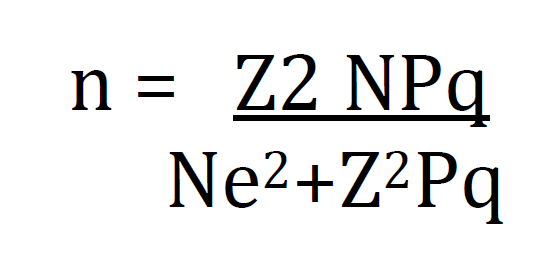
The probability sampling strategy, which gave every component of the population an equal and independent chance of being included in the sample, was used because the population size is known and based on a survey. As a result, five Niger Delta organizations were chosen using the cluster sampling technique, and the necessary sample size was calculated using the Cochran calculation shown below:
N : Sample size
N : Study population
Z2 : 1.96 (95% confidence level)
P : Estimated proportion of success
Q : Estimated proportion of failure
e2 : Proportion of sampling error
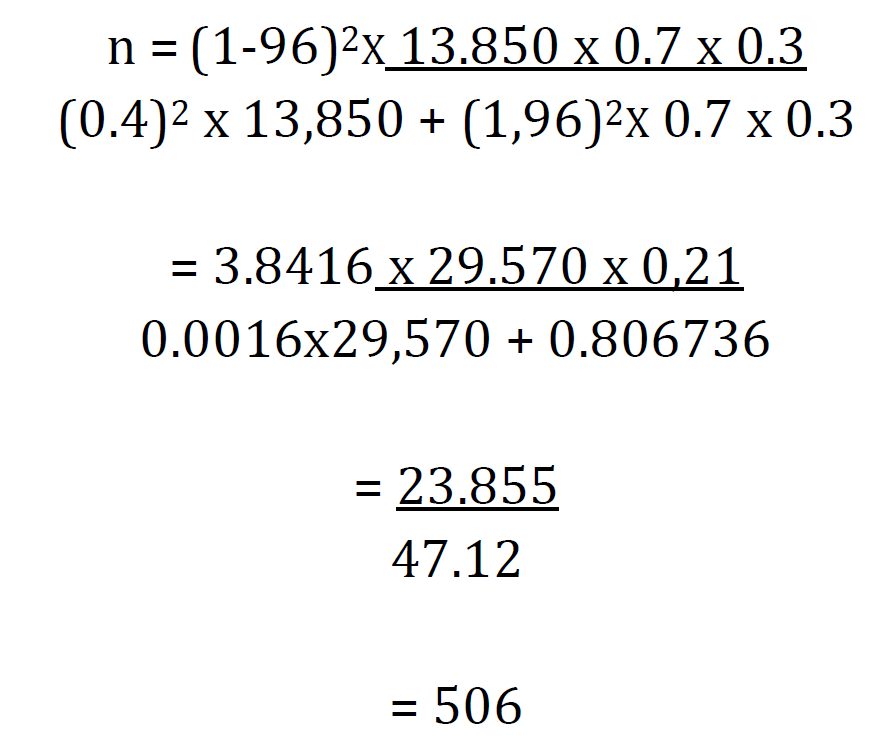
By substituting, we have the-following:
N: 13,850
Z2: (1.96)2
P: 0.7
Q: 0.3
e2 : (0.04)2
Accordingly, the researcher used a sample size of 506 respondents.
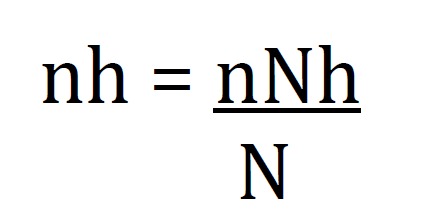
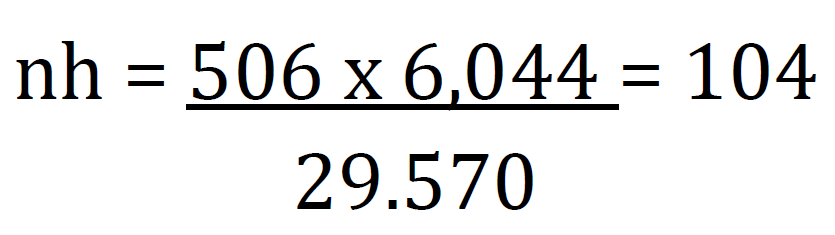
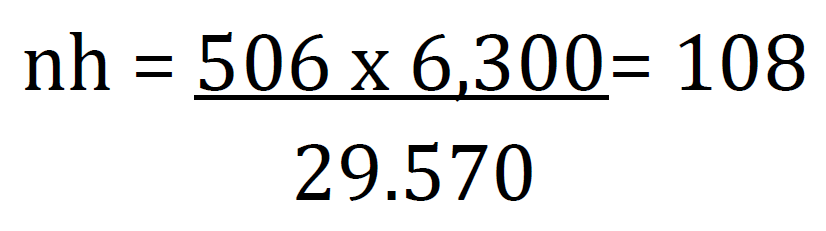
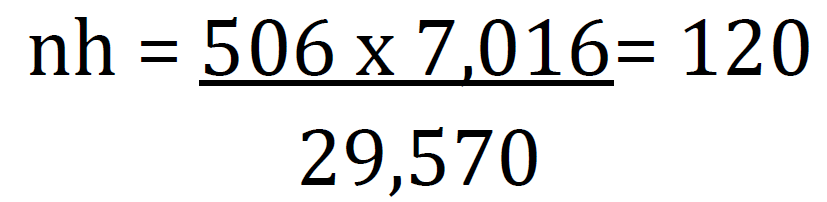
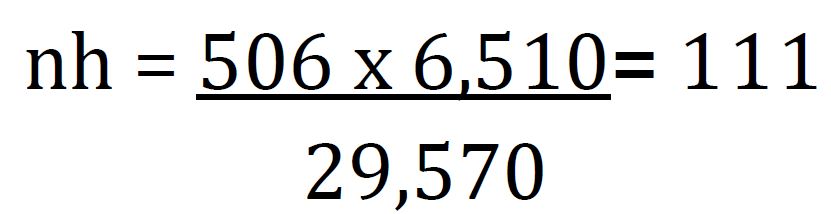
Again, the Bowley’s Proportion Allocation Formula was used in sharing the sample size between the five sample organizations as shown below:
Where:
Nh : Tthe number of units allocation to each enterprise
N : The sample size
Nh : The number of investors in each enterprise
N : The population size
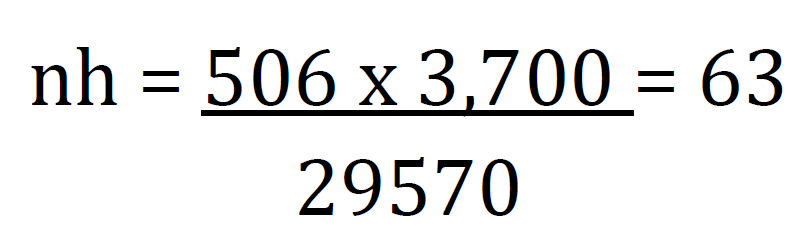
By substituting we have the following:
Delta state oil producing areas development commission 3,700 staff:
C and I leasing nigeria pic 6,044:
Chevron nigeria limited 6,300 staff:
Total nigeria pic 7,016 staff:
Nigerian agip oil company 6,510 staff:
Method of Data Collection
The primary data used in this study was obtained from the use of structured questionnaire that was administered to the participants in Delta state, Nigeria. Therefore, a drop-off and pick procedure of data collection was applied in this regard [19].
The questionnaire is divided into two main parts namely: section A, and section B. The section A part of the questionnaire measured the general characteristics of the respondents such as gender, age, year of service, educational qualification, union membership. The section B part is sub-divided into two parts: question 1 to question 5 elicited responses from the respondents concerning the five conflict management styles (independent variable) available to managers in organizations while question 6 to question 10 elicited responses from the respondents regarding workplace harmony (dependent variable).
This questionnaire used the five point Likert scale which ranges from Strongly Agree” with the highest score of 5 assigned to it, to “Undecided or Neutral” with the lowest score of 1 assigned to it.
Validity of the Instrument
In this study, the content validity technique was used, and independent expert judges in the fields of statistics and top management were carefully chosen.
After being provided the tool, they were asked to independently determine whether it was "Strongly Relevant to the Construct" or "Poorly Relevant to the Construct." The decision rule was then implemented after obtaining the instrument from the judges. It stipulates that only those items in the instrument that the panel of expert judges independently deems to be "highly related to the construct" should be kept, while those that fail this test should be eliminated.
By using this method, the researcher was able to sift through the experts' opinions and certify that the instrument is suitable for gathering accurate responses and measuring the things it is intended to measure.
Reliability of the Instrument
This study used the split-halves Method to ensure accuracy. With regard to a certain test administration, this technique offers a distinct estimate of dependability.
Split-Halves Method
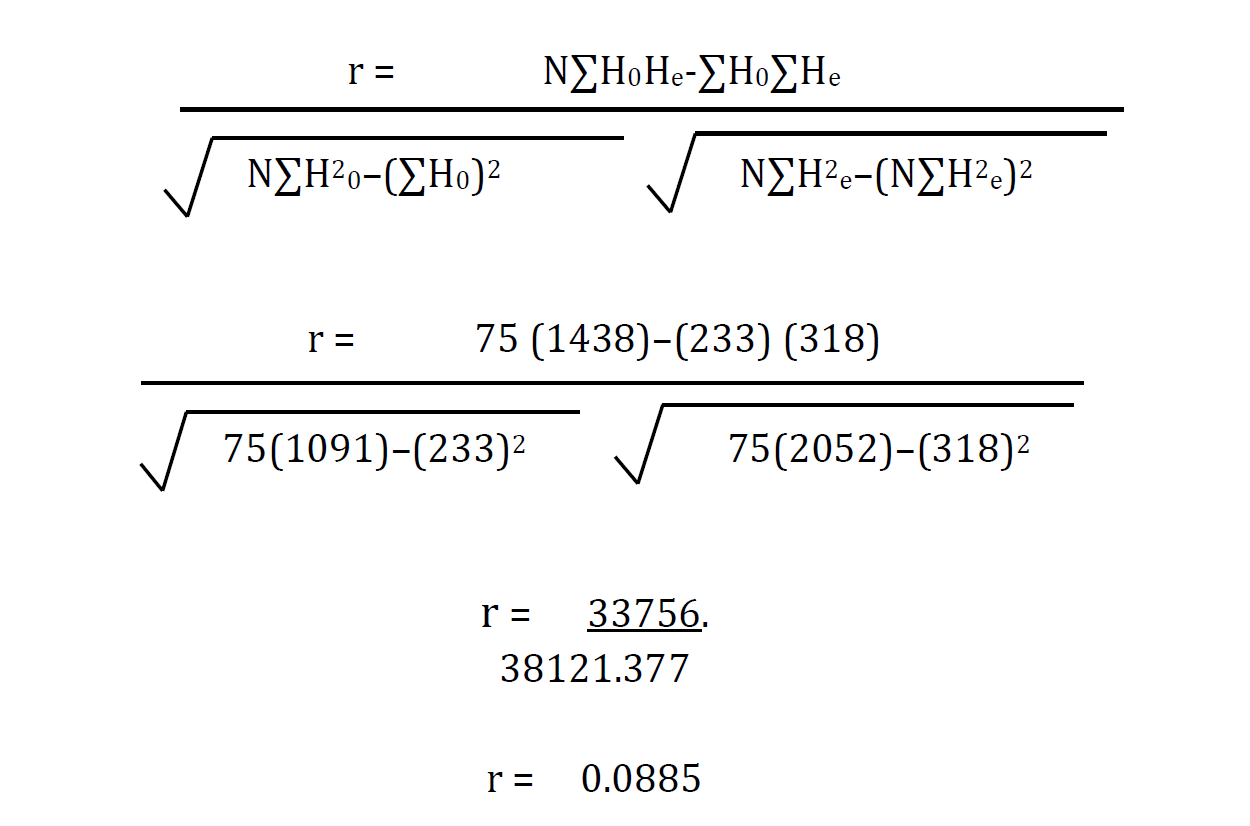
In this split-halves method, a pilot study involving some respondents was used. The responses of the participants based on the questions from the instrument were divided into two equal halves by assigning the odd numbered items to one half and the even numbered items to the other half of the test. Therefore, it was necessary to correct the correlation coefficient obtained between the two halves of the questionnaire. The Spearman- Brown Prophecy Formula was used to effect the correction. Therefore, the split-halves correlation estimate was corrected in order to estimate the reliability of the whole test.
The spearman-brown prophecy formula may be written as PXX” = 2PXX71+PXX’
Where:
PXX” : The reliability coefficient for the whole test
PXX’ : Tthe split-half correlation
The Correlation between the two halves:
Denotations
Let odd half be denoted as H0
Let even half be denoted as He
Therefore: the split half correlation (PXX’) = 0.885
Hence:
Since theSpearman-Brown Prophecycorrelation value is 0.939 the instrument is certified reliable as Spearman-Brown Prophecy correlation value of between 0.5 and 1 is considered reliable.
Method of Data Analysis
To objectively test the hypothesis formulated, the whole analysis was done with SPSS (Statistical Package for Social Sciences). The Simple Linear Regression Analysis was also used to measure the level of significance of the relationship existing between conflict management styles which is the independent variable which is avoiding also known as the exploratory variable, and the dependent variable (criterion variables) which is workplace harmony, picketing aversion in organizations.
The simple regression analysis is appropriate for the tests because it is used when the study involves models with just one dependent variable and one independent variable. In simple regression analysis, the variable whose value is to be predicted is known as the dependent variable while the ones whose known values are used for prediction are known as the independent variable [20].
The Simple Regression Used (Bi-variate Analysis)
The simple linear regression equation is expressed mathematically thus:
Y = f(X)
Model 1
Where:
Y : Workplace Harmony, and
X : Conflict Management Styles
Breaking Conflict Management Style into measurable form (predictors), model becomes:
X : Avoidance.
E : Stochastic error terms
Similarly, breaking Workplace Harmony into indicator, it yielded the following variable:
Y : Absence of Picketing
Interpretation of the Simple Regression Model
Y = b0+bx1+e
Equation 1
Where:
b1 = the slope of the regression line
Thus, this is the amount that the Y variable (dependent) which is the sustainability of family business, will respond to X variable (independent) which, is conflict management style
b0 = the intercept of the regression line with the Y axis
The techniques that were used for evaluating the overall goodness-of-fit of the regression line to the sample of the observations/the evaluation of the overall explanatory power of the regression equation/model are:
The Sample Coefficient of Determination (r2) /Correlation Analysis: The r square (r2) is the sample coefficient of determination that measures the proportion of the total variation in the dependent variable (workplace harmony) that is explained by the regression line (independent variable: conflict management style). For example, an r square (r2) of 0.70 shows that 70% of the total variation in workplace harmony is explained by conflict management style
F-test (Through ANOVA): The F-test tests the sources of the variation within the sample data. For the simple regression model, the test is shown to be equivalent to t-test which is used for inference about the population of the regression coefficients. The F-ratio or test was used to
test whether the estimated regression equation explains a significant proportion of the variation in the independent variable (conflict management style)
Decision Rule
The whole simple regression analyses were done in ANOVA table. Therefore, Reject Ho if the calculated F-ratio is greater than F-critical table value at 0.05 levels of significance and at 1 degree of freedom, and accept the alternative
Data Analyses
Test of Hypotheses: The formulated hypotheses were tested with F-test analyses and sample Coefficient of Determination (r). The r square (r2) is the sample coefficient of determination that measures the proportion of the total variation in the dependent variable (workplace harmony) that is explained by the regression line (independent variable: conflict management style). For example, an r square (r) of 0.70 shows that 70% of the total variation in workplace harmony is explained by conflict management style. Too, the F-test tests the sources of the variation within the sample data. For the simple regression model, the test is shown to be equivalent to t-test which is used for inference about the population of the regression coefficients. The F-ratio or test was used to test whether the estimated regression equation explains a significant proportion of the variation in the independent variable (conflict management style).
Decision Rule
The whole simple regression analyses were done in ANOVA Table 1. Therefore, Reject Ho if the calculated F-ratio is greater F-critical table value at 0.05 levels of significance and at 1 degree of freedom, and accept the alternative.
Significant positive relationship exists between avoiding, as a conflict management style and absence of picketing in organizations in the Niger Delta.
Table 1: Model Summary Result for Hypothesis
Model
R
R Square
Adjusted R Square
STD. Error of the Estimate
1
0.110a
0.010
0.0081
0.460
Source: Researcher's computation, 2022
Table 2: ANOVA Table for Simple Regression Result for Hypothesis
Parameters
Sum of Squares
df
Mean Square
F
Sig.
Regression
4.050
1
4.050
1.523
0.143b
Residual
755.719
496
1.963
-
-
Total
759.769
497
-
-
-
Source: Researcher's Computation, 2022
Table 3: Coefficients3 Result for Hypothesis
Model
Un standardized Coefficients
Standardized Coefficients
T
Sig.
B
Std. Error
Beta
(Constant)Managers in my organization neither satisfy the
3.710
0.161
23.019
0.000
organization's interest nor the interest of the subordinates during Conflict
0.069
0.049
0.772
1.412
0.143
Source: Researcher's computation, 2022
The model summary above shows how much of the variance in absence of picketing in organizations in the Niger Delta that is explained by avoiding, as a conflict management style. In this test, the calculated r 0.110 indicates that avoiding, as a conflict management style explains only 11 per cent variance in absence of picketing in organizations in the Niger Delta.
Table 2 result indicates that there is no significant positive relationship F-1.532: p = 0.143>0.05 between avoiding, as a conflict management style and absence of picketing in organizations in the Niger Delta. Therefore, the null hypothesis is accepted which says that there no significant positive relationship between avoiding, as a conflict management style and industrial absence of picketing in organizations in the Niger Delta while the alternative hypothesis is rejected.
The coefficient Table 3 shows how avoiding, as a conflict management style relates to absence of picketing in organizations in the Niger Delta. From this table therefore, the coefficient value 0.069 indicates that avoiding, as a conflict management style poorly relates to absence of picketing in organizations in the Niger Delta as every 100 per cent increase in absence of picketing, avoiding, as a conflict management style contributes a poor value of 6.9 per cent.
Interpretation of Results
The results from the three tables above indicate that there no significant positive relationship between avoiding, as a conflict management style and absence of picketing in organizations in the Niger Delta in organizations in the Niger Delta F = 1.532: t = 1.412: p = 0.143>0.05: r = 0.110.
Therefore, the null hypothesis is accepted which says that there no significant positive relationship between avoiding, as a conflict management style and absence of picketing in organizations in the Niger Delta while the alternative hypothesis is rejected.
RESULTS AND DISCUSSION
The test's findings show that there is no statistically significant correlation between the use of avoidance as a conflict management strategy and the lack of picketing in Niger Delta organizations. This finding is in line with the theories put forward by Rahim [21] and Thomas et al. according to which an avoidant behavior is one in which neither your own nor the other person's needs are met. Low aggressiveness and low cooperativeness characterize this approach. The intention is to stall.
Employees that are dissatisfied by this style of management frequently quit. Avoidance is also suitable when you are in a weak position and have little control over the circumstance, when you need to let others handle the disagreement, or when the issue is really a symptom of a far more serious problem and you need to focus on the root of the problem.
In order to master this approach, one must have the wisdom to know when to withdraw, the ability to utilise diplomacy to avoid awkward situations or touchy subjects, the ability to create a sense of time, and practice leaving issues unsettled. Overusing the avoidance approach can lead to low levels of involvement, default decision-making, and letting problems fester, which can lead to a breakdown in team members' ability to communicate. This can undermine the effectiveness of brainstorming sessions and interfere with teamwork.
People who employ avoidance excessively believe they can't communicate openly without worrying about the consequences. A child's experiences, occurrences at work in the past, and bad conflict resolution experiences are common causes of the misuse of conflict avoidance. When asked if something is wrong, avoidance-related behaviours include remaining silent, acting glum, and lying.
When a team member procrastinates, purposefully adopts an opposing viewpoint inappropriately during a decision-making circumstance, is timid, distant, or shy, these behaviors are milder forms of avoidance behaviour. Avoidance can lead to extreme behaviour when it is overdone. A person starts being pessimistic, judgmental, and snarky.
Other extreme avoidance behaviours include showing up late and not paying attention during meetings, which makes one passive hostile. Because you have spent a disproportionate amount of time using this style compared to the others, it also assigns a greater importance to it. Underusing the avoidance style can lead to animosity and damaged feelings.
In addition, taking on too many tasks at once can make work seem overwhelming, making it difficult to prioritise and assign tasks. A team member who uses avoidance insufficiently may downplay the issue and let their angry sentiments stifle communication. Conflict management strategy of avoidance is still used.
Employee picketing has the potential to harm the business through decreased sales and bad press, or by discouraging or stopping workers, customers, or both from entering the site and preventing it from running normally [14]. During strikes, picketing is a popular practice employed by trade unions to try and keep dissident union members, members of other unions, and non-unionized workers from working. Scabs are a derogatory term for people who cross the picket line and continue working while on strike.
CONCLUSION
The following conclusions are reached from the chapter's discussion of the results: First, managers' use of the dominant conflict management technique in Nigerian organizations impedes workplace harmony. Due to the fact that managers who utilise this method do not address the problems of the organisation or the employees, it causes picketing and so undermines workplace peace.
Fifth, the accommodating conflict management style raises employee morale in businesses because managers who apply this approach frequently put employee needs ahead of organisational needs.
Recommendation
The following suggestions are provided after comprehensive discussion of the facts and some conclusions there from: Avoiding conflict is a management strategy that should be avoided by managers since it encourages picketing, which undermines workplace harmony. This style usually makes employees to be disenchanted and consequently resign their jobs.
REFERENCE
International Labour Organisation. Global accelerator for jobs and social protection. 2006, www.ilo.org. Accessed October 2021.
Obiora, J. and U.Y. Okwuise. “Entrepreneurial intent and change readiness strategies among entrepreneurs in South-South Nigeria.” West African Journal of Business and Management Sciences, vol. 5, no. 1, 2016, pp. 196–204.
Okwuise, U.Y. et al. “Impact of conflict management strategies on employee performance in the Nigeria banking industry.” International Journal of Advanced Science and Technology, vol. 29, no. 8, 2020, pp. 5167–5177.
Okwuise, U.Y. et al. “The impact of talent management strategy on the FMCGs performance in Nigeria.” Test Engineering and Management, vol. 83, May–June 2020, pp. 26981–26992.
Ugherughe, J. et al. “The impact of globalization on industrial relations in Nigeria: A study of selected trade unions.” International Journal of Psychosocial Rehabilitation, vol. 24, no. 7, 2020, pp. 11288–11305.
Okwuise, U.Y. and G. Idowu. “Human capital development and employees’ performance: The Nigerian factor.” West African Journal of Business and Management Sciences, vol. 11, no. 1, 2022, pp. 90–112.
Okwuise, U.Y. et al. “Impact of strategic management on organisational growth and development in Delta State, Nigeria: Small and medium enterprises.” Test Engineering and Management, vol. 84, January–April 2021, pp. 91–107.
Owoseni, O.O. “An examination of some determinants of industrial conflict in employee–employer relationship in Nigeria.” Journal of Social Behavior and Personality, 2015, pp. 237–252.
Obi, R. “Stress and conflict in organisation.” Industrial Sociology, edited by O.A. Ogunbameru, Ibadan, 2012.
Ikeda, A. et al. “Organisational conflicts perceived by marketing executives.” International Journal of Asian Social Science, vol. 2, no. 3, 2005, pp. 229–243.
Ajala, M. and J. Oghenekohwo. “Appraisal of public policy on conflict resolution for harmony.” Journal of IIRA African Regional Congress of Industrial Relations, vol. 4, January–December 2002, pp. 23–41.
Hammed, T.A. and O.A. Ayantunji. “The effect of six thinking hats in enhancing the conflict-handling behaviour of selected trade union leaders in Lagos State.” Nigerian Journal of Applied Psychology, vol. 12, no. 2, 2002, pp. 127–135.
Fisher, R. et al.Getting to yes: Negotiating agreement without giving in. Houghton Mifflin, 2004.
Twarog, J. “Informational pickets, rallies, vigils and leafleting at health care facilities.” Massachusetts Nurse, vol. 77, no. 3, 2006, pp. 19–26.
Adavbiele, J.A. “Implications of incessant strike actions on the implementation of technical education programme in Nigeria.” American Journal of Social Issues and Humanities, vol. 6, no. 1, 2015.
Osabuohien, E.S.C. and I.O. Ogunrinola. “Causes and effects of industrial crisis in Nigeria: Some empirical clarifications.” 2015, www.causes.and.effects.of.industrial.crisis.in.nigeria. Accessed March 2021.
Olukayode, L. “Impact of workplace conflict management on organizational performance: A case of a Nigerian manufacturing firm.” Journal of Management and Strategy, vol. 6, no. 2, 2015, jms.sciedupress.com. Accessed March 2021.
Sholokwu, B.M. and W.O. Olori. “Management practices and industrial harmony in oil and gas firms in Rivers State, Nigeria.” Journal of African Labour Studies, vol. 5, nos. 1–2, 2016, pp. 78–87.
Creswell, J. Research design: Quantitative, qualitative, and mixed methods approaches. 2008.
All papers should be submitted electronically. All submitted manuscripts must be original work that is not under submission at another journal or under consideration for publication in another form, such as a monograph or chapter of a book. Authors of submitted papers are obligated not to submit their paper for publication elsewhere until an editorial decision is rendered on their submission. Further, authors of accepted papers are prohibited from publishing the results in other publications that appear before the paper is published in the Journal unless they receive approval for doing so from the Editor-In-Chief.
Himalayan Journal of Economics and Business Management open access articles are licensed under a Creative Commons Attribution-Share A like 4.0 International License. This license lets the audience to give appropriate credit, provide a link to the license, and indicate if changes were made and if they remix, transform, or build upon the material, they must distribute contributions under the same license as the original.
Advertisement
Recommended Articles
Research Article
Influence of Leadership on Poverty Reduction in the Devolved Government in Trans-Nzoia County, Kenya
Kinisu Sifuna,
...
Peter Simotwo
Published: 30/06/2021
Download PDF
Cite
x
APA
Sifuna, K., Lwangale, D. W., Simotwo, P., Sifuna, K., Lwangale, D. W. & Simotwo, P. (2021). Influence of Leadership on Poverty Reduction in the Devolved Government in Trans-Nzoia County, Kenya. Himalayan Journal of Economics and Business Management, 2(1), None-None.
MLA
Sifuna, Kinisu, et al. "Influence of Leadership on Poverty Reduction in the Devolved Government in Trans-Nzoia County, Kenya." Himalayan Journal of Economics and Business Management 2.1 (2021): None-None.
Chicago
Sifuna, Kinisu, David W. Lwangale, Peter Simotwo, Kinisu Sifuna, David W. Lwangale and Peter Simotwo. "Influence of Leadership on Poverty Reduction in the Devolved Government in Trans-Nzoia County, Kenya." Himalayan Journal of Economics and Business Management 2, no. 1 (2021): None-None.
Harvard
Sifuna, K., Lwangale, D. W., Simotwo, P., Sifuna, K., Lwangale, D. W. and Simotwo, P. (2021) 'Influence of Leadership on Poverty Reduction in the Devolved Government in Trans-Nzoia County, Kenya' Himalayan Journal of Economics and Business Management 2(1), pp. None-None.
Vancouver
Sifuna K, Lwangale DW, Simotwo P, Sifuna K, Lwangale DW, Simotwo P. Influence of Leadership on Poverty Reduction in the Devolved Government in Trans-Nzoia County, Kenya. Himalayan Journal of Economics and Business Management. 2021 Jan;2(1):None-None.
Download PDF
Research Article
Modelling Structure Job Quality, Job Design and Job Satisfaction
Moch Nurhadi,
...
Avi Sunani
Published: 30/08/2022
Download PDF
Cite
x
APA
Nurhadi, M., Bisyri Effendi, M., Saiful Ulum, A. & Sunani, A. (2022). Modelling Structure Job Quality, Job Design and Job Satisfaction. Himalayan Journal of Economics and Business Management, 3(2), 1-4.
MLA
Nurhadi, Moch, et al. "Modelling Structure Job Quality, Job Design and Job Satisfaction." Himalayan Journal of Economics and Business Management 3.2 (2022): 1-4.
Chicago
Nurhadi, Moch, Moch Bisyri Effendi, Achmad Saiful Ulum and Avi Sunani. "Modelling Structure Job Quality, Job Design and Job Satisfaction." Himalayan Journal of Economics and Business Management 3, no. 2 (2022): 1-4.
Harvard
Nurhadi, M., Bisyri Effendi, M., Saiful Ulum, A. and Sunani, A. (2022) 'Modelling Structure Job Quality, Job Design and Job Satisfaction' Himalayan Journal of Economics and Business Management 3(2), pp. 1-4.
Vancouver
Nurhadi M, Bisyri Effendi M, Saiful Ulum A, Sunani A. Modelling Structure Job Quality, Job Design and Job Satisfaction. Himalayan Journal of Economics and Business Management. 2022 Jul;3(2):1-4.
Download PDF
Research Article
Accountability and Transparency of Village Fund Management in Lumajang District
Nurina Ayuningtiyas,
...
Muhammad Miqdad
Published: 28/12/2023
Download PDF
Cite
x
APA
Ayuningtiyas, N., Santosa Putra, H. & Miqdad, M. (2023). Accountability and Transparency of Village Fund Management in Lumajang District. Himalayan Journal of Economics and Business Management, 4(2), 1-4.
MLA
Ayuningtiyas, Nurina, Hendrawan Santosa Putra and Muhammad Miqdad. "Accountability and Transparency of Village Fund Management in Lumajang District." Himalayan Journal of Economics and Business Management 4.2 (2023): 1-4.
Chicago
Ayuningtiyas, Nurina, Hendrawan Santosa Putra and Muhammad Miqdad. "Accountability and Transparency of Village Fund Management in Lumajang District." Himalayan Journal of Economics and Business Management 4, no. 2 (2023): 1-4.
Harvard
Ayuningtiyas, N., Santosa Putra, H. and Miqdad, M. (2023) 'Accountability and Transparency of Village Fund Management in Lumajang District' Himalayan Journal of Economics and Business Management 4(2), pp. 1-4.
Vancouver
Ayuningtiyas N, Santosa Putra H, Miqdad M. Accountability and Transparency of Village Fund Management in Lumajang District. Himalayan Journal of Economics and Business Management. 2023 Jul;4(2):1-4.
Download PDF
Research Article
The impact of organizational flexibility on improving institutional performance in Iraqi business organizations
Muntaha Abdul Hassan Salih
Published: 22/01/2026
Download PDF
Cite
x
APA
Salih, M. A. H. (2026). The impact of organizational flexibility on improving institutional performance in Iraqi business organizations. Himalayan Journal of Economics and Business Management, 7(1), 1-9.
MLA
Salih, Muntaha A. H.. "The impact of organizational flexibility on improving institutional performance in Iraqi business organizations." Himalayan Journal of Economics and Business Management 7.1 (2026): 1-9.
Chicago
Salih, Muntaha A. H.. "The impact of organizational flexibility on improving institutional performance in Iraqi business organizations." Himalayan Journal of Economics and Business Management 7, no. 1 (2026): 1-9.
Harvard
Salih, M. A. H. (2026) 'The impact of organizational flexibility on improving institutional performance in Iraqi business organizations' Himalayan Journal of Economics and Business Management 7(1), pp. 1-9.
Vancouver
Salih MAH. The impact of organizational flexibility on improving institutional performance in Iraqi business organizations. Himalayan Journal of Economics and Business Management. 2026 Jan;7(1):1-9.
Young, O. U. (2023). Conflict Avoidance Strategies and Picketing Absence in Organizations: A Survey Analysis. Himalayan Journal of Economics and Business Management, 4(1), 1-7.
MLA
Young, Okwuise, U.. "Conflict Avoidance Strategies and Picketing Absence in Organizations: A Survey Analysis." Himalayan Journal of Economics and Business Management 4.1 (2023): 1-7.
Chicago
Young, Okwuise, U.. "Conflict Avoidance Strategies and Picketing Absence in Organizations: A Survey Analysis." Himalayan Journal of Economics and Business Management 4, no. 1 (2023): 1-7.
Harvard
Young, O. U. (2023) 'Conflict Avoidance Strategies and Picketing Absence in Organizations: A Survey Analysis' Himalayan Journal of Economics and Business Management 4(1), pp. 1-7.
Vancouver
Young OU. Conflict Avoidance Strategies and Picketing Absence in Organizations: A Survey Analysis. Himalayan Journal of Economics and Business Management. 2023 Jan;4(1):1-7.


 Download PDF
 Download XML