The aim of this study was threefold. First, the study scrutinized the role of government spending on output growth for SSA countries. SSA countries’ economic growth has been low compared to other developing regions. Empirical evidence has shown that government expenditure is a significant driver of output growth. However, SSA economic performance has largely lagged despite the increase in government expenditure. The second objective assessed the role of institutions on economic growth, while the third objective analysed the role of institutional quality on growth among Sub-Saharan countries. The issues of institutional quality have been considered to be fundamental in explaining income variation across countries. In line with the search for the real determinant of economic growth, this work sought to analyze the tri-variate relation existing among institutional quality, government expenditure and economic growth, using a panel data analysis for 48 SSA countries 2005 to 2020. The study found a positive and significant relationship between some institution’s indicators, on economic growth whereas political institutions showed a negative and insignificant effect on economic growth. Also, the empirical findings reveal a very significant and positive impact of government expenditure on economic growth and finally, structural policy institution was found to impact positively on the government expenditure outcomes throughout the period of study. Based on the findings, the study recommends a concerted effort towards sanitizing the various institutions to improve on the policy making and execution of the various countries and by implication increase economic growth in countries. Also, governments should channel their public expenditure endeavors towards the productive sector (Education, Health etc) and on the provision of the requisite developmental infrastructures.
Keywords
Policy
Institutions
Institutional Quality
Government Expenditure
Performance
Development
Economic Growth
INTRODUCTION
The effect of government expenditure on cross country income variation has elicited considerable interest in the past decades [1-2]. Improving the quality of institutions could boost Sub-Saharan African’s output growth by 0.9 of a percentage [3]. However, very few SSA countries have managed to better their institutional quality. SSA countries have experienced underdevelopment and low economic growth. At the aggregate level, this perception is confirmed by the low average income per person and the low average rates of income increase over the last few decades [4].Government expenditure policies that maintain sustainable economic growth remain key objective that governments pursue. Efficient resource allocation, distribution and stabilization are also important in the realization of fiscal discipline that improves the economic growth of a particular country [5-6]. A sound fiscal policy significantly contributes to stable economic environment which creates expectation in the economy which foster long run income growth of a country [7-8].
Despite poor economic performance of SSA countries, Botswana is an example of successstory in Africa. WDI showed that Botswana had income per capita of $5,796 in 1998,which was almostfour times average African income per capita. For the periods 1965 to1998, Botswana’s income per capita grew 7.7 percent annually. According to Acemoglu, Johnson and Robinson [9], Botswana achieved robust economic growth because item braced better in stitutions than other African countries. Good institutions provide an environment for property rights (PRs) protection, enhance political stability and cushioninvestors against interference from political elites. In contrast, Democratic Republic of the Congo (DRC) Despite having large mineral deposits, it has remained underdeveloped. Therefore, poor governance arisingfrom corruption that distorts economic incentives can lead to low investment and the inefficient use of resources [10].
According to Vitola, and Senfelde [11] institutional checks and balances that renew policy makersthrough elections cushion the economy against corruption and misallocation of resources. Institutions that embrace democracy are believed to enhance economic prosperity by providing an environment that protects PRs, and it also nurtures civil rights. This therefore provides economic players with incentives to undertake investment, which consequently enhanceseconomic growth. The mixed economic activity outcome in SSA therefore suggests that economic growth is determined by the strength of institutional variables.
The problem then is seen not as one of the resource constraints in SSA but rather institutional weakness and poor policies. Institutional quality includes civil and political liberties, extent of corruption, political stability, public sector efficiency, regulatory framework and economic freedom. Governance should be seen as a function of the country’s institutions which implies that good institutions translate into good governance and policies, transparency and accountability. This paves way to allocation efficiency and visionary leadership. However, institutional quality, public expenditure and economic growth are interlinked. Understanding how public spending impact economic growth and exploring the role institutions play on growth is important for various reasons.
Statement of the Research Problem
Several research works that involve output growth and government expenditure for SSAs have been conducted. The findings have remained inconclusive on whether spending significantly retards or enhances output growth. The decline in output growth resulting from state spending is attributed to crowding out phenomenon. Provision of public goods through domestic borrowing could lead to a decrease in the private sector. However, this understanding of crowding out does not consider the efficacy of publice xpenditure [12-13]. In contrast, it is argued that resources alone are not enough but the institutional capacity i.e., nature of structure and policies and institutional quality are Also important drivers for economic growth. Improving the quality of institutions could boost Sub-Saharan Africa’s output growth by 0.9 of a percentage [14]. However, very few SSA countries have managed to better their institutional quality. Some countries in SSA are experiencing political strife, mega corruption Scandals and poor implementation of budgetary policies, i.e., DRC, Kenya, and the Central African Republic (CAR). Consequently, an important issue in public sector expenditure is whether an improvement in institutional quality can help in ameliorating the impact of public spending on economic growth in SSA. Although increased public spending as a form of fiscal policy can spur economic growth, efficient outcomes can be achieved with well-functioning institutions
This study therefore seek to answer the following questions:
Whatis the effectof publicexpenditure on output growth in SSA
What is the status of efficiency of public spendingin SSA
(3)How does institutional quality affecteconomic output growth in SSA
The nexus between government expenditure and output growth is an important subject thathas been studied by “Devarajan, Easterly, and Park [15], Barro [16], Kimaro, Keong, and Sea [17], among many other researchers, have examined this issue. Researchers want to know if financial discipline affects the production growth equation. One view is that public spending on human capacity building, infrastructure, and health enhances economic growth, although financing such government expenditure is associated with tax distortions, which can be growth-retarding. The public sector has expanded significantly over the years in various countries. At the beginning of the twentieth century, the public sector in many countries was small. However, expenditure increased gradually over the next sixty years. For SSA, the public sector has grown from 18.5% of GDP in the 1980s to about 29% of GDP in 2018. Despite this increase in public expenditure, SSA has experienced dwindling economic performance. The relationship between output growth and public spending for SSA nations has been extensively studied in the literature [17-23]. The diverse economic performance of the various countries was not taken into account in these research, which instead concentrated on the effect of public spending on output growth in SSA.None of thesestudies have dissected SSA countries into low- and middle-income countries. For policy makers, it will be crucial to have knowledge on which aspects of government spending contribute significantly and favourably to output growth for low and middle level economies SSA. These empirical findings will be helpful for formulating strategies that are particular to the level of economies, growth, and which will spur economic growth for low and middle level income economies of SSA. This study makes a distinctive contribution to the body of knowledge on production growth and public spending by dividing SSA countries into two groups: low- and middle-income countries.
The Efficiency of Public Spending in Sub-Saharan Africa
Government role in economic development is crucial in markets characterized by asymmetric information. Imperfect markets result in economic distortions and consequently worsen of welfare [24]. Government spending interventions in the economy are crucial for macroeconomic stabilization as well as improving long-term growth. With SSA countries faced with limited resources, investigating the effectiveness of public spending is essential because even little changes can have a significant influence on the achievement of governmental goals that are in line with the Sustainable Development Goals (SDGs). Different econometric techniques have been used to measure spending efficiency..Government is viewed as a producer since it uses different combination of labour and inputsto produce different outputs. According to Afonso et al. [25], governments that producemore outputs with fewer inputs are considered more efficient than governments that producefewer outputs but use more inputs. Some governments in the African region are characterizedby inefficiencies in the provision of public goods [26]. In order to account for government wastes, an empirical result that describes the degree of efficiency of government spending is essential. Additionally, care must be made when the government allocates its budgeted funds and when implementing procedures to increase the effectiveness of public spending.
Cross-country income variation is caused by numerous factors. The size of the government expenditure multiplier is one of these factors. Varied multipliers have different effects on how the change in the gross domestic product is realised (GDP). The effectiveness of government public expenditure execution is one of the other covariates [27]. Spending efficiency inturn is associated with a number of factors. This the study therefore analyses spending efficiency in SSA countries. Secondly, the study investigates how environmental factors contribute to inefficiencies of spending in SSA.
Institutional Quality and Economic Growth in Sub-Saharan Africa
Institutional quality is critical in the realization of economic success of developing countries.Institutional quality of a country facilitate international transactions, and provide for their security and predictability. It is a wide notion that encompasses the rule of law, individual rights, and top-notch public policies. Over the long run, institutional quality and economic growth support one another, but numerous studies contend that institutional quality creates a positive feedback loop.
Public institutions and governance that are inclusive are capable of delivering quality services that are important in improving people’s welfare. This is in line with the Sustainable Development Goals (SDGs) which advocate for strong institutions. Developing countries have recently embarked on radical reforms aimed at improving governance. This has been informed by the realization that good institutions are crucial for enhancing economic growth. North [28], for example, argues that good governance provides rules that are consistent and take the form of institutions important for sustainable growth. However, poor economic performance is associated with weak institutions [29]. If weak institutions negatively influence income growth, then policy actors should design policies that strengthen institutions [30].
Theoretical Review
The Wagner’s Organic State Theory, Keynesian Theory, Crowding out Theory, Neo-Classical Theory of Growth, and Endogenous Growth Theory was adopted in this research.
The Wagner’s Organic State Theory
Wagner's law states that complexity in the political system promotes economic expansion. This is required by the necessity to enact statutory laws and the growth of the legal system, both of which raise public expenditures. According to Wagner law, the process of urbanisation is accompanied by externalities that necessitate government intervention to lessen their consequences. Within the economic and fiscal aspects of public expenditure expansion, economic research has taken two main lines in analysing the expansion of the public economy.
Keynesian Theory
Keynes, in “The General Theory of Employment, Interest and Money” proposed that state intervention in economic activity is necessary since economies do not stabilize very quickly [31]. According to Keynes [31], in times of economic distress, government spending is required to boost employment. Government spending is necessary for promoting growth. Keynes believed that microeconomic interventions by both firms and individuals can lead to inefficient macroeconomic outcomes, leading to a general glut where the economy operates below its potential output and growth rate. Keynesian theory finds relevance in the context of Sub-Saharan African Countries. Government expenditure in infrastructure like road construction has been used by many governments to reduce unemployment during economic downturn. Economic stimulus like road construction has multiplier effect of increasing aggregate demand of economy and hence improving aggregate economic performance.
Crowding Out Theory
Crowding out Theory is premised on the view that increased government intervention can reduce private activities. Crowding out is a byproduct of an expansive fiscal policy, in which the government finances expenditures through taxes or debt issuance. Crowding out is also a multidimensional concept that constitutes direct and indirect effects of state intervention on the private activities.
Neo-Classical Theory
The foundation of the neo-classical theory put forth by Solow-Swan in 1956 is the notion that as physical capital increases, returns diminish and that capital therefore has a transitory impact on the level of income in an economy. In order to promote economic growth, the theory contends that labour productivity must be raised. Accordingly, accumulation of capital and labour, as well as advancements in technology, can lead to steady state economic growth. According to the idea, equilibrium can be reached by adjusting the production function's appropriate ratios of capital and labour.
Endogenous Growth Theory
Endogenous Growth Theory takes the assumption of decreasing returns in capital in the neoclassical model inhibits the explanation of income variation in the long run. To remedy the shorting comings of neoclassical model, endogenous growth theory was conceived to model long run growth through technological transfer.In endogenous growth theory, steady economic growth is achieved through technological change that is endogenously determined.
Empirical Review
Table 1: Summary of Related Literature Review
Author
Sample Period
Countries
Technique Used
Results
Daniel et al. [32]
2006-2015
35 African countries
Multi-level modelling technique
Result from the study showed that institutional quality significantly enhances firm’s performance for African countries.
Iheonu et al. [33]
1996-2015
12West African countries
FE, RE and the panel2SLS technique
The result showed institutional quality positively and significantly impact economic growth.
Kimaro et al. [17]
2002-2015
25 lowincome SSA countries
Panel cointegration and GMM
The study offered proof that government investment in low-income SSA nations predicts income level in a beneficial way.
Chan, et al. [24]
-
115countries
DEA Approach
The study found that efficient governmentspendingenhances growth
Obialor
Three middleincome economies of SSA countries (Nigeria, South Africa and Ghana)
VECM
According to the study's findings, Nigeria's production growth is favourably and considerably impacted by expenditure on health and education.HealthandeducationexpenditurenegativelyandinsignificantlyinfluenceincomelevelofSouthAfrica
The research revealed that while spending on health and consumption has a beneficial impact on economic growth, spending on agriculture and defence has a negative impact on income levels.
Adu et al. [34]
1970-2010
Ghana
ARDL and Granger causality
The paper predicts that spendingsignificantly improve income level in the long run. However, spending negatively impactsoutput intheshortrun.
Maingi et al.
1980 to 2010
MemberstatesofEastAfrica
-
The results demonstrated that while spending on education and agriculture was not statistically significant, spending on health and defence had a beneficial impact on growth.
Hsu [35]
46 Central Asia countries and Europe
DEA approach
The findings from the study further established a regional effect betweenEurope and Central Asiainterms ofefficiencyscores
Prasetyoand Zuhdi
2006 to 2010
81 countries
DEA approach
The study found that mixed resultfor efficiencyscore for differentcountries.
Yasin [36]
1987-1997
SSA
Fixed Effect and Random Effect
The study concluded that government expenditure on capital formation significantly improves income level
Wang and Alvi
1986-2007
7 Asian countries
DEA Approach
The findings indicated that Singapore and Japan were more productive than the other Asian nations. According to extreme bounds analysis (EBA), corruption has a significant impact on how well governments perform.
Wu et al.
1950 and 2004
182 countries
Panel grangercausality
The findings indicated a reverse causal relationship between income level and spending. The results also demonstrated that expenditure had a different effect on growth depending on each country's income level.
Maingi
1963-2008
Kenya
VAR
According to the findings, productive government spending on infrastructure, investments, economic affairs, health care, and defence raises the amount of income.
Rahmayanti and Horn [37]
1990 –2003
63developingcountries
Data Envelopment Analysis (DEA)
According to the study, if spending is used wisely, developing nations can optimise growth while using less money.
On the average,spendingin Lisbon municipalities wasfound tobeinefficient. According to the composite output metric, municipalities could have, on average, used 41% fewer resources to produce the same amount of production.
Loizides et al. [39]
1950-1990
UK, Greece, and Ireland
Asymmetric cointegration approach
The result showed public expansion enhances income level
Afonso et al. [40]
1990 – 2000
Twenty-three industrializedcountries
Free Disposal Hull (FDH) analysis
According to the report, big governments' private sector performance is 35% worse than that of small governments.
Gyimah-Brempong [41]
20-year period
SSA and OECD countries
GMM estimator
The findings demonstrated that having a strong human capital base raises income levels significantly.
Musila and Balassi [42]
1965 – 1999
Uganda
ECM
The study discovered that education spending considerably and positively predicted income level both in the short and long terms.
Dunne et al.
1967-1985
13 samples of SSA countries
Pooled OLS
The finding showed that military spending negatively impacts economic growth.
MATERIALS AND METHODS
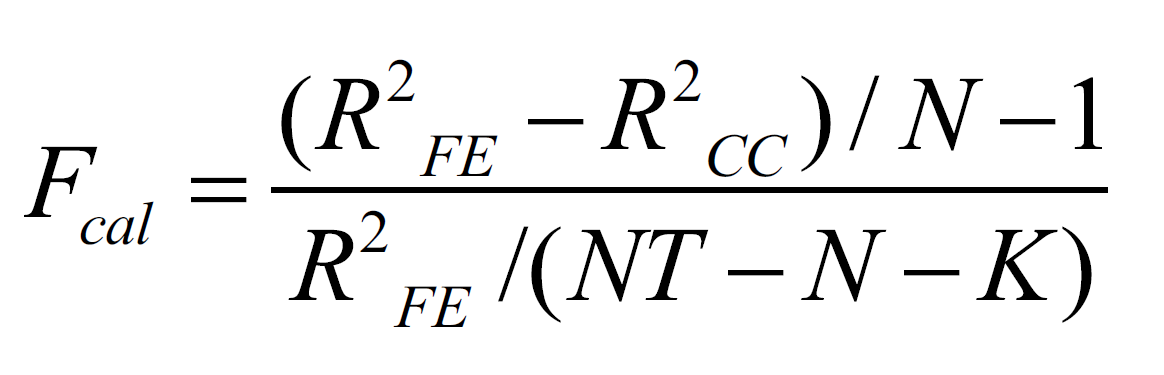
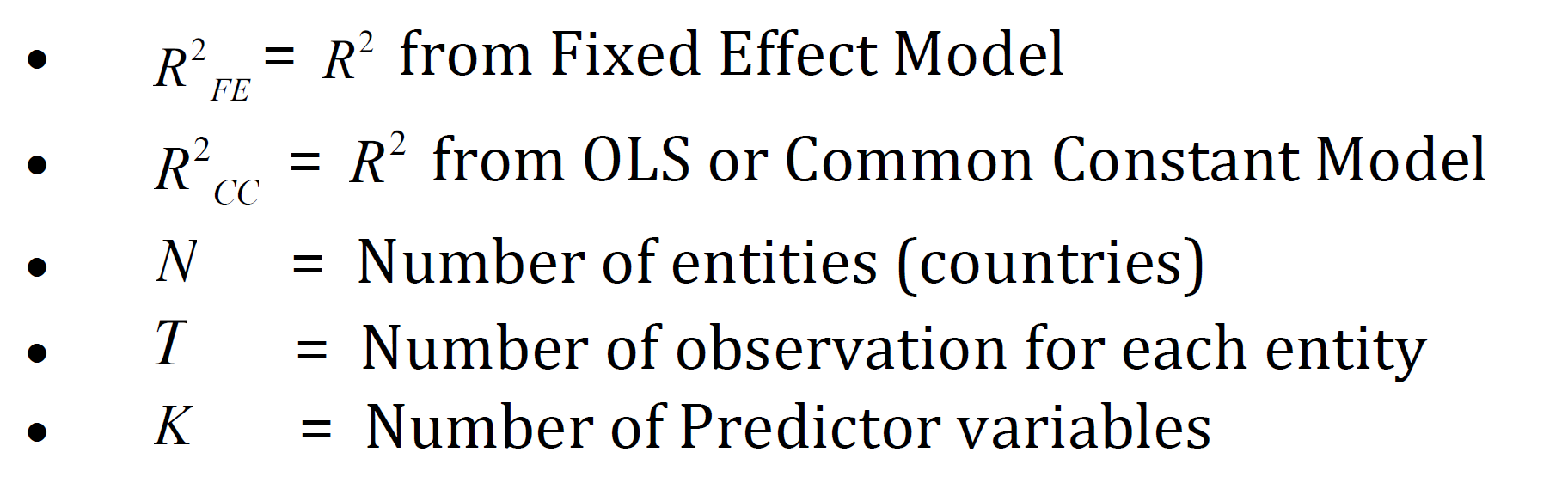
The methodology employed in this study is the panel data analysis and the fixed effect model and random effects models were used. However, the Hausman test favored the use of fixed effect model as the most appropriate model of analysis in this study. The study also employed data from the world Development indicators of the World Bank. After modelling the fixed effect panel regression to check for the impact of institutional quality on economic growth, the study discovered that some key institutional quality variables exert insignificant and negative impact on economic growth. The data for this study was gotten from World Bank Government database containing information from Forty-eight countries from sub-Saharan Africa were selected for the study for the period 2005 to 2020. The countries are; Angola, Central African Republic, Burundi, Chad, Democratic Republic of, Congo, Congo, Republic of, Rwanda, Comoros, Eritrea, Ethiopia, Kenya, Madagascar, Mauritius, Seychelles, Somalia, South Sudan, Sudan, Tanzania, Uganda, Botswana, Eswatini (Formerly Known as Swaziland), Mozambique, Lesotho, Malawi, Namibia, Zimbabwe, South Africa, Zambia, Benin, Burkina Faso, Cabo Verde, Cameroon, Cote d'Ivoire, Equatorial Guinea, Gabon, The Gambia, Ghana, Guinea, Guinea-Bissau, Liberia, Mali, Mauritania, Niger, Nigeria, Sao Tome and Principe, Senegal, Sierra Leone, and Togo. The tri-directional relationship between institutional quality, government expenditure and economic growth is thus expressed using three models functionally; Model 1 (Economic Growth versus Government Expenditure), Model 2 (Economic Growth versus Institutional Quality), and Model 3 (Institutional Quality versus Government Expenditure). Data which were collected were further analysed using different statistical techniques including the Panel Unit Root (time-series variable), Dickey-fuller test, co-integration test, Granger causality test, The Hansen J-statistic Test of Over-Identifying Restrictions and diagnostic test. The descriptive statistics was used to determine the mean, standard deviation and variance of the data sets. The Ordinary Least Square (OLS) was used to test the hypotheses formulated with the aid of the Statistical Package for the Social Sciences (SPSS version 21). The F-test of Joint Significance test reports that the estimated coefficients on the regressors are jointly equal to zero (p = 0.000) at any conventional level of significance.
Theoretical Framework/Model Specification
The theoretical framework adopted for this study is drawn from the Wagner’s Organic State Theory, Keynesian Theory, Crowding Out Theory, Neo-Classical Theory of Growth, and Endogenous Growth Theory. The model adopted is a replica of Devarajan, Swaroop & Zou [43] study which assumes Cobb Douglas production function. This is indicated in the function below;
Where
Estimation Technique
A major problem associated with the system GMM approach is that it is preferred for controlling endogeneity bias, omitted variable bias, reverse causality, unobserved heterogeneity, the weak instruments problem and unit root effects in the choice of instruments. Moreover, the use of system GMM approach will take care of flaws and statistical problems that are associated with OLS, fixed and random effects models and that of the first-difference GMM by producing consistent and efficient parameter estimates. It allows for the analysis to deal with situations where there are a large number of cross sections (N) and relatively short periods (T) (short panel) in order to control for dynamic panel bias.
RESULTS AND DISCUSSION
This section focuses on the presentation, analysis, interpretation and discussion of findings. The empirical results based on the specified models in the previous section are presented, while the interpretation and discussion of each result is related to the justification of the stated objectives.
Table 2 provides descriptive statistics in terms of mean and standard deviation for pooled observations for SSA countries, middle-income countries and low-income. GDP growth rate for pooled observation for SSA countries averages 4.53 percent with a standard deviation of 4.85 percent. Middle income countries reported higher average growth rate of 4.62 percent than low-income countries. Government effectiveness averaged -0.642 with a standard deviation of 0.614 for the sample for SSA countries, middle income countries averaged -0.247 with a standard deviation of 0.631, and low-income countries averaged -0.906 with a standard deviation of 0.436. On the average, political stability was -0.497 with a standard deviation of 0.945 for SAA countries, middle income countries had a mean of -0.138 with a standard deviation of 1.033 while low-income countries had a mean of -0.736 with a standard deviation of 0.799. On the average, rule of law for SSA countries is -0.627 with a standard deviation of 0.657, middle income countries is -0.266 with a standard deviation of 0.704 while low income countries averaged -0.867 with a standard deviation of 0.496. The descriptive statistics further revealed that voice and accountability averaged -0.500 with a standard deviation of 0.704 as compared to low-income countries with a mean of -0.740 and a standard deviation of 0.532. On average, control for corruption for SSA countries is -0.547 with a standard deviation of 0.616, the mean for middle income countries is -0.216 with a standard deviation of 0.725 while the mean value for control for corruption for low-income countries is -0.768 with a standard deviation of 0.402. Regulatory quality for SSA countries averaged -0.503 with a standard deviation of 0.700, middle income countries has a mean of -0.249 with a standard deviation of 0.606 while low income countries had a mean of -0.673 with a standard deviation of 0.708.
From Table 3, the variables, at level, with trend and intercept, are not stationary. This means that the properties (Mean, variance, autocorrelation) of the time series data is not constant, therefore it is imperative to differentiate and test for stationarity again. At first difference, the results show that the time series properties are now constant. It is therefore evident to say that they are integrated of order one. This result highlights that there is a high possibility of a long-run relationship between institutional quality and inclusive growth.
The econometrics estimates show that initial value of GDP growth rate significantly impact on the current economic growth (p<0.001). The findings in Table 4 indicate that government expenditure on infrastructure is positively and significantly related to economic growth with fixed effect coefficient value 0.04. Health expenditure and military expenditure are negatively and insignificantly related to economic growth at 5 percent level for SSA. The estimated coefficients on infrastructure expenditure categories emerge as significant correlates, with surprisingly positive signs across the fixed and the random effect. Health expenditure and military expenditure showed negative relationship to economic growth across fixed and random effects. At this stage, it remains unclear whether the shares of government spending are differentially productive. A possible explanation for these ambiguous results is the paucity of spending data, which as mentioned earlier are notoriously weak with many gaps over many years.
The results for the other variables in our model show that the estimated coefficient on physical capital is positive and significantly correlated with the growth rates of per capita GDP. A one percentage point increase in physical capital is associated with a 0.03-0.05 percent point improvement in per capita GDP growth rate. This robust positive relationship between investment and growth is consistent with the findings of other studies on drivers of growth[44].In this study, total productive workforce rate which is our measure of labour supply (L) appears to have imposed a great impact on the region’s economic growth prospects. The estimated coefficient is positive and significant, with a one percentage point increase in labour force predicted to increase the growth rate of the economy by 0.09-0.20 percentage points. The estimated coefficient also indicates that the productive workforce rate is one of the factors which significantly contribute to increase economic performance in SSA. The coefficient on the initial level of income at the beginning of every period is negative but very weak in most specifications, suggesting the existing of weak conditional convergence in Africa.
From the results in Table 4, institutional quality index (government effectiveness) shows a negative but insignificant effect on growth with fixed effect coefficient value 0.001. This shows that within the period under study, a unit increase in government effectiveness will lead to 0.001 percent decrease in growth. This further implies that on the whole, governments within the SSA renders quite a lot of inefficiency in policy stance, thus contributing to economic growth negatively. From the results in Table 4, institutional factor (which is the ability to control of corruption) shows a negative and insignificant effect on growth with fixed effect coefficient value 0.04 for the period under study. Corruption leads to high investment cost and low profits of government as well as foreign investment. In another dimension, corruption discourages investments which in turn negatively affect growth. The control of corruption which leads to the better management of public budget with consequences such as: good services to the population, reduction of inequalities, encouragement investors and developing partners is very crucial for sustainable growth. Table 4 shows that the one-year lag of growth as shown across the three (3) columns are highly and negatively associated with the current period growth regardless the income levels of the countries within the sub-region. From the results in Table 4.3, Regulatory Quality exhibits a positive and significant effect on economic growth with fixed effect coefficient value of 0.017. This implies that within the period under study, countries within the SSA have either being implemented or are still making institutional arrangements aimed at improving growth-promoting institutions (that is, formulating and implementing sound policies and regulations that will overtime permit and promote private sector development). Improved regulatory quality can only promote economic growth through creating effective and efficient incentives for private sector development.
From the results in Table 4, Rule of Law shows a positive and significant effect on growth with fixed effect coefficient value 0.002 for the period under study. This shows that a 1 percent increase in the Rule of Law will contribute to a 0.002 percent improvement in growth. This further implies that SSA countries have to an extent implemented growth-promoting institutions (in the form of protection of property rights and contractual rights by a country’s government to make markets more effective and efficient) which have triggered improvement in growth. From the results in Table 4, the Voice and Accountability exhibited a positive and significant effect on growth with fixed effect coefficient value 0.0004 for the period under study. This shows that a 1 percent increase in Voice and Accountability yielded a 0.0004 percent improvement in growth in SSA countries. This further imply that SSA countries have over time implemented growth-promoting institutions (high level of increased participation of citizen’s in selecting their government, freedom of association, freedom of expression, and a free media) which has reflected in the level of growth attained within the period studied. Political Stability and Absence of Violence show a positive and insignificant effect on growth with fixed effect coefficient value (0.0007). This implies that within the period under study, the dynamics surrounding the outcome of Absence of Violence and Political Stability has led to 0.007 percent increase in growth. Economic growth and political stability are deeply interconnected. On the one hand, the unpredictability brought on by a volatile political climate may slow growth and investment.
Table 2: Summary of Descriptive Statistics
Variable
SSA
Middle Income SSA Countries
Low Income SSA Countries
Obs.
Mean
Std. Dev.
Obs.
Mean
Std. Dev.
Obs.
Mean
Std. Dev.
GRGDP
455
4.53
4.84
182
4.62
3.98
273
4.47
5.35
GE
455
-0.64
0.61
182
-0.24
0.63
273
-0.90
0.43
PV
455
-0.49
0.94
182
-0.13
1.03
273
-0.73
0.79
RL
455
-0.62
0.65
182
-0.26
0.70
273
-0.86
0.49
VA
455
0.50
0.70
182
-0.14
0.76
273
-0.74
0.53
CC
455
-0.54
0.61
182
-0.21
0.72
273
-0.76
0.40
RQ
455
-0.50
0.70
182
-0.24
0.60
273
-0.67
0.70
L
455
52.10
15.30
182
42.07
12.23
273
58.79
13.39
K
455
20.06
8.68
182
22.53
9.28
273
18.53
7.90
INF
455
65.70
1145.34
182
7.56
6.88
273
104.45
1478.43
DS
455
8.43
20.88
182
17.42
17.69
273
2.43
20.72
GOVEXP
455
21.97
11.21
182
16.20
9.71
273
23.03
2.86
HLT
455
1.04
3.28
182
2.59
0.87
273
27.45
20.20
ML
455
32.87
23.03
182
16.78
5.18
273
44.83
11.40
INFR
455
29.62
10.01
182
18.25
7.98
273
32.54
5.62
ED
455
7.00
1.99
182
7.95
4.03
273
7.49
9.49
N.B: GRGDP = GDP growth; GE = Government Effectiveness; PV = Absence of political stability and violence; RL = Rule of Law; VA = Voice and Accountability; CC= Control of Corruption; RQ = Regulatory Quality; L = Labour Force; K – Capital Formation; DE = Domestic Savings; GOVEXP = Total Government Expenditure; HLT = Health Expenditure; ML = Military Expenditure; Ed = Education Expenditure; INFR = Expenditure on Infrastructure. Source: Compiled by Author
Table 3: Summary of Unit Root Test (Augmented Dickey Fuller Test)
Variable
Level
First Difference
Decision
Trend and Intercept
Probability
Trend and Intercept
Probability
Real GDP Growth
43.371
0.054***
93.446
0.000**
I(1)
Government Expenditure (GOVEXP)
20.520
0.902
105.083
0.000**
I(1)
Government Effectiveness (GE)
26.331
0.658
179.929
0.000**
I(1)
Control of Corruption (CC)
18.065
0.957
158.549
0.000**
I(1)
Regulatory Quality (RQ)
17.384
0.967
134.322
0.000**
I(1)
Rule of Law (RL)
18.481
0.950
166.804
0.000**
I(1)
Voice and Accountability (VA)
22.278
0.843
160.186
0.000**
I(1)
Political Stability and Absence of Violence (PV)
17.381
0.967
165.308
0.000**
I(1)
Domestic Savings (DS)
19.184
0.936
110.892
0.000**
I(1)
Inflation (INF)
30.377
0.446
111.375
0.000**
I(1)
Health Expenditure (HLT)
-0.20
0.412
-7.09
0.000**
I(1)
Military Expenditure (MLT)
-1.99
0.121
-5.12
0.000**
I(1)
Infrastructure Expenditure (INFR)
-2.28
0.652
-6.53
0.000**
I(1)
Education Expenditure (ED)
-1.01
0.352
-8.18
0.000**
I(1)
Source: Compiled by Author
Table 4: Model Estimation Results/Summary of Ordinary Least Square Result
Variables/Estimation technique
Panel OLS
Fixed Effect
Random Effect
GRGDPt-1
-0.11
(3.44)**
-0.09
(3.23)**
-0.12
(2.45)
Capital (K)
0.05
(3.78)**
0.04
(2.25)**
0.03
(2.30
Labour (L)
0.14
(6.24)**
0.09
(5.21)**
0.20
3.05)**
Savings (DS)
-0.001
(4.25)
0.02
(4.21)**
-0.04
(3.25)**
INF
0.0001
(5.23)**
0.0001
(4.52)**
0.00001
(3.65)**
INFR
0.11
(1.17)
0.045
(1.65)***
-0.08
(2.12)**
HLT
0.05
(1.65)***
-0.02
(1.25)
-0.08
(2.12)
MLT
0.01
(0.66)
-10.01
(0.80)
-0.03
(0.66)
C
5.22
(1.96)***
3.94
(1.79)***
10.61
(2.21)**
Observation
420
420
420
R-Squared
0.31
0.41
0.47
Hausman Test
0.77**
Sargan Score
0.43
Prob>F
0.00
0.00
0.00
* Significant at 1%, ** Significant at 5%, ***Significant at 10% Source: Compiled by Author
Policy Implications
The policy implication are discussed as follows:
The ordinary least square (regression) result shows a significant relationship between government expenditure and economic growth in SSA
There should be an existing policy framework that control government expenditure to enable maximum utilization of resources and capacity to utilize, government resources should be optimize
The result shows that there is significant relationship between institutional quality and government expenditure in SSA on one hand and institutional quality and economic growth in SSA on the other hand which influence a great deal of national economy
Summary of Findings, Conclusion and Recommendations
The study investigated the relationship between institutional quality, government expenditure and the performance of Sub-Sahara Africa countries. The tri-directional relationship between institutional quality, government expenditure and economic growth was expressed using three models functionally; Model 1 (Economic Growth versus Government Expenditure), Model 2 (Economic Growth versus Institutional Quality), and Model 3 (Institutional Quality versus Government Expenditure). The findings of the research are as follows;
There is significant relationship between government expenditure and economic growth in SSA
There is significant relationship between institutional quality and government expenditure in SSA
There is significant relationship between institutional quality and economic growth in SSA
Conclusion and Recommendation
The study contributed immensely by showing that the wasteful nature of the public sector in SSA, coupled with the high poverty incidence and low economic growth, necessitated this study. This is in line with the elusive question of what determines the real cause of economic growth. Although most African economic seem to be picking up in their respective growth trends, it has not been able to successfully translate to improved wellbeing of the citizens. This goes to show that an improvement in the institutions as regards the planning and execution of the various macroeconomic policies, make the economy to be better off. Also, government expenditure was found to have a positive significant impact on economic growth (in line with objective one). The study attributes this to the new consciousness amongst developing economies to consolidate the size of government expenditure especially capital expenditures.
Based on the afore-stated results, the following recommendations were put forward:
There is need to strengthen and enforce full compliance in the institutional environment in the sub-region through reforms targeted at ensuring the independence and adequate funding of such institutions as the judiciary, the police and other law enforcement agencies so as to improve access to fair and equitable administration of the justice system in the region for the benefit for all citizens. This has the potential of creating the enabling environment for growth
Institutions that promote political rights and civil liberty, private sector development, building political stability and an independent and credible judicial system for enforcement of contracts and property rights protection should be strengthened
REFERENCE
Adeleye, B.N. et al. “Comparative investigation of the growth-poverty-inequality trilemma in sub-Saharan Africa and Latin American and Caribbean countries.” Heliyon, vol. 6, no. 12, 2020.
African Development Bank. African Economic Outlook 2020: Developing Africa’s Workforce for the Future. African Development Bank, 2020.
International Monetary Fund. A Year Like No Other: IMF Annual Report 2020. International Monetary Fund, 2020.
Garner, P. “Economic growth in sub-Saharan Africa.” SSRN, 2006, https://papers.ssrn.com/sol3/papers.cfm?abstra ct_id=853184.
Afonso, A. and M.S. Aubyn. “Cross-country efficiency of secondary education provision: A semi-parametric analysis with non-discretionary inputs.” Economic Modelling, vol. 23, no. 3, 2006, pp. 476–491.
Afonso, A. and S. Fernandes. “Measuring local government spending efficiency: Evidence for the Lisbon region.” Regional Studies, vol. 40, no. 1, 2006, pp. 39–53.
Afonso, A. et al. “Public sector efficiency: An international comparison.” Public Choice, vol. 123, nos. 3–4, 2005, pp. 321–347.
Cournède, B. et al.Public Finance Structure and Inclusive Growth. OECD Economic Policy Paper no. 25, 2018.
Acemoglu, D. et al. “An African success story: Botswana.” 2002.
Udah, E.B. and N. Ayara. “Institutions, governance structure and economic performance nexus in Nigeria.” Journal of Economics and Sustainable Development, 2015.
Vitola, A. and M. Senfelde. “The role of institutions in economic performance.” Business: Theory and Practice, vol. 16, no. 3, 2015, pp. 271–279. doi: https://doi.org/10.3846/btp.2015.498
Rajkumar, A.S. and V. Swaroop. “Public spending and outcomes: Does governance matter?” Journal of Development Economics, vol. 86, no. 1, 2008, pp. 96–111.
Fasan. “Political instability and economic growth: Evidence from sub-Saharan Africa.” Economic Development and Cultural Change, vol. 40, no. 4, 2018, pp. 829–841.
International Monetary Fund. A Year Like No Other: IMF Annual Report 2020. International Monetary Fund, 2020.
Devarajan, S. et al. “Low investment is not the constraint on African development.” Economic Development and Cultural Change, vol. 51, no. 3, 2013, pp. 547–571.
Barro, R.J. “Government spending in a simple model of endogenous growth.” Journal of Political Economy, vol. 98, no. 5, pt. 2, 1990, pp. S103–S125.
Kimaro, E.L. et al. “Government expenditure, efficiency and economic growth: A panel analysis of sub-Saharan African low-income countries.” African Journal of Economic Review, vol. 5, no. 2, 2017, pp. 34–54.
Sahn, D.E. “Public expenditures in sub-Saharan Africa during a period of economic reforms.” World Development, vol. 20, no. 5, 1992, pp. 673–693.
Kagundu, P. The Quality of Governance, Composition of Public Expenditures and Economic Growth. Georgia State University, 2006.
Akinlo, A.E. “Energy consumption and economic growth: Evidence from 11 sub-Saharan African countries.” Energy Economics, vol. 30, no. 5, 2008, pp. 2391–2400.
Gyimah-Brempong, K. and M. Wilson. “Health human capital and economic growth in sub-Saharan Africa and OECD countries.” The Quarterly Review of Economics and Finance, vol. 44, no. 2, 2004, pp. 296–320.
Menyah, K. and Y. Wolde-Rufael. “Government expenditure and economic growth: The Ethiopian experience, 1950–2007.” The Journal of Developing Areas, 2013, pp. 263–280.
Nurudeen, A. and A. Usman. “Government expenditure and economic growth in Nigeria, 1970–2008.” Business and Economics Journal, vol. 2010, no. 4, 2010, pp. 1–11.
Chan, S.G. et al. “Government spending efficiency on economic growth: Roles of value-added tax.” Global Economic Review, vol. 46, no. 2, 2017, pp. 162–188.
Afonso, A. and S. Fernandes. “Efficiency of local government spending: Evidence for the Lisbon region.” SSRN, 2003.
Gupta, S. and M. Verhoeven. “The efficiency of government expenditure: Experiences from Africa.” Journal of Policy Modeling, vol. 23, no. 4, 2001, pp. 433–467.
Wang, E.C. and E. Alvi. “Relative efficiency of government spending and its determinants.” Eurasian Economic Review, vol. 1, no. 1, 2011, pp. 3–28.
North, D.C. “Institutions, ideology and economic performance.” Cato Journal, vol. 11, 1992, pp. 477–488.
Butkiewicz, J.L. and H. Yanikkaya. “Institutional quality and economic growth.” Economic Modelling, vol. 23, no. 4, 2006, pp. 648–661.
Aron, J. “Growth and institutions: A review of the evidence.” The World Bank Research Observer, vol. 15, no. 1, 2000, pp. 99–135.
Keynes, J.M. The General Theory of Employment, Interest and Money. Harcourt, Brace and Company, 1973.
Daniel, G.O. et al. “Institutional quality and economic development in sub-Saharan Africa.” Journal of Economic Issues, vol. 52, no. 2, 2018, pp. 473–482.
Iheonu, C. et al. “Institutional quality and economic performance in West Africa.” Munich Personal RePEc Archive, 2017.
Adu, E.O. et al. “Teachers’ characteristics and student attitude towards economics in secondary schools.” Mediterranean Journal of Social Sciences, vol. 5, no. 16, 2014, pp. 455–462.
Hsu, Y.C. “The efficiency of government spending on health.” The Social Science Journal, vol. 50, no. 4, 2013, pp. 665–673.
Yasin, M. “Public spending and economic growth.” Southwestern Economic Review, vol. 4, no. 1, 2011, pp. 1–10.
Rahmayanti, Y. and T. Horn. Expenditure Efficiency and the Optimal Size of Government. Working Paper no. 10–20, 2010.
Aixalá, J. and G. Fabro. “Institutional quality and economic growth.” Economic Affairs, vol. 28, no. 3, 2008, pp. 45–49.
Loizides, J. and G. Vamvoukas. “Government expenditure and economic growth.” Journal of Applied Economics, vol. 8, no. 1, 2005.
Afonso, A. et al. “Quality of public finances and growth.” 2005.
Gyimah-Brempong, K. and T.L. Traynor. “Political instability, investment and economic growth in sub-Saharan Africa.” Journal of African Economies, vol. 8, no. 1, 1999, pp. 52–86.
Musila, J.W. and B. Belassi. “The impact of education expenditures on economic growth in Uganda.” The Journal of Developing Areas, vol. 38, no. 1, 2004, pp. 123–133.
Devarajan, S. et al. “The composition of public expenditure and economic growth.” Journal of Monetary Economics, vol. 37, no. 2, 1996, pp. 313–344.
Levine, R. and D. Renelt. “A sensitivity analysis of cross-country growth regressions.” The American Economic Review, 1992, pp. 942–963
License
Creative Commons Attribution-NonCommercial-NoDerivatives 4.0 International License
All papers should be submitted electronically. All submitted manuscripts must be original work that is not under submission at another journal or under consideration for publication in another form, such as a monograph or chapter of a book. Authors of submitted papers are obligated not to submit their paper for publication elsewhere until an editorial decision is rendered on their submission. Further, authors of accepted papers are prohibited from publishing the results in other publications that appear before the paper is published in the Journal unless they receive approval for doing so from the Editor-In-Chief.
Himalayan Journal of Economics and Business Management open access articles are licensed under a Creative Commons Attribution-Share A like 4.0 International License. This license lets the audience to give appropriate credit, provide a link to the license, and indicate if changes were made and if they remix, transform, or build upon the material, they must distribute contributions under the same license as the original.
Advertisement
Recommended Articles
Research Article
Modelling Structure Job Quality, Job Design and Job Satisfaction
Moch Nurhadi,
...
Avi Sunani
Published: 30/08/2022
Download PDF
Cite
x
APA
Nurhadi, M., Bisyri Effendi, M., Saiful Ulum, A. & Sunani, A. (2022). Modelling Structure Job Quality, Job Design and Job Satisfaction. Himalayan Journal of Economics and Business Management, 3(2), 1-4.
MLA
Nurhadi, Moch, et al. "Modelling Structure Job Quality, Job Design and Job Satisfaction." Himalayan Journal of Economics and Business Management 3.2 (2022): 1-4.
Chicago
Nurhadi, Moch, Moch Bisyri Effendi, Achmad Saiful Ulum and Avi Sunani. "Modelling Structure Job Quality, Job Design and Job Satisfaction." Himalayan Journal of Economics and Business Management 3, no. 2 (2022): 1-4.
Harvard
Nurhadi, M., Bisyri Effendi, M., Saiful Ulum, A. and Sunani, A. (2022) 'Modelling Structure Job Quality, Job Design and Job Satisfaction' Himalayan Journal of Economics and Business Management 3(2), pp. 1-4.
Vancouver
Nurhadi M, Bisyri Effendi M, Saiful Ulum A, Sunani A. Modelling Structure Job Quality, Job Design and Job Satisfaction. Himalayan Journal of Economics and Business Management. 2022 Jul;3(2):1-4.
Download PDF
Research Article
Accountability and Transparency of Village Fund Management in Lumajang District
Nurina Ayuningtiyas,
...
Muhammad Miqdad
Published: 28/12/2023
Download PDF
Cite
x
APA
Ayuningtiyas, N., Santosa Putra, H. & Miqdad, M. (2023). Accountability and Transparency of Village Fund Management in Lumajang District. Himalayan Journal of Economics and Business Management, 4(2), 1-4.
MLA
Ayuningtiyas, Nurina, Hendrawan Santosa Putra and Muhammad Miqdad. "Accountability and Transparency of Village Fund Management in Lumajang District." Himalayan Journal of Economics and Business Management 4.2 (2023): 1-4.
Chicago
Ayuningtiyas, Nurina, Hendrawan Santosa Putra and Muhammad Miqdad. "Accountability and Transparency of Village Fund Management in Lumajang District." Himalayan Journal of Economics and Business Management 4, no. 2 (2023): 1-4.
Harvard
Ayuningtiyas, N., Santosa Putra, H. and Miqdad, M. (2023) 'Accountability and Transparency of Village Fund Management in Lumajang District' Himalayan Journal of Economics and Business Management 4(2), pp. 1-4.
Vancouver
Ayuningtiyas N, Santosa Putra H, Miqdad M. Accountability and Transparency of Village Fund Management in Lumajang District. Himalayan Journal of Economics and Business Management. 2023 Jul;4(2):1-4.
Download PDF
Research Article
Proposed Digital Marketing Strategy to Enhance Engineering Consultancy Company Revenue
Alfarisy, K. A.,
Wandebori, H.
Published: 30/04/2024
Download PDF
Cite
x
APA
K. A., A. & H., W. (2024). Proposed Digital Marketing Strategy to Enhance Engineering Consultancy Company Revenue. Himalayan Journal of Economics and Business Management, 5(1), 1-18.
MLA
K. A., Alfarisy, and Wandebori, H.. "Proposed Digital Marketing Strategy to Enhance Engineering Consultancy Company Revenue." Himalayan Journal of Economics and Business Management 5.1 (2024): 1-18.
Chicago
K. A., Alfarisy, and Wandebori, H.. "Proposed Digital Marketing Strategy to Enhance Engineering Consultancy Company Revenue." Himalayan Journal of Economics and Business Management 5, no. 1 (2024): 1-18.
Harvard
K. A., A. and H., W. (2024) 'Proposed Digital Marketing Strategy to Enhance Engineering Consultancy Company Revenue' Himalayan Journal of Economics and Business Management 5(1), pp. 1-18.
Vancouver
K. A. A, H. W. Proposed Digital Marketing Strategy to Enhance Engineering Consultancy Company Revenue. Himalayan Journal of Economics and Business Management. 2024 Jan;5(1):1-18.
Download PDF
Research Article
The Constitutional and Legislative Basis for Considering the Taxable Capacity of Taxpayers in Iraqi Tax Legislation
Hussein Kamel Wadaa
Published: 05/05/2025
Download PDF
Cite
x
APA
Wadaa, H. K. (2025). The Constitutional and Legislative Basis for Considering the Taxable Capacity of Taxpayers in Iraqi Tax Legislation. Himalayan Journal of Economics and Business Management, 6(1), 1-10.
MLA
Wadaa, Hussein Kamel. "The Constitutional and Legislative Basis for Considering the Taxable Capacity of Taxpayers in Iraqi Tax Legislation." Himalayan Journal of Economics and Business Management 6.1 (2025): 1-10.
Chicago
Wadaa, Hussein Kamel. "The Constitutional and Legislative Basis for Considering the Taxable Capacity of Taxpayers in Iraqi Tax Legislation." Himalayan Journal of Economics and Business Management 6, no. 1 (2025): 1-10.
Harvard
Wadaa, H. K. (2025) 'The Constitutional and Legislative Basis for Considering the Taxable Capacity of Taxpayers in Iraqi Tax Legislation' Himalayan Journal of Economics and Business Management 6(1), pp. 1-10.
Vancouver
Wadaa HK. The Constitutional and Legislative Basis for Considering the Taxable Capacity of Taxpayers in Iraqi Tax Legislation. Himalayan Journal of Economics and Business Management. 2025 Jan;6(1):1-10.
Idekpe, K. & Ishioro, B. (2023). Institutional Quality and Government Expenditure in Selected Sub-Saharan African Countries. Himalayan Journal of Economics and Business Management, 4(1), 1-9.
MLA
Idekpe, Kesiena and Bernhard Ishioro. "Institutional Quality and Government Expenditure in Selected Sub-Saharan African Countries." Himalayan Journal of Economics and Business Management 4.1 (2023): 1-9.
Chicago
Idekpe, Kesiena and Bernhard Ishioro. "Institutional Quality and Government Expenditure in Selected Sub-Saharan African Countries." Himalayan Journal of Economics and Business Management 4, no. 1 (2023): 1-9.
Harvard
Idekpe, K. and Ishioro, B. (2023) 'Institutional Quality and Government Expenditure in Selected Sub-Saharan African Countries' Himalayan Journal of Economics and Business Management 4(1), pp. 1-9.
Vancouver
Idekpe K, Ishioro B. Institutional Quality and Government Expenditure in Selected Sub-Saharan African Countries. Himalayan Journal of Economics and Business Management. 2023 Jan;4(1):1-9.


 Download PDF
 Download XML