As one of Indonesia’s state-owned enterprises, Telkom Indonesia (Telkom) provides telecommunications networks and services. For its enterprise segment, Telkom is implementing the go-to-market strategy called the New Go-to-market-alignment (NGTMA) strategy. In this strategy, Telkom’s subsidiaries with a specific license, strategic relationship, or single solution can directly approach and manage a contract with Corporate Customers. In addition, Telkom Enterprise has a role in collaborating with the subsidiaries to approach corporate customers to explore potential projects. Looking at the revenue performance for the enterprise segment, there was a decline in the growth rate of the NGTMA revenue from 2021 to 2022. This paper aims to evaluate the implementation of the NGTMA and formulate approaches for improvement. The evaluation focuses on the framework of the NGTMA, which are market, relationship and delivery model, products/services, and external partners. This research conducted qualitative research methodology through in-depth interviews involving thirteen interviewees. This research proposed the approaches to improving the implementation of the NGTMA scheme, such as emphasizing the importance of organizational culture, training, performance evaluation, vendor management, policy alignment, financial support, technological transformation, and monitoring and evaluation.
Keywords
Go-to-market-alignment
Enterprise Segment
Channels
Relationships
Account Manager
Subsidiary
INTRODUCTION
Indonesia made a significant contribution of US$21.26 billion to the global ICT industry in 2021. It is projected that the ICT market in Indonesia will experience a compound annual growth rate of 8.5%, reaching an estimated value of US$32.01 billion by 2026. Over the period from 2022 to 2026, the total revenue generated by the ICT market in Indonesia is expected to reach US$136.20 billion, as forecasted by Global Data in 2022. According to Lagat and Frankwick [1], in Business to Business (B2B) markets, purchasing decisions are complex and rely on building strong, trustworthy relationships. However, maintaining a competitive edge requires service providers to adapt marketing strategies, invest in infrastructure, cultivate channels, and train staff to integrate them effectively.
To win the enterprise market by creating added value and competitive prices, Telkom implemented the go-to-market (GTM) strategy. A go-to-market strategy articulates how businesses will integrate various elements of their marketing plans, including the marketing mix, to convince consumers to adopt their products or services [2]. Telkom utilizes the Go-To-Market Alignment (GTMA) strategy where Telkom acts as the principal, and its subsidiaries serve as product owners and implementors to cater to corporate customers. This strategy aims to establish a unified approach to engage with customers and clearly define roles. However, limitations include bubble revenue transactions, uncompetitive pricing, subsidiary tax liabilities, and extended delivery timelines due to administrative processes.
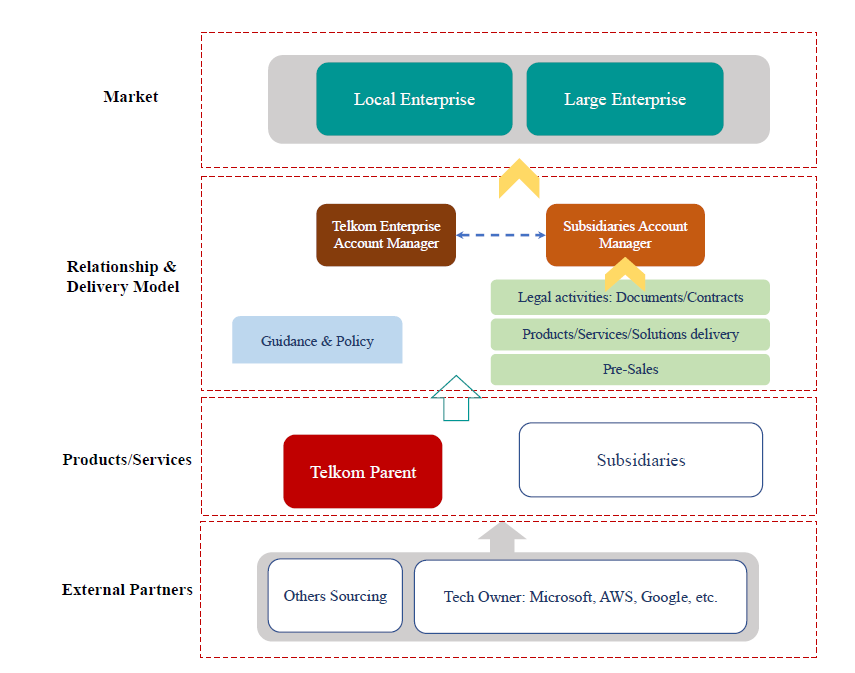
In response to this challenge, Telkom introduced the New Go-To-Market Alignment (NGTMA) scheme in 2020. Under NGTMA, Telkom's subsidiaries with specific licenses, strategic relationships, or unique solutions have the ability to directly engage and manage contracts with corporate customers. Telkom Enterprise collaborates with these subsidiaries to approach corporate customers and identify potential projects. The adoption of this strategic direction emphasizes the importance of implementing a multi-sales channel approach, enabling.
Figure 1: The NGTMA Framework
Source: Data of Telkom Indonesia for the NGTMA framework
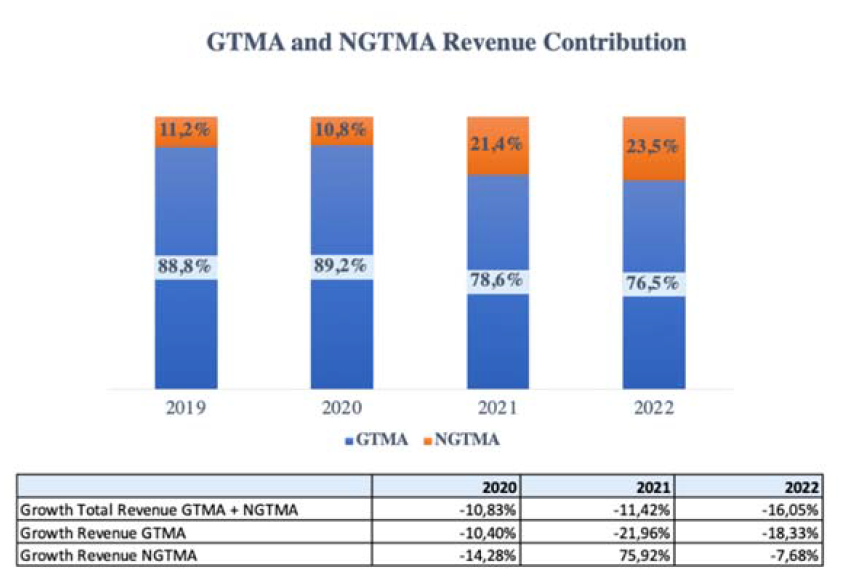
Figure 2: The NGTMA Revenue Contribution
Source: Data of Telkom Indonesia for the Revenue Contribution
Telkom to provide customers with various options for purchasing its products or services. Telkom uses the framework of the NGTMA as follows in Figure 1.
The revenue generated from the NGTMA scheme experienced a consistent increase from 2020 to 2022. However, there was a notable decline in the growth rate of NGTMA revenue from 2021 to 2022, with a decrease of 7.68%. Consequently, this decline played a significant role in the overall decrease of total revenue (including both GTMA and NGTMA) during the same period, experiencing a decline of 16.05%. (Figure 2)
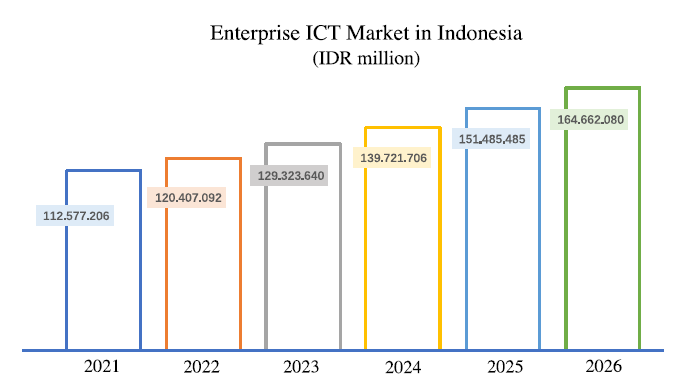
In contrast, IDC’s [3] research on the enterprise ICT market in Indonesia reveals a steady upward trend from 2021 to 2026, as illustrated in Figure 3. However, it is noteworthy that this growth does not align with the revenue growth observed by Telkom, specifically in the enterprise segment, as depicted in Figure 3.
To investigate the decline in revenue and potential issues related to the quality of products or services provided by Telkom to its corporate customers, preliminary interviews were conducted with Telkom's Account Managers responsible for various sectors. These sectors included banking (BCA), healthcare (BPJS), energy and resources (Pertamina), retail (Alfamart Group), and land transportation (KAI Commuter Indonesia). These interviews represented a sample of Telkom's top 20 enterprise clients. As a result, the Account Managers unanimously confirmed that no concerns were raised regarding the quality of services delivered under the NGTMA scheme.
The Account Manager for BCA stated that “There shouldn’t be any worries about service quality issues because the services used, such as Contact Center provided by Infomedia, SMS banking/SMS broadcast provided by MdMedia, are all top players in their respective industries. Considering BCA’s profile, they wouldn’t settle for anything less than top-notch service. Here, there shouldn’t be any concerns regarding the quality of services provided”.
The Account Manager for KAI Commuter Indonesia added, “This does not diminish the quality of services provided to customers, particularly KAI Commuter Indonesia, as customers have direct contracts with Telkom’s subsidiary specialized in this field. This means that the services delivered by the company are ensured to possess the necessary competence, thus maintaining the service level agreements (SLA) received by customers in these services”.
Figure 3: The enterprise ICT market in Indonesia
Source: IDC, 2021
Literature Review
Value Chain Analysis
The value chain consists of a linked sequence of activities designed to generate value. It begins by sourcing necessary raw materials from suppliers, followed by a range of value-adding activities involved in the production and promotion of a product or service. Finally, distributors transport the finished goods to the ultimate consumer [4].
Porter introduced the value chain concept as a fundamental idea in strategic management to gain a competitive advantage. The value chain analysis model outlines the value-creating activities of an organization, forming a coherent sequence of interconnected and independent processes [5]. Ruan [5] proposed the "value chain model," which combines an enterprise's internal and external basic and auxiliary activities. Together, these activities form the value-added chain of the organization.
Telkom's enterprise value chain analysis, based on Ruan's approach, reveals the following.
Basic activities include:
Sales Activities: Establishing strong relationships with corporate customers and partners, with the involvement of Account Managers from subsidiaries for the NGTMA scheme.
Customer Service Activities: Providing high-quality solutions, ensuring smooth delivery and after-sales service, and focusing on customer satisfaction.
Production Activities: Developing customized solutions based on customer preferences, maintaining communication and collaboration, and incorporating feedback for precise alignment.
Stock Purchase: Acquiring shares, exemplified by the strategic acquisition of Telkom Sigma, demonstrating Telkom's commitment to expansion and diversification.
Attract Investment: Engaging in investments through collaborations with tech companies, developing digital infrastructure, and optimizing resources for enhanced network capacity.
Auxiliary activities include:
Enterprise Infrastructure: Enhancing network management services, data centers, and towers to provide reliable connectivity solutions.
Human Resources: Promoting long-term employee engagement through compensation structures and facilities like training and innovation centers.
Research and Development: Increased investment in technologies to develop solutions aligned with corporate customers' needs.
Purchase: Utilizing e-procurement methods for efficient partner selection, streamlining the process through digital platforms, overseen by the SSO Procurement & Sourcing Center Unit.
Business Model Analysis
The term "business model" describes the strategy adopted by a company to generate profits within the current business environment. It encompasses a firm's core structure and operational elements, including its methods for revenue generation and attaining profitability [4]. Osterwalder and Pigneur [6] suggest that a company's revenue generation approach can be effectively communicated by identifying nine essential components that constitute its business model. These building blocks encompass the critical elements of customers, product or service offerings, infrastructure, and financial sustainability. The business model can be compared to a roadmap that directs the formulation and execution of a company's strategy through its organizational structures, processes, and systems. Osterwalder and Pigneur [6] introduced a business model canvas of nine interconnected blocks. These blocks serve as a framework to assist companies in developing new strategic options. The nine blocks include customer segments, value propositions, channels, customer relationships, revenue streams, key resources, key activities, key partners, and cost structure.
Telkom's analysis of its enterprise business model, based on Osterwalder and Pigneur's [6] business model canvas, reveals the following:
Customer Segments: Telkom serves diverse corporate customers from various industries, such as banks, transportation companies, agriculture firms, and healthcare providers.
Value Propositions: Telkom offers unique value propositions by combining reliable ICT infrastructure, customized solutions, seamless service integration, and industry expertise, providing comprehensive end-to-end ICT services.
Channels: Telkom leverages subsidiaries and dedicated account managers to establish strong relationships with corporate customers, acting as effective channels for communication and sales.
Customer Relationship: Telkom enhances customer relationships by equipping account managers with product knowledge and interpersonal skills, while top-level management engages with customers to foster trust and partnership.
Revenue Streams: Telkom generates revenue through monthly fees, usage-based fees, and sales of IT equipment, providing a diversified income base to meet varying customer needs.
Key Resources: Telkom relies on infrastructure components, financial stability, skilled employees, and expertise to deliver dependable solutions and stay at the forefront of technological advancements.
Key Activities: Telkom focuses on proactive sales, pre-sales initiatives, product development, strategic partnerships, solution delivery, and post-sales support to drive business growth.
Key Partners: Telkom collaborates with technology companies like Microsoft and content providers to enhance its offerings and deliver effective services.
Cost Structure: Telkom incurs costs related to infrastructure, licensing, marketing, human resources, research and development, and outsourcing, managing them carefully for sustainable and profitable operations.
Business to Business (B2B) Marketing
Researchers have advocated for the distinction between B2B and B2C) marketing domains [7]. According to Lilien [8], the key differentiating factor between B2B and B2C lies in the origin of demand. B2B demand arises from downstream customers, while B2C demand stems from customer preferences, emotions, and inclinations. In addition, B2C marketing generally exhibits higher standardization and well-defined product attributes, whereas B2B marketing displays more significant heterogeneity in customer size and performance requirements.
In B2B marketing, the target customers are organizations, which can be segmented into commercial enterprises, governments, and institutions [7]. Developing a B2B marketing strategy involves considering external and internal factors that focus on effectively fulfilling customer needs and requirements [9], resource allocation management, stakeholder involvement [1], and aligning quality dimensions with company's business strategy [10]. According to Fill and McKee [11], once characterized by predictability, Business-to-business (B2B) marketing is currently experiencing a profound transformation. It has evolved into a multifaceted and demanding landscape characterized by an increasing array of channels, rapidly advancing technology, and a heightened emphasis on accountability. This shift is driven by changes in buyer behavior and an emphasis on fostering meaningful conversations and establishing connections.
Channel Management
Holland and Young [12] emphasize the significance of channel management in the sales environment, as it plays a vital role in establishing enduring customer relationships and fostering partnerships throughout the sales cycle, and it is important to emphasize that the assumption that employing multiple channels leads to improved firm performance may not hold true for all industry sectors. Therefore, firms must exercise caution when implementing business strategy restructuring and selecting channels.
In the dynamic business landscape, while there are evident advantages that require occasional strategy adjustments, it is essential to recognize the impact of channel administration and communication on overall firm performance [13]. Käuferle and Reinartz [14] conducted an empirical study focusing on the field of industry wholesaling, shedding light on the significance of considering different drivers based on the extent of channel utilization. Their research emphasized that different sales channels demonstrate varying levels of performance, cost, and convenience in searching for products. The researchers identified several key determinants for selecting sales channels, including product diversities, the share of key accounts, the resource capabilities of sellers, and the level of technological turbulence.
Relationship Marketing
Relationship marketing focuses on strategic endeavors aimed at building, nurturing, and maintaining successful interactions with customers and relevant stakeholders [15]. Within most organizations, fostering and managing customer relationships has become a crucial strategic priority due to the increased profitability associated with loyal customers compared to those who prioritize price and perceive little differentiation among competing products. Moreover, a company that effectively cultivates strong connections with its customers enjoys enduring benefits that are challenging for competitors to understand, replicate, or substitute [7].
Go-to-market Theory
Friedman [16] highlights the significance of understanding customers in making effective go-to-market decisions. To achieve this, it is crucial to establish a comprehensive customer fact base, encompassing their demographics, consumption patterns, purchasing behavior, preferred approaches, and incentives that encourage increased engagement with your company. While competitors' go-to-market strategies and channel capabilities may limit a business marketer's ability to address all gaps, studying competitors' channel offerings can provide valuable insights for formulating an effective strategic direction [7]. Channel design can be viewed as a series of phases that the enterprise must undertake to comprehensively evaluate essential channel dimensions.
According to Gartner [17], telcos aiming to address the go-to-market approach for Small Midsize Businesses (SMBs) in the technology sector should consider the following: a) aligning go-to-market strategies with the tech priorities of SMBs, focusing on digital enablement through tools like CPaaS to offer flexibility, and b) focusing on SMBs' technology purchase and evaluation criteria, differentiating by enabling self-service and digital engagement, and leveraging automation, AI, data, and analytics to enhance marketing, sales, and support.
MATERIALS AND METHODS
Research Design
This research employed a qualitative research methodology to gain a comprehensive understanding of the company under study and the contextual factors surrounding it. According to Creswell [18], Qualitative research sets itself apart from quantitative research by relying on textual and visual data and employing unique procedures for data analysis. When crafting a methods section for a qualitative research proposal, it is essential to provide readers with an overview of the purpose of qualitative research, specific research designs, the role of the researcher, types of data sources, data recording protocols, multiple stages of data analysis, and the documentation of data validity. Benbasat et al., [19] stated that qualitative research offers several advantages, including enhancing the researcher's understanding of the intricate characteristics of the phenomenon being studied, enabling the exploration of emerging areas of inquiry, and facilitating an in-depth examination of the phenomenon within its authentic context.
Data Collection Method
In case studies, it is customary to employ multiple data collection methods to ensure the robustness and validity of the research findings. The present study employed a diverse range of primary and secondary data sources to effectively address the research inquiries.
Primary Data
Primary data refers to data that is specifically gathered to address the particular research problem at hand, employing methodologies that are most suitable for the research objectives [20]. This researcher employed in-depth interviews with primary sources to collect primary data directly. For example, in qualitative research, in-depth interviews involve individual interviews with limited participants to gain valuable insights into their perspectives on a specific concept, program, or scenario [21].
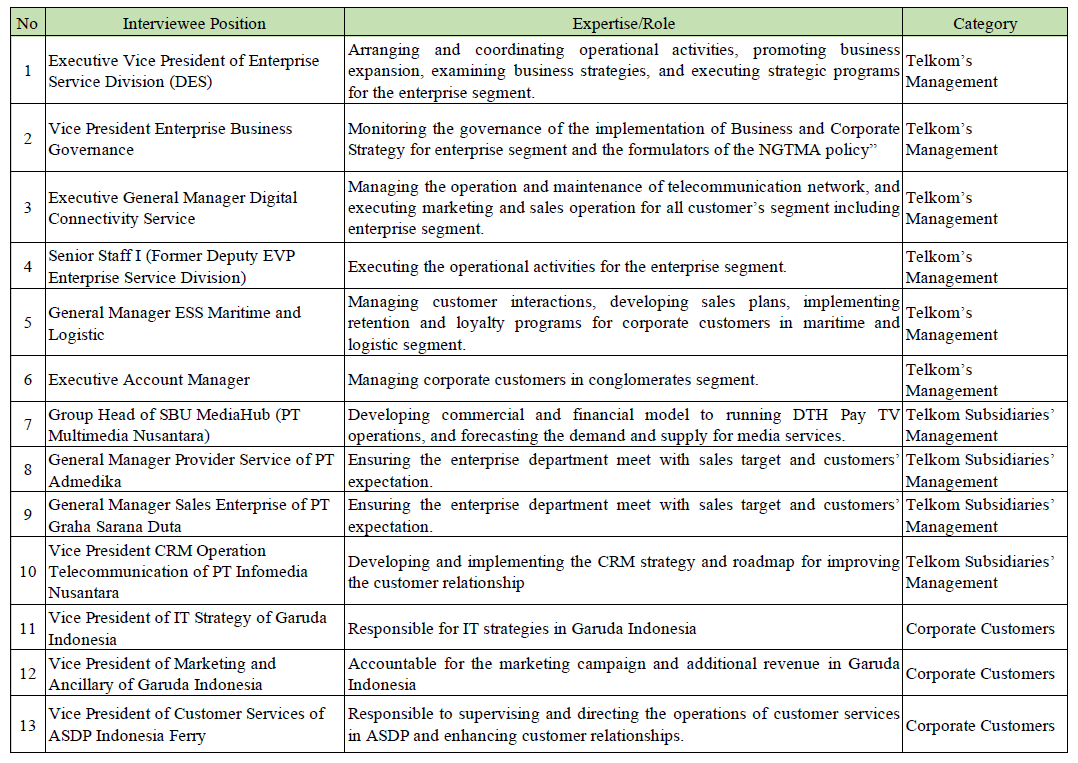
A semi-structured interview approach was utilized, involving thirteen interviewees comprising Telkom's management, Telkom Subsidiaries' Management, and Corporate Customers respondents. According to Corbin and Strauss [22], a semi-structured interview involves selecting specific topics before the research, drawing from relevant literature or practical experience. However, the presentation of these topics is flexible. While the interviews focus on the same topics, participants are encouraged to share any additional relevant information they deem necessary to the discussion beyond the initial questions. The details of the interviewees are presented in Table 1.
Table 1: Interviewee’s profile
Secondary Data
Typically, secondary data sets consist of quantitative information, where the attributes of the objects under study are expressed through variables that encompass a variety of potential values [20].
The secondary data used in this research are companies’ internal resources, published documents such as consultants’ reports, Telco operator’s reports, Statistics Indonesia’s reports, Bank Indonesia’s reports, books, journals, news, and internet sources.
RESULTS AND DISCUSSION
Based on the conducted research, the key findings obtained from the in-depth interviews can be summarized as follows in Table 2.
Based on the findings, the strategies for improving the implementation of the NGTMA scheme are as follows.
Building solid relationships between Account Managers from both Telkom and subsidiaries and corporate customers is crucial. This can be achieved through targeted training and development programs, mentoring, and coaching, and promoting knowledge sharing and collaboration among Account Managers.
Recognizing the contribution of Telkom's Account Managers in subsidiaries is essential for fostering fairness and engagement. Clear performance metrics, regular performance reviews, and performance incentives and recognition should be established to ensure Account Managers are motivated and supported in meeting sales targets.
Assessing subsidiaries' capabilities and competencies, along with initiatives to address vendor list issues, are necessary. A vendor list awareness program, regular monitoring of subsidiaries' status, and encouragement of certification can help ensure compliance with customer requirements.
Policies and guidelines within Telkom and its subsidiaries should be reviewed and aligned to ensure consistency and harmony in implementing the NGTMA scheme. Establishing collaborative mechanisms and regular dialogue between Telkom and its subsidiaries can facilitate policy development, communication, and feedback.
Subsidiaries should focus on enhancing product quality, competitive pricing, and establishing relationships with principals. Telkom can provide additional capital or investment and access to credit facilities to address financial resource challenges.
Investing in digital transformation and strategic partnerships can optimize internal processes, improve customer experience, and drive business growth. Collaboration with technology giants allows access to expertise, technologies, and resources. Fostering innovation competitiveness can reduce dependency on partners by benchmarking, adopting technology integration, and gradually developing independent capabilities.
Table 2: The findings from the In-Depth Interview
The NGTMA Scope
Findings
Market
The SoE’s Customers
Implementing the NGTMA scheme in the State-Owned Enterprises (SoE) market is challenging due to the preference for direct collaboration with Telkom as the parent company. Subsidiaries face difficulties in contracting directly with customers, as trust and association with the Telkom brand influence customer preferences. This highlights the need to address customer preferences for direct contracts when implementing the NGTMA scheme in the SoE market.
Relationship and Delivery Model
Subsidiaries’ salesperson capabilities
Engaging with corporate customers presents challenges for subsidiaries due to Telkom's established customer base. The need to navigate this space, establish effective communication channels, and overcome limited access to customers are crucial factors for the subsidiaries' success. Strategies that focus on building strong relationships, streamlining processes, and providing clear guidelines will be essential in effectively engaging with corporate customers in the future.
Performance evaluation and KPI’s
The NGTMA scheme does not directly affect the performance evaluation of units or segments within the enterprise. However, careful planning and target setting at the parent company level are necessary to address the implications of NGTMA. Managing the Key Performance Indicators (KPIs) and compensation of Account Managers is a critical challenge that needs to be effectively addressed to ensure their motivation and success in implementing the NGTMA scheme.
Registration of Subsidiaries in customers’ vendor list
The implementation of the NGTMA scheme faced challenges regarding the inclusion of subsidiaries in the vendor lists of corporate customers. Not all subsidiaries were registered as vendors or listed in the customers' list, indicating a need for improvement in this area. Meeting the criteria and prerequisites to be included in the customer's vendor list is crucial to qualify as a partner. However, it was noted that not all Telkom subsidiaries meet these requirements. Addressing these challenges and improving the inclusion of subsidiaries in vendor lists are essential considerations for successfully implementing the NGTMA scheme.
Policy and Guidance
There is a need for improved communication and clarity regarding policies and guidance related to the NGTMA scheme from the perspective of the subsidiaries.
Products/Services
Products/Services Capabilities
A disparity remains between customer expectations and the current state of subsidiaries regarding products and solutions.
Subsidiaries’ working capital
Subsidiaries face the challenge of having adequate financial resources or working capital to become partners for corporate customers under the NGTMA scheme. Poor financial performance in certain subsidiaries hinders their ability to secure the necessary working capital for project execution. This highlights the importance of addressing the working capital issue to enable the effective implementation of the NGTMA scheme.
External Partners
Partners dependency
On certain occasions, it is observed that certain subsidiaries opt to establish partnerships with external vendors instead of independently developing their products.
CONCLUSION
This research is aimed to evaluate the implementation of the NGTMA and formulate approaches for the improvement. The insights obtained from the research are as follows.
When considering strategies for improving the implementation of the NGTMA scheme, it is important to focus on organizational culture, training and development, performance evaluation, and vendor list management. Building a culture of collaboration and open communication between Telkom, its subsidiaries, and corporate customers is crucial for effective implementation. Comprehensive training programs should be provided to Account Managers and employees involved in the NGTMA scheme to enhance sales and relationship management skills. Clear performance metrics and KPIs should be established to measure success and recognize achievements, ensuring fairness and engagement among Account Managers. Additionally, strategies should be developed to improve the inclusion of subsidiaries in corporate customers' vendor lists, such as addressing registration challenges and streamlining the qualification process.
Further considerations should include policy alignment, financial support, technological transformation, and monitoring and evaluation. Policies and guidelines within Telkom and its subsidiaries should be reviewed and aligned to ensure consistency and harmony in implementing the NGTMA scheme. Collaborative mechanisms and regular dialogue between Telkom and its subsidiaries can facilitate policy development and effective communication. Telkom can provide additional capital or investment and access to credit facilities to address the working capital challenges faced by subsidiaries. Embracing digital transformation and technology integration can optimize internal processes, enhance customer experience, and reduce dependency on external partners. By investing in digital transformation and establishing strategic partnerships, Telkom and its subsidiaries can access expertise, technologies, and resources to drive innovation and competitiveness. Finally, a robust monitoring and evaluation framework should be implemented to assess progress, gather feedback, and make necessary adjustments, ensuring the long-term sustainability and continuous improvement of the NGTMA scheme.
These strategies and considerations will enable stakeholders to gain a comprehensive understanding of the NGTMA scheme's implementation and take proactive steps to address challenges and drive success. The implementation of the NGTMA scheme in the enterprise segment is seen as highly favorable, given Telkom's extensive network of subsidiaries. However, targeting corporate customers through this scheme presents considerable challenges, making it essential to conduct regular evaluations for ongoing enhancements. As the parent company responsible for implementing the NGTMA policy, Telkom Indonesia should actively engage in frequent dialogues with its subsidiaries to gather valuable insights and recommendations for refining the scheme.
Acknowledgment
The authors would like to extend their gratitude and acknowledgments to the Bandung Institute of Technology and MarkPlus, Inc for their valuable support in conducting this study. Furthermore, the authors would also like to express their deep appreciation and thanks to all the respondents from Telkom Indonesia's management in the Enterprise Division, the representatives from Telkom subsidiaries, and the Senior Leaders from Garuda Indonesia and ASDP Indonesia for their participation and contributions to this research. Their cooperation and insights have been instrumental in the success of this study.
REFERENCE
Benbasat, I., et al. “The Case Research Strategy in Studies of Information Systems.” MIS Quarterly, vol. 11, no. 3, 1987, p. 369. https://doi.org/10.2307/248684.
Boyce, C., and P. Neale. Conducting In-Depth Interviews: A Guide for Designing and Conducting In-Depth Interviews for Evaluation Input. Semantic Scholar, 2006, https://www.semanticscholar.org/paper/Conducting-in-depth-interviews%3A-a-guide-for-and-for-BoyceNeale/17d92c3d9ca9aff1a763e57edf39058798a57a9b.
Chang, S., et al. “Quality Dimensions, Capabilities and Business Strategy: An Empirical Study in High-Tech Industry.” Total Quality Management and Business Excellence, vol. 14, no. 4, 2003, pp. 407–421. https://doi.org/10.1080/1478336032000047228.
Corbin, J.M., and A.L. Strauss. Basics of Qualitative Research: Techniques and Procedures for Developing Grounded Theory. 4th ed., SAGE Publications, 2015.
Creswell, J.W. Research Design: Qualitative, Quantitative, and Mixed Methods Approaches. SAGE Publications, 2013.
Fill, C., and S. McKee. “Business Marketing: The Theory and Practice of B2B.” 2011. https://doi.org/10.23912/978-1-906884-54-3-2069.
Friedman, L.G. Go to Market Strategy. Elsevier, 2002.
Gartner. How Telcos Should Optimize Their Go-to-Market Strategy for SMBs. 2022.
Global Data. Market Opportunity Forecasts to 2026: ICT in Indonesia. 2020, globaldata.com.
Günther, M. “Performance in B2B Sales: An Explanation of How Channel Management and Communication Influence a Firm’s Performance.” Naše gospodarstvo/Our Economy, vol. 67, no. 3, 2021, pp. 38–48. https://doi.org/10.2478/ngoe-2021-0016.
Holland, J.R., and T. Young. Rethinking the Sales Cycle: How Superior Sellers Embrace the Buying Cycle to Achieve a Sustainable and Competitive Advantage. McGraw-Hill, 2010, pp. 42–61.
Hox, J.J., and H.R. Boeije. “Data Collection, Primary vs. Secondary.” Encyclopedia of Social Measurement, 2005, pp. 593–599. https://doi.org/10.1016/b0-12-369398-5/00041-4.
Hutt, M.D., and T.W. Speh. Business Marketing Management: B2B. South-Western Cengage Learning, 2012.
IDC. The Enterprise Market in Indonesia. 2021, idc.com.
Käuferle, M., and W. Reinartz. “Distributing through Multiple Channels in Industrial Wholesaling: How Many and How Much?” Journal of the Academy of Marketing Science, vol. 43, no. 6, 2014, pp. 746–767. https://doi.org/10.1007/s11747-014-0406-5.
Kuester, Sabine, et al. “Get the Show on the Road: Go-to-Market Strategies for E-Innovations of Start-Ups.” Journal of Business Research, vol. 83, 2018, pp. 65–81.
Lagat, C., and G.L. Frankwick. “Marketing Capability, Marketing Strategy Implementation and Performance in Small Firms.” Journal for Global Business Advancement, vol. 10, no. 3, 2017, p. 327. https://doi.org/10.1504/jgba.2017.084612.
Lilien, G.L. “The B2B Knowledge Gap.” International Journal of Research in Marketing, vol. 33, no. 3, 2016, pp. 543–556. https://doi.org/10.1016/j.ijresmar.2016.01.003.
Morgan, R.M., and S.D. Hunt. “The Commitment-Trust Theory of Relationship Marketing.” Journal of Marketing, vol. 58, no. 3, 1994, p. 20. https://doi.org/10.2307/1252308.
Osterwalder, A., and Y. Pigneur. Business Model Generation: A Handbook for Visionaries, Game Changers, and Challengers. Wiley, 2010.
Ruan, S. “Research on Strategic Cost Management of Enterprises Based on Porter’s Value Chain Model.” Journal of Physics: Conference Series, vol. 1533, no. 2, 2020, p. 022056. https://doi.org/10.1088/1742-6596/1533/2/022056.
Theodosiou, M., and L.C. Leonidou. “Standardization versus Adaptation of International Marketing Strategy: An Integrative Assessment of the Empirical Research.” International Business Review, vol. 12, no. 2, 2003, pp. 141–171. https://doi.org/10.1016/s0969-5931(02)00094-x.
Wheelen, T.L., and J.D. Hunger. Strategic Management and Business Policy: Toward Global Sustainability. 13th ed., Pearson Prentice Hall, 2012.
License
Creative Commons Attribution-NonCommercial-NoDerivatives 4.0 International License
All papers should be submitted electronically. All submitted manuscripts must be original work that is not under submission at another journal or under consideration for publication in another form, such as a monograph or chapter of a book. Authors of submitted papers are obligated not to submit their paper for publication elsewhere until an editorial decision is rendered on their submission. Further, authors of accepted papers are prohibited from publishing the results in other publications that appear before the paper is published in the Journal unless they receive approval for doing so from the Editor-In-Chief.
Himalayan Journal of Economics and Business Management open access articles are licensed under a Creative Commons Attribution-Share A like 4.0 International License. This license lets the audience to give appropriate credit, provide a link to the license, and indicate if changes were made and if they remix, transform, or build upon the material, they must distribute contributions under the same license as the original.
Recommended Articles
Research Article
Influence of Leadership on Poverty Reduction in the Devolved Government in Trans-Nzoia County, Kenya
Kinisu Sifuna,
...
Peter Simotwo
Published: 30/06/2021
Download PDF
Cite
x
APA
Sifuna, K., Lwangale, D. W., Simotwo, P., Sifuna, K., Lwangale, D. W. & Simotwo, P. (2021). Influence of Leadership on Poverty Reduction in the Devolved Government in Trans-Nzoia County, Kenya. Himalayan Journal of Economics and Business Management, 2(1), None-None.
MLA
Sifuna, Kinisu, et al. "Influence of Leadership on Poverty Reduction in the Devolved Government in Trans-Nzoia County, Kenya." Himalayan Journal of Economics and Business Management 2.1 (2021): None-None.
Chicago
Sifuna, Kinisu, David W. Lwangale, Peter Simotwo, Kinisu Sifuna, David W. Lwangale and Peter Simotwo. "Influence of Leadership on Poverty Reduction in the Devolved Government in Trans-Nzoia County, Kenya." Himalayan Journal of Economics and Business Management 2, no. 1 (2021): None-None.
Harvard
Sifuna, K., Lwangale, D. W., Simotwo, P., Sifuna, K., Lwangale, D. W. and Simotwo, P. (2021) 'Influence of Leadership on Poverty Reduction in the Devolved Government in Trans-Nzoia County, Kenya' Himalayan Journal of Economics and Business Management 2(1), pp. None-None.
Vancouver
Sifuna K, Lwangale DW, Simotwo P, Sifuna K, Lwangale DW, Simotwo P. Influence of Leadership on Poverty Reduction in the Devolved Government in Trans-Nzoia County, Kenya. Himalayan Journal of Economics and Business Management. 2021 Jan;2(1):None-None.
Download PDF
Research Article
Modelling Structure Job Quality, Job Design and Job Satisfaction
Moch Nurhadi,
...
Avi Sunani
Published: 30/08/2022
Download PDF
Cite
x
APA
Nurhadi, M., Bisyri Effendi, M., Saiful Ulum, A. & Sunani, A. (2022). Modelling Structure Job Quality, Job Design and Job Satisfaction. Himalayan Journal of Economics and Business Management, 3(2), 1-4.
MLA
Nurhadi, Moch, et al. "Modelling Structure Job Quality, Job Design and Job Satisfaction." Himalayan Journal of Economics and Business Management 3.2 (2022): 1-4.
Chicago
Nurhadi, Moch, Moch Bisyri Effendi, Achmad Saiful Ulum and Avi Sunani. "Modelling Structure Job Quality, Job Design and Job Satisfaction." Himalayan Journal of Economics and Business Management 3, no. 2 (2022): 1-4.
Harvard
Nurhadi, M., Bisyri Effendi, M., Saiful Ulum, A. and Sunani, A. (2022) 'Modelling Structure Job Quality, Job Design and Job Satisfaction' Himalayan Journal of Economics and Business Management 3(2), pp. 1-4.
Vancouver
Nurhadi M, Bisyri Effendi M, Saiful Ulum A, Sunani A. Modelling Structure Job Quality, Job Design and Job Satisfaction. Himalayan Journal of Economics and Business Management. 2022 Jul;3(2):1-4.
Download PDF
Research Article
The Constitutional and Legislative Basis for Considering the Taxable Capacity of Taxpayers in Iraqi Tax Legislation
Hussein Kamel Wadaa
Published: 05/05/2025
Download PDF
Cite
x
APA
Wadaa, H. K. (2025). The Constitutional and Legislative Basis for Considering the Taxable Capacity of Taxpayers in Iraqi Tax Legislation. Himalayan Journal of Economics and Business Management, 6(1), 1-10.
MLA
Wadaa, Hussein Kamel. "The Constitutional and Legislative Basis for Considering the Taxable Capacity of Taxpayers in Iraqi Tax Legislation." Himalayan Journal of Economics and Business Management 6.1 (2025): 1-10.
Chicago
Wadaa, Hussein Kamel. "The Constitutional and Legislative Basis for Considering the Taxable Capacity of Taxpayers in Iraqi Tax Legislation." Himalayan Journal of Economics and Business Management 6, no. 1 (2025): 1-10.
Harvard
Wadaa, H. K. (2025) 'The Constitutional and Legislative Basis for Considering the Taxable Capacity of Taxpayers in Iraqi Tax Legislation' Himalayan Journal of Economics and Business Management 6(1), pp. 1-10.
Vancouver
Wadaa HK. The Constitutional and Legislative Basis for Considering the Taxable Capacity of Taxpayers in Iraqi Tax Legislation. Himalayan Journal of Economics and Business Management. 2025 Jan;6(1):1-10.
Download PDF
Research Article
Proposed Digital Marketing Strategy to Enhance Engineering Consultancy Company Revenue
Alfarisy, K. A.,
Wandebori, H.
Published: 30/04/2024
Download PDF
Cite
x
APA
K. A., A. & H., W. (2024). Proposed Digital Marketing Strategy to Enhance Engineering Consultancy Company Revenue. Himalayan Journal of Economics and Business Management, 5(1), 1-18.
MLA
K. A., Alfarisy, and Wandebori, H.. "Proposed Digital Marketing Strategy to Enhance Engineering Consultancy Company Revenue." Himalayan Journal of Economics and Business Management 5.1 (2024): 1-18.
Chicago
K. A., Alfarisy, and Wandebori, H.. "Proposed Digital Marketing Strategy to Enhance Engineering Consultancy Company Revenue." Himalayan Journal of Economics and Business Management 5, no. 1 (2024): 1-18.
Harvard
K. A., A. and H., W. (2024) 'Proposed Digital Marketing Strategy to Enhance Engineering Consultancy Company Revenue' Himalayan Journal of Economics and Business Management 5(1), pp. 1-18.
Vancouver
K. A. A, H. W. Proposed Digital Marketing Strategy to Enhance Engineering Consultancy Company Revenue. Himalayan Journal of Economics and Business Management. 2024 Jan;5(1):1-18.
Samosir, N. P., Wibisono, D. & Confido, J. V. (2023). Proposed Strategy Improvement of the New Go to Market Alignment (NGTMA) Scheme of Telkom Indonesia in the Enterprise Segment (B2B). Himalayan Journal of Economics and Business Management, 4(1), 1-8.
MLA
Samosir, Noski P., Dermawan Wibisono and Jemy V. Confido. "Proposed Strategy Improvement of the New Go to Market Alignment (NGTMA) Scheme of Telkom Indonesia in the Enterprise Segment (B2B)." Himalayan Journal of Economics and Business Management 4.1 (2023): 1-8.
Chicago
Samosir, Noski P., Dermawan Wibisono and Jemy V. Confido. "Proposed Strategy Improvement of the New Go to Market Alignment (NGTMA) Scheme of Telkom Indonesia in the Enterprise Segment (B2B)." Himalayan Journal of Economics and Business Management 4, no. 1 (2023): 1-8.
Harvard
Samosir, N. P., Wibisono, D. and Confido, J. V. (2023) 'Proposed Strategy Improvement of the New Go to Market Alignment (NGTMA) Scheme of Telkom Indonesia in the Enterprise Segment (B2B)' Himalayan Journal of Economics and Business Management 4(1), pp. 1-8.
Vancouver
Samosir NP, Wibisono D, Confido JV. Proposed Strategy Improvement of the New Go to Market Alignment (NGTMA) Scheme of Telkom Indonesia in the Enterprise Segment (B2B). Himalayan Journal of Economics and Business Management. 2023 Jan;4(1):1-8.


 Download PDF
 Download XML