We conducted a systematic literature review of 98 peer-reviewed journal articles on climate financial risks published between 2001 and 2023 from Scopus and Google Scholar databases. Our analysis revealed a notable increase in climate financial risks literature in the last eight years, with most studies focusing on climate financial risk assessments, indicating the growing interest and urgency of the topic. The literature also addressed three other key issues: corporate management of climate financial risks, climate financial risk policies, and design and review of climate adaptation instruments. We identified several opportunities for future research, including developing risk measures and assessment methodologies, understanding the factors that can support climate financial risk management, evaluating the effectiveness and financial impact of climate financial risk policies, and supporting the development of financial innovations to manage climate risks. Our study provides a valuable overview of the current state of climate financial risk literature and potential future research directions, which can help inform decision-making processes and contribute to developing more effective strategies for managing climate financial risks.
Climate change presents one of the world's most pressing challenges today, with increasing evidence of its likely impact on the financial sector. The frequency and intensity of natural disasters, rising sea levels, and extreme weather events also pose significant financial risks to businesses, governments, and investors [1]. These risks arise from two main channels: physical risks and transition risks [2-3]. Physical risks refer to the direct impacts of climate change, such as damage to infrastructure and property from extreme weather events or disruption to operations and supply chains due to changes in weather patterns [4-6]. On the other hand, transition risks arise from the transition to a low-carbon economy and can include the risk of stranded assets, litigation, and regulatory changes [7-9].
Assessing and managing climate financial risks is a complex task, requiring the development of new tools and methodologies [3]. Researchers and practitioners have developed various methods for assessing climate financial risks, including stress testing, scenario analysis, and financial modelling [10-14,7]. These methods can help identify potential risks and vulnerabilities and inform decision-making. Policymakers have also begun addressing climate financial risks through initiatives such as the Task Force on Climate-related Financial Disclosures (TCFD) and the European Union's Sustainable Finance Disclosure Regulation (SFDR) [2,15]. Alongside policies addressing climate change's financial risks, developing financial innovation and new financial instruments are critical to addressing these risks [16-20]. However, there is also an increasing need to understand their effectiveness in facilitating climate transition and their impact on the financial system.
As the world continues to experience the consequences of climate change, there is a growing recognition among policymakers, investors, and businesses of the need to manage and assess climate financial risks [21-24]. With the risks posed by climate change becoming more urgent, comprehensive research is critical to understanding the potential financial impacts of climate change and to inform decision-making processes for these key stakeholders. This necessity has led to a surge of literature on climate financial risks in recent years, reflecting the increasing interest and importance of this topic. The growth of this literature highlights the need for continued research to inform and develop effective risk management strategies that can help mitigate the financial impacts of climate change.
This systematic review aims to comprehensively analyse the existing literature on climate financial risk and suggest potential areas for further research. Our ultimate goal is to contribute to developing more effective strategies for managing climate financial risks in the future. After a structured sourcing and selection process of peer-reviewed articles, we analyze the literature's general characteristics and substantial contents based on the key issues we identify. In doing so, we present opportunities for future research agendas in climate financial risk literature. By identifying gaps in current knowledge and highlighting opportunities for future research, our study provides valuable insights for scholars and practitioners alike. Previous literature studies have traditionally focused on the assessments of climate financial risks. We go beyond this focus to examine other important areas, such as corporate management of climate financial risks, climate financial risk policies, and the design and review of climate adaptation instruments.
The rest of this article is structured as follows: Section 2 outlines our methodology for conducting the systematic review, Section 3 presents our study's results and discussion of the future research agenda, and Section 4 concludes our study.
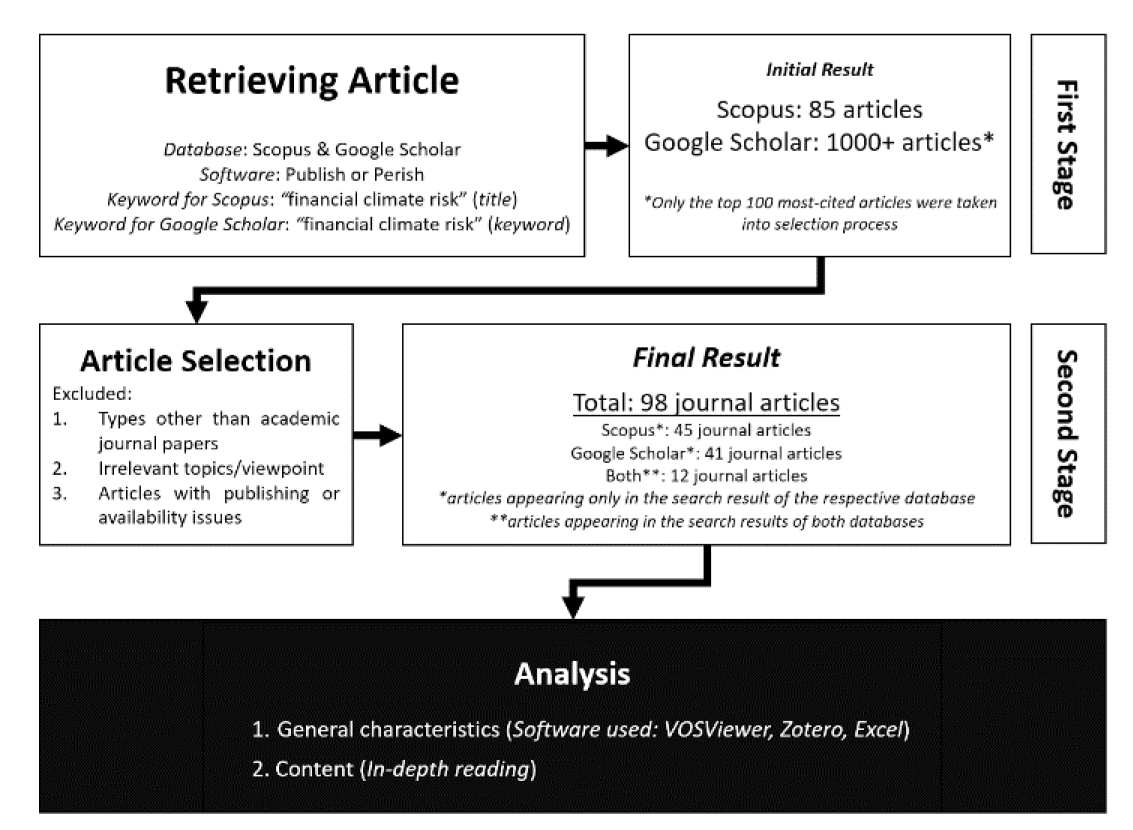
Our systematic review adopts a systematic review methodology employed by previous research [25-31]. Our approach consists of two stages (See Figure 1): sourcing articles related to the topic and selecting relevant articles based on several criteria. We then analyze the selected articles based on their general features and contents.

Figure 1: Methodology Summary
Stage 1: Sourcing Related Articles
We source articles on climate risk and financial stability from Scopus and Google Scholar. There are three main advantages of using the Scopus database:
A high accuracy level of journal article search
A comprehensive publication coverage for the fields relevant to our study, which includes sustainability, climate change, risk, and finance
Its status as a standard search database for academic research with “unparalleled and continuous access to critical research output from around the world” [32-36,30]. Google Scholar, on the other hand, has a coverage and citation advantage on top of controlled databases owing to its high coverage of non-peer-reviewed and non-English sources [37-38]. Google Scholar is, therefore, a legitimate source of scholarly information retrieval to serve as an addition to databases such as Scopus [34,37]
We utilize the Publish or Perish software by Harzing to search the Scopus and Google Scholar database. The software enables a more time-efficient database search and provides the possibility of extracting the search result to external software for further processing. The keyword we employ for our search in the database is “financial climate risk”, with the keyword specified as “title” in Scopus and “keyword” in Google Scholar. For initial search using the Publish or Perish software, we do not employ any restrictions for publication type, while the time of publication covers up to February 2023. Our initial search yielded 86 articles from Scopus and over 1000 from Google Scholar. We take all articles yielded from Scopus into our selection process. On the other hand, we take into our selection process only the 100 most cited articles from Google Scholar, given the high number of articles yielded from the database.
Stage 2: Selection of Relevant Papers and Analysis
We further select the retrieved articles to restrict analysis only to relevant articles. Our selection criteria cover two main points. First, we include only articles from peer-reviewed academic journals. We withdraw from our selection list articles other than the type mentioned. Second, we keep articles only with content directly related to climate change’s financial risks and remove those deemed to contain irrelevant points of view. We exclude articles with topics very far from this scope (for example, ones that only mention financial risks but not as the main content). We also eliminate review articles of only one particular previous study from our list of selected articles. Finally, we eliminate articles containing publishing issues or unavailable to access. The final list of the selected articles contains 98 articles, of which 45 are from Scopus only, 41 are from Google Scholar only, and 12 appeared in both databases' search results, with years of publication spanning from 2001 to 2023.
We provide several analyses of the final selected articles. First, we analyze the literature’s general characteristics, including publication time, the object of study, the journal of publication, citation counts (based on Crossref), and the authors. Secondly, we review the article’s contents and determine their key themes and ideas for future research for the literature. In both steps, we employ several platforms to support our analysis. Zotero and Excel aid in content reading and literature management, while VOSviewer enables us to construct and view bibliometric maps [39]. Given the combined use of two literature databases, however, our use of VOSviewer is specific to processing information related to literature authors.
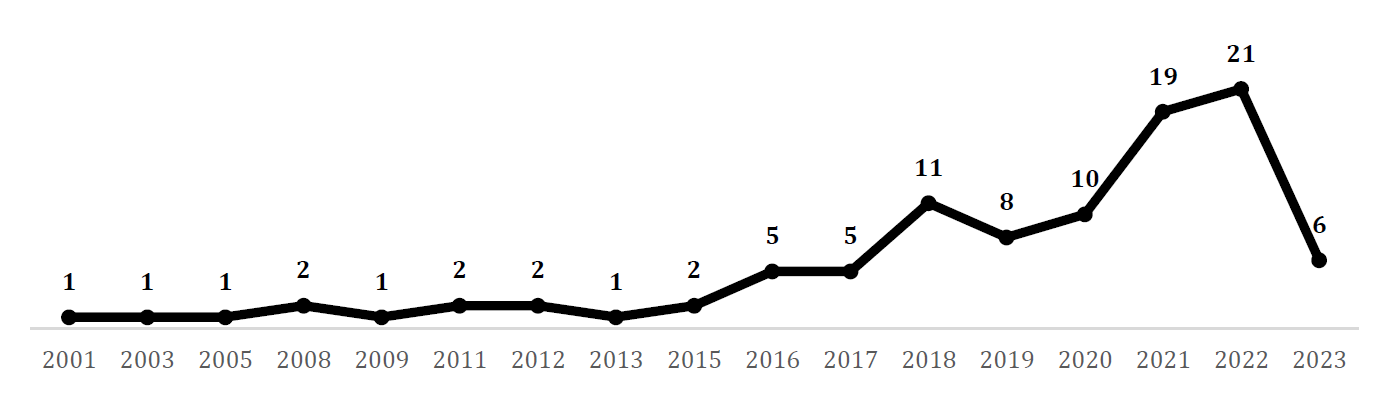
We first analyze the trend of climate financial risk publications according to their time. Figure 2 shows the number of climate financial risk publications for each year between 2001 and February 2023. Despite the inconsistent number of publications in its initial years, the literature on climate financial risk has increased considerably in the last decade. There has been an unprecedented uptick in annual publications each year after 2015, which coincides with the speech on the risk of climate change on financial stability by Mark Carney, the former Governor of the Bank of England [40]. The year 2022 contains the highest number of publications on climate financial risks, with 21 articles published. The last eight years saw the publications of over 85% of the articles. This finding indicates the increasingly growing interest in understanding climate financial risks.

Figure 2: Number of Articles Based on Years of Publication
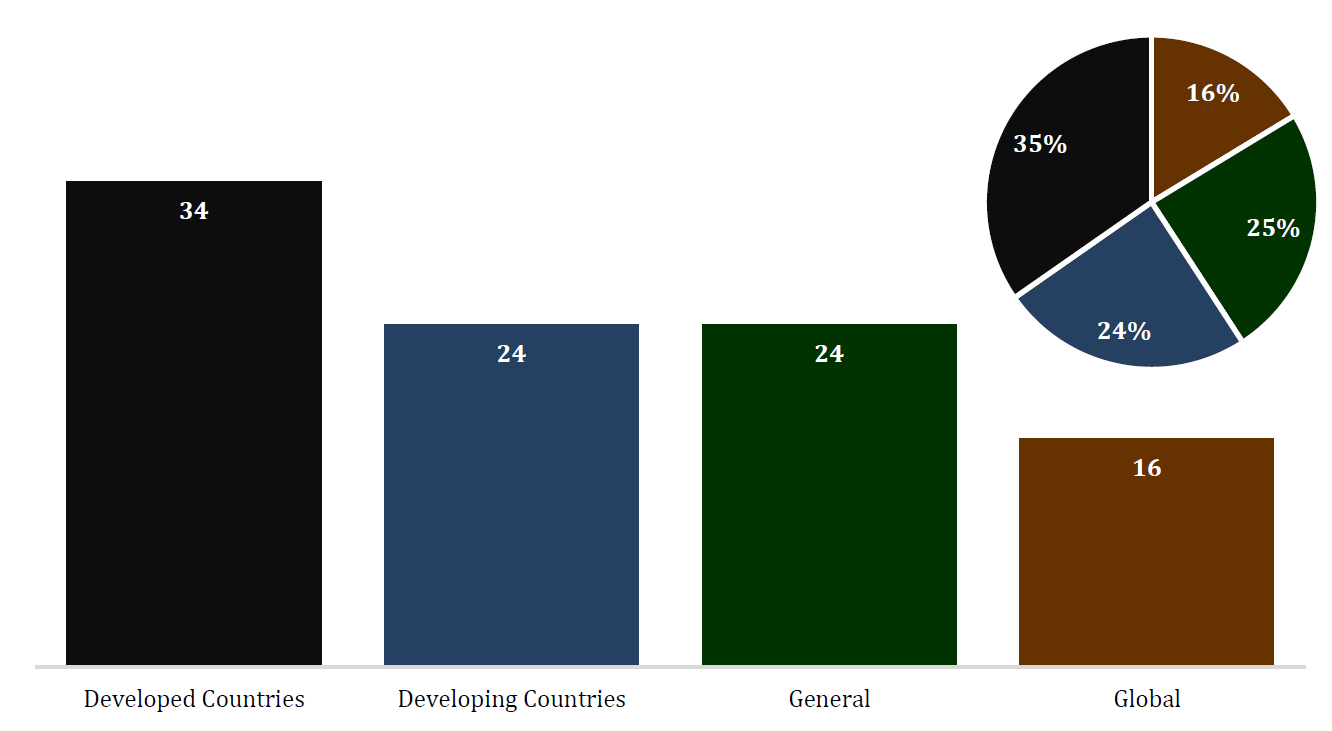
We further analyze the articles according to their primary objects of study. Within this measure, we divide the objects of study into four types: developed countries, developing countries, global (cross-country studies with no developed or developing country focus), and general (no geographical definition in the object of the studies- the scope applies to the literature in general). Figure 3 shows the number of articles and their shares to total articles based on their object of study. A significant part of the selected articles focuses on developed countries- accounting for the highest number of 34 articles or 35% of the total number of articles. European and North American countries are these articles' primary objects of study.

Figure 3: Number and Share of Articles Based on the Object of Study
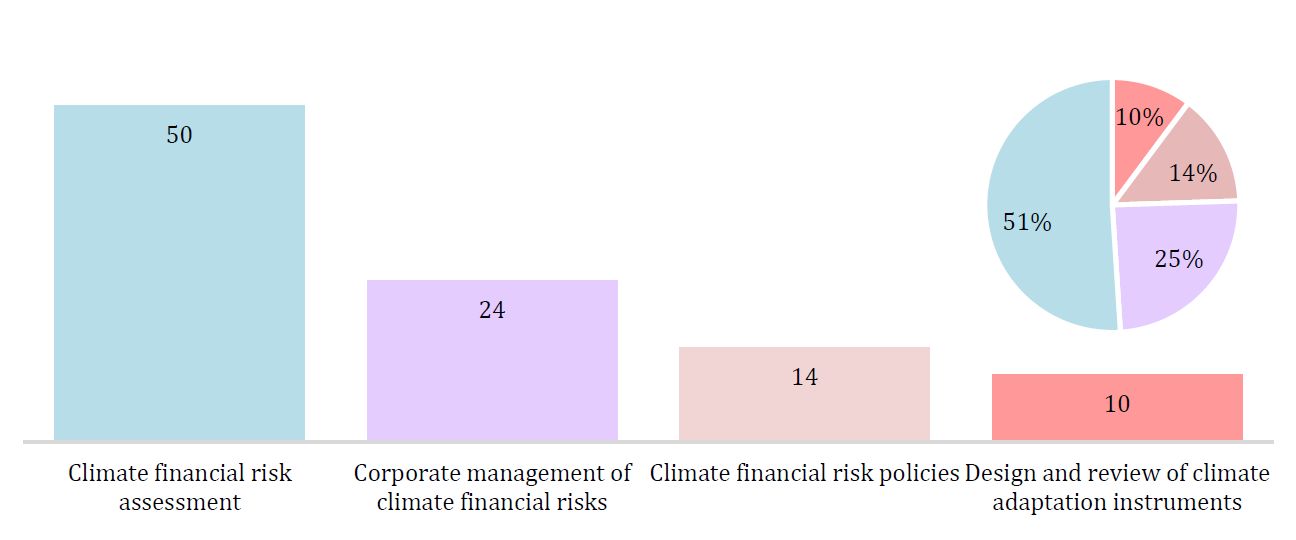
The second largest groups of articles focus on developing countries and the general context, both at 24 articles or 24-25% of the total articles each. China is the primary object of study within these articles, while other developing countries account for a smaller number of articles. Articles studying the global context account for the lesser part, at 16 articles (~16% of the total). The challenge of using the global economy as an object of study in climate financial risk research lies in the climate impact and economic structure differences of various countries, which complicate the establishment of the global linkages between climate change and financial risk. In analyzing the content of the selected articles, we find four primary issue categories: climate financial risk assessment, corporate management of climate financial risks, climate financial risk policies, and design and review of climate adaptation instruments. Figure 4 provides the number and share of articles based on these content categories. Publications assessing the financial risk of climate change are the largest group at 50 articles or 51% of total articles. This finding indicates a growing interest and the necessity of more precisely understanding the financial risk of climate change.

Figure 4: Number and Share of Articles Based on Content Categories
We further conduct citation analysis of the selected articles and highlight the journals with the most contributions to climate financial risk literature. Table 1 lists the top publications with the most contributions based on the number of articles with climate financial risks as their primary themes. Journal of Financial Stability has the highest number of articles at six, followed by Nature Climate Change with four articles. The articles from these two journals primarily assess the financial risks related to climate change, which include examining how such risks may destabilize the financial system, evaluating the effectiveness and the implications of policies designed to mitigate these risks, and analyzing whether asset prices account for these risks. Publications not listed in the table contribute one article each to our final article list.
Table 1. Top Publications in Climate Risk and Financial Stability
| Publication Name | Number of Articles |
| Journal of Financial Stability | 6 |
| Nature Climate Change | 4 |
| Climatic Change | 3 |
| Global Environmental Change | 3 |
| Climate Risk Management | 3 |
| Journal of Cleaner Production | 2 |
| Financial Analysts Journal | 2 |
| Finance Research Letters | 2 |
| Ecological Economics | 2 |
| Climate Policy | 2 |
| Business Strategy and the Environment | 2 |
Table 2 presents the articles from our final list with the highest citation counts. Most, though not all, of the articles in Table 2 fall under two issue categories: climate financial risk assessment and corporate management of The study by Krueger et al. [22] surveys how institutional investors consider climate risks in their investment decisions and has the highest citation count at 336. The study confirms the belief among institutional investors that climate risks have significant financial implications for their portfolio firms. Moreover, it highlights that many of these investors, particularly those who are long-term, larger, and ESG-oriented, believe that risk management and engagement, rather than divestment, are more effective in addressing climate risks.
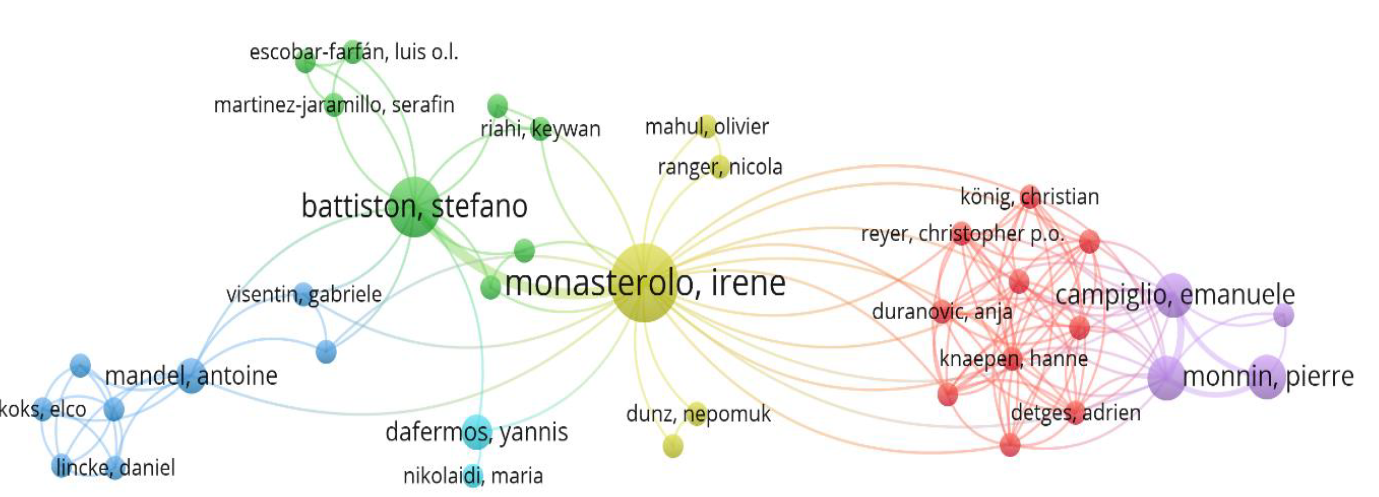
The software VOSviewer enables us to synthesize information on co-authorship in climate financial risks literature. Figure 5 is a co-authorship map generated through VOSviewer based on the financial climate risks literature in our analysis. The figure shows the most extensive co-authorship network set in the literature, showing the contributing authors in six clusters coded by colours. Authors not included in the figure belongs to other less-extensive co-authorship network sets.
Table 2: Top Articles Based on Citation Counts
| Rank | Title | Author | Year | Citation Count |
| 1 | The Importance of Climate Risks for Institutional Investors (The Review of Financial Studies) | Krueger et al. [22] | 2020 | 336 |
| 2 | (A climate stress-test of the financial system (Nature Climate Change) | Battiston et al. [11] | 2017 | 299 |
| 3 | ‘Climate value at risk’ of global financial assets (Nature Climate Change) | Dietz et al. [12] | 2016 | 204 |
| 4 | Climate risks and market efficiency (Journal of Econometrics) | Hong et al. [54] | 2019 | 183 |
| 5 | Hedging climate risk (Financial Analysts Journal) | Andersson et al. [91] | 2016 | 150 |
| 6 | Climate risk management and rural poverty reduction (Agricultural Systems) | Hansen et al. [117] | 2019 | 114 |
| 7 | Corporate Strategies for Managing Climate Risks: Corporate Strategies for Managing Climate Risks (Business Strategy and the Environment) | Weinhofer and Busch [95] | 2013 | 107 |
| 8 | Fostering green investments and tackling climate-related financial risks: Which role for macroprudential policies? (Ecological Economics) | D'Orazio and Popoyan | 2019 | 99 |
| 9 | The impact of climate risk on firm performance and financing choices: An international comparison (Journal of International Business Studies) | Huang et al. [98] | 2018 | 98 |
| 10* | Climate Finance (The Review of Financial Studies) | Hong et al. | 2020 | 87 |
| Financial instruments for disaster risk management and climate change adaptation (Climatic change) | Linnerooth-Bayer and Hochrainer-Stigler [20] | 2015 | 87 |
*Two articles are in the tenth position as both share the same citation count amount
Table 3 presents the top authors based on the number of articles they provide to our list. Authors not included in the table contribute fewer articles to our list. Total link strength “indicates the total strength of the co-authorship links of a given researcher with other researchers” [41]. Irene Monasterolo and Stefano Battiston contribute the most to our list, with eight and five documents each. Their work on climate financial risk assessment provides significant advancements in methodological frameworks, including climate stress tests, stock-flow consistent (SFC) models, and greenhouse gas indices.

Figure 5: Partial Network Visualization of Co-Authorship
Table 3: Top Authors Based on the Number of Articles
| Author | Documents | Total Link Strength |
| Irene Monasterolo | 8 | 28 |
| Stefano Battiston | 5 | 15 |
| Johannes Stroebel | 3 | 17 |
| Emanuele Campiglio | 3 | 17 |
| Adrian von Jagow | 3 | 7 |
| Pierre Monnin | 3 | 5 |
Substantive Review
Climate Financial Risk Assessment
Evidence from the literature has demonstrated that climate change poses considerable financial risks. There are two main channels of climate financial risks: transition risk, coming from a sudden and disorderly transition to more climate-conservative policies, and physical risk, stemming from the losses incurred due to the destruction of physical assets by climate events [42-44]. The survey by Stroebel and Wurgler [45] demonstrates a growing perception of climate financial risks, with risks over policies and regulations becoming the top climate risks for investors and corporations over the next half-decade while physical risks loom as a significant risk for the longer term. With increasing policy responses to climate change, especially following the Paris Agreement in 2015, a large number of studies has focused on assessing the transition risks of climate change [46-51,7,13-14].
On the other hand, some studies also provide attempts to assess the physical risks of climate change. Mandel et al. examine the financial risks induced by climate change while accounting for the direct impact amplification of global financial interlinkages by focusing on global coastal and river flood risks. Other studies provide risk assessments using more specific contexts, including but not limited to capital market pricing capture and responses [52-53], the cost of equity capital [54], and property prices [55]. However, assessing physical risks remains challenging due to the highly contextual nature of the risks according to natural and geographical characteristics, as well as their subsequent implications for proxies and methodologies [4]. With the physical risks of climate change, the literature leaves ample scope for developing its assessments.
Studies have shown that climate change may affect the economy through shocks in financial systems, with the considerable role of cross-economy and sectoral linkage. Ranger et al. [56] demonstrate that economic and financial risks, climate change, environmental damage, and pandemics are interconnected. The compound risk multiplier can reach over 150%; in other words, the compound shock may affect GDP by 50% more than the sum of the individual shocks. West et al. [57] demonstrate the uncertainty of the cross-border dynamics, which contribute to the complexity of their impact and response pathways. Ignoring compounding risks and potential cross-border spillover may contribute to a significant gap in future crisis preparation.
In addition to aggregated impacts on the economy and financial systems, some studies offer insights into the role of climate financial risks in specific sectors. Early studies demonstrate how climate change may affect financial return variability in hydropower projects and value creation in global automotive markets [58-59]. Climate risks may contribute to an increased insurance excess and additional expenses for buildings in flood risk zones [60]. Among Japanese manufacturing firms, an increase in asset beta and a decrease in financial leverage of high-emission firms occurred following the 2015 Paris Agreement, indicating an elevated risk level and the subsequent capital structure alteration to manage the risk [61].
In energy companies, climate change may contribute to financial risk in varying degrees and directions. For instance, the rising air temperatures cause natural gas plants to use more fuel but coal plants to use less, altering total fuel costs in opposing ways [62]. In Chinese mining companies, different climate events influence their financial performance differently: positive with drought but negative with floods, high temperatures, and cryogenic freezing [63]. In Chinese power companies, heavy rainfall may lower their generation costs and positively influence their financial performance [66]. Compared to fossil fuel-based energy assets, investments in renewable energy are also more likely to be climate-resilient [62]. These findings imply the importance of diversification: an energy-sector portfolio will benefit more from assets with different directions and levels of impact from climate-related risks.
Some studies also demonstrate the influence of climate financial risks on asset prices. Stern [65] offers early examples of weather option pricing using historical simulation, direct modelling, and indirect Monte Carlo modelling. Kölbel et al. [49] explain how the transition risk of climate change increases credit default swap (CDS) spreads, especially following the 2015 Paris Climate Agreement. After controlling for domestic and global factors, Beirne et al. [66] demonstrate the role of both resiliency and vulnerability to climate risk as the factors driving sovereign borrowing costs at the global level. Karydas and Xepapadeas [67] show how more often and less predictable tail events due to climate change increase the premium of climate risk in asset prices while noting how overall market risk premium may not fully reflect the change. The findings of the three latter studies are consistent with the hypothesis that as the world warms, real rates of interest decline, while the participation of brown assets declines in the market as the risk of climate policy increases.
Additionally, evidence shows that climate financial risks affect corporations, investors, and financial markets. Ait Soussane et al. [68] demonstrate that most climate-related natural hazards, such as floods, landslides, and cyclones, deter foreign direct investments (FDI) with more severe impacts found in agriculture-dependent and low-income countries. Capasso et al. [47] demonstrate the negative relation between CO2 emissions and carbon intensities and companies’ distance to default, showing that companies are more likely to default if they emit higher carbon amounts. Carbon high-emitting companies also shorten their distance to default following the 2015 Paris Agreement.
Assessing climate financial risks is challenging, owing to the features specifically attributable to climate change. In examining climate macroeconomic and financial impacts, issues lie in several dimensions:
The systematicity, non-linearity, and fat-tailed characteristic of climate change
Endogeneity, given the reciprocal influences of climate responses and their impacts
Complexity, covering the nexus of socio-economic and natural factors
Forward-looking characteristics of risk assessments, which historical-only data and climate change’s deep uncertainty further complicate [69-71,2-3]. In valuing climate risks on financial instruments, a considerable challenge exists in the availability of information on the climate-relevant traits of financial products and firms. Data, proxies, and classifications often lack standardizations, leading to inconsistencies and subsequent scoping and methodological issues in analyzing climate financial risks
In response to these challenges, several studies provide methodological development in assessing the financial risk arising from climate change. One major stream among these studies is the development of climate stress-test models. These are often macro-level assessments of the financial system's stability to climate risks. Battiston et al. [46] build a network-based climate stress-test methodology and demonstrate its use in ‘green’ and ‘brown’ policy transition scenarios in large Euro Area banks. Roncoroni et al. [14] combine the climate stress test and the network valuation of financial assets (NEVA) framework to analyze the effects on the financial stability of the interaction between climate policy changes and market conditions. Despite the increasing development of stress-test models, however, DeMenno [72] note its underutilization and explore opportunities to expand its applications and development.
Other studies develop value-at-risks (VaR) assessments to examine climate financial risks. Dietz et al. [12] estimate the VaR of global financial assets in three scenarios: business–as–usual (BAU), emission limit to two degrees Celsius temperature, and mitigation costs inclusion. They find an estimated VaR of 1.8 per cent under the BAU scenario, equaling US$2.5 trillion. Nieto [13] finds the loan exposure to elevated environmental risks of the banking system in the United States (US), the European Union (EU), China, Japan, and Switzerland amounting to US$1.6 trillion, ranging from 0.5 per cent (China) to 3.8 per cent (US). Abadie et al. [10] estimate the expected mean annual economic losses in VaR and expected shortfall (ES) related to sea-level rise in 19 European coastal cities. The findings of these studies indicate that the potential losses from climate risks warrant prevention actions to limit climate change justifiable.
Methodological development also includes other approaches that address the issues that arise in climate financial risk analyses. Dunz et al. [7] develop a macroeconomic behavioural Stock-Flow Consistent (SFC) model that incorporates an adaptive forecasting function of the climate sentiments in the banking sector. Some studies also develop indices to serve as proxies in climate financial risk assessment that account for specific factors such as carbon exposure, transnational flows, impact amplification, vulnerability level, and economic, social, and natural conditions [73-75,46]. Other studies utilize time series and panel data with specific estimators to address issues often present in climate financial risk analyses. Previous studies include estimators such as the generalized method of moment (GMM), the feasible generalized least squares (FGLS), and the vector autoregression (VAR) [48,50-52,78].
Corporate Management of Climate Financial Risks
On managing climate financial risks at a corporate level, a significant number of articles focus on the practice of corporate climate risk disclosures. Studies have shown an increasing trend in corporate climate risk disclosure practices, attributed to the increasing pressure on corporations for more extensive and meaningful climate risk disclosures [79-80,20]. Several factors serve as the driving forces of this increasing climate risk disclosure trend:
legislative and policy initiatives by governments and organizations
state investigations and climate litigation actions by governments, shareholders, and environmental communities
increased stakeholder activism and demands from major institutional investors, as well as the growth in financial sector development [81-83]
One example of the drivers behind the trend is the disclosure framework recommendation by the Task Force on Climate-Related Financial Disclosures (TCFD), which mainly covers four broad components: governance, strategy, risk management, and metrics and targets [84]. Bingler et al. [85] highlight how the arrival of the TCFD recommendations significantly impacts companies' disclosures. By developing Climate Risks and Opportunities Reporting Index (CRORI), Amar et al. [79] discovered improvements in voluntary climate disclosures among French CAC 40 companies from 2015–2018. According to Zitti and Guttormsen [86], the TCFD and the Carbon Disclosure Project (CDP) significantly promoted climate-related financial disclosures among Norwegian salmon aquaculture companies. They argue that disclosures motivate the companies to provide investors with transparency and to promote a smooth transition to a low-carbon economy.
There are several areas where potential development in corporate climate risk disclosure exists. Commitments to voluntary disclosure appear to suffer from ‘cheap talk’– proclaiming support for disclosure initiatives does not necessarily result in adopting disclosure practice [87]. Companies often prefer to provide non-material information, contributing to a relatively low level of depth in climate risk disclosures [86-88]. There are indications of short-term focus, with climate risk disclosures often focusing on transition risks and overlooking physical risks [80]. There also seem to be disparities across sectors and management areas in climate risk disclosure practices [79].
A second major stream of articles describes investors' responses to climate financial risks. Battiston, Monasterolo, et al. [90] present a framework for capturing the interrelationship between economic investment allocation and investors' future climate risk perceptions based on climate policies' credibility, which provides insights into the role of the financial system in low-carbon transitions. Van Benthem et al. [24] show that institutional investors incorporate climate risk management into two actions: engagement with their portfolio companies, including through demands for disclosures and strategic climate plan development, and portfolio allocation decisions such as asset divestment and investment alignment. Krueger et al. [22] surveyed the perception of climate risks among institutional investors. Three motives provide the strongest contribution for investors to incorporate climate risks into portfolio decisions: protecting investors’ reputations, moral/ethical considerations, and legal/fiduciary duties. Many investors also believe risk management and involvement strategy, rather than divestment, are superior for addressing climate risks.
Some studies also provide suggestions on how investors can manage climate financial risks. Andersson et al. [91] and de Jong and Nguyen [92] explain portfolio decarbonization strategies to protect portfolios from climate risk while avoiding unexpected exposures that compromise portfolio tracking properties. While studying the effect of climate change on the investment returns of infrastructure investors, Ambrosio et al. [93] also suggest how investors can address the exposure and vulnerability of infrastructure to projected physical climate impacts while funding initiatives that promote community resilience. Folqué et al. [94] find that funds face worse environmental, social, and governance (ESG) risk when applying only negative exclusion strategy, as opposed to a combination of more advanced sustainable investment strategies, such as ESG integration, screening combination, engagement, and impact investment. Their findings highlight the importance of adopting more diversified sustainable strategies to manage climate risks.
The next stream of articles focuses on the possible ways corporations can manage climate financial risks. Weinhofer and Busch [95] explores the management of climate risks across organizations. While the companies under the study perceive climate risk as a material issue, management often has restricted knowledge of the risk. Therefore, they often do not precisely determine potential negative impacts and implement only regular risk management not tailored towards climate risk. Busch [96] examines how Industrial Ecology principles and techniques can be useful in corporate risk management in a climate adaptation context, highlighting how they offer aspects that are beneficial to direct climate risk assessment and management despite their limited use. Taylor [97] explores how actuary professionals understand the challenges of climate change on economies and societies and how they position and integrate their profession within the issue of climate financial risks.
The last stream of articles focuses on corporate characteristics due to climate-related risks. Huang et al. [98] investigated the effects of climate-related risk on global publicly-listed companies' financing decisions. They find an association between the likelihood of loss from major climate events and lower and more volatile earnings and cash flows. Companies in countries with more extreme weather are also more likely to hold cash for financial slack and increase resilience to climatic hazards. H.-M. Chen et al. [99] analyze the ESG and financial performance impacts of different ownership structures, ESG and financial performance indicators, and climate change-related risks opportunities (CCR risks) disclosures among manufacturing firms. They find that when a company's management strongly emphasises disclosing CCR risks and opportunities, investments in and implementation of environmental performance metrics strengthen. However, an excessive implementation of environmental performance shifts its impact on financial performance from positive to negative.
Climate Financial Risk Policies
Studies have touched on the policy that supports increasing the capacity of business actors in climate adaptation. Crick et al. [100] explain how policy-influenced factors, such as business environment, play a significant role in businesses’ ability to respond to climate risk. In supporting adaptation, the public sector may help businesses by removing financial barriers and increasing access to adaptation assistance and information. Luo and Tang [101] find that corporate governance (CG) reforms in the United Kingdom have supported corporate social responsibility (CSR) behaviour measured through carbon performance. Ali et al. [102] demonstrate the significant impact of local community capacity building through financial literacy, flood preparedness investment, and the adoption of disaster risk reduction on improving resilient planning strategies and practices. Murshed et al. [103] demonstrate that energy efficiency improvements and a greater proportion of renewables in total energy consumption reduce carbon emissions. Energy efficiency also has a moderating effect on carbon emission reduction, jointly with higher financial inclusivity.
Studies have also covered corporate disclosures of climate risks as a policy. The literature documents the two goals of climate risk disclosures as generally narrated by public discourses:
Reducing climate risks by providing greater adaptation incentives and low-carbon investments
Reducing financial stability risks by allowing the development of frameworks to help efficient and stable market adjustments and stably in the low-carbon transition [17]. However, critiques on climate risk disclosure policies also emerge. Disclosure policies may not be effective due to considerable hurdles in measuring climate risks, the inefficiency of markets at processing climate-relevant information, and ineffective institutions due to irrational profit bias [104]
A significant number of studies focus on policies specifically targeting the financial sector. A macro-prudential strategy aligned with the Paris Agreement's goals can help reduce carbon bias, prevent the rise of climate financial risks and refocus financial flows into sustainable investments [105]. Studies provide several alternative green financial system strategies: countercyclical capital buffer with carbon-intensive credit cycle, sectoral leverage requirement targeting exposures to specific green sectors, liquidity regulation to dampen short-termism in financial intermediation, credit floor and ceiling, exposure limit from brown sectors for intermediaries, harmonized taxonomy as well as enhanced climate-related disclosure requirements [105,16]. Chenet et al. [106] specifically propose a precautionary financial policy approach to climate financial risks, consisting of integrating climate risk in capital adequacy requirements, climate-aligned credit controls and credit guidance, and the integration of climate risk in monetary policy operations.
Some studies under this stream also specifically review green differentiated capital requirements (GDCRs) policy, which includes green supporting factor (GSF) and dirty penalizing factor (DPF). Dafermos and Nikolaidi [107] explain how GDCRs can reduce the pace of global warming and help to make banks less fragile by reducing their credit provision and leverage. While testing a set of “green” finance policies– green capital requirements, green public guarantees to credit, and carbon-risk adjustment in credit ratings–Lamperti et al. [19] find the policies to reduce carbon emissions and climate impacts. However, studies also note the possible risks of applying GDCRs, as they can fuel financial instability through green credit booms and reductions in economic activity from non-green credit penalties [107,19]. In implementing GDCRs, therefore, careful calibration is important to prevent financial instabilities [16].
Other than reviewing macro-financial policies, other studies focus on institutional roles in climate financial risk policies. Onischka et al. [108] explain that the primary strategy for enabling the financial sector to increase
resource efficiency should focus on the role of companies in providing sufficient and comparable risk-relevant information and regulations in easing the inclusion of risks and opportunities by financial firms. Saliya and Wickrama [109] revealed that political leadership, administrative direction, international standards, and supervisory mechanisms are distinct dimensions of risk preparedness. On examining key financial system actors, Málits et al. [110] note the role of central banks in mapping climate risks to the banking system, banking system players in recognizing the risks and making operational changes, and regulatory interventions to promote the financing of low carbon projects by commercial banks. (Table 4)
Table 4: Key Literature Topics, According To Issue Areas
| Issue Area | Key Literature Topic |
| Climate Financial Risks Assessment |
|
| Corporate Management of Climate Financial Risks |
|
| Climate Financial Risk Policies |
|
| Design and Review of Sustainable Instruments |
|
Design and Review of Sustainable Instruments
The design and review of sustainable instruments are another key focus in climate financial risk literature. In addition to risk reduction, risk transfer is an important complementary to creating effective risk management from events and disasters, as opposed to a singular focus on only one type of action, on which financial instrument design becomes significant [111]. Innovative risk financing may include index-based public sector risk transfer, catastrophe bonds, contingent credit, micro-insurance programs, national insurance programs, insurance to donors supporting governments, and insurance pools among small states [20]. Well-designed instruments can help lower losses and increase their societal impacts by encouraging the prevention of moral hazard behaviours and providing safety nets through burden-sharing mechanisms [112,20].
Many studies focus on insurance as an adaptation instrument to climate financial risks, with early articles highlighting the compatibility issue of the instrument to address climate risks. As the climate changes, potential losses become more expensive and volatile, shifting from relative predictability to relative unpredictability[113-114]. This condition radically undermines the systemic foundation of insurance, which utilizes established probabilities to spread financial risks [114]. The losses from climate change may become too big, making insurance schemes unable to cover such magnitude. While the insurance system may support climate mitigation, the practical method for protecting against climate risks is through effective climate change mitigation– today’s emission reduction is the ‘premium’ to prevent future uninsurable loss from climate change [113-114].
More recent studies, however, still provide considerations for implementing insurance to adapt to climate financial risks. By simulating a hypothetical insurance market in Ethiopia, Meze-Hausken et al. [115] suggest that spatial pooling may be a desirable option for micro-insurers, deserving of thorough case-by-case attention when creating index-insurance schemes. Meyer et al. [116] suggest utilizing binary contract portfolios to reduce the possible effects of climate change on pricing assumptions in developing an index-based insurance product for hydropower generators. Hansen et al. [117] explain the complementary role of index-based insurance and adaptive social protection in allowing farmers to manage risk, overcome risk-related barriers in adopting improved technologies and practices, and protect assets from extreme climatic events.
Some studies provide suggestions for improving climate insurance. Isakson [118] noted several significant scopes for improvements to establish an index-based agricultural insurance market:
Technical interventions in agriculture environmental risk management
State support for establishing risk markets
An accommodating interest for insurance among small-scale producers. While demonstrating the possible development of a weather-index insurance
system in Bangladesh, Al-Maruf et al. [119] highlight several crucial factors to ensure: accurate weather and crop data availability, institutional cooperation and significant constituency trusts, and strong resources and capacity for scaling up
Research Gaps and Future Research Directions
Table 5 summarizes several avenues for future research. With considerable ongoing progress in the methodology to assess climate financial risks, room for improvement still exists in developing the literature. There is substantial scope for developments in climate risk exposure measures of different asset classes [2,14,45]. Opportunities are also present in sentiment measures and more creative use of existing data, such as satellite imagery, text from 10-K statements, and earning calls, as well as other measures, such as ecological footprint and indices showing the environmental performance of countries [120-121,45. While many existing tools already provide adequate reliability, usability, and depth, ensuring broader applications requires improvements in model transparency, output-related uncertainties, scenario flexibility, and assumption communication [87].
There are several ideas for future research in climate financial risk assessments. Extending applications may include expanding the use of recently developed methods across jurisdictions and into a more nascent and wider scope of research. Some examples of this are cross-national and developing economies evaluations and applying stress tests and other methods for longer-term scenarios and other impact channels, such as sovereign debts [14,44,68,74]. Future studies may provide insights by integrating systematic network financial modelling into dynamic macroeconomic climate change approaches and exploring the COVID-19 crisis context in analyzing climate financial risks [14]. Another important area for future research is the examination of the potential costs of various niche channels of financial risk associated with climate change, such as climate change litigation, as highlighted by Solana [122].
Some areas can serve as future exploration opportunities on the issue of corporate management on climate financial risks. Given several issues in climate financial risk disclosures, investigations into the motivations to engage in climate risk disclosures and reviews of existing disclosure practices from larger firm samples can help to improve this practice [123]. Additionally, studies exploring ways corporations can manage climate financial risks through other practices, such as intelligence service, and the factors that can support and impede corporate innovation on climate financial risk management can provide valuable insights into this field [124]. Topics on the position of investors in climate financial risk issues and how they can manage them through divestment, hedging, diversification, and other possible ways remain very important and should be explored further [125,54].
In climate financial risk policies, we identify future research opportunities in disclosure and macro-financial policies. To support climate financial risk disclosures, designing policies to improve guidance and incentives for more and deeper climate financial risk disclosure participation within and across firms and sectors is critical [123]. Additionally, the provision of empirical data should focus on increasing their availability and applicability through disclosure enhancement and information standardization [2,24,71,126]. On green macro-financial policies, there is still an opportunity to expand understanding of their impacts on both green transition and the financial system, as well as ways to improve their implementation [127]. For example, modelling fiscal, monetary, and financial climate policies can help provide an understanding of their interactions [2]. Moreover, the COVID-19 pandemic also presents a considerable prospect to investigate questions related to the design of green macro-financial policies during and after the crisis.
In the design of climate financial risk instruments, there is an increasing significance to understanding further the impeding and supporting factors of financial innovation, as it may enable capital shifting towards essential green sectors [24]. Future research can explore the development of new or improved financial instruments, such as green bonds, carbon taxation, and climate insurance, among others. Some sectors also present exceptional cases that raise important questions about the design of carbon markets [24]. Despite the growing number of climate financial risk instruments, there remains a significant gap in understanding their implications and the various mechanisms and factors that can influence these implications, including geography and the industrial sector [128]. This gap presents an opportunity for future research to evaluate their effectiveness in promoting a green economic transition while ensuring the financial system's stability.
Table 5: Future Research Directions, According To Issue Areas
| Issue Area | Future Research Direction |
| Climate Financial Risk Assessment |
|
| Corporate Management of Climate Financial Risks |
|
| Climate Financial Risk Policies |
|
| Design and Review of Sustainable Instruments |
|
In this study, we systematically review the literature on climate financial risks. We employ several tools to support our systematic review process: Harzing’s Publish or Perish, Zotero, VOSviewer, and Excel. We base our analysis on a total of 98 peer-reviewed journal articles with a publication time ranging from 2001 to 2023, sourced from Scopus and Google Scholar literature databases. We first analyze the general characteristics of the literature, which covers their publication years, objects of study, key content categories, top-publishing journals, citation counts, and co-authorship analysis. After in-depth reading and information processing, we substantially review the content of the articles based on the key issues we observed in the literature. We also review the possible future research agenda for the literature.
We find an unprecedented increase in climate financial risks literature in the past eight years, which coincides following the speech on the risk of climate change on financial stability by the former Governor of the Bank of England [40]. The current literature generally addresses four key issues: climate financial risk assessment, corporate management of climate financial risks, climate financial risk policies, and design and review of sustainable instruments. Given a growing interest and the necessity of more precisely understanding the financial risk of climate change, most studies are studying topics on climate financial risk assessments. We find several opportunities for future research, including but not limited to: further developing climate financial risks measures and assessment methodologies, understanding factors to support wider and deeper climate financial risk disclosures, developing and understanding the climate transition effectivity and the financial stability impacts of climate financial risk policies, and supporting the development of financial innovations to manage climate risks.
While our systematic review provides a comprehensive overview of the existing literature on climate financial risks, our approach may have limitations. For instance, our study may not have covered all literature related to the topic due to the choice of keywords, literature databases used, and exclusion criteria. Therefore, we encourage readers to use our study to supplement their research on the subject. Despite this potential limitation, our study provides valuable insights into the current state of the climate financial risk literature and outlines future research directions. The urgency of understanding and managing climate financial risks highlights the need for policymakers, investors, and businesses to collaborate in developing innovative financial instruments and policies that effectively address these risks while enhancing transparency and disclosure. Our findings can inform decision-making processes and contribute to developing more effective strategies for managing climate financial risks in the future.
Declaration of Competing Interest
The authors declare that they have no known competing financial interests or personal relationships that could have appeared to influence the work reported in this paper.
Acknowledgements
This research received no specific grant from funding agencies in the public, commercial, or not-for-profit sectors.
Batten, S. et al. “Climate change: Macroeconomic impact and implications for monetary policy.” Ecological, societal and technological risks and the financial sector, edited by T. Walker et al., Springer International Publishing, 2020, pp. 13–38. https://doi.org/10.1007/978-3-030-38858-4_2.
Battiston, S. et al. “Climate risks and financial stability.” Journal of Financial Stability, vol. 54, 2021, article 100867. https://doi.org/10.1016/j.jfs.2021.100867.
Monasterolo, I. “Climate change and the financial system.” Annual Review of Resource Economics, vol. 12, no. 1, 2020, pp. 299–320. https://doi.org/10.1146/annurev-resource-110119-031134.
Attoh, E.M.N.A.N. et al. “Making physical climate risk assessments relevant to the financial sector.” Climate Risk Management, vol. 37, 2022, article 100447. https://doi.org/10.1016/j.crm.2022.100447.
Hsiang, S. et al. “Estimating economic damage from climate change in the United States.” Science, vol. 356, no. 6345, 2017, pp. 1362–1369. https://doi.org/10.1126/science.aa l4369.
TCFD. Recommendations of the task force on climate-related financial disclosures. Task Force on Climate-related Financial Disclosures, 2017.
Dunz, N. et al. “Climate sentiments, transition risk and financial stability in a stock-flow consistent model.” Journal of Financial Stability, vol. 54, 2021, article 100872. https://doi.org/10.1016/j.jfs.2021.100872.
Monasterolo, I. and M. Raberto. “The EIRIN flow-of-funds behavioural model of green fiscal policies and green sovereign bonds.” Ecological Economics, vol. 144, 2018, pp. 228–243. https://doi.org/10.1016/j.ecolecon.2017.07.0 29.
van der Ploeg, F. and A. Rezai. “Stranded assets in the transition to a carbon-free economy.” Annual Review of Resource Economics, vol. 12, no. 1, 2020, pp. 281–298. https://doi.org/10.1146/annurev-resource-110519-040938.
Abadie, L.M. et al. “Climate risk assessment under uncertainty.” Frontiers in Marine Science, vol. 3, 2016. https://doi.org/10.3389/fmars.2016.00265.
Battiston, S. et al. “A climate stress-test of the financial system.” Nature Climate Change, vol. 7, no. 4, 2017, pp. 283–288. https://doi.org/10.1038/nclimate3255.
Dietz, S. et al. “‘Climate value at risk’ of global financial assets.” Nature Climate Change, vol. 6, no. 7, 2016, pp. 676–679. https://doi.org/10.1038/nclimate2972.
Nieto, M.J. “Banks, climate risk and financial stability.” Journal of Financial Regulation and Compliance, vol. 27, no. 2, 2019, pp. 243–262. https://doi.org/10.1108/JFRC-03-2018-0043.
Roncoroni, A. et al. “Climate risk and financial stability in the network of banks and investment funds.” Journal of Financial Stability, vol. 54, 2021, article 100870. https://doi.org/10.1016/j.jfs.2021.100870.
Chiu, I.H.-Y. “The EU sustainable finance agenda.” European Business Organization Law Review, vol. 23, no. 1, 2022, pp. 87–123. https://doi.org/10.1007/s40804-021-00229-9.
D’Orazio, P. “Towards a post-pandemic policy framework to manage climate-related financial risks.” Climate Policy, vol. 21, no. 10, 2021, pp. 1368–1382. https://doi.org/10.1080/14693062.2021.1975623.
Farbotko, C. “Global financial stability, rapid transition to a low-carbon economy and social justice.” Australian Geographer, vol. 50, no. 3, 2018, pp. 273–278. https://doi.org/10.1080/00049182.2018.1519874.
IPCC. Managing the risks of extreme events and disasters to advance climate change adaptation. Cambridge University Press, 2012.
Lamperti, F. et al. “Three green financial policies to address climate risks.” Journal of Financial Stability, vol. 54, 2021, article 100875. https://doi.org/10.1016/j.jfs.2021.100875.
Linnerooth-Bayer, J. and S. Hochrainer-Stigler. “Financial instruments for disaster risk management and climate change adaptation.” Climatic Change, vol. 133, no. 1, 2015, pp. 85–100. https://doi.org/10.1007/s10584-013-1035-6.
Campiglio, E. et al. “Climate change challenges for central banks and financial regulators.” Nature Climate Change, vol. 8, no. 6, 2018, pp. 462–468. https://doi.org/10.1038/s41558-018-0175-0.
Krueger, P. et al. “The importance of climate risks for institutional investors.” Review of Financial Studies, vol. 33, no. 3, 2020, pp. 1067–1111. https://doi.org/10.1093/rfs/hhz137.
Stroebel, J. and J. Wurgler. “What do you think about climate finance?” Journal of Financial Economics, vol. 142, no. 2, 2021, pp. 487–498. https://doi.org/10.1016/j.jfineco.2021.08.004.
van Benthem, A.A. et al. “The effect of climate risks on the interactions between financial markets and energy companies.” Nature Energy, vol. 7, no. 8, 2022, pp. 690–697. https://doi.org/10.1038/s41560-022-01070-1.
Akomea-Frimpong, I. et al. “A review of studies on green finance of banks, research gaps and future directions.” Journal of Sustainable Finance & Investment, vol. 12, no. 4, 2022, pp. 1241–1264. https://doi.org/10.1080/ 20430795.2020.1870202.
Firmansyah, E.A. and B. Harsanto. “Islamic fintech research: Systematic review using mainstream databases.” Etikonomi, vol. 21, no. 2, 2022, pp. 355–368. https://doi.org/10.15408/etk.v21i2.24602.
Homar, A.R. and L.K. Cvelbar. “The effects of framing on environmental decisions: A systematic literature review.” Ecological Economics, vol. 183, 2021, article 106950. https://doi.org/10.1016/j.ecolecon.2021.106950.
Jungell-Michelsson, J. and P. Heikkurinen. “Sufficiency: A systematic literature review.” Ecological Economics, vol. 195, 2022, article 107380. https://doi.org/10.1016/j.ecol econ.2022.107380.
Naeem, M. et al. “Bibliometrics literature revise on exchange rate: A future research agenda.” Etikonomi, vol. 21, no. 1, 2022, pp. 41–54. https://doi.org/10.15408/etk. v21i1.22412.
Rahman, S. et al. “A systematic review of green finance in the banking industry.” Green Finance, vol. 4, no. 3, 2022, pp. 347–363. https://doi.org/10.3934/GF.2022017.
Serafini, P.G. et al. “Sustainable development goals in higher education institutions.” Journal of Cleaner Production, vol. 370, 2022, article 133473. https://doi.org/10.1016/j.jclepro.2022.133473.
Elsevier. “About Scopus—Abstract and citation database.” Elsevier, February 2023, https://www.elsevier.com/solutions/scopus/who-uses.
Falagas, M.E. et al. “Comparison of PubMed, Scopus, Web of Science and Google Scholar.” FASEB Journal, vol. 22, no. 2, 2008, pp. 338–342. https://doi.org/10.1096/fj.07-9492LSF.
Gusenbauer, M. and N.R. Haddaway. “Which academic search systems are suitable for systematic reviews or meta-analyses?” Research Synthesis Methods, vol. 11, no. 2, 2020, pp. 181–217. https://doi.org/10.1002/jrsm.1378.
Marlowe, J. and A. Clarke. “Carbon accounting: A systematic literature review and directions for future research.” Green Finance, vol. 4, no. 1, 2022, pp. 71–87. https://doi.org/10.3934/GF.2022004.
Sarma, P. and A. Roy. “A scientometric analysis of literature on green banking.” Journal of Sustainable Finance & Investment, vol. 11, no. 2, 2021, pp. 143–162. https://doi.org/10.1080/20430795.2020.1711500.
Halevi, G. et al. “Suitability of Google Scholar as a source of scientific information.” Journal of Informetrics, vol. 11, no. 3, 2017, pp. 823–834. https://doi.org/10.1016/j.j oi.2017.06.005.
Orduna-Malea, E. et al. “Google Scholar como una fuente de evaluación científica.” Revista Española de Documentación Científica, vol. 40, no. 4, 2017, article 185. https://doi.org/10.3989/redc.2017.4.1500.
Van Eck, N.J. and L. Waltman. “Software survey: VOSviewer.” Scientometrics, vol. 84, no. 2, 2010, pp. 523–538. https://doi.org/10.1007/s11192-009-0146-3.
Carney, M. “Breaking the tragedy of the horizon—Climate change and financial stability.” Bank of England, September 2015, https://www.bankofengland.co.uk/spee ch/2015/breaking-the-tragedy-of-the-horizon-climate-change-and-financial-stability.
Van Eck, N.J. and L. Waltman. VOSviewer manual. 2022, https://www.vosviewer.com/documentation/Manual_VOSviewer_1.6.18.pdf.
Bhattacharyay, B.N. “Managing climate-related financial risk.” Contributions to Conflict Management, Peace Economics and Development, vol. 29, 2021, pp. 39–56. https://doi.org/10.1108/S1572-832320210000029004.
Campiglio, E. et al. “Climate risks in financial assets.” Council on Economic Policies Discussion Notes, 2019, https://www.researchgate.net/profile/Emanuele-Campiglio/publication/337102690.
Campiglio, E. et al. “Climate-related risks in financial assets.” Journal of Economic Surveys, 2022. https://doi.o rg/10.1111/joes.12525.
Giglio, S. et al. “Climate finance.” Annual Review of Financial Economics, vol. 13, no. 1, 2021, pp. 15–36. https://do i.org/10.1146/annurev-financial-102620-103311.
Monasterolo, I. et al. “Vulnerable yet relevant.” Climatic Change, vol. 145, no. 3–4, 2017, pp. 495–507. https:/ /doi.org/10.1007/s10584-017-2095-9.
Capasso, G. et al. “Climate change and credit risk.” Journal of Cleaner Production, vol. 266, 2020, article 121634. https://doi.org/10.1016/j.jclepro.2020.121634.
Hunjra, A.I. et al. “The nexus between climate change risk and financial policy uncertainty.” International Journal of Finance & Economics, 2022. https://doi.org/10.1002 /ijfe.2739.
Kölbel, J. et al. “Does the CDS market reflect regulatory climate risk disclosures?” 2020. https://doi.org /10.5167/UZH-187908.
Li, N. “Measuring the combining effects of financial stability and climate risk.” Economic Change and Restructuring, 2022. https://doi.org/10.1007/s10644-022-09466-5.
Sun, L. et al. “Financial stability role on climate risks and climate change mitigation: Implications for green economic recovery.” Environmental Science and Pollution Research, vol. 29, no. 22, 2022, pp. 33063–33074. https://doi.org/10.1007/s11356-021-17439-w.
Yang, S. et al. “Climate transition risk of financial institutions: Measurement and response.” Applied Economics Letters, 2022, pp. 1–11. https://doi.org/10.1 080/13504851.2022.2097630.
Chen, Y. et al. “Not all climate risks are alike: Heterogeneous responses of financial firms to natural disasters in China.” Finance Research Letters, vol. 52, 2023, article 103538. https://doi.org/10.1016/j.frl.2022 .103538.
Hong, H. et al. “Climate risks and market efficiency.” Journal of Econometrics, vol. 208, no. 1, 2019, pp. 265–281. https://doi.org/10.1016/j.jeconom.2018.09.015.
Huynh, T.D. et al. “Climate risk: The price of drought.” Journal of Corporate Finance, vol. 65, 2020, article 101750. https://doi.org/10.1016/j.jcorpfin.2020.101750.
Gourevitch, J.D. et al. “Unpriced climate risk and the potential consequences of overvaluation in US housing markets.” Nature Climate Change, 2023. https://doi.org/ 10.1038/s41558-023-01594-8.
Ranger, N. et al. “Managing the financial risks of climate change and pandemics: What we know (and don’t know).” One Earth, vol. 4, no. 10, 2021, pp. 1375–1385. https://doi.org/10.1016/j.oneear.2021.09.017.
West, C.D. et al. “Europe’s cross-border trade, human security and financial connections: A climate risk perspective.” Climate Risk Management, vol. 34, 2021, article 100382. https://doi.org/10.1016/j.crm.2 021.100382.
Austin, D. et al. “Quantifying the financial risks and opportunities of climate change on the automotive industry.” Environmental Quality Management, vol. 14, no. 3, 2005, pp. 49–70. https://doi.org/10.1002/tqem.20047.
Harrison, G. “Climate change impacts on financial risk in hydropower projects.” IEEE Transactions on Power Systems, vol. 18, no. 4, 2003, pp. 1324–1330. https://d oi.org/10.1109/TPWRS.2003.818590.
Alzahrani, A. et al. “Emerging financial risks from climate changes on building assets in the UK.” Facilities, vol. 36, no. 9–10, 2018, pp. 460–475. https://doi.org/10.1108/F-05-2017-0054.
In, S.Y. et al. “Climate-related financial risk assessment on energy infrastructure investments.” Renewable and Sustainable Energy Reviews, vol. 167, 2022, article 112689. https://doi.org/10.1016/j.rser.2022.112689.
Ito, A. and K. Nagasawa. “Impact of the corporate response to climate risk on financial leverage and systematic risk.” Applied Economics Letters, 2022, pp. 1–4. https://doi. org/10.1080/13504851.2022.2146643.
Sun, Y. et al. “The impacts of climate change risks on financial performance of mining industry: Evidence from listed companies in China.” Resources Policy, vol. 69, 2020, article 101828. https://doi.org/10.1016/j.resourpol. 2020.101828.
Sun, Y. et al. “Climate change risks and financial performance of the electric power sector: Evidence from listed companies in China.” Climate Risk Management, vol. 39, 2023, article 100474. https://doi.org/10.1016/j. crm.2022.100474.
Stern, H. “The application of weather derivatives to mitigate the financial risk of climate variability and extreme weather events.” Australian Meteorological Magazine, vol. 50, no. 3, 2001, pp. 171–182.
Beirne, J. et al. “Feeling the heat: Climate risks and the cost of sovereign borrowing.” International Review of Economics & Finance, vol. 76, 2021, pp. 920–936. https://doi.org/10.1016/j.iref.2021.06.019.
Karydas, C. and A. Xepapadeas. “Climate change financial risks: Implications for asset pricing and interest rates.” Journal of Financial Stability, 2022, article 101061. https://doi.org/10.1016/j.jfs.2022.101061.
Ait Soussane, J. et al. “Does climate change constitute a financial risk to foreign direct investment?” Weather, Climate and Society, vol. 15, no. 1, 2023, pp. 31–43. https://doi.org/10.1175/WCAS-D-22-0027.1.
Grippa, P. et al. “Climate change and financial risk.” The Economics of Climate, vol. 75, 2019, pp. 26–29.
Kolozsi, P.P. et al. “Measuring the climate risk exposure of financial assets.” Financial and Economic Review, vol. 21, no. 1, 2022, pp. 113–140. https://doi.org/10.3389 3/FER.21.1.113.
Monnin, P. “Central banks should reflect climate risks in monetary policy operations.” SUERF Policy Note, 2018.
Onischka, M. “Environmental and climate risks in financial analysis.” WIT Transactions on Ecology and the Environment, vol. 108, 2008, pp. 75–85. https://doi.or g/10.2495/EEIA080081.
DeMenno, M.B. “Environmental sustainability and financial stability.” Journal of Banking Regulation, 2022. https://doi.org/10.1057/s41261-022-00207-2.
Hedlund, J. et al. “Quantifying transnational climate impact exposure.” Global Environmental Change, vol. 52, 2018, pp. 75–85. https://doi.org/10.1016/j.gloenvcha.2018.04.006.
Mysiak, J. et al. “Climate risk index for Italy.” Philosophical Transactions of the Royal Society A, vol. 376, no. 2121, 2018, article 20170305. https://doi.org/10.1098/rsta .2017.0305.
Parker, L. et al. “Vulnerability of the agricultural sector to climate change.” PLOS ONE, vol. 14, no. 3, 2019, article e0213641. https://doi.org/10.1371/journal.pone.02136 41.
An, Q. et al. “Impact of transition risks of climate change on Chinese financial market stability.” Frontiers in Environmental Science, vol. 10, 2022, article 991775. https://doi.org/10.3389/fenvs.2022.991775.
Amar, J. et al. “Enhancing financial transparency to mitigate climate change.” Environmental Modeling & Assessment, vol. 27, no. 3, 2022, pp. 425–439. https://doi.o rg/10.1007/s10666-021-09800-7.
Demaria, S. and S. Rigot. “Corporate environmental reporting.” Business Strategy and the Environment, vol. 30, no. 1, 2021, pp. 721–738. https://doi.org/10.1002 /bse.2651.
Colombo, E. “From bushfires to misfires.” Transnational Environmental Law, vol. 11, no. 1, 2022, pp. 173–199. https://doi.org/10.1017/S204710252100025X.
Fiedler, T. et al. “Business risk and the emergence of climate analytics.” Nature Climate Change, vol. 11, no. 2, 2021, pp. 87–94. https://doi.org/10.1038/s41558-020-00984-6.
Nowiski, N. “Rising above the storm.” Energy Law Journal, vol. 39, no. 1, 2018.
Eccles, R.G. and M.P. Krzus. “Why companies should report financial risks from climate change.” MIT Sloan Management Review, vol. 59, no. 3, 2017, pp. 1–6.
Bingler, J.A. et al. “Cheap talk and cherry-picking.” Finance Research Letters, vol. 47, 2022, article 102776. https://doi.org/10.1016/j.frl.2022.102776.
Zitti, M. and A.G. Guttormsen. “Climate risk and financial disclosure in salmon aquaculture.” Aquaculture Economics & Management, 2022, pp. 1–27. https://doi.org /10.1080/13657305.2022.2143934.
Bingler, J.A. and C.C. Senni. “Taming the green swan.” Climate Policy, vol. 22, no. 3, 2022, pp. 356–370. https://doi.org/10.1080/14693062.2022.2032569.
Kouloukoui, D. et al. “Disclosure of climate risk information by the world’s largest companies.” Mitigation and Adaptation Strategies for Global Change, vol. 23, no. 8, 2018, pp. 1251–1279. https://doi.org/10.1007/s11027-018-9783-2.
Abhayawansa, S. and C. Adams. “Towards a conceptual framework for non-financial reporting inclusive of pandemic and climate risk reporting.” Meditari Accountancy Research, vol. 30, no. 3, 2022, pp. 710–738. https://doi.org/10.1108/MEDAR-11-2020-1097.
Battiston, S. et al. “Accounting for finance is key for climate mitigation pathways.” Science, vol. 372, no. 6545, 2021, pp. 918–920. https://doi.org/10.1126/science.abf3877.
Andersson, M. et al. “Hedging climate risk.” Financial Analysts Journal, vol. 72, no. 3, 2016, pp. 13–32. https://doi.org/10.2469/faj.v72.n3.4.
de Jong, M. and A. Nguyen. “Weathered for climate risk.” Financial Analysts Journal, vol. 72, no. 3, 2016, pp. 34–39. https://doi.org/10.2469/faj.v72.n3.2.
Ambrosio, N. et al. “Addressing climate risk in financial decision making.” Optimizing Community Infrastructure, Elsevier, 2020, pp. 123–142. https://doi.org/10.1016 /B978-0-12-816240-8.00007-0.
Folqué, M. et al. “Sustainable development and financial system.” Sustainable Development, vol. 29, no. 5, 2021, pp. 876–890. https://doi.org/10.1002/sd.2181.
Weinhofer, G. and T. Busch. “Corporate strategies for managing climate risks.” Business Strategy and the Environment, vol. 22, no. 2, 2013, pp. 121–144. https://d oi.org/10.1002/bse.1744.
Busch, T. “Industrial ecology, climate adaptation and financial risk.” Journal of Industrial Ecology, vol. 24, no. 2, 2020, pp. 285–290. https://doi.org/10.111 1/jiec.12938.
Taylor, N. “‘Making financial sense of the future.’” New Political Economy, vol. 28, no. 1, 2023, pp. 57–75. https://doi.org/10.1080/13563467.2022.2067838.
Huang, H.H. et al. “The impact of climate risk on firm performance and financing choices.” Journal of International Business Studies, vol. 49, no. 5, 2018, pp. 633–656. https://doi.org/10.1057/s41267-017-0125-5.
Chen, H.-M. et al. “Impacts on the ESG and financial performances of companies in the manufacturing industry.” Journal of Cleaner Production, vol. 380, 2022, article 134951. https://doi.org/10.1016/j.jclepro.2022 .134951.
Crick, F. et al. “How do African SMEs respond to climate risks?” World Development, vol. 108, 2018, pp. 157–168. https://doi.org/10.1016/j.worlddev.2018.03.015.
Luo, L. and Q. Tang. “Corporate governance and carbon performance.” Accounting & Finance, vol. 61, no. 2, 2021, pp. 2891–2934. https://doi.org/10.1111/ acfi.12687.
Ali, A. et al. “Migration, remittances and climate resilience.” GeoJournal, 2022. https://doi.org/10.1007/s10708-022-10631-6.
Murshed, M. et al. “Can enhancing financial inclusivity lower climate risks by inhibiting carbon emissions?” Research in International Business and Finance, 2023, article 101902. https://doi.org/10.1016/j.riba f.2023.101902.
Christophers, B. “Climate change and financial instability.” Annals of the American Association of Geographers, vol. 107, no. 5, 2017, pp. 1108–1127. https://doi.org/10.10 80/24694452.2017.1293502.
D’Orazio, P. and L. Popoyan. “Fostering green investments and tackling climate-related financial risks.” Ecological Economics, vol. 160, 2019, pp. 25–37. https://doi.org/10.1016/j.ecolecon.2019.01.029.
Chenet, H. et al. “Finance, climate-change and radical uncertainty.” Ecological Economics, vol. 183, 2021, article 106957. https://doi.org/10.1016/j.ecolecon.2021.1069 57.
Dafermos, Y. and M. Nikolaidi. “How can green differentiated capital requirements affect climate risks?” Journal of Financial Stability, vol. 54, 2021, article 100871. https://doi.org/10.1016/j.jfs.2021.100871.
Onischka, M. et al. “How to sensitize the financial industry to resource efficiency considerations and climate change related risks.” Journal of Environmental Assessment Policy and Management, vol. 14, no. 3, 2012, article 1250017. https://doi.org/10.1142/S1464333212500172.
Saliya, C.A. and K.A.S. Wickrama. “Determinants of financial-risk preparedness for climate change.” Advances in Climate Change Research, vol. 12, no. 2, 2021, pp. 263–269. https://doi.org/10.1016/j.acc re.2021.03.012.
Málits, P. et al. “Possible real economic consequences of financial actors’ attitudes towards climate change and realized risks.” Public Finance Quarterly, vol. 67, no. 3, 2022, pp. 430–447. https://doi.org/10.35551/PFQ_ 2022_3_7.
IPCC. Managing the risks of extreme events and disasters to advance climate change adaptation. Cambridge University Press, 2012.
Barrett, S. “Local level climate justice?” Global Environmental Change, vol. 23, no. 6, 2013, pp. 1819–1829. https://doi.org/10.1016/j.gloenvcha.2013.07.015.
Charpentier, A. “Insurability of climate risks.” The Geneva Papers on Risk and Insurance—Issues and Practice, vol. 33, no. 1, 2008, pp. 91–109. https://doi.org/10.1057 /palgrave.gpp.2510155.
Phelan, L. “Managing climate risk.” Australasian Journal of Environmental Management, vol. 18, no. 4, 2011, pp. 223–232. https://doi.org/10.1080/14486563.2011.611486.
Meze-Hausken, E. et al. “Reducing climate risk for micro-insurance providers in Africa.” Global Environmental Change, vol. 19, no. 1, 2009, pp. 66–73. https://doi.org/ 10.1016/j.gloenvcha.2008.09.001.
Meyer, E.S. et al. “Evaluating financial risk management strategies under climate change for hydropower producers on the Great Lakes.” Water Resources Research, vol. 53, no. 3, 2017, pp. 2114–2132. https://doi.org/10 .1002/2016WR019889.
Hansen, J. et al. “Climate risk management and rural poverty reduction.” Agricultural Systems, vol. 172, 2019, pp. 28–46. https://doi.org/10.1016/j.agsy.2018.01.019.
Isakson, S.R. “Derivatives for development?” Journal of Agrarian Change, vol. 15, no. 4, 2015, pp. 569–580. https://doi.org/10.1111/joac.12124.
Al-Maruf, A. et al. “Piloting a weather-index-based crop insurance system in Bangladesh.” Sustainability, vol. 13, no. 15, 2021, article 8616. https://doi.org/10.3390/su1 3158616.
Ahmed, Z. et al. “Towards environmental sustainability.” Journal of Cleaner Production, vol. 371, 2022, article 133721. https://doi.org/10.1016/j.jc lepro.2022.133721.
Peiró-Signes, Á. et al. “Can a country’s environmental sustainability exert influence on its economic and financial situation?” Journal of Cleaner Production, vol. 375, 2022, article 134121. https://doi.org/10.1016/j.jclepro.202 2.134121.
Solana, J. “Climate change litigation as financial risk.” Green Finance, vol. 2, no. 4, 2020, pp. 344–372. https://doi.org /10.3934/GF.2020019.
Li, A. et al. “Climate-related risk and financial statements.” Australian Accounting Review, vol. 29, no. 3, 2019, pp. 599–605. https://doi.org/10.1111/auar.12296.
Chen, H. and X. Zhao. “Green financial risk management based on intelligence service.” Journal of Cleaner Production, vol. 364, 2022, article 132617. https://doi. org/10.1016/j.jclepro.2022.132617.
Ejaz, R. et al. “An empirical investigation of market risk, dependence structure and portfolio management between green bonds and international financial markets.” Journal of Cleaner Production, vol. 365, 2022, article 132666. https://doi.org/10.1016/j.jclepro.2022.132666.
Walenta, J. “Climate risk assessments and science-based targets.” WIREs Climate Change, vol. 11, no. 2, 2020. https://doi.org/10.1002/wcc.628.
Hess, P. “The supervision and regulation of climate risks for banks.” Green Finance, vol. 4, no. 3, 2022, pp. 295–309. https://doi.org/10.3934/GF.2022014.
Mazaheri, M. et al. “Market-based instruments and sustainable innovation.” Journal of Cleaner Production, vol. 373, 2022, article 133947. https://doi.org/10.1016/j.jclep ro.2022.133947.