Defamation is a type of wrongdoing that seeks to tarnish the reputation of other people. The present study deals with the subject of defamation in televised Arabic political discourse with a specific focus on the pragmatic and evaluative mechanisms of construction of defamatory meaning. Specifically, the research examines the contribution of impoliteness strategies to the defamatory character of political utterances, and the role of appraisal categories (i.e. attitude, engagement, and graduation, including their subcategories) in the production and comprehension of defamatory discourse. The research aims to answer the following research questions: How do impoliteness strategies contribute to the construction of defamatory utterances? How do the major categories of appraisal theory and its subcategories affect the meaning production and interpretation of defamation? The data for this research are taken from three Iraqi televised political talk shows: Ma'a Almilaa Talal, Alhaqu Yuqal and Alqarar Lakum. For the analysis, Culpeper's model of impoliteness strategies and the framework of appraisal theory developed by Martin and White are being used. The data are analyzed by means of qualitative and quantitative methods. The results indicate that some strategies of impoliteness are used more often than others in the fulfillment of defamatory utterances. In addition, the result shows that appraisal categories and subcategories play an important role of shaping and reinforcing defamatory meaning in televised political discourse.
Keywords
Defamation
Attitude
Engagement
Graduation
Impoliteness Strategies
INTRODUCTION
Language acts as a general instrument with which social activities and assessments are shaped. A major point of intersection is reached between linguistic expression and defamation with defamation mainly being executed through the use of well-chosen words, expressions and implied meaning. Linguistically, defamation may be viewed as performing harmful speech acts that directly, indirectly, or implicitly state negative claims about a person or a given institution. Socially, it is an action that is aimed at tarnishing reputation, eliminating trust or reducing credibility in a society. Defamation in the media setting is commonly manifested when information, whether true or false, is spread in a way that makes the recipient perceive, mock, or cast moral outrage towards the person or institution being attacked.
This paper is a social pragmatic exploration of defamation in news coverage on political interviews on television. Although much of the past studies have been concerned with defamation in the terms of law or morality, little efforts have been made to draw attention on the socio-pragmatic processes that govern the production, interpretation and distribution of defamatory meanings. To fill this gap, the current study focuses on the issue of defamation in the Arabic political rhetoric, with an objective of drawing on the pragmatic and social limitations that make it difficult to construct effective frameworks against the communicative and social effects of such defamation. In this regard, the present study aims at:
Investigating the way, the impoliteness strategies contribute to the defamatory nature of the utterances
Examining the way, the appraisal categories of attitude, engagement, graduation, and their subcategories contribute and affect the production and the interpretation of the defamatory utterances
Consistent with the aforementioned aims, the present study tries to answer the following questions:
How do the impoliteness strategies contribute to the to the defamatory nature of the utterances
In what way the main categories of the appraisal theory and their subcategories affect the production and the interpretation of the defamatory utterances
Televised interviews containing defamatory material are a huge problem for the traditional principles of defamation common law which were created to govern printed media. Televised interviews that defame people are especially problematic because laws pertaining to defamation that were created to deal with simpler types of communication were quickly discovered to be insufficient in dealing with the complexities that broadcast media present [1]. One of the main challenges is in pursuing the issue of the legal responsibility for the defamatory statement, namely, whether the liability should be on the interviewer or interviewee. In addition, defamation that is televised has distinctive characteristics and differs from other types of defamation.
The term libel and slander are usually confounded with defamatory content in televised interviews since the content is based on both a verbal and pictorial representation. The impact of the television broadcast may be short term but long lasting especially in circumstances where the interview is recorded or replayed or even shared via digital mediums. Television interviews are also capable of reaching a huge number of people simultaneously, unlike other types of defamation, and they can easily overcome geographical limits and influence different audiences in various regions and even countries [2]. Consequently, the damage done by the defamatory statements is usually aggravated. This effect is also enhanced by the emotional responses that can be caused by television to viewers. The simultaneous visual and auditory presentation of an accusation may make the message seem more real and persuasive, and thereby elicit better engagement of the audience. The inclusion of visual images is an added strength, which enhances the perception of involvement and emotional reaction by the viewers [2]. Therefore, defamatory speech given via televised interviews has higher chances of producing a lasting impact and inflict more damage on the reputation of an individual.
The Theoretical Background
The branch of pragmatics that explores how speakers and hearers interpret and judge communicative acts in their social and cultural contexts and especially whether they believe this or that is appropriate and inappropriate communication can be defined as socio-pragmatics [3]. Specifying the scope and theoretical background of socio-pragmatics, is needed to define it better. This demands backtracking its intellectual origin to previous works that had stressed on the social aspects of language use. The initial work of Austin [4], Brown and Gilman [5], Lakoff [6], and Leech [7], was the emphasis on the influence of meaning on a social relation, power, politeness, and context, rather than just on the linguistic form. On these bases, socio-pragmatics examines how social circumstances and factors affect the construction of the use of language to construct actions and express meaning in a practical context [3].
Holmes [8], also makes the topic of socio-pragmatics even narrower by stating that it focuses on the issue of determining social norms and analyzing how these norms are enforced, negotiated, or disputed as part of using language. In this sense, the socio-pragmatic research is based on three primary pillars. The former entails the social perspective of pragmatics, which places emphasis on the speaker and the social role taken in place of the use of linguistic structures. The second pillar highlights the interactional aspect as it puts an accent on verbal communication and the interpretation of meaning in certain contexts. The third pillar is associated with the normative component of pragmatics, which emphasizes the two-way process of relations between language use and social norms, where the language is as well as a mirror of the social expectations.
Because the current research focuses on the defamation in the televised Arabic political speech, it is crucial to provide the theoretical background of the defamation. Law wise, defamation is regarded as a civil wrong, also referred to as tort committed by one person against another. In contrast to other types of misconduct, defamation does not presuppose the physical injuries and actual threats. Rather, it occurs when an individual shares the fake or hurtful information about a second party with the third party, thus injuring the reputation of the target. It is because of this reason that defamation is considered to be a wrong of law and remedies can be given in almost every legal system [9]. It has been classified as a speech that tarnishes the reputation of an individual by diminishing his status in the society or making people not want to be associated with him or her [10]. On the same note, defamation usually arises whenever there are negative utterances that are made about another individual with an adverse effect on his reputation [11]. Essentially, it defines it as a civil crime that is carried out through communicative activities as opposed to physical ones [12].
Defamatory act consists of false or misleading statements that damage the reputation of a certain individual in the mind of the reasonable persons in the society [12]. These statements can be of different kinds e.g., direct statement, accusations, verbal attacks or other forms of communication. Defamation can be done orally or in writing but can be also done in form of images, gestures, sounds, broadcasts, televised programmes or even online publications. In the common law traditions, defamation is subdivided into two broad groups, libel and slander. Libel is a defamative statement that is in permanent or written form, and slander is a defamative statement that is oral or delivered through word of mouth [9,11,13].
To be regarded legally, there must be three elements to be satisfied in defamatory acts. To begin with, the statement has to be defamatory that is, the statements have to be false, harmful and have the capacity of exposing the person who is attacked to ridicule, contempt or disapproval [9]. Second, the assertion should be definite or refer to the defamed person, be it an individual, a corporation, or an organization. Third, the defamatory statement has to be disseminated or directed to a third party since in this case, private statements were not termed defamation.
A defamatory political speech is a special issue since it lies in the border between two opposing values, which are the freedom of speech and the preservation of personal image. Political defamation is generally the false utterances that are made against persons of political nature, that hurt the credibility or the image of the victims. This is common among political campaigns, debates, interviews, and elections where statements that are offensive or exaggerated are common [14]. These utterances can be associated with criminal actions that have been alleged or family issues or personal behaviors, and they are usually meant to affect opinion of the population. Political defamation is commonly defined by the existence of actual malice, in which the words are tactfully employed in order to level allegations, assault or even defame the political adversaries irrespective of the outcome of the accusations.
The political defamation is the most common type of defamation, which is often present in televised interviews and political debates, thus its importance with regard to the current study. Defamatory discourse in such situations can be either libel or slander, since televised interviews use spoken language along with visual and recorded images. Nonetheless, political defamation is particularly dangerous because it may affect the opinion of the people as the defamatory statements may have a severe effect on the trust of the population in the political leaders and institutions.
MATERIALS AND METHODS
The current study adopts the mixed method that involves the qualitative and quantitative analyses to the selected data. Due to the fact that the samples are selected non-randomly in the present study, the non-probability sampling technique is adopted, particularly the purposive sampling. The samples of defamatory utterances are collected from the following televised political talk shows:
Ma’a Almilaa Talal which is broadcasted on the Utv Channel and presented by the journalist and interviewer Ahmed Almilaa Talal
Alhaqu Yuqal, which is broadcasted on the Utv Channel and presented by the journalist and interviewer Adnan Altia
Alqarar Lakum which is broadcasted on Dijlah TV Channel by the journalist and interviewer Sahar Abaas Jamil
The current work takes Culpeper's [15], framework of impoliteness strategies and Martin and White's [16]. framework of appraisal theory as the primary analytical tools. The first framework is used to analyze the creation of defamatory meaning by impoliteness strategies which are described as follows:
Bald on record impoliteness refers to instances in which a face threatening act is done in a direct, explicit and unambiguous manner, without the mitigation attempt, even within a face concerned context [15]
Positive impoliteness occurs when a speaker attacks the positive face wants of the hearer, in this case the desire to be accepted, appreciated or approved of by others [17]
Negative impoliteness is the use of linguistic strategies that compromise the addressee's negative face wants, most importantly, the need for autonomy and freedom of action [17]
Off-record impoliteness is used when the face-threatening act is performed with the use of politeness strategies that are obviously insincere, and thus remains surface realization [17]
Withhold politeness implies “the absence of politeness work where it would be expected” [15]
The second analytical theory that has been used in an analysis of the current study is the Appraisal Theory which was formulated by Martin and White [16] and which is used in examining the role that evaluative language plays in meaning construction in defamation. This framework enables evaluation of utterances in three aspects that have a connection, that is, attitude, engagement and graduation. Attitude domain: describes the expression of evaluation in terms of affect, judgement, and appreciation that represent the emotional responses, moral or social appraisal of conduct and assessment of things or occurrences. All these resources are analyzed to be shaped and emphasized in the light of how they construct and accentuate defamatory interpretations in political discourse. The engagement domain deals with how speakers locate their arguments in relation to other positions which either contain claims that are not challenged (monoscopic expressions) or those that recognize other voices (heteroglossic expressions). The choice of these forms is associated with the boost of the persuasive and defamative strength of a statement or the limitation. Graduation domain is concerned with scaling the evaluative meaning with force and focus so that speakers could accentuate or diminish intensity or blur or narrow down the category lines. All of these linguistic options can reinforce, dilute, or put into context the negative connotations of defamation, and thus graduation is a central process in the process of modulating reputational damage [16].
RESULTS AND DISCUSSION
The analysis of the selected data involves examining one sample of defamatory utterances in each of the selected televised political talk shows.
Sample 1
In the utterance, “The advisors turned out to be corrupt, turned out to be thieves, and turned out to be brokers”, the speaker accuses the advisors to be corrupt, thieves, and brokers.
According to the impoliteness model developed by Culpeper [15], speaker bases his/her attack on the face of the advisors using bald-on-record impoliteness strategy, i.e. not mitigating the attack. The speaker publicly cries foul on the advisors terming them corrupt, thieves and brokers, language which is obviously derogatory, pejorative and contemptuous. These utterances grossly hurt the positive face of the advisors i.e. the desire to be considered respectable, trustworthy and morally upright. Simultaneously, such a strategy is also a danger to their negative face because by presenting them as corrupt and untrustworthy, the social credibility of such people is limited, alongside their freedom of action. Such rude and negative connotation of the utterance is further enhanced by the constant repetition of the verb turned out to be (aram, aram) which serves to strengthen and intensify application of negative traits.
In the analysis applied in the Appraisal Theory created by Martin and White [16], the utterance may be discussed in the context of attitude, engagement, and graduation. Already in the aspect of attitude, the evaluative meaning is a part of judgement because the utterance evaluates the advisors, which are the algebra of al-Masstshar, and their conduct but not the expression of feelings or the evaluation of objects. This verdict works under the social sanction and the social esteem. Social sanction is present in such labels as corruptness “فاسدين” and thieves “سراق” that question the moral character of advisors. Social esteem is also present in how the word brokers is used as “سماسرة” which is a negative appraisal of their ability and trustworthiness and depicts them as selfish and immoral. There is no involvement of the categories of affect and appreciation because the utterance does not present emotional reactions, or judgement of something, process, or phenomenon.
In terms of engagement, the speaker is monoglossic, stating the accusations as facts that cannot be refuted, and without considering other voices or opinions. The speech is made without any hesitation or modalisation, which seals the dialogic space and enhances its face endangering power. The factual presentation of the claims as facts and not personal views added more to the defamatory impacts and reputational harm.
The speaker is very forceful and focused in the appraisal in graduation context. The repetition of the verb طلعوا is also used to increase the force, as the verb is repeated three times and establishes an effect of cumulative accusation which endows the rudeness of the act. This repetition increases credibility and seriousness of the defamatory statements. The concentration is achieved by means of such categorical words like corrupt “فاسدين" thieves “سراق" and brokers (سماسser) that do not allow any ambiguity or a different understanding. The lack of compromise or cushioning mechanisms further concentrates the eye on the subject and makes the accusations sound as real. Comprehensively, the utterance contains a very negative judgement, which is monoglossic, intensified, and sharply focused, which emphasizes the impoliteness and defamatory quality in the utterance.
Sample No. 2
In the utterance “يكون .... ضعيف فاسد. مؤسسه فاسده”, the speaker characterizes the referent as weak and corrupt, and further describes the institution as corrupt. This utterance constitutes a deliberate and malicious accusation that harms and damages the reputation of the referent. To analyze the defamatory act embedded in the utterance, it is examined through Culpeper’s model of impoliteness strategies and Martin and White’s model of appraisal theory.
According to Culpeper's [15], framework of impoliteness, the defamatory meaning is expressed through the use of the impoliteness strategy of bald on record since the expressions faible, fassad and muesse fasdhe are articulated directly and explicitly, without mitigation, hedging or politeness markers. Consequently, the utterance is given a factual format and not a subjective opinion which greatly contributes to its defamatory power. In addition, the speaker uses positive impoliteness because he or she attacks the positive face of the referent. By attributing weakness and corruption to the referent, the speaker attacks the target's need to be respected and socially valued. As a result, the utterance undermines the public trust in the referent and destroys their collective integrity.
When viewed through the appraisal framework provided by Martin and White, the utterance has negative evaluative meaning across the categories of attitude, engagement and graduation. With regard to attitude the utterance is a realisation of negative judgement and appreciation. Under the subcategory of social sanction, there are the words "fasaid and fasaeh" which convey a negative judgement of propriety by the evaluator, since they assess the referent's moral and ethical conduct unfavorably. Such judgement is reputationally damaging as it assigns corruption, dishonesty and moral failure to the target. Similarly, in the subcategory of social esteem, the adjective "ضعيف" describes a negative judgment of capacity, and characterizes the referent as incompetent and ineffective. Notably, the term "ضعيف" is a cross-categorial resource, as it displays a negative judgement of capacity for it while at the same time expanding into appreciation by negatively appraising the qualities of the referent. This evaluative configuration renders weakness and corruption observable characteristics instead of subjective impressions, and thus promotes the defamatory impact.
With regard to engagement, the utterance is uttered in a monoglossic form, as it does not admit any alternative standpoint or dialogic negotiation. The speaker categorically asserts that the referent is corrupt "fasd" and weak "chewa", without the use of hedging and modalization. This closure of dialogic space is consistent with the impoliteness strategy of bald on record, and increases the face-threatening nature of the utterance. By raising the accusations as factual claims, not as opinions, the utterance has an even greater defamatory and reputation-damaging effect.
Regarding graduation, the evaluative meaning is scaled through force and focus. In terms of force, the defamatory act is intensified through lexical repetition, particularly the repeated use of “فاسد”, alongside “ضعيف” and “مؤسسه فاسده”. This repetition strengthens the harshness of the impolite act and increases the perceived seriousness of the accusations. Consequently, the repeated and forceful evaluations enhance the credibility and damaging impact of the defamatory utterance. In terms of focus, the use of categorical expressions such as “فاسد”, “فاسده”, and “ضعيف” leaves no room for ambiguity or alternative interpretations. By asserting the claims categorically, the speaker presents them as indisputable truths, which further intensifies their defamatory nature. In sum, the utterance conveys a negative judgement articulated in a monoglossic, intensified, and sharply focused manner.
Sample No. 3
The speaker in the utterance هو متهم بالتزوير وقضايا أخرى تتعلق بالفساad وaasth glal almaanis is saying that the referent has committed a forgery and other crimes of corruption and misuse of office. This statement is defamatory in that it does an explicit act of speech of accusing and semantic signs and pragmatic signs indicating that the referent is connected with forgery, corruption, and abuse of power.
In terms of the impoliteness framework of Culpeper [15], the utterance can be considered to be the bald on record impoliteness strategy, as the referent is directly and without any mitigation attacking his face with accusations of corruption, forgery and abusing his office. By making these assertions, the speaker wants to taint the reputation of the referent. The speaker also uses positive impoliteness since he takes away the urge of the referent to be respected and socially valued. Such an assault on the positive face of the referent calls into question the integrity, legitimacy and honesty of the referent, thus, inflicting reputational damage using a combination of both strategies.
The attitudinal, engagement and graduation systems of the appraisal framework by Martin and White [16], show that the utterance was defamatory in nature. In terms of attitude, the terms: استغلال المنصب and قضaay a 23y tetainb al fasaad do accomplish a negative verdict of propriety, as they blame the referent of moral and legal misconduct, and thus, represent them as not ethical and corrupt. Likewise, verbal communication, such as متهم بالتزوير means verdicts that are negative on the truthfulness, as it attributes the attribute of dishonesty, deceitfulness, and lack of trustworthiness to the object of the verdict. Such negative statements are obviously aimed at causing negative publicity to the referent, which is the main aspect of defamation.
Regarding participation, the utterance is created in a monoglossic form, which does not allow people to have different perspectives and does not provide any dialogic space to other voices. Moreover, the statement is made in highly assertive key without modalization and hedging. The use of the term هو متهم is made on purpose so that the accusation can be seen as something objective and established. The assertions are therefore presented as unquestionable facts as opposed to opinions, which augment defamatory nature of the statement.
With respect to commencement, the intending of evaluation is scaled upon force and focus. The intensity of force is increased by lexical accumulation where various accusations are piled up in a single utterance: “التزوير”, “الفسaad and asteghlal al-mansab. This amassing plan is used as a reinforcement of the negative assessment and as a heightened effect of defamation. Regarding focus, the assessment is narrowed with the categorical formulation: هو متهم, that defines the referent as an unequivocal accused person and eliminates other fragmentations in interpretation. Combinations of reinforced force and increased focus not only strengthens the impoliteness strategies used but also the general defamatory impact of the utterance.
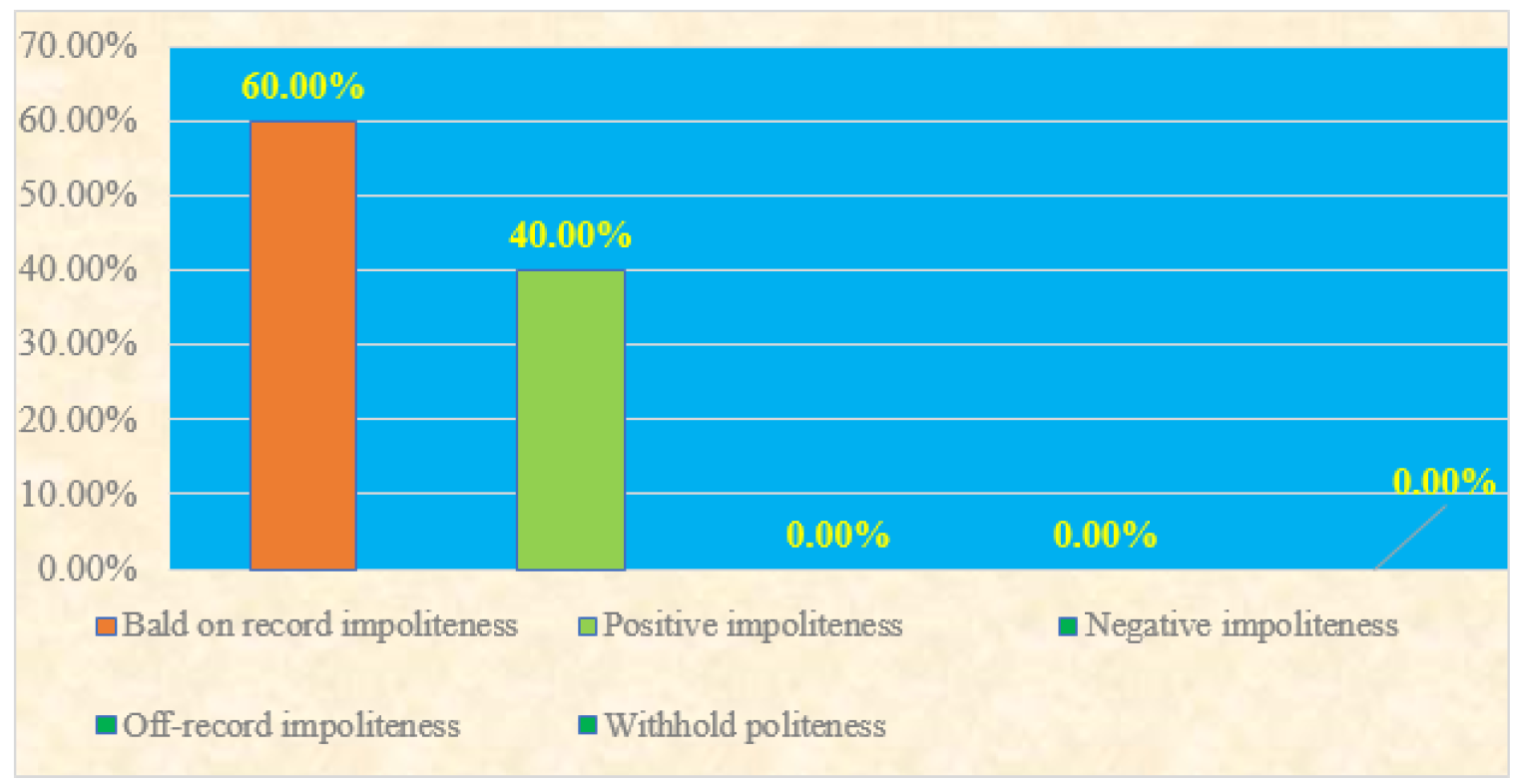
The use of the impoliteness strategies in carrying out the defamatory utterances in the Arabic political discourse is quantitatively analyzed as follows in the Table 1. These frequencies are represented in the subsequent Figure 1.
Table 1: The Frequency and Percentage of Impoliteness Strategies Used in Defamation in Arabic Political Discourse
No.
Impoliteness Strategies
Arabic Political Discourse
Frequency
Percentage
1
Bald on record impoliteness
3
60.00
2
Positive impoliteness
2
40.005
3
Negative impoliteness
0
0.00
4
Off-record impoliteness
0
0.00
5
Withhold politeness
0
0.00
Total
5
100.00
Figure 1: The Use of the Impoliteness Strategies in Performing Defamation in the Arabic Political Discourse
The tendency of Arab politicians to employ the bald on record impoliteness strategy in producing defamatory utterances can be explained by several reasons. First, the use of this strategy strengthens the defamatory accusation by allowing it to be presented in a direct, explicit, and assertive manner. It enables the speaker to frame the accusation as factual, making it more likely to be perceived as such by the audience. By adopting this strategy, politicians present their accusations in a way that leaves little room for the targeted individual to claim misinterpretation. As a result, the accusation becomes clear, unmistakable, and credible to most listeners, limiting the target’s ability to deny or reinterpret it convincingly.
Second, the use of the bald on record impoliteness strategy compromises the targeted politician's legitimacy, trustworthiness, and credibility. When the defamatory accusations are expressed in a direct and unmitigated fashion, it leads to immediate and unequivocal damage to the reputation of the person who is being attacked and often generates wide scale media attention. Such exposure further enhances the reputational damages caused by the defamatory act. Third, this strategy could be used to influence public perception by giving them a strong sense of certainty. Since the aim of defamation is to affect public opinion, the categorical and conclusive way in which accusations are made adds to their persuasive power on the audience, even if it is not backed up by evidence. In this respect, the bald on record impoliteness strategy works as a rhetorical strategy by means of which politicians forward defamatory claims. Fourth, the use of this strategy maximizes the illocutionary force of the accusation. Given that defamation is heavily dependent upon the perceived gravity of the allegation, bald on record impoliteness serves to run up the force of the utterance, making it more authoritative, categorical and assertive. The second most widely used strategy is positive impoliteness, and its prominence may also be accounted for on a number of grounds. First, positive impoliteness directly addresses the positive face wants of the individual, namely the desire to be appreciated, approved of and socially valued. Its recurrent use in defamatory discourse weakens the targeted politician's public image and social identity through questioning his/her credibility, legitimacy and reliability. As a result, it causes reputational harm by altering people's perception in a way that is antithetical to the identity the target wishes to present.
Second, positive impoliteness may be used strategically to reduce legal accountability in defamation cases. Because this strategy often operates indirectly, it allows speakers to deny responsibility for explicit accusations while still causing reputational damage. In this way, the speaker can harm the target’s reputation while avoiding direct legal consequences. Third, positive impoliteness enables speakers to construct a clear division between “us” and “them,” framing defamatory discourse within the boundaries of supporters versus opponents. This framing establishes a moral contrast between what is perceived as “good” and “bad,” thereby intensifying the moral damage inflicted on the targeted politician.
Finally, the use of positive impoliteness in defamatory utterances increases the social threat directed at the target. Since defamation threatens social identity, this strategy intensifies the denial of the target’s need for social approval, appreciation, and acceptance. By portraying the target as untrustworthy, positive impoliteness contributes to the construction of a negative public identity. As a result, the defamatory act extends beyond accusations of wrongdoing to an attack on the target’s character itself, leading to greater reputational damage.
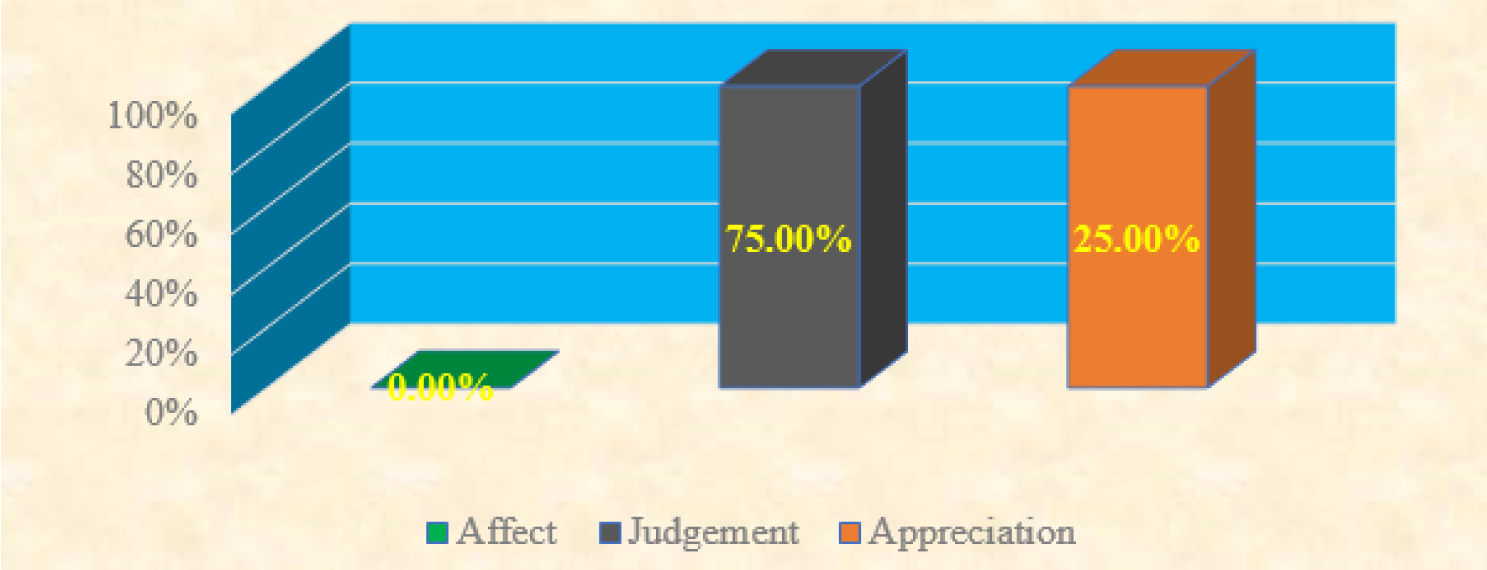
In line with Marin and White’s [16], framework, the classification of attitude and its subsections of affect, appreciation and judgement are quantitatively analyzed in Table 2. These frequencies are characterized in the Figure 2.
Table 2: The Frequency and the Percentage of Affect, Judgement, and Appreciation in Defamatory Utterances
No.
The Category of Attitude in the Arabic Political Discourse
The Subcategory Type
Frequency
Percentage
1.
Affect
0
0.00
2.
Judgement
3
75.00
3.
Appreciation
1
25.00
Total
4
100.00
Table 2: The Frequency and the Percentage of Affect, Judgement, and Appreciation in Defamatory Utterances
This tendency to use judgement in defamatory statements may be explained by the fact that defamation is deeply rooted in negative appraisal judgement of the propriety, veracity, capacity, or tenacity of a particular, specified politician by their speakers. In the event that speakers criticize these dimensions of social sanction and social esteem, they can bring down the reputation of the intended politician by criticizing their social status and social identity, and hence, damage their image. The review of the chosen Arabic data of political discourse reveals that the negative judgement of propriety, capacity, and veracity are the most frequently used forms of judgment by the politicians. As these dimensions are directly associated with moral integrity, professional competence, and honesty, the negative ratings in these fields are specifically helpful in enhancing reputational damage.
In comparison, the comparatively low frequency of the use of affect and appreciation in Arabic politics can be attributed to a number of reasons. To start with, the affect sub category reflects mostly the emotional attitude of the speaker towards the target politician, which is likely to imply subjective views as opposed to objective assessment. Affect is less frequently used as defamation usually depends on claims that are represented to be factual instead of emotional reactions. Second, appreciation does not deal with an individual in terms of behavior or personality, but deals with the evaluation of objects, processes, or phenomena. Since defamation revolves around pinning responsibility and blame on some wrongdoing perpetrated by individuals and not a description of anything or occurrence, the appreciation sub-category is not as common in defamatory statements.
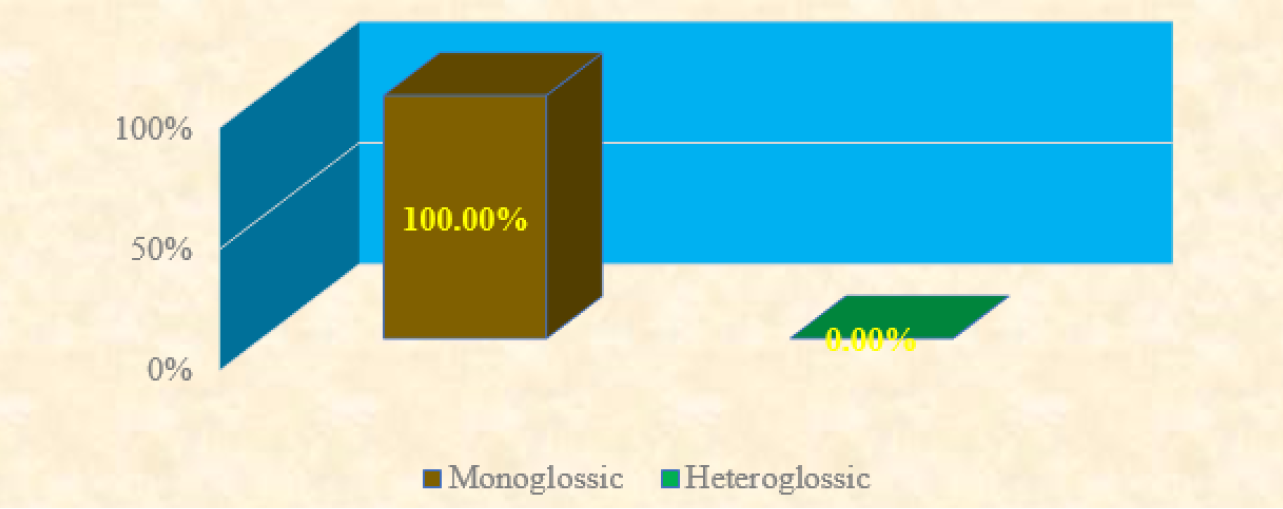
The quantitative analysis of the engagement category and its subcategories is displayed in the Table 3. These frequencies are represented in the Figure 3.
The quantitative analysis of the engagement category in the political discourse in Arabic language shows monoglossic forms of defamatory utterances are more common than the heteroglossic form. This tendency can be explained by the main goal of defamation that is certainty, assertiveness, authoritative positioning, and maximization of the damage of a person's reputation.
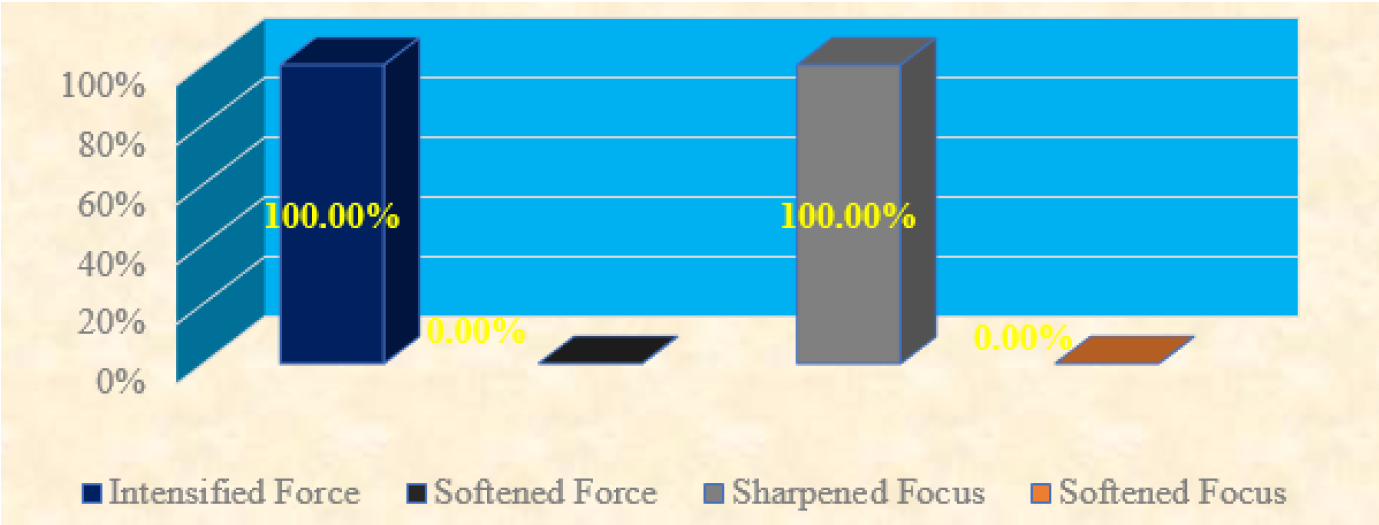
The quantitative analysis of the use of the graduation grouping in the Arabic biased discussion is reflected in Table 4. The frequencies of the subcategories of graduation are represented in the Figure 4.
‘The quantitative analysis of the graduation category in Arabic political discourse shows that the strengthened force and sharpened focus are more often used in the performing of the defamatory utterances, more often than the softened force and softened focus. Justification can be made on the following points:
Firstly, defamation is used to maximize the damage that the target has been damaged by rather than mitigate. Consequently, the intensification of the force reinforces the power and the emotional force of the negative evaluation and the sharpening of the focus introduces the targeted politician as a prototypical type of corruption, immorality and failure. Thus, in the heightened force and sharp focus, the negativity and defamatory nature of the evaluation is increased. Secondly, the increased intensity and the sharpened focus makes the defamatory claim more persuasive and more assertive. Therefore, the speaker can bring his utterance with a more assertive, and persuasive manner. It also influences the audience to see the defamatory claim as the given fact instead of just opinion. Moreover, the power and sharp focalization that has been increased close down alternatives of interpretation of the defamatory claim. It allows the speakers to pass their defamation against the other person as some negative evaluation that cannot be denied.
Table 3: The frequency and Percentage of Monoglossic and the Heteroglossic Forms in Defamatory Utterances
No.
The Category of Engagement in the Arabic Political Discourse
The Subcategory Type
Frequency
Percentage
1.
Monoglossic
3
100.00
2.
Heteroglossic
0
0.00
Total
3
100.00
Table 4: The Frequency and Percentage of Force and Focus of Defamatory Utterances in the Arabic Political Discourse
No.
The Category of Graduation in the Arabic Political Discourse
The Subcategory Type
Frequency
Percentage
Total
1.
Intensified Force
3
100.00
3
100.00
2.
Softened Force
0
0.00
3.
Sharpened Focus
3
100.00
3
100.00
4.
Softened Focus
0
0.00
Figure 3: The Use of Monoglossic and Heteroglossic Forms in Performing Defamation in the Arabic Political Discourse
Figure 4: The Use of Intensified Force and Sharpened Focus in Performing Defamation in the Arabic Political Discourse
CONCLUSION
As the current paper concludes, the strategy of creating defamatory utterances depends on certain pragmatic strategies. A good example of such strategies is the application of impoliteness mechanisms where speakers can use the mechanisms to convey defamatory meanings which intentionally damage the reputation of the person being attacked. The results also show that some impoliteness approaches are more commonly used in implementing the defamatory language in comparison to others. Specifically, the bald on record impoliteness approach and the positive impoliteness strategy turn out to be the most frequently employed strategies in the performance of defamatory utterances in the political discourse.
The findings also reveal that, most speakers, and particularly politicians, use the judgement subcategory of attitude to express defamatory utterances. Defamatory statements are mostly administered in monoglossic and not in heteroglossic way. This tendency may be attributed to the fact that the speakers tend to express their charges in a firm, authoritative and assertive way. Moreover, defamatory utterances are usually generated with more force and a sharper focus, as it is shown in the analysis. The above features make the defamation more impactful, forceful, categorical, and destructive to the reputation of the targeted person.
REFERENCES
Leflar R.A. “Radio and TV defamation: ‘fault’ or strict liability?” Ohio State Law Journal, vol. 15, no. 1, 1954, pp. 252–272.
Evans K.R. “Defamation in broadcasting.” Dalhousie Law Journal, vol. 5, no. 3, 1979, pp. 659–693.
Haugh M. et al. “Introduction: directions in sociopragmatics.” The Cambridge Handbook of Sociopragmatics, edited by M. Haugh et al., Cambridge University Press, 2021, pp. 1–12.
Austin J.L. How to do things with words. Oxford University Press, 1962.
Brown R., Gilman A. “The pronouns of power and solidarity.” Style in Language, edited by T.A. Sebeok, MIT Press, 1960, pp. 253–276.
Lakoff R. “The logic of politeness: or, minding your p’s and q’s.” Papers from the 9th Regional Meeting of the Chicago Linguistic Society, Chicago Linguistic Society, 1973, pp. 292–305.
Leech G. Language and tact. Linguistic Agency, University of Trier, 1977.
Holmes J. “Sociolinguistics vs. pragmatics.” Pragmatics and Its Interfaces, edited by C. Ilie and N.R. Norrick, John Benjamins, 2018, pp. 11–32.
Fu H.L., Cullen R. “Defamation law in the People’s Republic of China.” The Transnational Lawyer, vol. 11, no. 1, 1998, pp. 1–22.
Branscomb M.J. “Liability and damages in libel and slander law.” February 2025.
Cavico F.J., Mujtaba B.G. “Defamation by slander and libel in the workplace and recommendations to avoid legal liability.” Public Organization Review, vol. 20, no. 1, 2018, pp. 79–94. https://doi.org/10.1007/s11115-018-0424-8.
McGonagle T. et al.Freedom of expression and defamation: a study of the case law of the European Court of Human Rights. Council of Europe, 2016.
Shuy R. “Defamation, language and linguistics.” Handbook of Communication in the Legal Sphere, edited by J. Visconti, De Gruyter Mouton, 2018, pp. 321–338.
Hudson D.L. “Anti-SLAPP coverage and the First Amendment: hurdles to defamation suits in political campaigns.” American University Law Review, vol. 69, no. 5, 2020, pp. 1541–1558.
All papers should be submitted electronically. All submitted manuscripts must be original work that is not under submission at another journal or under consideration for publication in another form, such as a monograph or chapter of a book. Authors of submitted papers are obligated not to submit their paper for publication elsewhere until an editorial decision is rendered on their submission. Further, authors of accepted papers are prohibited from publishing the results in other publications that appear before the paper is published in the Journal unless they receive approval for doing so from the Editor-In-Chief.
Himalayan Journal of Education and Literature open access articles are licensed under a Creative Commons Attribution-Share A like 4.0 International License. This license lets the audience to give appropriate credit, provide a link to the license, and indicate if changes were made and if they remix, transform, or build upon the material, they must distribute contributions under the same license as the original.
Recommended Articles
Research Article
The Effect of Practicing Critical Thinking Skills on Undergraduates English Learners: Teachers’ Perspective
Azza Elmadani,
...
Shiraz Al-Ali
Published: 15/03/2026
Download PDF
Cite
x
APA
Elmadani, A., Hussein, J. A. T. & Al-Ali, S. (2026). The Effect of Practicing Critical Thinking Skills on Undergraduates English Learners: Teachers’ Perspective. Himalayan Journal of Education and Literature, 7(1), 1-5.
MLA
Elmadani, Azza, Jehan Adli Tawfig Hussein and Shiraz Al-Ali. "The Effect of Practicing Critical Thinking Skills on Undergraduates English Learners: Teachers’ Perspective." Himalayan Journal of Education and Literature 7.1 (2026): 1-5.
Chicago
Elmadani, Azza, Jehan Adli Tawfig Hussein and Shiraz Al-Ali. "The Effect of Practicing Critical Thinking Skills on Undergraduates English Learners: Teachers’ Perspective." Himalayan Journal of Education and Literature 7, no. 1 (2026): 1-5.
Harvard
Elmadani, A., Hussein, J. A. T. and Al-Ali, S. (2026) 'The Effect of Practicing Critical Thinking Skills on Undergraduates English Learners: Teachers’ Perspective' Himalayan Journal of Education and Literature 7(1), pp. 1-5.
Vancouver
Elmadani A, Hussein JAT, Al-Ali S. The Effect of Practicing Critical Thinking Skills on Undergraduates English Learners: Teachers’ Perspective. Himalayan Journal of Education and Literature. 2026 Jan;7(1):1-5.
Download PDF
Research Article
Perceptions of Adolescent Pregnancy and Early Motherhood
Lucy Fonjong Udikoh,
Tamfuchia Ferdinard Baba
Published: 30/12/2020
Download PDF
Cite
x
APA
Fonjong Udikoh, L. & Ferdinard Baba, T. (2020). Perceptions of Adolescent Pregnancy and Early Motherhood. Himalayan Journal of Education and Literature, 1(1), 1-7.
MLA
Fonjong Udikoh, Lucy and Tamfuchia Ferdinard Baba. "Perceptions of Adolescent Pregnancy and Early Motherhood." Himalayan Journal of Education and Literature 1.1 (2020): 1-7.
Chicago
Fonjong Udikoh, Lucy and Tamfuchia Ferdinard Baba. "Perceptions of Adolescent Pregnancy and Early Motherhood." Himalayan Journal of Education and Literature 1, no. 1 (2020): 1-7.
Harvard
Fonjong Udikoh, L. and Ferdinard Baba, T. (2020) 'Perceptions of Adolescent Pregnancy and Early Motherhood' Himalayan Journal of Education and Literature 1(1), pp. 1-7.
Vancouver
Fonjong Udikoh L, Ferdinard Baba T. Perceptions of Adolescent Pregnancy and Early Motherhood. Himalayan Journal of Education and Literature. 2020 Jul;1(1):1-7.
Download PDF
Research Article
Interaction of Modern Literature-Paintings and Poetry, Storytelling, Literature
Jackline Njeri Murimi
Published: 27/01/2021
Download PDF
Cite
x
APA
Njeri Murimi, J. (2021). Interaction of Modern Literature-Paintings and Poetry, Storytelling, Literature. Himalayan Journal of Education and Literature, 2(1), 1-5.
MLA
Njeri Murimi, Jackline. "Interaction of Modern Literature-Paintings and Poetry, Storytelling, Literature." Himalayan Journal of Education and Literature 2.1 (2021): 1-5.
Chicago
Njeri Murimi, Jackline. "Interaction of Modern Literature-Paintings and Poetry, Storytelling, Literature." Himalayan Journal of Education and Literature 2, no. 1 (2021): 1-5.
Harvard
Njeri Murimi, J. (2021) 'Interaction of Modern Literature-Paintings and Poetry, Storytelling, Literature' Himalayan Journal of Education and Literature 2(1), pp. 1-5.
Vancouver
Njeri Murimi J. Interaction of Modern Literature-Paintings and Poetry, Storytelling, Literature. Himalayan Journal of Education and Literature. 2021 Jan;2(1):1-5.
Download PDF
Research Article
Understanding Regional Spaces vis-à-vis “the” Indian Space: A Study of Récits
Himanshu Parmar
Published: 10/02/2026
Download PDF
Cite
x
APA
Parmar, H. (2026). Understanding Regional Spaces vis-à-vis “the” Indian Space: A Study of Récits. Himalayan Journal of Education and Literature, 7(1), 1-5.
MLA
Parmar, Himanshu. "Understanding Regional Spaces vis-à-vis “the” Indian Space: A Study of Récits." Himalayan Journal of Education and Literature 7.1 (2026): 1-5.
Chicago
Parmar, Himanshu. "Understanding Regional Spaces vis-à-vis “the” Indian Space: A Study of Récits." Himalayan Journal of Education and Literature 7, no. 1 (2026): 1-5.
Harvard
Parmar, H. (2026) 'Understanding Regional Spaces vis-à-vis “the” Indian Space: A Study of Récits' Himalayan Journal of Education and Literature 7(1), pp. 1-5.
Vancouver
Parmar H. Understanding Regional Spaces vis-à-vis “the” Indian Space: A Study of Récits. Himalayan Journal of Education and Literature. 2026 Jan;7(1):1-5.
Hussain, S. J. & Jasim, B. Y. (2026). Defamation in Selected Televised Arabic Political Interviews: A Socio-Pragmatic Perspective. Himalayan Journal of Education and Literature, 7(1), 1-8.
MLA
Hussain, Shahad Jawad and Basim Yahya Jasim. "Defamation in Selected Televised Arabic Political Interviews: A Socio-Pragmatic Perspective." Himalayan Journal of Education and Literature 7.1 (2026): 1-8.
Chicago
Hussain, Shahad Jawad and Basim Yahya Jasim. "Defamation in Selected Televised Arabic Political Interviews: A Socio-Pragmatic Perspective." Himalayan Journal of Education and Literature 7, no. 1 (2026): 1-8.
Harvard
Hussain, S. J. and Jasim, B. Y. (2026) 'Defamation in Selected Televised Arabic Political Interviews: A Socio-Pragmatic Perspective' Himalayan Journal of Education and Literature 7(1), pp. 1-8.
Vancouver
Hussain SJ, Jasim BY. Defamation in Selected Televised Arabic Political Interviews: A Socio-Pragmatic Perspective. Himalayan Journal of Education and Literature. 2026 Jan;7(1):1-8.


 Download PDF
 Download XML