This research aims to explore the conceptual framework of information processing in students based on their learning style preferences, specifically focusing on visual, auditory, and kinesthetic learning styles. We outline the stages of information processing, starting from the sensory register, attention, perception, rehearsal, short-term memory, retrieval, to long-term memory and encoding. Students with a visual learning style tend to process mathematical information through visual representation, accessing mental images to solve problems in the short term, and storing mathematical concepts in visual form for long-term understanding. Auditory learners are more responsive to auditory information, using oral explanations to build understanding and storing mathematical concepts in auditory form for long-term comprehension. Kinesthetic learners tend to process information through physical experiences, involving movement or object manipulation for short-term understanding, and storing mathematical concepts in the form of physical experiences or movements for long-term comprehension. The conclusion based on the explanations is that learning styles preferences play a crucial role in how they process mathematical information.
Keywords
Information Processing
Conceptual Framework
Mathematics Learning
Learning Styles Preferences
INTRODUCTION
Education is considered one of the tools to realize a quality society [1]. Therefore, education becomes a crucial aspect in the development of the potential of each individual. In the context of education, learning is the process of interaction between learners, educators, and learning resources within a learning environment [2-6]. Learning is a fundamental need that every individual must acquire [7]. According to Robert M. Gagne, learning is a set of cognitive processes that transform the nature of stimuli from the environment into several stages of information processing needed to acquire new capacities [8-9].
In general, the cognitive theory perspective asserts that the understanding of learning and education involves efforts focused on the processes of forming memory, storing and processing information, emotions, and aspects related to intellectual abilities. Thus, learning is interpreted as an activity that involves highly complex and comprehensive thinking processes [10]. According to Näätänen, Petersson, and Sani, learning is the process of acquiring information, processing information, storing information, and recalling information controlled by the brain [11-13]. Therefore, it can be concluded that learning is a cognitive process that occurs when the brain receives new information through stimuli, processes the information, shapes it, and stores it in memory.
The information processing theory requires sensory tools as modalities, and these modalities are later referred to as learning styles [14]. Modality preferences have received the greatest attention in educational research and practice [14]. According to Rahman et al learning styles are individual characteristics that influence how individuals acquire and absorb information in their environment [15]. Meanwhile, according to Chatib, learning styles are the ways information enters the brain through the senses one possesses [16]. Furthermore, Coffield et al. argue that learning styles reflect deep features of cognitive structures, including patterns of abilities [17]. According to Bakri, Hartati, and Wassahua, learning styles are a combination of how someone absorbs, organizes, and processes information [18-20]. From these definitions, it can be concluded that learning styles are a combination of learners' patterns of abilities in absorbing, processing, storing, and conveying information in the learning process.
Reality shows that in learning, each student differs in performance levels, learning speed, and learning styles. These differences in learning styles indicate the easiest way for students to absorb information during the learning process [21]. For example, visual learners emphasize the presentation of information visually [22-24], auditory learners emphasize the presentation of information through verbal means [25], and kinesthetic learners emphasize direct practical activities during learning [26]. This is consistent with Darmadi's opinion that information stored in short-term memory can be auditory, visual, or semantic, depending on the type of information or task experienced by an individual [27]. Information stored in long-term memory can be encoded acoustically, visually, and semantically. Auditory code is related to sound, visual code is related to images, and semantic code is related to meaning [28].
Mathematics is one of the subjects that plays a central role in fostering critical and analytical thinking. However, each student has a different learning style, which can influence how they process information, especially in solving mathematical problems. The importance of understanding students' information processing patterns based on their learning styles emerges as a challenge that needs to be addressed in efforts to improve the effectiveness of mathematics learning. Learning styles encompass individual preferences for learning methods, organizing information, and problem-solving strategies.
Based on previous research conducted by Kusaeri and Agustina et al it is known that student’s process information based on their sensory modalities in different ways [29-30]. N. Azizah et al. found that visualizer cognitive style tends to solve conceptual understanding problems with a more focused approach on visual representation. They outline structured plans and convey information in the form of images [31]. The research findings of Davis indicate that an increased understanding of the relationship between learning styles and memory appears to help learners gain a better understanding of how to maximize the benefits of preferred learning styles and how to store information in long-term memory [32].
Although these findings provide initial understanding, they have not fully disclosed how this information enters the students' cognitive domain. The three researchers only investigated how students process information with a focus on sensory modalities but did not provide details about the journey of information into the cognitive domain. Therefore, this research aims to fill this gap by delving deeper into the stages of information processing in the minds of students, particularly regarding how information is absorbed and integrated into their cognitive aspects. By understanding this process, it is expected to establish a more comprehensive conceptual framework to guide the development of more effective learning strategies that align with the diverse learning styles of students.
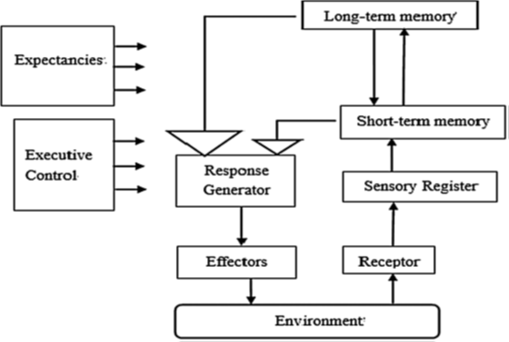
Based on the existing conceptual frameworks proposed by Gagne and Atkinson and Shiffrin, they remain general, and no specific framework has been identified based on information modalities, particularly in the context of learning styles. Presented below is a conceptual framework based on Gagne [33].
Figur 1. Gagne's Information Processing Model
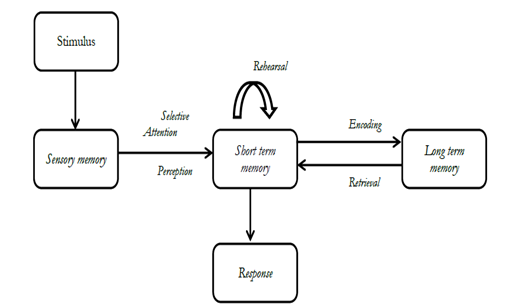
The general information processing model is presented as depicted in Figure 2. The information processing model is designed to aid in understanding the internal schema or process of an individual's thinking that occurs within the human brain or mind. The information processing model, as shown in Figure 2 by Atkinson & Shiffrin, is as follows:
The conceptual framework of information processing refers to the way information is processed in the human
Figure 1: Gagne's Information Processing Model
Figure 2: Atkinson and Shiffrin's Information Processing Model [34]
mind. It is an abstract model that elucidates how humans gather, organize, store, retrieve, and utilize information. This conceptual framework is valuable for understanding how the human brain operates and why people react to information in certain ways. It is essential to delve deeper into the conceptual framework of information processing based on students' learning styles. Therefore, this research designs a conceptual framework focusing on students' information processing based on their learning styles. Learning styles, as the unique dimension of each individual, encompass visual, auditory, and kinesthetic aspects, all of which play a crucial role in understanding, remembering, and solving mathematical problems. By detailing the stages from sensory register, attention, perception, rehearsal, short-term memory, retrieval, to long-term memory and encoding, this research aims to investigate how students with different learning styles process information.
By developing a conceptual framework of information processing based on students' learning styles, this research aims to provide a deeper insight into how students respond to, store, and use mathematical information. Through this conceptual framework, it is expected to uncover a comprehensive understanding and new insights that can open the door to the development of more accurate and supportive learning methods for various learning styles of students.
MATERIALS AND METHODS
This research employs a qualitative approach with the grounded theory research design. The instruments utilized involve observation and open-ended interviews. Data analysis is conducted using the interactive analysis model concept developed by Miles & Huberman. This model categorizes three interactive streams occurring simultaneously, namely data reduction, data display, and conclution drawing/ verification [35].
RESULTS
Based on the research findings, a conceptual framework was discovered based on students' learning style preferences. The details of this conceptual framework are outlined below.
Result
Students with a visual learning style: Students with a visual learning style exhibit a unique information processing pattern in solving mathematical problems. From the beginning, in the sensory register, they quickly capture visual information from their surroundings, focusing on elements such as shape, color, and patterns related to the mathematical problem at hand. In the attention stage, the visual learners' attention is focused on images, diagrams, or concept maps that can help them better understand mathematical concepts. Their perception process involves interpreting images and visualizing concepts, where they can imagine mathematical elements in mental form and form an overall picture of the problem.
During the rehearsal stage, visual learners engage in visual representation of images or conceptual visualizations in mathematics to reinforce their understanding. They visualize the steps or relationships between these visual elements. Relevant visual information is then temporarily stored in short-term memory, allowing students to access images or visual representations that assist in solving mathematical problems in the short term.
When entering the retrieval stage, visual learners can retrieve information from their visual memory. They can recall images that help them solve mathematical problems. Ultimately, information that is relevant and significant is encoded into long-term memory in the form of visual representations that can be accessed in the long term. Students with a visual learning style tend to store mathematical concepts in visual form, providing a strong foundation for their long-term understanding.
Students with a auditory learning style
Students with an auditory learning style exhibit a distinctive information processing pattern when dealing with mathematical problems. In the sensory register stage, auditory learners rapidly absorb information through hearing. They may be more responsive to sounds and oral explanations, which are immediately noticed in their attention. In this stage, the attention of auditory students is focused on sounds or keywords related to the mathematical concepts being studied.
Upon entering the perception stage, auditory students build their understanding through hearing and comprehend mathematical concepts through oral explanations. They can imagine the steps or processes of mathematics through the sounds they hear, forming a general picture of the problem. In the rehearsal stage, auditory learners tend to perform oral representation of information or problem-solving steps, repeating words or sounds related to the concepts.
Relevant and significant information is stored in the short-term memory of auditory students. They can access this information through sounds or words they remember. In the retrieval stage, auditory students can retrieve information from their oral memory, using sounds or explanations they recall to solve mathematical problems. Ultimately, information deemed important is encoded into long-term memory in the form of sounds or oral concepts that can be remembered in the long term. Students with an auditory learning style tend to store mathematical concepts in the form of sounds, providing a strong foundation for their long-term understanding.
Students with a kinestetic learning style
Students with a kinesthetic learning style exhibit a distinct information processing pattern when facing mathematical problems. In the sensory register stage, kinesthetic students quickly respond to information through physical experiences and touch. They are more focused on physical objects or manipulates related to the mathematical problems they encounter. When entering the attention stage, kinesthetic students tend to focus on physical activities or direct practical experiences. They can more easily engage in learning mathematics if it involves movement or actions that directly involve their bodies. In the perception stage, kinesthetic students build their understanding through physical experiences and object manipulation. They create mental images through direct actions, imagining mathematical processes through movement or touch.
In the rehearsal stage, kinesthetic learners repeat physical actions or object manipulations related to problem-solving steps. They may prefer to move or engage in physical activities as a way to understand mathematical concepts. Relevant information is stored in their short-term memory, allowing quick access through remembered actions or movements.
The retrieval stage involves kinesthetic students retrieving information from their kinesthetic memory. They use physical experiences or movements as keys to retrieve information from memory. Information deemed important and significant is encoded into long-term memory in the form of physical experiences or movements that can be remembered in the long term.
Based on the above data, sensory memory records information or stimuli entering through one or a combination of the senses, namely visually through the eyes, auditory through the ears, olfactory through the nose, gustatory through the tongue, and tactually through the skin [36]. Furthermore, Atkinson & Shiffrin [37] clarify that when a stimulus is presented, there is a direct
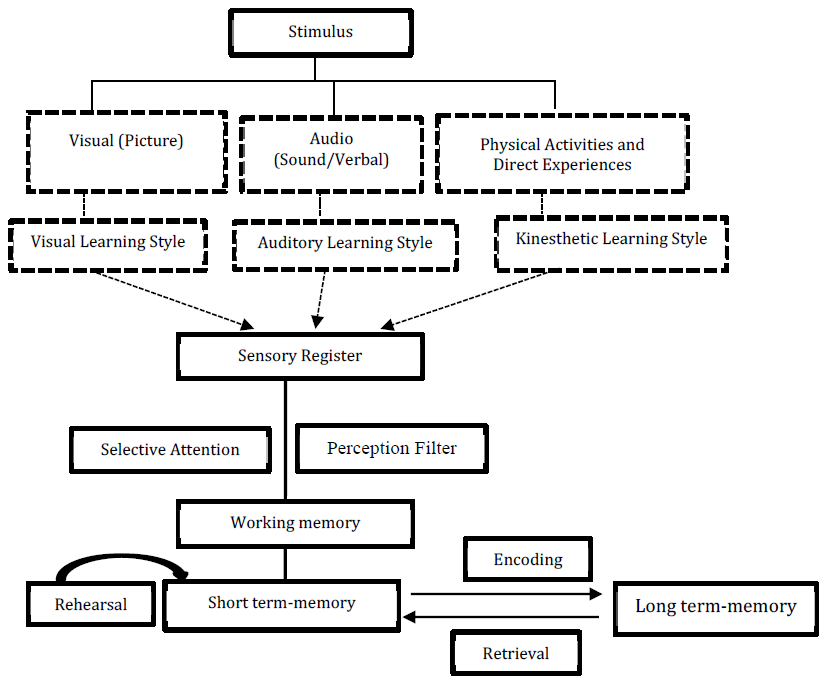
Figure 3: Conceptual Framework of the Information Processing Model
registration of that stimulus in the corresponding sensory dimension. According to Hitipiew, the processing of information begins with the presence of a stimulus or information entering the sensory memory/sensory register through the sensory organs [38]. Information entering the sensory register will then be selected (selective attention), information that is not attended to will be immediately forgotten, while information that receives attention will be forwarded to short-term memory. The result of information selection will generate perception [39].
When information continues to receive attention and there is frequent rehearsal (repetition), the information that has been perceived will enter long-term memory. After being in long-term memory, information can be retrieved (recall of previously stored information) through specific strategies, or the information will be forgotten (failed or cannot be retrieved) due to deficiencies in the memory system or its storage [39].
Understanding mathematical learning styles can help modify effective teaching strategies [40]. Because learning styles influence how students choose to access, process, and assimilate the information they receive. However, this does not mean that the way of processing and processing information is singular, meaning that it depends on their dominant learning style preferences, but they still involve other learning styles.
These findings highlight the importance of understanding students' learning style preferences in mathematics learning. By aligning teaching methods with each student's learning style, teachers can enhance the effectiveness of learning and understanding mathematical concepts. This approach facilitates a more effective and comprehensive learning experience, taking into account the uniqueness of each student in processing information. Additionally, integrating learning strategies that match learning styles can help students retain and recall mathematical concepts in the long term.
Based on the presentation of this data, a conceptual framework of information processing based on learning styles can be depicted.
Figure 3: Conceptual Framework of the Information Processing Model
registration of that stimulus in the corresponding sensory dimension. According to Hitipiew, the processing of information begins with the presence of a stimulus or information entering the sensory memory/sensory register through the sensory organs [38]. Information entering the sensory register will then be selected (selective attention), information that is not attended to will be immediately forgotten, while information that receives attention will be forwarded to short-term memory. The result of information selection will generate perception [39].
When information continues to receive attention and there is frequent rehearsal (repetition), the information that has been perceived will enter long-term memory. After being in long-term memory, information can be retrieved (recall of previously stored information) through specific strategies, or the information will be forgotten (failed or cannot be retrieved) due to deficiencies in the memory system or its storage [39].
Understanding mathematical learning styles can help modify effective teaching strategies [40]. Because learning styles influence how students choose to access, process, and assimilate the information they receive. However, this does not mean that the way of processing and processing information is singular, meaning that it depends on their dominant learning style preferences, but they still involve other learning styles.
These findings highlight the importance of understanding students' learning style preferences in mathematics learning. By aligning teaching methods with each student's learning style, teachers can enhance the effectiveness of learning and understanding mathematical concepts. This approach facilitates a more effective and comprehensive learning experience, taking into account the uniqueness of each student in processing information. Additionally, integrating learning strategies that match learning styles can help students retain and recall mathematical concepts in the long term.
Based on the presentation of this data, a conceptual framework of information processing based on learning styles can be depicted.
CONCLUSION
Students' learning styles play a crucial role in how they process and understand information, especially in the context of learning mathematics. Based on the provided explanations of visual, auditory, and kinesthetic learning style preferences, it can be concluded that each student has unique preferences in processing mathematical information.
Visual Learning Style: Students with a visual learning style tend to capture and process mathematical information through visual elements. They form understanding through interpreting images, visualizing concepts, and using visual representations. Mathematical concepts are stored in the form of visual images, providing a solid foundation for long-term understanding.
Auditory Learning Style: Students with an auditory learning style are more responsive to information conveyed through hearing. They understand mathematical concepts through sounds, verbal explanations, and the repetition of related words or sounds. Mathematical concepts are stored in the form of sounds, providing a strong foundation for long-term understanding through auditory memory.
Kinesthetic Learning Style: Students with a kinesthetic learning style prefer to involve physical experiences and direct activities in learning mathematics. They build understanding through object manipulation, body movements, and direct practical experiences. Mathematical concepts are stored in the form of physical experiences or movements, providing a strong foundation for long-term understanding through kinesthetic memory.
With this understanding, an instructional approach that considers students' learning styles can enhance the effectiveness of teaching and the understanding of mathematical concepts. Teachers can integrate learning strategies that align with students' learning style preferences to facilitate more effective and comprehensive learning experiences.
REFERENCE
Danial, “Keterlaksanaan Kurikulum 2013 dalam Mata Pelajaran Matematika di SMP Negeri 33 makassar,” vol. 01, no. 01, pp. 27–32, 2020.
Undang-Undang Republik Indonesia, “Undang-Undang Republik Indonesia Nomor 20 Tahun 2003 Tentang Sistem Pendidikan Nasional.” Jakarta, pp. 1–33, 2003.
M. S. Hanafy, “Konsep Belajar Dan Pembelajaran,” Lentera Pendidik. J. Ilmu Tarb. dan Kegur., vol. 17, no. 1, pp. 66–79, 2014.
M. Suardi, Belajar dan Pembelajaran, 1st ed. Yogyakarta: Deepublish, 2018.
B. Warsita, “Teori Belajar Robert M. Gagne Dan Implikasinya Pada Pentingnya Pusat Sumber Belajar,” J. Teknodik, vol. XII, no. 1, pp. 064–078, 2018.
A. Djamaluddin and Wardana, Belajar Dan Pembelajaran. 2019.
T. Nurul Hidayah, Danial, “Diagnostik Kesulitan Belajar Mahasiswa Pada Mata Kuliah Kalkulus Program Studi Tadris Matematika IAIM Sinjai,” JTMT J. Tadris Mat., vol. 2, no. 2, pp. 31–39, 2021.
I. Akib, Implementasi teori belajar Robert Gagne dalam pembelajaran konsep matematika, no. February. 2016.
E. Yayuk, Pembelajaran Matematika Sekolah Dasar, vol. 1. UMMPress, 2019.
K. Ni’amah and S. M. Hafidzulloh, “Teori Pembelajaran Kognivistik dan Aplikasinya dalam Pendidikan Islam,” J. Ilm. Mhs. Raushan Fikr, vol. 10, no. 2, pp. 204–217, 2021.
R. Näätänen, “The role of attention in auditory information processing as revealed by event-related potentials and other brain measures of cognitive function,” Behav. Brain Sci., vol. 13, no. 2, pp. 201–233, 1990.
K. M. Petersson, Learning and memory in the human brain. Karolinska Institutet (Sweden), 2005.
R. A. Sani, Inovasi pembelajaran. Bumi Aksara, 2022.
J. M. Lodge, L. Hansen, and D. Cottrell, “Modality preference and learning style theories: rethinking the role of sensory modality in learning,” Learn. Res. Pract., vol. 2, no. 1, pp. 4–17, 2016.
A. Rahman, A. S. Ahmar, and Rusli, “The influence of cooperative learning models on learning outcomes based on students’ learning styles,” World Trans. Eng. Technol. Educ., vol. 14, no. 3, pp. 425–430, 2016.
M. Chatib, Sekolahnya manusia: sekolah berbasis multiple intelligences di Indonesia. Kaifa, 2009.
F. Coffield, D. Moseley, E. Hall, and K. Ecclestone, “Should we be using learning styles? What research has to say to practice,” 2004.
H. Bakri, “Pemahaman tentang gaya belajar,” J. Stud. Pendidik., vol. 1, 2009.
L. Hartati, “Pengaruh gaya belajar dan sikap siswa pada pelajaran matematika terhadap hasil belajar matematika,” Form. J. Ilm. Pendidik. MIPA, vol. 3, no. 3, 2015.
S. Wassahua, “Analisis gaya belajar siswa terhadap hasil belajar matematika pada materi himpunan siswa kelas VII SMP Negeri Karang Jaya Kecamatan Namlea Kabupaten Buru,” Mat. dan Pembelajaran, vol. 4, no. 1, pp. 84–104, 2016.
J. O. Papilaya and N. Huliselan, “Identifikasi Gaya Belajar Mahasiswa,” J. Psikol. Undip, vol. 15, no. 1, p. 56, 2016.
W. Schnotz, “Towards an integrated view of learning from text and visual displays,” Educ. Psychol. Rev., pp. 101–120, 2002.
H. Pashler, M. McDaniel, D. Rohrer, and R. Bjork, “Learning styles: Concepts and evidence,” Psychol. Sci. public Interes., vol. 9, no. 3, pp. 105–119, 2008.
B. A. Rogowsky, B. M. Calhoun, and P. Tallal, “Matching learning style to instructional method: Effects on comprehension.,” J. Educ. Psychol., vol. 107, no. 1, p. 64, 2015.
R. M. Felder, “Learning and teaching styles in engineering education,” 2002.
A. P. Gilakjani and S. M. Ahmadi, “Paper title: The effect of visual, auditory, and kinaesthetic learning styles on language teaching,” in International Conference on Social Science and Humanity, 2011, vol. 5, pp. 472–496.
D. Darmadi, “Model memori mahasiswa calon guru matematika dalam memahami definisi formal barisan konvergen,” J. Math Educ. Nusant. Wahana Publ. Karya Tulis Ilm. di Bid. Pendidik. Mat., vol. 2, no. 02, pp. 93–118, 2016.
D. Darmadi and S. Sanusi, “Mudah Memahami Matematika Dengan Visualisasi.” UNIPMA Press, 2022.
K. Kusaeri, “Proses Berpikir Siswa dalam Menyelesaikan Masalah Matematika Berdasarkan Teori Pemrosesan Informasi,” Suska J. Math. Educ., vol. 4, no. 2, p. 125, 2018.
I. Agustina, T. Nusantara, and S. Irawati, “Proses Berpikir Siswa SMA dalam Menyelesaikan Soal Cerita Berdasarkan Teori Pemrosesan Informasi,” J. Pendidik. Teor. Penelitian, dan Pengemb., vol. 5, no. 10, p. 1503, 2021.
N. Azizah, B. Budiyono, and S. Siswanto, “Thinking process in understanding the pythagorean theorem: An analysis based on visualizer and verbalizer cognitive style,” in AIP Conference Proceedings, 2022, vol. 2566, no. 1.
S. E. Davis, “Learning styles and memory,” Inst. Learn. Styles J., vol. 1, no. 1, pp. 46–51, 2007.
R. M. Gagne, Essentials of learning for instruction. Dryden Press, 1975.
R. C. Atkinson and R. M. Shiffrin, “The control of short-term memory,” Sci. Am., vol. 225, no. 2, pp. 82–91, 1971.
M. B. Miles and A. M. Huberman, “Drawing Valid Meaning from Qualitative Data: Toward a Shared Craft,” Educ. Res., vol. 13, no. 5, pp. 20–30, 1984.
M. Bhinnety, “Struktur dan proses memori,” Bul. Psikol., vol. 16, no. 2, 2008.
R. C. Atkinson and R. M. Shiffrin, “Human memory: A proposed system and its control processes,” in Psychology of learning and motivation, vol. 2, Elsevier, 1968, pp. 89–195.
I. Hitipeuw, “Belajar dan Pembelajaran,” Malang Fak. Ilmu Pendidik. Univ. Negeri Malang, 2009.
K. Kusaeri, S. Lailiyah, Y. Arrifadah, and N. Hidayat, “Proses berpikir siswa dalam menyelesaikan masalah matematika berdasarkan teori pemrosesan informasi,” Suska J. Math. Educ., vol. 4, no. 2, pp. 125–141, 2018.
M. F. Mahmad, M. H. Yee, B. C. Kok, N. Azid, and S. Fuada, “Teaching Styles Pattern: A Survey of Mathematics Teacher’s Preferences in Primary School.,” Malaysian J. Math. Sci., vol. 17, no. 2, 2023.
License
Creative Commons Attribution-NonCommercial-NoDerivatives 4.0 International License
All papers should be submitted electronically. All submitted manuscripts must be original work that is not under submission at another journal or under consideration for publication in another form, such as a monograph or chapter of a book. Authors of submitted papers are obligated not to submit their paper for publication elsewhere until an editorial decision is rendered on their submission. Further, authors of accepted papers are prohibited from publishing the results in other publications that appear before the paper is published in the Journal unless they receive approval for doing so from the Editor-In-Chief.
Himalayan Journal of Education and Literature open access articles are licensed under a Creative Commons Attribution-Share A like 4.0 International License. This license lets the audience to give appropriate credit, provide a link to the license, and indicate if changes were made and if they remix, transform, or build upon the material, they must distribute contributions under the same license as the original.
Recommended Articles
Research Article
The Effect of Practicing Critical Thinking Skills on Undergraduates English Learners: Teachers’ Perspective
Azza Elmadani,
...
Shiraz Al-Ali
Published: 15/03/2026
Download PDF
Cite
x
APA
Elmadani, A., Hussein, J. A. T. & Al-Ali, S. (2026). The Effect of Practicing Critical Thinking Skills on Undergraduates English Learners: Teachers’ Perspective. Himalayan Journal of Education and Literature, 7(1), 1-5.
MLA
Elmadani, Azza, Jehan Adli Tawfig Hussein and Shiraz Al-Ali. "The Effect of Practicing Critical Thinking Skills on Undergraduates English Learners: Teachers’ Perspective." Himalayan Journal of Education and Literature 7.1 (2026): 1-5.
Chicago
Elmadani, Azza, Jehan Adli Tawfig Hussein and Shiraz Al-Ali. "The Effect of Practicing Critical Thinking Skills on Undergraduates English Learners: Teachers’ Perspective." Himalayan Journal of Education and Literature 7, no. 1 (2026): 1-5.
Harvard
Elmadani, A., Hussein, J. A. T. and Al-Ali, S. (2026) 'The Effect of Practicing Critical Thinking Skills on Undergraduates English Learners: Teachers’ Perspective' Himalayan Journal of Education and Literature 7(1), pp. 1-5.
Vancouver
Elmadani A, Hussein JAT, Al-Ali S. The Effect of Practicing Critical Thinking Skills on Undergraduates English Learners: Teachers’ Perspective. Himalayan Journal of Education and Literature. 2026 Jan;7(1):1-5.
Download PDF
Research Article
Perceptions of Adolescent Pregnancy and Early Motherhood
Lucy Fonjong Udikoh,
Tamfuchia Ferdinard Baba
Published: 30/12/2020
Download PDF
Cite
x
APA
Fonjong Udikoh, L. & Ferdinard Baba, T. (2020). Perceptions of Adolescent Pregnancy and Early Motherhood. Himalayan Journal of Education and Literature, 1(1), 1-7.
MLA
Fonjong Udikoh, Lucy and Tamfuchia Ferdinard Baba. "Perceptions of Adolescent Pregnancy and Early Motherhood." Himalayan Journal of Education and Literature 1.1 (2020): 1-7.
Chicago
Fonjong Udikoh, Lucy and Tamfuchia Ferdinard Baba. "Perceptions of Adolescent Pregnancy and Early Motherhood." Himalayan Journal of Education and Literature 1, no. 1 (2020): 1-7.
Harvard
Fonjong Udikoh, L. and Ferdinard Baba, T. (2020) 'Perceptions of Adolescent Pregnancy and Early Motherhood' Himalayan Journal of Education and Literature 1(1), pp. 1-7.
Vancouver
Fonjong Udikoh L, Ferdinard Baba T. Perceptions of Adolescent Pregnancy and Early Motherhood. Himalayan Journal of Education and Literature. 2020 Jul;1(1):1-7.
Download PDF
Research Article
Interaction of Modern Literature-Paintings and Poetry, Storytelling, Literature
Jackline Njeri Murimi
Published: 27/01/2021
Download PDF
Cite
x
APA
Njeri Murimi, J. (2021). Interaction of Modern Literature-Paintings and Poetry, Storytelling, Literature. Himalayan Journal of Education and Literature, 2(1), 1-5.
MLA
Njeri Murimi, Jackline. "Interaction of Modern Literature-Paintings and Poetry, Storytelling, Literature." Himalayan Journal of Education and Literature 2.1 (2021): 1-5.
Chicago
Njeri Murimi, Jackline. "Interaction of Modern Literature-Paintings and Poetry, Storytelling, Literature." Himalayan Journal of Education and Literature 2, no. 1 (2021): 1-5.
Harvard
Njeri Murimi, J. (2021) 'Interaction of Modern Literature-Paintings and Poetry, Storytelling, Literature' Himalayan Journal of Education and Literature 2(1), pp. 1-5.
Vancouver
Njeri Murimi J. Interaction of Modern Literature-Paintings and Poetry, Storytelling, Literature. Himalayan Journal of Education and Literature. 2021 Jan;2(1):1-5.
Download PDF
Research Article
Understanding Regional Spaces vis-à-vis “the” Indian Space: A Study of Récits
Himanshu Parmar
Published: 10/02/2026
Download PDF
Cite
x
APA
Parmar, H. (2026). Understanding Regional Spaces vis-à-vis “the” Indian Space: A Study of Récits. Himalayan Journal of Education and Literature, 7(1), 1-5.
MLA
Parmar, Himanshu. "Understanding Regional Spaces vis-à-vis “the” Indian Space: A Study of Récits." Himalayan Journal of Education and Literature 7.1 (2026): 1-5.
Chicago
Parmar, Himanshu. "Understanding Regional Spaces vis-à-vis “the” Indian Space: A Study of Récits." Himalayan Journal of Education and Literature 7, no. 1 (2026): 1-5.
Harvard
Parmar, H. (2026) 'Understanding Regional Spaces vis-à-vis “the” Indian Space: A Study of Récits' Himalayan Journal of Education and Literature 7(1), pp. 1-5.
Vancouver
Parmar H. Understanding Regional Spaces vis-à-vis “the” Indian Space: A Study of Récits. Himalayan Journal of Education and Literature. 2026 Jan;7(1):1-5.
None, D., Upu, H. & Ihsan, H. (2023). Unraveling the Information Processing in Mathematics Learning Based on Learning Style Preferences. Himalayan Journal of Education and Literature, 4(2), 1-6.
MLA
None, Danial, Hamzah Upu and Hisyam Ihsan. "Unraveling the Information Processing in Mathematics Learning Based on Learning Style Preferences." Himalayan Journal of Education and Literature 4.2 (2023): 1-6.
Chicago
None, Danial, Hamzah Upu and Hisyam Ihsan. "Unraveling the Information Processing in Mathematics Learning Based on Learning Style Preferences." Himalayan Journal of Education and Literature 4, no. 2 (2023): 1-6.
Harvard
None, D., Upu, H. and Ihsan, H. (2023) 'Unraveling the Information Processing in Mathematics Learning Based on Learning Style Preferences' Himalayan Journal of Education and Literature 4(2), pp. 1-6.
Vancouver
Danial D, Upu H, Ihsan H. Unraveling the Information Processing in Mathematics Learning Based on Learning Style Preferences. Himalayan Journal of Education and Literature. 2023 Jul;4(2):1-6.



 Download PDF
 Download XML