Neurofibromatosis is an autosomal dominant disease with a wide variety of clinical manifestations. Neurofibromas are the characteristic lesions present in the patients. This disorder is associated with important anaesthetic considerations, mainly when neurofibromas occur in cervical region, leading to restricted neck movement, difficult laryngoscopy and tracheal intubation. We report the anaesthetic management of 37 year old patient K/C/O Neurofibromatosis with large neurofibromas in cervical region posted for open cholecystectomy under general anesthesia. We performed a brief review of literature with the aim of optimizing the anaesthetic management and reducing the number of complications associated with the systemic manifestations of this syndrome.
Keywords
Neurofibromatosis
Difficult Airway
Multisystem Involvement
Video Laryngoscopy
INTRODUCTION
Neurofibromatosis is an autosomal dominant disorder characterized by the formation of ectodermal and mesodermal tumors which can be divided into two groups with different clinical manifestations:
Neurofibromatosis 1
Neurofibromatosis 2
Neurofibromatosis 1 was first described in 1882 by Frederich von Recklinghausen and became known as von Recklinghausen’s disease. It presents no correlation with gender or ethnicity and has an incidence of 1 in 2500-3000 people per year throughout the world. The genetic mutation on chromosome 17 expresses the gene NF-1, which produces the defective neurofibromin protein in lower quantities. Neurofibromin plays a role in the control of cell division and tumor suppression. Seven characteristics have been identified for diagnosing Neurofibromatosis 1:
Six or more café-ou-lait spots > 5 mm in children or > 15 mm in post-puberty
Two or more neurofibroma of some type, or a plexiform neurofibroma
Axillary or inguinal freckles
Optical gliomas
Two or more Lisch nodules
Distinct bone lesions
First degree relative with Neurofibromatosis 1
The diagnosis is established with the presence of 2 or more of these characteristics.
Neurofibromatosis 2 occurs less frequently than type 1, with an incidence of 1 in 33000 - 40000 cases. It is an autosomal dominant disease, with genetic mutations on chromosome 22. Neurofibromatosis 2 affects both ectodermal and mesodermal tissues, and all systems of the body may be involved, similar to Neurofibromatosis 1. Neurofibromatosis has fundamental implications for anesthesiologist due to its broad clinical spectrum and multisystem involvement. Bulky neurofibromas in and around airway makes anesthetic management more difficult.
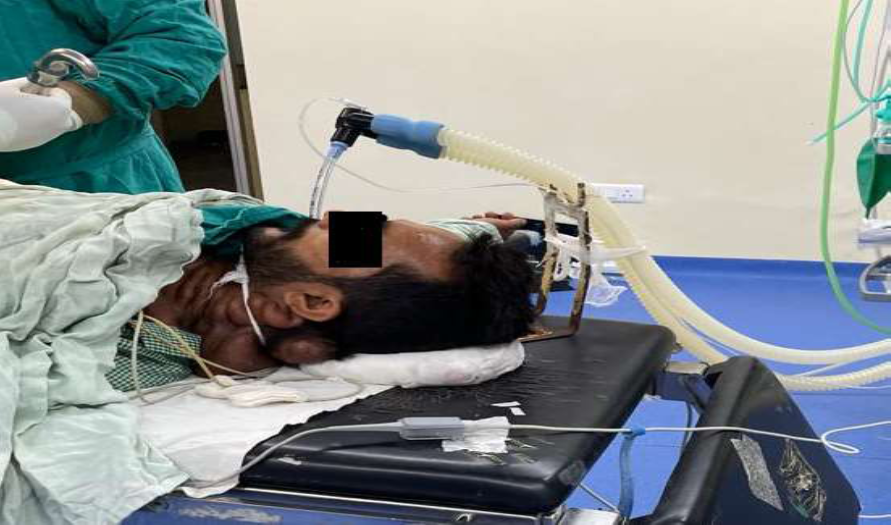
Figure 1: Cervical Neurofibromas Causing Restricted Neck Mobility in A Patient with Neurofibromatosis
Case Report
37-year-old-male, weight 54 kg, K/C/O Neurofibromatosis diagnosed with symptomatic cholelithiasis was posted for elective open cholecystectomy. Pre anesthetic and physical examination revealed bulky neurofibromas in cervical region along with axillary and inguinal freckling. Patient had H/O removal of neurofibromas in 1998 under local anesthesia after which there was gradual increase in size of neurofibromas. There was no H/O similar complaints in the family. All laboratory parameters and concerned investigations were within normal limits. On airway assessment MPS was grade III, edentulous, decreased buccal fat with large cervical neurofibromas causing restricted neck mobility with no H/O dysponea, dysphagia, voice change and symptoms suggesting spinal cord compression.
Difficult airway implications were discussed with patient and attendents and endocrionologist opinion was also taken preoperatively. Difficult airway cart was kept ready on day of surgery and patient was taken in OT with all standard monitoring (SpO2, NIBP, ECG, TEMPERATURE) attached.
Pre-induction vitals were WNL. I/V/O anticipated difficult airway leading anesthetist decided to do video laryngoscope guided check laryngoscopy under local anesthesia (10% lignocaine spray) and sedation (Inj. glycopyrolate 0.2mg iv, Inj. midazolam 1mg iv, Inj. Fentanyl 50 mcg iv). Vocal cords were visible on check laryngoscopy and post induction airway was secured with stylet guided CETT of 8mm ID under video laryngoscopy. Patient was maintained with nitrous oxide in oxygen with isoflurane.
Intra operative course was uneventful. Anesthesia was reversed with Inj. Neostigmine, inj. gylcopyrolate and patient was extubated fully awake. Patient shifted to PACU without any postoperative complications.
DISCUSSION
Approximately 5% of patients of NF-1 present manifestations of the disease in oral cavity which may provide hindrance to conventional orotracheal intubation making awake fiberoptic as a gold standard approach. Vertebral deformities and spinal neurofibromas make spinal and epidural techniques extremely difficult. Multisystemic involvement in Neurofibromatosis-1 requires special attention to I/O findings such as HTN related pheochromocytoma or renal artery stenosis along with identification of difficult airway predictors, therefore need arises for complete systemic assessment before selecting any anesthetic technique.
CONCLUSION
Although difficult airway remains a major challenge for anesthesiologist, a detailed pathological and clinical knowledge of neurofibromatosis is needed so that a systemic approach to perioperative assessment of these patients can result in rationale perioperative management.
Conflict of Interest
Nil.
REFERENCE
Hirsch, N.P. et al "Neurofibromatosis: clinical presentations and anaesthetic implications." Br. J. Anaesth., vol. 86, no. 4, 2001, pp. 555–64.
Hirbe, A.C. et al "Neurofibromatosis type 1: a multidisciplinary approach to care." Lancet Neurol., vol. 13, no. 8, 2014, pp. 834–43.
Fox, C.J. et al "Perioperative management of neurofibromatosis type 1." Ochsner J., vol. 12, no. 2, 2012, pp. 111–21.
Andersson, J. et al "NF1associated gastrointestinal stromal tumors have unique clinical, phenotypic, and genotypic characteristics." Am. J. Surg. Pathol., vol. 29, no. 9, 2005, pp. 1170–76.
Lakshiminarasimhaiah, G. et al "Anaesthetic implications in neurofibromatosis type 2." J. Clin. Diagn. Res., vol. 7, no. 12, 2013, pp. 3004–5.
Evans, D.G. et al "Neurofibromatosis type 2." J. Med. Genet., vol. 37, no. 12, 2000, pp. 897–904.
License
Creative Commons Attribution-NonCommercial-NoDerivatives 4.0 International License
All papers should be submitted electronically. All submitted manuscripts must be original work that is not under submission at another journal or under consideration for publication in another form, such as a monograph or chapter of a book. Authors of submitted papers are obligated not to submit their paper for publication elsewhere until an editorial decision is rendered on their submission. Further, authors of accepted papers are prohibited from publishing the results in other publications that appear before the paper is published in the Journal unless they receive approval for doing so from the Editor-In-Chief.
Himalayan Journal of Medicine and Surgery open access articles are licensed under a Creative Commons Attribution-Share A like 4.0 International License. This license lets the audience to give appropriate credit, provide a link to the license, and indicate if changes were made and if they remix, transform, or build upon the material, they must distribute contributions under the same license as the original.
Advertisement
Recommended Articles
Research Article
Effect of Land Degradation on Livelihood
Kemalo Abdulmalik,
Isreal Zewide
Published: 04/01/2024
Download PDF
Cite
x
APA
Abdulmalik, K. & Zewide, I. (2024). Effect of Land Degradation on Livelihood. Himalayan Journal of Medicine and Surgery, 5(1), 1-4.
MLA
Abdulmalik, Kemalo and Isreal Zewide. "Effect of Land Degradation on Livelihood." Himalayan Journal of Medicine and Surgery 5.1 (2024): 1-4.
Chicago
Abdulmalik, Kemalo and Isreal Zewide. "Effect of Land Degradation on Livelihood." Himalayan Journal of Medicine and Surgery 5, no. 1 (2024): 1-4.
Harvard
Abdulmalik, K. and Zewide, I. (2024) 'Effect of Land Degradation on Livelihood' Himalayan Journal of Medicine and Surgery 5(1), pp. 1-4.
Vancouver
Abdulmalik K, Zewide I. Effect of Land Degradation on Livelihood. Himalayan Journal of Medicine and Surgery. 2024 Jan;5(1):1-4.
Download PDF
Research Article
Gastric Cancer: A Comprehensive Review
Ali Shafeeq Neameh,
...
Hussein Riyadh Ali Shlaka
Published: 20/01/2026
Download PDF
Cite
x
APA
Neameh, A. S., Hatab, W. M. & Ali Shlaka, H. R. (2026). Gastric Cancer: A Comprehensive Review. Himalayan Journal of Medicine and Surgery, 7(1), 1-5.
MLA
Neameh, Ali S., Waleed M. Hatab and Hussein R. Ali Shlaka. "Gastric Cancer: A Comprehensive Review." Himalayan Journal of Medicine and Surgery 7.1 (2026): 1-5.
Chicago
Neameh, Ali S., Waleed M. Hatab and Hussein R. Ali Shlaka. "Gastric Cancer: A Comprehensive Review." Himalayan Journal of Medicine and Surgery 7, no. 1 (2026): 1-5.
Harvard
Neameh, A. S., Hatab, W. M. and Ali Shlaka, H. R. (2026) 'Gastric Cancer: A Comprehensive Review' Himalayan Journal of Medicine and Surgery 7(1), pp. 1-5.
Vancouver
Neameh AS, Hatab WM, Ali Shlaka HR. Gastric Cancer: A Comprehensive Review. Himalayan Journal of Medicine and Surgery. 2026 Jan;7(1):1-5.
Download PDF
Research Article
Mean Platelet Volume, Systemic Immune-Inflammation Index and Procalcitonin as Biomarkers in Streptococcal Acute Tonsillitis and Peritonsillar Abscess
Asaad Mezher Hussain,
...
Mohammed Khazaal Hashim
Published: 31/12/2025
Download PDF
Cite
x
APA
Mezher Hussain, A., Jaber Abed, S. & Khazaal Hashim, M. (2025). Mean Platelet Volume, Systemic Immune-Inflammation Index and Procalcitonin as Biomarkers in Streptococcal Acute Tonsillitis and Peritonsillar Abscess. Himalayan Journal of Medicine and Surgery, 6(2), 1-6.
MLA
Mezher Hussain, Asaad, Sattar Jaber Abed and Mohammed Khazaal Hashim. "Mean Platelet Volume, Systemic Immune-Inflammation Index and Procalcitonin as Biomarkers in Streptococcal Acute Tonsillitis and Peritonsillar Abscess." Himalayan Journal of Medicine and Surgery 6.2 (2025): 1-6.
Chicago
Mezher Hussain, Asaad, Sattar Jaber Abed and Mohammed Khazaal Hashim. "Mean Platelet Volume, Systemic Immune-Inflammation Index and Procalcitonin as Biomarkers in Streptococcal Acute Tonsillitis and Peritonsillar Abscess." Himalayan Journal of Medicine and Surgery 6, no. 2 (2025): 1-6.
Harvard
Mezher Hussain, A., Jaber Abed, S. and Khazaal Hashim, M. (2025) 'Mean Platelet Volume, Systemic Immune-Inflammation Index and Procalcitonin as Biomarkers in Streptococcal Acute Tonsillitis and Peritonsillar Abscess' Himalayan Journal of Medicine and Surgery 6(2), pp. 1-6.
Vancouver
Mezher Hussain A, Jaber Abed S, Khazaal Hashim M. Mean Platelet Volume, Systemic Immune-Inflammation Index and Procalcitonin as Biomarkers in Streptococcal Acute Tonsillitis and Peritonsillar Abscess. Himalayan Journal of Medicine and Surgery. 2025 Jul;6(2):1-6.
Download PDF
Research Article
Hospital-Based Study of Lower Respiratory Tract Infection Patterns in Children Less Than Five Years
Mustafa Elias Abdulqader,
...
Sirwa Raoof Rasheed
Published: 31/12/2025
Download PDF
Cite
x
APA
Abdulqader, M. E., Jehad, A. H. & Rasheed, S. R. (2025). Hospital-Based Study of Lower Respiratory Tract Infection Patterns in Children Less Than Five Years. Himalayan Journal of Medicine and Surgery, 6(2), 1-6.
MLA
Abdulqader, Mustafa Elias, Ahmed Hasan Jehad and Sirwa Raoof Rasheed. "Hospital-Based Study of Lower Respiratory Tract Infection Patterns in Children Less Than Five Years." Himalayan Journal of Medicine and Surgery 6.2 (2025): 1-6.
Chicago
Abdulqader, Mustafa Elias, Ahmed Hasan Jehad and Sirwa Raoof Rasheed. "Hospital-Based Study of Lower Respiratory Tract Infection Patterns in Children Less Than Five Years." Himalayan Journal of Medicine and Surgery 6, no. 2 (2025): 1-6.
Harvard
Abdulqader, M. E., Jehad, A. H. and Rasheed, S. R. (2025) 'Hospital-Based Study of Lower Respiratory Tract Infection Patterns in Children Less Than Five Years' Himalayan Journal of Medicine and Surgery 6(2), pp. 1-6.
Vancouver
Abdulqader ME, Jehad AH, Rasheed SR. Hospital-Based Study of Lower Respiratory Tract Infection Patterns in Children Less Than Five Years. Himalayan Journal of Medicine and Surgery. 2025 Jul;6(2):1-6.
Saphiya, L. & Sharma, N. (2022). Anesthetic Management of 37 Year Old Male K/C/O Neurofibromatosis with Large Neurofibromas in Cervical Region Posted for Open Cholecystectomy. Himalayan Journal of Medicine and Surgery, 3(1), 1-3.
MLA
Saphiya, Latesh and Nandini Sharma. "Anesthetic Management of 37 Year Old Male K/C/O Neurofibromatosis with Large Neurofibromas in Cervical Region Posted for Open Cholecystectomy." Himalayan Journal of Medicine and Surgery 3.1 (2022): 1-3.
Chicago
Saphiya, Latesh and Nandini Sharma. "Anesthetic Management of 37 Year Old Male K/C/O Neurofibromatosis with Large Neurofibromas in Cervical Region Posted for Open Cholecystectomy." Himalayan Journal of Medicine and Surgery 3, no. 1 (2022): 1-3.
Harvard
Saphiya, L. and Sharma, N. (2022) 'Anesthetic Management of 37 Year Old Male K/C/O Neurofibromatosis with Large Neurofibromas in Cervical Region Posted for Open Cholecystectomy' Himalayan Journal of Medicine and Surgery 3(1), pp. 1-3.
Vancouver
Saphiya L, Sharma N. Anesthetic Management of 37 Year Old Male K/C/O Neurofibromatosis with Large Neurofibromas in Cervical Region Posted for Open Cholecystectomy. Himalayan Journal of Medicine and Surgery. 2022 Jan;3(1):1-3.


 Download PDF
 Download XML