Contents
Download PDF
pdf Download XML
2086 Views
272 Downloads
Share this article
Research Article | Volume 2 Issue 2 (July-Dec, 2021) | Pages 1 - 6
Effective Personnel Planning: Strategies for Competitive Advantage
 ,
1
Study Program, Dept. of Agribusiness Faculty of Agriculture, Universitas Pembangunan Nasional “Veteran” Jawa Timur, 60294 Indonesia
Under a Creative Commons license
Open Access
Received
Oct. 5, 2021
Revised
Oct. 15, 2021
Accepted
Nov. 26, 2021
Published
Dec. 31, 2021
Abstract

Changes include: a very fast rate of business change with high uncertainty, rising costs along with increasing competitive pressures on profit margins, very rapid technological changes increasing the demand for new memberships to graduate empowerment, training, and re-education, organizations that are increasingly more organizations complex, leaner, more equitable and flexible, changing demographics, increasing competition and multinational collaboration and multilateral relations have resulted in the role of human resources (HR) increasing. This makes HR a source of competitive potential advantage because their intellectual interests, traits, skills, personal character, and cognitive and intellectual processes cannot be imitated by other companies. The purpose of this article is to discuss the relationship between effective HR planning and competitive advantage, namely how to implement HR plans that can support competitive advantage, and present the concept of integrating HR strategic planning. The method used is Literature review. The results obtained are Regarding competitive advantage, four main characteristics must be met by the HR function to support competitive advantage. Namely, 1) integration of HR activities into business strategy, 2) integration of HR and HR management processes, and 3) integration. HR with Business and 4) Integrating HR measurement with measurement throughout the organization. To achieve these four things, it is very important to start with an effective workforce plan.

Keywords
Important Note

Key findings:

This article discusses the relationship between effective HR planning and competitive advantage. It emphasizes the need for HR activities to be integrated into business strategy, management processes, and measurement systems to support competitive advantage. Effective workforce planning is highlighted as a crucial starting point to achieve this integration and enhance organizational competitiveness.

Top of Form


What is known and what is new?

Existing knowledge recognizes the importance of HR planning in achieving competitive advantage. This study contributes by specifically highlighting the need for HR activities to be integrated into business strategy, management processes, and measurement systems. The emphasis on the integration of HR activities with broader organizational functions as a source of competitive advantage is a new perspective that can guide HR practices towards enhancing organizational competitiveness.


What is the implication, and what should change now?

The implication of this study is that organizations should prioritize integrating HR activities into their overall business strategy to gain a competitive advantage. This integration involves aligning HR practices with business goals, processes, and performance measurement systems. Organizations should focus on developing effective HR plans that support their strategic objectives, as this can enhance their competitiveness in the rapidly changing business environment.

Introduction

Company resources consist of tangible assets (machinery, buildings, money, etc.) and intangible assets (staff knowledge, skills, abilities, etc.). The company's resources in the form of tangible assets are easily imitated by competitors, but the company's intangible assets are very difficult to imitate by competitors so that Human Resources (HR) has this form. Competitive advantage. From intelligence, traits, and abilities, personality, and intellectual and cognitive processes cannot be imitated by other companies [1]. Therefore, companies need to continue to develop the quantity and quality of human resource knowledge through human resource development courses or stimulate human resources to always operate "learning by doing" in the sense of a learning organization. To develop the company's talent, relying on organizational processes in developing talent and the company's ability to recruit the best talent. This means that the way companies plan their workforce has a significant impact on how they develop HR to gain a competitive advantage ([2].


HR Planning (Human Resource Planning) is a process where management determines how the organization should move from the current state of HR to the desired HR position in the future [3]. According to this concept, personnel planning is considered a linear process that uses past (short-term) data and processes to guide future (long-term) planning. Management seeks to find the right people, right places, right people at the right time through workforce planning, and management is the greatest long-term leader for organizations and individuals. [4] states that talent planning consists of five phases. Namely, 1) identify goals, 2) predict basic talent needs or requirements, 3) assess existing knowledge and other features of internal offerings, and 4) determine needs. Key personnel and 5) Plan activities and programs so that the right people are in the right places.


Even well planned, there are often gaps in personnel planning when developing and implementing a personnel strategy. This gap can arise due to the widespread changes in world trade and increasingly fierce competition, new regulations, and technologies, political priorities, and strategies that depend on the interests of competent groups so that the plan will be implemented. type of organization, management skills, skills and abilities of managers who prefer practical adaptation over conceptualization, and distrust of theory and planning. Therefore, an explanation is needed to fill this gap. However, research shows that human resource development is still needed [1].


[2] also, suggest that manpower plans are considered an important feature of an ideal workforce model. The ideal HR model has important framework conditions that differ from traditional labor relations and traditional governance in terms of enterprise integration, strategy, or future-oriented aspects. Therefore, it is necessary to integrate personnel planning with strategic planning and operational planning to achieve effective personnel planning.


This article explains the relationship between effective HR planning and competitive advantage, namely how to implement HR plans that can support competitive advantage, and presents the concept of integrating HR strategic planning.

Literature Review

Human Resources

The definition of human resources is the human potential inherent in a person's existence which includes physical and non-physical potential. Meanwhile, HR in the context of public organizations is understood as the human potential inherent in an employee's existence which consists of physical potential and non-physical potential. The physical potential is the accumulated physical ability of an employee, while the non-physical potential is the ability of an employee that accumulates both from the background of knowledge, intelligence, expertise, skills, and human relations [5]. According to (Sham, 2020) [6] what is meant as human resources include three meanings:

  • Human resources are humans who work within an organization (also called personnel, labor, employees, or employees).

  • Human resources are human potential as the driving force of the organization in realizing its existence.

  • Human resources are potentials that are assets and function as capital (non-material/non-financial) in business organizations, which can be realized into real potential (real) physically and non-physically in realizing the existence of the organization.

Human Resource Planning

Planning is making decisions now about things that will be done in the future. Human resource planning is certain steps taken by management to better ensure that for the organization the right workforce is available to occupy the right positions, positions, and jobs at the right time, all in the context of achieving the goals and objectives that have been and will be established [7].


Human resource planning is a series of activities carried out to anticipate business and environmental demands on the organization in the future and to meet the workforce needs arising from these conditions. This general view implies that four interrelated activities make up an integrated human resource planning system: current human resource supply, forecasts of human resource supply and demand, plans to increase the number of individuals qualified individuals, and various monitoring and evaluation procedures to provide feedback to the system.

Research Method

The type of method used is a literature review and descriptive. namely a systematic, explicit, and reproducible method for identifying, evaluating, and synthesizing research works and ideas that have been produced by researchers and practitioners [8]. Data sources are obtained from relevant articles to be reviewed, such as Google Scholar, Pubmed, Scopus, Elsevier, etc. Data collection can be in the form of keywords used to find articles to be reviewed. Includes an explanation of the time limit for searching data/articles. Analysis of the results used is the analytical method, namely through the process of analyzing data or information by providing arguments through logical thinking and then a conclusion is drawn.

Results and Discussion

Integration of HR Planning with Strategic Planning

The goal of HR planning is to ensure that the right people are at the right place at the right time. To achieve this goal, personnel plans must be aligned with plans throughout the organization. Therefore, to achieve an effective staffing plan, it is necessary to integrate the staffing plan and strategic plan. According to (Nurjaman et al., 2020) [9] Integrating workforce plans with strategic plans has suggested that companies can overcome problems such as mergers, international business, and entrepreneurship. Agree with Nurjaman, (Supriyadi et al., 2020) [10] show that the integration of talent and strategic planning occurs for several reasons.

  • Integration offers many solutions to solve complex organizational problems.

  • Integration ensures that talent, finance, and technology are taken into account when setting goals to predict skills development.

  • Through integration, organizations need to consider accompanying individuals and implement the guidelines.

  • Interdependence in the integration of human resource planning and strategic planning limits the dependence of strategic considerations on human resource sector decisions and is a major source of organizational skills and competitive advantage.


Meanwhile, (Halisa, 2020) [11] argues that organizations/companies are currently facing five main business challenges, and when these challenges are combined, organizations need to build new skills. The five challenges are:

  • Globalization. Organizations need to improve their ability to learn, collaborate, and deal with differences, complexity, and ambiguity.

  • Profitability from growth. This can be done through efforts to attract new customers and develop new creative and innovative products, which should encourage the free flow of information and the dissemination of knowledge among employees.

  • Technology. The challenge facing administrators in this regard is to understand and use the full technical potential. Technology can influence where and how people work.

  • Intellectual capital. The challenge for businesses is to be able to identify, assimilate, nurture, replace and retain talented individuals.

  • There are many changes. The most competitive challenge for businesses is adapting to constant change. Organizations must always be in a state of continuous, fundamental, and continuous transformation. Organizations can only anticipate these challenges by integrating strategic planning with human resource management. This integration helps companies gain a competitive advantage.


Introduced an integrated system of strategic planning, operational planning, and human resource planning. This is positive and positive so that the human resources sector can play an effective role in organizational and strategic planning and company operations. Figure 1 below illustrates the integration of strategic planning, operational planning, and human resource planning.
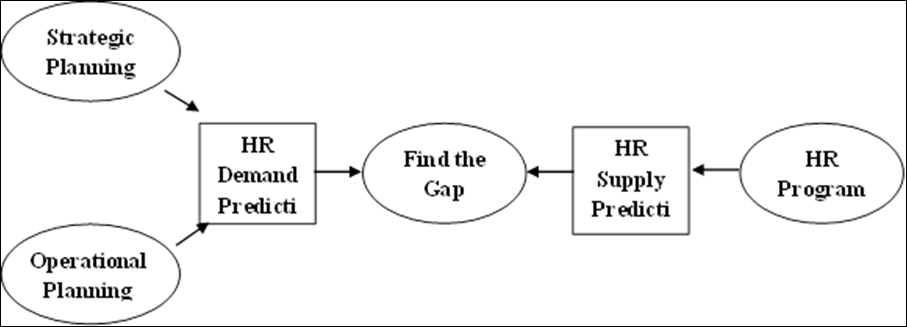
 

Figure 1: System Integration of HR Planning, Strategic Planning, and Operational Planning


Source: Manzini, A.O, 1996, Integrating Human Resource Planning and Development: The Unification of Strategic, Operational and Human Resource Planning System, Human Resource Planning, 11(2):79-94


  • The company's staffing needs are determined by strategic planning, and the forecast of labor availability (supply) is determined by human resource planning.

  • Gaps indicate deficiencies, strengths, or differences in skills, leadership, or other types of talent.

  • Forecasts of labor supply are made by determining baselines (promotions, demotions, turnovers, etc.) and comparing them with labor demand.

  • Strategic planning needs to consider internal and external factors. Internal factors include (1) profitability-focused financial goals and objectives, (2) talent and technology assessment, and (3) explicit and accurate definition of key tasks. External factors, on the other hand, include the economy and the environment. 


From the diagram above, modern organizations with changing individual needs integrate the following three plans into one system to design effective personnel planning and development processes with increasingly complex needs: We also know and we need. The three plans are 1) a strategic plan aimed at ensuring the survival of the company in a highly competitive environment and predicting long-term staffing needs. This plan involves analyzing past changes and uncertainties, so long-term change-based scenarios are necessary, but not all predictable. 2) Operational planning, identification of personnel needs, and other routine, current, and future work requirements based on reality, cost, time, resources, and performance. 3) Human resource planning, forecasting the quality and quantity of human resources needed to meet short-term and long-term needs, integrating human resource development programs and policies, determining actual human resource needs to meet short-term and long-term strategic needs Plan to focus. The objectives of integrating personnel planning into strategic and operational planning are 1) to identify and combine elements of planning that are interconnected, systematic and consistent, and 2) to identify personnel gaps between supply and demand, also aiming to create a process for comprehensively predicting staffing. quantitative. Needs arising from strategic and operational planning and forecast availability of HR programs. The satisfaction of an organization's future HR needs is determined by environmental factors and uncertainty, as well as current trends in organizational change. Increasingly, businesses need to rely on speed or speed. In short, you need to find the best and the fastest to meet the needs of your consumers [12].


HR Planning and Competitive Advantage

Companies that survive in global competition must have a competitive advantage over their competitors. [13] provides an understanding of competitive advantage. This is a unique position developed by companies to beat their competitors. (Samsudin, 2021) [14] distinguishes between the traditional view of competitive advantage and the resource-based view of sustainable competitive advantage. Traditionally, resources owned by firms in the same industry were easily purchased or transferred to other firms. On the other hand, a sustainable competitive advantage from a resource-based perspective is that the firm's resources and capabilities are homogeneous, and unlike other firms and competitors, other firms and competitors acquire similar resources Position. Meanwhile, (Harnani, 2018) [15] A company is considered a competitive advantage if it meets the following characteristics: 1) Special abilities. For example, better product quality, smoother sales channels, faster product delivery, more well-known product brands. 2) Creating imperfect competition. In a perfectly competitive market, every company can easily enter and leave the market, so companies seeking a competitive advantage must leave the perfectly competitive market. 3) Sustainability. This means that our competitive advantage must be sustainable and uninterrupted. 4) Suitable for external environment. The external environment presents both opportunities and threats for competing firms. Therefore, competitive advantage must not only consider competitors' weaknesses, but also pay attention to market conditions. 5) The profit generated is higher than the average profit of other companies. Efforts to gain competitive advantage for a company must be supported by all existing functions, including human resource management (hereinafter abbreviated as personnel management). (Sunarmo et al., 2018) [16] states that HR functionality must meet four main characteristics to achieve competitive advantage. 1) Integrate HR activities into business strategy, 2) Integrate HR and HR management processes, 3) Integrate business with HR capabilities, and 4) Integrate organizational-wide measurement and HR measurement. To achieve these four things, it is very important to start with an effective workforce plan.

Conclusion

As HR Planning (Human Resource Planning): The process by which an administrator decides how an organization will transition from its current HR status to its desired future HR position. To achieve effective personnel planning, personnel planning must be integrated with strategic and operational planning. Although well planned, there is often a gap between personnel planning in developing and implementing a personnel strategy. This gap may be partly due to rapid changes in world trade, increasingly fierce competition, new regulations, and technologies. Therefore, an explanation is needed to fill this gap. However, despite the gap between theory and practice, the findings suggest that personnel planning is still necessary. Regarding competitive advantage, four main characteristics must be met by the HR function to support competitive advantage. Namely, 1) integration of HR activities into business strategy, 2) integration of HR and HR management processes, and 3) integration. HR with Business and 4) Integrating HR measurement with measurement throughout the organization. To achieve these four things, it is very important to start with an effective workforce plan.

 

Funding: No funding sources 


Conflict of interest: None declared


Ethical approval: The study was approved by the Institutional Ethics Committee of Universitas Pembangunan Nasional

References
  1. Susan, E. (2019). Human Resource Management. Journal of Educational Management, 9(2), 952-962.

  2. Pratama, Himawan Aditya, and Heni Dwi Iryanti. "Transformasi SDM dalam menghadapi tantangan revolusi 4.0 di sektor kepelabuhan." Majalah Ilmiah Bahari Jogja 18.1 (2020): 71-80. DOI https://doi.org/10.33489/mibj.v18i1.229

  3. Kurniawati, R. (2018). Islamic Values-Based HR Competency Development Model in Islamic Microfinance Institutions. Journal of Jurisprudence, 7(2), 142-151. https://doi.org/10.23917/jurisprudence.v7i2.4236

  4. Hasnadi. (2019). Educational Human Resource Planning. Journal of the Study of Islamic Sciences, 10(2), 141-148. http://ejournal.staindirundeng.ac.id/index.php/bidayah/article/view/270/178

  5. Maradita, F. (2020). Human Resource Scorecard Linking People, Strategy and HR Performance (A HR Performance Measurement Model). Indonesian Journal of Economics and Business, 05(01), 15-18.

  6. Syam, S. (2020). The Effect of Work Effectiveness and Efficiency on Employee Performance at the East Banggae District Office. Journal of Profitability Management Science, 4(2), 128-152. https://doi.org/10.26618/profitability.v4i2.3781

  7. Sari, D. P., Febriani, O. M., & Putra, A. S. "Designing an Outstanding HR Information System at SD Global Surya." Technology And Business, vol. 3, no. 1, 2018, pp. 289-294.

  8. Rifai, A. A. (2020a). Contribution of HR Strategy Improvement Improving the Quality of Organizational Performance to Achieve the Target of Competitive Advantage among Companies. Journal of Economedia, 09(01), 101-112.

  9. Nurjaman, Kadar, et al. "Meningkatkan Kinerja Perusahaan Dengan Menerapkan Konsep Manajemen Sumber Daya Manusia Strategik Dalam Menyongsong Persaingan Global." Komitmen: Jurnal Ilmiah Manajemen 1.2 (2020): 73-82. https://doi.org/10.15575/jim.v1i2.10403

  10. Supriyadi, I., Khamdari, E., & Susilowati, F. (2020). The Role of Human Resource Management in Improving Performance of Construction Companies. Orbith, 16(1), 27-34.

  11. Halisa, Novia Nour. "Peran Manajemen Sumber Daya Manusia" Sistem Rekrutmen, Seleksi, Kompetensi dan Pelatihan" Terhadap Keunggulan Kompetitif: Literature Review." ADI Bisnis Digital Interdisiplin Jurnal 1.2 Desember (2020): 14-22. https://doi.org/10.34306/abdi.v1i2.168

  12. Rifai, A. A. (2020b). HRM Strategic Contribution to Encouraging Improving the Quality of Organizational Capabilities in the Revolutionary Era 4.0. Journal of Economedia, 9(2), 66-80.

  13. Sembiring, S. R., & Budiartha, K. (2018). Effectiveness of Human Resource Management (Case Study on Implementation of Management Audit at Hotel X Seminyak). E-Journal of Accounting, 25(2), 1390-1417. https://doi.org/10.24843/eja.2018.v25.i02.p22

  14. Harnani, S. (2018). Analysis of HR Placement on Work Performance at the Malang Regency Office. Jayanegara Journal of Management, 10(1), 65-72.

  15. Ermita, Isyana, Syamsudin Syamsudin, and Irwin Sukrisno Sugeng. "The influence of organizational culture and work environment on employee performance at pt pos (persero) post office Bekasi 17000." Journal of Industrial Engineering & Management Research 2.1 (2021): 83-89. https://doi.org/10.29264/jkin.v14i2.2480

  16. Sunarmo, Agus Sunarmo, et al. "Penerapan Prinsip-Prinsip Good Government Governance, Sistem Pengendalian Intern Pemerintah, dan Kompetensi SDM Terhadap Kinerja Aparatur Pemerintah Daerah." Jurnal Analisis Bisnis Ekonomi 16.1 (2018): 9-18. https://doi.org/10.31603/bisnisekonomi.v16i1.2126

License
CC BY-NC-ND
Creative Commons Attribution-NonCommercial-NoDerivatives 4.0 International License
Effective Personnel Planning: Strategies for Competitive Advantage © 2026 by Risqi Firdaus Setiawan, Teguh Soedarto licensed under CC BY-NC-ND 4.0
All papers should be submitted electronically. All submitted manuscripts must be original work that is not under submission at another journal or under consideration for publication in another form, such as a monograph or chapter of a book. Authors of submitted papers are obligated not to submit their paper for publication elsewhere until an editorial decision is rendered on their submission. Further, authors of accepted papers are prohibited from publishing the results in other publications that appear before the paper is published in the Journal unless they receive approval for doing so from the Editor-In-Chief.
Himalayan Journal of Agriculture open access articles are licensed under a Creative Commons Attribution-Share A like 4.0 International License. This license lets the audience to give appropriate credit, provide a link to the license, and indicate if changes were made and if they remix, transform, or build upon the material, they must distribute contributions under the same license as the original.
Advertisement
Recommended Articles
Research Article
Mating behaviour of Cavariella aegopodii
Published: 19/07/2024
Download PDF
Research Article
The Role of Indigenous Microbes and Earthworm in the Bioconversion of Dairy Wastewater Solids into Organic Fertilizer
...
Published: 17/01/2024
Download PDF
Research Article
The Effect of Green Marketing Mix on Purchasing Decisions by Greenly Salad Consumers in Surabaya
...
Published: 30/01/2023
Download PDF
Review Article
Registration of Gute-19 (Late Set) Soybean Varieties (Late Maturity Class)
Published: 10/10/2020
Download PDF
Chat on WhatsApp
Flowbite Logo
Najmal Complex,
Opposite Farwaniya,
Kuwait.
Email: kuwait@iarcon.org

Editorial Office:
J.L Bhavan, Near Radison Blu Hotel,
Jalukbari, Guwahati-India
Useful Links
Order Hard Copy
Privacy policy
Terms and Conditions
Refund Policy
Others
About Us
Team Members
Contact Us
Online Payments
Join as Editor
Join as Reviewer
Subscribe to our Newsletter
Follow us
MOST SEARCHED KEYWORDS
scientific journal
 | 
business journal
 | 
medical journals
 | 
Scientific Journals
 | 
Academic Publisher
 | 
Peer-reviewed Journals
 | 
Open Access Journals
 | 
Impact Factor
 | 
Indexing Services
 | 
Journal Citation Reports
 | 
Publication Process
 | 
Impact factor of journals
 | 
Finding reputable journals for publication
 | 
Submitting a manuscript for publication
 | 
Copyright and licensing of published papers
 | 
Writing an abstract for a research paper
 | 
Manuscript formatting guidelines
 | 
Promoting published research
 | 
Publication in high-impact journals
Copyright © Himalayan Journals . All Rights Reserved.