The integration of Artificial Intelligence (AI) with Knowledge Management (KM) systems has the potential to transform patient care in healthcare. AI technologies such as natural language processing, predictive analytics and machine learning enhance KM by making knowledge more accessible and actionable. These advances can improve diagnostic accuracy, enable personalized treatment plans and streamline operations. However, significant challenges remain, including data privacy, security concerns and algorithmic bias. Such issues complicate the full adoption of AI and may lead to variable patient outcomes across healthcare contexts. This systematic review examines current applications of AI-based KM in healthcare, highlights major challenges and proposes potential solutions. It underscores the need for adaptable frameworks that account for diverse healthcare environments to maximize AI’s benefits. Ethical considerations-such as transparency, fairness and patient privacy-are central to safe implementation. Overall, while AI demonstrates strong potential to improve healthcare delivery, further research is required to address its limitations and ethical concerns.
Keywords
AI
Knowledge Management
Healthcare
Patient Care
Personalized Medicine
Ethical Issues
Data Privacy
Algorithmic Bias
Healthcare Efficiency
Systematic Review
INTRODUCTION
Artificial Intelligence (AI) is reshaping healthcare into a more efficient, productive and patient-centered system. By strengthening Knowledge Management (KM) frameworks, AI supports the flow of information, evidence-based decision-making and collaboration among healthcare professionals. Together, these improvements enhance patient outcomes and streamline healthcare delivery.
Technologies such as machine learning, natural language processing and predictive analytics enable healthcare providers to access patient data, clinical guidelines and research instantly. This supports more accurate diagnoses, better treatment decisions and personalized care tailored to individual patient needs.However, integration is not without challenges. Data privacy, security risks and algorithmic bias must be addressed to ensure equitable and ethical implementation. Despite these concerns, AI continues to demonstrate significant potential to improve diagnostics, treatment planning and administrative efficiency in healthcare [1].Kaur [2] emphasizes the importance of a patient-centered approach to AI adoption. By moving beyond the “one-size-fits-all” model, AI enables more precise diagnostics, treatment and preventive care. Nonetheless, ethical safeguards are essential to ensure security, confidentiality and fairness. Kaur also highlights the need for cross-disciplinary collaboration to guide AI development responsibly.In summary, AI plays a pivotal role in advancing patient-centered care, fostering innovation and reinforcing ethical principles in healthcare.
Practical Implementation Challenges
The Study talks about how to combine Artificial Intelligence (AI) and Knowledge Management (KM) frameworks in healthcare to improve patient care, but there are still some problems with putting these ideas into action. Data privacy and security are big problems because AI needs a lot of patient data to work. This makes people worry about keeping private medical information protected. Federated learning and encryption are two possible ways to safeguard this data in AI systems, but it is very important to make sure that this data stays safe. To lower privacy concerns, we need rules like HIPAA and GDPR.
Another problem is algorithmic bias, which happens when AI models use training data that already has biases in it, which can lead to different outcomes for different groups of patients. For instance, AI's predictions may not be correct for groups of people who weren't well represented in the training data. This could make health care inequities worse. Also, getting different healthcare systems to work together is still a big problem. A lot of healthcare systems still use diverse data sources that don't work well with AI-powered KM systems. For AI to really help healthcare, it needs to be able to work with all of its systems without any problems.
Ethical and moral issues are also quite important when it comes to putting AI into use. Problems including getting patients' permission, making AI decisions clear and holding AI systems responsible are still not solved. It is important to make sure that AI programs respect patients' rights and that the choices made by AI systems are clear to both doctors and patients. Also, healthcare workers and organizations may not want to use AI-powered KM systems because they are worried about job security, don't trust technology, or don't comprehend it well enough. To get over these problems, we need good training programs and ways for slowly adopting new ideas.
Another problem is making AI models work in varied healthcare settings. Different healthcare contexts have different patient demographics, treatment regimens and operational constraints. This means that AI frameworks need to be flexible. This personalization might be hard and take a long time. Lastly, a lack of resources is a big problem, especially in tiny or poorly funded healthcare facilities. Adopting AI technologies can be expensive and you need the right infrastructure, training and money to do it well.
Even with these problems, AI has a lot of potential to improve healthcare by making diagnoses more accurate, customizing therapy and making operations more efficient. However, AI technologies need to be improved through continual research and innovation to solve ethical issues and make them work in many healthcare settings so that patient care outcomes are always the same and fair.
Statement of Problem
The integration of Artificial Intelligence (AI) into Knowledge Management (KM) frameworks offers significant opportunities to improve patient care and enhance healthcare efficiency. However, challenges remain in achieving consistent and effective use of AI across diverse healthcare settings. Patient outcomes vary, diagnoses are not always accurate and personalized treatment plans may not consistently deliver the desired results. Moreover, concerns about data privacy, security and algorithmic bias further complicate the seamless collaboration between AI and KM systems. Although the field is attracting increasing attention, there is still limited understanding of how to effectively implement AI-driven KM solutions to address these issues across different healthcare contexts.
Research Question
How does the integration of AI with KM frameworks affect patient care outcomes, including recovery rates, diagnostic accuracy and treatment personalization in healthcare settings?
What is the relationship between the level of AI adoption and operational efficiency in healthcare organizations?
What are the perceived ethical challenges and concerns associated with AI integration in healthcare KM systems, particularly regarding data privacy, security and algorithmic biases?
How can AI technologies be better adapted to diverse healthcare environments to ensure consistent improvements in patient care and operational efficiency?
Research Objectives:
To evaluate the impact of AI-powered Knowledge Management systems on improving patient care outcomes in healthcare settings, focusing on recovery rates, diagnostic accuracy and treatment personalization
To examine the relationship between the adoption of AI technologies and the improvement in operational efficiency in healthcare institutions, specifically in terms of time saved and resource utilization
To recognise and resolve the moral dilemmas associated with the absorption of AI with the KM structures in the healthcare sector involving the edge of data privacy and security and counteralling the bias of the algorithm
To suggest an integrative conceptual framework of AI and KM systems with healthcare systems that would be contextualized to various healthcare settings to make improvements in patient care more standard and successful
MATERIALS AND METHODS
The research methodology of considering Artificial Intelligence (AI) and Knowledge Management (KM) integration in healthcare and focusing it on the enhancement of the patient care process is systematic and relies on the properly structured approach toward obtaining the related data, examining the existing trends and discovering the possible gaps in utilizing the AI and KM frameworks in the healthcare process. The methodology encompasses both qualitative and quantitative research techniques to comprehensively understand the impact, challenges and future directions for combining AI and KM in healthcare settings.
The research methodology for this systematic review of the integration of Artificial Intelligence (AI) with Knowledge Management (KM) systems in healthcare settings adopts a broad approach that spans various healthcare environments such as hospitals, clinics and telemedicine platforms. While this approach offers a comprehensive view of the potential applications of AI in diverse settings, it introduces the challenge of maintaining a focused and in-depth analysis. The wide scope, covering different healthcare environments, makes it difficult to standardize the findings and address the specific challenges or nuances each setting presents.
Hospitals, clinics and telemedicine platforms each have distinct operational models, technological capabilities, patient populations and regulatory requirements, which may affect the implementation and impact of AI-based KM systems. This diversity complicates the ability to conduct a uniform evaluation across all settings. As a result, the findings might vary significantly, potentially limiting the ability to draw generalized conclusions.
In future research, narrowing the scope to specific healthcare settings could help mitigate these challenges and allow for a more focused and detailed exploration of AI and KM integration. By concentrating on particular environments, such as hospitals or telemedicine platforms, future studies can provide clearer insights into how these technologies function in context-specific scenarios, thereby improving the quality of the analysis and its applicability to healthcare practice.
Research Design
This study adopts a systematic review and comparative analysis approach to assess the intersection of AI and KM in healthcare. By reviewing existing literature, the study synthesizes previous research on AI technologies (such as machine learning, deep learning, natural language processing) and KM frameworks applied in healthcare. The research aims to evaluate how these technologies are integrated, their contributions to patient care optimization and the ethical challenges involved.
Literature Review
A thorough literature review is conducted to gather existing studies, journal articles, books and research papers that examine:
The role of AI in healthcare (diagnostics, treatment personalization, decision-making support)
Various KM frameworks in healthcare (e.g., SECI model, healthcare knowledge management frameworks)
The integration of AI and KM for healthcare decision-making, patient care and operational efficiency
Data Collection
Data is collected from multiple sources:
Peer-reviewed journals (such as the Journal of Clinical Research, Healthcare Management Review and other relevant medical and technology journals)
Books and conference papers related to AI, KM and healthcare innovations
Case studies and real-world applications of AI and KM integration in healthcare settings
Expert interviews and surveys with healthcare professionals, AI developers and KM practitioners to gain firsthand insights into practical challenges and opportunities
A snowball sampling technique is used for qualitative data, where initial interviews with healthcare professionals or AI experts lead to further interviews with other relevant experts.
Data Analysis
Qualitative Analysis:
Interviews and open-ended survey responses are analyzed for insights into the perceived challenges, benefits and ethical concerns of integrating AI in KM frameworks.
Quantitative Analysis:
Statistical methods are used to evaluate the effectiveness of AI-powered KM systems in improving patient outcomes. For example, data on patient recovery rates, diagnostic accuracy and treatment personalization before and after AI-KM integration will be analyzed
Descriptive statistics and ANOVA test will be applied to examine the relationship between AI adoption and operational efficiency in healthcare settings
Framework Development
Based on the findings from the literature review and data analysis, a conceptual framework for integrating AI with KM in healthcare is proposed. This framework will outline the following:
Key AI technologies that should be integrated with KM systems
Ethical guidelines for managing data privacy, security and algorithmic bias
Best practices for implementing AI-driven KM solutions in healthcare organizations.
The role of healthcare professionals in embracing AI and KM technologies
Literature Review
Knowledge Management in Healthcare: Frameworks and Optimization of Patient Care
KM Frameworks in Healthcare: El-Morr and Subercaze [3] highlight the importance of Knowledge Management (KM) in healthcare, noting its many benefits despite challenges in implementation. Effective patient care depends on information sharing among healthcare professionals and there is a growing emphasis on evidence-based decision-making. KM systems support this by ensuring quick access to accurate information, which enhances decision-making and improves patient outcomes. However, obstacles such as organizational complexity and resistance to change often hinder adoption. To secure the future of KM in healthcare, these barriers must be addressed by developing systems that simplify processes and support evidence-based practice.
Nicolini et al. [4] describe KM as an increasingly central component of healthcare organizations, leading to the development of diverse approaches. Research in this area has focused on three themes: defining healthcare knowledge, evaluating KM tools and initiatives and identifying factors that enable or hinder adoption. While the literature does not directly link specific KM frameworks to patient care improvements, it consistently suggests that KM contributes to better clinical decisions, streamlined processes and the sharing of best practices. Collectively, these benefits enhance healthcare delivery, underscoring KM’s growing significance and the conditions necessary for its success.
Shahmoradi et al. [5] emphasize KM’s role in improving quality and patient safety by ensuring timely access to accurate information. KM frameworks in healthcare typically revolve around the transfer of knowledge among people, processes and technology. Collaboration and information exchange are central, enabling Evidence-Based Medical Practices (EBMP) where research findings, clinical expertise and patient preferences collectively inform decisions. This integration strengthens decision-making, enhances quality of care, supports advanced care planning and ultimately improves patient well-being.
Sabeeh et al. examine KM frameworks as tools for creating, storing, distributing and utilizing medical knowledge within healthcare organizations. These models are vital for monitoring and applying information to support patient care. The authors identify limitations in existing frameworks, clustering them into six major areas of concern. In response, they propose the Healthcare Knowledge Management Framework (HKMF), designed to address these gaps and improve medical knowledge management. Ongoing development of HKMF aims to streamline knowledge processes and ultimately enhance patient care.
Metaxiotis [6] reinforces the necessity of KM in the rapidly evolving healthcare sector, where the demand for high-quality care continues to grow. Healthcare’s complexity-spanning diverse organizations and vast amounts of biological and medical data-makes efficient management essential. Failures in this system can be costly, both financially and clinically. KM helps organize the expanding body of knowledge, enabling innovation and providing a competitive edge. Given the information-intensive nature of healthcare, effective KM ensures better decision-making, improved efficiency and superior patient outcomes.
AI Integration in Healthcare KM Systems
Faiyazuddin et al. [7] note that Artificial Intelligence (AI) is transforming healthcare by improving diagnostic accuracy, enabling personalized treatments and enhancing operational efficiency. Key technologies driving this transformation include Machine Learning (ML), Deep Learning (DL), Natural Language Processing (NLP) and Robotics.
ML and DL are widely applied in medical diagnosis for pattern recognition, image analysis and predictive modeling, while NLP supports the interpretation of unstructured clinical data, such as Electronic Health Records (EHRs). Together, these tools accelerate diagnostic processes, improve precision and support the development of tailored treatment strategies based on genetic and medical information.
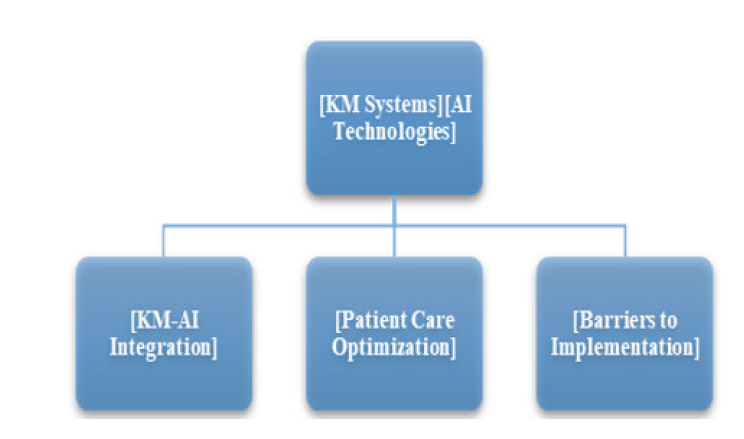
Beyond clinical applications, AI also strengthens healthcare operations by optimizing resource use, simplifying administrative processes and enabling remote patient monitoring. However, challenges such as data security risks and limited resources remain significant barriers. To fully realize AI’s potential, ongoing research, collaboration and ethical safeguards are essential to ensure its effective and responsible integration into healthcare systems (Figure 1).
Thanasitsomboon et al. [8] highlight the transformative potential of Artificial Intelligence (AI) in healthcare, emphasizing its ability to enhance clinical trials, improve diagnostic accuracy and deliver more patient-specific care. AI applications span diverse areas, including medical imaging, surgery, drug development and virtual health.
Figure 1: Framework for KM Systems and AI Technologies in Healthcare, Source: Developed by Author
By analyzing vast amounts of data and identifying patterns, AI supports more informed decision-making, leading to improved patient outcomes.
However, challenges such as data security, algorithmic transparency and bias present significant ethical concerns that must be addressed before widespread adoption. These issues raise moral dilemmas around fairness, accountability and trust in AI-driven systems. Despite these barriers, the study concludes that AI holds immense promise to revolutionize healthcare by advancing both clinical effectiveness and operational efficiency.
Anakal and Soumya [9] examine the revolutionary impact of Artificial Intelligence (AI) on healthcare, particularly in diagnostics, treatment and patient care. Key applications include medical imaging, Electronic Health Records (EHRs), pharmaceuticals and personalized medicine. Their review highlights AI’s transformative potential in improving healthcare delivery and patient outcomes. However, they also underscore critical challenges-such as data quality, model interpretability and integration into clinical practice-that must be addressed. The authors emphasize that overcoming these barriers is essential for realizing AI’s full benefits in healthcare.
Challenges and Ethical Considerations
While AI holds great promise for transforming medicine, integrating it with Knowledge Management (KM) systems raises complex ethical and practical challenges. Key concerns include data privacy, data security and algorithmic bias. Because AI relies heavily on patient data, strict compliance with regulations such as HIPAA and GDPR is essential to safeguard confidentiality. At the same time, minimizing bias in AI algorithms is critical to avoid perpetuating healthcare disparities and ensure fairness in decision-making.
Rana et al. [10] highlight broader ethical and societal implications of AI adoption. A major concern is job displacement, as automation threatens to replace certain human tasks, raising economic and social challenges. This underscores the need for reskilling and upskilling initiatives to help workers transition into new roles. Data privacy and security remain pressing issues, given the vast amounts of sensitive information AI systems process. Safeguards such as encryption and privacy-focused regulations are crucial to mitigate risks.
In addition, biases embedded in training data may reinforce inequities, particularly along racial or socioeconomic lines, resulting in unfair or inaccurate outcomes. Addressing this requires the development of fairness measures and transparent AI systems. Practical barriers also exist-high implementation costs, lack of technical expertise and limited infrastructure often restrict adoption, especially in smaller healthcare institutions. Overcoming these challenges will require cost-effective solutions, strong governance frameworks and sustained investment in infrastructure and workforce development.
Emerging Trends, Challenges and Applications of AI in Healthcare KM
Taherdoost and Madanchian [11] emphasize several emerging trends shaping AI-driven knowledge management. Generative AI is improving efficiency by producing reports, summaries and other outputs from existing data, allowing professionals to focus on higher-level tasks. Individualized AI knowledge services are enhancing relevance and accessibility, while the integration of blockchain with AI is bolstering data security and integrity. Additionally, “usable AI”-designed to improve transparency and user trust-is gaining importance, along with predictive analytics that enable proactive, data-driven decision-making. Collectively, these innovations point toward more intelligent, secure and flexible knowledge management systems.
Sira [12] highlights both technological and organizational challenges in uniting AI with KM. From a technical perspective, data governance is critical to ensuring quality, accessibility and security, while issues of interoperability and unstructured data often limit AI’s performance. Organizationally, leadership support, stakeholder engagement and adequate resources are essential for successful adoption. Human factors-including resistance to change and insufficient training-also pose obstacles, underscoring the need for robust change management and capacity-building programs.
Apriyanto et al. [13] classify AI applications in healthcare into three categories: descriptive, predictive and prescriptive. Descriptive AI identifies patterns in large datasets to support diagnostics and operations; predictive AI leverages algorithms to forecast health outcomes and tailor interventions; and prescriptive AI goes further by recommending specific actions for treatment and care. Technologies such as machine learning, deep learning, Natural Language Processing (NLP) and robotics enhance diagnosis, surgical support, clinical data analysis and patient care. These capabilities enable more customized treatment plans and faster, evidence-based decision-making.
Sharma [14] also emphasizes AI’s potential to revolutionize diagnostics, personalized therapy, medical imaging and drug discovery. AI can detect early signs of disease, support patient-specific treatment planning and streamline drug development by predicting chemical effectiveness. However, broader implementation is hampered by concerns over data security, system interoperability, ethical considerations and patient acceptance. Addressing these challenges is essential to harness AI’s full potential in healthcare.
Similarly, Zafar et al. [15] highlight AI’s significant role in advancing diagnostics, therapy and disease management. Machine Learning (ML) and Deep Learning (DL) technologies are improving diagnostic precision, identifying patterns and modeling disease progression. These tools not only accelerate diagnosis but also reshape clinical approaches to treatment, from identifying new medicines to guiding surgical procedures. Moreover, AI aids in managing chronic and neurological conditions by predicting disease development and informing public health strategies. Collectively, these advancements demonstrate AI’s ability to deliver cost-effective, efficient and innovative solutions in healthcare.
Machine Learning in Healthcare: Applications and Impact
Machine Learning (ML) is rapidly transforming healthcare by enhancing diagnostics, treatment planning, patient monitoring and operational efficiency. Upadhyay and Gulati [16] observe that ML algorithms can process diverse medical data to support disease detection, prediction of disease progression, treatment recommendations and administrative efficiency. Convolutional Neural Networks (CNNs), in particular, have shown effectiveness in medical imaging, aiding in the detection and localization of conditions such as lung cancer and brain tumors. Despite these benefits, infrastructure limitations, data privacy concerns and the complexity of ML models hinder full-scale implementation.
Tiwari [17] highlights the role of ML and AI in radiology and pathology, where deep learning models analyze medical images (e.g., mammograms) with accuracy comparable to pathologists. These technologies also enable risk stratification, helping clinicians design personalized interventions for high-risk patients, thereby improving treatment outcomes. However, persistent challenges-especially data privacy, security and workforce implications-require ongoing research and careful integration strategies.
Ahmed and Ahmed [18] similarly emphasize ML’s contribution to early diagnosis and patient outcome prediction. Algorithms such as Random Forests and Support Vector Machines (SVMs) are being applied to medical imaging, particularly in cancer detection, while CNNs assist radiologists in diagnosing complex diseases. Although training such models demands significant resources, their potential to improve efficiency and care quality makes them highly valuable.
Sivashankar et al. [19] further stress ML’s impact on accessibility and diagnostic precision. By analyzing large datasets such as CT scans, MRIs and X-rays, ML enhances radiologists’ ability to detect conditions like cancer and cardiovascular disease at early stages. In oncology, ML also enables personalized medicine by predicting individual responses to treatments based on genetic variations. Additionally, ML accelerates drug discovery and supports real-time patient monitoring, helping healthcare providers intervene earlier in chronic illness management. To ensure reliability, however, these systems must remain transparent, accountable and clinically explainable.
Deep Learning in Healthcare
Deep Learning (DL), as a subset of ML, has demonstrated particular strength in medical imaging and precision medicine. Shaik et al. [20] explain that DL models, with their multi-layered architecture, can extract hierarchical features from raw input data, making diagnostic predictions more accurate. This capability is particularly valuable in complex image analysis. Similarly, Sharma et al. [21] show that DL assists in identifying genetic markers for diseases such as cancer, Parkinson’s and Alzheimer’s, thereby advancing personalized treatment plans tailored to individual patient profiles.
Zayed and Elnemr [22] reinforce DL’s utility in tumor detection, Alzheimer’s diagnostics and identifying diabetic retinopathy from retinal images. They also note its value in precision medicine, where DL incorporates genetic, lifestyle and historical data to propose tailored therapies, especially in oncology.
Galić and Habijan [23] expand this view by examining DL methods such as CNNs, Recurrent Neural Networks (RNNs) and Generative Adversarial Networks (GANs). They highlight DL’s role in enhancing cancer detection, Alzheimer’s diagnosis and diabetic retinopathy screening, while also addressing unresolved issues like the need for annotated data, inconsistencies in medical imaging and interpretability of results. Future progress, they suggest, lies in developing explainable DL models and integrating data from multiple sources.
Kim et al. [24] similarly note DL’s superiority over earlier computer-aided detection systems, citing its ability to reduce false positives and costly unnecessary biopsies. They emphasize its importance in precision oncology, where genetic profiles guide treatment decisions, marking DL as a cornerstone of personalized medicine.
Understanding Natural Language Processing (NLP) in Healthcare
Natural Language Processing (NLP) is playing a transformative role in extracting value from the vast amounts of unstructured data stored in Electronic Health Records (EHRs). Gautam [25] emphasizes how NLP converts clinical notes into structured data, enabling clinicians to access patient information more efficiently and support timely clinical decision-making. Techniques such as SpaCy and Med7Model demonstrate the dynamic potential of NLP to improve data accessibility, streamline workflows and support clinical research. Similarly, Hossain et al. [26] highlight NLP’s contribution to Clinical Decision Support Systems (CDSS), where advanced models such as BERT enhance the ability to draw actionable insights from messy, incomplete, or non-standardized data. These tools ultimately improve diagnostic accuracy, treatment recommendations and patient outcomes.
While most studies focus on NLP’s contribution to EHRs and decision support, they share a central theme: NLP transforms unstructured medical information into structured knowledge, making healthcare delivery more precise and patient-centered.
The Synergy of AI and Knowledge Management
The integration of Artificial Intelligence (AI) and Knowledge Management (KM) has emerged as a powerful framework for optimizing healthcare decision-making and innovation. Sharma et al. [27] argue that AI-driven KM systems enhance the creation, storage, sharing and use of knowledge across organizations. Technologies such as Machine Learning (ML) and NLP assist in managing large datasets, while AI engines, intelligent search and chatbots foster knowledge accessibility and collaboration. These systems enable organizations to innovate faster and make more informed decisions, though they require careful attention to privacy and ethical concerns.
Olson et al. [28] extends this idea within a healthcare context, showing that AI-enhanced KM improves data retrieval, predictive analytics and clinical decision-making. Predictive models enable proactive care, while NLP-powered search tools improve access to relevant medical knowledge. AI-driven KM frameworks also support collaborative care by ensuring teams have real-time access to the most relevant data. Together, these studies demonstrate how AI–KM integration not only improves organizational learning but also enhances patient outcomes.
AI Integration in Clinical Decision Support Systems (CDSS)
AI has become central to strengthening Clinical Decision Support Systems (CDSS), particularly by incorporating predictive analytics, patient-specific recommendations and real-time data processing. Nyiramana [29] emphasizes the role of ML, NLP and deep learning in generating tailored recommendations for patients, though barriers such as data quality, transparency and clinician trust remain. Similarly, Bharmal [30] notes that AI-powered CDSS reduces medical errors and improves diagnostic validity by processing vast volumes of medical literature and patient records-IBM Watson in oncology being a prime example.
Elhaddad and Hamam [31] highlight additional benefits, including improved risk identification, more accurate diagnoses and personalized treatment recommendations. Yet they also stress the importance of interpretability and unbiased systems for real-world adoption. Collectively, these studies suggest that while AI-CDSS has already improved diagnosis and treatment, its broader adoption requires attention to ethical, usability and integration challenges.
Characteristics of the AI–KM Interplay in Healthcare
Several scholars examine how AI and KM converge to generate actionable knowledge and enhance patient-centered care. Stafie et al. [32] describe AI’s ability to analyze large datasets, automate processes and create personalized treatment strategies, thereby supporting proactive and preventive care. Chinnathambi [33] similarly underscores AI’s role in pattern recognition, predictive analytics and knowledge generation, positioning KM as the framework that organizes and disseminates this knowledge to improve outcomes.
Rich and Winston [34] show how AI aligns with KM principles by turning raw data into usable knowledge through imaging interpretation, predictive analytics and virtual assistants. Srikannan [35] reinforces this by demonstrating how AI transforms patient records and genetic data into individualized care plans, a process that mirrors KM’s objective of systematizing knowledge for decision-making. Lainjo [36] further highlights AI’s role in accelerating clinical research, supporting personalized medicine and optimizing healthcare operations, while also cautioning against risks such as bias, privacy concerns and the need for strong regulation.
Knowledge Management Theories and Frameworks
Knowledge Management (KM) plays a critical role in enhancing organizational performance and providing a competitive advantage. Sensuse et al. [37] identify over 30 KM models, each representing distinct perspectives on how organizations can create, store and utilize knowledge. While these frameworks are not exclusive to healthcare, they provide a valuable foundation for tailoring KM practices to the complexities of the sector.
In the healthcare domain, KM facilitates the long-term improvement of services, knowledge sharing and decision-making while respecting ethical principles. Perrott and Iedema [38], drawing on Polanyi’s paradigm of tacit and explicit knowledge, highlight the conceptual challenges of applying KM in healthcare, particularly regarding how knowledge is created and communicated in clinical settings. Their framework underscores the difficulties healthcare managers face and provides a base for future inquiry.
Cabrita et al. [39] extend this discussion by framing KM as an assemblage of practices and tactics that transform organizational knowledge assets into sustainable value. Their work emphasizes the importance of KM frameworks in the creation, acquisition and use of healthcare knowledge assets, especially when combined with Evidence-Based Practice (EBP). This integration builds learning environments and facilitates the spread of best practices, improving clinical decision-making and patient treatment. Similarly, Guptill [40] underscores KM’s practical benefits in hospitals, particularly cost-effectiveness, error reduction and accountability, though without explicitly drawing on well-known KM theories such as SECI or Clinical Knowledge Management.
AI Integration into Knowledge Management Systems
Recent scholarship highlights the transformative potential of Artificial Intelligence (AI) in enhancing KM systems in healthcare. Vaidya et al. [41] argue that AI strengthens KM by efficiently processing large datasets such as EHRs, medical imaging and genomic data. This supports faster and more precise clinical decision-making through applications like Clinical Decision Support Systems (CDSS), predictive analytics and NLP-driven unstructured data processing. Furthermore, tools like Robotic Process Automation (RPA) streamline administrative work, making operations more efficient and patient care more personalized.
Similarly, Pargaien et al. [42] emphasize that AI enhances every stage of KM-knowledge creation, storage, dissemination and application. By leveraging predictive analytics, intelligent diagnostic assistants and virtual health assistants, AI empowers healthcare professionals to make better-informed decisions and predict patient outcomes more accurately. Their findings underscore AI’s role not just as a data processor but as a catalyst for smarter decision-making and improved patient outcomes.
Ethical Challenges of AI-Driven KM in Healthcare
While the integration of AI into KM frameworks offers transformative benefits, it also introduces profound ethical and regulatory challenges. Albalawi et al. [43] highlight the moral issues tied to AI’s reliance on vast databases of sensitive patient information. Ensuring security, privacy and accountability is essential, with techniques such as encryption, anonymization and federated learning serving as safeguards. They also draw attention to the “black box” problem, where AI’s decision-making processes lack transparency, making accountability more complex. They advocate for the development of explainable AI (XAI) and transparent governance structures to maintain patient trust.
Mullaj [44] reinforces these concerns, noting that privacy breaches, opaque algorithms and insufficient legal safeguards could erode trust and equity in healthcare. He calls for robust legal and regulatory frameworks that mandate transparency and fairness in AI use. Expanding data representation during AI training and increasing algorithmic transparency are recommended as practical steps toward ensuring fairness and accountability. Both authors converge on the argument that AI adoption must balance innovation with ethical governance, ensuring patient autonomy and trust remain intact.
Knowledge Management in Healthcare
Foundations of Healthcare Knowledge Management (HKM): Abidi [45] conceptualizes Healthcare Knowledge Management (HKM) as a structured process encompassing the creation, modeling, dissemination and application of healthcare knowledge to improve patient outcomes. Central to this model is the integration of multiple knowledge sources-such as clinical data and evidence-based practices-supported by ontology engineering to ensure accuracy, consistency and accessibility. Similarly, De Brún [46] emphasizes the role of KM in knowledge dispersion, decision support and patient benefit, highlighting its potential to enhance safety and care quality, even though KM remains under-recognized as a discipline within many healthcare organizations.
Yahiaoui et al. [47] reinforce this perspective, stressing the role of KM systems in improving information circulation, facilitating knowledge sharing and supporting decision-making within healthcare institutions. While their work does not detail specific models, it frames KM as a cornerstone for enhancing operational efficiency and patient care.
Applications of KM Systems in Clinical Practice
Several studies extend KM into knowledge-based systems and decision support tools. Srivastava and Dubey [48] show that KM-enabled diagnostic systems can analyze comprehensive datasets of diseases and symptoms, improving both surgical accuracy and clinical decision-making. These tools also benefit medical training and physician–patient relationships, broadening KM’s scope beyond diagnostics.
Raghavan [49] describes Medical Decision Support Systems (MDSS) as practical applications of KM, leveraging explicit knowledge to provide patient-specific recommendations that standardize practice and improve care delivery. In a similar vein, Mandalika and Bharadwaj [50] propose a Healthcare Prognosis Management System delivered via web and mobile platforms. This system continuously updates patient data, predicts health outcomes and supports collaborative care, particularly for chronic diseases such as cardiovascular conditions. These examples demonstrate how KM principles are increasingly being embedded into real-time, patient-centered technologies.
Barriers to KM and Digital Health Adoption
Despite its potential, the adoption of KM systems in healthcare is slowed by significant barriers. Santos et al. [51] identify challenges associated with Health 4.0, including data privacy concerns, high implementation costs, lack of standardization and professional resistance to adopting new technologies. Oude Nijeweme-d’Hollosy et al. [52] further highlight the lack of unified data exchange standards, which fragments eHealth systems and hampers interoperability.
Specific technologies encounter similar challenges. Bernabe and Ebardo [53] note that telemedicine faces socio-technological barriers (system incompatibility, poor usability), behavioral barriers (resistance to change, professional identity concerns) and institutional barriers (workload and training deficits). Shear et al. [54] examine the adoption of Fast Healthcare Interoperable Resources (FHIR) in the United States, finding that inconsistent EHR implementations, vendor limitations and workforce skills shortages inhibit integration. Kruse et al. [55] reinforce these issues by categorizing EHR implementation barriers into system incompatibility, human resistance and data integrity problems, all of which undermine the reliability of patient data and slow down adoption.
Synthesis
Taken together, these studies show that while KM frameworks and tools have evolved significantly-from broad analytical approaches [45] to applied decision-support systems [48,49,59] and prognosis management platforms [50]-their effectiveness is often undermined by systemic, technical and human barriers. The recurring problem of interoperability across EHRs, FHIR and telemedicine platforms underscores the urgent need for standardized data frameworks. Likewise, issues of data privacy, professional resistance and cost suggest that technological solutions must be complemented by organizational change strategies and policy frameworks.
Synergies of AI and Knowledge Management
Organizational Benefits of AI–KM Integration: Prihandoko et al. [56] highlight how Artificial Intelligence (AI) augments Knowledge Management (KM) through automation, advanced data analysis and enhanced knowledge retrieval, thereby fostering innovation, productivity and organizational learning. AI’s ability to detect patterns and deliver actionable insights enables more flexible, adaptive organizations that leverage knowledge assets for competitive advantage.
Asrifan et al. [57] extend this idea by emphasizing the human-AI collaboration in knowledge discovery. While AI excels in processing large datasets with speed and accuracy, human cognition contributes contextual understanding, ethical reasoning and creativity. Together, this hybrid model creates more meaningful knowledge generation and cross-disciplinary decision-making-a paradigm especially relevant in complex sectors like healthcare and education.
Montani and Striani [58] illustrate this synergy in the healthcare domain, showing how knowledge-based AI (transparent reasoning models) and data-driven AI (large-scale statistical models) complement each other in Clinical Decision Support Systems (CDSS). Their integration strengthens decision-making by improving explainability, flexibility and data efficiency, thereby enhancing patient care and knowledge dissemination.
Gaps and Opportunities in AI Implementation in Healthcare
Despite the promise of AI–KM integration, current research often treats them in isolation. Chomutare et al. [59] point out that most studies analyze either AI technologies or KM frameworks independently, overlooking their cumulative performance in real-world healthcare environments. They call for integrated frameworks that leverage AI to enrich KM processes and vice versa.
Wubineh et al. [60] echo this, noting that while AI promises advancements in diagnosis, patient monitoring, pharmaceutical research and virtual health assistance, there is a lack of studies connecting these advances explicitly to KM systems. Similarly, Owoyemi et al. [61] identify the gap between theoretical promise and clinical practice, arguing for human-centered design approaches that align AI with the needs of clinicians and patients. Their findings highlight the need for holistic, multidisciplinary research that bridges technological, organizational and cultural dimensions of AI–KM adoption.
Ethical Concerns Regarding Data Privacy in AI-Driven Healthcare
One of the most pressing challenges in deploying AI–KM in healthcare is data privacy. Yu et al. [62] underscore the risk of patient data leaks, stressing the importance of compliance with regulatory frameworks such as HIPAA and GDPR to safeguard confidentiality. Similarly, Gupta [63] raises concerns around patient autonomy, informed consent and data ownership, arguing that ethical healthcare must balance cost-effectiveness with patient rights.
Bartoletti [64] situates these concerns within the broader debate on responsible AI use, pointing out that while AI promises precision medicine and improved diagnostics, it also raises risks of data misuse if governance frameworks are weak. Turak et al. [65] propose technical solutions such as federated learning, homomorphic encryption and differential privacy, which enable data analysis without compromising confidentiality. Together, these works converge on the need for transparent, explainable and legally grounded AI systems to preserve patient trust and ensure sustainable integration.
Synthesis
The literature suggests that AI and KM are mutually reinforcing: AI enhances KM’s capacity to organize, analyze and share knowledge, while KM provides the structures to embed AI insights into organizational workflows. In healthcare, this synergy offers transformative potential for clinical decision-making, patient monitoring and care personalization.
However, significant research gaps remain. Current studies often overlook the practical interplay of AI and KM in clinical environments, focusing instead on either technology in isolation. Bridging this gap requires integrated frameworks and human-centered approaches that align AI tools with clinical workflows.
Finally, the ethical dimension of data privacy and security emerges as a central challenge. Without robust safeguards, AI–KM integration risks eroding patient trust. Addressing these concerns demands a combination of regulatory compliance, technical safeguards and transparent design.
Mitigating Bias in Medial AI through Data Privacy
Addressing Bias in Medical AI
Sources and Consequences of Bias: Bias in AI systems poses a significant threat to equitable healthcare delivery. Cross et al. [66] identify several sources of bias in medical AI, including underrepresentation of patient subgroups, missing data such as diagnosis codes or social determinants of health and annotation biases. Moreover, modeling practices themselves can exacerbate inequities: for example, an overreliance on aggregate performance metrics can mask disparities across subpopulations. The consequence of such bias is that AI tools may reinforce existing disparities in treatment outcomes, undermining the promise of precision medicine.
Wang and Bertrand [67] expand on this issue, arguing that biased datasets can perpetuate health inequalities, especially in underserved or underprivileged regions. When AI systems are trained on narrow or skewed data, predictions for marginalized groups become less reliable, potentially leading to inferior or harmful patient care. They stress that without intervention, AI risks widening healthcare disparities rather than narrowing them.
Strategies for Mitigation
Several approaches have been proposed to reduce bias in AI. Cross et al. [66] recommend the use of broader and more representative datasets, the application of statistical debiasing techniques and the evaluation of models across diverse patient subgroups. They also emphasize the importance of model interpretability, standardized reporting and rigorous validation protocols to ensure fairness in clinical deployment.
Wang and Bertrand [67] highlight inclusive data collection and community stakeholder engagement as essential steps to improve data diversity without compromising privacy. They point to federated learning as a promising method for training models on distributed, diverse datasets while maintaining data security.
Gaonkar [68] demonstrates how bias manifests in AI-based medical risk prediction models, such as Random Forest, k-nearest neighbor, XGBoost and Naive Bayes. His study found significant differences in true positive rates across racial groups, showing how predictive algorithms may produce systematically unequal outcomes. To counter this, Gaonkar suggests bias-reduction strategies such as reweighting data and adversarial training approaches that specifically address disparities during the model training process.
Toward Fair and Equitable AI in Healthcare
Taken together, these studies converge on a critical insight: Bias mitigation must occur at every stage of AI development, from data collection to model design, testing and deployment. The representativeness of training data, the fairness of modeling techniques and the inclusivity of evaluation frameworks all play a role in ensuring that AI does not reproduce or worsen existing health inequities.
In short, while AI holds transformative potential for patient care, its benefits will only be equitably distributed if healthcare AI systems are developed and validated with fairness at their core. The literature makes clear that bias is not just a technical issue but an ethical and social challenge, requiring collaboration between data scientists, clinicians, policymakers and affected communities.
Research Gap
Although it has been established in previous studies that AI has the potential of bringing forth better outcomes in healthcare and also improving the efficiency of healthcare operations, few studies have examined how AI can be integrated with KM frameworks in a healthcare environment. Specifically, not a lot of research has been done to:
The immediate consequences of the KM systems using AI to patient care outcomes, namely paying attention to particular measures used, e.g., recovery rates, precision of diagnoses and appointing treatment plans that are unique to each patient
A close look at the ethical issues associated with the use of AI in healthcare, in general and especially when it relates to KM systems and patient data security
The practical frameworks or models can be rendered by healthcare businesses to ensure that the application of AI and KM technologies is both uniform and efficient across different healthcare contexts
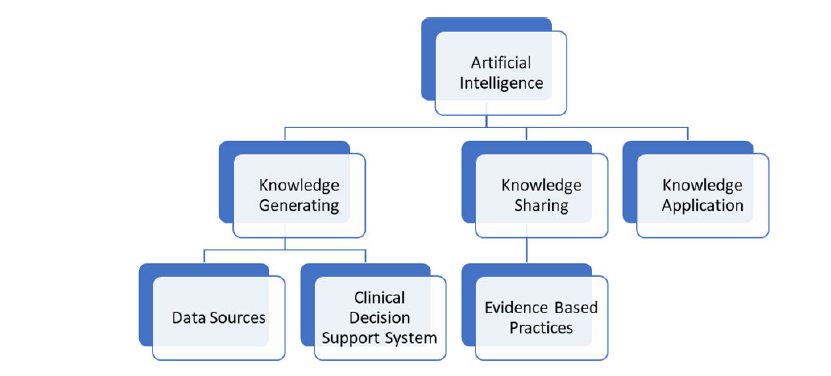
Further field studies are required that investigate the variation in the use of AI in various healthcare facilities and the influence of this aspect on efficiency (Figure 2).
Artificial Intelligence (AI)
The central topic of the diagram represents the fundamental technology utilized to improve healthcare knowledge management. AI makes a substantial contribution to data processing and analysis, which can help inform decisions and increase healthcare service efficiency.
Figure 2: Conceptual Framework Section
Knowledge Generation
Artificial intelligence (AI) contributes significantly to knowledge generation by translating raw data into valuable insights. The "Data Sources" are critical in this process, which involves AI systems processing massive volumes of healthcare-related data (such as patient records, medical pictures and clinical studies) to provide useful information.
Knowledge Sharing
Once knowledge is developed, it must be distributed throughout the healthcare ecosystem. The "Clinical Decision Support System" facilitates this sharing by ensuring that the relevant information reaches the right healthcare providers at the right time, resulting in more informed decisions and improved patient care.
Knowledge Applications
The final phase in the framework is to apply the generated and shared knowledge. The use of evidence-based strategies is critical to improving patient outcomes. AI facilitates this by delivering individualized treatment plans based on available data and knowledge.
Knowledge Generation (Data Sources)
This step stresses the **creation of knowledge** by gathering medical data. Data can come from a variety of sources, including Electronic Health Records (EHRs), medical imaging, lab findings and patient monitoring systems. AI techniques assist in processing these big datasets, revealing hidden patterns that can be transformed into important clinical information.
Knowledge Sharing (Clinical Decision Support System)
AI and Knowledge Management (KM) enable the **distribution of knowledge** among healthcare professionals. Clinical Decision Support Systems (CDSS) serve an important role in delivering real-time advice, diagnostic aid and therapeutic guidance. This ensures that knowledge is not isolated but properly disseminated, allowing for collaborative and fast decisions.
Table 1: Descriptive Statistics
Variables
Mean
SD
Patient Recovery Rate
75.6
8.4
Diagnostic Accuracy
82.3
6.1
Treatment Personalization
70.4
9.8
Operational Efficiency (Time Saved in Hours)
120.5
15.2
Knowledge Application (Evidence-Based Practice)
Finally, developed and shared knowledge is put into practice to improve patient care. Evidence-based practices imply that physicians leverage AI-driven insights and established medical criteria to provide safer, more accurate and efficient care. This stage ensures that knowledge is converted into practical advantages for patients, hence boosting outcomes and operational efficiency.
Quantitative Analysis
Descriptive Statistics: Descriptive statistics to conclude on the most significant issues that influence the application of AI-powered Knowledge Management (KM) systems in healthcare. The descriptive statistics may help determine the impact of AI on healthcare performance by analyzing mean and standard deviation of such variables as patient outcomes, diagnostic precision and operational effectiveness before and after integration with AI-KM. This will assist us to know the extent to which AI-powered solutions will enhance patient care and streamline the operations of healthcare provision (Table 1).
The discussion of the factors proves the aspects that AI-powered Knowledge Management (KM) system utilisation impacted the healthcare outcomes significantly. There is a mean recovery rate of 75.6% and standard deviation of 8.4% taken over the average recovery rate of patients. This implies that recovery is usually good albeit some disparities between groups of patients, or health care environments. This implies that AI is improving the recovery process, yet it might require further development to become more unwavering in various cases. The mean diagnostic rate has increased to 82.3% with standard deviation of 6.1 proportion. This demonstrates that AI-enhanced KM systems can contribute to the better diagnosis, whereas the insignificant findings indicate that there is, still, a scope to achieve more comparable outcomes in various healthcare practitioners.
Table 2: ANOVA Analysis
Source of Variation
Sum of Squares (SS)
df
Mean Square (MS)
F-Value
Sig. (p-value)
Between Groups
250.45
2
125.23
4.85
0.009
Within Groups
1083.75
57
19.00
Total
1334.20
59
With the average of 70.4% towards the personalization of therapy, AI is allowing most medical treatments to become specialized to an individual. This SD, which is 9.8% is quite large and hence great variation in the extent of individualization of the therapies used. That could imply that we require more sophisticated or specialized AI models to ensure more uniformity in customized care with different patients.
Finally, the operational efficiency has slightly improved with 120.5 hours saved a year by healthcare organizations. The standard deviation of 15.2 hours shows that AI has saved a lot of time, although the benefits depend on the various healthcare settings or departments. This variability shows that there are chances to make operational operations even better so that results are more consistent.
Overall, the use of AI in KM systems has made significant gains in many areas of healthcare. However, the differences in results suggest that AI models could be made more consistent and effective in a wider range of healthcare settings by being improved and adapted.
ANOVA Analysis
ANOVA analysis is to find out if the means of three or more groups are statistically different from each other. In this study, it is utilized to see if using AI in healthcare settings makes them run more efficiently by comparing the means of different groups.
Null Hypothesis (H₀)
There is no significant relationship between the level of AI adoption and operational efficiency in healthcare settings.
Alternative Hypothesis (H₁)
There is a significant relationship between the level of AI adoption and operational efficiency in healthcare settings (Table 2).
The ANOVA test shows that there is a strong link between using AI and improving operational efficiency in healthcare settings. The total of the squares between groups is 250.45, while the average square is 125.23. The p-value is 0.009 and the F-value is 4.85. Since the p-value is smaller than the significance level of 0.05, the results show that using AI has a statistically meaningful effect on operational efficiency. So, we reject the null hypothesis and say that using AI makes healthcare operations more efficient.
CONCLUSION
The integration of Artificial Intelligence (AI) with Knowledge Management (KM) systems has proved to have a lot of potential in enhancing care of patients and ensuring smooth running of activities in the healthcare sector. It has been demonstrated, through a systematic study and analysis that AI technologies like machine learning, natural language processing and predictive analytics can be used to enhance patient health outcomes, including recovery rates, diagnosis and an individualized treatment regimen. Healthcare KM systems based on AI have helped the operations of the healthcare industry become smoother because they have reduced the time that is dedicated to administrative tasks significantly.
The findings also indicate that the integration of AI has the potential to improve the situation however it does not work out similarly in all healthcare environments. Comparisons related to the effectiveness of the functioning and effectiveness of the treatment indicate that the AI models and KM frameworks must be continuously enhanced and modified to various healthcare environments to ensure that the larger numbers of people could use them successfully.
Ethical concerns with the use of AI in healthcare, such as: data confidentiality, information security, bias in algorithms, should remain a priority to be addressed before they are an issue. To be responsible and effective in using AI technologies, it is obligatory that they are clear, fair and aligned with rules and regulations.
Future Directions
The finding leaves the prospect of additional works concerning the collaboration between AI and KM to improve the medical sphere. The future of research on API driven KM systems might include investigating ways to make them more homogenous in various healthcare contexts, targeting the resolution of issues relating to data quality, algorithm biasness and interoperability. Moreover, ethical questions that arise when AI is applied to healthcare also need to be researched closer, in particular, in regard to obtaining patient consent, guaranteeing the safety of data and acting fairly.
The answers to the issues identified in this research paper will involve monitoring advances in Explainable AI (XAI), developing powerful AI models that can be applied to diverse healthcare scenarios. Also, ongoing attempts to increase communication between AI developers, healthcare practitioners and legislators will make sure that AI is used in ways that improve both patient care and the efficiency of the healthcare system, all while upholding ethical norms.
Contribution and Originality of the Study
This research makes a unique contribution to the industry by connecting two crucial areas of healthcare innovation-Artificial Intelligence (AI) and Knowledge Management (KM), which are frequently explored separately. Unlike previous studies, which focused solely on AI applications or knowledge management systems, this study combines the two fields into a comprehensive conceptual framework. The novelty resides in demonstrating how AI may systematically improve the processes of information generation, sharing and application to improve decision-making and patient outcomes.
Specifically, this Work Makes Three Contributions:
Conceptual Integration: The study creates a framework to combine AI's technical capabilities (data processing, pattern recognition and automation) with knowledge management activities (creation, distribution and application). This integrated perspective fills a vacuum in the literature where these two realms have been separated
Relevance in Healthcare: The research highlights how AI-KM may enhance diagnostic accuracy, support clinical decision-making and encourage evidence-based practices. This demonstrates a clear pathway from theoretical advancement to real healthcare transformation
Identifying Challenges and Future Directions: The article highlights both opportunities and hurdles to AI-driven knowledge managx ement in healthcare, including data quality, interoperability, bias and ethical considerations. This balanced approach ensures that the study is relevant to both academic researchers and healthcare practitioners
Limitations:
Data Availability: Access to proprietary or restricted healthcare datasets may limit the scope of data collection and analysis
Technological Variability: Variations in AI tools, algorithms and KM frameworks across healthcare institutions may introduce challenges in generalizing findings
Bias in AI Systems: As the study involves examining AI algorithms, addressing biases in data and AI models will be critical to ensure the validity of the findings
Ethical Considerations
Given the sensitive nature of healthcare data, the study adheres to strict ethical guidelines:
Informed Consent will be obtained from all interviewees and survey participants, ensuring that they understand the purpose of the research and the confidentiality of their responses
Ethical approval will be sought from relevant review boards for any primary data collection involving health care professionals or patient data.
REFERENCES
Koo, T.H. et al. “Systematic Review of the Application of Artificial Intelligence in Healthcare and Nursing Care.” The Malaysian Journal of Medical Science, vol. 31, no. 5, 2024, pp. 135–142. https://doi.org/10.21315/mjms2024.31.5.9.
Nicolini, D. et al. “Managing Knowledge in the Healthcare Sector: A Review.” International Journal of Management Reviews, vol. 10, no. 3, 2008, pp. 245–263. https://doi.org/10.1111/J.1468-2370.2007.00219.X.
Shahmoradi, L. et al. “Knowledge Management Implementation and the Tools Utilized in Healthcare for Evidence-Based Decision Making.” 2017.
Faiyazuddin, Md. et al. “The Impact of Artificial Intelligence on Healthcare: A Comprehensive Review of Advancements in Diagnostics, Treatment and Operational Efficiency.” Health Science Reports, vol. 8, no. 1, 2025. https://doi.org/10.1002/hsr2.70312.
Anakal, S. and S. Soumya. “Literature Review: The Use of AI in Healthcare.” Journal of Scientific Research and Technology, 2024, pp. 81–84. https://doi.org/10.61808/jsrt143.
Rana, M. et al. “Obstacles to the Full Realization and Adoption of Artificial Intelligence (AI).” South Eastern European Journal of Public Health, 2024, pp. 1003–1016. https://doi.org/10.70135/seejph.vi.2251.
Taherdoost, H. and M. Madanchian. “Artificial Intelligence and Knowledge Management: Impacts, Benefits and Implementation.” Computers, vol. 12, no. 4, 2023, p. 72. https://doi.org/10.3390/computers12040072.
Sira, M. “Artificial Intelligence in Knowledge Capture and Transfer: Breaking Down Organizational Silos.” System Safety, vol. 6, no. 1, 2024. https://doi.org/10.2478/czoto-2024-0027.
Upadhyay, N. and A. Gulati. “Applications of Artificial Intelligence and Machine Learning for Diagnosis, Prediction and Smart Health Care.” 2023, pp. 79–94. https://doi.org/10.1007/978-981-99-6472-7_6.
Tiwari, R. “The Use of AI and Machine Learning in Healthcare and Its Potential to Improve Patient Outcomes.” Indian Scientific Journal of Research in Engineering and Management, vol. 7, no. 1, 2023. https://doi.org/10.55041/ijsrem17582.
Ahmed, J. and M. Ahmed. “Machine Learning and Artificial Intelligence in Healthcare.” Empowering Artificial Intelligence through Machine Learning, Apple Academic Press, 2022, pp. 43–56.
Sharma, A. et al. "Harnessing Machine Learning and Deep Learning in Healthcare: From Early Diagnosis to Personalized Treatment." Advances in Healthcare Information Systems and Administration Book Series, 2024, pp. 369–398. https://doi.org/10.4018/979-8-3693-7277-7.ch012.
Gautam, L. "Natural Language Processing-Based Structured Data Extraction from Unstructured Clinical Notes." Notes, vol. 6, 2024, p. 9.
Hossain, M.R. et al. "Natural Language Processing (NLP) in Analyzing Electronic Health Records for Better Decision Making." Journal of Computer Science and Technology Studies, vol. 6, no. 5, 2024, pp. 216–228. https://doi.org/10.32996/jcsts.2024.6.5.18.
Sharma, D. et al. "Enhancing Organisational Intelligence: Integration of Artificial Intelligence and Knowledge Management." IGI Global, 2023, pp. 167–184. https://doi.org/10.4018/978-1-6684-9576-6.ch008.
Olson, D.L. and Ö.M. Araz. "Analytics and Knowledge Management in Healthcare." Data Mining and Analytics in Healthcare Management: Applications and Tools, Springer Nature Switzerland, 2023, pp. 7–19.
Nyiramana, M.P. "The Role of Artificial Intelligence in Clinical Decision Support Systems." Research Journal of Interdisciplinary and Policy Perspectives, vol. 3, no. 2, 2024, pp. 14–17. https://doi.org/10.59298/rijpp/2024/321417.
Bharmal, A.R. "Transforming Healthcare Delivery: AI-Powered Clinical Decision Support Systems." International Journal of Scientific Research in Computer Science, Engineering and Information Technology, vol. 11, no. 1, 2025, pp. 339–347. https://doi.org/10.32628/cseit25111233.
Elhaddad, M. and S. Hamam. "AI-Driven Clinical Decision Support Systems: An Ongoing Pursuit of Potential." Cureus, 2024. https://doi.org/10.7759/cureus.57728.
Stafie, C. et al. "Exploring the Intersection of Artificial Intelligence and Clinical Healthcare: A Multidisciplinary Review." Diagnostics, vol. 13, no. 12, 2023, p. 1995. https://doi.org/10.3390/diagnostics13121995.
Rich, E. and P. Winston. "AI in Healthcare." International Journal of Advanced Research in Science, Communication and Technology, 2024. https://doi.org/10.48175/ijarsct-15285.
Srikannan, D. "Integrated Diagnosis, Treatment and Prognosis in Healthcare Using Artificial Intelligence." Indian Journal of Artificial Intelligence and Neural Networking (IJAINN), vol. 4, no. 3, 2024, pp. 1–5. https://doi.org/10.54105/ijainn.c1086.04030424.
Lainjo, B. "A Meta-Study on Optimizing Healthcare Performance with Artificial Intelligence and Machine Learning." Journal of Autonomous Intelligence, 2024. https://doi.org/10.32629/jai.v7i5.1535.
Sensuse, D.I., Y.G. Sucahyo, S. Rohajawati, and P. Anggia. "Models and Frameworks of Knowledge Management: A Literature Review." International Conference on Information Science, Electronics and Electrical Engineering, vol. 2, 2014, pp. 1166–1170. https://doi.org/10.1109/INFOSEEE.2014.6947854.
Perrott, B. and R. Iedema. "Knowledge Management in Healthcare Settings." Asia Pacific Journal of Health Management, vol. 4, no. 1, 2009, pp. 27–33. http://ecite.utas.edu.au/94298.
Cabrita, M. et al. "Healthcare Knowledge Management: Integrating Knowledge with Evidence-Based Practice." Springer, Berlin, Heidelberg, 2014, pp. 1121–1131. https://doi.org/10.1007/978-3-642-55122-2_97.
Vaidya, R. et al. “Advancing Healthcare through Artificial Intelligence: Opportunities, Challenges and Future Directions.” 2024. https://doi.org/10.47392/irjaem.2024.0177.
Albalawi, A.F. et al. “Ethical Obligations and Patient Consent in the Integration of Artificial Intelligence in Clinical Decision-Making.” Journal of Healthcare Sciences, vol. 4, no. 12, 2024, pp. 957–963. https://doi.org/10.52533/johs.2024.41241.
Mullaj, E. “The Artificial Intelligence Dilemma: Navigating Ethics in Healthcare.” University of Waterloo Journal of Undergraduate Health Research, vol. 1, no. 3, 2024. https://doi.org/10.15353/juhr.v1i3.6106.
Yahiaoui, F. et al. “Mapping the Growth and Trends of Knowledge Management in Health Organizations: A Bibliometric Exploration.” International Journal of Advances in Applied Sciences, 2024. https://doi.org/10.21833/ijaas.2024.03.017.
Oude Nijeweme-d’Hollosy, W. et al. “Barriers and Requirements for Achieving Interoperable eHealth Technology in Primary Care.” 2015, pp. 167–168. https://doi.org/10.13140/RG.2.1.4171.9528.
Bernabe, M. and R. Ebardo. “Barriers Leading to the Discontinuance of Telemedicine among Healthcare Providers: A Systematic Review.” Data & Metadata, vol. 4, 2024, p. 440. https://doi.org/10.56294/dm2025440.
Shear, K. et al. “Experts’ Perspectives on Use of Fast Healthcare Interoperable Resources for Computerized Clinical Decision Support.” CIN: Computers, Informatics, Nursing, 2023. https://doi.org/10.1097/CIN.0000000000001033.
Kruse, C.S. et al. “Barriers to electronic health record adoption: A systematic literature review.” Journal of Medical Systems, vol. 40, no. 12, 2016, pp. 1–7. https://doi.org/10.1007/S10916-016-0628-9.
Asrifan, A. et al. “Synergizing Human and Machine.” Advances in Environmental Engineering and Green Technologies Book Series, 2024, pp. 249–282. https://doi.org/10.4018/979-8-3693-9879-1.ch010.
Montani, S. and M. Striani. “Artificial Intelligence in Clinical Decision Support: A Focused Literature Survey.” Yearbook of Medical Informatics, vol. 28, no. 1, 2019, pp. 120–127. https://doi.org/10.1055/S-0039-1677911.
Chomutare, T. et al. “Artificial Intelligence Implementation in Healthcare: A Theory-Based Scoping Review of Barriers and Facilitators.” International Journal of Environmental Research and Public Health, vol. 19, no. 23, 2022, p. 16359. https://doi.org/10.3390/ijerph192316359.
Wubineh, B.Z. et al. “Exploring the Opportunities and Challenges of Implementing Artificial Intelligence in Healthcare: A Systematic Literature Review.” 2023. https://doi.org/10.1016/j.urolonc.2023.11.019.
Owoyemi, A. et al. “Lessons for Approaching Implementation of AI Systems in Clinical Settings.” 2024, pp. 472–477. https://doi.org/10.1109/ichi61247.2024.00067.
Yu, S. et al. “The ethics of using artificial intelligence in medical research.” Kosin Medical Journal, vol. 39, no. 4, 2024, pp. 229–237. https://doi.org/10.7180/kmj.24.140.
Gupta, S. “Ethical, Privacy and Security Issues in Smart Healthcare.” Advances in Human Services and Public Health (AHSPH) Book Series, 2024, pp. 83–98. https://doi.org/10.4018/979-8-3373-0240-9.ch004.
Cross, J.L. et al. “Bias in Medical AI: Implications for Clinical Decision-Making.” PLOS Digital Health, vol. 3, no. 11, 2024, e0000651. https://doi.org/10.1371/journal.pdig.0000651.
Wang, M.L. and K.A. Bertrand. “AI for All: Bridging Data Gaps in Machine Learning and Health.” Translational Behavioral Medicine, vol. 15, no. 1, 2025. https://doi.org/10.1093/tbm/ibae075.
All papers should be submitted electronically. All submitted manuscripts must be original work that is not under submission at another journal or under consideration for publication in another form, such as a monograph or chapter of a book. Authors of submitted papers are obligated not to submit their paper for publication elsewhere until an editorial decision is rendered on their submission. Further, authors of accepted papers are prohibited from publishing the results in other publications that appear before the paper is published in the Journal unless they receive approval for doing so from the Editor-In-Chief.
Himalayan Journal of Applied Medical Sciences and Research open access articles are licensed under a Creative Commons Attribution-Share A like 4.0 International License. This license lets the audience to give appropriate credit, provide a link to the license, and indicate if changes were made and if they remix, transform, or build upon the material, they must distribute contributions under the same license as the original.
Recommended Articles
Research Article
Intellident – Identification System
Srishti Mishra,
...
Skand Sao
Published: 30/06/2026
Download PDF
Cite
x
APA
Mishra, S., Chandra, A., Karpathak, S., Pradhan, S., Godbole, S. & Sao, S. (2026). Intellident – Identification System. Himalayan Journal of Applied Medical Sciences and Research, 7(2), 1-4.
MLA
Mishra, Srishti, et al. "Intellident – Identification System." Himalayan Journal of Applied Medical Sciences and Research 7.2 (2026): 1-4.
Chicago
Mishra, Srishti, Anukrity Chandra, Shilpi Karpathak, Sonia Pradhan, Shambhavi Godbole and Skand Sao. "Intellident – Identification System." Himalayan Journal of Applied Medical Sciences and Research 7, no. 2 (2026): 1-4.
Harvard
Mishra, S., Chandra, A., Karpathak, S., Pradhan, S., Godbole, S. and Sao, S. (2026) 'Intellident – Identification System' Himalayan Journal of Applied Medical Sciences and Research 7(2), pp. 1-4.
Vancouver
Mishra S, Chandra A, Karpathak S, Pradhan S, Godbole S, Sao S. Intellident – Identification System. Himalayan Journal of Applied Medical Sciences and Research. 2026 Jul;7(2):1-4.
Download PDF
Research Article
Dento-Vault: A Universal Cloud-Based Dental Record System for Lifelong, Interoperable Patient Care
Anukrity Chandra,
...
Achint Chhabra
Published: 23/08/2026
Download PDF
Cite
x
APA
Chandra, A., Mishra, S., Pradhan, S., Karpathak, S., Mishra, A. & Chhabra, A. (2026). Dento-Vault: A Universal Cloud-Based Dental Record System for Lifelong, Interoperable Patient Care. Himalayan Journal of Applied Medical Sciences and Research, 7(2), 1-6.
MLA
Chandra, Anukrity, et al. "Dento-Vault: A Universal Cloud-Based Dental Record System for Lifelong, Interoperable Patient Care." Himalayan Journal of Applied Medical Sciences and Research 7.2 (2026): 1-6.
Chicago
Chandra, Anukrity, Srishti Mishra, Sonia Pradhan, Shilpi Karpathak, Avantika Mishra and Achint Chhabra. "Dento-Vault: A Universal Cloud-Based Dental Record System for Lifelong, Interoperable Patient Care." Himalayan Journal of Applied Medical Sciences and Research 7, no. 2 (2026): 1-6.
Harvard
Chandra, A., Mishra, S., Pradhan, S., Karpathak, S., Mishra, A. and Chhabra, A. (2026) 'Dento-Vault: A Universal Cloud-Based Dental Record System for Lifelong, Interoperable Patient Care' Himalayan Journal of Applied Medical Sciences and Research 7(2), pp. 1-6.
Vancouver
Chandra A, Mishra S, Pradhan S, Karpathak S, Mishra A, Chhabra A. Dento-Vault: A Universal Cloud-Based Dental Record System for Lifelong, Interoperable Patient Care. Himalayan Journal of Applied Medical Sciences and Research. 2026 Jul;7(2):1-6.
Download PDF
Research Article
Ethnomedicinal Plants for Obesity Management - Phytochemicals, Molecular Targets and Prospects of Green Nanotechnology
Arpana Ashokrao Durge,
Utpal Jagdish Dongre
Published: 25/03/2026
Download PDF
Cite
x
APA
Durge, A. A. & Dongre, U. J. (2026). Ethnomedicinal Plants for Obesity Management - Phytochemicals, Molecular Targets and Prospects of Green Nanotechnology. Himalayan Journal of Applied Medical Sciences and Research, 7(1), 1-6.
MLA
Durge, Arpana Ashokrao and Utpal Jagdish Dongre. "Ethnomedicinal Plants for Obesity Management - Phytochemicals, Molecular Targets and Prospects of Green Nanotechnology." Himalayan Journal of Applied Medical Sciences and Research 7.1 (2026): 1-6.
Chicago
Durge, Arpana Ashokrao and Utpal Jagdish Dongre. "Ethnomedicinal Plants for Obesity Management - Phytochemicals, Molecular Targets and Prospects of Green Nanotechnology." Himalayan Journal of Applied Medical Sciences and Research 7, no. 1 (2026): 1-6.
Harvard
Durge, A. A. and Dongre, U. J. (2026) 'Ethnomedicinal Plants for Obesity Management - Phytochemicals, Molecular Targets and Prospects of Green Nanotechnology' Himalayan Journal of Applied Medical Sciences and Research 7(1), pp. 1-6.
Vancouver
Durge AA, Dongre UJ. Ethnomedicinal Plants for Obesity Management - Phytochemicals, Molecular Targets and Prospects of Green Nanotechnology. Himalayan Journal of Applied Medical Sciences and Research. 2026 Jan;7(1):1-6.
Download PDF
Research Article
Digital Implantology: Current Concepts, Clinical Applications, Limitations and Future Directions - A Narrative Review
Anukrity Chandra
Published: 30/07/2026
Download PDF
Cite
x
APA
Chandra, A. (2026). Digital Implantology: Current Concepts, Clinical Applications, Limitations and Future Directions - A Narrative Review. Himalayan Journal of Applied Medical Sciences and Research, 7(2), 1-7.
MLA
Chandra, Anukrity. "Digital Implantology: Current Concepts, Clinical Applications, Limitations and Future Directions - A Narrative Review." Himalayan Journal of Applied Medical Sciences and Research 7.2 (2026): 1-7.
Chicago
Chandra, Anukrity. "Digital Implantology: Current Concepts, Clinical Applications, Limitations and Future Directions - A Narrative Review." Himalayan Journal of Applied Medical Sciences and Research 7, no. 2 (2026): 1-7.
Harvard
Chandra, A. (2026) 'Digital Implantology: Current Concepts, Clinical Applications, Limitations and Future Directions - A Narrative Review' Himalayan Journal of Applied Medical Sciences and Research 7(2), pp. 1-7.
Vancouver
Chandra A. Digital Implantology: Current Concepts, Clinical Applications, Limitations and Future Directions - A Narrative Review. Himalayan Journal of Applied Medical Sciences and Research. 2026 Jul;7(2):1-7.
Naeem Idris, D. (2025). Integrating Knowledge Management and AI for Optimizing Patient Care: Systematic Review. Himalayan Journal of Applied Medical Sciences and Research, 6(2), 1-14.
MLA
Naeem Idris, Dina. "Integrating Knowledge Management and AI for Optimizing Patient Care: Systematic Review." Himalayan Journal of Applied Medical Sciences and Research 6.2 (2025): 1-14.
Chicago
Naeem Idris, Dina. "Integrating Knowledge Management and AI for Optimizing Patient Care: Systematic Review." Himalayan Journal of Applied Medical Sciences and Research 6, no. 2 (2025): 1-14.
Harvard
Naeem Idris, D. (2025) 'Integrating Knowledge Management and AI for Optimizing Patient Care: Systematic Review' Himalayan Journal of Applied Medical Sciences and Research 6(2), pp. 1-14.
Vancouver
Naeem Idris D. Integrating Knowledge Management and AI for Optimizing Patient Care: Systematic Review. Himalayan Journal of Applied Medical Sciences and Research. 2025 Jul;6(2):1-14.


 Download PDF
 Download XML