Contents
Download PDF
pdf Download XML
2725 Views
288 Downloads
Share this article
Research Article | Volume 5 Issue 1 (Jan-June, 2024) | Pages 1 - 7
Business Strategy for Independent Power Producer (IPP) Companies to Succeed in State Own Project Tender, Case Study: Power Purchase of Minihydro Power Plant (PLTM) with Distributed Quota Capacity of 15 MW on JAMALI Electricity System
 ,
1
Institute of Technology Bandung, School of Business and Management, Jakarta, Indonesia
2
Master of Business Administration Program, Institut Teknologi Bandung, Indonesia
Under a Creative Commons license
Open Access
Received
Nov. 10, 2023
Revised
Dec. 1, 2023
Accepted
Dec. 25, 2023
Published
Jan. 9, 2024
Abstract

This Final Project delves into the strategic methods employed by Independent Power Producer (IPP) companies, with a particular focus on their participation in state-owned project tenders in Indonesia. The study centers around a case study of the Minihydro Power Plant (PLTM) within the JAMALI Electricity System, examining the dynamics and challenges faced by IPP in the tender process. The research employs a variety of analytical tools, including SWOT-TOWS analysis, diamond strategy/five element strategy, and thematic analysis, to decode the complexities and develop strategic solutions. Key findings indicate that IPP need to align their strategies with evolving government policies, market demands, and environmental factors. The study underscores the importance of regulatory compliance, risk management, and sustainable business practices. It provides significant insights into the strategic necessities for IPP to be successful in bidding for state-owned project tenders, emphasizing the need for adaptability, ethical practices, and strategic collaboration. The thesis presents a comprehensive roadmap for IPP to boost their competitive edge and achieve success in Indonesia’s dynamic renewable energy sector.

Keywords
INTRODUCTION

Background

The landscape of renewable energy development in Indonesia has witnessed a significant evolution in recent years, particularly within the realm of Independent Power Producers (IPP) and their engagement in state-owned project tenders. This evolution is exemplified in the case of PT Manggala Gita Karya (MGK), an IPP with a diverse portfolio in energy production, including gas, coal and hydroelectric power. The focus of this study is on the tender process for a 15 MW minihydro power plant (PLTM) within the JAMALI Electricity System in West Java, a pivotal project under the framework of Presidential Decree 112-year 2022, which aims at the acceleration of renewable energy in Indonesia [1].


Historically, the participation of IPP in state-owned tenders has been fraught with challenges and opportunities shaped by evolving government policies, market dynamics and environmental considerations. These elements collectively underscore the intricate interplay between business strategy, regulatory compliance and sustainable development within the Indonesian energy sector. The journey of MGK, from its establishment in 1986 to its current strategic positioning, reflects the broader narrative of Indonesia's energy sector transitioning towards sustainability and efficiency, aligning with the nation's commitment to net-zero emissions by 2060 [2].


Previous works in this field have extensively explored the technical and economic aspects of renewable energy projects. However, there remains a gap in comprehensive understanding of the strategic maneuvers adopted by IPP in navigating the complex tender processes, especially in the context of evolving governmental regulations and market conditions. This research aims to bridge this gap by providing an in-depth analysis of the tender process, including the administrative, financial and technical criteria essential for successful bids. Furthermore, it delves into the strategic decisions, risk managemsent and ethical considerations intrinsic to the procurement process.


The scope of this research is confined to the decision-making processes leading to the power purchase agreement within the JAMALI electricity distribution network. It includes an examination of the business strategies employed by MGK, their approach to meeting PLN requirements and the alignment of these strategies with government policies and environmental ethics. The research employs qualitative methods, including interviews and thematic analysis, to glean insights into the strategies and challenges faced by IPP in tender processes.


In essence, this study not only contributes to the existing literature by providing a nuanced understanding of the strategic dimensions in IPP tender participation but also serves as a practical guide for other IPP navigating similar challenges. It highlights the importance of adaptability, strategic foresight and ethical considerations in securing and successfully executing state-owned renewable energy projects [3].


Rationale and Knowledge Gap

The transition to renewable energy is a global imperative and Indonesia is at a pivotal point in this transformation. The involvement of Independent Power Producers (IPP) like MGK in state-owned renewable energy projects, especially in the context of the Presidential Decree 112-year 2022, is crucial for the nation's energy sector. Understanding the strategic, regulatory and operational challenges faced by IPP in the tender process is vital for enhancing the efficiency and success rate of such projects. This understanding can guide policy formulation, project planning and execution, ensuring alignment with Indonesia's commitment to sustainable energy development and net-zero emissions.


While there is substantial research on the technical and economic dimensions of renewable energy projects, there is a noticeable gap in literature concerning the strategic approaches of IPP in navigating government tenders under new regulations like Presidential Decree 112-year 2022. Specifically, the nuances of strategic decision-making, risk management and ethical considerations in the tender process remain under-explored. This gap limits the comprehensive understanding required for effective policymaking and project implementation in the renewable energy sector [4-8].


Objective to Study

The primary objectives of this research are to:


  • Understand how the terms and conditions, as well as the addendums of the quota auction tender, align with Presidential Decree Number 112-Year 2022

  • Analyze the situation of auction participants relative to the existing terms and conditions

  • Investigate the business strategies employed by companies like MGK in securing projects through tender auctions

  • Evaluate the strategic steps MGK needs to take in preparing tender documents and making decisions during the auction process


Assess the challenges MGK faces in adopting these strategies, including competition and risk management, to successfully implement and operate the proposed hydro energy power plant.


The study aims to provide a comprehensive understanding of the strategic approaches necessary for IPP like MGK to succeed in the Indonesian renewable energy sector, particularly in the context of government-led initiatives and tender processes [9-12].


Literature Review

The literature review for this research provides a comprehensive examination of several key theoretical frameworks and concepts relevant to the study of Independent Power Producers (IPPs) like MGK in the context of state-owned project tenders. These frameworks and concepts are crucial for understanding the strategic, regulatory and ethical dimensions that influence the decision-making and operational processes of IPPs in the renewable energy sector [12,13].


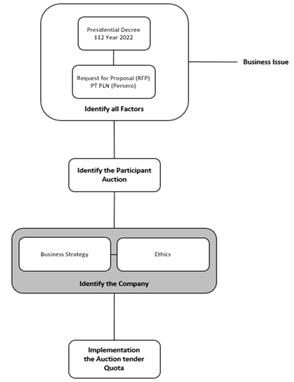
SWOT–TOWS Analysis assesses an organization's internal strengths and weaknesses, along with external opportunities and threats. It is pivotal for strategic planning and identifying the right tactics to exploit opportunities and mitigate threats. The TOWS extension further links internal aspects with external factors, facilitating the creation of strategic options tailored to organizational capabilities and environmental conditions. Diamonds Strategy is employed for dynamic industries like hydroelectric power, this strategy considers various factors such as arenas, vehicles, differentiators, staging and economic logic. It is particularly useful for MGK, given the dynamic nature of the hydroelectric power sector and its reliance on natural resources. The study highlights the significance of ethics in business and environmental contexts. It explores consequentialism ethics, which emphasizes the outcomes of actions, business ethics focusing on practices within companies and their impact on society and environmental ethics, which are concerned with the balance and sustainability of human-environment interactions (Figure 1).


The provided conceptual framework illustrates the structured approach MGK follows in navigating the tender process for a hydro energy power plant, as dictated by Presidential Decree 112 Year 2022 and the Request for Proposal (RFP) issued by PT PLN (Persero). Initially, the framework indicates that MGK must consider all factors outlined in the decree and the RFP to understand the business issue fully. The process begins with identifying the participant auction, which involves determining eligible participants based on the tender's requirements. Subsequently, the framework bifurcates into two simultaneous pathways: the development of a robust business strategy and the adherence to ethical standards, both of which are critical to MGK identity as a company. The culmination of this framework is the implementation of the auction tender quota, where MGK applies its business strategy and ethical considerations to execute the tender and, ultimately, to secure and implement the project successfully.


Figure 1: Conceptual Framework


This framework underscores the importance of strategic alignment with regulatory requirements, ethical business conduct and effective implementation strategies in the competitive tendering environment [14].

MATERIALS AND METHODS

This methodology is constructed around qualitative research principles and employs strategic frameworks such as SWOT-TOWS and the Five Major Elements Strategy to assess MGK internal and external capabilities. This helps to identify strengths, weaknesses, opportunities and threats and to strategize MGK positioning in the decision-making process. The research design maps out the data collection methods, data analysis techniques and the logical flow of the study, which are all underpinned by these theoretical concepts.


The data collection consists of two primary methods, there are In Depth Interview and Focus Discussion Group and the secondary data collection though RFP from PT PLN (Persero) to supporting these primary methods. This data offers additional context on the tendering process and requirements, augmenting insights from the primary data. The In-Depth Interview are key individuals from MGK and other energy companies who are significantly involved in the PLTM quota project will be interviewed. These semi-structured interviews aim to delve into the experiences, perspectives and strategies related to decision-making in the tender process. And the second one is Focus Discussion Group are diverse stakeholder groups will participate in FGDs to provide a range of perspectives on the decision-making process. This interactive method is designed to facilitate rich discussions that lead to a comprehensive understanding of the challenges and dynamics involved.


The research utilizes two principal analysis methods, there are Thematic Analysis and Content analysis, the thematic analysis to approach involves a deep examination of interview and FGD transcripts to identify recurring themes and patterns. It is an iterative process where the researcher refines and develops themes that capture the essence of MGK is decision-making process. And Content Analysis to systematic review of textual content from documents like contracts and agreements procured during the decision-making process. This analysis will uncover crucial information impacting the decision-making outcomes, including potential strengths, weaknesses and expectations of the parties involved [15].


By integrating these qualitative data collection and analysis methods, the research aims to provide a rich, detailed understanding of MGK is decision-making process in the quota tender, leading to the development of effective business strategies. The findings are expected to contribute to the successful implementation of renewable energy projects in Indonesia and offer valuable insights for similar decision-making contexts in the energy sector​​.

RESULTS

Thematic Analysis Findings

The results should present the key themes identified from the interviews and focus group discussions, emphasizing the strategic approaches taken by MGK in the tender process, such as identifying potential mini-hydro sites, aligning with PLN load requirements and emphasizing business ethics. The analysis of potential locations, the impact of Perpres 112/2022 and the participants' perspective on the changing auction process would be included here (Table 1-3).


SWOT-TOWS Analysis Outcomes

The results should detail how MGK internal strengths and weaknesses and the external opportunities and threats were identified and strategized, particularly in relation to participating in the quota auction for the PLTM project.


SWOT
Internal Factors: 


Strengths: 

  • Strong alignment with regulatory frameworks, especially Presidential Decree Number 112-Year 2022

  • Comprehensive risk analysis and feasibility evaluation capabilities

  • Strategic adaptation to regulatory changes and policy shifts

  • Proactive identification and management of tender process risks


Weakness: 

  • Potential challenges in pricing benchmarking and financial implications under new regulations

  • Limited flexibility in adapting to rapid market changes

  • Dependence on specific regulatory compliance which may restrict innovation


Table 1: Theme Result: Research Question 1

Research Question 1

How are the terms and conditions, as outlined in the addendum to the quota tender, specifically aligned with or influenced by the provisions set forth in Presidential Decree Number 112-Year 2022?

Themes

Integration with Literature Review

Business Strategy Insights

Regulatory Conformity and Strategy Synchronization

Links with literature on regulatory frameworks and compliance, emphasizing the need for strategic alignment and risk assessment. Relevant theories include Institutional Theory and Strategic Risk Management.

Companies need to align their strategies with regulatory requirements and assess risks and financial implications to succeed in the tender process.

Risk Analysis and Feasibility Evaluation

Pricing Benchmarking and Financial Implications

Focus on regulatory compliance, risk evaluation, pricing strategy, adapting to policy changes, and strategic decision-making.

 Strategic Adaptation to Regulatory Changes

 Strategic Decision Making


Table 2: Theme Result: Research Question 2

Research Question 2

How does the situation of the participant auction relate to the existing term condition?

Themes

Integration with Literature Review

Business Strategy Insights

Comprehensive Terms Analysis and Strategic Alignment

Correlates with literature on Strategic Management and Decision Theory, focusing on aligning company strategies with tender conditions and managing risks.

Effective participation in the auction requires a thorough understanding of terms, strategic alignment, risk management, and responsiveness to market conditions.

Risk Governance and Regulatory Conformity

Feasibility Assessment for Operational Viability

Emphasize comprehensive terms analysis, risk governance, operational and financial feasibility, strategic decision-making, and market adaptation.

Strategic Decision-Making in Tender Participation

Market-Responsive Strategy Adaptation


Table 3: Theme Result: Research Question 3

Research Question 3

How are the business strategies used by companies participating in tender auctions to get the projects with the potential being auctioned, with refers to benefit of both parties?

Themes

Integration with Literature Review

Business Strategy Insights

Symbiotic Strategic Alignment

Aligns with theories of Strategic Alliance, Risk Management, Financial Strategy, Change Management, and Business Ethics.

Winning strategies involve aligning goals with PLN, managing risks, ensuring financial sustainability, innovating, and maintaining ethical collaboration.

Proactive Risk Mitigation Strategies

Financial Prudence and Market Competitiveness

Highlight strategies for mutual benefits, proactive risk mitigation, financial prudence, adaptive innovation, and ethical collaboration.

Adaptive Innovation in Project Execution

Ethical Collaboration in Competitive Environments


External Factors: 

Opportunities: 

  • Increasing demand for renewable energy projects, like Minihydro Power Plants, in Indonesia

  • Potential for strategic collaborations and partnerships in the renewable energy sector

  • Opportunities for innovation in project execution and tender strategy


Threats: 

  • Competitive tender environment with other IPPs and energy companies

  • Financial constraints and strict pricing benchmarks set by the government

  • Technological advancements in renewable energy may outpace the company's current capabilities


TOWS
Strengths-Opportunities: 

  • Leverage strong regulatory alignment and risk management capabilities to capitalize on the growing renewable energy market

  • Utilize strategic collaborations to innovate in project execution and tender strategies


Weakness - Opportunities: 

  • Address challenges in financial planning and pricing strategies by exploring innovative funding models in the renewable energy sector

  • Expand market understanding and adaptability to leverage opportunities in renewable energy projects


Strengths-Threats: 

  • Use adaptability to regulatory changes and risk management to navigate the competitive tender environment effectively

  • Stay updated with technological advancements and integrate them into project strategies


Weakness-Threats: 

  • Competitive Develop strategies to enhance financial flexibility and reduce reliance on specific regulatory frameworks

  • Focus on internal capacity building to stay competitive in a rapidly evolving technological landscape

Diamond Strategy/Five Major Element Strategy Application

This part would present how MGK incorporated the Diamond Strategy into its business model, considering national and regional competitive advantages and how this strategy influenced their positioning in the auction process. This analysis will incorporate insights from the interview and integrate them with the overall business strategy framework:


Arenas:

  • Areas of Focus: MGK focus on mini-hydro power plants and their alignment with the government's renewable energy initiatives

  • Location Strategy: Selecting potential sites for development, considering PLN load requirements and location constraints


Vehicles:

  • Mode of Entry: Direct participation in quota auctions and compliance with the Presidential Decree and PLN Request for Proposals (RFP).

  • Partnerships and Collaborations: Working with other developers and authorities for sustainable project development


Differentiators:

  • Competitive Edge: MGK commitment to ethical business practices, flexibility and quality in tender processes

  • Technical and Financial Competence: Ability to adapt to auction requirements and financial constraints set by PLN and government policies


Staging:

  • Development Phases: Progressive approach to tender participation, from site evaluation and feasibility assessment to strategic bidding and project execution

  • Adaptation to Policy Changes: Responding strategically to shifts in government policies and regulations, particularly Presidential Decree 112/2022


Economic Logic:

  • Financial Strategy: Focusing on cost-effective development, competitive pricing and aligning with PLN financial expectations

  • Profitability and Sustainability: Balancing project feasibility with economic viability, ensuring projects are profitable while contributing to net-zero emission goals


Assess the internal and external challenges faced by MGK during the tender process.


Internal Challenges

MGK internal challenges include aligning their project strategies with evolving regulatory requirements, particularly Presidential Decree 112/2022. This involves rigorous risk assessment and adapting their financial models to comply with the new regulations. Additionally, maintaining the balance between quality, cost-effectiveness and competitive pricing in their project proposals presents an ongoing internal challenge.


External Challenges

Externally, MGK contends with intense competition in the quota auctions for renewable energy projects. Navigating the complex and changing landscape of PLN tender requirements and government policies in renewable energy is a significant challenge. They also face the task of ensuring project sites align with PLN load requirements and regional energy needs, which requires extensive external coordination and assessment.


Strategic Implications

The internal challenges MGK faces call for introspection and an internal restructuring that allows for more agile resource allocation, enhanced training programs for staff and better financial planning. Addressing these internal challenges is within MGK direct control and can lead to significant improvements in tender strategy execution.


Externally, MGK needs to develop a robust strategy that considers market competition, stays ahead of technological developments and is flexible enough to adapt to economic and political changes. Partnerships and collaborations may be vital in overcoming some of these external challenges, particularly when it comes to technological advancements and regulatory compliance.

DISCUSSION

Strategic adjustments to address the weakness and threats identified in the analysis.


To address the weaknesses and threats identified in the analysis of MGK in the tender process for mini-hydro power plants in Indonesia, strategic adjustments can be proposed:


Addressing Internal Challenges

Enhance Financial and Technical Preparedness

MGK should invest in improving its financial modeling and technical assessment capabilities. This includes enhancing their ability to accurately estimate costs, assess site feasibility and align with the financial constraints and benchmark pricing of the tenders.


Strengthen Internal Processes

Streamlining internal processes for better adaptability to policy changes is crucial. This involves creating flexible strategies that can quickly adjust to new regulations and market conditions.


Employee Training and Development

Implementing training programs focused on regulatory compliance, risk assessment and tender process management can equip MGK workforce with the necessary skills to navigate the evolving tender landscape.


Addressing External Challenges

Building Strategic Partnerships

Forming alliances with other companies and stakeholders in the renewable energy sector can provide MGK with additional resources and insights, helping them to navigate the competitive tender environment more effectively.


Enhanced Market Research

Conducting thorough market research can inform MGK of the latest trends and technological advancements in renewable energy. This can help them in selecting optimal project sites and in formulating competitive bids.


Active Engagement with Policy Makers

Establishing a proactive dialogue with regulators and PLN can provide MGK with a better understanding of future policy directions and tender requirements. This can aid in better aligning their strategies with governmental objectives.


By implementing these strategic adjustments, MGK can mitigate the internal and external challenges it faces, enhancing its potential to succeed in state-owned project tenders. These strategies should be integrated into MGK overall business approach, ensuring alignment with their core objectives and long-term sustainability in the renewable energy sector.


Methods for leveraging strengths and opportunities to gain competitive advantage.


Capitalizing on Regulatory Alignment and Compliance

MGK can leverage its strength in understanding and aligning with regulatory frameworks, particularly Presidential Decree 112/2022. This includes using their knowledge of legal requirements to navigate the tender process effectively, ensuring compliance while optimizing their strategic approach


Enhancing Risk Management and Feasibility Evaluations

Utilizing their strong capabilities in risk assessment and feasibility studies, MGK can identify and mitigate potential risks early in the project lifecycle. This proactive approach in evaluating project viability can provide a competitive edge in the tendering process.


Strategic Site Selection and Load Requirement Analysis

By strategically selecting sites with high potential and aligning with PLN load requirements, MGK can optimize their project proposals. This involves thorough research and analysis of potential locations to ensure the highest probability of tender success


Innovative Approaches to Financial and Technical Challenges

MGK can use its innovative capabilities to address the financial and technical aspects of the tender process. This includes devising creative solutions for financial modeling, project funding and technical execution to stand out in the competitive tender landscape.


Exploiting Partnerships and Collaborative Opportunities

Building strategic partnerships and engaging in collaborations with other entities in the renewable energy sector can open up new opportunities. These collaborations can provide access to additional resources, knowledge sharing and joint ventures, enhancing MGK competitive position.


Adapting to Market Conditions and Policy Changes

MGK ability to adapt to changing market conditions and policy shifts is a significant strength. By staying agile and responsive to external changes, they can refine their tender strategies to align with the current regulatory and market environment.


Promoting Ethical and Sustainable Practices

Emphasizing their commitment to ethical business practices and sustainability can enhance MGK reputation and brand value. This approach aligns with the growing global focus on environmental responsibility, potentially attracting more opportunities and goodwill from stakeholders.


By leveraging these strengths and opportunities, MGK can enhance its strategic positioning in the competitive landscape of state-owned project tenders, particularly in the renewable energy sector of Indonesia. This approach ensures that they not only succeed in the tender process but also contribute positively to the nation's renewable energy goals.


Implementation Schedule

Here's an outline of what the Justification of Implementation Process could encompass.


Logical Argument for Proposed Solutions

The logical argument for the proposed solutions in your thesis revolves around how the SWOT-TOWS and thematic analysis directly address MGK specific challenges and opportunities in the tender process. The solutions are tailored to leverage MGK strengths, such as regulatory compliance and risk management skills, to capitalize on opportunities in the Indonesian renewable energy market. Simultaneously, they aim to mitigate internal weaknesses and external threats, ensuring MGK strategies are robust, adaptable and aligned with market and regulatory demands. This targeted approach is designed to enhance MGK competitiveness in state-owned project tenders, aligning with both business objectives and ethical considerations.


Alignment with Business Objectives and Ethics

The proposed strategies for MGK in the tender process align with their broader business goals and ethical considerations. These strategies enhance sustainability through a focus on renewable energy projects, boosting profitability by leveraging market opportunities and managing risks effectively. Additionally, they support market expansion by aligning with regulatory trends and consumer demands for green energy. Adherence to ethical standards is ensured through compliance with legal frameworks and responsible business practices, demonstrating MGK commitment to ethical operations alongside its strategic objectives.


Evidence from Similar Industries

In similar industries, especially in the renewable energy sector, various IPPs have successfully employed strategies like thorough market analysis, strong regulatory compliance and innovative project management to win state-owned project tenders. These cases often demonstrate the effectiveness of strategic adaptability, collaborative partnerships and a focus on sustainability, which not only align with regulatory demands but also enhance the company's competitive edge in the tendering process. These examples serve as evidence of the practical applicability and success potential of the strategies proposed for MGK.


Anticipated Outcomes and Benefits

The anticipated outcomes and benefits of implementing the proposed strategies for MGK include enhanced competitiveness in the energy market, especially in renewable projects. Better risk management practices will lead to more effective decision-making, reducing the likelihood of project failures. Improved regulatory alignment will ensure compliance and may lead to a higher success rate in tenders. Collectively, these factors contribute to MGK stronger market position, financial stability and an improved reputation as a reliable and ethically responsible energy provider.


Feasibility and Practicality

The feasibility and practicality of the implementation plan for MGK involve a realistic assessment of available resources, market conditions and the regulatory environment. The plan must consider MGK current capabilities and adapt to market trends and regulatory changes. Challenges, such as resource limitations or evolving market demands, require flexible and dynamic strategies, possibly involving partnerships or new technologies. Overcoming these challenges involves proactive planning, continuous market analysis and an agile approach to project management, ensuring the successful execution of the plan.

CONCLUSION

The tender process undertaken by MGK and PT PLN (Persero) is depicted as largely positive, signifying adherence to ethical business practices and strategic acumen from both parties. While the process attracted participants for seven potential projects, only three were pursued, indicating a discrepancy between PT PLN requirements and the actual development of new renewable energy resources. Consequently, this misalignment has implications for achieving the ambitious goals set out in Presidential Decree No. 112 of 2022. Additionally, the geographic limitation of companies, confined by the potential of their respective locations, has resulted in a suboptimal win-win situation, suggesting that not all companies are able to contribute to the development of power plants and thus, the broader objectives of renewable energy acceleration remain partially unfulfilled.


The research underscores the importance of compliance with Presidential Decree 112/2022, analyzing the degree to which the quota auction tender's terms and conditions align with this regulatory framework. The decree is pivotal in setting out the operational landscape for renewable energy projects, including pricing and developmental guidelines. It also emphasizes the crucial role that a comprehensive understanding of these directives plays for companies like MGK in enhancing their prospects for tender success. Furthermore, the study delves into the intricacies faced by auction participants in adhering to the multifaceted tender criteria, which underscores the significance of strategic compliance for winning tenders. The research concludes by discussing the array of strategic approaches that companies employ to clinch projects in competitive auctions, suggesting that a nuanced grasp of the auction process, effective risk management and strategies beneficial to both the companies and governmental entities are key to their success.


Acknowledgment

The authors would like to thank all parties involved who were willing to participate and followed the research protocol patiently.


Conflict of Interest

There is no conflict of interest.

REFERENCES
  1. Kabir, M.R. "Data collection." In Handbook of research methods: A practical guide for researchers in social sciences, pp. 201-215. AuthorHouse, 2016.

  2. Moleong, L.J. Qualitative research methodology. PT Remaja Rosdakarya, 2005.

  3. Lax, D.A. and Sebenius, J.K. "The three dimensions of decision-making: Tactical, deal design and set-up." Harvard Business Review, vol. 81,no. 11, 2003, pp. 87-95.

  4. Reeder, T. "The three dimensions of decision-making." In The Decision-making Challenge, pp. 1-12. Springer, Cham, 2016.

  5. Hambrick, D.C. and Fredrickson, J.W. "Are you sure you have a strategy?" Academy of Management Executive, vol. 15, no. 4, 2001, pp. 48-59.

  6. Humphrey, A., Stanford Research Institute. Business policy and environment: A cooperative research program at the Stanford Research Institute., 1960.

  7. Lex, D. and Sebensius, J. "3-D decision-making: Playing the whole game." Harvard Business Review, vol. 84, no. 12, 2006, pp. 139-147.

  8. Sugiyono. Metode Penelitian Kuantitatif, Kualitatif, dan R&D. Alfabeta, 2005.

  9. Hudha, A.M., Husamah and Rahardjanto, A. Etika Lingkungan: Teori dan Praktik Pembelajarannya. Universitas Muhammadiyah Malang, 2019, pp. 51.

  10. Chandra, A. and Darmawan, R. Estetis: Rasionalitas Kehidupan Berbangsa dan Bernegara. Jati Bangsa, 2023, pp. 51.

  11. Marfai, M.A. Pengantar etika lingkungan dan kearifan lokal. Yogyakarta: GMU Press, 2013.

  12. Syamsuri, I. "Etika lingkungan (Usul tentang cara merumuskan dan memasyarakatkannya)." Chimera, vol. 1, no. 2, 1996, pp. 85-98.

  13. Echdar, S. and Maryadi. Business Ethics and Entrepreneurship: Etika Bisnis & Kewirausahaan. 2019.

  14. Sudarmanto, E. et al. Business Ethics. 2020.

  15. Braun and Clarke's. "Framework guides the thematic analysis process." 2006.
License
CC BY-NC-ND
Creative Commons Attribution-NonCommercial-NoDerivatives 4.0 International License
Business Strategy for Independent Power Producer (IPP) Companies to Succeed in State Own Project Tender, Case Study: Power Purchase of Minihydro Power Plant (PLTM) with Distributed Quota Capacity of 15 MW on JAMALI Electricity System © 2026 by Muhamad Irfan Adriansyah, Pri Hermawan licensed under CC BY-NC-ND 4.0
All papers should be submitted electronically. All submitted manuscripts must be original work that is not under submission at another journal or under consideration for publication in another form, such as a monograph or chapter of a book. Authors of submitted papers are obligated not to submit their paper for publication elsewhere until an editorial decision is rendered on their submission. Further, authors of accepted papers are prohibited from publishing the results in other publications that appear before the paper is published in the Journal unless they receive approval for doing so from the Editor-In-Chief.
Himalayan Journal of Economics and Business Management open access articles are licensed under a Creative Commons Attribution-Share A like 4.0 International License. This license lets the audience to give appropriate credit, provide a link to the license, and indicate if changes were made and if they remix, transform, or build upon the material, they must distribute contributions under the same license as the original.
Recommended Articles
Research Article
Influence of Leadership on Poverty Reduction in the Devolved Government in Trans-Nzoia County, Kenya
...
Published: 30/06/2021
Download PDF
Research Article
Modelling Structure Job Quality, Job Design and Job Satisfaction
...
Published: 30/08/2022
Download PDF
Research Article
Accountability and Transparency of Village Fund Management in Lumajang District
...
Published: 28/12/2023
Download PDF
Research Article
Proposed Digital Marketing Strategy to Enhance Engineering Consultancy Company Revenue
Published: 30/04/2024
Download PDF
Flowbite Logo
Najmal Complex,
Opposite Farwaniya,
Kuwait.
Email: support@himjournals.com

Useful Links
Order Hard Copy
Privacy policy
Terms and Conditions
Refund Policy
Others
About Us
Team Members
Contact Us
Online Payments
Join as Editor
Join as Reviewer
Subscribe to our Newsletter
Follow us
MOST SEARCHED KEYWORDS
scientific journal
 | 
business journal
 | 
medical journals
 | 
Scientific Journals
 | 
Academic Publisher
 | 
Peer-reviewed Journals
 | 
Open Access Journals
 | 
Impact Factor
 | 
Indexing Services
 | 
Journal Citation Reports
 | 
Publication Process
 | 
Impact factor of journals
 | 
Finding reputable journals for publication
 | 
Submitting a manuscript for publication
 | 
Copyright and licensing of published papers
 | 
Writing an abstract for a research paper
 | 
Manuscript formatting guidelines
 | 
Promoting published research
 | 
Publication in high-impact journals
Copyright © Himalayan Journals . All Rights Reserved.