Cloud computing is the process of maintaining, storing, managing, processing, analyzing, and protecting data using a network of internet-based servers. Data is stored in the cloud instead of on physical devices. This enables organizations to better manage administration, streamline processes, improve productivity, optimize costs, and improve the digital customer experience. As a country that is experiencing exponential growth in data volume, Indonesia and its banking system have yet to fully implement cloud computing technologies due to regulation barriers and a lack of decent infrastructure. Major banks in Indonesia, have 10 to 40 million customers with hundreds of millions of transactions every day. Banking services are among the data giants that generate terabytes of data every day and have yet to move to cloud computing technology.The main reason that banks are not using innovative technologies is the hurdle of cost for developing customized banking solutions, investment of time, and high-quality resources. Cloud computing, as the latest technology that banks are adopting, comes with its own advantages and challenges. Therefore, to avoid the confusion and fear of decision-makers to adopt this technology, a study of the factors that influence the adoption of cloud computing must be undertaken before implementing it. This study focuses on exploring factors (technological, organizational, environmental) that affect the decision to adopt cloud computing in Bank Tepat Syariah to improve the understanding of decision-makers on these solutions so that their decision can be an informed one. Furthermore, this study aims to contribute to scientific knowledge since empirical research on the adoption of cloud computing is limited.
Keywords
Cloud Computing
Cloud Architecture
Cloud Services
Cloud Computing Adoption
Bank Syariah.
Important Note:
Key findings:
Key findings include: the main reasons for not adopting cloud computing in Indonesian banks are cost, time, and resource investment; technological, organizational, and environmental factors influence the adoption decision; and understanding these factors is crucial for informed decision-making, contributing to scientific knowledge on cloud computing adoption in the banking sector.
What is known and what is new?
What is known is the benefits of cloud computing, such as improved management and productivity. What is new is the specific study on the factors influencing the adoption of cloud computing in Bank Tepat Syariah, focusing on technological, organizational, and environmental factors to inform decision-makers and contribute to scientific knowledge on this topic.
What is the implication, and what should change now?
The implication is that cloud computing adoption in Indonesian banks is hindered by regulatory barriers and infrastructure limitations. Changes needed include addressing these barriers and investing in infrastructure to enable banks to fully leverage cloud computing, improving efficiency, productivity, and customer experience.
INTRODUCTION:
We live in a constantly evolving world. All companies need to adjust their activities to new technologies. That is why digital transformation is becoming a means of survival. Cloud computing will play a key role and will be the catalyst for this transformation. Every business today measures performance based on customer experience. Cloud-enabled and cloud-delivered business models help companies embrace new channels and deliver superior customer experiences by differentiating their strategies and solutions from their competitors in the current market.
Is Cloud Computing Important?
Cloud computing is the process of maintaining, storing, managing, processing, analyzing, and protecting data using a network of internet-based servers. Data is stored in the cloud instead of on physical devices. This enables organizations to better manage administration, streamline processes, improve productivity, optimize costs, and improve the digital customer experience.
Cloud services can also be categorized based on the type of computing technology that is offered as the service. As follows:
Software as a Service (SaaS)
Sass is a software licensing and delivery model in which software is licensed on a subscription basis and is centrally hosted.
Platform as a Service (PaaS)
PaaS provides a platform allowing software developers to develop, run, and manage applications without maintaining technology infrastructure.
Infrastructure as a Service (IaaS)
IaaS provides customers with the capability to procure and use processing, storage, networks, and other fundamental computing resources easily.
As a country that is experiencing exponential growth in data volume, Indonesia and its banking system have yet to fully implement cloud computing technologies due to regulation barriers and a lack of decent infrastructure. Major banks in Indonesia, have 10 to 40 million customers with hundreds of millions of transactions every day.
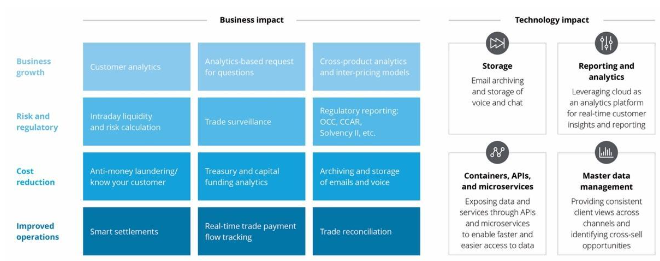
Figure 1. Business and Technological Impact Using Cloud Computing
Banking services are among the data giants that generate terabytes of data every day and have yet to move to cloud computing technology. Indonesian Banks have a great contribution to the economic development of the country, but their development regarding the adoption of modern technologies is still slow. This is mainly because banks are using traditional systems to deliver their services to their customers. Bank Tepat Syariah is one of the Indonesian Banks that still uses traditional systems to support its business and wants to carry out Digital Transformation to align with Industrial Revolution 4.0. (Figure 1)
New technologies, such as Cloud computing, are becoming the most disruptive technologies in the world. Cloud computing technologies enable banks to utilize state-of-the-art technologies and experts, with less upfront capital expenses and direct them to focus on their business strategic goals rather than focusing on day-to-day routine tasks. Banks that embrace the new trends in finance such as cloud computing, while leveraging the power of technology, are coming out on top and achieving in a big way in the following aspects.
Deployment: Rapid, convenient, and faster execution of applications from a central data center.
Operations: Simplified and virtualized practices, more diverse investment opportunities for clients, reduced costs, and increased speed to meet client needs.
Data: Consistent and easy access to data, which in turn improves visibility into the financial status of customers.
Disaster Recovery: Faster automated backup, quicker restoration times, and faster provisioning of resources – all with a lower total cost of ownership (TCO).
Technologies: Flexibility in utilizing leading-edge mechanisms to meet the requirements of customers and free up resources in existing infrastructure, thus reducing costs, mitigating risk, and gaining agility.
Customer Behavior: Analyzing customer behavior through trends and patterns to create personalized services.
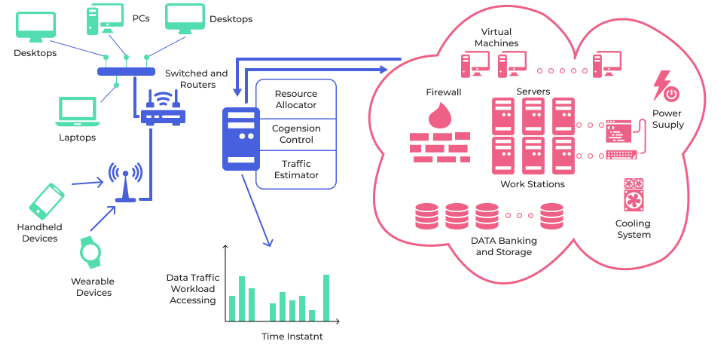
Figure 2. Cloud Infrastructure
The main reason that banks are not using innovative technologies is the hurdle of cost for developing customized banking solutions, investment of time, and high-quality resources. Cloud computing, as the latest technology that banks are adopting, comes with its own advantages and challenges. Therefore, to avoid the confusion and fear of decision-makers to adopt this technology, a study of the factors that influence the adoption of cloud computing must be undertaken before implementing it. (Figure 2)
The technology-organization-environment (TOE) framework developed by Tornatzky and Fleischer [1] is one of many adoption frameworks that are used in this study because it emphasizes organizational factors rather than individual ones. Other frameworks that focus on individual intention and behavior toward using innovation are not taken into consideration in this research, including the innovation diffusion model [2], the technology acceptance model [3], the human-organization-technology model [4], the decomposed theory of planned behavior [5], the technology task fit model [6] and the inter-organizational system model [7].
In addition to TOE, Rogers' 2003 Diffusion On Innovation (DOI) examines technology adoption from a business perspective. However, to better understand different adoptions, the DOI theory was excluded from the study because it places more emphasis on the varying degrees to which people are willing to adopt innovations and how those adoptions are impacted over time by various social contexts at the individual and firm levels [8]. Furthermore, the environmental context—which is crucial to this study because it can highlight important elements from the outside world—is not considered by the DOI theory. The TOE framework, on the other hand, can be "a useful analytical tool to distinguish between the inherent qualities of an innovation and the motivations, capabilities, and broader environmental context of the adopting organization," and is thus appropriate because it can capture factors affecting the adoption from technology, organization, and external task environment [9].
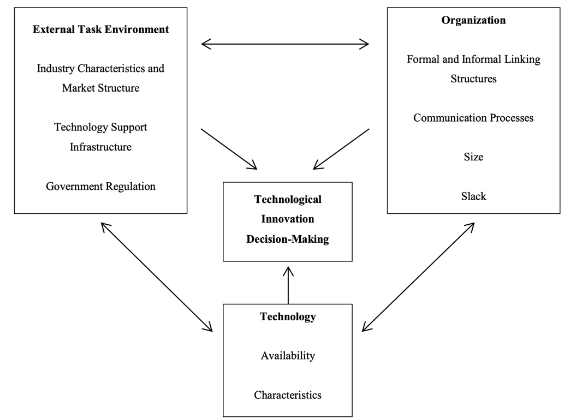
Figure 3. TOE Framework
The TOE framework divides the factors that drive an organization to adopt an innovation into three categories: (1) technology, (2) organization, and (3) environment.
This study focuses on exploring factors (technological, organizational, environmental) that affect the decision to adopt cloud computing in Bank Tepat Syariah to improve the understanding of decision-makers on these solutions so that their decision can be an informed one. Furthermore, this study aims to contribute to scientific knowledge since empirical research on the adoption of cloud computing is limited. (Figure 3)
RESEARCH METHODOLOGY:
Research Design
The purpose of this study is to explore the adoption process by identifying the factors to consider and the challenges faced by the company. The research question indicates an exploratory purpose. Exploratory research is typically conducted to explore new or not yet clearly defined topics [10]. The purpose of exploratory research is to identify key themes and variables through a review and analysis of the available literature [11]. It may include a descriptive element but goes beyond that to identify and investigate root causes [10].
There are two types of research approaches: quantitative and qualitative. Quantitative approaches deal with measurable data and are usually based on numbers such as scientific measurements, economic data, and other data statistics. Aliaga and Gunderson (2000) [12] define quantitative research as “explaining phenomena by collecting numerical data that are analyzed using mathematically based methods”. In this approach, research tools such as experiments and surveys are used, and all data collected is counted or quantified [13]. It is suitable for gathering information from large groups and is considered cost and time efficient. One of its main limitations is that variable limitations often produce predictable and nonsignificant results. Nor does it consider people's interpretations and meanings [14].
In contrast, qualitative approaches place more emphasis on unmeasurable data such as people's opinions, descriptions, and observations [15]. Creswell (2003) says “Qualitative research is useful when a concept or phenomenon needs to be understood because little research has been done on it” [13]. In this study, a qualitative method has been chosen to receive empirical evidence for the thesis’s purpose, which is to develop an understanding of which factors obstruct or foster the adoption of cloud computing in the Bank Tepat Syariah. With a qualitative approach, it is possible to reveal the underlying attitudes within the phenomenon of cloud computing in the banking industry, and thus a deeper understanding of the underlying factors can be made.
The study was conducted through face-to-face interviews with six people from the IT department of Bank Tepat Syariah in Indonesia. These respondents provided an insider's perspective on cloud computing in the banking industry. Additionally, interviews with one expert in cloud computing strategy and implementation were conducted to better understand the cloud computing adoption process from an external perspective.
Data Collection Method
This study’s data collection has been gathered through the seven interviews that have been conducted with two IT heads, four IT leads, and one external consultant. Through these interviews that have taken place face-to-face , a large amount of empirical data has been gathered within a narrow timeframe, which has encouraged more precise information gathering directly from the involved actors, hence minimizing the risk of data loss.
Respondents were chosen to be anonymous for this study because the data contained sensitive and confidential information. Semi-structured interview method was considered suitable to allow respondents to provide deep and grounded answers to the topic. Besides that, the focus should be on the context, rather than on specific companies. However, it is interesting to see the differences in each respondent’s answers to get a complete picture and better understanding of the banking industry. Therefore, the bank respondent is given a pseudonym A, B, or C, and the consulting firm respondent is referred to as X. Table 1 below shows the respondent’s work occupation, interview time, and duration.
Table 1. Interview schedule including respondents’ information.
Respondent
Occupation
Date
Time
Bank
Respondent A
IT Business Enablement 1 Head
2023-12-19
1 hour
Respondent B
IT DBA & Storage Management Head
2023-12-15
1 hour
Respondent C
Innovation Engineering Chapter Lead
2023-12-06
1 hour
Respondent D
Integration Chapter Lead
2023-11-29
1 hour
Respondent E
Application Owner Chapter Lead
2023-11-29
1 hour
Respondent F
Technical Lead
2023-11-24
1 hour
External actor
Respondent X
IT Consultant
2023-12-07
hour
The theoretical framework facilitated the design of the interview guide that was used during the interview. Thus, the interview questions were mainly derived from the TOE framework, which ensured to ask relevant interview questions that would answer the research questions. Table 2 below is divided according to the elements of the TOE framework. Interview questions (eleven in total) and interview question numbers are provided when the respondent’s answer touches on a factor.
After each interview, the data later have been transcribed and translated into English as mentioned above. The categories selected for this study were created according to the TOE framework. The bank's technology, organization, and external operating environment; There are no changes to the classification other than merging the size and slack aspects into one category. The material has later been read through and its elements are classified according to the applicable categories. A summary of respondents' responses was then created for each element within the category. This allowed us to work conceptually while also performing analysis.
Table 2. Interview guide relationship with TOE Framework.
Factor in TOE
Interview question no.
Technology
Availability
1, 2, 4
Characteristic
3, 5, 6
Organization
Formal and Informal Linking Structures
6, 7
Communication Process
5, 7
Size and Slack
5, 8
External Task Environment
Industry Characteristics and Market Structures
2, 9
Technology Support Infrastructure
3, 10
Government Regulation
10, 11
RESULTS AND DISCUSSION:
What is Cloud
Previous research has shown multiple definitions of cloud computing [16], and based on respondent's answers, there are many different definitions.However, many respondents agree that cloud computing is like renting computer services over the internet, where you can access things like storage without needing your physical computer. They all also agreed that cloud computing is a service that can be structured in different ways: private, public, hybrid, or even as a community cloud. This is consistent with NIST’s description of different ways to deploy the cloud – as four development models (public, private, hybrid, and community) [17].
Technology
Availability
Respondents highlight cost efficiency as a key advantage. The pay-as-you-go model eliminates significant upfront investments in hardware and infrastructure, allowing companies to invest judiciously based on their usage. Flexibility and scalability are recurrent themes across respondents. Cloud computing allows businesses to scale resources rapidly based on demand, offering adaptability to varying workloads without maintaining excess infrastructure.
The thematic analysis reveals a positive outlook on the availability of cloud computing technology in Indonesia. The advantages highlighted include cost efficiency, flexibility, scalability, and the elimination of data center management. However, concerns about the technology's suitability for large banks, the importance of regulatory compliance, and the need to assess reliability and maturity highlight the nuanced decision-making process within the Technology-Organization-Environment (TOE) framework. The technology's availability, evidenced by the presence of data centers and implementation options, plays a pivotal role in influencing organizational decisions regarding cloud adoption.
Characteristic
The respondents collectively emphasize the functionality of different cloud computing types (IaaS, PaaS, SaaS) and their suitability for various banking needs. The challenges highlighted (technical readiness, cost-benefit analysis, resource constraints, human resources, and technology compatibility) point to the complexity involved in implementing cloud computing in the banking sector.
All bank respondents described the importance of carefully considering what you put in the cloud and how you structure vendor contracts before deployment. This may indicate a fear of relying on a third party, which may hinder the decision to adopt cloud computing. The analysis reveals that specific needs, regulatory requirements, and resource considerations influence the choice of cloud computing types in banking. Challenges in implementation revolve around technical readiness, costs, human resources, regulatory compliance, and compatibility with existing systems. These aspects align with the TOE framework's focus on the characteristics of the technology itself, including functionality, compatibility, and ease of use.
Organization
Formal and Informal Linking Structures
Respondents emphasized the importance of technical skills, talent readiness, skill sets, training, security awareness, staff training, change management, communication strategy, and knowledge of cloud technologies/services. These collectively underscore the organizational dimensions of human readiness in the TOE framework.
The interview responses align closely with the Technology-Organization-Environment (TOE) framework, demonstrating a comprehensive understanding of the organizational context. Challenges in compatibility, human aspects of readiness, cost considerations, and vendor dependencies reflect the interplay between technological, organizational, and environmental factors.
Communication Process
Most of the respondents believed that a lot of effort was put into interpretation and therefore the communication for sorting out definitions is important before involvement with a cloud provider can occur, which both Respondent C and D touched upon when they mentioned that the terminology was an issue. The cloud computing terminology needs to be clear and the whole organization needs to refer to the same thing, for an implementation to function smoothly. According to respondent A, some services could internally be defined as cloud services but are not today. The risk of misinterpretation becomes greater with larger complex organizations, which can be a reason why confusion regarding a cloud definition occurs.
All respondents believed that clear communication processes were important to avoid staff misunderstandings about the policies the organization supports. Without policies and guidelines, respondents B and X both believed there was a risk that staff would sign contracts or use cloud services without the organization's knowledge because it is easy or simple to sign. Therefore, organizations must educate their staff on how they perceive and understand cloud computing.
The challenges and considerations identified in the interview data align closely with the TOE framework, showcasing the interplay between technology, organization, and environment. The communication process within the organization is evident in the emphasis on human aspects, change management, and cultural factors. The TOE framework provides a holistic lens through which these challenges can be understood, emphasizing the need for a comprehensive approach that considers technological, organizational, and environmental factors.
Size and Slack
Respondent A suggests that starting small is advantageous for enjoying cloud computing benefits, while larger organizations may face challenges in controlling services at a fine granularity level. Respondent D implies that larger organizations might need a bigger budget for cloud migration but acknowledges that technology and innovation standards make the process easier with a larger budget. Respondent E differentiates between large organizations with more financial resources and SMEs finding appeal in the cost-efficiency and scalability of cloud services.
According to the TOE framework, larger companies with more resources are more likely to adopt new technologies [1]. However, as stated by the respondents, this has not been confirmed as organizations face complexity and resistance. This is like Respondent X’s answer, who stated that “Bigger organizations have more challenges to do transformation / shifting from one state to another state including cloud adoption compared to smaller organizations” (Respondent X, personal communication, December 7, 2023).
External Task Environment
Industry Characteristics and Market Structures
All respondents said that adopting cloud services takes time. However, respondent F believed that he could not just sit back and watch everyone proceed with development and that he too had to act. This is a key element to staying competitive and promoting cloud computing adoption. Respondent F further explained that no one wants to be first because those who are first are often checked and followed by others. This may suggest that the bank is a follower rather than a first mover, reducing its competitive advantage. Once a company starts implementing it and proves cost-effective, other companies should follow suit.
The analysis indicates a strong connection between cloud computing adoption benefits and the impact of current IT trends and competitors on organizational competitiveness. This relationship aligns with the Technology-Organization-Environment (TOE) framework, particularly focusing on industry characteristics and market structures. A consistent theme emphasizes the cost efficiency, scalability, and flexibility of cloud computing. The impact of current IT trends and competitors reflects how external factors (environment) influence organizational decisions related to technology adoption.
Technology Support Infrastructure
Respondent A acknowledges the use of cloud computing, especially for smaller banks like Tepat Syariah. Expresses uncertainty about larger banks embracing the cloud due to concerns about it being the backbone of their business. Respondent A also highlights potential resistance from traditional big banks and suggests the need for experienced personnel and external support to mitigate risks during the transition. Respondent B believes that the availability of cloud computing in Indonesia is not sufficient to support the banking infrastructure, and emphasizes the importance of external support, indicating that the lack of IT in the cloud within the banking sector necessitates guidance from service providers, consultants, and vendors. Respondent C affirms that cloud computing is sufficient, noting the presence of major cloud companies' data centers in Indonesia, and emphasizes the importance of external support for guidelines and consultation during the cloud transition.
All respondents recognize the presence of cloud computing in Indonesia, with varying opinions on its sufficiency and readiness for different banking needs. The respondents shared a concern about the cloud supplier, for supplier soundness, to discover a cautious and genuine cloud supplier. The respondents moreover specified a must-be impact on the cloud supplier, and how much haggling control may they have towards the supplier for illustration to adjust the administrations for their needs.
Government Regulation
Challenges related to government regulation are recognized, including data privacy, data residency, and compliance with specific laws applicable to the financial sector. There is a mix of positive and cautious views on government regulations, with some respondents perceiving them as obstacles and others believing existing regulations are sufficient. Therefore, regulation can have an impact on the choice of whether to deploy cloud services or not. However, it seems that the interpretation of the regulation is mainly hindering and thus making it more demanding to dare to deploy cloud services. There is great uncertainty among all banks, and the implementation of cloud computing requires careful interpretation of the relevant regulations.
OJK as an authority puts up regulations about personal information and states that those who use cloud services as storage for personal information will lose actual control of data. Since cloud providers often use standard agreements, it is important to define the user terms before signing an agreement. Therefore, those who have thoughts on using cloud computing in their business must be aware of the demands that OJK states and other laws and regulations. The one that uses the cloud service is responsible for the safety of the personal information, higher expectations would be implied on a bank that chooses to be on a cloud service regarding risk analysis and safety precautions than when doing a traditional IT outsourcing.
Summary of Analysis
When conducting the study, results were found that were in line with the TOE framework, that the technological, organizational, and external task environment context of Bank Tepat Syariah involved factors that both hindered and encouraged the adoption of technological innovation, such as cloud computing. These factors are also related in many ways. Both banks and external actors cited factors from all categories that influence the decision to implement cloud computing. After analyzing these two perspectives, key factors were found which are presented in Table 3. below.
Table 3. Key factors in the analysis related to the TOE framework.
Analytical Framework
Key factors
Explanation
Technology
Compatibility
Ensuring compatibility and interoperability between different cloud service providers, platforms, and banking applications can be a challenge. Banks may face issues when trying to integrate services from multiple providers.
Scalability
Banks can scale their computing resources up or down based on demand, ensuring they can handle increased workloads during peak times and scale down during periods of lower activity.
Complexity
Many banks operate with legacy systems that may not seamlessly integrate with modern cloud platforms. Integrating these systems can be complex and may require significant effort.
Organization
Cost Efficiency
Cloud computing shifts the financial model from a capital-intensive approach to an operational cost model. Banks pay for the resources they consume, avoiding substantial upfront investments in hardware.
Communication Process
Inadequate communication can lead to misunderstandings, resistance to change, and a lack of alignment on the cloud adoption strategy. Effective communication is crucial for gaining buy-in from stakeholders and ensuring a cohesive approach.
Organization Size
The size of the organization, whether it's a large multinational bank or a smaller regional institution, can impact the complexity of cloud adoption. Large organizations may face challenges in coordinating efforts and managing diverse infrastructure, while smaller organizations may lack resources.
Talent Readiness
A lack of talent readiness can slow down the implementation process, increase the risk of errors, and lead to operational inefficiencies. Ensuring that employees are adequately trained and equipped for cloud technologies is crucial.
External Task Environment
Competitive Advantage
Adopting cloud computing can provide banks with several competitive advantages, enabling them to stay ahead in the rapidly evolving financial industry.
Standardization
Banks may face challenges related to vendor lock-in, where they become overly dependent on a specific cloud service provider. Ensuring the ability to migrate applications and data between different providers or back to on-premises environments is important.
Regulations
The banking industry is highly regulated, with strict requirements regarding data security, privacy, and compliance.
All the critical elements presented in Table 3 influence the decision-making process of banks when considering the adoption of cloud services, and some of these factors exhibit interdependencies. Insufficient expertise among employees in these matters may stem from communication breakdowns and ambiguous definitions of cloud computing within the organizational context. Moreover, a lack of proficiency in cloud computing among senior management can result in heavy reliance on the knowledge of the IT department, potentially posing challenges since the implementation of cloud services often reduces internal IT requirements. The IT staff might harbor concerns about job security, leading to resistance and exerting an impact on the decisions made by top management.
Furthermore, cloud providers often present standardized agreements that fail to meet the specific requirements and industry regulations of banks, creating uncertainty among them. Consequently, banks may refrain from placing sensitive information on the cloud. Establishing an open dialogue between banks and providers is suggested, allowing banks to articulate clear expectations for providers to meet.
Additionally, this research reveals that traditional banks share a common legacy characterized by complexity, conservatism, and reliance on mainframes. In contrast, new entrants in the industry lack the same legacy considerations and are often not subject to identical regulations, providing them with a competitive edge over banks with such legacies. This difference may influence banks to adopt cloud computing as a strategy to maintain competitiveness. The legacy of traditional banks includes outdated mainframes that pose challenges for integration with new technologies due to complexity and a shortage of personnel with expertise in these systems, impeding cloud adoption.
Given the heavy regulation of traditional banks, uncertainty arises regarding the interpretation of laws and regulations about cloud computing. Clear input and guidelines from authorities would be valuable in facilitating interpretation. All these pivotal factors are interconnected, aligning with the arrows in the TOE framework. Understanding the decision-making factors behind cloud implementation necessitates a consideration of the technological, organizational, and external task environment contexts of banks.
CONCLUSION AND RECOMMENDATION:
Conclusion
This study aimed to develop an understanding of which factors obstruct or foster the adoption of Cloud Computing in the Bank Tepat Syariah, with a theoretical base in Tornatzky and Fleischer’s (1990) TOE framework. From this study we can conclude: [1]
Ten key factors that affect the decision to adopt cloud computing for Bank Tepat Syariah, are the following: Compatibility, Scalability, Complexity, Cost Efficiency, Communication Process, Organization Size, Talent Readiness, Competitive Advantage, Standardization, Regulations.
Most of the factors, except Scalability, Cost Efficiency, and Competitive Advantage were shown to obstruct and delay the adoption of cloud computing for Bank Tepat Syariah.
It was found that all these key factors interlink with each other in some sense. One factor that affects the decision to adopt cloud computing or not might lead to another factor doing the same.
Based on the findings of this research, the adoption of cloud computing is influenced by the technological context, organization, and external task environment of the bank. This study also considered other factors, by asking respondents whether there was any additional information that needed to be added apart from the factors already mentioned. By doing this, factors not included in the TOE framework are also taken into consideration. However, all answers are covered in the context of the bank’s technology, organization, or external task environment. This confirms that the TOE framework is comprehensive and helps find relevant factors for this research. This framework has been widely used in previous research in various contexts to understand the factors behind the decision of a new technological innovation.
Recommendation
The findings in this research from a practitioner’s perspective can provide a better understanding of what factors hinder or encourage cloud computing adoption. Understanding these factors can help banks open their eyes to what appears to be influencing cloud computing adoption and act on this. This study highlights the need for banks and cloud computing providers to start using the same language; Therefore, it would be beneficial to have an open dialogue between banks and service providers so that banks can set clear demands for service providers to fulfill.
Because traditional banks are highly regulated and banks are unsure how to interpret laws and regulations affecting cloud computing, there is a need for authorities to provide input and guidance to ease interpretation and not just focus on what the banks themselves should do. There is mutual responsibility. Despite many challenging factors regarding cloud computing, factors like Scalability, Cost Efficiency, and Competitive Advantage (See Table 4.1 for further explanation) are potential benefits when implementing cloud computing. The author suggests that Bank Tepat Syariah must adopt Cloud Computing as soon as possible, or at least begin to start budgeting and preparing the talent readiness.
This study is only limited to looking at the Bank Tepat Syariah in Indonesia, but it is also interesting to see the views of other banks. Other banks, both Sharia and conventional, can contribute with additional perspective and understanding regarding what factors influence adoption as they may not be affected by the same factors as Bank Tepat Syariah. Another limitation is that this study only looked at IT personnel. If other departments had been interviewed, further understanding of cultural complexity and legacy could have been considered and perhaps impacted on what factors appeared to influence the adoption.
Furthermore, further research proposals may be interesting to conduct similar research but with the banks that have implemented cloud computing in their systems. This would likely show a different perspective on the issue, as respondents would have more insight into implementation decisions.
Funding: No funding sources.
Conflict of interest: None declared.
Ethical approval: The study was approved by the Institutional Ethics Committee of Tanjungpura University.
Venkatesh, Viswanath, et al. "User acceptance of information technology: Toward a unified view." MIS quarterly (2003): 425-478.https://www.jstor.org/stable/30036540
Yusof, Maryati Mohd, et al. "An evaluation framework for Health Information Systems: human, organization and technology-fit factors (HOT-fit)." International journal of medical informatics 77.6 (2008): 386-398.https://www.sciencedirect.com/science/article/pii/S1386505607001608
Taylor, Shirley, and Peter Todd. "Decomposition and crossover effects in the theory of planned behavior: A study of consumer adoption intentions." International journal of research in marketing 12.2 (1995): 137-155.https://doi.org/10.1016/0167-8116(94)00019-K
Goodhue, Dale L., and Ronald L. Thompson. "Task-technology fit and individual performance." MIS quarterly (1995): 213-236.https://doi.org/10.2307/249689
Benbasat, Izak, David K. Goldstein, and Melissa Mead. "The case research strategy in studies of information systems." MIS quarterly (1987): 369-386.https://doi.org/10.2307/248684
Babbie, Earl R. The practice of social research. Cengage AU, 2020.https://books.google.com/books?hl=en&lr=&id=lFvjDwAAQBAJ&oi=fnd&pg=PP1&dq=10.%09BabBab,+Earl+R.+The+practice+of+social+research.+Cengage+AU,+2020.%E2%80%8F&ots=I4xW1FaTU5&sig=MYdcYJnYFfxHfnUqS03b6P1auFo
Guimaraes, Fernando. "Research: anyone can do it." PediaPress, Mainz (2011).
Aliaga, Martha, and Brenda Gunderson. "Interactive statistics." (No Title) (1999)
Creswell, John W., and J. David Creswell. Research design: Qualitative, quantitative, and mixed methods approaches. Sage publications, 2017
All papers should be submitted electronically. All submitted manuscripts must be original work that is not under submission at another journal or under consideration for publication in another form, such as a monograph or chapter of a book. Authors of submitted papers are obligated not to submit their paper for publication elsewhere until an editorial decision is rendered on their submission. Further, authors of accepted papers are prohibited from publishing the results in other publications that appear before the paper is published in the Journal unless they receive approval for doing so from the Editor-In-Chief.
Himalayan Journal of Economics and Business Management open access articles are licensed under a Creative Commons Attribution-Share A like 4.0 International License. This license lets the audience to give appropriate credit, provide a link to the license, and indicate if changes were made and if they remix, transform, or build upon the material, they must distribute contributions under the same license as the original.
Recommended Articles
Research Article
Influence of Leadership on Poverty Reduction in the Devolved Government in Trans-Nzoia County, Kenya
Kinisu Sifuna,
...
Peter Simotwo
Published: 30/06/2021
Download PDF
Cite
x
APA
Sifuna, K., Lwangale, D. W., Simotwo, P., Sifuna, K., Lwangale, D. W. & Simotwo, P. (2021). Influence of Leadership on Poverty Reduction in the Devolved Government in Trans-Nzoia County, Kenya. Himalayan Journal of Economics and Business Management, 2(1), None-None.
MLA
Sifuna, Kinisu, et al. "Influence of Leadership on Poverty Reduction in the Devolved Government in Trans-Nzoia County, Kenya." Himalayan Journal of Economics and Business Management 2.1 (2021): None-None.
Chicago
Sifuna, Kinisu, David W. Lwangale, Peter Simotwo, Kinisu Sifuna, David W. Lwangale and Peter Simotwo. "Influence of Leadership on Poverty Reduction in the Devolved Government in Trans-Nzoia County, Kenya." Himalayan Journal of Economics and Business Management 2, no. 1 (2021): None-None.
Harvard
Sifuna, K., Lwangale, D. W., Simotwo, P., Sifuna, K., Lwangale, D. W. and Simotwo, P. (2021) 'Influence of Leadership on Poverty Reduction in the Devolved Government in Trans-Nzoia County, Kenya' Himalayan Journal of Economics and Business Management 2(1), pp. None-None.
Vancouver
Sifuna K, Lwangale DW, Simotwo P, Sifuna K, Lwangale DW, Simotwo P. Influence of Leadership on Poverty Reduction in the Devolved Government in Trans-Nzoia County, Kenya. Himalayan Journal of Economics and Business Management. 2021 Jan;2(1):None-None.
Download PDF
Research Article
Modelling Structure Job Quality, Job Design and Job Satisfaction
Moch Nurhadi,
...
Avi Sunani
Published: 30/08/2022
Download PDF
Cite
x
APA
Nurhadi, M., Bisyri Effendi, M., Saiful Ulum, A. & Sunani, A. (2022). Modelling Structure Job Quality, Job Design and Job Satisfaction. Himalayan Journal of Economics and Business Management, 3(2), 1-4.
MLA
Nurhadi, Moch, et al. "Modelling Structure Job Quality, Job Design and Job Satisfaction." Himalayan Journal of Economics and Business Management 3.2 (2022): 1-4.
Chicago
Nurhadi, Moch, Moch Bisyri Effendi, Achmad Saiful Ulum and Avi Sunani. "Modelling Structure Job Quality, Job Design and Job Satisfaction." Himalayan Journal of Economics and Business Management 3, no. 2 (2022): 1-4.
Harvard
Nurhadi, M., Bisyri Effendi, M., Saiful Ulum, A. and Sunani, A. (2022) 'Modelling Structure Job Quality, Job Design and Job Satisfaction' Himalayan Journal of Economics and Business Management 3(2), pp. 1-4.
Vancouver
Nurhadi M, Bisyri Effendi M, Saiful Ulum A, Sunani A. Modelling Structure Job Quality, Job Design and Job Satisfaction. Himalayan Journal of Economics and Business Management. 2022 Jul;3(2):1-4.
Download PDF
Research Article
Accountability and Transparency of Village Fund Management in Lumajang District
Nurina Ayuningtiyas,
...
Muhammad Miqdad
Published: 28/12/2023
Download PDF
Cite
x
APA
Ayuningtiyas, N., Santosa Putra, H. & Miqdad, M. (2023). Accountability and Transparency of Village Fund Management in Lumajang District. Himalayan Journal of Economics and Business Management, 4(2), 1-4.
MLA
Ayuningtiyas, Nurina, Hendrawan Santosa Putra and Muhammad Miqdad. "Accountability and Transparency of Village Fund Management in Lumajang District." Himalayan Journal of Economics and Business Management 4.2 (2023): 1-4.
Chicago
Ayuningtiyas, Nurina, Hendrawan Santosa Putra and Muhammad Miqdad. "Accountability and Transparency of Village Fund Management in Lumajang District." Himalayan Journal of Economics and Business Management 4, no. 2 (2023): 1-4.
Harvard
Ayuningtiyas, N., Santosa Putra, H. and Miqdad, M. (2023) 'Accountability and Transparency of Village Fund Management in Lumajang District' Himalayan Journal of Economics and Business Management 4(2), pp. 1-4.
Vancouver
Ayuningtiyas N, Santosa Putra H, Miqdad M. Accountability and Transparency of Village Fund Management in Lumajang District. Himalayan Journal of Economics and Business Management. 2023 Jul;4(2):1-4.
Download PDF
Research Article
Proposed Digital Marketing Strategy to Enhance Engineering Consultancy Company Revenue
Alfarisy, K. A.,
Wandebori, H.
Published: 30/04/2024
Download PDF
Cite
x
APA
K. A., A. & H., W. (2024). Proposed Digital Marketing Strategy to Enhance Engineering Consultancy Company Revenue. Himalayan Journal of Economics and Business Management, 5(1), 1-18.
MLA
K. A., Alfarisy, and Wandebori, H.. "Proposed Digital Marketing Strategy to Enhance Engineering Consultancy Company Revenue." Himalayan Journal of Economics and Business Management 5.1 (2024): 1-18.
Chicago
K. A., Alfarisy, and Wandebori, H.. "Proposed Digital Marketing Strategy to Enhance Engineering Consultancy Company Revenue." Himalayan Journal of Economics and Business Management 5, no. 1 (2024): 1-18.
Harvard
K. A., A. and H., W. (2024) 'Proposed Digital Marketing Strategy to Enhance Engineering Consultancy Company Revenue' Himalayan Journal of Economics and Business Management 5(1), pp. 1-18.
Vancouver
K. A. A, H. W. Proposed Digital Marketing Strategy to Enhance Engineering Consultancy Company Revenue. Himalayan Journal of Economics and Business Management. 2024 Jan;5(1):1-18.
Putra, T. W. & Anggoro, Y. (2024). Cloud Computing Adoption a Case Study at Bank Tepat Syariah. Himalayan Journal of Economics and Business Management, 5(1), 1-14.
MLA
Putra, Tirta W. and Yudo Anggoro. "Cloud Computing Adoption a Case Study at Bank Tepat Syariah." Himalayan Journal of Economics and Business Management 5.1 (2024): 1-14.
Chicago
Putra, Tirta W. and Yudo Anggoro. "Cloud Computing Adoption a Case Study at Bank Tepat Syariah." Himalayan Journal of Economics and Business Management 5, no. 1 (2024): 1-14.
Harvard
Putra, T. W. and Anggoro, Y. (2024) 'Cloud Computing Adoption a Case Study at Bank Tepat Syariah' Himalayan Journal of Economics and Business Management 5(1), pp. 1-14.
Vancouver
Putra TW, Anggoro Y. Cloud Computing Adoption a Case Study at Bank Tepat Syariah. Himalayan Journal of Economics and Business Management. 2024 Jan;5(1):1-14.



 Download PDF
 Download XML