Purpose: This paper aims to present studies related to cryptocurrency, highlight its adoption factors and supply applied methodology from recent research across various fields. Materials and Methods: In this review article, state-of-the-art of cryptocurrency adoption research are presented by merging literature from the subject of block chain, mobile banking and management information systems. Findings: Cryptocurrency exchange adoption has become increasingly widespread in various areas in recent years using both qualitative and quantitative methods. Recent research has expanded on the factors influencing the adoption of a cryptocurrency exchange such as effort expectancy, performance expectancy, facilitating conditions, social influence, privacy, security and trust. Research Limitations/Implications: Although research on cryptocurrency exchange adoption has gained attention during the last seven years, mediation or multi-group analysis still become interesting subject to be explored. Originality/Value: This article introduces cryptocurrency adoption for researchers that have not yet been exposed to the method. The article is the first to review the adoption factors of cryptocurrency.
Keywords
Conceptual Study
Cryptocurrency
Centralized Exchange Platform
Indonesia
Privacy
Security
Technology Adoption
UTAUT
INTRODUCTION
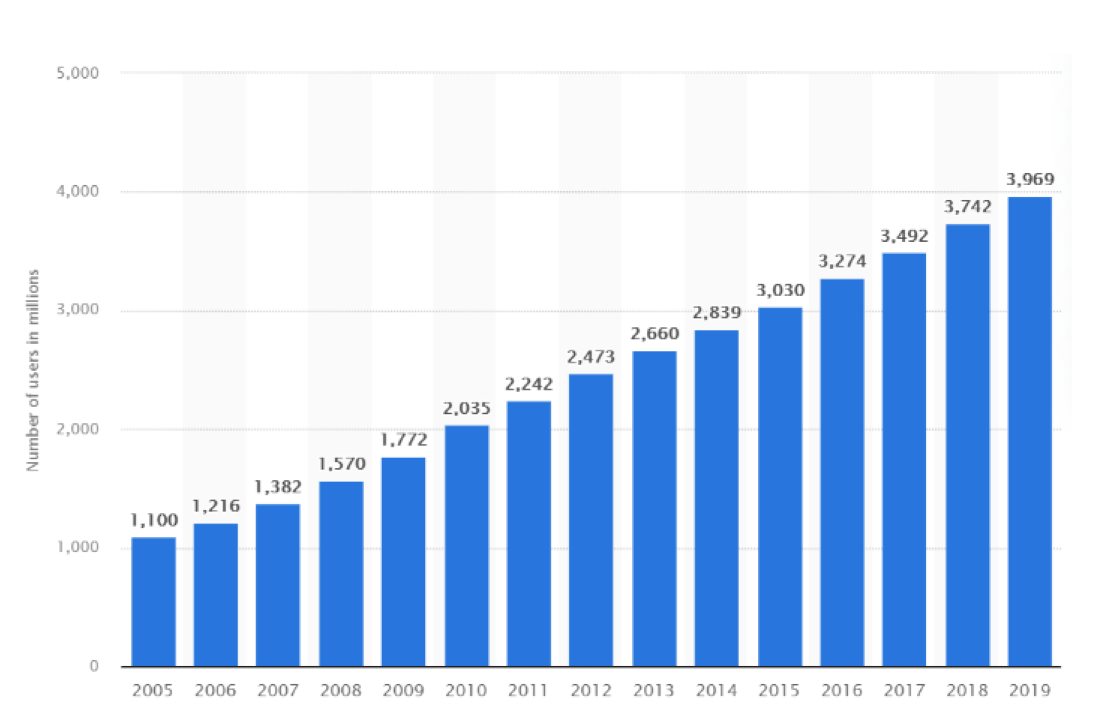
Technological developments, includes the Internet, carries on to revolutionize the way people connect, arrange the flow of processes and manage finances. Internet is becoming increasingly vital in daily life due to its impact on both individual consumers and major economies. In 2019, about 3.97 billion people used the internet in the world. The number shows that more than 50% of the population in the world have an internet access [1].
A technology called as block chain operates by storing the data information in an account that are proved to be decentralized account [2]. Block chain performed the registration of each gadget that is part of the block chain framework. The ledger is stored using cryptographic techniques in a distributed network of nodes that any system excavators can access the intrinsic features of block chain configuration and engineering include transparency, power, ability to be audited and security. A block chain in other words is an adequate database made up of a list of requested blocks and unchangeable once submitted.
In 2009, the first Bitcoin block was extracted or in a more familiar term, was mined. Since that time, cryptocurrencies have experienced explosive development. The rapid growth of block chain techniques and the digital economic ecosystem were responsible for the expansion [3]. Thousands of various distinct cryptocurrencies, aside from Bitcoin, have periodically been launched. By mid-2021, more than 10,000 different cryptocurrencies exist and the combined market value is $1,32 trillion [4]. The GDP of 181 countries was eclipsed by this size of market capitalization [5]. Trading digital asset (for example Bitcoin) can be done through hundreds of cryptocurrency exchanges that already exists. The trade can be done using conventional flat currencies such as U.S. dollars or other crypto assets (e.g., Ethereum).
Today, there are numerous means can be done to obtain cryptocurrencies. Using peer-to-peer exchanges, using Bitcoin ATMs and signing up for cryptocurrency exchanges are one of the means. The most common approach to utilize cryptocurrencies is through the purchase on cryptocurrencies exchanges [6]. In Indonesia, there are 13 cryptocurrency exchanges with 4.2 million registered cryptocurrencies investors. A total of 126 trillion rupiahs were exchanged [7,8]. These figures demonstrate Indonesian interest in cryptocurrencies. This study aims to contribute to cryptocurrency literature in several ways. The first is to explore and analyse the current state of knowledge related to cryptocurrency.
Figure 1: Number of Internet Users 2005–2019 (in millions)
The second is exploring variables that affect its adoption across the available works. In this way, it can unite and synthesize different research streams into an enriched body of knowledge, identifying and discussing the method, frameworks and models that are applied in the field. The study concludes by summarizing the key findings and pointing out any gaps that require further research. The word "manuscript" is used in this study to refer to the unit of analysis employed in any examined study for these purposes. In this review, only variables or antecedents that affect cryptocurrency adoption, pre-adoption, or acceptance are discussed.
The following section presents a general review of cryptocurrency and its definition. In the next section, the research methodology will be presented. Furthermore, the results of analysis, several conclusions, limitations and at last the research recommendations.
Literature Review
The literature review is consists of eight parts to explain the theories and terms utilized in the study and evaluate the results of earlier, pertinent research to support the study. The literature review for this topic was compiled from a variety of academic sources, including relevant journals, books and research papers.
Cryptocurrency
Cryptocurrency is a form of money where supply and authenticity are handled by mathematical and cryptographic techniques. In order to safeguard it, cryptography is used. Cryptocurrency transactions are irreversible and the system is capable of fully recording and storing the transfer data [9]. Several cryptocurrencies are appealing for investors and the capitalizations are shown in Table 1.
Table 1: Cryptocurrency Market Capitalization
Rank
Cryptocurrency
Price (in USD)
Market Capitalizations (in billions) USD)
1.
Bitcoin
33,088.16
614.40
2.
Ethereum
1,932.40
223.17
3.
Tether
1.00
62.68
4.
Binance Coin
299.16
43.98
5.
Cardano
1.36
41.35
6.
Dogecoin
0.2363
29.98
7.
XRP
0.6445
29.59
8.
USD Coin
1.00
25.46
9.
Polkadot
15.74
14.68
10.
Uniswap
17.14
9.74
Source: coinmarketcap.com (accessed on June 24, 2021)
Customers can utilize the cryptocurrency exchange in order to buy cryptocurrencies. Through this, users can purchase and sell bitcoins or other cryptocurrencies. Many solely provide services for cryptocurrencies trading, meanwhile few platforms provide fiat (e.g., U.S. Dollar or Euro) to cryptocurrency transactions [3]. Similar to the stock market, users use cryptocurrency exchanges to profit on the swings in price. There are three different kinds of cryptocurrency exchanges: Decentralized Exchanges (DEX), which offer an automated mechanism for peer-to-peer trades; Centralized Exchanges (CEX), which are run by a business or organization; and hybrid exchanges, which incorporate both of the aforementioned [3].
Unified Theory of Acceptance and Use of Technology (UTAUT)
A broad range of technology adoption theories investigated many different technologies and structures in many different contexts [10]. This condition made researchers stand in a situation that pointed to some uncertainty among researchers. Researchers were pushed to choose specific characteristics from a wide variety of models and theories. The aim is to reconcile the existing literature concerning the adoption of new technology. The result is a coherent paradigm that united the different perspectives on consumer and innovation adoption was created [11]. Later it was named The Unified Theory of Acceptance and Use of Technology (UTAUT) for Information Technology and System.
The UTAUT model refers to an enhanced version of the Technology Acceptance Model (TAM) [12,13]. According to some study, UTAUT is the most precise and up-to-date TAM used to assess both intended and actual technology utilization [14]. By evaluating and incorporating eight robust theories and models, namely the Technology Acceptance Model (TAM), the Theory of Reasoned Action (TRA), the Innovation Diffusion Theory (IDT), the Social Cognitive Theory (SCT), the Theory of Planned Behaviour (TPB), the Model of P.C. Utilization, a combined TBP/TAM and the Motivational Model, the theory was developed [14]. The UTAUT proposes that performance expectancy, effort expectancy, social influence and facilitating conditions stimulate behavioral intention and usage behavior, with age, gender, voluntariness of use and experience moderating the acceptance of information technology [15].
Performance Expectancy
Performance expectancy happen to be characterized as the benefit gained in improving work performance from using the technology [11]. Performance expectancy has five dimensions based on previous models: perceived usefulness, extrinsic motivation, job fitness, relative advantages and outcome expectations. Previous research described that perceived usefulness is the degree to which an person assumes their job accomplishment shall be improved by utilizing a given system [12,13]. Extrinsic motivation is the belief that people consider doing something because it's believed to be important in obtaining desired results that are separated from the activity itself, such as enhanced job efficiency, compensation, or even promotions [16]. Job fit is how a program’s functionality improves job performance [17]. Relative benefit is the extent to which it is considered that using technology is better than using its compounds [18]. Outcome Expectations are related to outcomes in terms of change in behavior [19,20]. Performance expectancy, a construction bound to utility, has been shown to be the best predictor of behavioral intention [11].
Effort Expectancy
Effort expectancy stand as the easiness of using technology based on the device used [11]. Effort expectancy is measured by three dimensions from the existing models: perceived ease of use, ease of use and complexity. Perceived Ease of Use [12,13] is the extent to which a person assumes it will be effortless to use a device [12]. Complexity is how people perceive technology as understandable [17]. Ease of use is the level to which it is considered that using technology is hard to use [18]. The construct is analogous to the TAM’s perceived ease of use variable or ease of use variable and the variable of complexity that belongs to the diffusion of innovation theory [13].
Social Influence
Social influence act as the behavioral effect that the users perceive from essential others to use particular technology [11]. The influence is quantified in terms of a social context, a subjective norm and an image. Subjective norm refers to the belief of the individual that other individuals who are significant to them believe the activity in question should or should not be performed [21]. Social factors happens to be the internalization of the collective community of the reference group by the person in particular social circumstances and similar interpersonal arrangements that the person has made with others [17]. Image is the extent to which the use of advancement to improve the identity and status within one’s social structure is viewed [18]. The decision of the users to adopt technology is adversely influenced by the social construct beyond the decision thinking of an individual [22].
Facilitating Conditions
The belief that technological systems exist to facilitate people to use of technology is the definition of facilitating conditions [11]. This interpretation encompasses principles represented by three distinct dimensions: perceived behavioral control, facilitating conditions and compatibility. Perceived Behavioral Control represents perceptions of internal and external behavioral constraints and involves self-reliance, resource and technology facilitating [21]. Facilitating Conditions are objective environmental variables that the participants accept to make an act simple, including offering computer assistance [17]. Compatibility is the belief of adopters in the technology’s compatibility with their current values, experiences and desires [18]. Based on the literature review [13], facilitating conditions significantly affect behavioral intention and technology use. The researchers have outlined that the facilitating conditions are good predictors that can be used to identify technology acceptance and use of technology.
Perceived Privacy
Perceived privacy refers to an individual's capacity to manage the communication of their personal information to a platform, including when, how and to what extent such information is shared. [23]. An alternative perspective is the perceived privacy concerns, which refer to the compromise that consumers are ready to make by revealing personal information in exchange for certain advantages [24]. From those views, it can be summed up that privacy is related to giving up certain personal information to gain benefit. Earlier research on privacy has discussed the correlation between perceived privacy and intention. For example, in social media areas, perceived privacy is found to have a significant relationship with the continuance intention of using social media [25]. Besides social media settings, research in China also found that perceived privacy significantly affects digital payment applications’ continuous usage intention [26].
Trust
Using technology, including the internet, mobile applications and financial services delivered online, raises users’ concerns about trust. Trust can be defined as a person’s willingness to take risks to fulfill a need without prior experience or credible, meaningful information [27]. Trust will appear when there is enough level of ability, benevolence and integrity in a specific system [28]. The arrival of new technology such as cryptocurrency and its exchange face concerns of risk and confidence from the user. Past research on the mobile banking sector shows that trust has become a significant antecedent for predicting use intention [27,29].
Perceived Security
Perceived security pertains to the individual's perception of the measures taken by the provider to protect shared information against security breaches, both during and after its transmission through technological means. [30]. A platform is said to have a good level of security when it is able to adequately protect its users from malware, guard their private data and offer other security protections [31]. Previous research on mobile applications reveals that perceived security is a good predictor of intention to install the mobile application through perceived risk [31]. Following that, results in China also show that perceived security significantly affects digital payment application’s continuous usage intention [26].
Behavioral Intentions
Behavioral intention is the consumer’s willingness to act in specific ways to purchase, dispose and use goods or services [32].
Behavioral intention pertains to the degree to which an individual has formed deliberate intentions to either engage in or avoid future behaviors [33]. It can also be defined as the intensity of purchases from buyers devoted to a particular brand [34]. In technology terms, behavioral intention is the individual desire to use a technology system where human beings are the technology users and continue to use that mechanism [11].
Use Behaviour
Past researchers have also shown that past use habits are the antecedents of potential activities in the future [13]. The inclusion of the use behavior construct should be calculated by both the variation and the intensity. To react to the measures, researchers evaluate actions based on the amount of time spent each day, the level of use of technology products, the number of different software applications and the different job tasks enabled by the use of technology products [13].
Antecedents of Cryptocurrency Exchange Use
Over the years, there has been some investigation conducted into the usage of cryptocurrency and block chain technology. A previous study, which was published in various journals, indicated that there is a relationship between the intention to use cryptocurrency and its actual usage. Below are the findings of prior investigations gathered from selected journal articles (Table 2).
Table 2: Previous Study
Author
Objectives
Findings
(Venkatesh, Thong and Xu, 2012 [35])
Enhance the unified theory of acceptance and use of technology (UTAUT) to gather insights into the acceptance and utilization of technology among consumers.
The influence of hedonic incentives on behavioural intention is weakened by age, gender and experience
Age and gender act as moderators of the impact of price value on behavioural intention
Individual differences help to attenuate the effects of habit on technology use, which has both direct and indirect consequences
(Krombholz, Judmayer, Gusenbauer and Weippl, 2017 [36])
Examine how consumers perceive security, privacy and anonymity in the Bitcoin ecosystem.
Many users still find it difficult to manage their bitcoins since they don't take adequate security precautions like backups and encryption
There are a lot of false beliefs about how to safeguard one's privacy and remain anonymous on the Bitcoin network
22.5% of the respondent have suffered security lapses and lost bitcoins
(Mendoza-Tello, Mora, Pujol-Lopez and Lytras, 2018 [37])
Examine how social media has influenced people's trust in and desire to use cryptocurrency for electronic payments.
Social commerce promotes trust and usage intention
Mutual support among participants does not sufficiently foster trust to appropriately promote the perceived usefulness of cryptocurrencies
(Shahzad, Xiu, Wang and Shahbaz, 2018 [38])
Study on how popular cryptocurrencies, especially Bitcoin, are in China's mainland.
Among residents of Mainland China, awareness, perceived usability, utility and trustworthiness are all significantly positively correlated with the intention to adopt Bitcoin
Arias-Oliva, Pelegrín-Borondo and Matías-Clavero [39]
Examine the crucial elements from the standpoint of customer behavior for the successful development of a cryptocurrency.
Performance expectations, social influence and enabling conditions all have a substantial impact on the decision to utilize cryptocurrencies
Financial literacy and perceived risk happens to deliver significant contributions toward the intention to use cryptocurrency
(Merhi, Hone and Tarhini, 2019 [40])
Investigate the main elements that could help or hinder the use of mobile banking services in different cultural contexts.
Habit, perceived security, perceived privacy and trust were all factors that influenced the willingness of both English and Lebanese users to use mobile banking services
Price value (P.V.) was significant in England but not Lebanon, while performance expectancy (P.E.) was a significant predictor in Lebanon but not England
For both Lebanese and English customers, hedonic motivations (H.M.) and social influence (S.I.) were inconsequential
(Sobhanifard and Sadatfarizani, 2019 [9])
Investigate a mixed model for the elements that encourage cryptocurrency use.
The level of cryptocurrency usage are influenced by technology proficiency, technological uncertainty and technological benefits
(Albayati, Kim and Rho, 2020 [41])
To determine the value of the technology, research the behavioral elements that affect users' intents for blockchain-based cryptocurrency transactions.
The primary variable influencing consumer behavior, choices and eventually acceptance is trust
Regulatory support and expertise foster and influence the trust level
Regional and cultural factors cause user impressions to behave slightly differently
(Gil-Cordero, Cabrera-Sánchez and Arrás-Cortés [42],
Establish the key determinants of cryptocurrency use by presenting a model in which trust is a key component.
The load on behavioural intention is significantly influenced by trust and performance expectations
Three factors are important antecedents of trust: perceived risk, site quality and e-WOM
(Saif Almuraqab, 2020 [43])
Examine how the UAE's population feels about the use of digital currency.
Awareness has no significant association with intention to use, but it has a large positive relationship with perceived usefulness and ease of use
There is a significant positive correlation between the intention to use and both social influence and perceived trust
(Sohaib, Hussain, Asif, Ahmad and Mazzara, 2020 [44])
Investigate the use of a two-step approach that combines analysis of artificial neural networks (ANNs) and partial least squares structural equation modelling (PLS-SEM), new technology acceptance-based research can be improved.
The acceptance of cryptocurrencies by users is significantly correlated with technological readiness
Technology readiness and acceptability are closely related
(Steinmetz, von Meduna, Ante and Fiedler, 2021 [45])
Examine the socioeconomic and demographic factors that influence awareness of cryptocurrencies and blockchains, as well as present and past ownership and the degree of faith in cryptocurrencies.
Trust serves as a mediator between knowledge of cryptocurrency and ownership
The majority of cryptocurrency users are often male, young, well-educated and wealthy
Long-term investments are repeatedly connected with ownership.
(Almarashdeh et al., 2021 [46])
Examine the attempts to address the issues surrounding the adoption of bitcoin.
Perceived trust and self-efficacy strongly influence the behavioural intentions to utilize bitcoins
(Nadeem, Liu, Pitafi, Younis and Xu, 2021 [47])
Analyse how perceived usability, transaction processing, security and control affect perceptions of value and intention to use Bitcoin.
Perceived usefulness and ease of use both have a favourable impact on the decision to use Bitcoin
Perceived usefulness acts as a mediator between perceived ease of use and the intention to use bitcoin
Confirms that benefits associated to transaction processing contributes huge effects on perceived usefulness
Perceived usefulness of Bitcoin is not much impacted by security and control
(Stix, 2021 [48])
Examine the characteristics of consumers who possess crypto-assets and their related motivations.
1.6% of Austrian population happens to have crypto-assets
Expectations of investment returns are substantially correlated with ownership and purchase intentions
The higher ownership rate of crypto-assets is associated with bothersome regarding medium-term monetary stability and a lack of trust in banks
Owners' and prospective adopters' buying intents are largely influenced by their transactional and speculative motivations
Table 2: Continued
Author
Objectives
Findings
(Ter Ji-Xi, Salamzadeh and Teoh, 2021 [49])
Investigate empirically the variables that affect consumers' behavioral intentions (B.I.) to adopt cryptocurrencies as a means of exchange.
The Behavioural Intention of an individual in adopting cryptocurrencies for its means of transactions strongly predicted using the performance expectancy, effort expectancy and facilitating condition
Perceived risk happens to have insignificant influence to B.I. despite of previous studies researches showed otherwise
Only after age was added as a moderator did the relationship between B.I. and social impact become meaningful
MATERIALS AND METHODS
Literature Synthesis Analysis
The study begins with problem identification, determining research objectives and establishing research questions. Defining concepts are essential steps to ensure aligned understanding related to the terminology used in this research. Following that, constructing the research will be done through a literature review. The primary aim of a literature review is to offer a detailed summary of technology adoption and research on cryptocurrency. Other than that, the literature review also helps to clarify the logical continuity between earlier and current studies. Literature for this study is gathered from books, journal articles and research papers. Based on the examined literature, research findings will be obtained through analysis. In the end, the conclusion will be drawn based on the findings of the research. Suggestions related to future research are also offered.
RESULTS
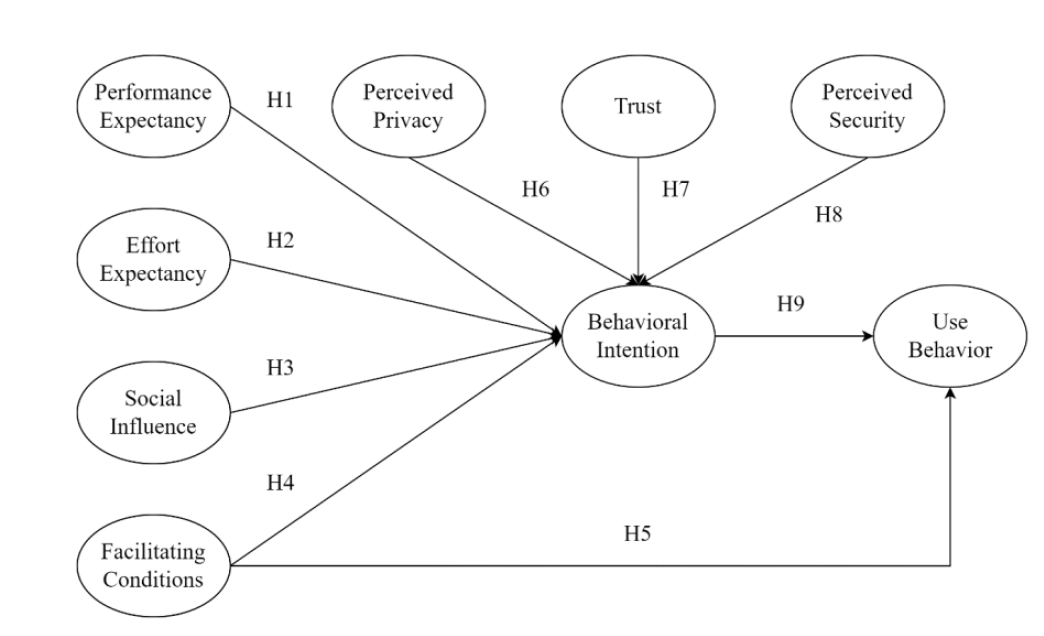
The literature review shows the relationship between researched variables. The first relationship is between behavioral intention and use behavior. They have a significant and positive relationship. Other than that, behavioral intention is also affected by performance expectancy, effort expectancy, social influence and facilitating conditions. The suggested framework is depicted below to illustrate the anticipated connection among each variable.
Additional variables such as perceived privacy, trust and perceived security were added as the variable that influences cryptocurrency exchange use behavior. This addition of variables is based on the fact that financial activity has a higher risk of fraud, scams and other criminal activities (Figure 2).
Figure 2: Theoretical Framework
Source: Author
CONCLUSION
This research has successfully reviewed the literature related to cryptocurrency exchange usage. The variables that were found to affect user behavior are performance expectancy, effort expectancy, social influence, facilitating conditions, perceived privacy, trust and perceived security. This research can be used as the foundation to develop further research related to the factors affecting cryptocurrency exchange adoption. Besides, this research also adds literature related to cryptocurrency exchange adoption and provides views for the provider of a cryptocurrency exchange to understand what factors affect the adoption of cryptocurrency in general.
REFERENCES
Johnson, J. “Internet usage Worldwide - Statistics and facts.” Statista, October 2021, https://www.statista.com/topics/1145/internet-usage-worldwide/#dossierKeyfigures
Maseleno, A. et al. “Access control and classifier-based blockchain technology in E-healthcare applications.” Intelligent Data Security Solutions for e-Health Applications, 2020, pp. 151–167. https://doi.org/10.1016/B978-0-12-819511-6.00008-X
Xia, P. et al. “Characterizing cryptocurrency exchange scams.” Computers and Security, vol. 98, 2020, p. 101993. https://doi.org/10.1016/j.cose.2020.101993
CoinMarketCap. “Today’s Cryptocurrency Prices by Market Cap.” June 2021, https://coinmarketcap.com/
Silver, C. “The Top 25 economies in the World.” Investopedia, June 2020, https://www.investopedia.com/insights/worlds-top-economies/
Conway, L. “How to buy bitcoin.” Investopedia, June 2021, https://www.investopedia.com/articles/investing/082914/basics-buying-and-investing-bitcoin.asp
Bappebti. “Jumlah investor aset kripto lampaui investor saham.” Beritasatu, June 2021, http://bappebti.go.id/pojok_media/detail/7537
CNN Indonesia. “Nilai transaksi uang kripto di Indonesia Tembus Rp126 T.” June 2021, https://www.cnnindonesia.com/ekonomi/20210421171433-92-632997/nilai-transaksi-uang-kripto-di-indonesia-tembus-rp126-t
Sobhanifard, Y. and S. Sadatfarizani. “Consumer-based modeling and ranking of the consumption factors of cryptocurrencies.” Physica A: Statistical Mechanics and Its Applications, vol. 528, 2019, p. 121263. https://doi.org/10.1016/j.physa.2019.121263
Williams, M.D. et al. “The unified theory of acceptance and use of technology (UTAUT): A literature review.” Journal of Enterprise Information Management, vol. 28, no. 3, 2015, pp. 443–488. https://doi.org/10.1108/JEIM-09-2014-0088.
Venkatesh, V. et al. “User acceptance of information technology: toward a unified view.” MIS Quarterly, vol. 27, no. 3, 2003, pp. 425–478. https://doi.org/10.2307/30036540
Davis, F.D. “Perceived usefulness, perceived ease of use and user acceptance of information technology.” MIS Quarterly, vol. 13, no. 3, 1989, pp. 319–340. https://doi.org/10.2307/249008
Davis, F.D. et al. “User acceptance of computer technology: A comparison of two theoretical models.” Management Science, vol. 35, no. 8, 1989, pp. 982–1003. https://doi.org/10.1287/mnsc.35.8.982
Huang, C.-Y. and Y.-S. Kao. “UTAUT2 based predictions of factors influencing the technology acceptance of phablets by DNP.” Mathematical Problems in Engineering, 2015, pp. 1–23. https://doi.org/10.1155/2015/603747
Ho, C.B. et al. “Technology adoption of podcast in language learning: Using Taiwan and China as examples.” International Journal of E-Education, e-Business, e-Management and e-Learning Technology, 2015. https://doi.org/10.17706/ijeeee.2016.6.1.1-12
Davis, F.D. et al. “Extrinsic and intrinsic motivation to use computers in the workplace.” Journal of Applied Social Psychology, vol. 22, no. 14, 1992, pp. 1111–1132. https://doi.org/10.1111/j.1559-1816.1992.tb00945.x
Thompson, R.L. et al. “Personal computing: Toward a conceptual model of utilization.” MIS Quarterly, vol. 15, no. 1, 1991, pp. 125–143. https://doi.org/10.2307/249443
Moore, G.C. and I. Benbasat. “Development of an instrument to measure the perceptions of adopting an information technology innovation.” Information Systems Research, vol. 2, no. 3, 1991, pp. 192–222. https://doi.org/10.1287/isre.2.3.192.
Compeau, D. et al. “Social cognitive theory and individual reactions to computing technology: A longitudinal study.” MIS Quarterly, vol. 23, no. 2, 1999, pp. 145–158. https://doi.org/10.2307/249749
Compeau, D.R. and C.A. Higgins. “Computer self-efficacy: development of a measure and initial test.” MIS Quarterly, vol. 19, no. 2, 1995, pp. 189–211. https://doi.org/10.2307/249688
Ajzen, I. “The Theory of planned behavior.” Organizational Behavior and Human Decision Processes, vol. 50, 1991, pp. 179–211. https://doi.org/10.1016/0749-5978(91)90020-T
Rogers, E.M. Diffusion of Innovations. New York: Free Press, 2005.
Hong, W. and J.Y.L. Thong. “Internet privacy concerns: An integrated conceptualization and four empirical studies.” MIS Quarterly, vol. 37, no. 1, 2013, pp. 275–298. JSTOR, http://www.jstor.org/stable/43825946
Dinev, T. and P. Hart. “Internet privacy concerns and their antecedents - measurement validity and a regression model.” Behaviour and Information Technology, vol. 23, no. 6, 2004, pp. 413–422. https://doi.org/10.1080/01449290410001715723
Maqableh, M. et al. “Integrating an information systems success model with perceived privacy, perceived security and trust: The moderating role of Facebook addiction.” Heliyon, vol. 7, no. 9, 2021, e07899. https://doi.org/10.1016/j.heliyon.2021.e07899
Mombeuil, C. and H. Uhde. “Relative Convenience, relative advantage, perceived security, perceived privacy and continuous use intention of China’s WeChat pay: A mixed-method two-phase design study.” Journal of Retailing and Consumer Services, vol. 59, 2021, p. 102384. https://doi.org/10.1016/j.jretconser.2020.102384
Malaquias, R.F. and Y. Hwang. “An empirical study on trust in mobile banking: A developing country perspective.” Computers in Human Behavior, vol. 54, 2016, pp. 453–461. https://doi.org/10.1016/j.chb.2015.08.039
Alalwan, A.A. et al. “Factors influencing adoption of mobile banking by jordanian bank customers: extending UTAUT2 with Trust.” International Journal of Information Management, vol. 37, no. 3, 2017, pp. 99–110. https://doi.org/10.1016/j.ijinfomgt.2017.01.002
Kim, G. et al. “Understanding dynamics between initial trust and usage intentions of mobile banking.” Information Systems Journal, vol. 19, no. 3, 2009, pp. 283–311. https://doi.org/10.1111/j.1365-2575.2007.00269.x
Balapour, A. et al. “Mobile application security: role of perceived privacy as the predictor of security perceptions.” International Journal of Information Management, vol. 52, 2020, p. 102063. https://doi.org/10.1016/j.ijinfomgt.2019.102063
Harris, M.A. et al. “Identifying factors influencing consumers’ intent to install mobile applications.” International Journal of Information Management, vol. 36, no. 3, 2016, pp. 441–450. https://doi.org/10.1016/j.ijinfomgt.2016.02.004
Mowen, J.C. and Michael Minor. Consumer Behavior: A Framework. Upper Saddle River, NJ: Prentice Hall, 2001.
Aarts, H. et al. “Predicting behavior from actions in the past: repeated decision making or a matter of habit?” Journal of Applied Social Psychology, vol. 28, no. 15, 1998, pp. 1355–1374. https://doi.org/10.1111/j.1559-1816.1998.tb01681.x
Schiffman, L.G. and Leslie Lazar Kanuk. Consumer Behavior. Upper Saddle River, NJ: Pearson Prentice Hall, 2004.
Venkatesh, V. et al. “Consumer acceptance and use of information technology: Extending the unified theory of acceptance and use of technology.” MIS Quarterly, vol. 36, no. 1, 2012, pp. 157–178. https://doi.org/10.2307/41410412
Krombholz, K. et al. “The other side of the coin: user experiences with bitcoin security and privacy.” Lecture Notes in Computer Science, 2017, pp. 555–576. https://doi.org/10.1007/978-3-662-54970-4_33
Mendoza-Tello, J.C. et al. “Social Commerce as a Driver to Enhance Trust and Intention to Use Cryptocurrencies for Electronic Payments.” IEEE Access, vol. 6, 2018, pp. 50737–50751. https://doi.org/10.1109/ACCESS.2018.2869359
Shahzad, F. et al. “An empirical investigation on the adoption of cryptocurrencies among the people of mainland China.” Technology in Society, vol. 55, 2018, pp. 33–40. https://doi.org/10.1016/j.techsoc.2018.05.006
Arias-Oliva, M. et al. “Variables influencing cryptocurrency use: A technology acceptance model in Spain.” Frontiers in Psychology, vol. 10, 2019, p. 475. https://doi.org/10.3389/fpsyg.2019.00475
Merhi, M. et al. “A cross-cultural study of the intention to use mobile banking between Lebanese and British consumers: Extending UTAUT2 with security, privacy and trust.” Technology in Society, vol. 59, 2019, p. 101151.
Albayati, H. et al. “Accepting financial transactions using blockchain technology and cryptocurrency: A customer perspective approach.” Technology in Society, vol. 62, 2020, p. 101320. https://doi.org/10.1016/j.techsoc.2020.101320
Gil-Cordero, E. et al. “Cryptocurrencies as a financial tool: Acceptance factors.” Mathematics, vol. 8, no. 11, 2020, p. 1974. https://doi.org/10.3390/math8111974
Almuraqab, N.A.S. “Predicting determinants of the intention to use digital currency in the UAE: An empirical study.” The Electronic Journal of Information Systems in Developing Countries, vol. 86, no. 3, 2020. https://doi.org/10.1002/isd2.12125
Sohaib, O. et al. “A PLS-SEM neural network approach for understanding cryptocurrency adoption.” IEEE Access, vol. 8, 2020, pp. 13138–13150. https://doi.org/10.1109/ACCESS.2020.2966221
Steinmetz, F. et al. “Ownership, uses and perceptions of cryptocurrency: Results from a population survey.” Technological Forecasting and Social Change, vol. 173, 2021, p. 121073. https://doi.org/10.1016/j.techfore.2021.121073.
Almarashdeh, I. et al. “The adoption of bitcoins technology: The difference between perceived future expectation and intention to use bitcoins: does social influence matter?” International Journal of Electrical and Computer Engineering, vol. 11, no. 4, 2021, pp. 3270–3281. https://doi.org/10.11591/ijece.v11i4.pp3270-3281
Nadeem, M.A. et al. “Investigating the adoption factors of cryptocurrencies—A case of bitcoin: Empirical evidence from China.” SAGE Open, vol. 11, no. 1, 2021. https://doi.org/10.1177/2158244021998704
Ter Ji-Xi, J. et al. Teoh. “Behavioral intention to use cryptocurrency in Malaysia: An empirical study.” The Bottom Line, vol. 34, no. 2, 2021, pp. 170–197. https://doi.org/10.1108/BL-08-2020-0053
License
Creative Commons Attribution-NonCommercial-NoDerivatives 4.0 International License
All papers should be submitted electronically. All submitted manuscripts must be original work that is not under submission at another journal or under consideration for publication in another form, such as a monograph or chapter of a book. Authors of submitted papers are obligated not to submit their paper for publication elsewhere until an editorial decision is rendered on their submission. Further, authors of accepted papers are prohibited from publishing the results in other publications that appear before the paper is published in the Journal unless they receive approval for doing so from the Editor-In-Chief.
Himalayan Journal of Economics and Business Management open access articles are licensed under a Creative Commons Attribution-Share A like 4.0 International License. This license lets the audience to give appropriate credit, provide a link to the license, and indicate if changes were made and if they remix, transform, or build upon the material, they must distribute contributions under the same license as the original.
Recommended Articles
Research Article
Influence of Leadership on Poverty Reduction in the Devolved Government in Trans-Nzoia County, Kenya
Kinisu Sifuna,
...
Peter Simotwo
Published: 30/06/2021
Download PDF
Cite
x
APA
Sifuna, K., Lwangale, D. W., Simotwo, P., Sifuna, K., Lwangale, D. W. & Simotwo, P. (2021). Influence of Leadership on Poverty Reduction in the Devolved Government in Trans-Nzoia County, Kenya. Himalayan Journal of Economics and Business Management, 2(1), None-None.
MLA
Sifuna, Kinisu, et al. "Influence of Leadership on Poverty Reduction in the Devolved Government in Trans-Nzoia County, Kenya." Himalayan Journal of Economics and Business Management 2.1 (2021): None-None.
Chicago
Sifuna, Kinisu, David W. Lwangale, Peter Simotwo, Kinisu Sifuna, David W. Lwangale and Peter Simotwo. "Influence of Leadership on Poverty Reduction in the Devolved Government in Trans-Nzoia County, Kenya." Himalayan Journal of Economics and Business Management 2, no. 1 (2021): None-None.
Harvard
Sifuna, K., Lwangale, D. W., Simotwo, P., Sifuna, K., Lwangale, D. W. and Simotwo, P. (2021) 'Influence of Leadership on Poverty Reduction in the Devolved Government in Trans-Nzoia County, Kenya' Himalayan Journal of Economics and Business Management 2(1), pp. None-None.
Vancouver
Sifuna K, Lwangale DW, Simotwo P, Sifuna K, Lwangale DW, Simotwo P. Influence of Leadership on Poverty Reduction in the Devolved Government in Trans-Nzoia County, Kenya. Himalayan Journal of Economics and Business Management. 2021 Jan;2(1):None-None.
Download PDF
Research Article
Modelling Structure Job Quality, Job Design and Job Satisfaction
Moch Nurhadi,
...
Avi Sunani
Published: 30/08/2022
Download PDF
Cite
x
APA
Nurhadi, M., Bisyri Effendi, M., Saiful Ulum, A. & Sunani, A. (2022). Modelling Structure Job Quality, Job Design and Job Satisfaction. Himalayan Journal of Economics and Business Management, 3(2), 1-4.
MLA
Nurhadi, Moch, et al. "Modelling Structure Job Quality, Job Design and Job Satisfaction." Himalayan Journal of Economics and Business Management 3.2 (2022): 1-4.
Chicago
Nurhadi, Moch, Moch Bisyri Effendi, Achmad Saiful Ulum and Avi Sunani. "Modelling Structure Job Quality, Job Design and Job Satisfaction." Himalayan Journal of Economics and Business Management 3, no. 2 (2022): 1-4.
Harvard
Nurhadi, M., Bisyri Effendi, M., Saiful Ulum, A. and Sunani, A. (2022) 'Modelling Structure Job Quality, Job Design and Job Satisfaction' Himalayan Journal of Economics and Business Management 3(2), pp. 1-4.
Vancouver
Nurhadi M, Bisyri Effendi M, Saiful Ulum A, Sunani A. Modelling Structure Job Quality, Job Design and Job Satisfaction. Himalayan Journal of Economics and Business Management. 2022 Jul;3(2):1-4.
Download PDF
Research Article
Accountability and Transparency of Village Fund Management in Lumajang District
Nurina Ayuningtiyas,
...
Muhammad Miqdad
Published: 28/12/2023
Download PDF
Cite
x
APA
Ayuningtiyas, N., Santosa Putra, H. & Miqdad, M. (2023). Accountability and Transparency of Village Fund Management in Lumajang District. Himalayan Journal of Economics and Business Management, 4(2), 1-4.
MLA
Ayuningtiyas, Nurina, Hendrawan Santosa Putra and Muhammad Miqdad. "Accountability and Transparency of Village Fund Management in Lumajang District." Himalayan Journal of Economics and Business Management 4.2 (2023): 1-4.
Chicago
Ayuningtiyas, Nurina, Hendrawan Santosa Putra and Muhammad Miqdad. "Accountability and Transparency of Village Fund Management in Lumajang District." Himalayan Journal of Economics and Business Management 4, no. 2 (2023): 1-4.
Harvard
Ayuningtiyas, N., Santosa Putra, H. and Miqdad, M. (2023) 'Accountability and Transparency of Village Fund Management in Lumajang District' Himalayan Journal of Economics and Business Management 4(2), pp. 1-4.
Vancouver
Ayuningtiyas N, Santosa Putra H, Miqdad M. Accountability and Transparency of Village Fund Management in Lumajang District. Himalayan Journal of Economics and Business Management. 2023 Jul;4(2):1-4.
Download PDF
Research Article
Proposed Digital Marketing Strategy to Enhance Engineering Consultancy Company Revenue
Alfarisy, K. A.,
Wandebori, H.
Published: 30/04/2024
Download PDF
Cite
x
APA
K. A., A. & H., W. (2024). Proposed Digital Marketing Strategy to Enhance Engineering Consultancy Company Revenue. Himalayan Journal of Economics and Business Management, 5(1), 1-18.
MLA
K. A., Alfarisy, and Wandebori, H.. "Proposed Digital Marketing Strategy to Enhance Engineering Consultancy Company Revenue." Himalayan Journal of Economics and Business Management 5.1 (2024): 1-18.
Chicago
K. A., Alfarisy, and Wandebori, H.. "Proposed Digital Marketing Strategy to Enhance Engineering Consultancy Company Revenue." Himalayan Journal of Economics and Business Management 5, no. 1 (2024): 1-18.
Harvard
K. A., A. and H., W. (2024) 'Proposed Digital Marketing Strategy to Enhance Engineering Consultancy Company Revenue' Himalayan Journal of Economics and Business Management 5(1), pp. 1-18.
Vancouver
K. A. A, H. W. Proposed Digital Marketing Strategy to Enhance Engineering Consultancy Company Revenue. Himalayan Journal of Economics and Business Management. 2024 Jan;5(1):1-18.
Gunawijaya, C. & Aswin Rahadi, R. (2023). Cryptocurrency Exchange Adoption: A Literature Review. Himalayan Journal of Economics and Business Management, 4(1), 1-7.
MLA
Gunawijaya, Clint and Raden Aswin Rahadi. "Cryptocurrency Exchange Adoption: A Literature Review." Himalayan Journal of Economics and Business Management 4.1 (2023): 1-7.
Chicago
Gunawijaya, Clint and Raden Aswin Rahadi. "Cryptocurrency Exchange Adoption: A Literature Review." Himalayan Journal of Economics and Business Management 4, no. 1 (2023): 1-7.
Harvard
Gunawijaya, C. and Aswin Rahadi, R. (2023) 'Cryptocurrency Exchange Adoption: A Literature Review' Himalayan Journal of Economics and Business Management 4(1), pp. 1-7.
Vancouver
Gunawijaya C, Aswin Rahadi R. Cryptocurrency Exchange Adoption: A Literature Review. Himalayan Journal of Economics and Business Management. 2023 Jan;4(1):1-7.



 Download PDF
 Download XML