In all parts of the world, border areas or borderlines are both melting pots and security hot spots. These borders are often neglected in the development strategies of postcolonial states. They suddenly became arenas for cross-border crime and represent a dynamic place of historically fostered cultural and socioeconomic exchanges at the same time. The balkanization of Africa as obtains today is largely a product of Western colonial influence. This division was carried out at the Berlin Conference from November 1884 to February 1885 away from Africa and without the Africans to set up their own frontiers. The boundary which corresponds to the English terms “border” or “frontier” is the limitation between two sovereign states. The advent of the boundary then redefined the map of Africa in general and of sub-Saharan Africa in particular. The latter is also called black Africa or Africa south of the Sahara. It is the stretch of the continent which is separated ecologically, culturally, ethnically from the countries of the north and consisted of 48 countries (including islands) and subdivided into four sub regions [1]. Consequently, this part of the continent is thus characterised by population dynamism in both sides of the border zones. Many researchers and policy makers have been questioning on what can be at the forefront of this interactive dynamism observed in sub-Saharan Africa in general and between Benin and Nigeria in particular? This is because these countries were subjected to different colonial experiences. To give more focus, this paper begins by focusing on the factors responsible for such dynamic interactions between the people. Secondly, the evolution of this dynamic interaction between the people of east Benin and west Nigeria shall equally be treated. In the end, this paper will highlight the consequences generated by these mutations in the border areas.
The Factors Responsible for the Dynamic Interaction in Sub-Saharan Africa
After colonisation, the inherited borders were confronted with several realities; notably the mobility of people and the displacement of the populations situated on both sides of the border zones. However, all these dynamic interactions are explained in line with political, economic and social considerations.
Political Considerations
Politically, the issue of African borders is extremely sensitive and is often hotly debated. This is understandable inasmuch as their course inevitably recalls the arbitrary manner in which the division of this continent took place this was between the 19th and 20th centuries. Thus, politically, the borders of Africa especially that of sub-Sahara Africa undergoes major changes both physically and ideologically. Initially, people moved across the borders to escape colonial forms of administration. For example, the people of Savé (Central-East Benin), faced with the abuses of the French administration characterized with forced labour, torture, military recruitment, high taxation amongst others, moved the boundary symbols of the Okpara towards the Ouémé in 1898. This displacement eventually put them under the authority of the English colonialist [2]. Nowadays, the evolution of state structures and the confirmation of new forms of power are reflected in the affirmation of new and more shifting boundaries that fit into urban spaces. In addition, borders are integrated into most governance cases. Indeed, in the daily life of the peoples of sub-Saharan Africa, there are customary chiefs whose authority extends without difficulties beyond the borders. They have the mastery of their territory through the daily information of their people. Here, the dynamism of the populations is a guarantee of the security of the zone of interaction. Moreover, there is the challenge of traditional authority as another reason for the displacement of frontier spots. A good example of this was reflected in the creation of the Ifonyintedo agglomeration in Nigeria. It was the work of the Yoruba of Ifangni-Ile (Benin) who did not want to submit to the leader Tori (an ethnic group of Benin) imposed by the French [3]. Besides these political considerations, economic factors were equally responsible for such dynamic interaction within the people.
Economic Factors
Economically, the activities practised by the cross-border populations exert an influence on the changes of the borders in sub-Sahara Africa. In the colonial context, each power has endowed its territory with infrastructures including roads, bridges, and ports to a larger extent of opening of Africa to the world by the Gulf of Guinea and to link the colonial empires. This was the case of France who wanted to link Dakar in French Equatorial Africa (AOF) to Djibouti in East Africa. This situation was already encouraging contacts between peoples. Moreover, trade between cross-border populations justifies this dynamism. A good example of such a situation is found in the far north of Cameroon in whose commercial relations are more advanced with those of neighbouring Chad in spite of the existence of a border [4]. Furthermore, the border markets on both sides of the border have significantly influenced the zone of interaction amongst people living in sub-Saharan Africa in the present day. As a case study, the markets of Abang-Minko and Kye-Ossi are very favourable for trade between Cameroon, Equatorial Guinea and Gabon. In this connection, borders must advance especially when it concerns the exploitation of such resources found on both sides of the borders. Indeed, some African states do not have an opening on the sea. Consequently, they resort to their neighbours having a maritime opening. The case of Ethiopia and Eritrea which recently built a railway linking the two countries despite the presence of borders is a good example to note. In the CEMAC zone, after the accomplishment of the Chad Cameroon pipeline transportation project in the early 2000s, both countries are still planning to do the same in the domain of railway transportation system [5]. Thus, economic activities have been woven between frontier peoples without taking into account of the boundaries physically represented or naturally established. Nevertheless, these economic factors extend socially.
Social Responsibility
The borders in sub-Saharan Africa are not only the result of the colonial arbitrary delimitation and demarcation but also of considerable mobility. According to the work of Michel Soares, the displacement of boundaries can be due, among other things, to the fields of culture situated on either side of the line, to marriages, baptisms and ancestor cults. Moreover, the border can never be a wall between the two peoples, whatever the micro-nationalisms that might develop between the neighbouring states. In fact, this imaginary line departed the brother peoples. As a result, this solidarity of the past has steadily increased among these border populations. This is the example of the Cameroon-Chad border which is almost non-existent. The populations of these two countries together celebrate cultural festivals such as “FéoKagué” or “the Coq festival” [6]. Likewise, along this border, there are multitudes trails or vicinal roads whose operational surveillance of the police, customs or gendarmerie have never succeeded in prohibiting the use. In this context, the trans-border space is experienced as a de facto space, corresponding to cultural unity, itself derived from a common natural context. Thus, historically, the zones of interactions in sub-Saharan Africa constitute a homogeneous unit imperturbable neither by the imaginary traces nor by the position of the boundaries. However, this dynamic interaction is equally more visible on the South-East border between Benin and Nigeria that constitute our case study.
Border Dynamic Interaction: The Case Study of Benin-Nigeria
Benin and Nigeria, although having a different colonial past, share a common border. The population contacts on both sides of this border are an example of frontier dynamism in sub-Saharan Africa. This case study then provides an in-depth understanding of the features of border interaction dynamism in this part of Africa.
The Characteristics of the Beninese-Nigerian Border
Benin and Nigeria are two states of West Africa. Although they had different colonial powers, the international
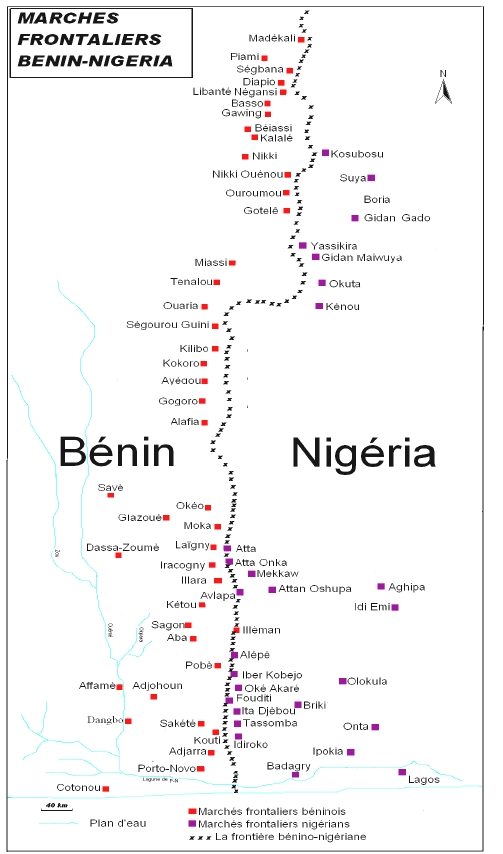
Figure 1: Border Markets Between Benin and Nigeria
Source: [3]
border between the Federal Republic of Nigeria and the Republic of Benin is roughly 700 km long [7]. The current border corresponds to the inter-colonial border between British and French territories that was set up in 1889. Due to the fact that between these two Countries hardly any natural boundaries exist, in some parts, its exact demarcation remains unclear. The border region includes a large surface of lagoon and marshlands in the Ouémé valley, which has traditionally been used as transport and trade routes and which are very difficult to control and monitor by migration and customs authorities. The multiple local markets found along the border line, from the North to the South, are the backbone of the buzzing web of exchange taking place between both countries [8]. These markets also constitute the main places of contact and exchange between people, who come from both rural and urban areas. However, the geographical condition of this area has played a vital role: the proximity of major consumption markets and the absence of natural boundaries are important contributions to the economic and social interaction between these countries.
Historically, the different populations living within their borders have direct ethnological and cultural ties a long time before the advent of the various European colonizers. These colonial boundaries are both terrestrial and lagoon. The Beninese-Nigerian borders are areas of concentration of economic activities between the two States. It has special characteristics which made the boundaries almost not visible. At first, this boundary was only an arbitrary division operated by the colonial powers in the direction of the balkanization of Africa. It is marked by the presence on both sides of a very close African population, have in common: the same cultures and traditions, the same languages, the same relations and the same history. In short a human entity with the same civilisation. The dynamism of these populations then imposes the existence of a border area almost non-existent because there develop exchanges long ago of all kinds [9].
The cultural homogeneity of the border zone is crucial for the extraordinary cross-border dynamics. When the border was fixed in 1889, it divided up the Shabe Yoruba of which the majority became part of French Dahomey whilst some of the eastern Shabe villages joined British Nigeria. This separation, which forced many Yoruba into a nation with the Dahomean Fon, a former enemy, was the source of resentment. The current borders, a colonial remnant, separated a homogeneous socio-cultural group. Even today, linguistically and ethnically similar groups can be found all along the border: the above mentioned Yoruba in the South together with the Gun and Ajo speaking group; the Beriba in the centre and the Fulani and Haussa in the northern parts of both countries. Oshita is convinced that: “The majority of these border residents consider de beacon stones signifying official boundary marks as mere symbols of the geographical state, which for them have no bearing on the social and cultural ties of the life and blood human beings” [ 10]. The cultural vicinity builds the basis for a high density of economic and social exchange across the border.
However, the border between Benin and Nigeria is vital for both states, equally to the entire West African sub-region. It facilitates exchanges of all kinds by the various means of communication: air, land, river and sea. This vitality explains the high density of economic activities and the movement of people, goods and services observed by the services of the two countries. It is distinguished by its extreme permeability, permanent mobility and increasing vulnerability.
Moreover, there is bound to have several markets (as partly illustrated in map 1 below) in the areas that share the two countries. These markets constitute points of meeting and exchange between urban and rural populations. These populations constitute the real actors of the environment. That is to say, “individuals and social groups who intervene in more than one capacity in an action and feel involved in the objectives of this action” [11]. Accessibility from both sides of the borders is still one of the characteristics that feature amongst these two countries. In this sphere, three semi-urban villages (Ponton, Medédjonou and Louho) and one part of the city of Porto-Novo (Acrontokpa) are clerical cases [12]. These access points made it possible to understand the relationships that these populations have with their territory. It is between them that relations are strengthened and real change takes place most often.
From the above map, it appears that along the border between these two countries there are 43 border markets on the Benin side and 26 on the side of Nigeria. The high number of markets in Benin is explained by the major role played by Benin in West Africa trade sector. Indeed, Benin is considered a “warehouse state” [13] because it receives goods imported from all parts of the world especially from Europe and Asia which are subsequently exported to Nigeria in particular and to the sub-region in general. These markets include major markets such as Lagos in Nigeria and Porto-Novo in Benin, and there equally intermediate markets along the borders. The dynamic interaction between Benin and Nigeria is also reflected in the presence of maritime and lagoon areas. Indeed, water has long influenced the social, economic and political organisation of man and society. Thus, today, the human control of water resources poses as a vector of sustainable development [14]. The Fluvio-lagoon transport is a good example to indicate. These two states mostly depend on a common water resource. This imposes cross-border water management between Benin and Nigeria, the case of the hydraulic complex on the Ouémé River and the Porto-Novo/Lagos lagoon [15]. Similarly, re-export by the lagoon is now provided by four villages in the boroughs of Porto-Novo: Louho, Mariatokpa, Acrontokpa and Agbokoutokpa [16]. At the top of the re-exports, comes the transportation of rice which dominants other products. This profitable activity experienced between Lagoon village and the cities of Nigeria assures the daily activity of the people.
The Factors Linked to Mobility in this Border
Benin and Nigeria have had great difficulties in delimiting their frontiers because they stem from arbitrary colonial considerations. The boundary is necessarily uncertain and imprecise, hence its mobile nature. There are several reasons for this mobility. One is the development of trade relations. These relations were established between the peoples of the two countries without taking into account the boundaries physically represented or naturally established. It should be recalled that these two states have focused their development policy on re-export trade. Thus, this trade is deployed through cross-border markets. In this case, there is the Badagry market in the Gulf of Benin, whose importance goes back to the slave trade, and which is today one of the great meeting place between Beninese and Nigerians [17]. The merchants come from Lagos, the villages of the Badagry region, Porto-Novo and the neighbouring villages. There is also the Dantokpa and Ouando markets found between Cotonou and Porto-Novo. However, they equally play a crucial role in trade. The first aspect is the area for the economic exchange of products within and out of the sub-region and to Europe. The second view is an interconnection market where intense flows take place on daily mobility. Alongside these major trading centres, there are a few relay markets that serve as intermediaries between the major cities of Adjarra, Djoffin, in Benin and Idiroko in Nigeria. By 1963, there had been more than fifty markets along the 700 km of borders between Benin and Nigeria, [18]
The Consequences of the Dynamic Interaction in Sub-Saharan Africa
The displacement of border pillars and the development of contacts and exchanges in areas of interaction in sub-Saharan Africa often have many consequences and at various levels ranging from political, economic and social.
Political Consequences
Politically, the displacement of populations on both sides of a border often facilitates the emergence of major political problems. At first, there is the destabilization of States. Indeed, the free movement of people, goods and services is often used to destabilize neighbouring states. As an example, Ivory Coast is destabilized by mercenary soldiers from neighbouring countries this as a result of the accessibility with her neighbouring countries. This mercenary often uses the border that separates Ivory Coast with Burkina Faso to enter the country. Still, the non-respect of the borders by the populations is often responsible for the installation of a climate of tension or political conflicts between the States. These conflicts often punctuate the closure or opening of borders without taking into account the interests of the populations who continue to move according to their needs and especially in the light of the outgoing development of States [19]. Thus, the Senegal River, which has never constituted a real border throughout history, has become a barrier between Senegal and Mauritania. This area at the cross of the river was closed as a result of the conflict between the two countries in 1988.
The Economic Consequences
The border is the zone of constant economic exchange between two neighbouring states. Consequently, this mobility between the states of sub-Saharan Africa can have harmful consequences for these nations. In many cases in these areas, there is the organisation of a system of fraudulent exchange amongst the people of the said locality. Indeed, the transportation of products by river and land between populations has generated a new networks system at the detriment of the customs department of both nations. Worse still, network actors most often work in collusion with police and customs officers. This is the case of Nigeria where the entry of products by fluvio-lagoon on the border with Benin is known to have entered the contraband products [20]. Nevertheless, there equally exists the rapid development of cross-border smuggling. It is often favoured by the fact that the border is not marked by any significant physical obstacle and also by the fact that smugglers are thoroughly familiar with the topography of the border. As example, there is the Cameroon-Nigeria border where large smuggled goods are being transported on a daily bases with little or no control. Also, the Benin-Nigeria border through its lagoon facilitates the transport of rice, oils, preserves, fabrics, salt, building materials and so on. In addition, some nations are deprived of sea openings and use the ports of neighbouring countries to transit their goods. For example, the ports of Kenya and Tanzania serve countries such as Rwanda, Burundi, Uganda and Zambia [21]. Moreover, as an economic consequence, there is the development of trade based on adulterated products (alcohol, hydrocarbons). This activity has its origins in the “oil boom” that followed the oil crisis of 1973. Thus, many people in sub-Saharan Africa buy adulterated gasoline in order to ensure the movement of their various means of transport (vehicles, motorcycles) because the price is accessible to all segments of the population. This is the case in the Porto-Novo region and south-west Nigeria. Here, there is an active circulation corridor, which is conducive to the flow of prohibited products and to unofficial trade [22]. With this situation, it is practically impossible for security officers to ensure effective and permanent control of the region. However, these consequences equally extend to the social domain.
The Social Consequences
Socially, the mutations in the areas of interaction that are most often justified by ethnic, cultural and linguistic links of border populations often have social consequences. First of all, there is a high level of banditry experienced in these areas. It grows when there is an imbalance in the level of development of neighbouring countries. It is manifested by intrusions by the armed groups of the least developed country to the most advanced country. These bandits proceed by kidnapping, rapes and assassinations amongst other crimes, as in the border area between Cameroon and the Central African Republic [23]. Here, several groups of Central African bandits cross the border to commit exactions in Cameroon, especially in mining areas (gold, bauxite and diamond) in the east of the country. There is equally the development of tribal wars amongst other another social consequence. Indeed, the free movement of populations on both sides of a border often creates tensions. In many cases, animals from both sides of the border are forced to move especially during transhumant seasons, as such, destroying the fields beyond their territory. This kind of situation ends in clashes between border populations. In addition, failure to respect boundary markers is often responsible for a desire to dominate one party over another. The land issue all over the world in general and in Africa, in particular, has become a source of conflict between communities [24]. Some border populations in their appetite for land often go beyond the border to express their envy. This is the case in the north-west border between Cameroon and Nigeria where there have often been fatal clashes between the border populations of the countries because of land conquests. Moreover, we have the growing xenophobia between neighbouring peoples. Indeed, labour migrations that often ignore the borders make them permeable by ethnic solidarities linking the populations on both sides. These populations, often numerous, invade the neighbouring territory, where they are very creative. This is one of the reasons why we often find that Africans in general and Cameroonians, in particular, are often driven out of Equatorial Guinea by the indigenous population [25].



 Download PDF
 Download XML