Analysis of Dairy Cow Milk Business in Wonosalam District, Jombang Regency
Ryan Ego Suprianto
1
,
Nuriah Yuliati
1
,
Mubarokah
1
1
Master of Agribusiness Study Program, Faculty of Agriculture, UPN Veterans East Java, Jl. Rungkut Madya No. 1 Gunung Anyar, Gunung Anyar District, City of Surabaya East Java, 60294
The dairy cattle commodity is still struggling with classic problems, the government admits that this livestock is less desirable, even by young farmers, currently the average age of dairy farmers is around 45 years or even more. The scale of dairy cow ownership has not moved from 2-3 heads, the milk production produced is also low, which is only 8-13 liters per head per day. Dairy farmers complain that concentrate prices continue to rise. The high number of imports was caused by domestic milk production being unable to meet domestic milk consumption, with growth tending to stagnate. At least around 70% of the need for milk consumption in Indonesia is met by imported milk, while the remaining 30% is from the contribution of domestic milk production. This study aims to determine the factors that influence the income of dairy cattle business in Wonosalam District and efforts to increase the income of dairy farmers in Wonosalam District. The method used in this research is descriptive method with a quantitative approach. Sampling used a non-random technique, namely purposive sampling. The results of the regression test prove that the factors affecting income that have a major influence are the cost of feed and the amount of milk production. The problems faced by dairy farmers in the current research area and sucounter measures litisthe impact of the spread of foot and mouth disease (FMD) does not only affect beef sales. Milk production of dairy cows also plunged. Permasa and the second largest is Forage feed in the dry season is difficult to obtain for breeders. Moor land during the dry season is difficult to obtain because forage cannot grow. Breeders have to look for forage in the fields or buy it from feed traders.
Keywords
Cow Milk Business
Dairy Income Factors
Problems
INTRODUCTION
The dairy cattle business plays an important role in providing nutrition for the community. The main product produced from dairy cattle is milk. Cow's milk is the main product of cattle which is mostly consumed by humans, because the nutritional content of milk can be absorbed by the body perfectly. The calculation of how much milk is produced is a concern, because in the dairy cattle business there is a period of the lactation cycle.
Nugroho Aju Chess et al. in his research said that altitude has a significant effect on milk production. Setyaningrum, JU business cannot be separated from physical and non-physical factors. Physical factors also support the productivity of milk produced by dairy cows while non-physical factors such as labor, capital, marketing and livestock management will affect the productivity of dairy cows.
Dairy cattle in Indonesia can develop well and produce optimally in highland areas with an altitude of 750 masl to 1200 masl. The air temperature suitable for cattle is between 130C-180C. Areas with an altitude of ≤700 masl will have lower production than maintenance areas with an altitude of ≥700 masl. Dairy cattle in Indonesia will be able to develop on mountain slopes which have not so hot temperatures, high rainfall and fertile soil.
Data from the Animal Husbandry and Fisheries Service in 2021 the number of dairy cattle in Jombang Regency is5983. The population of dairy farmers and the largest number of dairy cattle in Jombang Regency is Wonosalam District. The number of dairy farmers in Wonosalam District is 924 people and the number of dairy cattle5537tail. Wonosalam sub-district is a sub-district that has the highest potential for the dairy farming and milk-producing industry compared to other sub-districts in Jombang Regency.
Currently, dairy farmers in Wonosalam District generally still adhere to the traditional system, even though in this modernization era there are not a few farmers who use modern methods. The traditional livestock system is characterized by a small number of livestock, low technological inputs, family labor and low profits.
The dairy cattle commodity is still struggling with classic problems, the government admits that this livestock is less desirable, even by young farmers, currently the average age of dairy farmers is around 45 years or even more. The scale of dairy cow ownership has not moved from 2-3 heads, the milk production produced is also low, which is only 8-13 liters per head per day. Dairy farmers complain that concentrate prices continue to rise. The high number of imports was caused by domestic milk production being unable to meet domestic milk consumption, with growth tending to stagnate. At least around 70% of the need for milk consumption in Indonesia is met by imported milk, while the remaining 30% is from the contribution of domestic milk production.
Seeing this background, the researchers analyzed the factors that influence the income of the dairy cattle business in Wonosalam District. Researchers want to formulate efforts to increase the income of dairy cattle business in Wonosalam District.
MATERIALS AND METHODS
This research was conducted in Wonosalam District, Jombang Regency. The determination of the research location was carried out purposively with the consideration that Wonosalam District is one of the centers for dairy cattle which has not yet carried out the processing of its cow manure. This research was conducted in January – July 2022.
The population in this study were dairy farmers spread over 9 villages in the Wonosalam sub-district of 924 households.
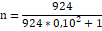
Given the limitations of time, cost, manpower and human resources, the sample uses a household survey and the sample size is calculated using a formula. The sample is part or representative of the population studied [1]. Researchers will conduct research on the contribution of dairy farmers to the level of income of residents in Wonosalam District. To determine the size of the sample used in research from a population, a formula can be usedSlovin [2], as follows:
Information:
n: Sample Size
N: Population Size
e: Measure of allowance for inaccuracy (10%)
Table 1: Dairy Cattle Population by District in Jombang Regency (Per Head) in 2019-2020
No.
Subdistrict
2019
2020
1.
Diwek
6
8
2.
Mojowarno
76
91
3.
Bareng
236
285
4.
Wonoslam
4964
5537
5.
Mojoagung
464
0
6.
Sumobito
8
12
7.
Jogoroto
11
23
8.
Megaluh
14
20
9.
Kesamben
6
7
Amount
5785
5983
Source: Jombang District Animal Husbandry Service
The sample has 90% confidence in the population, the sample used in this study is the number of dairy farmers in Wonosalam District. According to data from the Jombang Regency Animal Husbandry Service in 2018, the number of dairy farmers in Wonosalam District is 924 families. The sample size is calculated using the Slovin formula [2], with the following calculations:
From the results of these calculations, the result is 90.23 which is then rounded up to 90 people for dairy farmers in Wonosalam District. The sampling method used in this study is to use the probability sampling method by giving each element of the population to be selected and using a sample (Proportional Sampling). Proportional Sampling is a technique that requires sampling from each sub-population by taking into account the size of the sub-population [3]. The size of the sample in each region varies according to the size of the population in the region, the larger the population the larger the sample. Before determining the number of samples in each village, it is necessary to know the sample percentage for each village [2], seblike the following:
Which is then continued by calculating the sample in each village using the following formula:
By using this formula, the calculation results are obtained and can be seen in Table 3.
Sampling area (area sampling) was carried out using a simple random method. The sampling in this study was in the administrative area of the Wonosalam District which was obtained from every village included in the administrative area of the Wonosalam District. The number of samples taken in each village is different, according to the calculation results.
Definition and measurement of research variables Hadi [1], defines "variables as symptoms that vary. Symptoms are research objects, so variables are varied research objects."
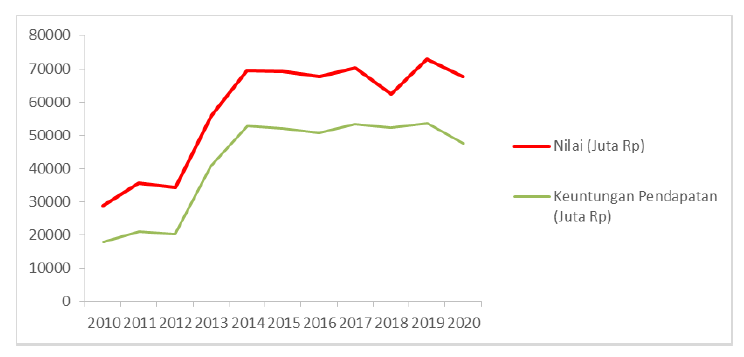
Figure 1: Sales Value of Dairy Cow's Milk
value (million IDR), Revenue gain (million IDR)
Table 2: Number of Dairy Cattle Breeders and Livestock Per Village in Wonosalam District, Jombang Regency (Per Head) in 2020.
Village Name
Number of Dairy Cattle Farmers
Number of Dairy Cows
Carangwulung
135
552
Galengdowo
186
1338
Jarak
141
1395
Panglungan
172
922
Sambirejo
41
261
Sumberjo
29
135
Wonokerto
8
35
Wonomerto
102
399
Wonosalam
110
500
Amount
924
5537
Source: Jombang District Animal Husbandry Service
Table 3: Sample Sizes Detailed for Each Village in the Wonosalam District in 2020
Village Name
Number of Dairy Cattle Farmers
%
Calculation of the Number of Samples
Carangwulung
135
14.61
13
Galengdowo
186
20.13
17
Distance
141
15.26
14
Pangpang
172
18.61
17
Sambirejo
41
4.44
4
Sumberjo
29
3.14
3
Wonokerto
8
0.87
1
Wonomerto
102
11.04
10
Wonosalam
110
11.9
11
Amount
924
100.00
90
Source: Data Analysis
The variables used in this study are:
Dairy Cattle Farmers add definition to people who have their own livestock or have other people (the status of the breeder which has an impact on cost calculations)
Income of Dairy Farmers
Income variables in the study include the following indicators
The main income which is a dairy farmer business is measured in Rupiah units
Side income is income derived from business activities outside the dairy farming business
Dairy Farming Business, The Indicators Include
Dairy farming business maintenance activities
The production activities of the dairy farmer business undertaken
Capital, where does the capital used for the breeder business come from
The number and work system of the workforce can help in the dairy farming business
Price is an exchange rate that can be equated with money or other goods for the benefits derived from an item or service. The price includes the purchase price from the cooperative to member farmers for each liter of cow's milk produced and is also determined by the price from the IPS (Milk Processing Industry) in collaboration with the dairy cooperative in Wonosalam District.
Milk production is the amount of milk produced by lactating cows that is paid to the dairy cooperative in Wonosalam District.
Expenditure, the Indicators Include
Farmer Household Expenses: Expenditures for the production costs of a dairy farmer business consist of:
The cost of green feed, the cost of additional feed, is the amount of forage and additional feed given to cows multiplied by the size price in rupiah units/day
The cost of additional feed, is the amount of additional feed given to cows multiplied by the price of additional feed/kg measured in rupiah units/day
Labor cost, is the amount of labor used multiplied by the value of the wages given, measured in the rupiah value of labor in units of rupiah value/day
The cost of medicines, is the amount of costs incurred by breeders within one month in units of rupiah/day
Production Costs
Fixed costs (Total fixed costs)
Fixed costs consist of (Rp/year)
Shrinkage of cage (Rp/year)
Equipment depreciation (Rp/year)
Variable cost (Total variable cost)
Variable costs consist of:
Forage, calculated based on the amount given multiplied by the purchase price of forage (measured in rupiah per bunch)
Drugs or vaccines, calculated based on the number of drugs or vaccines given at the price of the drugs or vaccines (in Rupiah)
Transportation costs, livestock sales (how are the quality of livestock), delivery of milk, costs of finding forage, calculated based on the amount sold multiplied by the transportation costs for 1 transportation (in Rupiah units)
Insemination costs are costs incurred for the implementation of artificial insemination in dairy cattle. (in Rupiah unit)
Factors of income of dairy farmers
Animal feed in this study was measured by the purchase price of the feed and the wages for taking the feed in the form of green grass. Livestock feed is food given to domestic animals on a farm. There are two basic types: forage and forage. The word "feed" more often refers to animal feed
Cattle can be made in double or single form, depending on the number of cows owned. In single-type pens, the placement of cows is carried out in one row or one line, while in dual-type pens the placement of the cows is carried out facing each other or opposite each other.
Cage Size
Adult female cow 1.5 x 2 m/head
Calves 1.5 x 2 m/head
In this study the cost of the cage is measured in terms of the amount of the cost of depreciation of the cage
Medicine, health vitamins certainly hold the key in achieving success in the cattle farming business. In caring for and caring for it, of course, medicines or vitamins are needed to treat and maintain the health of livestock, in this study the measuring tool for this success is the cost of buying medicines and vitamins to support the success of a cattle business
Workforce is a resident who is of working age, to join in developing a business. Labor in this study is measured by the cost of wages for 8 hours of work
Analysis to answer objective 3 even if only descriptive
Data Type
Primary data and secondary data in this study are as follows.
Primary Data
Interview data were obtained from dairy farmers.
Secondary Data
The Wonosalam District administration map was obtained from the Planning and Development Agency (BAPPEDA)
Data on dairy farmers in the Wonosalam District were obtained from the sub-district/village, the Central Bureau of Statistics, the Livestock and Fisheries Service of the Jombang Regency and field surveys
Data on population by age group and sex for 2018 were obtained from the Central Bureau of Statistics
Data on the number of facilities or facilities and infrastructure in the Wonosalam District were obtained from the Central Bureau of Statistics
Data Collection Methods and Tools
Obtaining data in this study can be used various methods, including the following:
Field Observation
This study used the observation method to determine the whereabouts of all dairy farming business locations in Wonosalam District. By taking measurements directly at the location of the dairy farmer's business in Wonosalam District.
Structured Interview
Structured interviews are interviews conducted using interview guidelines (interview guides) that have been compiled systematically and completely for data collection [4]. The interview guide in this study was an instrument in the form of written questions arranged based on variables and obtained by direct interviews and distributing questionnaires.
Questionnaire
The questionnaire was carried out by giving a set of questions or written questions to the respondents to answer. This questionnaire also aims to test the results of other data collection. This study will provide questionnaires to dairy farmers in Wonosalam District.
Documentation
This method is used to collect data that is already available in document records from related agencies in the form of research supporting data [4]. The document data in this study are population data, population composition, livelihoods, data on the number of dairy farmers, the number of dairy cattle, administrative maps and so on obtained from the Village Office, District Office, Animal Husbandry and Fisheries Service, Regional Government Agency, the Central Bureau of Statistics and other agencies that can support research.
Library Studies
Literature study is a data collection method that is carried out by reading books, literature, journals, references related to this research and previous research related to the research being carried out.
Recording
Recording is a way of collecting data by recording data that already exists at agencies and other sources related to this research.
Validity and Reliability
To answer the problem formulation, it is carried out using multiple linear regression analysis assisted by SPSS Statistics software. Test the validity and reliability can be seen below:
Validity Testing
Validity test is used to measure the validity or validity of a questionnaire. A questionnaire is said to be valid if the questions on the questionnaire are able to reveal something that will be measured by the questionnaire. The purpose of the validity test is to measure whether the questions in the questionnaire that have been made can correctly measure what is to be measured [5].
The validity test of the instrument is intended to find out whether the instrument used can reveal data from the variables studied correctly. Testing the validity of the instrument for business contributions to household income by conducting a bivariate correlation between each indicator score and the total construct score using the SPSS for windows release 25 program. In the instrument trial when it was carried out, there were 30 respondents in the r product moment table and a significant level of 5 % it is known that the value of r is 0.349 so that it can be concluded that the value of r (correlation) in the item is more than the r product moment (0.349) so the item is declared valid. The criteria for the assessment are as follows:
r count > r table, then the statement is valid
r count < r table, then the statement is invalid
A valid instrument has high validity, whereas an instrument that is less valid has low validity.
Reliability
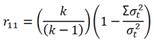
Reliability is a measuring tool for a questionnaire which is an indicator of a variable or construct [5]. A questionnaire is said to be reliable or valid if one's answers to questions/statements are consistent or stable from time to time. The reliability test is carried out using the Cronbach Alpha coefficient with the following formula:
If the variable under study has cronbach's alpha (α) >70% (0.7) then the variable is said to be reliable otherwise if cronbach's alpha (α) <70% then the variable is declared unreliable (Asnawi and Masyhuri, 2011). Calculation of cronbach's alpha can be calculated with SPSS for windows release 25.
RESULTS
Dairy Farmer Production Cost Analysis
The financing carried out by dairy farmers in the process of production and sale of cow's milk is the costs incurred for the average production which consists of fixed costs and variable costs. The fixed cost components incurred in the dairy farming business in Wonosalam District consist of: costs for depreciation of cages, electricity costs, water costs, taxes, transportation. The amount of fixed costs can be seen in Table 4.
The table shows the value of the average fixed costs incurred by a dairy cattle business in Wonosalam District. This figure shows that the value of the fixed costs analyzed, the depreciation of the cage has a fairly large value, namely Rp. 1,166,667.00. This shows that depreciation of the cage is a significant cost because it is calculated as a cost that must be incurred by the respondent breeders to take care of their livestock. The value which is the cost of water is Rp. 155,000.00.
Variable costs or variable costs are costs whose size is influenced by the production of livestock commodities obtained. If you want high production costs, then production factors such as feeding need to be added, so that these costs are variable because they depend on the size of the production of the desired agricultural commodity.
The components of variable costs or variable costs incurred by a dairy farm in Wonosalam District consist of: costs for feeding, labor costs and medical costs which include artificial insemination and medicines. The amount of variable cost components can be seen in Table 5.
The table shows the average value of variable costs incurred by dairy cattle in Wonosalam District, Jombang Regency. As can be seen from the table, the cost of feed has a fairly high value, namely Rp. 5. 137,000.00. This shows that the feed costs incurred in the cattle farming business are very high. The factor causing the high cost of feed is because forage is not available all year round so that the supply of forage grass is unstable and this requires farmers to buy grass elsewhere.
Income Analysis of Dairy Cattle Farmers in Wonosalam District
Income is the difference between the income earned during the dairy farming business and the total production costs during the process of raising dairy cows. Livestock business income is the result of livestock management in the implementation of a dairy cattle business. The results of the calculation will get a positive value, so the farmer will get a profit, while the calculation result will get a negative result, so the farmer will suffer a loss. The amount of income derived from the production of dairy cows in the District of Wonosalam can be seen from Table 6.
Based on the table it can be seen that the income in the business of producing dairy cows is the difference between the income and production costs. The average net income of dairy farmers received is Rp. 13,654,270.14/ year. Meanwhile for the production costs of farmers, the average production cost incurred is IDR 11,898,629.86 due to the difference in the number of cows owned by breeders, the more number of cows owned by breeders, the greater the income received by breeders.
Dairy Cattle Business Production Costs
Most of the dairy farming businesses run by breeders in Wonosalam District are still traditional. Dairy cattlebusiness is widely cultivated by breeders as a side business to increase income and as savings which can be sold at any time. The type of dairy cattle that many breeders cultivate in Wonosalam District is Friesian Holstein (FH) descent. According to AAK (1995), FH cows have the highest milk production than other types of cows. Milk production reaches 4500-5500 liters per lactation. The dairy cows from FH are similar to FH, but their productivity is lower than FH. This is because the quality of the FH offspring has decreased.
Table 4: Fixed Costs of dairy farmers' milk production business in Wonosalam District
Fixed Cost Types
Fixed Cost Value (Rp)/ Year
Cage Shrinkage
1,166,667.00
Equipment Depreciation
625,520.00
Electricity
900,000.00
Water
155,000.00
Transportation
280,000.00
United Nations
752,300.00
Average Amount
3,879,487
Source: Primary data processed, 2022
Table 5: Variable Costs of Dairy Cow Milk Production Business in Wonosaam District
Types of variable costs
Variable Cost Value (Rp/Year)
Feed Cost
5,137,000.00
Health Expenses
2,707,142.86
Labor costs
175,000.00
Average Amount
8,019,142.86
Source: Primary data processed, 2022
Table 6: Income from Dairy Cow Milk Production in Wonosalam District, Jombang Regency
No.
Description
Income (Rp/Year)
1.
Reception
25,552,900
2.
Production cost
11,898,629, 86
3.
Net income
13,654,270, 14
Total income
51,105,800
Source: Primary data processed, 2022
Table 7: Average Total Analysis of Dairy Cattle Farming Per Month per head in Wonosalam District in 2021
No.
Description
Average (Rp/year)
1.
Water costs
155,000.00
2.
Cost of buying salt
185,300.00
3.
Feed costs
Concentrate
Bagasse
bran
Cassava
Forage
1,285,000
1,047,000
875,000
930,000
1,000,000
Amount
5,477,300
Source: Primary Data Analysis
The cost of production facilities is the cost that is directly incurred by farmers for their farming business. The cost of production facilities includes the cost of buying cows, the cost of water, the cost of buying salt and the cost of feed. The cost of livestock production facilities can be seen in the table 7.
The purchase of dairy cows was not all carried out by respondents. From the results of the study, it was found that 7 respondents bought cows at different prices. The price of cattle is influenced by the quality, type and size of dairy cows. Farmers buy heifers (6-24 months) with prices ranging from Rp. 7,000,000.00 – Rp. 8,400,000.00 calves (24 months) with prices ranging from Rp. 9,000,000.00 – Rp. 12,400,000.00 for those who are female because they feel that buying a female cow can produce fresh milk. Do not buy dairy calves because they keep calves long enough to produce fresh milk. The dairy cows purchased by the respondents were obtained from the local market, where the quality was still low. The average cost of purchasing dairy cows is IDR 7,707,142.86/year.
Water is used for washing tools and feed mixtures. Water in the Wonosalam District comes from the Anjasmoro Mountains. The water is not purchased by the breeders but only for the maintenance of the paralon pipes that connect to the breeders' houses. The average cost of maintaining a water pipe is Rp. 155,000.00/year. Salt purchases are usually made once every 10 days or after the salt runs out. The price of salt per 1 kg is IDR 500.00. The average cost of buying salt is Rp. 185,300.00/year.
Feed costs include concentrate, tofu dregs, rice bran and cassava. The price of concentrate per kg is IDR 2,100.00 and the average cost of concentrate feed is IDR 2,827,400.00/year. Tofu dregs are purchased in large quantities compared to other feeds. The price of 1 kg of tofu dregs is Rp. 500.00 and the average purchase of tofu dregs is Rp. 8,280,416.67/year. Rice bran feed is widely used by respondents from 30 farmers and 24 breeders use it. The price for 1 kg of rice bran is IDR 1,300.00 and the average cost of using rice bran is IDR 3,413,258.33/year. Cassava is also widely used by breeders, out of 30 respondents 2 breeders do not use cassava. Because breeders think cassava can be sold instead of being used for animal feed. The price of 1 kg of cassava is IDR 700.00 and the average cost of cassava feed is IDR 1,524,371.43/year. Forage comes from fields and yards. In the dry season, breeders have to buy forage for 1 car, which is Rp. 120,000.00. There are also those who search the fields which are far from the breeders. The average cost of using forage is Rp. 1,995,333.33/year. So the total average cost of production facilities is IDR 26,084,282.62/year.
Analysis of Factors Influencing Income
Equation of multiple linear regression analysis test results:
The F test shows a significant value of 0.00 <0.05, which means that the variable price of livestock, labor wages, price of milk, price of additional feed, amount of lactating milk and amount of milk production simultaneously affect the variable income of livestock business. This is in accordance with the opinion of Zaenuddin which states that to see whether all variables have a simultaneous effect on the dependent variable, the F test can be carried out. Kuncoro argues that if the significant value is <0.05 or the F count >F table then the independent variables simultaneously have a significant influence on the dependent variables.
Coefficient of Determination Square Results (R2)
Subsequent tests by knowing the value of the Coefficient of Determination Square (R2) were carried out to show how much the independent variable varies with the dependent variable. The results of the study are in accordance with table 11 showing the coefficient of determination (R2) is 0.827 and the Adjusted R2 value is 0.800. The coefficient of determination obtained is 0.827, which means that the value of the independent variable can affect the dependent variable, namely the cost of feed (X5) and the amount of milk production (X8) affecting the income of dairy farmers by 82.7%, while the remaining 17.3% is explained by the variable other. Sulaiman explained that the R2 value has an interval between 0 and 1, which means that the greater the R2 value is close to 1, the better the results of the regression model.
Stimulant Test Results (Test F)
The data will then be tested with the F test or simultaneous significance test. The F test was conducted to determine the effect of the independent variables on the dependent variable. The results of data processing obtained a df value of 6, a calculated F value of 30.378.
The value obtained is then compared with the F table value with a significance level of 10%, the F value is 6;38;0.1 = 1.94. Comparison of the two shows that F count
Table 8: Multiple Linear Regression Test Results
Variable
Regression Coefficient
Constant
-4,893
Education Level (X2)
0.026
Breeding Experience (X3)
0.036
Family Member (X4)
0.067
Feed Cost (X5)
-0.876**)
Land Area (X7)
0.056
Total Milk Production (X8)
1,341 **)
R-squared (R2)
0.827
Adjusted R square (Adj. R2)
0.800
F count
30,378
n
44
***< 0.000
Source: Primary research data that has been processed, 2022
> F table, so it can be concluded that H0 is rejected, which means that in the multiple regression model there is a linear relationship. The value above can also be known by comparing the significance value with the significance level, with a significance value in the table of 0.000 with a significance level of 10% or 0.1, so it can be concluded that a significance value of 0.000 < a significance level of 0.1, which means there is a linear relationship in the multiple regression model. Based on these calculations, it can be concluded that the independent variables (age, education level, number of family members, feed costs, land area and amount of milk production) have a joint effect on the dependent variable (dairy farmer income). Ghozali [5], explained that to test the hypothesis using F statistics a decision was made by comparing the calculated F value with the F value according to the table. If the calculated F value is greater than table F, then all independent variables simultaneously are significant explanations for the dependent variable.
Partial Test Results (t test)
The data will also be tested by t test or individual parameter significance test. The value of the coefficient of each independent variable must be tested one by one so that it can be seen which independent variables have a real influence and which do not have a significant effect, so the test is carried out using the value of the t coefficient. The magnitude of the calculated t coefficient value which can be seen in table 9 shows that the independent variable that individually affects the dependent variable (dairy cattle business income) is milk production (X8). The calculated t value is 11.818 which is greater than the t table value of 1.943. Sulaiman explains the same thing that the t test is done by comparing the calculated t value with the t table value, according to Ghozali [5], the t test was also carried out by comparing the t statistical value with the critical point according to the table. The t test can also be done by looking at the assigned t and alpha significance. The data in table 9 shows that the significance of t count X5 is 0.000 and X8 is 0.000 which is smaller than alpha 0.1 or 10%. The results shown can be concluded that the feed cost variable (X5) and the amount of milk production (X8) have an effect on income. Sudarmanto explains that the results of data processing can be concluded with the following criteria: The results shown can be concluded that the feed cost variable (X5) and the amount of milk production (X8) have an effect on income. Sudarmanto explains that the results of data processing can be concluded with the following criteria: The results shown can be concluded that the feed cost variable (X5) and the amount of milk production (X8) have an effect on income. Sudarmanto explains that the results of data processing can be concluded with the following criteria:
If the calculated t value is greater than t table, it can be stated that it is significant so that there is a significant influence of the independent variable on the dependent variable
If the calculated t value is smaller than t table, it can be stated that it is not significant so that there is no significant effect between the independent variables on the dependent variable
If the significance of t count is greater than the specified alpha, it is declared insignificant so that there is no effect of the independent variable on the dependent variable
If the significance of t count is smaller than the specified alpha, it is declared significant so that there is a real influence between the independent variables on the dependent variable
Based on the results of the regression analysis shown by the table it can be included in the multiple regression line equation which is stated as follows: Y = -4.893 - 0.876 X5 + 1.341 X8 According to the equation obtained from the data, the variable can describe its effect on income as follows:
Constant coefficient value = -4.893. This shows that if the value of X1, X2, X3, X4, X5, X6, X7, X8, in the research object is equal to zero then the magnitude of the dependent variable Y will be 4.893 percent
Coefficient b5 = -0.876. This indicates that if the value of X5 increases by one point while the other independent variables remain the same, the level of the Y variable in the study will decrease by 0.87 percent
Coefficient value b8 = 1.341. This shows that if the value of X8 increases by one point while the other independent variables remain the same, then the level of the Y variable in the study will increase by 1.34 percent
Based on the highest significance value, namely variable X5 and variable X8, it can be seen that those that have a large influence on income are feed costs (Rp/year) and total milk production (liters/year). Feed costs (X5) indicate that the results of the study stated that the feed cost variable (X5) has a negative effect on income in the dairy cattle business. Based on the data generated, the feed cost variable (X5) has a coefficient value of -0.876, which means that if feed costs increase by 10%, it will affect income, namely income has decreased by 8.76%. Income on scale III is known to be Rp. 1,586/liter/day, if the feed increases by 10% then the income will decrease by Rp. 139/liter/day so that the income earned is Rp. 1,447/liter/day. Feed costs are costs that must be incurred during the production process, so that they have an influence on income. The results also show that the calculated t value of the feed cost variable (X5) is -8.030 and a significance value of 0.000. The calculated t value of -8.030 is smaller than the t table value of 1.943, which means it has no effect on income, but from a significance value of 0.000 it is smaller than the specified alpha significance of 0.1 so that the feed cost variable (X5) has an influence on income. This has answered the fifth hypothesis which states that the cost of feed has a positive effect on the income of a dairy cattle business. Feed costs consist of forage and concentrate costs which are an important part of the dairy cattle business which are included in variable costs. Feed costs contribute quite a lot, the more livestock controlled, the greater the amount of feed costs incurred. Riyanto's research also showed the same result that the cost of main feed and side feed is one of the factors that affect profits in livestock business. The results of the research by Dewanti and Sihombing show the same result that the costs of corn and bran have a joint effect on livestock business income with a significant level of 0.05. the more livestock controlled, the greater the amount of feed costs incurred. Riyanto's research also showed the same result that the cost of main feed and side feed is one of the factors that affect profits in livestock business. The results of the research by Dewanti and Sihombing show the same result that the costs of corn and bran have a joint effect on livestock business income with a significant level of 0.05. the more livestock controlled, the greater the amount of feed costs incurred. Riyanto's research also showed the same result that the cost of main feed and side feed is one of the factors that affect profits in livestock business. The results of the research by Dewanti and Sihombing show the same result that the costs of corn and bran have a joint effect on livestock business income with a significant level of 0.05.
The amount of milk production (X8) shows that the results of the multiple regression analysis are in accordance with hypothesis 4, namely the variable amount of milk production (X8) has a positive effect on income. The results showed that the value of the regression coefficient was 1.341, which means that if the amount of milk production increases by 10%, the income will increase by 13.41%. The average milk production on scale III is 1,716 liters/month, income on scale III is Rp. 1,586/liter/day, if the amount of milk production increases, income will increase by 13.41% to Rp. 1,799/liter/day. The amount of milk production is one of the revenues received in the dairy cattle business, so that the following variables have a positive effect on income, especially in the dairy cattle business. Based on the research results, the calculated t value for the following variables is 12.981 and a significance value of 0.000. The t value of 12.981 is greater than the t table of 1.943 so that the variable amount of milk production can be concluded to have a positive effect on income. Based on the t significance value of 0.000 which is smaller than the predetermined alpha significance of 0.1 or 10%, so it can also be concluded according to the eighth hypothesis that the amount of milk production has a positive effect on income. The amount of milk production for each livestock varies depending on the month of lactation for each dairy cow. Milk production reaches its peak in the second and third months of lactation. Each farmer gets a different income from the amount of milk production. The milk production of each farmer is determined by the number of lactating cows and the average milk production per head which is highly dependent on the length of lactation. Inappropriate lactation length will reduce milk production and this can affect the farmer's income. Sundari and Katamso 84 state that the lactation period of local dairy cows varies, some occur in the second, third, fourth and fifth months. The results of Hartono's research show that the more livestock raised, the household income of dairy farmers also increases because milk production and the number of calves sold are the main components which also increase. Inappropriate lactation length will reduce milk production and this can affect the farmer's income. Sundari and Katamso 84 state that the lactation period of local dairy cows varies, some occur in the second, third, fourth and fifth months. The results of Hartono's research show that the more livestock raised, the household income of dairy farmers also increases because milk production and the number of calves sold are the main components which also increase. Inappropriate lactation length will reduce milk production and this can affect the farmer's income. Sundari and Katamso 84 state that the lactation period of local dairy cows varies, some occur in the second, third, fourth and fifth months. The results of Hartono's research show that the more livestock raised, the household income of dairy farmers also increases because milk production and the number of calves sold are the main components which also increase.
Problems and Efforts to Increase Income
Dairy farming business activities in Wonosalam District are very influential in improving the community's economy. Consumption of beef and cow's milk always increases every year, but cattle farming in Wonosalam District is still relatively slow due to the problems that occur. The problems faced by breeders in the dairy cattle business include:
Foot and Mouth Disease Outbreak
The impact of the spread of foot and mouth disease (FMD) does not only affect beef sales. Milk production of dairy cows also plunged. Previously, there were 969 cows in Jombang infected with FMD. Of the hundreds of cows spread across 18 districts throughout Jombang, the recovery rate is 30 percent, or 285 heads. Until this news was published, it was recorded that 16 cows had died. While the other 10 tails had to be forcibly slaughtered. In fact, in the District of Wonosalam, the milk production of these cows has decreased to 1,500-2,000 liters per day. After contracting FMD, dairy cows lose their appetite. Finally, the cow's milk production also decreased. In Galengdowo Village alone there are a total of 600 breeders with a total cattle population of around 4,000 heads. Within a day, thousands of cows can produce as much as 7,500 liters of fresh cow's milk.
Most of the Traditional Breeders
Even though there are quite a number of business actors in the field of cattle farming, in fact most of these business actors are traditional breeders with very few cattle ownership. Cattle are often kept as a source of labor to cultivate land, savings for certain hajat events and not for beef cattle and many actors or owners of cattle/livestock only develop makeshift livestock. This condition causes the livestock yields obtained are not optimal. The method of treatment used is still traditional so that the growth of cattle tends to be slow. The profit generated is not optimal.
Low Milk Production of Dairy Cows
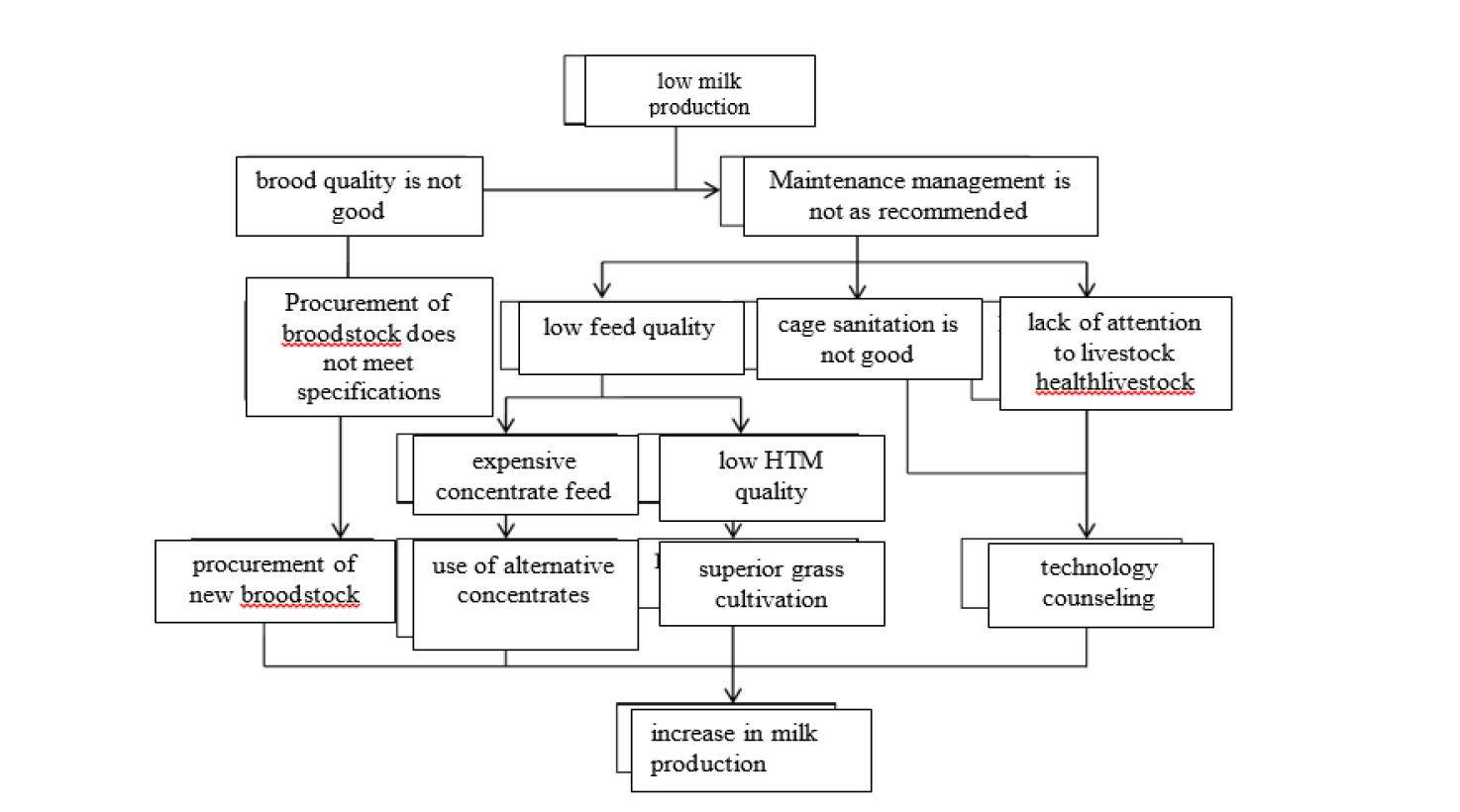
The problem of the dairy cattle business in Wonosalam District is very complex. The identification results through interviews with farmers indicated that there were two main problems with the low milk production of dairy cows, namely the poor quality of the sows and maintenance management that was not in accordance with recommendations. The poor quality of the broodstock is due to the fact that from the start the procurement of broodstock was not in accordance with the livestock specifications desired by the breeder. The parent specifications are seen in body shape and udder shape. The body shape of livestock is visually unfavorable because it is not triangular. In addition, the cow's teats are not entirely active from the start. In terms of maintenance management, breeders have not paid attention to the quality of forage and concentrates that are in accordance with recommendations. Farmers often feed their livestock with field grass and straw because they have not yet planted superior grass. Meanwhile, the procurement of factory concentrate was constrained by capital. Field observations also show that cage sanitation is also not good as indicated by the absence of a manure storage facility. In addition, attention to livestock health has not been a focus for breeders. Farmers do not understand that the health of cattle is very important because it can affect their production. attention to livestock health has not yet become a focus for breeders. Farmers do not understand that the health of cattle is very important because it can affect their production. attention to livestock health has not yet become a focus for breeders. Farmers do not understand that the health of cattle is very important because it can affect their production.
Difficulty Forage Forage in The Dry Season
Forage feed in the dry season is difficult to obtain for breeders. Moor land during the dry season is difficult to obtain because forage cannot grow. Breeders have to look for forage in the fields or buy it from feed traders. This will increase the cost of dairy cattle business thereby reducing the income of farmers. Feed is the main requirement that often experiences problems. Until now, most breeders still depend on seasonal forage and utilization of waste or by-products from agricultural crops. Farmers in eastern Indonesia often use agricultural waste because it is quite difficult to get forage in that area. In this case, it is necessary to have many bachelors who master nutrition and animal feed technology in order to be able to create new innovations that are useful as substitutes for or additional nutritious feed for livestock, so that livestock can grow healthily and as desired.
Poor Maintenance Management
In Indonesia there are still few human resources oriented to produce livestock according to market demand. Have qualified knowledge and is really needed in the world of animal husbandry.
Lack of knowledge of breeders about good maintenance of dairy cows.
The problem faced by farmers in the study area is a problem that comes from the farmers themselves, namely the difficulty in cultivating these dairy cows. According to the breeders, the habits of doing business traditionally are because in that area no one has ever researched or specifically informed farmers about good dairy farming in the study area. Farmers are also less active in seeking information about good dairy cattle rearing, breeders only cultivate dairy cows that they manage with experience gained from the environment and passed down from their parents. The difficulty for breeders in understanding modern dairy farming or these incentives is an obstacle for other breeders who also intend to develop the livestock business. due to the lack of knowledge and interest of breeders to learn about the management of dairy cattle business in incentives. Farmers prefer to manage dairy cattle in the traditional way because they are considered more profitable, because they are considered not to require too much money, but the results of the income they get are still promising benefits. The lack of knowledge of breeders about good management of dairy cattle business ultimately makes breeders pay less attention to intensive dairy farming. Whereas if special attention is given to these dairy cattle, the greater the income will be obtained, where the dairy cattle business system is carried out intensively can increase the quantity of milk milked because the cattle are given additional feed or concentrates.
Seeing the problems faced by dairy farmers on this occasion the author would like to convey efforts to increase income with the strategies offered for dairy farmers in Wonosalam District as follows:
Management of Nail and Mouth Diseases
Measures to control and mitigate by forming a task force that focuses on stopping the spread of the virus that causes PMK through quarantine measures, monitoring and limiting livestock traffic and closing animal markets. The next step is to eliminate the source of infection by limitedly destroying or stamping out exposed animals along with implementing biosecurity by decontaminating cages, equipment, vehicles and other materials that have the potential to transmit the virus through spraying an effective disinfectant solution against viruses and destroying materials that are already contaminated. To increase the immunity of livestock that are susceptible to FMD infection, it is necessary to intensify the mass vaccination program and carry out mitigation efforts in areas that have not been infected in the form of surveillance and establishment of early vigilance as well as carrying out disease resilience. However, the basic treatment of viral diseases is incurable. Efforts that can be made are increasing the immunity and resistance of infected livestock through supportive therapy by providing vitamins and feed supplements and symptomatic therapy by providing fever reducers, pain relievers and antibiotics to prevent secondary infections.
Transfer of Technology and Knowledge for Dairy Farming Private Sector Contribution.
In this case, forging partnerships with the private sector can be a solution, as has been proven in a number of case studies regarding the transfer of technology and knowledge from large processing companies (such as Cimory, Frisian Flag Indonesia [FFI] and Nestlé) and development organizations. international operations in West Java and East Java. One example of collaboration is support for efforts to digitize milk collection points (MCP). This digital system sets prices that reflect the quality of each farmer's milk, incentivizing them to invest in technology, equipment improvements and better management to increase the quality and production of their milk. Various contract mechanisms are applied in technology transfer, some technology transfers are accompanied by supplier agreements with mandatory supply requirements and some are given as grants and loans that are bound by a commitment to maintain milk quality and standards. Meanwhile, the government's efforts to promote technology adoption are mostly carried out in the form of providing technology free of charge.
The solution to the problem of low milk production in dairy cows.
The problem of low milk production in cows needs to be addressed with the right approach. In Figure 1 it can be seen that there are four alternative applications of technology to increase milk production for dairy cows, namely procuring new broodstock, making alternative concentrates made from local raw materials, planting superior grass and providing technology counseling related to animal sanitation and health.
Procurement of livestock is assumed to be difficult for farmers because the price is quite expensive and difficulties in the buying process if only 1-2 head. Therefore, the focus of dairy farmers is only on improving feed and maintaining existing livestock. According to farmers, without the use of concentrate, milk production will not increase or even accelerate decline or drought (dry cages). Feeding with high protein is expected to increase consumption and non-fat dry matter content of milk. The increase in milk production was due to an increase in the quality of the ration, especially protein. This is in accordance with the opinion of Susanti and Marhaeniyanto that high milk production is closely related to the quality of the feed consumed, especially protein. Feed containing high concentrates will increase the milk production of dairy cows, while providing forage in sufficient quantities will affect the fat content of the milk, because forage will be converted by rumen microbes into VFA which consists of 65% acetic acid, 20% propionic acid and 15% butyric acid in Riski. et al 2016. King [6], in Sumahati states that genetic potential will appear optimally caused by an increase in feed PK concentration to meet the needs of rumen microbes in achieving maximum milk production. Breeders have tried several feed formulations prepared by BPTP East Java using ingredients available around the breeder's location. It is intended that breeders return to using concentrates to increase milk production. Concentrated feed formulations that are given contain enough good nutrition. In addition to technical issues, economic considerations are also important in preparing feed rations. Farmers will prefer cheaper concentrate rations. Table 3 shows a comparison of the production costs of the three feed formulations prepared by BPTP Bengkulu. The formulation is in accordance with the wishes of the farmers that the production cost is not more than Rp. 2,500/kg to be applied on an ongoing basis. The formulation is in accordance with the wishes of the farmers that the production cost is not more than Rp. 2,500/kg to be applied on an ongoing basis. The formulation is in accordance with the wishes of the farmers that the production cost is not more than Rp. 2,500/kg to be applied on an ongoing basis.
Fermentation Technology
local sources of forages such as grass and corn trees are used and nutrients are added as concentrates such as minerals, probiotics and enzymes. With this feed technology, later during the dry season, breeders don't have to worry about a shortage of feed because they have feed barns from fermented feed. In an ideal composition, for dairy cows, the feed composition is 60 to 70 percent forage and 30 percent concentrate. As for beef cattle, 60 to 80 percent concentrate and 20 to 40 percent forage.
Figure 2: Problem Tree and Direction of Solving Increased Milk Production
The Use of Control Cards as Livestock Data Recording
Innovation with the use of control cards as a livestock data recording medium that can optimize the quality of dairy cattle maintenance management. This control card will later be used as a media for recording livestock data and can optimize the maintenance management of a farm. One of the basic components in maintenance management is by recording livestock (recording). Recording is all kinds of recording activities such as genealogical records, production records, identification activities, maintenance management records and livestock health records in certain populations.
Development of Dairy Village by the Government
To overcome the problems faced by farmers where breeders still have difficulty cultivating these dairy cattle in a better way due to the lack of information and knowledge obtained, farmers try to learn from the experiences of other dairy farmers who have been successful before, they discuss and solve problems individually. jointly related to dairy cattle, in livestock groups in the study area. Farmers also seek information from other areas around them to find information about the development of dairy cattle, so that they can be more independent in cultivating their livestock. Breeders should have good cooperation between dairy farmers outside their area.
CONCLUSION
Based on the analysis of the dairy business analysis in the Wonosalam sub-district, Jombang regency can be concluded that. The average income of dairy farmers is Rp. 13,654,270.14/ year, with an average production cost of Rp. 11,898,629.86/ year. The biggest production costs for dairy farmers come from feed costs, which reach Rp.
5,137,000/year. Factors that affect the income of a dairy business in Wonosalam District are the number of cattle, the cost of feed, the level of education, the experience of raising livestock, the number of family dependents, the area of land and the amount of milk production.
The biggest factor affecting the farmer's income is the amount of milk production. The problems faced by dairy farmers in the current research area and sucountermeasures litisthe impact of the spread of foot and mouth disease (FMD) does not only affect beef sales. Milk production of dairy cows also plunged. Permasaand the second largest is Forage feed in the dry season is difficult to obtain for breeders. Moor land during the dry season is difficult to obtain because forage cannot grow. Breeders have to look for forage in the fields or buy it from feed traders. Efforts made by breeders in overcoming the problems encounteredMeasures to control and mitigate by forming a task force that focuses on stopping the spread of the virus that causes PMK through quarantine measures, monitoring and limiting livestock traffic and closing animal markets.
REFERENCES
Arikunto, S. Prosedur Penelitian Suatu Pendekatan Praktis. 12th ed., PT Rineka Cipta, 2010.
Husein, Umar. Metode Penelitian untuk Skripsi dan Tesis Bisnis. 6th ed., PT Raja Grafindo Persada Suryabrata, 2004.
Soekartawi. Prinsip Dasar Ekonomi Pertanian, Teori dan Aplikasi. Revised ed., PT Raja Grafindo Perkasa, 2002.
Widoyoko, Eko Putro. Teknik Penyusunan Instrumen Penelitian. Pustaka Pelajar, 2012.
Ghozali, I. Aplikasi Analisis Multivariate dengan Program SPSS. Badan Penerbit UNDIP, 2002.
King, I. Jr. Managing the High Genetic Meric Cow. PhD dissertation, Universitas Delaware, 2000.
None
License
Creative Commons Attribution-NonCommercial-NoDerivatives 4.0 International License
All papers should be submitted electronically. All submitted manuscripts must be original work that is not under submission at another journal or under consideration for publication in another form, such as a monograph or chapter of a book. Authors of submitted papers are obligated not to submit their paper for publication elsewhere until an editorial decision is rendered on their submission. Further, authors of accepted papers are prohibited from publishing the results in other publications that appear before the paper is published in the Journal unless they receive approval for doing so from the Editor-In-Chief.
Himalayan Journal of Agriculture open access articles are licensed under a Creative Commons Attribution-Share A like 4.0 International License. This license lets the audience to give appropriate credit, provide a link to the license, and indicate if changes were made and if they remix, transform, or build upon the material, they must distribute contributions under the same license as the original.
Recommended Articles
Research Article
The Role of Indigenous Microbes and Earthworm in the Bioconversion of Dairy Wastewater Solids into Organic Fertilizer
Marlina ,
...
N. Meynadhea
Published: 17/01/2024
Download PDF
Cite
x
APA
None, M., Rahayu, N. A., Badruzzaman, D. Z., Hidayati, Y., Harlia, E., Kurniawan, E. & Meynadhea, N. (2024). The Role of Indigenous Microbes and Earthworm in the Bioconversion of Dairy Wastewater Solids into Organic Fertilizer. Himalayan Journal of Agriculture, 5(1), 1-7.
MLA
None, Marlina, et al. "The Role of Indigenous Microbes and Earthworm in the Bioconversion of Dairy Wastewater Solids into Organic Fertilizer." Himalayan Journal of Agriculture 5.1 (2024): 1-7.
Chicago
None, Marlina, N. A. Rahayu, D. Z. Badruzzaman, Y.A. Hidayati, E. Harlia, E. Kurniawan and N. Meynadhea. "The Role of Indigenous Microbes and Earthworm in the Bioconversion of Dairy Wastewater Solids into Organic Fertilizer." Himalayan Journal of Agriculture 5, no. 1 (2024): 1-7.
Harvard
None, M., Rahayu, N. A., Badruzzaman, D. Z., Hidayati, Y., Harlia, E., Kurniawan, E. and Meynadhea, N. (2024) 'The Role of Indigenous Microbes and Earthworm in the Bioconversion of Dairy Wastewater Solids into Organic Fertilizer' Himalayan Journal of Agriculture 5(1), pp. 1-7.
Vancouver
Marlina M, Rahayu NA, Badruzzaman DZ, Hidayati Y, Harlia E, Kurniawan E, Meynadhea N. The Role of Indigenous Microbes and Earthworm in the Bioconversion of Dairy Wastewater Solids into Organic Fertilizer. Himalayan Journal of Agriculture. 2024 Jan;5(1):1-7.
Download PDF
Research Article
Mating behaviour of Cavariella aegopodii
Nidhi Dhatwalia
Published: 19/07/2024
Download PDF
Cite
x
APA
Dhatwalia, N. (2024). Mating behaviour of Cavariella aegopodii. Himalayan Journal of Agriculture, 5(1), 1-7.
MLA
Dhatwalia, Nidhi. "Mating behaviour of Cavariella aegopodii." Himalayan Journal of Agriculture 5.1 (2024): 1-7.
Chicago
Dhatwalia, Nidhi. "Mating behaviour of Cavariella aegopodii." Himalayan Journal of Agriculture 5, no. 1 (2024): 1-7.
Harvard
Dhatwalia, N. (2024) 'Mating behaviour of Cavariella aegopodii' Himalayan Journal of Agriculture 5(1), pp. 1-7.
Vancouver
Dhatwalia N. Mating behaviour of Cavariella aegopodii. Himalayan Journal of Agriculture. 2024 Jan;5(1):1-7.
Download PDF
Research Article
Efficiency of Some Salicylic Acid Concentrations in Tetranychus urticae Koch on Some Eggplant Varieties
Yusra Jamal Talib,
...
Nadia Kadhim Thamer
Published: 10/04/2023
Download PDF
Cite
x
APA
Talib, Y. J., Abass, M. H. & Thamer, N. K. (2023). Efficiency of Some Salicylic Acid Concentrations in Tetranychus urticae Koch on Some Eggplant Varieties. Himalayan Journal of Agriculture, 4(1), 1-7.
MLA
Talib, Yusra J., Mohammed H. Abass and Nadia K. Thamer. "Efficiency of Some Salicylic Acid Concentrations in Tetranychus urticae Koch on Some Eggplant Varieties." Himalayan Journal of Agriculture 4.1 (2023): 1-7.
Chicago
Talib, Yusra J., Mohammed H. Abass and Nadia K. Thamer. "Efficiency of Some Salicylic Acid Concentrations in Tetranychus urticae Koch on Some Eggplant Varieties." Himalayan Journal of Agriculture 4, no. 1 (2023): 1-7.
Harvard
Talib, Y. J., Abass, M. H. and Thamer, N. K. (2023) 'Efficiency of Some Salicylic Acid Concentrations in Tetranychus urticae Koch on Some Eggplant Varieties' Himalayan Journal of Agriculture 4(1), pp. 1-7.
Vancouver
Talib YJ, Abass MH, Thamer NK. Efficiency of Some Salicylic Acid Concentrations in Tetranychus urticae Koch on Some Eggplant Varieties. Himalayan Journal of Agriculture. 2023 Jan;4(1):1-7.
Download PDF
Research Article
Efficiency of Production Factors Usage on Sorgum (Sorghum Bicolor L) (Case in Keyongan Village, Babat Sub-District, Lamongan Regency)
Evi Maf'idatul Ilmi,
...
Hamidah Hendrarini
Published: 20/12/2022
Download PDF
Cite
x
APA
Ilmi, E. M., Amir, I. T. & Hendrarini, H. (2022). Efficiency of Production Factors Usage on Sorgum (Sorghum Bicolor L) (Case in Keyongan Village, Babat Sub-District, Lamongan Regency). Himalayan Journal of Agriculture, 3(2), None-None.
MLA
Ilmi, Evi M., Indra T. Amir and Hamidah Hendrarini. "Efficiency of Production Factors Usage on Sorgum (Sorghum Bicolor L) (Case in Keyongan Village, Babat Sub-District, Lamongan Regency)." Himalayan Journal of Agriculture 3.2 (2022): None-None.
Chicago
Ilmi, Evi M., Indra T. Amir and Hamidah Hendrarini. "Efficiency of Production Factors Usage on Sorgum (Sorghum Bicolor L) (Case in Keyongan Village, Babat Sub-District, Lamongan Regency)." Himalayan Journal of Agriculture 3, no. 2 (2022): None-None.
Harvard
Ilmi, E. M., Amir, I. T. and Hendrarini, H. (2022) 'Efficiency of Production Factors Usage on Sorgum (Sorghum Bicolor L) (Case in Keyongan Village, Babat Sub-District, Lamongan Regency)' Himalayan Journal of Agriculture 3(2), pp. None-None.
Vancouver
Ilmi EM, Amir IT, Hendrarini H. Efficiency of Production Factors Usage on Sorgum (Sorghum Bicolor L) (Case in Keyongan Village, Babat Sub-District, Lamongan Regency). Himalayan Journal of Agriculture. 2022 Jul;3(2):None-None.
Suprianto, R. E., Yuliati, N. & None, M. (2023). Analysis of Dairy Cow Milk Business in Wonosalam District, Jombang Regency. Himalayan Journal of Agriculture, 4(1), 1-11.
MLA
Suprianto, Ryan E., Nuriah Yuliati and Mubarokah . "Analysis of Dairy Cow Milk Business in Wonosalam District, Jombang Regency." Himalayan Journal of Agriculture 4.1 (2023): 1-11.
Chicago
Suprianto, Ryan E., Nuriah Yuliati and Mubarokah . "Analysis of Dairy Cow Milk Business in Wonosalam District, Jombang Regency." Himalayan Journal of Agriculture 4, no. 1 (2023): 1-11.
Harvard
Suprianto, R. E., Yuliati, N. and None, M. (2023) 'Analysis of Dairy Cow Milk Business in Wonosalam District, Jombang Regency' Himalayan Journal of Agriculture 4(1), pp. 1-11.
Vancouver
Suprianto RE, Yuliati N, Mubarokah M. Analysis of Dairy Cow Milk Business in Wonosalam District, Jombang Regency. Himalayan Journal of Agriculture. 2023 Jan;4(1):1-11.


 Download PDF
 Download XML