Background: Dental records are an essential component of diagnosis, treatment planning, follow-up, forensic identification, and long-term oral healthcare. However, dental records in India are predominantly maintained independently by individual clinics and institutions. When patients relocate, change healthcare providers, or seek treatment at multiple centres, previous records may become difficult to access. This fragmentation can result in repeated investigations, duplication of radiographs, incomplete medical and dental histories, delays in clinical decision-making, and increased treatment expenditure. DentoVault is proposed as a universal, cloud-based dental record management system designed to provide secure, lifelong, and interoperable access to a patient's dental information. Proposed Methodology: DentoVault is conceptualized as a centralized digital platform connecting patients and verified dental practitioners. Dentist authentication would be performed through professional registration details, while patient authentication could utilize mobile-based OTP verification and, where appropriate and legally permissible, integration with established digital health identifiers. Clinical information including dental history, treatment records, prescriptions, radiographs, photographs, laboratory reports, periodontal charts, prosthodontic records, and clinical notes would be stored in an encrypted cloud environment. Automated timestamps and audit trails would maintain the chronology and integrity of records. A role-based access-control mechanism would provide dentists with appropriate clinical privileges while allowing patients-controlled access to their own information. Artificial intelligence-assisted modules could subsequently be incorporated to support risk assessment, image analysis, and clinical decision-making. Expected Outcome: DentoVault is expected to improve continuity of dental care by creating a unified longitudinal record that can accompany the patient across participating dental practices and institutions. The system could reduce unnecessary duplication of investigations and improve the availability of previous treatment information. It may also facilitate faster clinical decision-making, inter-clinic communication, tele-consultation, and patient engagement. De-identified and appropriately governed aggregated information could potentially contribute to oral-health research, epidemiological surveillance, and healthcare planning. Conclusion: DentoVault represents a conceptual framework for transforming fragmented dental documentation into a secure, interoperable, patient-centred digital record system. By connecting dental visits across healthcare providers, the proposed platform has the potential to support paperless dentistry, continuity of care, tele-dentistry, academic research, and evidence-based oral-health planning. Future development may include integration with India's digital health ecosystem, artificial intelligence-assisted imaging workflows, standardized interoperability protocols, and advanced security technologies.
Keywords
Electronic Dental Records
Oral Healthcare
Health Information Technology
Tele-dentistry
Patient-Centred Care
INTRODUCTION
Digital transformation has substantially changed the delivery of healthcare. Electronic health records have enabled healthcare professionals to document, retrieve, and exchange patient information more efficiently than conventional paper-based systems. Despite these developments, dental records often remain fragmented across individual clinics, hospitals, diagnostic centres, and educational institutions [1].
A patient may receive dental treatment from several providers throughout their lifetime. A general dentist may perform preventive and restorative treatment, followed by treatment from an endodontist, orthodontist, periodontist, prosthodontist, oral surgeon, or implantologist. In many cases, each provider maintains a separate record. Consequently, clinically important information may not be available when the patient seeks care elsewhere [2].
This problem becomes particularly relevant when patients relocate to another city, change dental practitioners, lose paper prescriptions, or are unable to retrieve radiographs and previous treatment records. The absence of a longitudinal dental record can make it difficult for clinicians to establish an accurate treatment history [3].
Repeated radiographs, unnecessary investigations, duplication of clinical procedures, and delays in obtaining previous records may increase both the financial burden and the clinical workload. In addition, incomplete information may influence treatment planning and increase the possibility of inconsistent clinical decisions.
The increasing adoption of cloud computing, secure authentication, mobile technology, artificial intelligence, and interoperable digital-health infrastructure provides an opportunity to address these limitations [4].
DentoVault is proposed as a universal cloud-based dental record platform designed to maintain a secure, lifelong dental record for each patient. The fundamental concept is simple: the dental record should follow the patient rather than remain confined to a particular dental clinic [5].
Need for a Universal Dental Record System
Fragmentation of Dental Records: Unlike a centralized patient record, conventional dental documentation is generally generated and stored by individual practitioners. A patient visiting five different dental clinics may therefore have five separate sets of records.
This fragmentation can lead to:
Loss or unavailability of previous treatment information
Repetition of diagnostic investigations
Difficulty obtaining previous radiographs
Incomplete medication and allergy histories
Lack of information regarding previous dental materials and procedures
Delays in emergency treatment
Increased treatment costs
Difficulty in communication between specialists
A longitudinal digital record could minimize these limitations by maintaining relevant information in one continuously updated environment.
Increasing Patient Mobility
Modern patients frequently move between cities because of education, employment, marriage, or other personal circumstances. Dental treatment, however, may continue over several years.
Orthodontic treatment, implant therapy, prosthodontic rehabilitation, periodontal maintenance, and management of chronic oral conditions frequently require long-term follow-up. A portable digital dental record could therefore improve continuity of care when the treating dentist changes [6].
Importance of Previous Dental Information
Previous dental treatment may have direct relevance to future clinical decisions. Information regarding previous root canal treatment, crowns, implants, extractions, periodontal therapy, allergies, medications, and surgical procedures may influence subsequent diagnosis and treatment planning. A comprehensive longitudinal record could provide clinicians with this information before initiating new treatment.
Proposed DentoVault Framework
DentoVault is conceptualized as a cloud-based platform consisting of three principal stakeholders:
Patients
Verified dental practitioners
The secure digital record infrastructure
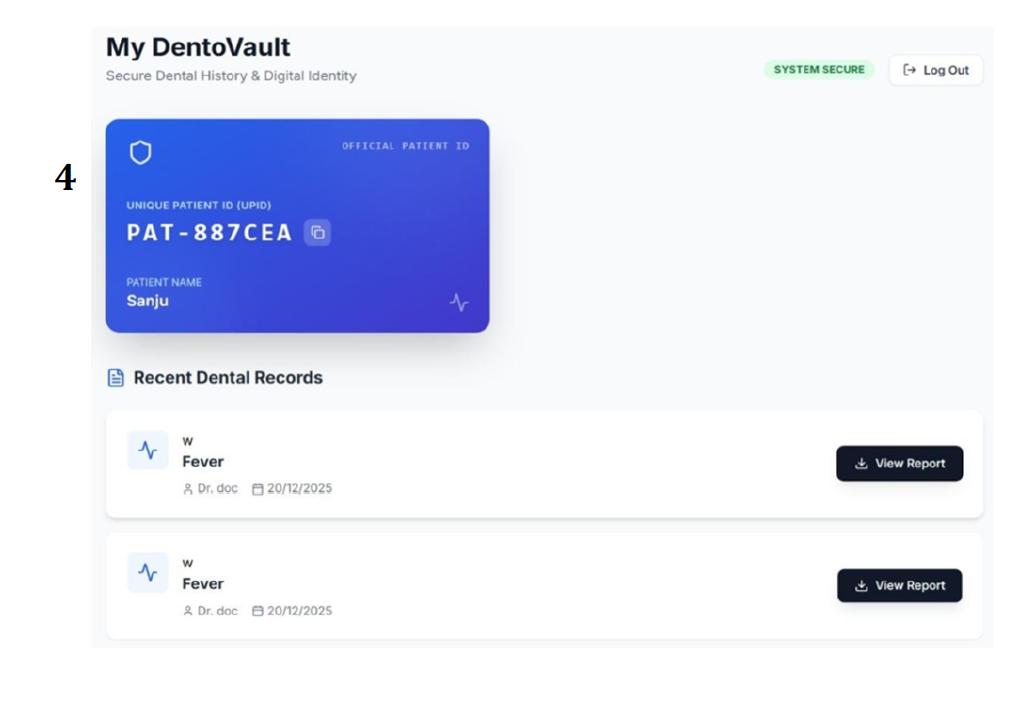
The system would create a unique digital dental profile for each patient. New clinical encounters could then be linked to this profile rather than creating an entirely independent record at every clinic.
Patient Authentication
Patients could access their records through secure authentication mechanisms such as mobile OTP verification. Integration with recognized digital-health identifiers may be considered during future development, subject to applicable regulations and consent requirements.
Dentist Verification
Only authenticated and appropriately verified dental practitioners should be permitted to create or modify clinical records. Professional verification could incorporate dental registration information and appropriate institutional credentials. Periodic verification could help prevent unauthorized clinical access.
Secure Cloud Storage
Clinical information would be stored in an encrypted cloud-based database. The system could accommodate multiple forms of dental information, including patient demographics, medical and dental history, chief complaints, clinical examination findings, diagnosis, treatment plans, completed procedures, prescriptions, radiographs, intraoral photographs, laboratory reports, periodontal charts, prosthodontic records, and implant records. Automated timestamps would document when each entry was created or modified.
Role-Based Access and Data Security
Patient health information is highly sensitive. Therefore, a universal dental record system must prioritize privacy and security from the beginning.
DentoVault would utilize a role-based access-control model:
Dentist Access: Verified dentists could receive permission to view relevant previous records, add new clinical information, upload diagnostic images, add prescriptions, document procedures, and update treatment status. Editing privileges would be restricted according to the dentist's authorization level
Patient Access: Patients would have controlled access to their own records. A patient-facing interface could allow them to view previous treatments, access prescriptions, view radiographs and reports, review treatment summaries, download selected records, monitor upcoming or completed treatment, and control appropriate information-sharing permissions
Audit Trail: Every major activity should generate an electronic audit trail documenting user identity, date and time, type of activity, record accessed or modified, and relevant authorization status. Previously entered clinical information should not simply disappear when modified. Version history could preserve an appropriate record of changes and improve accountability
Interoperability
One of the major objectives of DentoVault is interoperability.
The platform should not function as an isolated database. Instead, it should be designed around standardized data structures and application programming interfaces that can allow authorized information exchange with compatible healthcare systems.
For example, a patient visiting a new dental clinic could provide consent for the new dentist to access relevant previous records.
A standardized record format could allow information to be exchanged between: Patient → DentoVault → Authorized Dentist, rather than requiring: Patient → Previous Clinic → Manual Record Collection → New Clinic. This could significantly reduce administrative delays.
Artificial Intelligence-Assisted Clinical Support
Artificial intelligence could represent a future extension of the DentoVault platform.
The AI component should function as a clinical decision-support tool rather than an autonomous diagnostic system.
Potential applications could include:
Risk Prediction
Longitudinal patient information could potentially be analyzed to identify patterns associated with dental caries risk, periodontal disease risk, tooth loss, recurrent dental disease, missed follow-ups, and preventive-care requirements.
Radiographic Assistance
Future versions could incorporate AI-assisted analysis of dental radiographs to identify suspicious findings and assist clinicians in reviewing images. Such systems would require appropriate validation before clinical deployment.
Personalized Preventive Care
A longitudinal database could generate patient-specific reminders for routine dental examinations, periodontal maintenance, prosthesis follow-up, implant maintenance, orthodontic appointments, and preventive interventions.
Clinical Applications
DentoVault could have applications across multiple dental specialties:
General Dentistry: A dentist could rapidly review previous restorations, extractions, radiographs, prescriptions, and treatment history before initiating new treatment
Endodontics: Previous root canal treatment records and radiographs could assist in evaluating previously treated teeth and planning retreatment
Prosthodontics: Information regarding previous crowns, bridges, dentures, implants, materials, and laboratory procedures could be valuable during future rehabilitation
Implant Dentistry: Implant-related information such as implant system, dimensions, date of placement, surgical details, radiographs, and maintenance records could be maintained longitudinally
Orthodontics: Long-term orthodontic records, photographs, radiographs, treatment plans, and retention information could remain accessible even if the patient changes location
Emergency Dentistry: Emergency care represents an important potential application. In situations where a patient cannot provide a complete history, an authorized clinician could access relevant information after appropriate authentication and consent mechanisms
Patient Benefits
The proposed system could provide several benefits to patients:
Continuity of Care: Patients would not need to depend entirely on individual clinics for retrieval of historical dental records
Reduced Duplication: Availability of previous radiographs and investigations could reduce unnecessary repetition where clinically appropriate
Greater Transparency: Patients could review their treatment history and maintain a clearer understanding of their oral-health journey
Convenience: Prescriptions, reports, and treatment information could be available digitally rather than being dependent on physical documents
Improved Communication: Patients moving between dental providers could share relevant information more efficiently
Benefits to Dental Practitioners
DentoVault could also provide advantages to dental professionals. A dentist could obtain a more complete clinical history before treatment, potentially improving diagnosis and treatment planning.
The platform could also reduce documentation redundancy, improve communication between specialists, facilitate referrals, simplify record retrieval, support tele-consultation, improve follow-up, and create organized longitudinal documentation.
For teaching institutions, appropriately consented and de-identified records could potentially contribute to academic education and research.
Research and Public-Health Potential
A major long-term advantage of a standardized digital dental record system could be the generation of high-quality, de-identified datasets.
Aggregated information could potentially assist researchers in studying prevalence of dental caries, periodontal disease patterns, tooth-loss trends, treatment-seeking behaviour, geographic differences in oral-health conditions, utilization of dental services, and treatment outcomes.
Such datasets could support epidemiological research and evidence-based oral-health planning. However, secondary use of patient information would require strict governance, de-identification, appropriate ethical oversight, and compliance with applicable data-protection requirements.
Integration with the Indian Digital Health Ecosystem
India is rapidly developing digital healthcare infrastructure. DentoVault could potentially be designed to complement existing digital-health initiatives rather than operate independently.
Future integration with appropriate national digital-health identifiers and interoperable healthcare frameworks could allow dental information to become a more integrated component of an individual's broader health record.
Such integration would need to follow applicable regulatory, privacy, cybersecurity, consent, and interoperability requirements.
Future Scope
Several advanced features could be incorporated into future versions of DentoVault:
ABHA Integration
Subject to appropriate technical and regulatory compatibility, integration with the Ayushman Bharat Digital Health ecosystem could provide a pathway toward connecting dental information with broader health records.
AI-Assisted Imaging
Future systems could incorporate validated AI algorithms for assistance in radiographic interpretation and risk assessment.
Blockchain or Distributed-Ledger Technologies
Distributed-ledger technologies could potentially be explored for specific use cases requiring tamper-evident verification and traceability. However, blockchain should be considered only where it provides a demonstrable advantage over conventional secure databases.
Emergency Access
A carefully governed emergency-access mechanism could allow authorized clinicians to obtain critical information when immediate treatment is required and normal patient authorization is impractical.
Patient-Controlled Data Sharing
Patients could potentially receive granular control over which categories of information are shared with a particular dental provider and for what purpose.
Challenges and Limitations
Although DentoVault has considerable potential, implementation would involve several challenges:
Data Privacy
Dental records contain sensitive personal and health information. Strong encryption, access control, authentication, monitoring, and regulatory compliance would therefore be essential.
Adoption by Dental Clinics
The usefulness of a universal system depends on participation by dental practitioners. Adoption may be limited if the platform significantly increases documentation workload.
Standardization
Dental records vary considerably between practitioners. Standardized terminology, coding, image formats, and data structures would be required for effective interoperability.
Data Accuracy
A centralized system does not automatically guarantee accurate clinical information. Incorrect or incomplete entries could still occur. Appropriate verification and audit mechanisms would therefore be necessary.
Digital Literacy
Patients and smaller dental practices may have varying levels of digital literacy and technological infrastructure. The platform would therefore need to remain simple, affordable, and accessible.
Cybersecurity
A centralized repository could become a high-value target for cyberattacks. Continuous security monitoring, encryption, vulnerability assessment, backup systems, and incident-response mechanisms would be essential.
Proposed Workflow
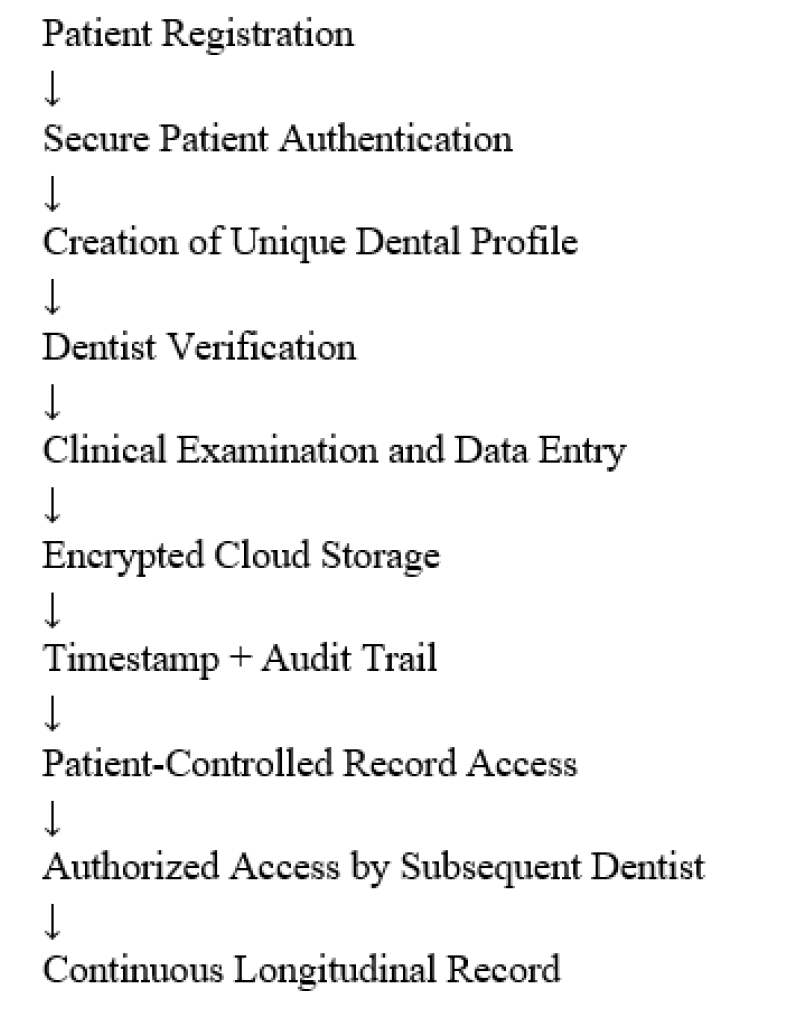
The conceptual workflow of DentoVault can be summarized as (Figure 1).
Figure 1: The Traditional Concept of Dental Documentation from a Clinic-Owned Record to A Secure, Patient-Linked Longitudinal Record
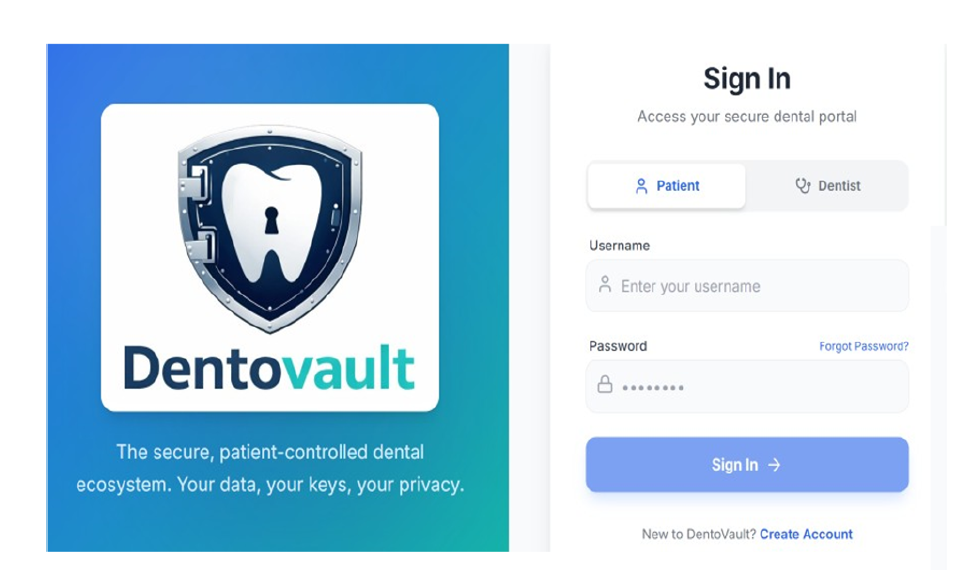
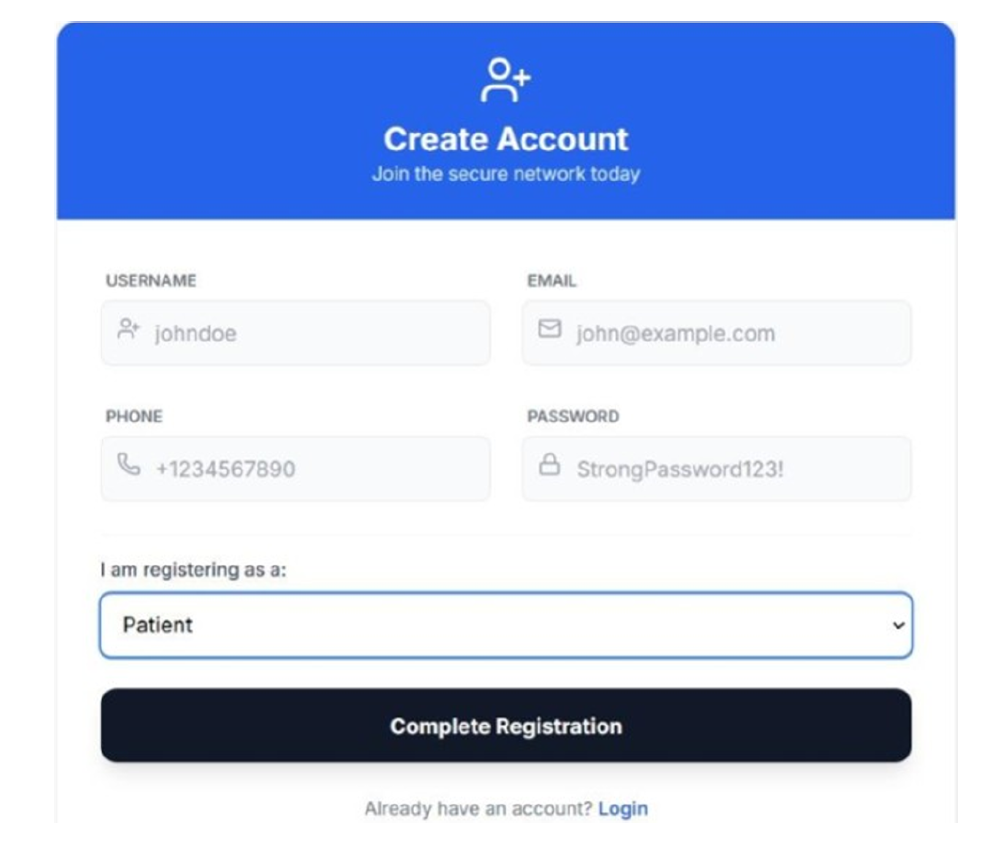
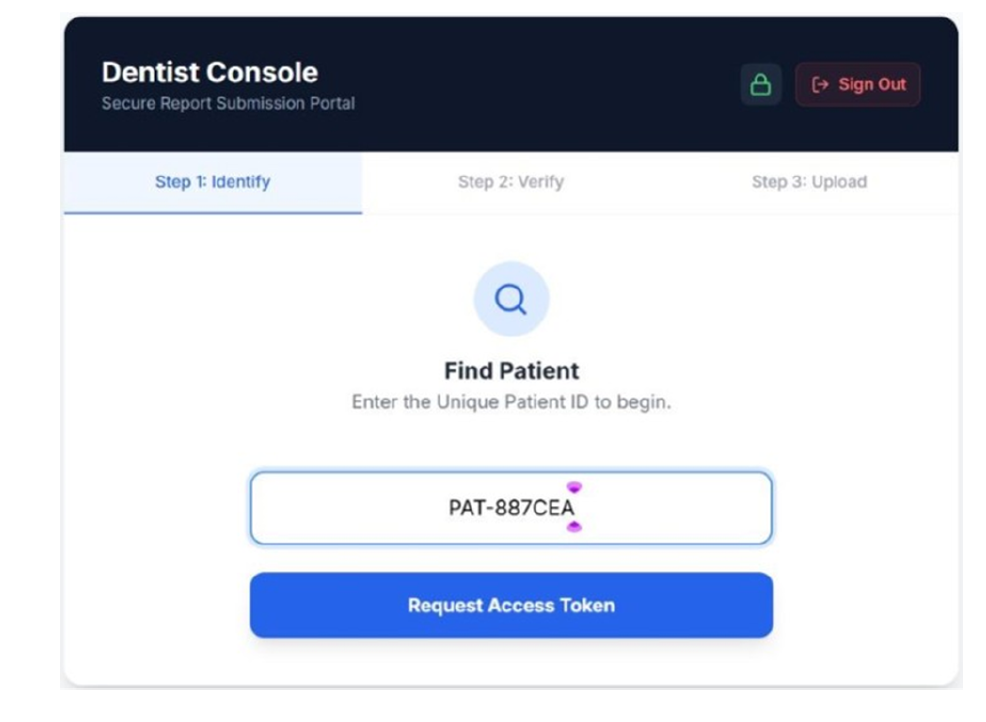
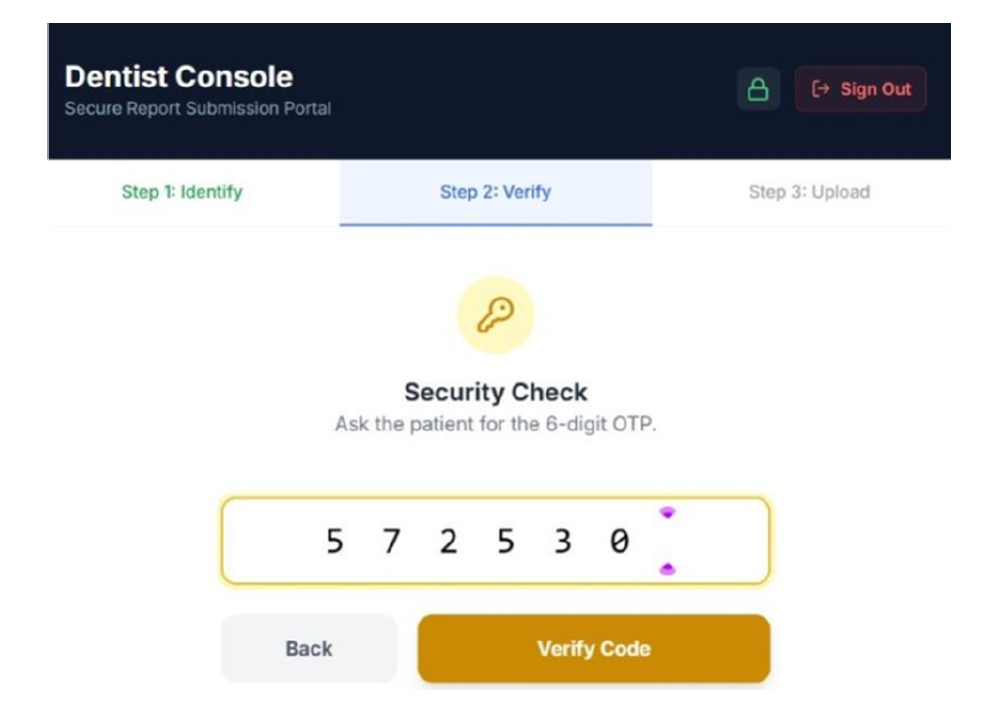
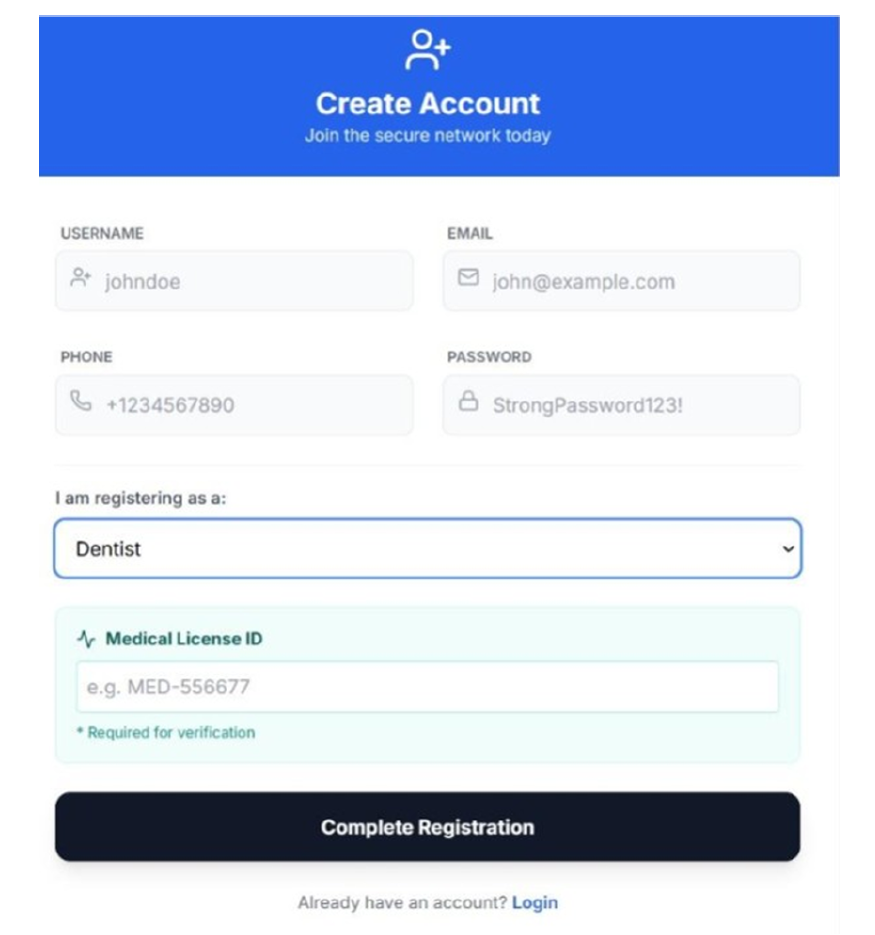
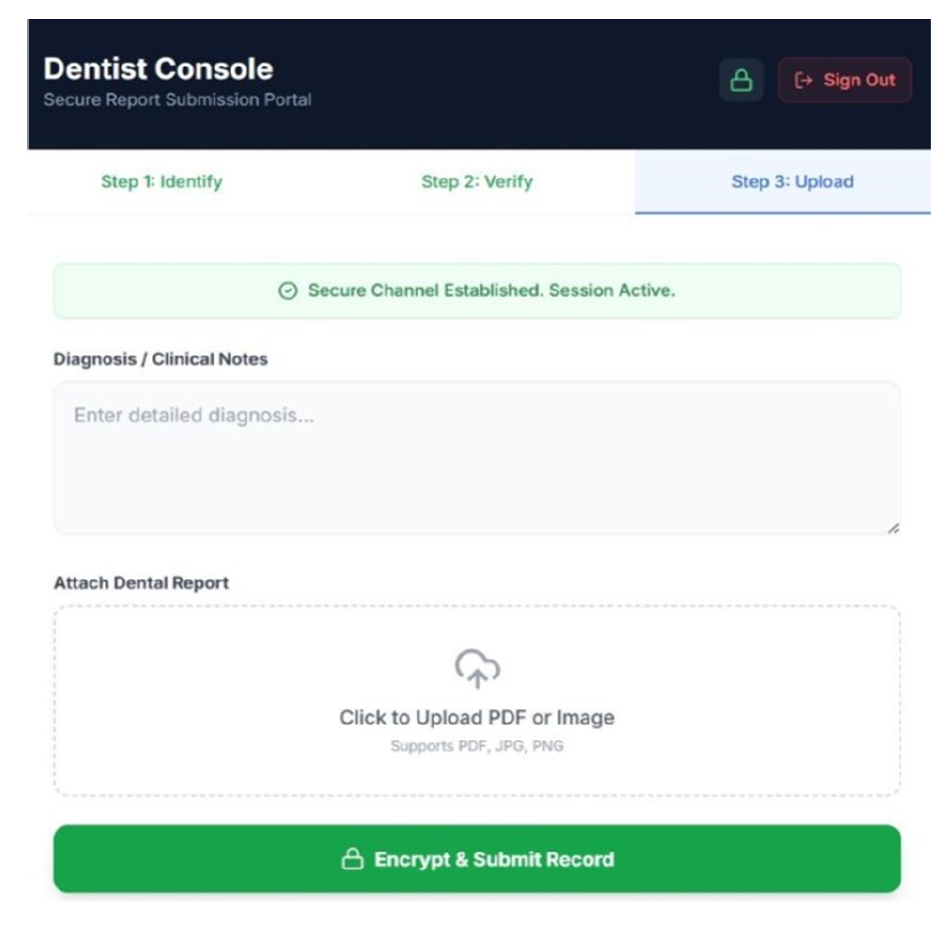
This model changes the traditional concept of dental documentation from a clinic-owned record to a secure, patient-linked longitudinal record (Figure2-8).
Figure 2: Patient Registration
Figure 3: Creating An Account
Figure 4: Unique patient ID
Figure 5: Secure Patient Authentication
Figure 6: Dentist Verification
Figure 7: Clinical Examination and Data Entry
Figure 8: Encrypted Cloud Storage
DISCUSSION
The principal innovation proposed by DentoVault is not simply digitization of existing dental records. Numerous digital record-management systems already exist at the individual clinic level. The distinctive objective is interoperability across providers [1].
The true value of a lifelong dental record emerges when information generated at one dental facility can, with appropriate authorization, become useful to another provider years later [2].
For example, a patient who received an implant several years earlier may not remember the implant system, dimensions, or surgical details. Similarly, a patient undergoing prosthodontic treatment may not possess previous radiographs or laboratory information. A longitudinal record could make such information available when clinically relevant [3].
The system could therefore shift dental care toward a more connected model in which previous clinical information becomes an active component of future decision-making [4].
Nevertheless, DentoVault should be considered a proposed framework rather than a replacement for professional clinical judgment. AI-assisted components, in particular, should be appropriately validated and used to support not replace the treating clinician [5].
CONCLUSION
Table 1: Proposed Key Features at a Glance
Feature
Proposed Function
Universal dental profile
Maintains lifelong longitudinal dental history
Dentist verification
Restricts clinical access to verified practitioners
Potential connection with India's digital-health ecosystem
DentoVault proposes a universal, cloud-based approach to lifelong dental record management. By linking a patient's dental history across authorized dental providers, the system has the potential to address one of the important limitations of fragmented dental documentation (Table 1).
Secure authentication, encrypted storage, role-based access, audit trails, interoperability, and patient-controlled access could form the foundation of the platform. Future incorporation of artificial intelligence, digital-health integration, and advanced security technologies could further expand its capabilities [6].
If implemented with appropriate clinical validation, data governance, cybersecurity safeguards, and regulatory compliance, DentoVault could contribute to more continuous, transparent, efficient, and patient-centred dental care.
The central principle of DentoVault is simple: a patient's dental history should remain with the patient, not with the clinic.
REFERENCES
World Health Organization. Global Strategy on Digital Health 2020–2027. World Health Organization, 2025.
National Health Authority, Government of India. Ayushman Bharat Digital Mission: Promoting Interoperability in Digital Health. National Health Authority, 2022.
National Commission for Allied and Healthcare Professions, Ministry of Health and Family Welfare, Government of India. Digital Health Ecosystem: Health ID, Healthcare Professionals Registry and Personal Health Records. Government of India.
Hung, K., et al. “The use and performance of artificial intelligence applications in dental and maxillofacial radiology: A systematic review.” Dentomaxillofacial Radiology, vol. 49, no. 1, 2020, pp. 20190107. https://doi.org/10.1259/dmfr.20190107.
“Artificial intelligence in diagnosis of oral diseases: A systematic review.” Journal of International Society of Preventive and Community Dentistry, 2023.
License
Creative Commons Attribution-NonCommercial-NoDerivatives 4.0 International License
All papers should be submitted electronically. All submitted manuscripts must be original work that is not under submission at another journal or under consideration for publication in another form, such as a monograph or chapter of a book. Authors of submitted papers are obligated not to submit their paper for publication elsewhere until an editorial decision is rendered on their submission. Further, authors of accepted papers are prohibited from publishing the results in other publications that appear before the paper is published in the Journal unless they receive approval for doing so from the Editor-In-Chief.
Himalayan Journal of Applied Medical Sciences and Research open access articles are licensed under a Creative Commons Attribution-Share A like 4.0 International License. This license lets the audience to give appropriate credit, provide a link to the license, and indicate if changes were made and if they remix, transform, or build upon the material, they must distribute contributions under the same license as the original.
Recommended Articles
Research Article
Intellident – Identification System
Srishti Mishra,
...
Skand Sao
Published: 30/06/2026
Download PDF
Cite
x
APA
Mishra, S., Chandra, A., Karpathak, S., Pradhan, S., Godbole, S. & Sao, S. (2026). Intellident – Identification System. Himalayan Journal of Applied Medical Sciences and Research, 7(2), 1-4.
MLA
Mishra, Srishti, et al. "Intellident – Identification System." Himalayan Journal of Applied Medical Sciences and Research 7.2 (2026): 1-4.
Chicago
Mishra, Srishti, Anukrity Chandra, Shilpi Karpathak, Sonia Pradhan, Shambhavi Godbole and Skand Sao. "Intellident – Identification System." Himalayan Journal of Applied Medical Sciences and Research 7, no. 2 (2026): 1-4.
Harvard
Mishra, S., Chandra, A., Karpathak, S., Pradhan, S., Godbole, S. and Sao, S. (2026) 'Intellident – Identification System' Himalayan Journal of Applied Medical Sciences and Research 7(2), pp. 1-4.
Vancouver
Mishra S, Chandra A, Karpathak S, Pradhan S, Godbole S, Sao S. Intellident – Identification System. Himalayan Journal of Applied Medical Sciences and Research. 2026 Jul;7(2):1-4.
Download PDF
Research Article
Ethnomedicinal Plants for Obesity Management - Phytochemicals, Molecular Targets and Prospects of Green Nanotechnology
Arpana Ashokrao Durge,
Utpal Jagdish Dongre
Published: 25/03/2026
Download PDF
Cite
x
APA
Durge, A. A. & Dongre, U. J. (2026). Ethnomedicinal Plants for Obesity Management - Phytochemicals, Molecular Targets and Prospects of Green Nanotechnology. Himalayan Journal of Applied Medical Sciences and Research, 7(1), 1-6.
MLA
Durge, Arpana Ashokrao and Utpal Jagdish Dongre. "Ethnomedicinal Plants for Obesity Management - Phytochemicals, Molecular Targets and Prospects of Green Nanotechnology." Himalayan Journal of Applied Medical Sciences and Research 7.1 (2026): 1-6.
Chicago
Durge, Arpana Ashokrao and Utpal Jagdish Dongre. "Ethnomedicinal Plants for Obesity Management - Phytochemicals, Molecular Targets and Prospects of Green Nanotechnology." Himalayan Journal of Applied Medical Sciences and Research 7, no. 1 (2026): 1-6.
Harvard
Durge, A. A. and Dongre, U. J. (2026) 'Ethnomedicinal Plants for Obesity Management - Phytochemicals, Molecular Targets and Prospects of Green Nanotechnology' Himalayan Journal of Applied Medical Sciences and Research 7(1), pp. 1-6.
Vancouver
Durge AA, Dongre UJ. Ethnomedicinal Plants for Obesity Management - Phytochemicals, Molecular Targets and Prospects of Green Nanotechnology. Himalayan Journal of Applied Medical Sciences and Research. 2026 Jan;7(1):1-6.
Download PDF
Research Article
Digital Implantology: Current Concepts, Clinical Applications, Limitations and Future Directions - A Narrative Review
Anukrity Chandra
Published: 30/07/2026
Download PDF
Cite
x
APA
Chandra, A. (2026). Digital Implantology: Current Concepts, Clinical Applications, Limitations and Future Directions - A Narrative Review. Himalayan Journal of Applied Medical Sciences and Research, 7(2), 1-7.
MLA
Chandra, Anukrity. "Digital Implantology: Current Concepts, Clinical Applications, Limitations and Future Directions - A Narrative Review." Himalayan Journal of Applied Medical Sciences and Research 7.2 (2026): 1-7.
Chicago
Chandra, Anukrity. "Digital Implantology: Current Concepts, Clinical Applications, Limitations and Future Directions - A Narrative Review." Himalayan Journal of Applied Medical Sciences and Research 7, no. 2 (2026): 1-7.
Harvard
Chandra, A. (2026) 'Digital Implantology: Current Concepts, Clinical Applications, Limitations and Future Directions - A Narrative Review' Himalayan Journal of Applied Medical Sciences and Research 7(2), pp. 1-7.
Vancouver
Chandra A. Digital Implantology: Current Concepts, Clinical Applications, Limitations and Future Directions - A Narrative Review. Himalayan Journal of Applied Medical Sciences and Research. 2026 Jul;7(2):1-7.
Download PDF
Research Article
Study of the Role of Serum Interleukin-6 in Inflammation among Pregnant Women with COVID-19
Aynar Talib Samad,
Yossra Saleh Khudhur
Published: 27/07/2021
Download PDF
Cite
x
APA
Talib Samad, A. & Khudhur, Y. S. (2021). Study of the Role of Serum Interleukin-6 in Inflammation among Pregnant Women with COVID-19. Himalayan Journal of Applied Medical Sciences and Research, 2(2), 1-6.
MLA
Talib Samad, Aynar and Yossra Saleh Khudhur. "Study of the Role of Serum Interleukin-6 in Inflammation among Pregnant Women with COVID-19." Himalayan Journal of Applied Medical Sciences and Research 2.2 (2021): 1-6.
Chicago
Talib Samad, Aynar and Yossra Saleh Khudhur. "Study of the Role of Serum Interleukin-6 in Inflammation among Pregnant Women with COVID-19." Himalayan Journal of Applied Medical Sciences and Research 2, no. 2 (2021): 1-6.
Harvard
Talib Samad, A. and Khudhur, Y. S. (2021) 'Study of the Role of Serum Interleukin-6 in Inflammation among Pregnant Women with COVID-19' Himalayan Journal of Applied Medical Sciences and Research 2(2), pp. 1-6.
Vancouver
Talib Samad A, Khudhur YS. Study of the Role of Serum Interleukin-6 in Inflammation among Pregnant Women with COVID-19. Himalayan Journal of Applied Medical Sciences and Research. 2021 Jul;2(2):1-6.
Chandra, A., Mishra, S., Pradhan, S., Karpathak, S., Mishra, A. & Chhabra, A. (2026). Dento-Vault: A Universal Cloud-Based Dental Record System for Lifelong, Interoperable Patient Care. Himalayan Journal of Applied Medical Sciences and Research, 7(2), 1-6.
MLA
Chandra, Anukrity, et al. "Dento-Vault: A Universal Cloud-Based Dental Record System for Lifelong, Interoperable Patient Care." Himalayan Journal of Applied Medical Sciences and Research 7.2 (2026): 1-6.
Chicago
Chandra, Anukrity, Srishti Mishra, Sonia Pradhan, Shilpi Karpathak, Avantika Mishra and Achint Chhabra. "Dento-Vault: A Universal Cloud-Based Dental Record System for Lifelong, Interoperable Patient Care." Himalayan Journal of Applied Medical Sciences and Research 7, no. 2 (2026): 1-6.
Harvard
Chandra, A., Mishra, S., Pradhan, S., Karpathak, S., Mishra, A. and Chhabra, A. (2026) 'Dento-Vault: A Universal Cloud-Based Dental Record System for Lifelong, Interoperable Patient Care' Himalayan Journal of Applied Medical Sciences and Research 7(2), pp. 1-6.
Vancouver
Chandra A, Mishra S, Pradhan S, Karpathak S, Mishra A, Chhabra A. Dento-Vault: A Universal Cloud-Based Dental Record System for Lifelong, Interoperable Patient Care. Himalayan Journal of Applied Medical Sciences and Research. 2026 Jul;7(2):1-6.

 Download PDF
 Download XML