Background: Identification of denture wearers is crucial in forensic investigations, hospitals, old-age homes and other institutional settings. Conventional denture-labelling methods, such as engraving, identification bands, or inclusion strips, may be susceptible to wear, damage and limited information storage. This project explores the incorporation of Quick Response (QR) codes within dentures as a modern, durable, inexpensive and information-rich alternative for digital identification. Methods: A QR code containing selected patient and clinic details, or a secure link to authorized digital records, is generated and printed on waterproof material. During denture fabrication, the label is positioned in a relatively protected region, such as the posterior palatal area of a maxillary denture or the lingual flange of a mandibular denture. The label is then sealed within clear heat-cured acrylic resin. Following processing and polishing, the completed denture is examined and the embedded QR code is tested for readability using a smartphone or compatible QR-code scanner. Expected Outcome: QR-coded dentures are expected to allow rapid access to relevant identification information, thereby facilitating identification in emergencies, forensic investigations, hospitals and institutional settings. The approach may also improve record-keeping, reduce the risk of denture mix-ups and provide a practical link between prosthodontic appliances and digital dental records. Conclusion: Embedding QR codes in dentures offers a secure, inexpensive and potentially durable approach to patient identification. The concept combines prosthodontic practice with contemporary digital technology and may have applications in forensic dentistry, geriatric care, hospitals and long-term institutional settings. With appropriate privacy safeguards and secure data handling, QR-coded dentures could represent a practical step toward digitally enabled prosthodontic identification.
Keywords
QR-Coded Dentures
Denture Identification
Digital Identification
Prosthodontics
Forensic Dentistry
QR Code
Denture Labelling
Digital Dental Records
INTRODUCTION
Denture identification is an important aspect of prosthodontic and forensic practice. Complete and removable partial dentures can become separated from their wearers in hospitals, residential care facilities, accidents, disasters and forensic situations. Positive identification of the denture and its wearer can therefore assist healthcare professionals, caregivers and forensic investigators.Traditional denture identification methods include engraving, marking, inclusion of identification slips, metallic bands and other physical labelling techniques. Although these approaches can be useful, some methods have limitations related to durability, readability, available surface area and the amount of information that can be incorporated.The widespread availability of smartphones and QR-code scanning provides an opportunity to introduce a digital component into removable prostheses. A QR code can store or provide access to selected information and can be scanned rapidly using a compatible device.
INTELLIDENT
Identification System proposes the incorporation of a QR code into the acrylic denture base at a protected location. The system aims to create a simple bridge between a physical prosthesis and digitally accessible identification information.
Rationale of the INTELLIDENT System
A denture remains with the patient for extended periods and is therefore an appropriate location for a durable identification marker. Unlike external labels, an internally embedded QR code is protected from routine handling and may remain readable after normal use, provided that the material, placement and processing technique are appropriately selected.The principal advantage of the proposed system is information accessibility. Instead of merely displaying a name or identification number, a QR code may be configured to direct an authorized user to a secure digital profile containing selected identification or clinical information.
MATERIALS AND METHOD
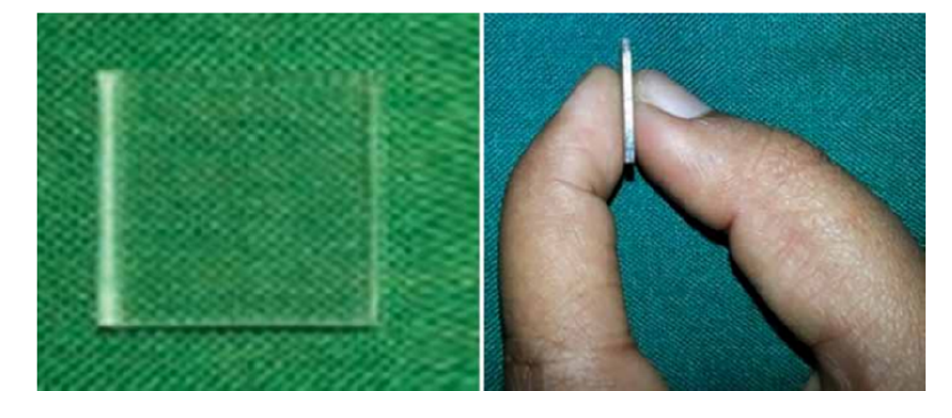
Patient and clinic information is collected with appropriate consent [1] (Figure 1)
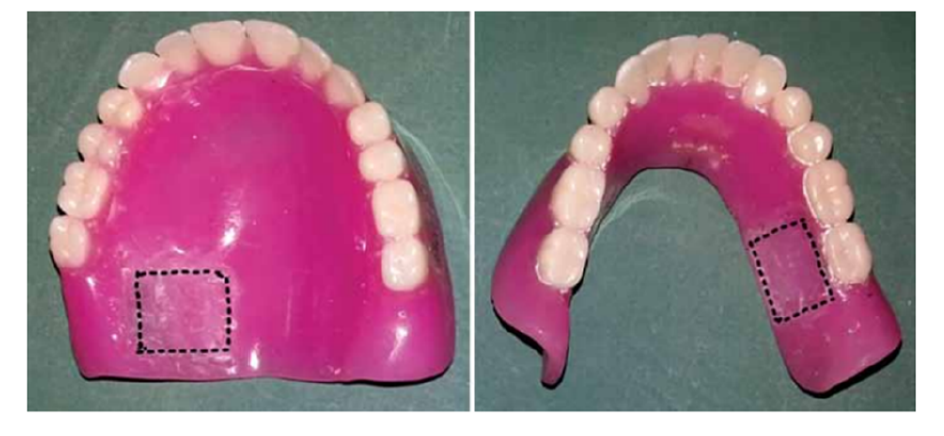
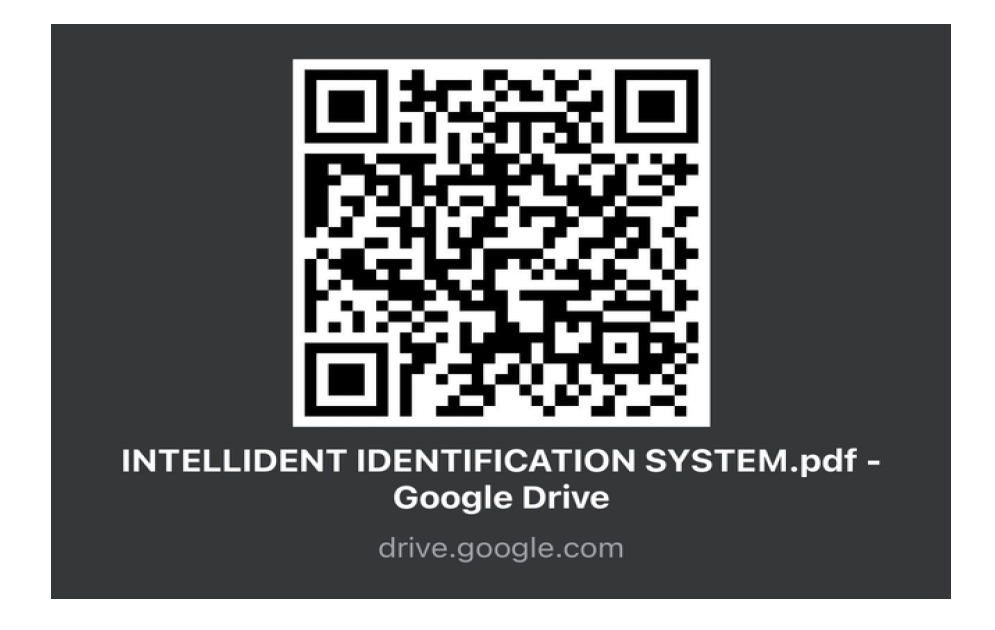
A QR code is generated containing limited identification information or, preferably, a secure link/token to an authorized digital record (Figure 2)
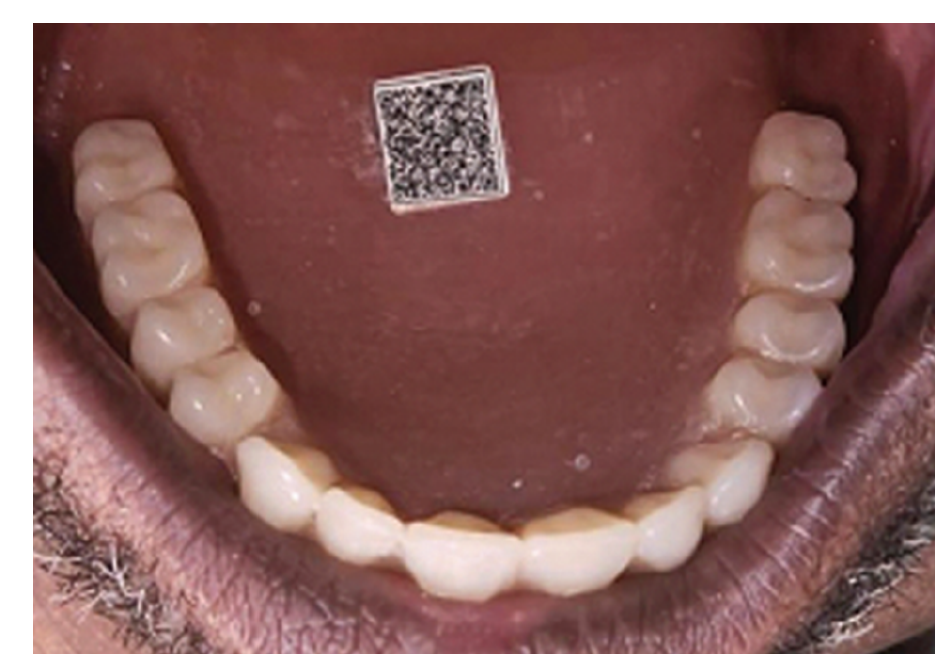
The QR code is printed on waterproof, appropriately sized material using a high-contrast format (Figure 3)
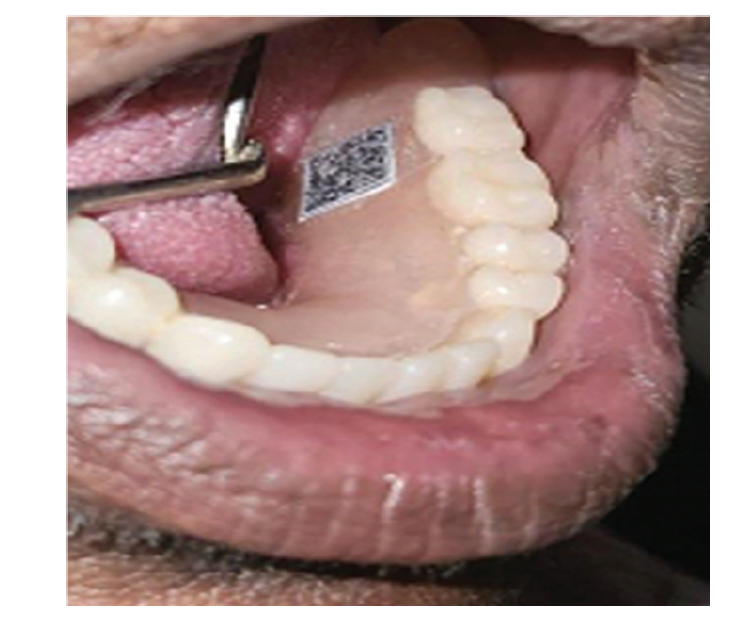
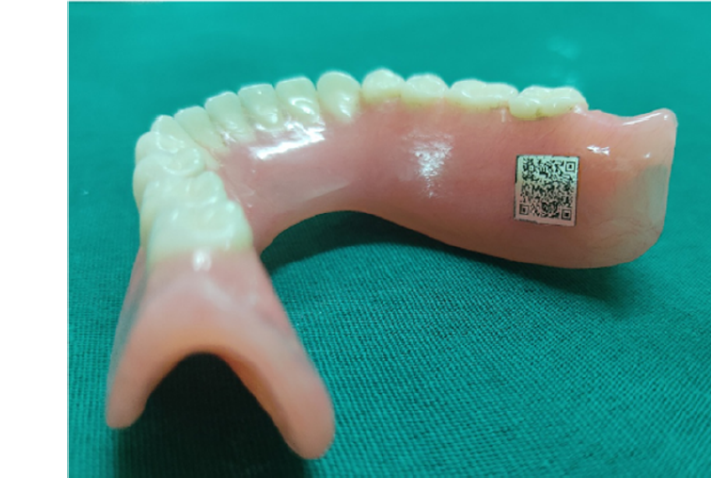
For a maxillary denture, the label is positioned in the posterior palatal region; for a mandibular denture, it may be positioned within the lingual flange or another protected area [2] (Figure 4)
The label is incorporated and sealed within clear heat-cured acrylic resin during denture processing (Figure 5)
The denture is finished and polished without damaging the embedded identification marker (Figure 6)
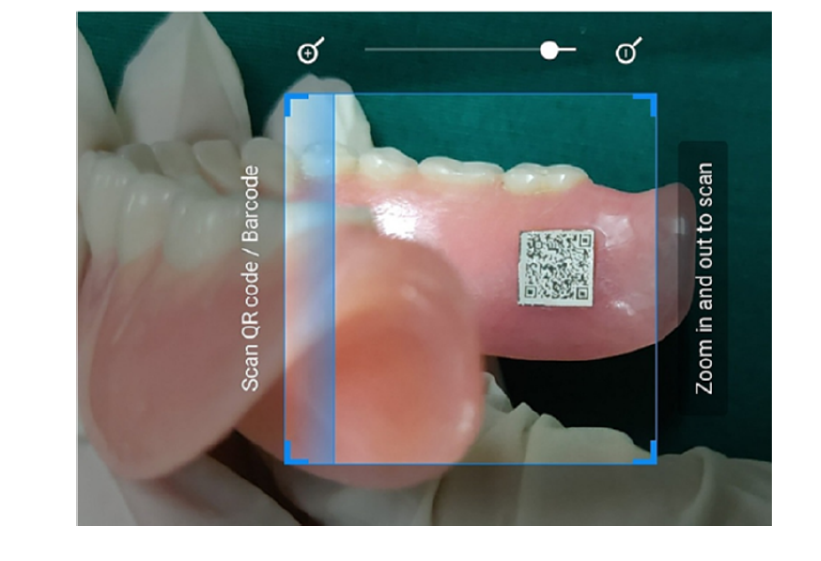
The QR code is scanned using a smartphone or compatible scanner to confirm readability (Figure 7)
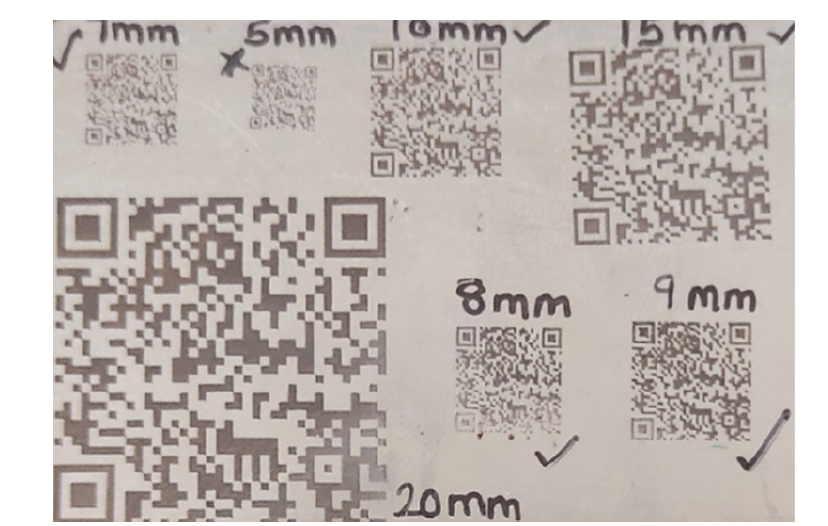
Readability and integrity should be re-evaluated after finishing, polishing and simulated routine use before clinical application (Figure 8) [3]
Figure 1: Clear Acrylic Sheet of 1 mm Thickness
Figure 2: Grooves Created on Palate of Maxillary Denture and Lingual Flange of Mandibular Denture
Figure 3: QR Code-Based Identification Marker Visible on the Oral Cavity
Figure 4: Intraoral View Showing a QR Code Identification Marker Affixed to the Palatal Mucosa
Figure 5: Removable Partial Denture with an Embedded QR Code Identification Marker
Figure 6: Intraoral Scanning of a Dental Prosthesis Using a QR Code for Digital Identification
Figure 7: QR Code Readability Evaluation
Figure 8: Different sizes of QR codes
Advantages
Low-cost and relatively simple to incorporate during denture fabrication
Can carry more information than conventional engraved labels [4]
Can provide a direct connection between a physical denture and an authorized digital record
Potentially useful across clinical, institutional, emergency and forensic settings
May reduce denture mix-ups in hospitals and residential care facilities [5]
Can be incorporated without substantially altering the external appearance of the denture
Compatible with commonly available smartphone QR scanners
Limitations and Challenges
QR-code readability may be affected by damage, discoloration, distortion, poor printing quality, or inappropriate placement (Table 1)
The denture must be processed without compromising the integrity of the QR label
Patients may not always carry or use smartphones and scanning equipment may not be universally available
Directly embedding personal or medical information in a QR code may create privacy risks
Secure authentication is required if the QR code provides access to protected health information
Long-term durability and readability should be evaluated through laboratory and clinical testing before widespread use
Standardization of QR-code size, placement, materials and scanning performance would be necessary for reproducible results
Table 1: Suggested Information Architecture
Information Category
Examples
Basic identification
Patient name/initials, unique identification number
Dental provider
Clinic or institution name, professional contact
Emergency information
Authorized emergency contact or emergency identifier
Digital record link
Secure URL/token connecting to the patient's authorized record
Prosthesis information
Type of denture, date of fabrication, relevant laboratory identifier
Sensitive information should not be embedded directly in an openly readable QR code. A safer design would use a random identifier or secure token that leads to an authenticated system with controlled access
Data Security and Ethical Considerations
The identification system should be designed around the principle of minimum necessary information. A QR code that can be scanned without authentication should ideally contain only a non-sensitive identifier rather than a patient's complete medical or dental history [6].
Where clinical information is required, the QR code should preferably contain a secure token or link to a protected database. Access should be restricted to authorized users and patient consent should be obtained before linking personal information to the identification system [4].
Any future implementation should comply with applicable Indian laws, institutional policies, ethical requirements and professional standards governing the collection, storage, processing and sharing of personal and health information (Table 2).
Table 2: Potential Applications
Application
Potential Utility
Forensic Dentistry
The system may assist in linking a recovered denture to an individual when appropriate identifying information is available.
Hospitals
Patients who are unconscious, confused, or unable to communicate may potentially be identified through their dentures.
Old-Age Homes and Institutional Care
QR-coded dentures may help caregivers distinguish dentures belonging to different residents and reduce accidental exchange.
Emergency Situations
A rapidly scannable identification marker may provide useful information when conventional documentation is unavailable.
Denture Mix-Up Prevention
A unique digital identifier may help staff confirm the intended wearer of removable prostheses.
Long-Term Prosthodontic Follow-Up
The QR code may link to information regarding the prosthesis, fabrication date, or authorized dental records.
Future Scope
Future development may involve systematic laboratory testing of different QR-code materials, acrylic thicknesses, printing techniques and denture locations to identify the most durable configuration [1,2].
The system could also be integrated with a secure digital dental-record platform, allowing an authorized clinician to scan the denture and retrieve a verified prosthesis record. Additional technologies such as NFC tags could be explored as complementary identification methods where appropriate.
A future version could include an institutional dashboard for hospitals and care facilities, enabling rapid verification of denture ownership while maintaining patient privacy. Clinical studies could evaluate QR-code readability after simulated aging, repeated cleaning, immersion, thermal cycling and mechanical wear.
DISCUSSION
The INTELLIDENT concept demonstrates how a conventional removable prosthesis can serve as a carrier for digital identification. The approach does not seek to replace existing denture-labelling methods; rather, it provides an additional layer of identification that may offer greater information capacity and connectivity [1,2].
The protected placement of the QR code within the acrylic base is particularly important. Positioning the label away from areas of frequent occlusal contact and external abrasion may improve its longevity. At the same time, the selected location should permit scanning when the denture is available for examination [3,4].
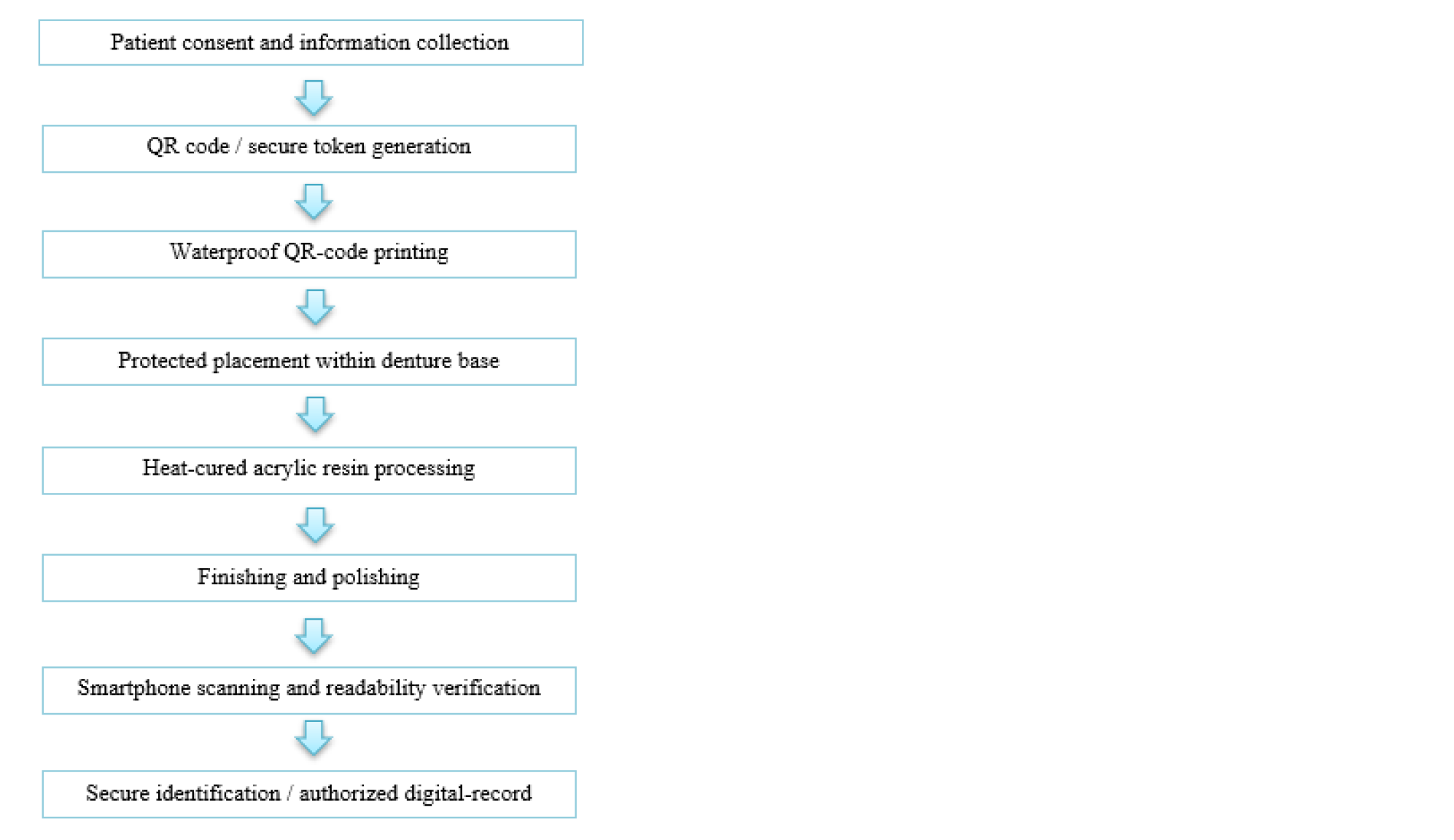
The concept has particular relevance in institutional and forensic settings where dentures may become separated from their owners or inadvertently exchanged. Its clinical value will ultimately depend on durability, reliable scanning, secure information architecture, patient acceptance and integration into routine denture fabrication workflows (Figure 9) [5,6].
Figure 9: Proposed Workflow
CONCLUSION
INTELLIDENT–Identification System proposes the incorporation of a QR code within removable dentures to create a practical link between a physical prosthesis and digitally accessible identification information. The approach is inexpensive, minimally invasive to the denture design and potentially useful in forensic investigations, hospitals, old-age homes, emergency situations and denture-management settings.
With appropriate patient consent, secure data architecture, standardized fabrication protocols and validation of long-term readability, QR-coded dentures could represent a promising application of digital technology in prosthodontics. The concept demonstrates the potential of combining conventional prosthodontic techniques with modern identification technology to improve patient safety, record accessibility and identification efficiency.
REFERENCES
Richmond, R. and I.A. Pretty. “Contemporary methods of labeling dental prostheses-A review of the literature.” Journal of Forensic Sciences, vol. 51, no. 5, 2006, pp. 1120–1126. https://doi.org/10.1111/j.1556-4029.2006.00238.x.
Bansal, P.K. et al. “Denture labeling: A new approach.” Contemporary Clinical Dentistry, vol. 2, no. 2, 2011, pp. 76–78.
Mohan, S. et al. “Denture marking as an aid to forensic identification.” Journal of Indian Academy of Forensic Medicine, vol. 34, no. 1, 2012, pp. 75–77.
Nalawade, S.N. et al. “A simple and inexpensive bar-coding technique for denture identification.” Journal of Forensic Dental Sciences, vol. 3, no. 2, 2011, pp. 92–94.
Colvenkar, S.S. “Denture labeling in forensic dentistry.” Indian Journal of Dental Research, vol. 21, no. 1, 2010, pp. 112–114.
“Denture labels: Various types and their abilities to resist different assaults.” Journal of Forensic Dental Sciences, vol. 10, no. 1, 2018, pp. 18–23.
License
Creative Commons Attribution-NonCommercial-NoDerivatives 4.0 International License
All papers should be submitted electronically. All submitted manuscripts must be original work that is not under submission at another journal or under consideration for publication in another form, such as a monograph or chapter of a book. Authors of submitted papers are obligated not to submit their paper for publication elsewhere until an editorial decision is rendered on their submission. Further, authors of accepted papers are prohibited from publishing the results in other publications that appear before the paper is published in the Journal unless they receive approval for doing so from the Editor-In-Chief.
Himalayan Journal of Applied Medical Sciences and Research open access articles are licensed under a Creative Commons Attribution-Share A like 4.0 International License. This license lets the audience to give appropriate credit, provide a link to the license, and indicate if changes were made and if they remix, transform, or build upon the material, they must distribute contributions under the same license as the original.
Recommended Articles
Research Article
Ethnomedicinal Plants for Obesity Management - Phytochemicals, Molecular Targets and Prospects of Green Nanotechnology
Arpana Ashokrao Durge,
Utpal Jagdish Dongre
Published: 25/03/2026
Download PDF
Cite
x
APA
Durge, A. A. & Dongre, U. J. (2026). Ethnomedicinal Plants for Obesity Management - Phytochemicals, Molecular Targets and Prospects of Green Nanotechnology. Himalayan Journal of Applied Medical Sciences and Research, 7(1), 1-6.
MLA
Durge, Arpana Ashokrao and Utpal Jagdish Dongre. "Ethnomedicinal Plants for Obesity Management - Phytochemicals, Molecular Targets and Prospects of Green Nanotechnology." Himalayan Journal of Applied Medical Sciences and Research 7.1 (2026): 1-6.
Chicago
Durge, Arpana Ashokrao and Utpal Jagdish Dongre. "Ethnomedicinal Plants for Obesity Management - Phytochemicals, Molecular Targets and Prospects of Green Nanotechnology." Himalayan Journal of Applied Medical Sciences and Research 7, no. 1 (2026): 1-6.
Harvard
Durge, A. A. and Dongre, U. J. (2026) 'Ethnomedicinal Plants for Obesity Management - Phytochemicals, Molecular Targets and Prospects of Green Nanotechnology' Himalayan Journal of Applied Medical Sciences and Research 7(1), pp. 1-6.
Vancouver
Durge AA, Dongre UJ. Ethnomedicinal Plants for Obesity Management - Phytochemicals, Molecular Targets and Prospects of Green Nanotechnology. Himalayan Journal of Applied Medical Sciences and Research. 2026 Jan;7(1):1-6.
Download PDF
Research Article
Dento-Vault: A Universal Cloud-Based Dental Record System for Lifelong, Interoperable Patient Care
Anukrity Chandra,
...
Achint Chhabra
Published: 23/08/2026
Download PDF
Cite
x
APA
Chandra, A., Mishra, S., Pradhan, S., Karpathak, S., Mishra, A. & Chhabra, A. (2026). Dento-Vault: A Universal Cloud-Based Dental Record System for Lifelong, Interoperable Patient Care. Himalayan Journal of Applied Medical Sciences and Research, 7(2), 1-6.
MLA
Chandra, Anukrity, et al. "Dento-Vault: A Universal Cloud-Based Dental Record System for Lifelong, Interoperable Patient Care." Himalayan Journal of Applied Medical Sciences and Research 7.2 (2026): 1-6.
Chicago
Chandra, Anukrity, Srishti Mishra, Sonia Pradhan, Shilpi Karpathak, Avantika Mishra and Achint Chhabra. "Dento-Vault: A Universal Cloud-Based Dental Record System for Lifelong, Interoperable Patient Care." Himalayan Journal of Applied Medical Sciences and Research 7, no. 2 (2026): 1-6.
Harvard
Chandra, A., Mishra, S., Pradhan, S., Karpathak, S., Mishra, A. and Chhabra, A. (2026) 'Dento-Vault: A Universal Cloud-Based Dental Record System for Lifelong, Interoperable Patient Care' Himalayan Journal of Applied Medical Sciences and Research 7(2), pp. 1-6.
Vancouver
Chandra A, Mishra S, Pradhan S, Karpathak S, Mishra A, Chhabra A. Dento-Vault: A Universal Cloud-Based Dental Record System for Lifelong, Interoperable Patient Care. Himalayan Journal of Applied Medical Sciences and Research. 2026 Jul;7(2):1-6.
Download PDF
Research Article
Digital Implantology: Current Concepts, Clinical Applications, Limitations and Future Directions - A Narrative Review
Anukrity Chandra
Published: 30/07/2026
Download PDF
Cite
x
APA
Chandra, A. (2026). Digital Implantology: Current Concepts, Clinical Applications, Limitations and Future Directions - A Narrative Review. Himalayan Journal of Applied Medical Sciences and Research, 7(2), 1-7.
MLA
Chandra, Anukrity. "Digital Implantology: Current Concepts, Clinical Applications, Limitations and Future Directions - A Narrative Review." Himalayan Journal of Applied Medical Sciences and Research 7.2 (2026): 1-7.
Chicago
Chandra, Anukrity. "Digital Implantology: Current Concepts, Clinical Applications, Limitations and Future Directions - A Narrative Review." Himalayan Journal of Applied Medical Sciences and Research 7, no. 2 (2026): 1-7.
Harvard
Chandra, A. (2026) 'Digital Implantology: Current Concepts, Clinical Applications, Limitations and Future Directions - A Narrative Review' Himalayan Journal of Applied Medical Sciences and Research 7(2), pp. 1-7.
Vancouver
Chandra A. Digital Implantology: Current Concepts, Clinical Applications, Limitations and Future Directions - A Narrative Review. Himalayan Journal of Applied Medical Sciences and Research. 2026 Jul;7(2):1-7.
Download PDF
Research Article
Study of the Role of Serum Interleukin-6 in Inflammation among Pregnant Women with COVID-19
Aynar Talib Samad,
Yossra Saleh Khudhur
Published: 27/07/2021
Download PDF
Cite
x
APA
Talib Samad, A. & Khudhur, Y. S. (2021). Study of the Role of Serum Interleukin-6 in Inflammation among Pregnant Women with COVID-19. Himalayan Journal of Applied Medical Sciences and Research, 2(2), 1-6.
MLA
Talib Samad, Aynar and Yossra Saleh Khudhur. "Study of the Role of Serum Interleukin-6 in Inflammation among Pregnant Women with COVID-19." Himalayan Journal of Applied Medical Sciences and Research 2.2 (2021): 1-6.
Chicago
Talib Samad, Aynar and Yossra Saleh Khudhur. "Study of the Role of Serum Interleukin-6 in Inflammation among Pregnant Women with COVID-19." Himalayan Journal of Applied Medical Sciences and Research 2, no. 2 (2021): 1-6.
Harvard
Talib Samad, A. and Khudhur, Y. S. (2021) 'Study of the Role of Serum Interleukin-6 in Inflammation among Pregnant Women with COVID-19' Himalayan Journal of Applied Medical Sciences and Research 2(2), pp. 1-6.
Vancouver
Talib Samad A, Khudhur YS. Study of the Role of Serum Interleukin-6 in Inflammation among Pregnant Women with COVID-19. Himalayan Journal of Applied Medical Sciences and Research. 2021 Jul;2(2):1-6.
Mishra, S., Chandra, A., Karpathak, S., Pradhan, S., Godbole, S. & Sao, S. (2026). Intellident – Identification System. Himalayan Journal of Applied Medical Sciences and Research, 7(2), 1-4.
MLA
Mishra, Srishti, et al. "Intellident – Identification System." Himalayan Journal of Applied Medical Sciences and Research 7.2 (2026): 1-4.
Chicago
Mishra, Srishti, Anukrity Chandra, Shilpi Karpathak, Sonia Pradhan, Shambhavi Godbole and Skand Sao. "Intellident – Identification System." Himalayan Journal of Applied Medical Sciences and Research 7, no. 2 (2026): 1-4.
Harvard
Mishra, S., Chandra, A., Karpathak, S., Pradhan, S., Godbole, S. and Sao, S. (2026) 'Intellident – Identification System' Himalayan Journal of Applied Medical Sciences and Research 7(2), pp. 1-4.
Vancouver
Mishra S, Chandra A, Karpathak S, Pradhan S, Godbole S, Sao S. Intellident – Identification System. Himalayan Journal of Applied Medical Sciences and Research. 2026 Jul;7(2):1-4.

 Download PDF
 Download XML