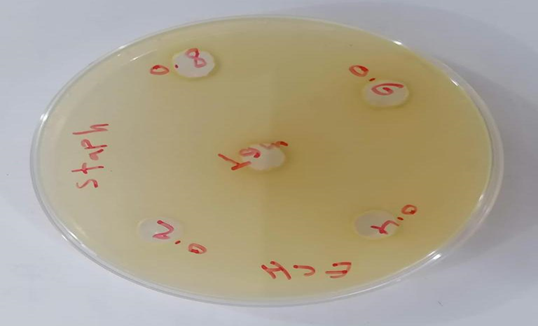
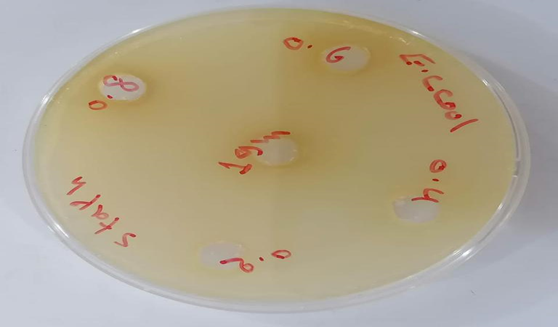
This study was conducted at the Iraqi University, College of Education, from 1/3/2021 to 1/6/2021, and included the collection of three clinical isolates of the bacterial species Staphylococcus aureus, Klebsiella pneumoniae and Acinetobacter baumannii, from swabs of wounds and burns, which were collected from the Hospital of Baghdad Medicine City. Where the bacterial samples were cultured on Macconkey agar medium to ensure their purity and incubated in the incubator at a temperature of 37 °C for 24 hours. The effect of the cold aqueous extract and the hot aqueous extract of common mistletoe was tested and the effect of these two extracts was studied against Staphylococcus aureus, Klebsiella pneumoniae and Acinetobacter baumannii, by well method, in this study we are using five different concentrations: 1gm, 0.8mg, 0.6mg, 0.4mg, 0.2mg. High inhibitory activity of the hot aqueous extract against Klebsiella pneumonia and Acinetobacterbaumannii, as the results showed that 1 gm concentration was the most effective concentration against bacteria except for Staphylococcusaureus, intermediate activity against Klebsiella pneumonia and Acinetobacterbaumannii, while a concentration of 0.6 mg had intermediate activity against Acinetobacter baumannii and did not show any activity against Klebsiellapneumonia and Staphylococcus aureus. While ( 0.2 mg and 0.4 mg) did not show any effectiveness in inhibiting the growth of bacterial isolates. As for the cold aqueous extract, it did not show any effect on any of the three isolates.
Keywords
Aqueous extract of common mistletoe
Wound and burn infections
Pathogenic bacteria
INTRODUCTION
Common mistletoe is a vascular plant belonging to the genus Viscum in the Viscaceae family according to the latest classifications, which in turn belongs to the order of Moslems. Its diameter ranges between 25 and 50 cm and may reach 150 cm. It has many medicinal benefits. The aqueous extracts of European mistletoe have been widely used for decades in alternative therapy, especially in Germany, Austria and Switzerland [1]. Due to its medical importance, it was used in this study to determine the extent to which it inhibits the growth of some Pathogenic bacterial species, including Klebsiella pneumoniae, and this type represents about 95% of clinical isolates of the genus Klebsiella. Klebsiellapneumoniae is a major cause of community-acquired bacterial lung diseases and causes acute pneumonia, bronchitis, otitis, some types of croup, wounds, and meningitis [2]. Staphylococcusaureus bacteria were also used, which cause several infections, including wound infections, pustule & boils, impetigo as well as ulcers and infections of wounds and burns [3]. Acinetobacterbaumannii may cause a wide range of healthcare-associated infections such as bloodstream infections, ventilator-associated pneumonia, surgical site infections, urinary tract infections, cholangitis, meningitis, peritonitis, skin and wound infections, infective endocarditis and Ventriculitis [4].
This study aims to reveal the effect of the aqueous extract of common mistletoe in inhibiting some bacterial species that cause burns and wounds in human Klebsiella pneumoniae, Staphylococcusaureus and Acinetobacterbaumannii which were isolated from wounds and burns.
MATERIALS AND METHODS
Isolation and identification of bacteria
Bacterial isolates were identified by studying the general culturing characteristics of the colonies growing on the medium of blood agar, Mannitol salt agar, and Macconkey agar, and then the appearance of colony shapes was studied and determined on the basis of hemolysis type, color, shape, and size, as well as observing other general characteristics such as utilize of mannitol sugar and growth with a high salt concentration, as well as the use of some biochemical tests such as oxidase and catalase tests, then the diagnosis was confirmed using the Vitec system [5].
Preparation of aqueous extract of common mistletoe
Two extracts of common mistletoe were prepared, one using hot water and the other using cold water, by following methods:-
10 gm of common mistletoe was weighed and then placed in a glass beaker, fifty ml of cold water was added, and 10 gm of common mistletoe was also weighed and transferred to another glass beaker, and 50 ml of hot water was added.
The two extracts were placed in a water bath for 10 minutes and then left for 24 hours.
The two extracts were precipitated using a centrifuge for 10 minutes and 3000 revolutions per minute, after which the filtered extract was taken while leaving and ignoring the precipitate formed in the tube.
Prepare different concentrations of common mistletoe extract in cold and hot water
Five different concentrations of the aqueous extract of common mistletoe were prepared according to the method of Mitscher and his group [6], which was prepared by adding water to the concentrated common mistletoe solution and we obtained the following five concentrations: 1gm, 0.8mg, 0.6mg, 0.4mg, 0.2 mg. Which then tests the inhibitory activity of the aqueous extract of the common mistletoe plant against isolated types of pathogenic bacteria.
RESULTS AND DISCUSSION
An antimicrobial efficacy test of hot and cold aqueous extract of common mistletoe was conducted against Staphylococcusaureus, Klebsiellapneumoniae and Acinetobacterbaumannii isolated from wounds and burns by agar well diffusion method.
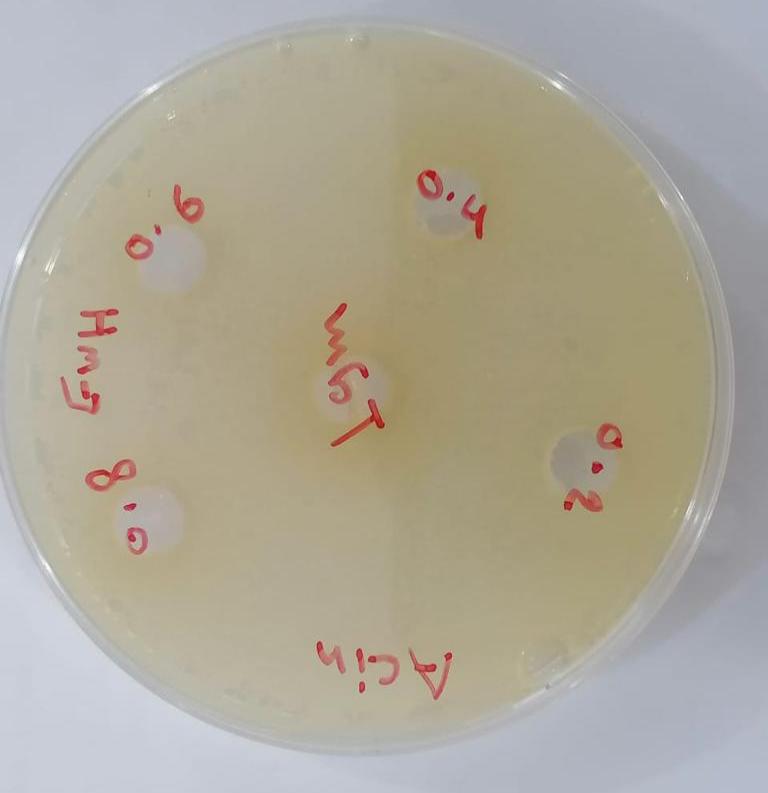
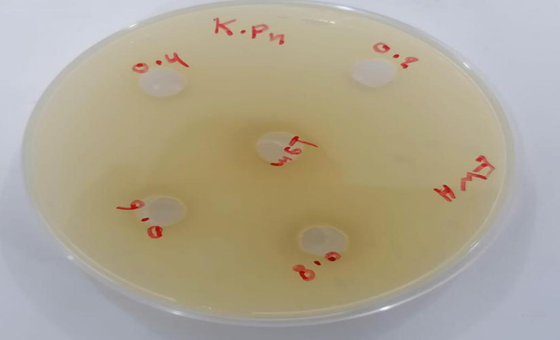
The results presented in Table 1 show a high inhibitory activity of the hot aqueous extract against Acinetobacterbaumannii and K.pneumoniae as in Figures 1 and 3, depending on the size of the diameters of the inhibition zones. The results showed that the concentration (1gm) is more concentrations were effective towards the bacteria, where the diameter of the inhibition zone was more than 16 mm, except for Staphylococcusaureus. The aqueous extract did not show any effect in inhibiting its growth, as it was characterized by its strong resistance to the extract as shown in Figure 5.
The results of this study differ from the results reached by the researcher Salem, Donia Kamal [7] which indicated the high effectiveness of the aqueous extract of common mistletoe against Staphylococcusaureus [7]. This also does not agree with the results that appeared in our study, while the concentration of 0.8 mg showed intermediate activity against Klebsiellapneumoniae and Acinetobacterbaumannii, and the diameters of the inhibition zones were 12 mm, while the concentration of 0.6 mg also had a medium activity against Acinetobacter. The diameter of the inhibition zone was 10 mm, and it did not show any activity against Klebsiellapneumoniae and Staphylococcusaureus. The results showed that concentrations of 0.2 mg and 0.4 mg did not show any effectiveness in inhibiting the growth of any type of bacterial isolate.
Table 1: Shows the effectiveness of the hot aqueous extract of common mistletoe against some pathogenic bacterial isolates
0.2 mg
0.4 mg
0.6 mg
0.8 mg
1 gm
Type of bacteria
R
R
R
S
S
Klebseillapneumoniae
R
R
R
R
R
staphylococcusaureus
R
R
S
S
S
Acinetobacter baumannii
Table No. (2) shows the effectiveness of the cold aqueous extract of common mistletoe against some pathogenic bacterial isolates
0.2 mg
0.4 mg
0.6 mg
0.8 mg
1 gm
Type of bacteria
R
R
R
R
R
Klebseillapneumonia'e
R
R
R
R
R
staphylococcusaureus
R
R
R
R
R
Acinetobacter bawmanii
Figure 1: The inhibition activity of the hot aqueous extract of common mistletoe against Acenitobaterbawmanii
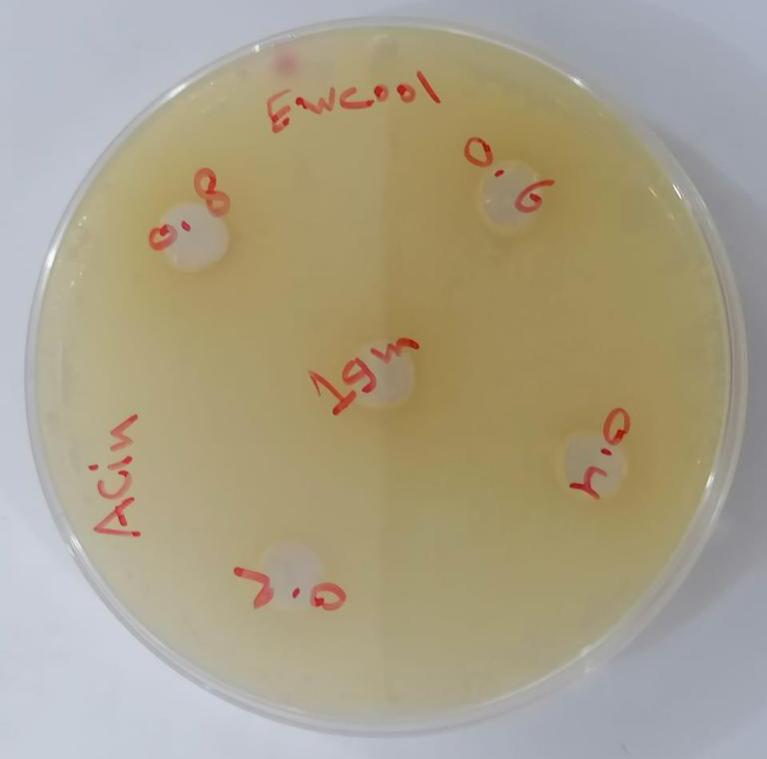
Figure 2: The inhibition activity of the cold aqueous extract of common mistletoe towards Acenitobater bawmanii
Data
Figure 3: The inhibiting activity of the hot aqueous extract of common mistletoe K.pneumoniae
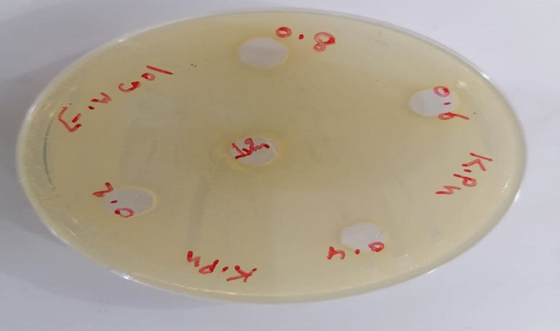
Figure 4: The inhibition activity of cold aqueous extract of common mistletoe against K.pneumoniae
The results presented in Table 2 show the lack of inhibitory activity of cold aqueous extract of common mistletoe towards any type of bacterial isolates used in the study as in Figures 2, 4 and 6.
In general, it is noted that the effect of medicinal plant compounds on microorganisms varies depending on the plant extract concentrations used and the number of bacteria under examination. The difference in place and time in the methods of extraction and concentrations of extracts used in each study may have a role in the difference in the effect of single plant extracts in several studies.
Figure 5: The inhibition activity of the hot aqueous extract of common mistletoe against S.aureus
Figure 6: Shows the inhibition activity of cold aqueous extract of common mistletoe against S.aureus
REFERENCE
Zuber, D. “Biological Flora of Central Europe: Viscum Album L.” Flora: Morphology, Distribution, Functional Ecology of Plants, vol. 199, no. 3, 2004, pp. 181–203.
All papers should be submitted electronically. All submitted manuscripts must be original work that is not under submission at another journal or under consideration for publication in another form, such as a monograph or chapter of a book. Authors of submitted papers are obligated not to submit their paper for publication elsewhere until an editorial decision is rendered on their submission. Further, authors of accepted papers are prohibited from publishing the results in other publications that appear before the paper is published in the Journal unless they receive approval for doing so from the Editor-In-Chief.
Himalayan Journal of Applied Medical Sciences and Research open access articles are licensed under a Creative Commons Attribution-Share A like 4.0 International License. This license lets the audience to give appropriate credit, provide a link to the license, and indicate if changes were made and if they remix, transform, or build upon the material, they must distribute contributions under the same license as the original.
Recommended Articles
Research Article
Ethnomedicinal Plants for Obesity Management - Phytochemicals, Molecular Targets and Prospects of Green Nanotechnology
Arpana Ashokrao Durge,
Utpal Jagdish Dongre
Published: 25/03/2026
Download PDF
Cite
x
APA
Durge, A. A. & Dongre, U. J. (2026). Ethnomedicinal Plants for Obesity Management - Phytochemicals, Molecular Targets and Prospects of Green Nanotechnology. Himalayan Journal of Applied Medical Sciences and Research, 7(1), 1-6.
MLA
Durge, Arpana Ashokrao and Utpal Jagdish Dongre. "Ethnomedicinal Plants for Obesity Management - Phytochemicals, Molecular Targets and Prospects of Green Nanotechnology." Himalayan Journal of Applied Medical Sciences and Research 7.1 (2026): 1-6.
Chicago
Durge, Arpana Ashokrao and Utpal Jagdish Dongre. "Ethnomedicinal Plants for Obesity Management - Phytochemicals, Molecular Targets and Prospects of Green Nanotechnology." Himalayan Journal of Applied Medical Sciences and Research 7, no. 1 (2026): 1-6.
Harvard
Durge, A. A. and Dongre, U. J. (2026) 'Ethnomedicinal Plants for Obesity Management - Phytochemicals, Molecular Targets and Prospects of Green Nanotechnology' Himalayan Journal of Applied Medical Sciences and Research 7(1), pp. 1-6.
Vancouver
Durge AA, Dongre UJ. Ethnomedicinal Plants for Obesity Management - Phytochemicals, Molecular Targets and Prospects of Green Nanotechnology. Himalayan Journal of Applied Medical Sciences and Research. 2026 Jan;7(1):1-6.
Download PDF
Research Article
Digital Implantology: Current Concepts, Clinical Applications, Limitations and Future Directions - A Narrative Review
Anukrity Chandra
Published: 30/07/2026
Download PDF
Cite
x
APA
Chandra, A. (2026). Digital Implantology: Current Concepts, Clinical Applications, Limitations and Future Directions - A Narrative Review. Himalayan Journal of Applied Medical Sciences and Research, 7(2), 1-7.
MLA
Chandra, Anukrity. "Digital Implantology: Current Concepts, Clinical Applications, Limitations and Future Directions - A Narrative Review." Himalayan Journal of Applied Medical Sciences and Research 7.2 (2026): 1-7.
Chicago
Chandra, Anukrity. "Digital Implantology: Current Concepts, Clinical Applications, Limitations and Future Directions - A Narrative Review." Himalayan Journal of Applied Medical Sciences and Research 7, no. 2 (2026): 1-7.
Harvard
Chandra, A. (2026) 'Digital Implantology: Current Concepts, Clinical Applications, Limitations and Future Directions - A Narrative Review' Himalayan Journal of Applied Medical Sciences and Research 7(2), pp. 1-7.
Vancouver
Chandra A. Digital Implantology: Current Concepts, Clinical Applications, Limitations and Future Directions - A Narrative Review. Himalayan Journal of Applied Medical Sciences and Research. 2026 Jul;7(2):1-7.
Download PDF
Research Article
Study of the Role of Serum Interleukin-6 in Inflammation among Pregnant Women with COVID-19
Aynar Talib Samad,
Yossra Saleh Khudhur
Published: 27/07/2021
Download PDF
Cite
x
APA
Talib Samad, A. & Khudhur, Y. S. (2021). Study of the Role of Serum Interleukin-6 in Inflammation among Pregnant Women with COVID-19. Himalayan Journal of Applied Medical Sciences and Research, 2(2), 1-6.
MLA
Talib Samad, Aynar and Yossra Saleh Khudhur. "Study of the Role of Serum Interleukin-6 in Inflammation among Pregnant Women with COVID-19." Himalayan Journal of Applied Medical Sciences and Research 2.2 (2021): 1-6.
Chicago
Talib Samad, Aynar and Yossra Saleh Khudhur. "Study of the Role of Serum Interleukin-6 in Inflammation among Pregnant Women with COVID-19." Himalayan Journal of Applied Medical Sciences and Research 2, no. 2 (2021): 1-6.
Harvard
Talib Samad, A. and Khudhur, Y. S. (2021) 'Study of the Role of Serum Interleukin-6 in Inflammation among Pregnant Women with COVID-19' Himalayan Journal of Applied Medical Sciences and Research 2(2), pp. 1-6.
Vancouver
Talib Samad A, Khudhur YS. Study of the Role of Serum Interleukin-6 in Inflammation among Pregnant Women with COVID-19. Himalayan Journal of Applied Medical Sciences and Research. 2021 Jul;2(2):1-6.
Download PDF
Research Article
Evalution CD11b, CD4, IL-17A and IL-23 as Biomarkers Immunological in Patients with Behçet’s Disease
Layla Saleh Abdul-Hassan,
...
Saeed hilal khudhair
Published: 13/07/2026
Download PDF
Cite
x
APA
Abdul-Hassan, L. S., Fadel, R. H. & khudhair, S. H. (2026). Evalution CD11b, CD4, IL-17A and IL-23 as Biomarkers Immunological in Patients with Behçet’s Disease. Himalayan Journal of Applied Medical Sciences and Research, 7(2), 1-7.
MLA
Abdul-Hassan, Layla S., Radhia H. Fadel and Saeed H. khudhair. "Evalution CD11b, CD4, IL-17A and IL-23 as Biomarkers Immunological in Patients with Behçet’s Disease." Himalayan Journal of Applied Medical Sciences and Research 7.2 (2026): 1-7.
Chicago
Abdul-Hassan, Layla S., Radhia H. Fadel and Saeed H. khudhair. "Evalution CD11b, CD4, IL-17A and IL-23 as Biomarkers Immunological in Patients with Behçet’s Disease." Himalayan Journal of Applied Medical Sciences and Research 7, no. 2 (2026): 1-7.
Harvard
Abdul-Hassan, L. S., Fadel, R. H. and khudhair, S. H. (2026) 'Evalution CD11b, CD4, IL-17A and IL-23 as Biomarkers Immunological in Patients with Behçet’s Disease' Himalayan Journal of Applied Medical Sciences and Research 7(2), pp. 1-7.
Vancouver
Abdul-Hassan LS, Fadel RH, khudhair SH. Evalution CD11b, CD4, IL-17A and IL-23 as Biomarkers Immunological in Patients with Behçet’s Disease. Himalayan Journal of Applied Medical Sciences and Research. 2026 Jul;7(2):1-7.
Abood, S. H., Shihab, L. A., Abood, A. S., AL-Azzawi, T. Y. & Abed, G. H. (2022). The Inhibitory Effect of Aquatic Extracts of (Common Mistletoe) on Some Bacterial Isolates from Different Clinical Cases. Himalayan Journal of Applied Medical Sciences and Research, 3(2), 1-4.
MLA
Abood, Saad H., et al. "The Inhibitory Effect of Aquatic Extracts of (Common Mistletoe) on Some Bacterial Isolates from Different Clinical Cases." Himalayan Journal of Applied Medical Sciences and Research 3.2 (2022): 1-4.
Chicago
Abood, Saad H., Liwaa A. Shihab, Ahmed S. Abood, Thanoon Y. AL-Azzawi and Ghufran H. Abed. "The Inhibitory Effect of Aquatic Extracts of (Common Mistletoe) on Some Bacterial Isolates from Different Clinical Cases." Himalayan Journal of Applied Medical Sciences and Research 3, no. 2 (2022): 1-4.
Harvard
Abood, S. H., Shihab, L. A., Abood, A. S., AL-Azzawi, T. Y. and Abed, G. H. (2022) 'The Inhibitory Effect of Aquatic Extracts of (Common Mistletoe) on Some Bacterial Isolates from Different Clinical Cases' Himalayan Journal of Applied Medical Sciences and Research 3(2), pp. 1-4.
Vancouver
Abood SH, Shihab LA, Abood AS, AL-Azzawi TY, Abed GH. The Inhibitory Effect of Aquatic Extracts of (Common Mistletoe) on Some Bacterial Isolates from Different Clinical Cases. Himalayan Journal of Applied Medical Sciences and Research. 2022 Jul;3(2):1-4.


 Download PDF
 Download XML