The importance of measuring the time spent on nursing activities and other processes makes the purpose of this study to identify the time of direct and indirect nursing care in the inpatient unit of Dharmais Cancer Hospital Jakarta. The type of this research is quantitative, with the statistical method used is descriptive statistics. It conducted this research with a work sampling approach by observing the activities carried out by nurses while in the inpatient treatment room for 24 hours. The results of this study show that direct nursing activities take an almost equal portion to indirect nursing activities. It is due to the possibility that the classification of inpatient ward patients is independent. Nurses should be able to analyze the level of patient dependence to provide nursing actions according to the patient's condition and ultimately improve the healing process and client satisfaction.
Keywords
Cancer Hospital
Nursing Activities
Direct Nursing Activities
Indirect Nursing Activities
Inpatient Unit
INTRODUCTION
The hospital is a form of health facility that carries out basic health efforts, or referral health and supporting health efforts. The quality of excellent hospital services marks the success of hospitals in carrying out their functions. The most dominant factor affecting quality is human resources. Among the human resources directly involved in providing services to patients, the most numerous are nurses and midwives, which is about 40% of the total workforce. We achieve the goal of effective and efficient nursing services. It is necessary to match the nursing staff, including the number, type, and qualifications, with the required service needs [1-2].
In the world of hospitals, it is required to make changes to prepare products and human resources that are competitive in the face of free competition in the global markets. Nursing services in hospitals have a strategic position because the service process is carried out continuously for 24 hours. Hence, the good and bad services in hospitals depend on the performance of the nursing staff who provide nursing care to patients or families. Nursing service activities are a subsystem of health services that assist patients in maintaining health or recovering. The patient's need for dependence on nursing staff fluctuates according to the patient's condition. It affects the number of human resources (nurses) needed to provide nursing care to patients properly and correctly [3].
The implementation of health services in hospitals is very complex. In addition to the characteristics and organization, the demand that health workers follow dynamic health science and technology adds to the complexity of providing standard quality health services. “Minimum service standards are provisions regarding the type and quality of basic services, which are mandatory government affairs that every citizen has the right to obtain at a minimum” [4]. The benefit of realizing a good management system is the increased efficiency, effectiveness, and productivity of staff at the hospital. Hariyati said that effectiveness and efficiency are two interrelated components in achieving goals. Nursing management challenges are cost minimization and no waste in implementation, but simultaneously providing quality services is a challenge that must be faced [5].
The importance of measuring time spent on nursing documentation and other processes has prompted the following research question: “How much time is spent by nursing staff on direct and indirect patient care?”[6] Thus, this study to identify the timing of direct and indirect nursing care in the inpatient unit of Dharmais Cancer Hospital Jakarta. This research is part of the architectural research being carried out by the author. The data regarding the activities of nurses are very useful for spatial and building design that is edition in supporting the optimization of hospital services.
MATERIALS AND METHODS
The type of this research is quantitative, with the statistical method used is descriptive statistics. "The descriptive-analytic research design is a research design that intends to describe an object of research being studied through samples or data that have been collected and then conclude in general" [7]. This study only measures the use of working time carried out by nursing staff in providing nursing care services to patients.
This study is descriptive research with a work sampling approach. It was conducted to observe the activities carried out by nurses while in the treatment room for 24 hours. The room that became the place of observation was the inpatient room of the Dharmais Cancer Hospital Jakarta. Observations were made using the nurse's activity observation sheet by counting the number of nursing care activities. Observations began after the nurse expressed her willingness to contribute to the study. Nurses who became the subject of observation activities were randomly assigned so that the observed nurses did not know and did not feel disturbed. The sample observed in this study were nurses' activities included in the nursing care category, including direct, indirect, and personal activities. The sample population in this study were all nurse activities in each shift in each Inpatient Room at the time of observation.
DISCUSSION
Nurse Activities
The model of providing nursing care must be based on the role of direct and indirect care. The role of direct nursing care is facilitated and depends on management. “The role of direct care is assessment, monitoring, prioritizing goals, care coordination, therapeutic intervention, evaluation, communication, and patient education” [8]. “Nurses provide direct care with a special relationship with physical, psychological, and spiritual needs” [9]. “The level of patient dependence on nurses can be classified into four groups: self-care, partial care, total care, and intensive care” (Kartika, Erwin, & Lestari). Nurses' direct and indirect activities are influenced by several factors, namely patient dependence[10], human resource factors [11], and communication skills.
The imbalance of the ratio between nurses and patients will cause fatigue in nurses. The workload is strongly influenced by the ratio of nurses to patients. The workload is a collection of activities an organization must complete within a certain period. Fatigue, if it occurs in the long term, will cause a decrease in performance. Gholizadeh et al. [12] found a significant relationship between fatigue and workload. The challenge for hospitals now is how to provide effective and efficient services. Hospitals must transform into smart, safe, friendly, and quality hospitals with infrastructure supporting and implementing effective and efficient operations [13]. Efficiency is needed to see a massive transformation in all hospital service systems. The health care industry is expected to change its service mindset. Without change, the service will not change the situation but only carry out routines without having a significant impact. Hospitals must begin to develop information technology, which will certainly impact improving quality services [14-15].
The complexity of care activities in the room is influenced by the number of patients per day as indicated by the bed occupancy rate, commonly known as the Bed Occupancy Rate (BOR). An excessive number of patients can lead to increased nursing activities [16]. The classification of inpatients is dominated by independent and partial dependence, which will impact the complexity of the nurse's activities [17]. The higher the level of patient dependence or, in other words, the level of total independence, the patient will require absolute nursing intervention in every need. In contrast, if the patient's level of dependence is mild or independent, it will impact the nurse's interventions for patients. Nurses will provide minimal intervention because patients can perform daily activities with minimal assistance.
An indirect activity often carried out by nurses is documentation of nursing care. It happens because the documentation system is still mostly done manually, so nurses must write a lot. In addition to documentation, nurses must also be involved in patient administration activities and coordination between teams, such as with the laboratory, radiology, or other departments. Research conducted by Hendrich [18] also states that documentation is an activity that is mostly carried out in 36 hospitals where research is carried out with a time of 80.6%. In addition to documentation activities, coordination was also reported to be an activity that nurses often carried out by 69.2%. Most of these activities are carried out in the nurse's room and a small part in the patient care room [15].
Ria [19], in her research in the Inpatient Room of Hermina Podomoro Hospital, stated that the implementing nurses carried out more indirect activities when compared to direct activities. Research by Heydari & Tabari [20] suggests more time spent on indirect activities when compared to direct activities. Implementing fewer direct activities than indirect ones can be caused by the work system that applies in the hospital [19]. The work system includes the absence of special personnel who handle administrative problems and the lack of " standard operational procedure " actions. The work requires repetition, which should do once. A Sick Helper (POS) can also affect the quantity of interaction between nurses and patients. If there is no clear job description division regulation, the activities of nurses and POS can overlap. Nurses may overuse POS so that nurses will rarely interact with patients.
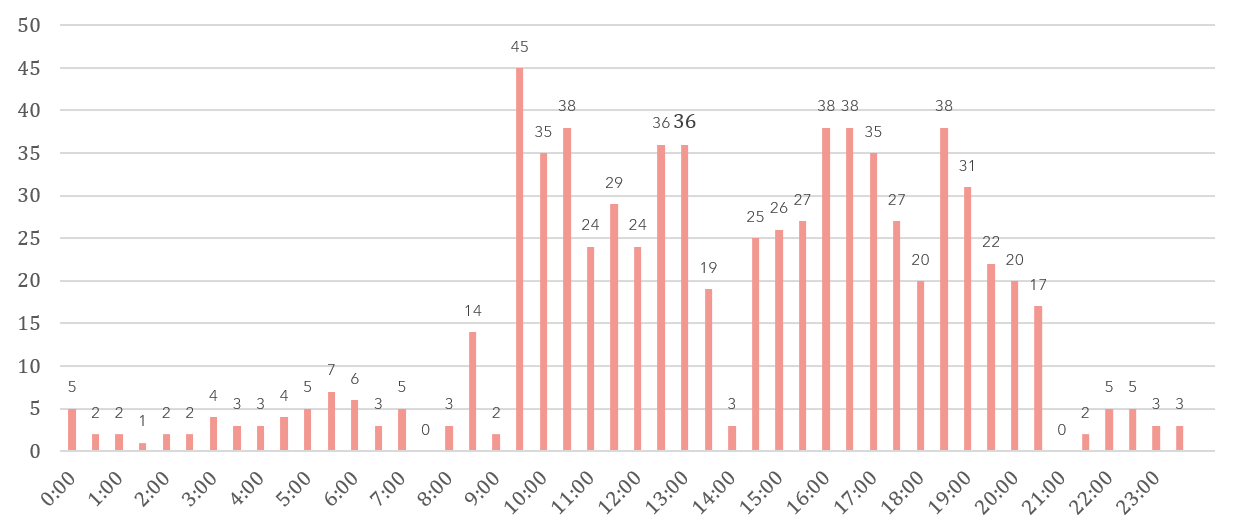
Figure 1: Observations of Direct Nursing Activities in the Inpatient Room for 24 Hours
Source: Data Processing Results, 2022
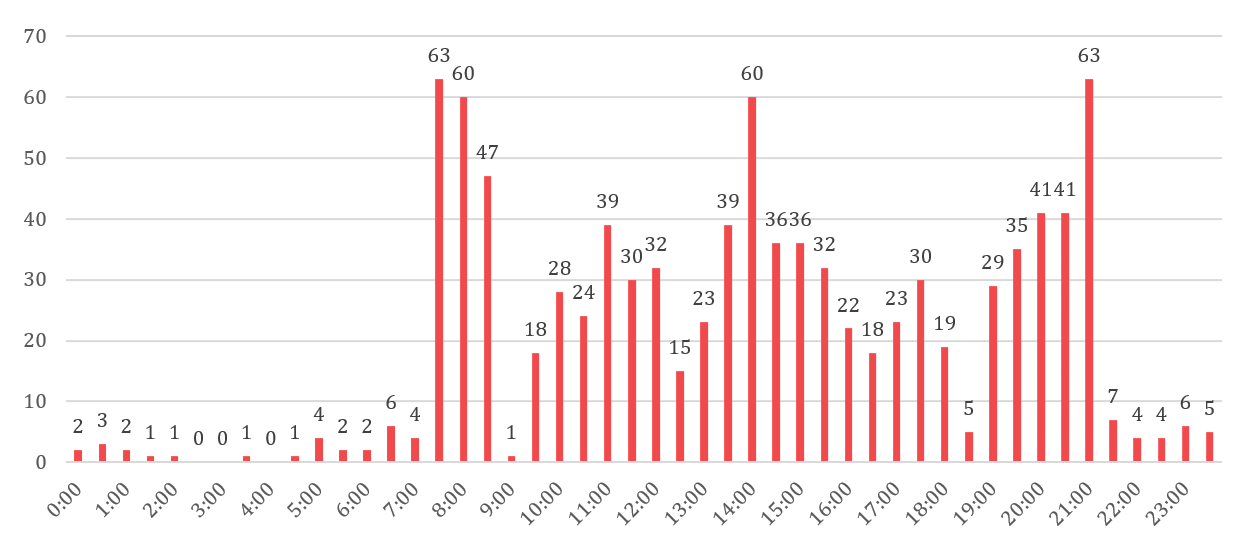
Figure 2: Observations of Indirect Nursing Activities in the Inpatient Room for 24 Hours
Source: Data Processing Results, 2022
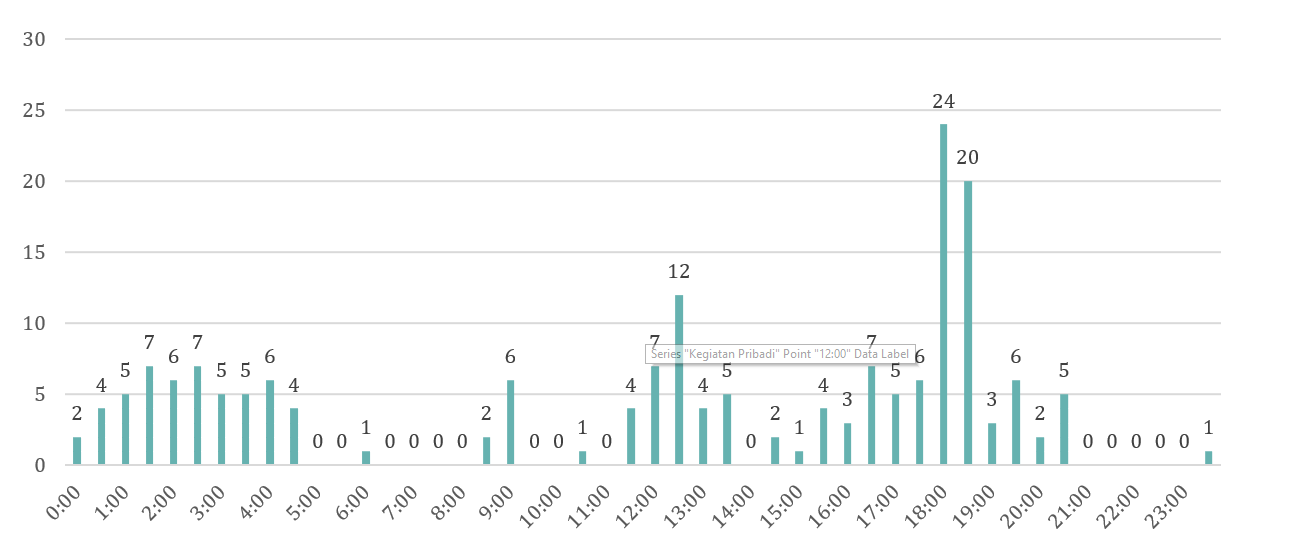
Figure 3. Observations of Nurses' Activities in the Inpatient Room for 24 Hours
Source: Data Processing Results, 2022
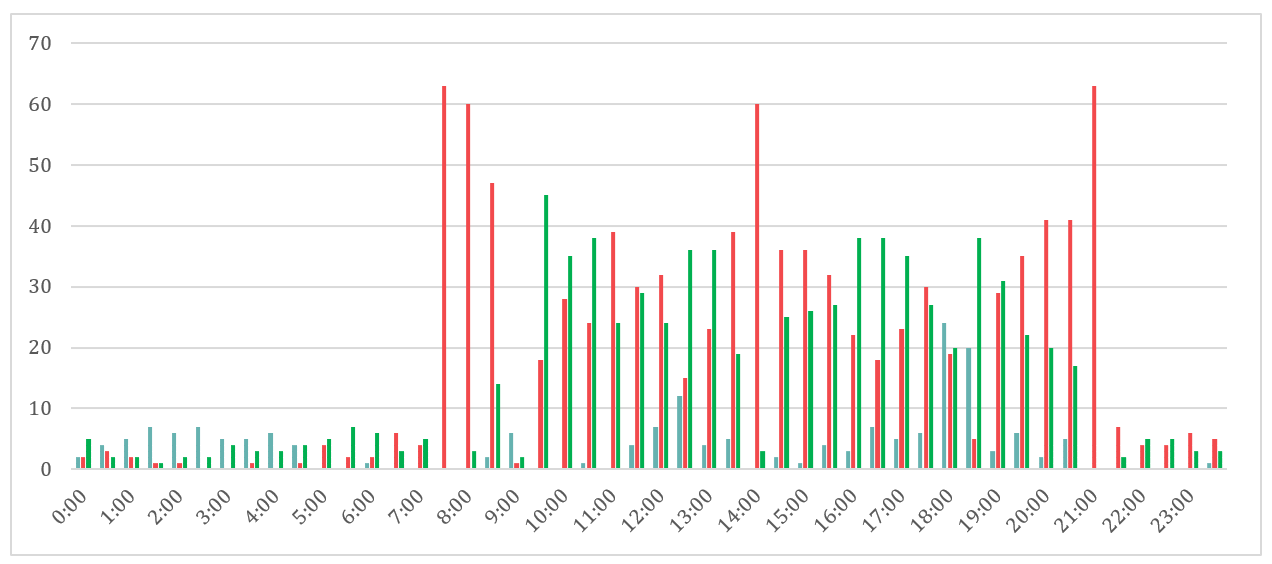
Figure 4: Observations of All Nursing Activities in the Inpatient Room for 24 Hours
Source: Data Processing Results, 2022 Blue Bar = Personal Activities; Red Bar = Indirect Maintenance Activities; Green Bar = Direct Care Activities
The results of Robot's research stated that in the morning shift, nurses did a lot of activities for patients, while in the afternoon and evening shifts, the activities carried out were a continuation of the morning shift activities. However, Ria's [19] research results show that nurses do many direct nursing activities on the night shift. It is because, at night, the nurse's shift is longer than other shifts, which is 10 hours, so nurses can have more time to meet patient needs. Patients often look for nurses on the night shift, especially if the infusion runs out. In addition, nurses on the night shift must also take the examination sample. Even so, indirect activities on the night shift are still higher than direct activities [15].
Nurse's Direct Activities
Nurses' direct activities are carried out to patients through direct interaction, social interaction, and counseling actions. Direct activities include communication, health education, providing food and drink, assisting patients' hygiene, administering medication, and performing routine procedures. Direct care activities are care provided by nurses that are specifically related to physical, psychological, and spiritual needs. The following is shown in Figures 1 and 2 below, in the form of an observations diagram of direct nursing activities in the inpatient room at the Dharmais Cancer Hospital Jakarta for 24 hours.
Nurse's Personal Activities
Nurses carry out personal activities that do not involve their work in supporting the patient's healing process (non-nursing). These activities include resting, eating and drinking, praying, and going to the toilet. The following is shown in Figures 5 and 6 below, in the form of an observations diagram of the personal activities of nurses (non-nursing) in the inpatient room at Dharmais Cancer Hospital Jakarta for 24 hours.
Overall Activities (Combined)
The following is shown in Figure 7 below, in the form of an observations diagram of all nursing and non-nursing activities in the inpatient room at Dharmais Cancer Hospital Jakarta for 24 hours.
The study found that direct nursing activities (green bars) were almost equal to indirect nursing activities (red bars). However, there are differences in the portion of direct, indirect, and non-nursing nursing activities (blue bars) from each observation time:
In the morning, around 9.30-13.00, it is dominated by direct nursing activities. Back in the afternoon, around 16.00-19.00, it was dominated by direct nursing activities. From the early hours until the morning, from 00.00-07.00, direct nursing activities are much more dominant than indirect nursing activities
Indirect dominant activities occur from 07.30-08.30, 13.00-15.30, and 19.30-23.30
Non-nursing activities such as personal use are mostly carried out in the early morning when the patient sleeps, which is 00.00-04.30. And in the afternoon at 11.30-13.30, the highest during rest time is between 18.00-19.00
The balance of direct and indirect activities is possible because the classification of inpatient ward patients is independent—the more independent the patient, the less need for nurse intervention.
One of the developments to make the health care sector more efficient is using technology that continues to evolve. It must pay attention to electronic health systems for documenting patient information and data. "Information technology systems provide easy access to information, the possibility of data sharing, simultaneous access to information by multiple professionals, legibility, and integration with other health information systems. They also reduce the time spent documenting patient care activities” [21]. It also reduces the time spent documenting patient care activities [22-23]. The advantages and benefits of electronic systems have been widely studied by various authors [21-23]. However, several studies report insufficient evidence regarding the time spent on nursing documentation in electronic systems and their impact on patient care [24-25,15].
Every employee has a different motivation that they want to achieve. The number of direct and indirect activities is certainly not the only thing that must consider in assessing a person's performance, especially in achieving patient satisfaction. Even a lot of interaction with the patient, if done without purpose and effective communication, will only worsen the relationship. However, the good quality of the nurse-patient relationship will be able to create overall satisfaction if the nurse has a good leadership spirit. Altman and Rosa [26] stated that nurses need to flashback to the figure of Florence Nightingale, who raised the nursing profession by making innovation breakthroughs. Florence spends her time dedicated and making good changes. Altman and Rosa [26] said that good service is not about the number of indirect or non-productive activities nurses carry out but what contribution they can make in their profession.
CONCLUSION
This study only measures the use of working time carried out by nursing staff in providing nursing care services to patients. The results of this study show that direct nursing activities take an almost equal portion to indirect nursing activities. The classification of inpatient room patients at Dharmais Cancer Hospital Jakarta is independent.
Nursing managers should pay more attention to the immediate nursing needs of each patient. Nurses should be able to analyze the level of patient dependence so that nurses can analyze the level of patient development, provide nursing actions according to the patient's condition, and ultimately improve the healing process and client satisfaction. For administrative activities, transportation and patient couriers should be carried out by non-nursing staff, so that existing nursing staff can provide more nursing services to patients to improve the quality of nursing care. Hospitals also need to implement an integrated health information system to facilitate nurses in documentation activities so that services become more efficient. In addition, nurses must be given leadership training and effective communication to improve staff capabilities in human relationships.
Subsequent research can analyze factors related to the duration of time and quality of direct nursing care actions, such as compliance with standard operational procedures, nurses' skills in carrying out nursing actions, and nurses' level of understanding of a problem.
Acknowledgments
The authors would like to thank the Research Grants from “The Ministry of Education, Culture, Research, and Technology” (Simlitabmas Grant 2022) and "the Institute for Research and Community Service LPPM-UKI."
REFERENCE
Depkes-RI. Standar tenaga keperawatan di rumah sakit. Direktorat Pelayanan Keperawatan Direktorat Jendral Pelayanan Medik, Departemen Kesehatan Jakarta, 2022.
Adawiyah, R. et al. "Evaluasi pelayanan yang diberikan oleh perawat pada ruang kelas III rumah sakit umum daerah Dokter Soedarso." Jurnal Tesis PMIS-UNTAN IAN, 2012.
Susanto, A. Analisis terhadap aktivitas keperawatan kaitannya dengan beban kerja perawat di ruang rawat inap kelas III Rumah Sakit Karya Medika Bekasi. Tesis Fakultas Kesehatan Masyarakat, Universitas Indonesia, 2002.
Kemenkes-RI. Peraturan Mentri Kesehatan RI nomor 43 tahun 2016 tentang standar pelayanan minimal bidang kesehatan. Depkes RI, 2016.
Verschueren, M. A review on leadership of head nurses and patient safety and quality of care. Emerald Pub., 2016.
Kakushi, L.E. and Y.D.M. Evora. "Direct and indirect nursing care time in an intensive care unit." Revista Latino-Americana de Enfermagem, vol. 22, no. 1, 2014, pp. 150–157.
Sugiyono. Statistika untuk penelitian. IKAPI, 2013.
Huber, L. Leadership and nursing management care. Saunders Elsevier, 2006.
Myny, D. et al. "Non-direct patient care factors influencing nursing workload: A review of the literature." Journal of Advanced Nursing, vol. 67, no. 10, 2011, pp. 2109–2129.
Hernández-Cruz, R. et al. "Factors influencing the missed nursing care in patients from a private hospital." Revista Latino-Americana de Enfermagem, vol. 25, 2017.
Gholizadeh, M. et al. "How do nurses spend their time in the hospital?" Journal of Clinical Research & Governance, vol. 3, no. 1, 2014, pp. 27–33.
Novia, D. and W.D. Putri. "Ini tantangan rumah sakit era JKN." Republika Online, August 2017, http://nasional. republika.co.id/berita/nasional/umum/17/08/29/ovgd1f359-ini-tantangan-rumah-sakit-era-jkn.
Indrarta, W. "Editorial tantangan rumah sakit." Berkala Ilmiah Kedokteran Duta Wacana, vol. 2, no. 1, 2016, pp. 2–4.
Wijayanti, E.T. "Gambaran kegiatan langsung dan tidak langsung perawat di rumah sakit pemerintah kota Kediri." JuKe, vol. 3, no. 1, 2019, pp. 63–69.
Al-Kandari, F. and D. Thomas. "Perceived adverse patient outcomes correlated to nurses’ workload in medical and surgical wards of selected hospitals in Kuwait." Journal of Clinical Nursing, vol. 18, no. 4, 2009, pp. 581–590.
Mueller, M. et al. "Patients' functioning as a predictor of nursing workload in acute hospital units providing rehabilitation care: A multi-center cohort study." BMC Health Services Research, vol. 10, no. 1, 2010, p. 295.
Hendrich, A. "A 36-hospital time and motion study: How do medical-surgical nurses spend their time?" The Permanente Journal, vol. 12, no. 3, 2008, pp. 25–34.
Ria, S. Analisis kebutuhan tenaga perawat di ruang rawat inap anak RSIA Hermina Podomoro. Universitas Indonesia, 2012.
Heydari, F. and R. Tabari. "Identify direct and indirect nursing care time in a medical and surgical ward." Journal Holist Nursing Midwifery, vol. 25, no. 1, 2015, pp. 1–9.
Galvão, M.C.B. and I.L.M. Ricarte. "Informatização." Prontuário do paciente, edited by M.C.B. Galvão and I.L.M. Ricarte, Guanabara Koogan, 2012, pp. 31–54.
Hannah, K.J. et al. "Aplicações na prática clínica baseada em unidade de cuidado." Introdução à informática em enfermagem, ArtMed, 2009, pp. 123–136.
Peres, H.H.C. and M.M.J. Leite. "Sistemas de informação em saúde." Gerenciamento em enfermagem, edited by P. Kurggant, Guanabara Koogan, 2010, pp. 63–70.
Madorum, R.L. and N.T. Shaw. "The impact of a critical care information system (CCIS) on time spent charting and direct patient care by staff in the ICU: A review of the literature." International Journal of Medical Informatics, vol. 78, no. 7, 2010, pp. 435–445.
Ammenwerth, E. et al. "Effect of a nursing information system in the quality of information processing in nursing: An evaluation study using the HIS-monitor instrument." International Journal of Medical Informatics, vol. 80, no. 1, 2011, pp. 25–38.
Altman, M. and W. Rosa. "Redefining ‘time’ to meet nursing’s evolving demands." Nursing Management, vol. 46, no. 5, 2015, pp. 46–50.
Ammenwerth, E. et al. "Effect of a nursing information system in the quality of information processing in nursing: An evaluation study using the HIS-monitor instrument." International Journal of Medical Informatics, vol. 80, no. 1, 2011, pp. 25–38.
Altman, M. and W. Rosa. "Redefining ‘time’ to meet nursing’s evolving demands." Nursing Management, vol. 46, no. 5, 2015, pp. 46–50.
License
Creative Commons Attribution-NonCommercial-NoDerivatives 4.0 International License
All papers should be submitted electronically. All submitted manuscripts must be original work that is not under submission at another journal or under consideration for publication in another form, such as a monograph or chapter of a book. Authors of submitted papers are obligated not to submit their paper for publication elsewhere until an editorial decision is rendered on their submission. Further, authors of accepted papers are prohibited from publishing the results in other publications that appear before the paper is published in the Journal unless they receive approval for doing so from the Editor-In-Chief.
Himalayan Journal of Community Medicine and Public Health open access articles are licensed under a Creative Commons Attribution-Share A like 4.0 International License. This license lets the audience to give appropriate credit, provide a link to the license, and indicate if changes were made and if they remix, transform, or build upon the material, they must distribute contributions under the same license as the original.
Recommended Articles
Research Article
Childhood Overweight and Obesity: Prevalence, Lifestyle Patterns and Associated Comorbidities among School Children Aged 6–12 Years in Kolkata
F.A. Faisal,
Amit Sachdeva
Published: 25/09/2026
Download PDF
Cite
x
APA
Faisal, F. & Sachdeva, A. (2026). Childhood Overweight and Obesity: Prevalence, Lifestyle Patterns and Associated Comorbidities among School Children Aged 6–12 Years in Kolkata. Himalayan Journal of Community Medicine and Public Health, 7(2), 1-6.
MLA
Faisal, F.A. and Amit Sachdeva. "Childhood Overweight and Obesity: Prevalence, Lifestyle Patterns and Associated Comorbidities among School Children Aged 6–12 Years in Kolkata." Himalayan Journal of Community Medicine and Public Health 7.2 (2026): 1-6.
Chicago
Faisal, F.A. and Amit Sachdeva. "Childhood Overweight and Obesity: Prevalence, Lifestyle Patterns and Associated Comorbidities among School Children Aged 6–12 Years in Kolkata." Himalayan Journal of Community Medicine and Public Health 7, no. 2 (2026): 1-6.
Harvard
Faisal, F. and Sachdeva, A. (2026) 'Childhood Overweight and Obesity: Prevalence, Lifestyle Patterns and Associated Comorbidities among School Children Aged 6–12 Years in Kolkata' Himalayan Journal of Community Medicine and Public Health 7(2), pp. 1-6.
Vancouver
Faisal F, Sachdeva A. Childhood Overweight and Obesity: Prevalence, Lifestyle Patterns and Associated Comorbidities among School Children Aged 6–12 Years in Kolkata. Himalayan Journal of Community Medicine and Public Health. 2026 Jul;7(2):1-6.
Download PDF
Research Article
Assessing the Role of Community Engagement in Promoting Malaria Prevention and Treatment Practices in Mashonaland Central Province, Zimbabwe: A Case of Centenary District
Dzamara Tafadzwa,
Mapuranga Danemore
Published: 13/08/2026
Download PDF
Cite
x
APA
Tafadzwa, D. & Danemore, M. (2026). Assessing the Role of Community Engagement in Promoting Malaria Prevention and Treatment Practices in Mashonaland Central Province, Zimbabwe: A Case of Centenary District. Himalayan Journal of Community Medicine and Public Health, 7(1), 1-6.
MLA
Tafadzwa, Dzamara and Mapuranga Danemore. "Assessing the Role of Community Engagement in Promoting Malaria Prevention and Treatment Practices in Mashonaland Central Province, Zimbabwe: A Case of Centenary District." Himalayan Journal of Community Medicine and Public Health 7.1 (2026): 1-6.
Chicago
Tafadzwa, Dzamara and Mapuranga Danemore. "Assessing the Role of Community Engagement in Promoting Malaria Prevention and Treatment Practices in Mashonaland Central Province, Zimbabwe: A Case of Centenary District." Himalayan Journal of Community Medicine and Public Health 7, no. 1 (2026): 1-6.
Harvard
Tafadzwa, D. and Danemore, M. (2026) 'Assessing the Role of Community Engagement in Promoting Malaria Prevention and Treatment Practices in Mashonaland Central Province, Zimbabwe: A Case of Centenary District' Himalayan Journal of Community Medicine and Public Health 7(1), pp. 1-6.
Vancouver
Tafadzwa D, Danemore M. Assessing the Role of Community Engagement in Promoting Malaria Prevention and Treatment Practices in Mashonaland Central Province, Zimbabwe: A Case of Centenary District. Himalayan Journal of Community Medicine and Public Health. 2026 Jan;7(1):1-6.
Download PDF
Research Article
Curves of Concern: Public Awareness of Scoliosis and Its Impact on Childhood Development in Hamirpur
Vishal Dhatwalia,
Swati Chandel
Published: 10/12/2024
Download PDF
Cite
x
APA
Dhatwalia, V. & Chandel, S. (2024). Curves of Concern: Public Awareness of Scoliosis and Its Impact on Childhood Development in Hamirpur. Himalayan Journal of Community Medicine and Public Health, 5(2), 1-6.
MLA
Dhatwalia, Vishal and Swati Chandel. "Curves of Concern: Public Awareness of Scoliosis and Its Impact on Childhood Development in Hamirpur." Himalayan Journal of Community Medicine and Public Health 5.2 (2024): 1-6.
Chicago
Dhatwalia, Vishal and Swati Chandel. "Curves of Concern: Public Awareness of Scoliosis and Its Impact on Childhood Development in Hamirpur." Himalayan Journal of Community Medicine and Public Health 5, no. 2 (2024): 1-6.
Harvard
Dhatwalia, V. and Chandel, S. (2024) 'Curves of Concern: Public Awareness of Scoliosis and Its Impact on Childhood Development in Hamirpur' Himalayan Journal of Community Medicine and Public Health 5(2), pp. 1-6.
Vancouver
Dhatwalia V, Chandel S. Curves of Concern: Public Awareness of Scoliosis and Its Impact on Childhood Development in Hamirpur. Himalayan Journal of Community Medicine and Public Health. 2024 Jul;5(2):1-6.
Download PDF
Research Article
Etiological Analysis of the Incident of Computer Vision Syndrome (Cvs) in Students of the Faculty of Medical Muhammadiyah University Semarang
Anang Kriswantoro,
...
Swasty
Published: 20/01/2026
Download PDF
Cite
x
APA
Kriswantoro, A., Martiningsih, W. R., Novitasari, A. & None, S. (2026). Etiological Analysis of the Incident of Computer Vision Syndrome (Cvs) in Students of the Faculty of Medical Muhammadiyah University Semarang. Himalayan Journal of Community Medicine and Public Health, 7(1), 1-5.
MLA
Kriswantoro, Anang, et al. "Etiological Analysis of the Incident of Computer Vision Syndrome (Cvs) in Students of the Faculty of Medical Muhammadiyah University Semarang." Himalayan Journal of Community Medicine and Public Health 7.1 (2026): 1-5.
Chicago
Kriswantoro, Anang, Wahju R. Martiningsih, Andra Novitasari and Swasty . "Etiological Analysis of the Incident of Computer Vision Syndrome (Cvs) in Students of the Faculty of Medical Muhammadiyah University Semarang." Himalayan Journal of Community Medicine and Public Health 7, no. 1 (2026): 1-5.
Harvard
Kriswantoro, A., Martiningsih, W. R., Novitasari, A. and None, S. (2026) 'Etiological Analysis of the Incident of Computer Vision Syndrome (Cvs) in Students of the Faculty of Medical Muhammadiyah University Semarang' Himalayan Journal of Community Medicine and Public Health 7(1), pp. 1-5.
Vancouver
Kriswantoro A, Martiningsih WR, Novitasari A, Swasty S. Etiological Analysis of the Incident of Computer Vision Syndrome (Cvs) in Students of the Faculty of Medical Muhammadiyah University Semarang. Himalayan Journal of Community Medicine and Public Health. 2026 Jan;7(1):1-5.
Fitranto, A. G., Kennedy, P. S. J. & Eni, S. P. (2022). Operational Overview of Nursing Activities Case Study in the Inpatient Unit of Dharmais Cancer Hospital Jakarta. Himalayan Journal of Community Medicine and Public Health, 3(2), 1-6.
MLA
Fitranto, Aswin G., Posma S. J. Kennedy and Sri P. Eni. "Operational Overview of Nursing Activities Case Study in the Inpatient Unit of Dharmais Cancer Hospital Jakarta." Himalayan Journal of Community Medicine and Public Health 3.2 (2022): 1-6.
Chicago
Fitranto, Aswin G., Posma S. J. Kennedy and Sri P. Eni. "Operational Overview of Nursing Activities Case Study in the Inpatient Unit of Dharmais Cancer Hospital Jakarta." Himalayan Journal of Community Medicine and Public Health 3, no. 2 (2022): 1-6.
Harvard
Fitranto, A. G., Kennedy, P. S. J. and Eni, S. P. (2022) 'Operational Overview of Nursing Activities Case Study in the Inpatient Unit of Dharmais Cancer Hospital Jakarta' Himalayan Journal of Community Medicine and Public Health 3(2), pp. 1-6.
Vancouver
Fitranto AG, Kennedy PSJ, Eni SP. Operational Overview of Nursing Activities Case Study in the Inpatient Unit of Dharmais Cancer Hospital Jakarta. Himalayan Journal of Community Medicine and Public Health. 2022 Jul;3(2):1-6.


 Download PDF
 Download XML