The branch of library science concerned with the application of mathematical and statistical analysis to bibliography; the statistical analysis of books, articles, or other publications is known bibliometrics. This bibliometric study of SAIJM was based on published online with open access research articles from 1999 t0 2006. This study is to survey the research output of South African journal of information management. This study reveals/scrutinizes the articles published during the period of 1999 to 2006. The parameters have been set to describe this study Country’s wise contributions, author’s collaborations, lengths of papers and individual author’s contribution during the chosen period of the selected online journal. The total number of research papers have been retrieved from the journal database was 252. The most number of articles were published in 2003 with 41. The study findings further revealed 158 authors were individual. Further found that 79 of the articles were page length of 1-5 and most productive region was South Africa with 242. The total number of references was found 2999. The degree of authors collaboration was value of C= 0.37.
Keywords
Information
Management
South Africa
Research
Bibliometric
INTRODUCTION
Bibliometric is well known aspect of library and information science which applies to find out the measurement of bibliographic information and data. Basically bibliometric studies apply to find out number of aspects of a specific subjects, journals and text. Moreover, bibliometric use as a technique where a research scholars taken it into an account to quantify the progression growth of information and research on specific field. Bibliometric studies help to find out the depth analysis of scientific growth of literature which makes sure the impact of publication on specific filed [1].Patra [2] defines the number of terms connected with biblimetric e.g. scientometrics, and infometrics. Bibiliometric provides a space to measures scholarly communication or written papers/works. This is also used to describe the quantification of scientific productivity. As said by Jacob [3] bibliometric provides set of parameters to count the published works and scholarly communication. Additionally, using bibliometric techniques to measures authors productivity, region productivity, institutions productivity as well as frequency of publications. There are number of laws which is used to measure different parameters in bibliometic study e.g. Lotka’s law, bradfords law and Zippf’s Law respectively. Published since June 1999, SAJIM is available to scientists and practitioners worldwide. The management will maintain the standard required for international indexing services. Articles are citable. Previous issues are archived for permanency and are searchable onsite.
Objectives of the study
To find out the Growth of Literatures
To determine the degree of collaboration
To explore the authors productivity
To search out the region contributions
To discover the papers length
To identify the References
MATERIALS AND METHODS
Research Methodology
The bibliometric study is carried out to search the search articles from the online journal of South African journal of information management. The research articles have been retrieved from the website of online journal of South African journal of information management from chosen period of time 1999 to 2006. The research articles were download from website where were available on PDF formats. All the retrieved articles have been analyzed through MS office, MS Excel and electronic calculator. The parameters set to analyzed as the objectives of the study has drawn.
Related Works
Sa and Barik [4] studied contribution of Indian authors to library philosophy and practice during 2001 to 2015. They retrieved 200 research papers on SCOPUS database which was contributed by Indian authors. Kumar [5] investigated a bibliometric study of library Herald journal. He finds 114 research articles during the period of the study. Patil [6] examined the Scopus databases using bibliometric techniques. He finds 11861 global publications on feminism during the 17 years. He retrieved 15 countries were contributed their publications in the said area. USA was the top of list sharing publication with (47.45%) as far as the schools were concern London school of economics and political science has contributed highest relative citations impact. Siddique, Rehman, Khan & Altaf [7].Carried a study on library and information science research in Pakistan: a bibliometric analysis 1957 to 2018. They conducted a major study on web of science, Scopus, LISA and LISTA. Tian [8] carried a research topic and future trends on maker education in china based on bibliometric. They searched publications from CNKT database. They analyzed data and revealed the findings about coauthors, institutions of maker education. Kumar [5] studied library herald journal: a bibliometric study. The found 114 published articles from the selected period of 2011 to 2014. He finds that majority of the articles was written by single authors which were 65(57.01%) and multiple authors was 49 in total. The findings of the study revealed that the most productive country is India with 89.47%.Tanveer, Bhaumik, Hassan and Haq [9] carried a research on Scopus based bibliometric evaluation of Saudi medical journal from 1979 to 2019. They retrieved 7700 documents with average of 187% per annum and used quantitative method to complete this paper. They found King Saud University was most creative institutions with 1006 documents. As far region was concern that turkey was the top with 806 documents. Bambo and Pouris [10] studied bibiometric analysis of bio economy research in South Africa. They chose web of science to retrieve that data from South African authors. They chose some of countries and compare with South Africa like India, Brazil, Russia and china from 2008 to 2018.Sabri, Barkhan and Hamzehei [11] carried a survey a biblilometric study and visualization of library philosophy and practice during 1998 to 2018. They used Scopus data to retrieved and analyzed data. They have selected 20 years of data that was published in LPP. They found Rubina Bhatti with 19 papers, Nigeria with 549 and University of Ibadan with 78 papers from 1998 to 2018.Journal of informatics by [12], annuals of library and information studies [13], journal of school health [14], the journal of information literacy [15], Library herald [16], journal of documentation [17], journal of religion and health [18], journal of knowledge management practice [19], Malaysian journal of library and information science [20], Pakistan journal of medical science [21], Libri Journal [22], DESIDOC journal of library and information technology [23].
Data analysis and interpretation
Year Wise Literature Growth
Table 1 shows the total growth of 252 research papers during the period of 1999 to 2006. The analyzed data shows highest number of research papers 41(16.26%) were published in 2003 and followed by 40(15.87%) and least number of research papers were 18(7.14%) in 2006. The overall data has been displayed in table 1.
Author’s Collaboration
Table 2 shows the authors contribution of articles from the chosen period of study at SAJIM. The analyzed data has confirmed that a maximum number of articles have been written by individual authors which were 158(62.69%), followed by two authors 53(21.03%). as far as three authors they were 15(5.95%). preceding 6(2.38%) were four authors and 20(7.93%) more than four authors respectively.
Single Author’s v/s Multiple Authors
The Table 3 has indicated that the single authors were in 158 and multiple authors were 94 in total as the analyzed data has confirmed.
Papers Length
When we look at length of the papers, we see that the majority of the papers’ length is 1-5 i.e.79 articles, preceded 75 articles, of which length is 5 -10. The 70 papers length is 11-15 in the said study. 24 articles length were found 16-20. 4 of the papers were longer with length of 21 to more .A complete year wise frequency distribution is below shown in the table.
Year wise References
Table 5 shows the year wise used cited references of published articles from 1999 to 2006 in the South African Journal of information management. The analyzed data shows that 2999 references were retrieved. The retrieved data shows the most number of references were found 586 in 2005 and least was retrieved in 2006 with 239. Followed by 555 in 2003 and 528 cited references were originate in 2004. The 276 references were retrieved in 1999 and 2000 respectively. The 273 references were found in 2001 and followed by 266 were retrieved in 2002.
Degree of Collaboration
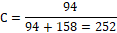
The Table 6 shows the degree of collaboration among authors of SAJIM. It was found that single authors in dominancy with 158 and multiple authors were 94 in numbers. The present
C= is degree of collaboration
Nm = number of multiple authors
Ns= number of single authors
Table 1: Year Wise Literature Growth
S.NO.
Years
Publication
Percentage %
1
1999
26
10.31
2
2000
38
15.07
3
2001
29
11.5
4
2002
22
8.73
5
2003
41
16.26
6
2004
38
15.07
7
2005
40
15.87
8
2006
18
7.14
Total
252
100
Table 2: Pattern of Author Collaboration in Published Articles (1999–2006)
Authors
1999
2000
2001
2002
2003
2004
2005
2006
Total
%
One
17
29
18
17
28
21
19
9
158
62.69
Two
2
3
6
3
9
11
15
4
53
21.03
Three
1
2
1
0
1
4
3
3
15
5.95
Four
2
2
1
0
1
0
0
0
6
2.38
More then
4
2
3
2
2
2
3
2
20
7.93
Total
26
38
29
22
41
38
40
18
252
100
Table 3: Comparison between Single Authors and Multiple Authors (1999–2006)
Single Authors
Multiple Author’s
Total no of papers/articles
Years
No of articles
Percentage %
No. of Articles
Percentage %
1999
17
10.57
9
9.57
26
2000
29
18.35
9
9.57
38
2001
18
11.39
11
11.70
29
2002
17
10.75
5
5.31
22
2003
28
17.72
13
13.82
41
2004
21
13.29
17
18.05
38
2005
19
12.02
21
22.34
40
2006
09
5.69
09
9.57
18
Total
158
100
94
100
252
Table 4: Distribution of Research Papers by Length (1999–2006)
Papers Length
1999
2000
2001
2002
2003
2004
2005
2006
Total
%
1-5
7
14
11
7
7
8
16
9
79
31.34
5- 10
10
14
8
9
15
12
5
2
75
29.76
11- 15
7
5
7
4
15
12
15
5
70
27.77
16-20
2
5
2
1
4
4
4
2
24
9.52
21- more
0
0
1
1
0
2
0
0
4
1.58
Total
26
38
29
22
41
38
40
18
252
100
Table 5: Year-wise Distribution of Cited References in SAJIM (1999–2006)
Years
References
Percentage %
1999
276
9.2
2000
276
9.2
2001
273
9.1
2002
266
8.66
2003
555
18.5
2004
528
17.6
2005
586
19.53
2006
239
7.96
Total
2999
100
Table 6: Degree of Author Collaboration in SAJIM Based on Year-wise Analysis
S.NO
years
Single Authored(Ns)
Multiple Authored(Nm)
Total NM + Ns
Degree of Collaboration
1
1999
17
9
26
0.34
2
2000
29
9
38
0.23
3
2001
18
11
29
0.37
4
2002
17
5
22
0.22
5
2003
28
13
41
0.31
6
2004
21
17
38
0.44
7
2005
19
21
40
0.52
8
2006
09
9
18
0.5
Total
158
158
94
252
0.37
Table 7: Country-wise Contribution of Articles to SAJIM (1999–2006)
Country
Publication
Ranking
Percentage %
South Africa
242
1
96.03
U.K
3
2
1.19
Portugal
2
3
0.79
USA
1
4
0.39
Australia
1
4
0.39
Netherland
1
4
0.39
Zimbabwe
1
4
0.39
Tanzania
1
4
0.39
total
252
100
research study the value of C= 0.3. So, it was obvious that the degree of collaboration in the South African journal of information management is 0.37 which acknowledged the single author dominancy over multiple authors.
Country wise contribution
Table 7 show the geographic distribution of published articles from 1999 to 2006 in the South African Journal of information management. The retrieved data shows the most number of papers or articles has been contributed by South Africa with 242 ranked first. Followed by UK with 3 ranked 2nd and Portugal has contributed ranked 3rd. It looks the South African contributions very high as per analyzed data of SAJIM.
Major findings of the study
The data has confirmed that majority of the research papers has been published in SAJIM 41 in 2003 and least number of articles was in 2006 with 18 in numbers
The analyzed data shows that majority of the papers have been written by individual authors with 158 and 6 research papers were written by 4 authors
Data has confirmed that single author’s dominancy over multiple authors
The analyzed data has been confirmed that majority of the research paper length 1-5 with 79 and 4 articles were range of 21 to more pages
The data has confirmed that most number of references was found in 2005 with 586 and least were retrieved in 2006 with 239
As far as the most productive nation South Africa was the most productive nation with 242 research articles
Conclusion
SAJIM is publishing since June 1999; SAJIM is available to scientists and practitioners worldwide. The management will maintain the standard required for international indexing services. Articles are citable. Previous issues are retrieved from the database of SAJIM. The SAJIM is very famous online journal among library professionals in South Africa and rest of the world as well. But from last decade or so it has gained enormous success. The prime and most significance is that articles published in this journal full length articles. SAIJM is an open access journal and users can get not just abstract can also retrieve full text articles without any impediment. The number of articles has published during the eight years; from 1999 to 2006 are 252. The findings show that most of the research papers have been written by individual with 158 and 79 papers page length of 1-5. Furthermore, most productive country was South Africa with 242 papers. There are 2999 references were retrieved from the published articles in SAJIM.
REFERENCE
Ibrahim, M. and Jan, S. U. “Bibliometric analysis of the Journal of Pakistan Medical Association form 2009 to 2013.” J Pak Med Assoc, vol. 65, no. 9, 2015, pp. 978-983.
Patra, S. K. et al. “Bibliometric study of literature on bibliometrics.” DESIDOC Journal of Library & Information Technology, vol. 26, no. 1, 2006.
Jacobs, D. “Analysis of scientific research in selected institutions in South Africa: A bibliometric study.” South African Journal of Libraries and Information Science, vol. 72, no. 1, pp. 72-77,2006
Sa, M. K. and Barik, N. “Contributions of Indian authors to Library Philosophy and Practice (e-Journal) during 2001 to 2015.”
Kumar, M. “Library Herald journal: A bibliometric study.” Journal of Education & Social Policy, vol. 1, no. 2, pp. 123-134, 2014.
Patil, S. B. “A bibliometric study of global feminism research based on Scopus database.” 2020.
Siddique, N. et al. “Library and information science research in Pakistan: A bibliometric analysis, 1957–2018.” Journal of Librarianship and Information Science, 2020, doi: 10.1177/0961000620921930.
Tian, Q. et al. “Research topics and future trends on maker education in China based on bibliometric analysis.” International Journal of Information and Education Technology, vol. 10, no. 2, 2020.
Tanveer, M. et al. “A Scopus based bibliometric evaluation of Saudi Medical Journal from 1979 to 2019.” Journal of Talent Development and Excellence, vol. 12, no. 2s, pp. 2328-2337, 2020.
Bambo, T. L. and Pouris, A. “Bibliometric analysis of bioeconomy research in South Africa.” Scientometrics, vol. 125, no. 1, pp. 29-51, 2020
Saberi, M. K. et al. “A bibliometric study and visualization of Library Philosophy and Practice during 1998–2018.” Library Philosophy and Practice, 2019.
Das, P. K. “Journal of Informetrics: A bibliometric profile.” DESIDOC Journal of Library & Information Technology, vol. 33, no. 3, pp. 243-252, 2013.
Verma, N. et al. “Analysis of contributions in Annals of Library and Information Studies.”
Zhang, C. C. et al. “A bibliometric study of the Journal of School Health: 1965–2014.” Chinese Nursing Research, vol. 4, no. 2, pp. 75-83, 2017.
Panda, I. et al. “The Journal of Information Literacy: A bibliometric study.” International Journal Scientific and Research Publication, vol. 3, no. 3, pp. 1-7, 2013
Thanuskodi, S. “Library Herald Journal: A bibliometric study.” Researchers World, vol. 2, no. 4, 2011, p. 68.
Roy, S. B. and Basak, M. “Journal of Documentation: A bibliometric study.” Library Philosophy and Practice, p. 1, 2013.
Şenel, E. and Demir, E. “Bibliometric and scientometric analysis of the articles published in the Journal of Religion and Health between 1975 and 2016.” Journal of Religion and Health, vol. 57, no. 4, pp. 1473-1482, 2018.
Barik, N. and Jena, P. “Bibliometric analysis of Journal of Knowledge Management Practice, 2008–2012.” Library Philosophy and Practice (e-journal), 2013, article no. 1020.
Tiew, W. S. et al. “Malaysian Journal of Library and Information Science 1996–2000: A bibliometric study.” Malaysian Journal of Library & Information Science, vol. 6, no. 1, pp. 43-56, 2001.
Baladi, Z. H. and Umedani, L. V. “Pakistan Journal of Medical Sciences: A bibliometric assessment 2001–2010.” Pakistan Journal of Medical Sciences, vol. 33, no. 3, p. 714,2017
Singh, J. K. “A bibliometric analysis of LIBRI Journal (2001–2009).” Proceedings Papers, vol. 19, pp. 8-59, 2002.
Kumar, M. and Moorthy, A. L. “Bibliometric analysis of DESIDOC Journal of Library and Information Technology during 2001–2010.
License
Creative Commons Attribution-NonCommercial-NoDerivatives 4.0 International License
All papers should be submitted electronically. All submitted manuscripts must be original work that is not under submission at another journal or under consideration for publication in another form, such as a monograph or chapter of a book. Authors of submitted papers are obligated not to submit their paper for publication elsewhere until an editorial decision is rendered on their submission. Further, authors of accepted papers are prohibited from publishing the results in other publications that appear before the paper is published in the Journal unless they receive approval for doing so from the Editor-In-Chief.
Himalayan Journal of Humanities and Cultural Studies open access articles are licensed under a Creative Commons Attribution-Share A like 4.0 International License. This license lets the audience to give appropriate credit, provide a link to the license, and indicate if changes were made and if they remix, transform, or build upon the material, they must distribute contributions under the same license as the original.
Recommended Articles
Research Article
Development of a Blended Learning Model to Increase Learning Effectiveness at University
Hairul ,
...
Darman Manda
Published: 10/12/2022
Download PDF
Cite
x
APA
None, H., Tolla, I. & Manda, D. (2022). Development of a Blended Learning Model to Increase Learning Effectiveness at University. Himalayan Journal of Humanities and Cultural Studies, 3(2), None-None.
MLA
None, Hairul, Ismail Tolla and Darman Manda. "Development of a Blended Learning Model to Increase Learning Effectiveness at University." Himalayan Journal of Humanities and Cultural Studies 3.2 (2022): None-None.
Chicago
None, Hairul, Ismail Tolla and Darman Manda. "Development of a Blended Learning Model to Increase Learning Effectiveness at University." Himalayan Journal of Humanities and Cultural Studies 3, no. 2 (2022): None-None.
Harvard
None, H., Tolla, I. and Manda, D. (2022) 'Development of a Blended Learning Model to Increase Learning Effectiveness at University' Himalayan Journal of Humanities and Cultural Studies 3(2), pp. None-None.
Vancouver
Hairul H, Tolla I, Manda D. Development of a Blended Learning Model to Increase Learning Effectiveness at University. Himalayan Journal of Humanities and Cultural Studies. 2022 Jul;3(2):None-None.
Download PDF
Research Article
A Study on the Current Situation and Innovation Strategies of Museum Cultural and Creative Product Development: taking Shanghai Museum as an Example
Shuyou Shi
Published: 30/04/2024
Download PDF
Cite
x
APA
Shi, S. (2024). A Study on the Current Situation and Innovation Strategies of Museum Cultural and Creative Product Development: taking Shanghai Museum as an Example. Himalayan Journal of Humanities and Cultural Studies, 5(1), 1-8.
MLA
Shi, Shuyou. "A Study on the Current Situation and Innovation Strategies of Museum Cultural and Creative Product Development: taking Shanghai Museum as an Example." Himalayan Journal of Humanities and Cultural Studies 5.1 (2024): 1-8.
Chicago
Shi, Shuyou. "A Study on the Current Situation and Innovation Strategies of Museum Cultural and Creative Product Development: taking Shanghai Museum as an Example." Himalayan Journal of Humanities and Cultural Studies 5, no. 1 (2024): 1-8.
Harvard
Shi, S. (2024) 'A Study on the Current Situation and Innovation Strategies of Museum Cultural and Creative Product Development: taking Shanghai Museum as an Example' Himalayan Journal of Humanities and Cultural Studies 5(1), pp. 1-8.
Vancouver
Shi S. A Study on the Current Situation and Innovation Strategies of Museum Cultural and Creative Product Development: taking Shanghai Museum as an Example. Himalayan Journal of Humanities and Cultural Studies. 2024 Jan;5(1):1-8.
Download PDF
Research Article
The Role of SEAMEO CECCEP in Creating Accessibility to Early Childhood Education in Indonesia
Ratna Wulan,
Elisabeth A. Satya Dewi
Published: 01/08/2024
Download PDF
Cite
x
APA
Wulan, R. & Dewi, E. A. S. (2024). The Role of SEAMEO CECCEP in Creating Accessibility to Early Childhood Education in Indonesia. Himalayan Journal of Humanities and Cultural Studies, 5(2), 1-8.
MLA
Wulan, Ratna and Elisabeth A. S. Dewi. "The Role of SEAMEO CECCEP in Creating Accessibility to Early Childhood Education in Indonesia." Himalayan Journal of Humanities and Cultural Studies 5.2 (2024): 1-8.
Chicago
Wulan, Ratna and Elisabeth A. S. Dewi. "The Role of SEAMEO CECCEP in Creating Accessibility to Early Childhood Education in Indonesia." Himalayan Journal of Humanities and Cultural Studies 5, no. 2 (2024): 1-8.
Harvard
Wulan, R. and Dewi, E. A. S. (2024) 'The Role of SEAMEO CECCEP in Creating Accessibility to Early Childhood Education in Indonesia' Himalayan Journal of Humanities and Cultural Studies 5(2), pp. 1-8.
Vancouver
Wulan R, Dewi EAS. The Role of SEAMEO CECCEP in Creating Accessibility to Early Childhood Education in Indonesia. Himalayan Journal of Humanities and Cultural Studies. 2024 Apr;5(2):1-8.
Download PDF
Research Article
Stamp Game Intervention to Overcome Numeracy Difficulties in Slow Learner Children
Florentina Nining Hastiani,
Adnani Budi Utami
Published: 30/05/2024
Download PDF
Cite
x
APA
Hastiani, F. N. & Utami, A. B. (2024). Stamp Game Intervention to Overcome Numeracy Difficulties in Slow Learner Children. Himalayan Journal of Humanities and Cultural Studies, 5(1), 1-4.
MLA
Hastiani, Florentina N. and Adnani B. Utami. "Stamp Game Intervention to Overcome Numeracy Difficulties in Slow Learner Children." Himalayan Journal of Humanities and Cultural Studies 5.1 (2024): 1-4.
Chicago
Hastiani, Florentina N. and Adnani B. Utami. "Stamp Game Intervention to Overcome Numeracy Difficulties in Slow Learner Children." Himalayan Journal of Humanities and Cultural Studies 5, no. 1 (2024): 1-4.
Harvard
Hastiani, F. N. and Utami, A. B. (2024) 'Stamp Game Intervention to Overcome Numeracy Difficulties in Slow Learner Children' Himalayan Journal of Humanities and Cultural Studies 5(1), pp. 1-4.
Vancouver
Hastiani FN, Utami AB. Stamp Game Intervention to Overcome Numeracy Difficulties in Slow Learner Children. Himalayan Journal of Humanities and Cultural Studies. 2024 Jan;5(1):1-4.
Anwar, M. & Zhewei, T. (2021). South African Journal of Information Management: A Bibliometric Study from 1999 to 2006. Himalayan Journal of Humanities and Cultural Studies, 2(1), 1-4.
MLA
Anwar, Muhammad and Tang Zhewei. "South African Journal of Information Management: A Bibliometric Study from 1999 to 2006." Himalayan Journal of Humanities and Cultural Studies 2.1 (2021): 1-4.
Chicago
Anwar, Muhammad and Tang Zhewei. "South African Journal of Information Management: A Bibliometric Study from 1999 to 2006." Himalayan Journal of Humanities and Cultural Studies 2, no. 1 (2021): 1-4.
Harvard
Anwar, M. and Zhewei, T. (2021) 'South African Journal of Information Management: A Bibliometric Study from 1999 to 2006' Himalayan Journal of Humanities and Cultural Studies 2(1), pp. 1-4.
Vancouver
Anwar M, Zhewei T. South African Journal of Information Management: A Bibliometric Study from 1999 to 2006. Himalayan Journal of Humanities and Cultural Studies. 2021 Jan;2(1):1-4.


 Download PDF
 Download XML