Contents
Download PDF
pdf Download XML
1334 Views
426 Downloads
Share this article
Research Article | Volume 5 Issue 1 (Jan-June, 2024) | Pages 1 - 5
Exploring Tourism Attractions of the Nyobeng International Dayak Bidayuh Festival 2023
 ,
 ,
1
Faculty of Economics and Business, Tanjungpura University, Pontianak, Indonesia
Under a Creative Commons license
Open Access
Received
Oct. 25, 2023
Revised
Nov. 30, 2023
Accepted
Dec. 18, 2023
Published
Jan. 6, 2024
Abstract

Nyobeng is a worldwide festival event that is still celebrated by Dayak Bidayuh ethnic community in Sebujit Village, Siding District, Bengkayang Regency, West Kalimantan. Many tourists travel to attend this annual event. The purpose of this study is to investigate the impact of tourism attractions on the intention to revisit, with the visit decision serving as a mediating variable. This study was explanatory research carried out in Sebujit Village, Siding District, Bengkayang Regency, West Kalimantan from June 2023 to July 2023. The study was begun by identifying phenomena and issues, examining object-related issues, establishing a conceptual framework, conducting interviews and distributing questionnaires. A quantitative method was employed and the data was obtained through a purposive sampling method. A total of 205 respondents completed the questionnaire and the data was analyzed using Structural Equation Modeling - Partial Least Square (SEM - PLS). The findings indicate that there is a relationship between the tourism attractions and the intention to revisit (ρ = 0.000), with the visit decision serving as a mediating variable This study concludes that the tourism attractions have a relationship with the intention to revisit.

Keywords
INTRODUCTION

Indonesia has a variety of interesting must-visit tourist destinations. As part of the 7.7 million target tourists visiting Indonesia, the Minister of Culture and Tourism, Jero Wacik, introduced and promoted the new tagline “Wonderful Indonesia” in 2011. This tagline is still used to attract tourists to visit Indonesia. According to data from Statistics Indonesia, in relation to the recovery of Indonesian domestic tourism in 2023, Indonesian domestic tourism is gradually recovering with the number of foreign tourist travels increasing in 2022 by 19.82% compared to 2021 and growing 1.76% compared to 2019. The biggest number of foreign tourists travels of 80.23 million was in March 2022. In 2022, Indonesia’s domestic tourist sector will steadily develop in line with the declining trend of COVID-19 transmission. This is reflected in a 19.82% increase in the number of wisatawan nusantara (wisnus, domestic tourists) over the previous year. In 2022, there were 734.86 million foreign tourist travels reported. Compared to conditions prior to the COVID-19 pandemic, the domestic tourist travels increased 1.76%.


Bengkayang Regency offers natural and cultural attractions that potentially attract the tourists. One of them is Nyobeng – a cultural tourism attraction, which is a Dayak Bidayuh ethnical ceremony that has become an international festival event in Sebujit Village, Siding District, Bengkayang Regency. The Nyobeng is derived from the words ‘nibakng’ or ‘sibang’, which refer to a huge and special religious activity. The Nyobeng consists of a process of bathing or cleansing the human skull as a result of ngayau – a headhunting tradition by Dayak Bidayuh tribe’s predecessors. The Nibakng is a celebration of thanksgiving to Tipaiakng (a Bidayuh name for God) for the blessings of the rice harvest, formerly viewed as a ritual to respect the human heads as a result of the ngayau headhunting [1].


According to an interview with Mr. Gunawan, Chair of the Siding District DAD and Chair of the Sebujit Indigenous Community (2023), the Nyobeng International Festival Event was attended by approximately 500 foreign tourists from China, Korea, Australia, Russia and Malaysia in 2018 prior to the COVID-19 pandemic. During the COVID-19 pandemic, the Nyobeng was still performed internally in the Bidayuh community, with no tourists presented. It was finally hosted internationally in June 2023, following the COVID-19 pandemic. Many domestic and foreign tourists, including Malaysian tourists who were related to the Dayak Bidayuh community, came to Siding District to participate in Nyobeng ethnical traditions. The decrease in the number of international tourists attending the Nyobeng International Dayak Bidayuh Festival 2023 demonstrates that the Nyobeng is no longer a popular tourist destination.


The Bengkayang Regency Regional Government is attempting to attract both foreign and domestic tourists to the Nyobeng International Dayak Bidayuh Festival 2023. Efforts are being made to share information, such as through social media. However, visitors are still not as numerous as they were prior to the COVID-19 pandemic. This is a challenge that necessitates reviving the tourism sector so that the Nyobeng International Dayak Bidayuh Festival can echo on the world stage. One of the supports for attracting the tourists is through the function of technology in promoting tourist destinations [2]. Other factors include demographic characteristics, tourist experience while participating in the activities, superior infrastructure, attractions, inexpensive facilities, simple access and tourist satisfaction [3-5]. According to Giao et al. [6], there are eight factors influencing the intention to revisit, including the infrastructure, accessibility, local food, atmosphere, environment, price value, comfort and entertainment. For these reasons, this study aims to analyze the tourism attractions in relation to the intention to revisit, with visit decision servings as a mediating variable.


Literature Review 

Tourism Attractions: Several researches have been conducted to explain factors influencing the tourism attractions. Studies by Shen et al. [7], Taecharungroj and Mathayomchan [8] and Bi et al. [2] revealed that technology has a role in marketing tourism locations and tourist attractions. According to Kesgin et al. [3], the demographic characteristics can be a factor that promotes a destination. Haneef et al. [4] stated that the best strategy to attract tourists is to use past event experiences and expectations, superior infrastructure, attractions, hotels, inexpensive facilities, simple accessibility and highly developed air and road transportation systems. Suhartanto et al. [5] discovered that the perceived value of tourist satisfaction, as well as tourist motivation, are important elements in determining tourist loyalty to creative attractions.


Visit Decision 

Over the last few decades, there has been significant progress in researches on tourist travel decisions. Many models and methodologies have also been employed, including gravity and economic models, psychological motivation or values, information processing theory, attitude theory and conjoint analysis. According to the decision-making behavior, the travel decisions follow a contingent decision process that is temporal, dynamic, sequential and multistage. A theory by Gollwitzer of action phases and thought patterns, being inspired by conditions is part of the deliberation phase before decision making, whereas being inspired marks the transition to the decision-making implementation stage. When a person is inspired, their thinking shifts from contemplations to a strong commitment to a certain objective. A study by Khozaei et al. found that there is a cognitive process that underpins the travel decision making and raises understanding of how people build expectations of new and unfamiliar areas. According to other studies, the image of a destination and a country and the presence of unfavorable conditions are the most influential elements in the tourists’ decision to visit a country [9]. 


Intention to revisiting

Many studies in the tourism industry investigate the intention to revisit to a tourist destination. According to the findings of a study conducted by Giao et al. [6] in Ba Ria – Vung Tau Province, Vietnam, there are eight elements influencing the intention to revisit, such as infrastructure, accessibility, local food, atmosphere, environment, price value, comfort and entertainment. Abbasi et al. [10] explained that perceived behavioral control, perceived value, destination image and satisfaction all had a substantial impact on the visitors’ intention to revisit. Khairi and Darmawan [11] mentioned that attractiveness, location and facilities all played a role in generating the intention to revisit partially or simultaneously. A study by Fianto [12] in marine tourism in East Java revealed that the service quality had a substantial effect on the intention to revisit. Further, Brida et al. [13] found that the socio-demographic factors had a positive influence on the intention to revisit. Chang et al. [14] added that on-site tourism experience was the component that most determined the intention to revisit to creative tourism attractions. A major finding by Peter Ayeni and Peter Ball [15] included the importance of e-word-of-mouth communication in terms of perceived utility and attitudes toward the use of social networks as a potential instrument for tourism destination selection.


Tourism Attractions and Intention to Revisit

While the tourism image has a considerable and positive influence on experience satisfaction, experience value has a direct influence on the experience satisfaction [16]. A study by Rahmawati et al. [17] explained that the service quality is a factor that influences the intention to revisit. Similarly, Pratiwi et al. [18] argued that the attractiveness had a favorable and significant impact on the intention to revisit, visitor satisfaction and the provision of suitable facilities. According to Atmari and Putri [19], the tourism experience had a direct influence on the destination image, satisfaction and intention to revisit. In addition, Arni et al. [20] found that having world-class tourism infrastructure, natural wonders, multicultural identity and unique culture and legacy were characteristics supporting the tourists’ interest in tourist destinations.

MATERIALS AND METHODS

This study employed explanatory research and investigated three variables, consisting of tourism attractions, visit decision and intention to revisit. Each variable consisted of two, four and five indicators, respectively. The Cronbach’s alpha was used to assess the reliability. The results show that the tourism attractions, visit decision and intention to revisit have a Cronbach’s alpha value of 0.712, 0.919 and 0.545, respectively.


Sample and Data Collection

This study was done in a quantitative manner by distributing questionnaires to visitors of the Nyobeng International Dayak Bidayuh Festival 2023. There was a total of 205 respondents participated. The questionnaire was measured using a 5-point Likert Scale, with 1 being ‘strongly disagree’ and 5 being ‘strongly agree’. A purposive sampling method was employed. The data was collected from June to July 2023.


Data Analysis

This study evaluated research constructs using construct reliability, discriminant validity, convergent validity and individual item reliability tests using a Structured Equation Modeling – Partial Least Square (SEM - PLS) [21-23]. The goodness of fit evaluation was done based on the R-squared indicator. The outer model was measured to examine the validity and reliability. The composite reliability (CR) value for all variables must be higher than 0.7 [24], while the reliability value for individual variables must be higher than 0.7 [25]. In this study, the loading factor value must also be higher than 0.7. An instrument would be considered a valid construct if its loading factor value is higher than 0.7. Average Variance Extracted (AVE) value was also used to evaluate the convergent validity, with a minimum value of 0.5 [26]. The SEM analysis was a structural model analysis that determined whether or not the study hypotheses could be supported empirically. Each coefficient had a t-value as a result of the SEM analysis. A hypothesis could be supported empirically if the estimated t-value was ≥ t-table (1.96) with a significance level of α = 0.05 [22].

RESULTS

This study finds that most of the respondents were 20 – 30 years old (43.90%), female (52.68%), from Bengkayang District (61.95%) and knew the Nyobeng International Dayak Bidayuh Festival 2023 from the internet (52.68%) and participated in the Nyobeng once (53.66%).


Measurement and Structural model

Before measuring the structural model, the model was measured. The following Table 2 shows that the tourism


Table 1. Respondent Profile

CategoryItem%
Age20 – 30 years old9043.90
31 – 40 years old7536.58
41 – 50 years old3014.63
> 51 years old104.87
GenderMale9747.32
Female10852.68
Area of originBengkayang District12761.95
Outside Bengkayang District7838.05
Information resourceMagazine7436.11
Internet10852.68
Television104.87
Others136.34
Participation in the NyobengOnce11053.66
Twice5325.85
> 2 times4220.49


Table 2. Results of Measurement Model

Variable

Item

SLF

Cronbach’s Alpha

AVE

CR

R-squared

Tourism Attractions

TA1

0.849

0.545

0.687

0.814


TA2

0.808


Visit Decision

DC1

0.726

0.712

0.536

0.822

0.244

DC2

0.748


DC3

0.738


DC4

0.716


Intention to Revisit

RI1

0.839

0.919

0.756

0.939

0.437

RI2

0.823


RI3

0.908


RI4

0.941


R15

0.831


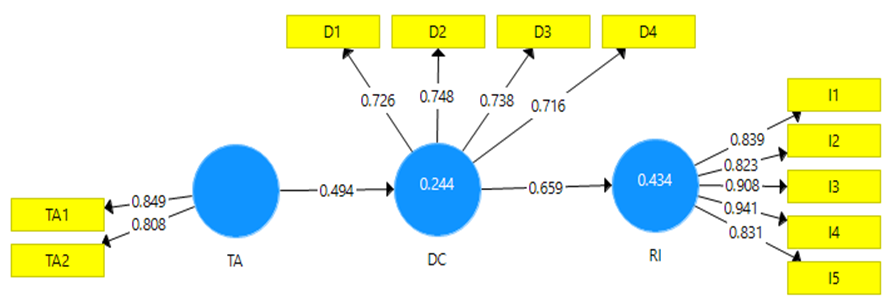
Figure 1: Results of Full Model Structural Test


Table 3: Results of Structural Model

Hypothesis

Path

Original Sample

Mean

St. Dev.

T-Statistic

P-Value

Conclusion

H1

TA DC

0.494

0.500

0.050

9.836

0.000

Supported

H2

DC RI

0.659

0.664

0.043

15.467

0.000

Supported

Note: TA = Tourism Attractions; DC = Visit Decision; RI = Intention to Revisit


Table 4: Result Of Mediating Role Hypothesis Testing

Hypothesis

Path

Original Sample

Mean

St. Dev.

T-Statistic

P-Value

Conclusion

H3

TA DC RI

0.325

0.333

0.041

7.875

0.000

Supported


attractions, visit decision and intention to revisit have a CR value of 0.814, 0.822 and 0.839; AVE value of 0.687, 0.536 and 0.756; and a Cronbach’s alpha value of 0.545, 0.712 and 0.919, respectively. Meanwhile, the R-squared values of visit decision and intention to revisit are 0.244 and 0.437. The reliability and validity of the model constructed have met the criteria. Figure 1 depicts the structural model investigated using a path analysis to discover the relationship between the dependent variable and each latent variable in the research. The higher the coefficient value, the higher the latent variable’s influence on the dependent variable.


Result of Hypothesis Testing

The results of hypothesis testing in the following Table 3 confirm that there is a positive and significant relationship between the tourism attractions and visit decision (p = 0.000). This shows that the first hypothesis can be supported empirically. Similarly, this study confirms that there is also a positive and significant relationship between the visit decision and intention to revisit (p = 0.000), which supports the second hypothesis empirically.


Result Of Mediating Role Hypothesis Testing

The following Table 4 shows that the third hypothesis can be supported empirically, indicating that there is a positive and significant relationship between the tourism attractions and intention to revisit, with the visit decision as the mediating variable (T-Statistic: 7.875; St. Dev: 0.041; ρ: 0.000). This finding can also be seen in Figure 1.

DISCUSSION

This study proves that the tourism attractions have a positive and significant relationship with the intention to revisit, with the visit decision as the mediating variable. This finding supports the one by Shen et al. [7], Taecharungroj and Mathayomchan [8] and Bi et al. [2] who explained that the technology played a role in marketing the tourism locations and tourism attractions. According to Kesgin et al. [3], the demographic characteristics could be a factor that promoted a destination. The tourists would decide whether or not to visit the tourist attractions once they had expressed an interest. The process of making tourist decisions was a cognitive process. This was in accordance with a study by Khozaei et al. who discovered a cognitive process that underpined the travel decisions and improved the knowledge of how people built their expectations of new and unfamiliar areas. The image of a destination and a country and the presence of unfavorable conditions were the most influential factors in the tourists’ decision to visit a country [9].


The tourists would revisit the same location if they had a positive experience at the tourism attractions. This was consistent with the findings of a study conducted by Giao et al. [6] in Ba Ria – Vung Tau Province, Vietnam which found that there were eight factors influencing the intention to revisit, including infrastructure, accessibility, local food, atmosphere, environment, price value, comfort and entertainment. Abbasi et al., [10] added that the perceived behavioral control, perceived value, destination image and satisfaction all had a substantial impact on the visitors’ intentions to revisit. Other research indicated that, while the tourism image had a considerable and favorable influence on the experience satisfaction, the experience value had a direct negative effect on the experience satisfaction [16]. Rahmawati et al. [17] explained that the service quality was a factor influencing the intention to revisit.

CONCLUSION

The purpose of this study is to investigate the impact of tourism attractions on the intention to revisit, using the visit decision as the mediating variable. This study finds that there is a positive and significant relationship between the tourism attractions and intention to revisit, with the visit decision serving as the mediating variable (p-value = 0.000). On the other hand, this study has a limitation, where the samples used were only domestic tourists. Therefore, future researches are suggested to analyze qualitatively with in-depth interviews for other factors contributing to the decrease in the tourist attractiveness for the Nyobeng International Dayak Bidayuh Festival 2023.


Acknowledgment

The researchers would like to thank the Doctoral Study Program in Management, especially the Department of Human Resource Management, for encouraging the researchers to b write this article.

REFERENCE
  1. Prayoga, A. and Kardy. "Nilai-nilai penghormatan terhadap leluhur dalam." Jurnal Ilmu Budaya, vol. 11, 2023, pp. 120–28.

  2. Bi, J.W. et al. "Daily tourism volume forecasting for tourist attractions." Annals of Tourism Research, vol. 83, 2020, article 102923. https:// doi.org/ 10.1016/ j.annals. 2020. 102923.

  3. Kesgin, M. et al. "Residents as destination advocates: The role of attraction familiarity on destination image." Journal of Hospitality and Tourism Insights, vol. 2, no. 1, 2019, pp. 55–74. https://doi.org/10.1108/JHTI-06-2018-0034.

  4. Haneef, S.K. et al. "Attractions of Dubai and Expo 2020: An exploratory study." Worldwide Hospitality and Tourism Themes, vol. 11, no. 3, 2019, pp. 266–78. https://doi.org/10.1108/WHATT-01-2019-0007.

  5. Suhartanto, D. et al. "Tourist loyalty in creative tourism: The role of experience quality, value, satisfaction and motivation." Current Issues in Tourism, vol. 23, no. 7, 2020, pp. 867–79. https://doi.org/10.1080/13683500.2019.1568400.

  6. Giao, H.N.K. et al. "How destination image factors affect domestic tourists revisit intention to Ba Ria-Vung Tau province, Vietnam." Journal of Asian Finance, Economics and Business, vol. 7, no. 6, 2020, pp. 209–20. https://doi.org/10.13106/JAFEB.2020.VOL7.NO6.209.

  7. Shen, S. et al. "The influence of smart technologies on customer journey in tourist attractions within the smart tourism management framework." Sustainability (Switzerland), vol. 12, no. 10, 2020. https://doi.org/10.3390/su12104157.

  8. Taecharungroj, V. and B. Mathayomchan. "Analysing TripAdvisor reviews of tourist attractions in Phuket, Thailand." Tourism Management, vol. 75, 2019, pp. 550–68. https://doi.org/10.1016/j.tourman.2019.06.020.

  9. Stepchenkova, S. et al. "Influential factors for intention to visit an adversarial nation: Increasing robustness and validity of findings." International Journal of Tourism Cities, vol. 5, no. 3, 2019, pp. 491–510. https:// doi.org/ 10.1108/ IJTC-11-2018-0085.

  10. Abbasi, G.A. et al. "Understanding the intention to revisit a destination by expanding the theory of planned behaviour (TPB)." Spanish Journal of Marketing - ESIC, vol. 25, no. 2, 2021, pp. 282–311. https://doi.org/10.1108/ SJME-12-2019-0109.

  11. Khairi, M. and Darmawan D. "The relationship between destination attractiveness, location, tourism facilities and revisit intentions." Journal of Marketing and Business Research, vol. 1, no. 1, 2021, pp. 39–50.

  12. Fianto, Achmad Yanu Alif. "Satisfaction as intervening for the antecedents of intention to revisit: Marine tourism context in East Java." Relasi: Jurnal Ekonomi, vol. 16, no. 1, 2020, pp. 179–207. https:// doi. org/ 10.31967/ relasi. v16i1.347.

  13. Brida, J.G. et al. "Factors influencing the intention to revisit a cultural attraction: The case study of the Museum of Modern and Contemporary Art in Rovereto." Journal of Cultural Heritage, vol. 13, no. 2, 2012, pp. 167–74. https://doi.org/10.1016/j.culher.2011.08.003.

  14. Chang, L.L. et al. "Creative tourism: A preliminary examination of creative tourists’ motivation, experience, perceived value and revisit intention." International Journal of Culture, Tourism and Hospitality Research, vol. 8, no. 4, 2014, pp. 401–19. https://doi.org/10.1108/IJCTHR-04-2014-0032.

  15. Ayeni, T.B. and Peter Ball. "기사 (Article) 와 안내문 (Information)." The Electronic Library, vol. 34, no. 1, 2010, pp. 1–5.

  16. Rini, E.S. et al. "Intention to revisit tourist destinations in Indonesia." Innovative Marketing, vol. 17, no. 4, 2021, pp. 37–48. https://doi.org/10.21511/im.17(4).2021.04.

  17. Rahmawati, N. et al. "The influence of attraction, location and service quality on revisit intention to Sesaot rural tourism." JMM Unram - Master of Management Journal, vol. 10, no. 1A, 2021, pp. 43–57. https:// doi.org/ 10.29303/ jmm.v10i1a.636.

  18. Pratiwi, Y.M. et al. "The effect of attraction and facilities on the revisit intention by tourists satisfaction as an intervening variable." International Journal of Social Science & Economic Research, vol. 3, no. 6, 2018, pp. 2313–26. www.ijsser.org.

  19. Atmari, N.V. and V.W. Putri. "The effect of tourism experience on revisit intention through destination image and satisfaction." Management Analysis Journal, vol. 10, no. 1, 2021, pp. 85–94. https:// doi. org/ 10.15294/ maj. v10i1.45503.

  20. Arni, A.G. et al. "Visitor’s experiential attributes and revisit intention to Islamic tourism attractions in Malaysia." Journal of Tourism, Hospitality & Culinary Arts, vol. 11, no. 1, 2019, pp. 1–13. https:// ir.uitm. edu. my/id /eprint/ 29256/1/AJ_ARNI%20ABDUL%20GANI%20JTHCA%20B%2019.pdf.

  21. Hair, J.F. Jr. et al. Multivariate Data Analysis. 7th ed., Pearson Prentice-Hall, 2010.

  22. Hair, J.F. et al. "When to use and how to report the results of PLS-SEM." European Business Review, vol. 31, no. 1, 2019, pp. 2–24. https://doi.org/10.1108/EBR-11-2018-0203.

  23. Hair, J.F. Jr., Howard M.C., Nitzl C. "Assessing measurement model quality in PLS-SEM using confirmatory composite analysis." Journal of Business Research, vol. 109, 2020, pp. 101–10. https://doi.org/10.1016/j.jbusres.2019.11.069.

  24. Straub, D.W. "Validating instruments in MIS research." MIS Quarterly, vol. 13, no. 2, 1989, pp. 147–69.

  25. Churchill, G.A. Jr. "A paradigm for developing better measures of marketing constructs." Journal of Marketing Research, vol. 16, no. 1, 1979, pp. 64–73.

  26. Fornell, C. and D.F. Larcker. "Evaluating structural equation models with unobserved variables and measurement error." Journal of Marketing Research, vol. 18, no. 1, 1981, pp. 39–50.

License
CC BY-NC-ND
Creative Commons Attribution-NonCommercial-NoDerivatives 4.0 International License
Exploring Tourism Attractions of the Nyobeng International Dayak Bidayuh Festival 2023 © 2026 by Maria Christiana Iman Kalis, M. Irfani Hendri, Noverita Irmayati licensed under CC BY-NC-ND 4.0
All papers should be submitted electronically. All submitted manuscripts must be original work that is not under submission at another journal or under consideration for publication in another form, such as a monograph or chapter of a book. Authors of submitted papers are obligated not to submit their paper for publication elsewhere until an editorial decision is rendered on their submission. Further, authors of accepted papers are prohibited from publishing the results in other publications that appear before the paper is published in the Journal unless they receive approval for doing so from the Editor-In-Chief.
Himalayan Journal of Humanities and Cultural Studies open access articles are licensed under a Creative Commons Attribution-Share A like 4.0 International License. This license lets the audience to give appropriate credit, provide a link to the license, and indicate if changes were made and if they remix, transform, or build upon the material, they must distribute contributions under the same license as the original.
Recommended Articles
Research Article
Development of a Blended Learning Model to Increase Learning Effectiveness at University
...
Published: 10/12/2022
Download PDF
Research Article
A Study on the Current Situation and Innovation Strategies of Museum Cultural and Creative Product Development: taking Shanghai Museum as an Example
Published: 30/04/2024
Download PDF
Research Article
The Role of SEAMEO CECCEP in Creating Accessibility to Early Childhood Education in Indonesia
Published: 01/08/2024
Download PDF
Research Article
Stamp Game Intervention to Overcome Numeracy Difficulties in Slow Learner Children
Published: 30/05/2024
Download PDF
Flowbite Logo
Najmal Complex,
Opposite Farwaniya,
Kuwait.
Email: support@himjournals.com

Useful Links
Order Hard Copy
Privacy policy
Terms and Conditions
Refund Policy
Others
About Us
Team Members
Contact Us
Online Payments
Join as Editor
Join as Reviewer
Subscribe to our Newsletter
Follow us
MOST SEARCHED KEYWORDS
scientific journal
 | 
business journal
 | 
medical journals
 | 
Scientific Journals
 | 
Academic Publisher
 | 
Peer-reviewed Journals
 | 
Open Access Journals
 | 
Impact Factor
 | 
Indexing Services
 | 
Journal Citation Reports
 | 
Publication Process
 | 
Impact factor of journals
 | 
Finding reputable journals for publication
 | 
Submitting a manuscript for publication
 | 
Copyright and licensing of published papers
 | 
Writing an abstract for a research paper
 | 
Manuscript formatting guidelines
 | 
Promoting published research
 | 
Publication in high-impact journals
Copyright © Himalayan Journals . All Rights Reserved.