This study was conducted at Padma Hotel Bandung, a five-star hotel located in Bandung. The main objective of this research was to analyze the effects of a comprehensive training program on the overall performance of the hotel's employees, with a brief focus on the impact it had on the quality of service provided to guests. The training program spanned a duration of four months and covered essential topics that were meticulously planned and organized by the Corporate Training Manager. In order to evaluate the efficacy of the training program, the researcher employs a refined qualitative approach, utilizing insightful interviews, analyzing using descriptive methods and gathering supplementary data from reputable sources such as journals and internal company records. Moreover, researchers utilized the Kirkpatrick Model, a theoretical framework widely recognized for evaluating the outcomes of training programs. Findings of the research, the author discovered that the primary objective of the training program is to enhance the performance of employees. This training program has effectively contributed to the enhancement of employees' skills, knowledge and overall performance. As a result, the improved performance has resulted in heightened satisfaction among all the guests who choose to stay at the hotel. Ultimately, the author concludes that while the training program implemented by the hotel has shown promising results, there are certain aspects that require evaluation and improvement in order to further enhance the quality of the core training program in the future.
Keywords
Evaluation
Effectiveness of Training
Service Excellency
Employee Performance
Hotel Industry
INTRODUCTION
The hospitality industry is often regarded as one of the most captivating and stimulating fields to pursue a career in. Within this industry, the concept of hospitality revolves around the act of serving and treating guests in a gracious and welcoming manner. While some individuals possess a natural talent for this type of work, others must acquire the necessary skills and knowledge to excel in people-oriented businesses. It is crucial to recognize that the hotel industry encompasses more than just managerial expertise; every staff member must undergo training to effectively contribute to the achievement of company objectives. Regardless of their specific role, each individual working in a hotel plays a vital part in shaping the overall guest experience. Moreover, the significance of employee training and development cannot be emphasized enough in the realm of hospitality, as every job within this industry ultimately aims to ensure guest satisfaction. According to BPS [1], foreign tourists visited in 2009 reached 6.32 million people. This figure continues to increase to 8.8 million people at the end of 2013. In 2018, the number of foreign tourists visiting Indonesia reached 15.81 million people or grew about 2.5 times compared to 2009. As per the Byrne [2], the enchanting realm of tourism, particularly the esteemed domain of hotels, has undeniably played a pivotal role in fostering economic prosperity and fostering an elevated Gross Domestic Product for our nation, which in the year 2019, preliminary data revealed that the accommodation industry in Indonesia contributed a substantial gross domestic product (GDP) of 99,7 trillion Indonesian rupiah. Moreover, it has gracefully bestowed gainful employment upon a staggering 3.5 million individuals within our beloved country.
Training encompasses various methods of teaching and learning that enable employees to acquire and apply the necessary knowledge, skills, abilities and attitudes required by their company. The ultimate goal of employee training is to equip individuals with the specific skills needed to effectively carry out their job tasks [3]. The emphasis on improving the skills and capabilities of the existing workforce has led practitioners and researchers to delve into various aspects such as financial performance, employee productivity and motivation [4,5]. This focus has been driven by factors like technological advancements, globalization, the need for improved customer service, economic changes, the need to drive change processes and the challenge of attracting and retaining talented individuals [6].
Unfortunately, numerous organizations globally, particularly in various hotels in Bandung, fail to prioritize the implementation of effective training programs due to a lack of willingness to invest in these initiatives and a refusal to recognize the potential benefits for their future aspirations and goals. Inadequate or insufficient training of staff results in a dearth of employee motivation, satisfaction, performance and commitment to the organization. To successfully navigate future challenges and achieve desired objectives and goals, businesses must acknowledge the essential role of training. Without the presence of employees and their provision of services, as well as the absence of their specialized skills and knowledge, the attainment of the company's future outcomes becomes unattainable. It is necessary to develop people as a strategic asset for hospitality companies. Through training and human development initiatives, hotels aim to cultivate efficient and effective employees who can contribute to the overall success of the establishment. Padma Hotels and Resort Group, a company that has been operating in Indonesia since the early 2000s, has invested significantly in people development. However, based on the available data, it appears that this investment has not been yielding the desired results. Therefore, conducting a study to evaluate the effectiveness of people development through training programs becomes crucial for the company.
It is necessary to develop people as a strategic asset for hospitality companies. Through training and human development initiatives, hotels aim to cultivate efficient and effective employees who can contribute to the overall success of the establishment. Padma Hotels and Resort Group, a company that has been operating in Indonesia since the early 2000s, has invested significantly in people development. However, based on the available data, it appears that this investment has not been yielding the desired results. Therefore, conducting a study to evaluate the effectiveness of people development through training programs becomes crucial for the company. As a proud member of Padma Hotels Corporate, formerly known as Sekar Alliance Hotel Management, the hotel is joined by other esteemed properties within the same corporation, including Padma Resort Legian, Padma Resort Ubud, Resinda Hotel Karawang and Padma Hotel Semarang which all of them are in five-star category. According to Hospitality Net [7], COVID-19 will leave deep scars on the entire hotel industry all around the world, including Indonesia. Padma Hotel Bandung is also significantly suffering from the current pandemic. This means it needs to further enhance its service quality to impress a limited number of customers and survive in this pandemic period. For this, it is also required to enhance the skills and capabilities of employees to provide differentiated customer service. Due to massive technological development, globalization, expectations of better customer service quality, economic changes, driving change process and attracting and retaining talents, training is needed [6].
After a year of operational hiatus, the hotel finds itself in need of a gentle reminder to rekindle the essence of exceptional service that once defined its reputation. Training emerges as a pivotal component in this process, as it empowers employees to swiftly recapture their former expertise. The organization must expedite the training program, ensuring that all staff members swiftly assimilate the necessary knowledge, for the imminent reopening holds the promise of abundant revenue. The success of the hotel industry in any country is deeply connected to the level of service it provides, particularly in developing nations where improvement is needed. Consequently, it is crucial to educate hotel staff on the most effective methods and practices. As hotels play a vital role in the labor-intensive hospitality industry, their productivity heavily relies on skilled employees [8-10]. Therefore, it is not only imperative to provide comprehensive training to these employees, but also essential to evaluate the effectiveness of such training programs.
Aside from service excellence and customer satisfaction purposes, Employee training is more than just a mere endeavor, it represents a transformative journey that necessitates a shift in one's professional responsibilities, all with the aim of enhancing their overall performance. It serves as the pivotal gateway that unlocks the doors to their aspirations, enabling them to flourish within their chosen career path, right within the confines of their esteemed organization. The training program as a form of empowerment is carried out offline, namely delivered by all certified trainers in supervisory level and above at their free time as long as they require to fulfill mandatory 45 hours of training hours for each employee in a year. As a result of an unfilled training manager position, the training program at Padma Hotel Bandung has unfortunately been overlooked, leading to a noticeable disparity in performance compared to other Padma hotel properties. This discrepancy extends to both the quality of materials and the expertise of certified trainers. Alarming data from 2022 - 2023 reveals that Padma Hotel Bandung has only managed to provide less than 25 hours of training.
This was because Padma Hotel Bandung at the early 2023 started the program not only as an offline method but also as a Train the Trainer and Cross Training program. Apart from increasing the number of training hours, this method also aims at employees having better performance so in the future they will have a bigger chance to get a promotion and widen their knowledge. The Cross Training program is like a special school for all the workers in a company. It allows them to try working in a different department of the company for at least three months. The goal is to help them learn new things and get better at different jobs. While the Training Manager position is vacant, Padma Hotel Bandung helped by Corporate Training Manager from Headquarters in Bali and assisted by Padma Hotel Bandung Training Supervisor since April 2023. The platform used remains traditional by distributing the material directly offline as mentioned before and the Corporate Training Manager provides approximately 10 contents and sets the goals to all certified trainers to create new materials within one month. The program began by giving core training like’ service excellence’ and ‘customer satisfaction’ to operational departments such as Housekeeping, Front Office, F&B Service and F&B Kitchen since they play an important role in serving the guests. It lasted for a whole month and there were only two people helping all 68 people in the program. At the same time, Corporate Training Manager also runs the Train the Trainer program to 12 selected Supervisor and Department Head in various divisions. The trainer program lasts for 3 days and on the last day the participants are asked to create an example of training material to be delivered later to other training participants. After passing, they are declared certified. The goal is that there are many facilitators at Padma Hotel Bandung who can help catch up on their missed training hours. This certified trainer is also expected to take part as a facilitator in the cross-training program.
Theoretical Review
Training
Training is a vital and fundamental aspect of human resource management in the hotel industry. It entails equipping both new and existing employees with the essential skills, knowledge, behavior and approaches necessary to perform their roles proficiently. Furthermore, training is closely linked to job satisfaction, as it provides employees with the necessary tools and knowledge to excel in their positions. By empowering staff with increased competence and confidence, training enables them to contribute effectively towards achieving the organization's objectives. Additionally, training serves as a source of motivation and inspiration, as it provides employees with valuable information and reinforces the significance of their roles. Training plays a crucial role in the success of hotel operations. According to Dessler [11], training is a hallmark of effective management and a responsibility that managers cannot afford to neglect. Simply having high-potential employees in a hotel company does not guarantee success. It is through providing appropriate training that employees gain an understanding of the company's goals and objectives, while also reducing the organization's risks. In the hospitality industry, it is imperative to train the workforce in a manner that ensures the delivery of high-quality service standards. Thus, the significance of training lies in its ability to translate into day-to-day operations, ultimately granting the company a competitive advantage within the industry. Furthermore, training serves as an investment for hotel companies, contributing to their prosperity and enhancing the efficiency, productivity and effectiveness of their workforce.
On-the-job Training
On-the-Job training means having a person learn the job actually doing it [12]. Actually, on-the-Job training refers mainly to a new workforce or staff that has never had a previous working experience. In the hospitality sector most of the employees are constantly working and interacting face to face with customers. At this point, they need to be trained inside their working place, enhancing their social skills. Not only could on-the-Job training be useful for the new staff, but it could also be useful for upgrading the skills of experienced employees especially when new technology systems come to the fore. The new or inexperienced workforce has the opportunity to learn by observing during job peers or managers performing the job trying to imitate their behavior. On-the-Job training methods are job rotation, coaching, action learning. Padma Hotel Bandung itself uses cross training similar to job rotation, coaching as training method on daily basis and action learning as part of challenges to problem solving directly on field.
Job Rotation
Hospitality companies are increasingly utilizing the strategy of job rotation in order to motivate their employees and enhance their skills. This approach involves employees transitioning between various departments within the organization, thereby expanding their knowledge and understanding of the entire corporation. The fundamental concept behind job rotation is that individuals undertake different roles over a specified timeframe, allowing them to acquire comprehensive and in-depth experience, ultimately positioning them for a future role as a hotel manager. Esteemed researchers such as Farrant [13] and Cheraskin and Champion [14] have identified numerous advantages associated with job rotation, including the cultivation of morale, increased productivity, improved employee retention, enhanced training opportunities and the facilitation of career development.
Coaching
Coaching is a refined and compelling process that not only engages employees, but also aligns with the company's perspective. Its purpose is to enhance performance at managerial and supervisor levels within the corporation. Managers are expected to possess exceptional coaching abilities to elevate employee engagement, well-being and overall performance, while facilitating personal and organizational change [15,16]. Furthermore, coaching is intimately connected to customer satisfaction and intrinsic motivation pertaining to job values. Moreover, coaching provides staff with invaluable opportunities to enhance their skills, knowledge and performance, all while cultivating more effective interactions with customers. The trainee collaborates directly with the trainer-coach, with the aim of meeting individual needs, setting and achieving long-term goals and executing a comprehensive action plan. Additionally, coaching proves highly advantageous to workers as it enables trainers to identify and address any difficulties or shortcomings the trainee may face. Furthermore, coaching significantly enhances managerial, communication and social skills.
Action Learning
As stated by Cusins [17], action learning encompasses a collection of key activities that, when executed with precision, synergistically enhance one another to establish a fertile environment for innovative decision-making in uncertain circumstances. This, in turn, instills a sense of assurance in the learner regarding the attainment of a favorable outcome. The fundamental components of action learning include hands-on experiential learning, ingenious problem-solving techniques, the acquisition of pertinent knowledge and the invaluable support of a co-learner group [17]. By incorporating these essential characteristics, individuals are able to alleviate their apprehensions when confronted with rare situations, fostering a heightened self-assurance in the decision-making process and ultimately elevating their overall effectiveness. When personnel actively engage with genuine problems or tasks and operate within a cohesive group or learning set that promotes introspective inquiry and a sincere dedication to learning [2], the prospects for successfully resolving challenges through problem-solving become exponentially more promising.
Off-The-Job Training
Off-the-job training is usually designed to take place outside of the enterprise. It focuses on transferring the learning only to a group point of view rather than an individual one. Newton [18] argues that “there are also off-the-job training methods which are generally used on new employees”. These training methods are those in which training is provided away from the actual working environment or office. The most common off-the-job training methods are case study, games, role plays and behavior modeling. However, Padma Hotel Bandung doesn’t apply this method into their program.
Kirkpatrick Evaluation Model
Evaluation of training deals with information on information on training programs and to assess the value of training in light of that information. It provides justification of training expenditure and creation for allocation of resources. Evaluation of training is done during training exercises and subsequently, at the place of use in the organization [5]. According to Kirkpatrick evaluation of the effectiveness of training programs includes four levels of evaluation, namely: level 1 - Reaction, level 2 - Learning, level 3 - Behavior, level 4 – Result.
MATERIALS AND METHODS
This study employed a descriptive qualitative approach to gather and analyze data. In this particular scenario, the author undertook the collection, analysis and interpretation of data, ultimately aiming to provide a comprehensive depiction of the subject matter. This approach was utilized to shed light on all aspects pertaining to the research topic, which revolved around the evaluation and analysis of the effectiveness of a training program implemented within a hotel setting. This study is centered on the collection of data, both primary and secondary data. Primary data using interviews offline to research objects. Meanwhile, secondary data collects various kinds of data and information from Hotel’s internal data and literature reviews obtained from journals, articles and previous research. Interview was needed in this research in order to gather data on how the hotel implemented the training program. From this interview, the author tried to do a gap analysis related to the process of the training program in Padma Hotel Bandung. In this study, the researchers employ the data descriptive analysis model developed by [19], also known as the Interactive Model. Table 1 contains the questions list for the customer.
Table 1: List of Research Questions
Training Effectiveness Based on Kirkpatrick Model
Questions
Level 1 - Evaluating Reaction
How do you feel about the training process with the facilitators?
Is the training material easy to understand?
Did the training address the needs in your role and in your department?
Would you recommend this training program to other employees?
Level 2 – Evaluation Learning
How good do you think your core knowledge after joining the training program?
Do you feel as though you can apply what you learned to your work?
What is the biggest impact you’ve noticed in your performance so far with all these new skills?
Are there any topics from the training you still don’t understand?
Level 3 – Evaluating Behavior
Are you applying what you learned in training in your daily job?
Are there noticeable changes in individual and team performance post training?
Are there any obstacles preventing you from using your new skills efficiently?
How good is your performance after joining the training program?
Level 4 – Evaluating Result
Do you feel your team in your department has performed better post training?
Is the customer pleased with the service or improvements?
Do you think the training needs to reapply after a few months after, for example once in 3 months?
Has the training helped you work toward and/or achieve any professional development goals?
RESULTS AND DISCUSSION
Training in Hotel Industry
The training activity is under control of the Human Resources Department and supervised by Padma Corporate Training Manager. There is a goal that each person in a training program needs to reach. They have to train for 5 hours every month and 45 hours in a whole year. Even though it may seem easy, it can actually be difficult to achieve because the employees are busy serving guests and sometimes their schedules don't match up with the busy times. It's even more difficult because there is no Training Manager to oversee the training program since the beginning of this year.
Coaching
Prior to proceeding, it is imperative that we delve into the realm of the training material in Coaching - one of the methods used in Padma Hotel Bandung - to be studied. This material is meticulously categorized into two distinct sections: the core training material, which is essential for all employees at Padma Hotel and the optional training material, which is further divided into departmental and leader's level.
Table 2: Training Schedule of Padma Hotel Bandung in August – September 2023
No.
Training Topic
Trainer
Date
1
How To Calculate Training Hours Report
Suryaningrat – CTM
August
2
Meeting w/ DTC (Template Training Hours)
Suryaningrat – CTM
August
3
Grooming Standard
Suryaningrat – CTM
August
4
BBI – Behavior Based Interview
Suryaningrat – CTM
August
5
Communication Skill
Suryaningrat – CTM
August
6
Customer Satisfaction
Suryaningrat – CTM
August
7
Train The Trainer Batch I (Part I)
Suryaningrat – CTM
8/8/2023
8
Train The Trainer Batch I (Part II)
Suryaningrat – CTM
9/8/2023
9
Train The Trainer Batch II (Part I)
Suryaningrat – CTM
22/8/2023
10
Train The Trainer Batch II (Part II)
Suryaningrat – CTM
23/8/2023
11
Zero Based Manpower Planning
Suryaningrat – CTM
30/8/2023
12
Sosialisasi Program MT
Surya & Intan
13/9/2023
13
CSR
Intan – TC
14/9/2023
14
AI Based Book Review
Suryaningrat – CTM
19/9/2023
15
Appraisal Performance
Suryaningrat – CTM
20/9/2023
Source: Training Coordinator of Padma Hotel Bandung
Job Rotation
At Padma, cross training was only held again 2 years after the pandemic occurred and only one participant from the accounting department joined and was transferred to Purchasing department, which was from the position of General Cashier to Accounts Payable. Her name was Bunga and she has working in Padma for almost three years. The training started on 7 August 2023 and was mostly done in the Purchasing office room. It took about 6 weeks for Bunga who already knows how to work in a hotel to learn the basic tasks in a specific department. However, that doesn't mean they will become experts right away. She will still need more time to become really good at their job. Bunga mentioned that her job necessitates the ability to perform multiple tasks simultaneously, which aligns with the findings of Jang [20] and Daskin [21], who concluded that multitasking is a common requirement in the hospitality industry. However, it is important to note that while employees generally enjoy multitasking, they are often unwilling to switch tasks within a single work shift. Additionally, cross-training employees can introduce additional stress and ambiguity in their roles [22,23].
Action Learning
In Padma Hotel Bandung, only the Front Office and F&B Service Department applied this training method since they have to deliver fast yet smooth service directly to guests. The Front Office Department comprises a total of 22 staff members, while 28 individuals from the Food and Beverage Service have also participated in the action learning program. The individuals in the team were split into groups, with each group comprising five members from their respective departments. These groups were then assigned to practice their skills in a real-life setting, such as a field. Meanwhile, other groups were tasked with closely observing their performances, keenly analyzing whether they executed the tasks correctly or needed corrections. The objectives of this method are to help employees master the service skills, develop the communication skills of guests and to overcome the difficulties they face at work.
Observation on the Training Program
The following is a sample of the training schedule for August, which was arranged by the Training Coordinator and the Corporate Training Manager.
From what has been observed, the programs are typically planned to occur during the latter part of the first shift, usually around 3 PM or 4 PM. These sessions are designed to accommodate a group of roughly 30 to 35 employees, who are selected from different departments. The duration of each program is approximately one hour, which includes a question-and-answer session. However, it is common for the sessions to commence a bit behind schedule, which subsequently causes them to extend beyond the intended completion time.
Kirkpatrick Evaluation Model
The following are lists of individuals who are eager to share their thoughts and feedback after participating in the core training program. Author asked eight employees whose completed monthly training target. This interviewee consists of five women and three men. A majority of these respondents have been employed at Padma Hotel Bandung for over two years and hold positions in different departments. In a nutshell, Level 1, also known as Reaction, assesses the participants' initial response and attitude towards the training program they have undergone. On the other hand, Level 2, also referred to as Learning, gauges the extent to which participants have acquired new skills and knowledge from the training program. Moving on, Level 3 or Behavior, monitors any observable changes in the participants' behavior as a result of the training. Lastly, the final level, known as Result, aims to determine whether the training program has had any positive impact on the employees' performance.
Table 3 Evaluation Level 1: Reaction
No
Question
Interpretation
1
How do you feel about the training process with the facilitators?
The employees are highly satisfied with the training program as they find it to be well-organized and seamlessly executed. The facilitator's presentation material is clear and comprehensible, allowing the employees to grasp the concepts easily. Furthermore, the duration of the program is efficiently utilized.
2
Is the training material easy to understand?
The facilitator provides clear and concise information to the participants.
3
Did the training address the needs in your role and on your department?
The training material provided can be extremely beneficial to employees as it assists them in effectively completing their day-to-day tasks.
4
Would you recommend this training program to other employees?
Regardless of whether they perceive the advantages of participating in this training program or not, they will certainly be inclined to endorse its continuation or renewal.
Table 4: Learning evaluation question lists to Padma Hotel Bandung respondents
No
Question
Interpretation
1
How would you rate your knowledge on the training program from 1-10?
100% of respondents are satisfied with the material provided by the facilitator
2
Do you feel as though you can apply what you learned to your work?
Certain respondents in the back-office have expressed their apprehension in utilizing the provided resources due to their limited availability.
3
What is the biggest impact you’ve noticed in your performance so far with all these new skills?
The staff exudes an air of expertise, consistently imparting fresh insights and information.
4
Are there any topics from the training you still don’t understand?
Many of the participants have a limited understanding of the English language, which causes confusion when trying to comprehend the material presented in English.
Table 5: Learning Evaluation
No
Question
Interpretation
1
Are you applying what you learned in training in your daily job?
The employees are actively attempting to apply the training material in a practical manner that aligns with their job responsibilities.
2
Are there noticeable changes in individual and team performance post training?
The knowledge acquired from the material they studied has helped them enhance their overall appearance and demeanor, which in turn has greatly boosted their self-confidence. Additionally, this newfound confidence has made them a more dependable and reliable member within their team, resulting in a stronger and more cohesive group dynamic.
3
Are there any obstacles preventing you from using your new skills efficiently?
All the participants affirmed that their environment is conducive to implementing the material.
4
How good is your performance after joining the training program?
All of the employees rate their performance beyond a good score.
Table 6: Result evaluation question lists to Padma Hotel Bandung respondents
No
Question
Interpretation
1
Do you feel your team in your department has performed better post training?
The employees have a strong sense that their team is not only helpful but also incredibly proactive in their work.
2
Is the customer pleased with the service or improvements?
The service section of the TrustYou score is experiencing an upward trend, with a notable increase being observed. Additionally, there is a corresponding rise in the number of comments provided by guests.
3
Do you think the training needs to reapply after a few months after, for example once in 3 months?
The majority of employees experience the effects of the training program upon joining and find it necessary to participate in the program again at least every three to six months.
4
Has the training helped you work toward and/or achieve any professional development goals?
Many individuals believe that participating in a training program not only enhances their performance but also increases their chances of receiving a promotion.
Evaluation Level 1: Reaction
The author asked eight employees who had completed their monthly training targets. These interviewees consisted of five women and three men.
After asking four questions that were mentioned above, to all of the questions all respondents said the training was great because of well - performed and skillful facilitators, Easy to understand material and knowledge to enhance the skill and last but not least the training program is very recommended to other colleagues. As a result of reaction level, all of the participants were enthusiastic with the program and there was no issue appearing during the program. The representative of respondents as a sample is showing a satisfactory indicator by saying those three biggest points.
Evaluation Level 2: Learning
This evaluation process allows for a comprehensive understanding of the impact of the training. Furthermore, the author has graciously agreed to participate in an interview at the conclusion of the training, providing valuable insights into the overall effectiveness of the program.
The training material that is currently available is in Bahasa and it would be much more beneficial if it were provided in English. However, there is a problem because some of the employees are not proficient in English. Bekti, who is not only the IT Manager but also one of the respondents, suggests that the employees should enroll in English classes in order to improve their language skills. This suggestion is based on the fact that other five-star hotels offer English classes to their own employees.
Evaluation Level 3: Behavior
During this phase, the focus is on evaluating the work conduct of participants once they are back in their respective work settings. The behavior level was also assessed among the eight respondents as a means of identifying the sample.
The Behavioral Basic Interview, which was introduced three years ago, has proven to be an incredibly valuable resource for new employees in enhancing their performance. They are able to gain valuable insights and skills from this material, giving them a competitive edge in their roles. This material serves as a foundation for their professional development, enabling them to excel not only in their current role but also in their future career endeavors. Grooming is also an essential aspect that must be adhered to in the hotel industry. Didi, a Purchasing Coordinator, mentioned that the employees who have participated in the core training program have displayed a significantly improved attitude compared to their previous behavior. Additionally, he noted that these employees provide a higher level of service to guests in comparison to employees at other renowned five-star hotels.
Table 7: Interview Findings
Respondent Name
Interview Findings
Note
Bunga
The individual who is responding to the training program expresses that it has provided her with a significant number of new skills and knowledge, ultimately contributing to an enhancement in her overall performance. Moreover, her overall sentiment towards both the training programs themselves and the facilitator who leads them is highly optimistic and favorable.
Bunga was the employee who was chosen to join another training program, which involved cross-training with the Purchasing Division. She mentioned that in the beginning, she felt exhausted from having to juggle two responsibilities simultaneously during the first week.
Krisna Bella
The respondent has a positive reaction towards the mentoring program and the mentors. She believes that the mentoring program is beneficial in improving her skills, knowledge and performance. However, based on her observation, the timing for mentoring sessions is not suitable as they are often conducted during guests' check-in time, which corresponds to peak hours in a hotel.
The training must be conducted at a suitable time, such as right after the break at 1 PM, in order to avoid disturbing the check-in process and lack of team members to help.
Rayna
The respondent expressed her liking for both the training program and the facilitator. She also noted that she observed improvements in her skills, knowledge and performance, as well as changes in her behavior.
Rayna just got promotion few weeks after the program finished and she thought training program somehow helped her with her KPI score.
Bonny
The respondent observes the improvement of employees' behavior in both operational and back-office aspects. This improvement is evident in a metric called TrustYou, which measures the monthly satisfaction of guests with regard to the employees' performance.
Training program itself must be evaluated so the Human Resources Department knows the impact of this program based on hotel internal data, not only by TrustYou guests’ comments.
Didi
This program helps people learn new things and also helps them to act better. The person who tried this program saw that everyone in their group started behaving better than before. They did not waste as much time and they came back to work on time after lunch.
There is actually no measurement in behavior changes and it is only based on personal analysis. It would be better perhaps in the next time HR Department can conduct assessment for behavior changes pre and post training program
Resti Ayu
The respondent is very happy with the training program and she thought it has successfully improved her knowledge
The mentoring program in the next time could have something new exciting and fresh
Kiki Rista
The respondent's reaction to the program is mostly positive; however, as a senior employee, her view on the program is slightly negative. She believes that the program could be improved by incorporating new and fresh material.
The Training team could conduct a survey to gather the opinions of Department Heads regarding the idea of introducing new material or adding additional material to improve it.
Bekti Pramayanto
The respondent believes that the training program could be improved and feels that it has not been successful in enhancing his skills, as he has previously received similar material and content from it.
The training program can include additional material in the English language or, alternatively, have a separate English training program to enhance employees' language skills.
Table 8: Training Program Cost for 2023
No.
Details
Note
Cost
1
Corporate Training Manager Transport Fee
4 months
12.000.000
2
Snack Box
Budget for 170 pax
12.750.000
3
Training Kit (Certificate & Stationery)
Budget for 170 pax
10.00.000
Total
34.750.000
Table 9: Revenue Data of Padma Hotel Bandung July – October 2023
No
Description
Actual
Actual
Actual
Actual
A
Statistics
July 2023
August 2023
Sept 2023
Oct 2023
1
Room Available
3,844
3,844
3,844
3,844
2
Room Occupancy (%)
79.01%
81.01%
87.57%
90.06%
3
Room Sold (Excl.Compl)
3,037
3,114
3,366
3,462
4
Average Room Rate
1,988,171
1,888,486
1,820,619
2,087,656
5
REVPAR
1,570,779
1,529,850
1,594,225
1,880,194
B
REVENUE
1
Room
6,038,073,848
5,880,744,740
6,128,201,881
7,227,466,182
2
Food & Beverage
2,947,289,349
2,471,142,488
2,773,315,802
3,221,534,278
3
Others
41,912,018
41,336,743
59,784,929
53,033,293
Total Revenue
9,027,275,215
8,393,223,971
8,961,302,612
10,502,033,754
Evaluation Level 4: Result
The evaluation of level 4 training places great importance on the outcomes and achievements that occur as a result of participating in the training. These outcomes can be measured through tangible performance indicators, which include quantifiable improvements such as enhanced productivity, higher profits, reduced expenses, lower error rates, improved quality and a decrease in customer complaints. In this stage, the results aim to see what benefits are felt by the Hotel for this program. Bonny, the Cost Controller, noticed a significant difference in his subordinates' performance after they participated in the training program. At present, Bonny oversees a team of three subordinates and works alongside eight colleagues in the accounting department. Krisna Bella, who shares Bonny's perspective, observed a similar transformation in guest satisfaction scores evaluated by TrustYou. Notably, the overall rating has been consistently on the rise, further validating the program's positive impact. Without a doubt, every single employee wholeheartedly endorses this program and firmly believes that the training sessions should be conducted on a regular basis, ideally every 3 to 6 months. However, their preference lies in encountering fresh and novel material each time the program is reintroduced. They yearn for a sense of distinct improvement and exhilaration with every subsequent session.
Interview Findings
To help the researcher analyze, Table regarding Kirkpatrick could be used as a reference to the results obtained.
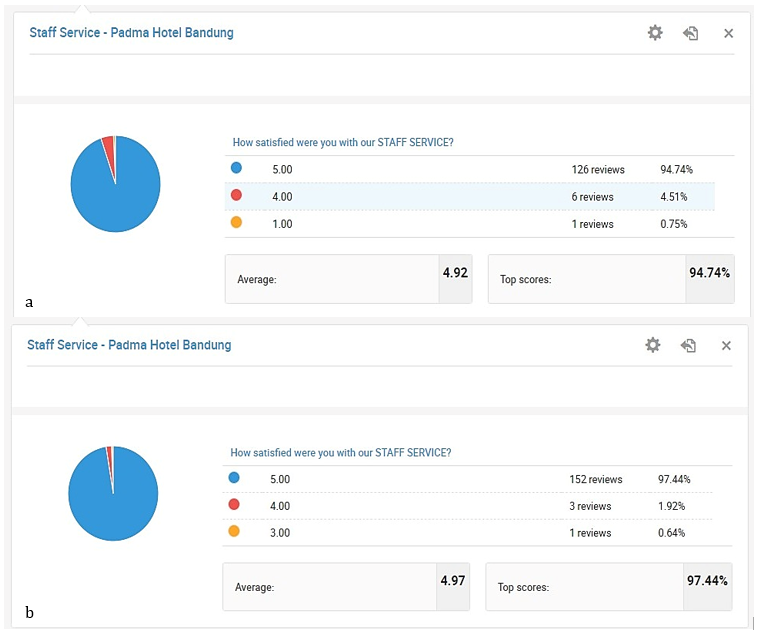
Figure 1 a&b: Comparison of Employee Service in Pre (May) and Post (October) Training Program 2023
Training Impacted to Employee Productivity (using ROTI Method)
The training programs implemented by Padma Hotel Bandung have a cascading impact on the entire organization. The training programs implemented by Padma Hotel Bandung have a cascading impact on the entire organization.
Specifically, not many expenses are incurred as it is the responsibility of the Corporate Training Manager to visit each hotel property and oversee the training program. Specifically, not many expenses are incurred as it is the responsibility of the Corporate Training Manager to visit each hotel property and oversee the training program.
Based on the financial data recorded between July to October 2023, it can be seen that the revenue fluctuated during this period. However, a noteworthy observation is that there was an upward trend in revenue from August to October, indicating a growth in the number of generated profits. The impact of the training program can be observed over a period of three months, specifically from August to October. This is primarily due to the improvement in service and performance of the employees, which will be elaborated upon in the next sub chapter.
The ROTI (Return of Investment Training) calculation, as explained earlier in Chapter 2, is determined by subtracting the training cost from the benefit. By referring to both Table 8 and 9, the ROTI amount can be measured as follows:
Average Revenue during
Training Program = Rp. 9.220.958.888
Training Costs = Rp. 34.750.000
(1)
Based on the extensive research and calculations conducted, it is evident that the training program has proven to be highly successful in significantly enhancing the overall productivity of employees. The participants who actively engaged in the training program have unanimously attested to the fact that the program’s objectives were unequivocally fulfilled, as they experienced a notable surge in their knowledge and skill pertaining to their daily job responsibilities.
Training Impacted to Employee Service
The figure provided below illustrates the contrast between the employee service scores in May, before the commencement of the training program and in October, which marks the conclusion of the training program.
Table 10: Guests Sentiment of Padma Hotel Bandung
Month
Total Reviews
Negative Comments Amount
July
185
65
August
157
43
September
162
39
October
200
34
November
214
27
Source: Compiled Data of Secretary to General Manager
Table 11: Proposed Implementation Plan
Activity or Development
Q1 2-24
Q2 2-24
Q3 2-24
Q4 2-24
Pre - Assesment for Employee
✔
-
-
-
Determine KPI with Dept Head
✔
-
-
-
Data Processing
✔
-
-
-
Developing the Materials
-
✔
-
-
Developing Additional Activity Concept
-
✔
-
-
Run the Training Program
-
✔
✔
-
The competence and effectiveness of employees in a service organization are of utmost importance when it comes to achieving success in the market and ensuring financial performance. Padma Corporate has established a minimum service score of 4.96 for all of its hotel properties. This poses a significant challenge for Padma Hotel Bandung, as they must strive to meet this score before undergoing the training program. In the month of October, it is evident that a large majority of guests at Padma Hotel Bandung give a score of 5 compared to the month of July through the TrustYou application parameter. This indicates that the employees of the hotel have improved their service towards the guests after undergoing a comprehensive training program that equipped them with the necessary knowledge and skills
Training Impacted to Employee Performance
Based on the interview, it was found that training had a significant impact on performance, initially creating a positive impression and fostering a sense of acceptance among individuals.
According to the information provided in Table 10, the data is collected from various sources such as Google Review, TrustYou, TripAdvisor, Traveloka, Blibli.com and Agoda. The data includes reviews from guests. In the month of July, the total number of comments is equal to the number of negative comments. However, in August, when the hotel is more crowded, the number of reviews increases, but the number of negative comments decreases compared to previous months. It is interesting to note that after the conclusion of the training program in November, the number of reviews is the highest it has been so far and there are significantly fewer negative comments.
Business Solutions
Decreasing Time – Consuming Training Session: In the rapidly changing landscape of the hotel industry, customer expectations and industry trends are constantly shifting. As a result, employees must always be ready to adjust to new technologies, service standards and customer preferences. To equip them with the necessary tools and information, training programs play a crucial role in empowering employees to provide exceptional service. However, the traditional method of conducting extensive training sessions may not always be the most effective and time-efficient approach. In general, it is widely accepted that training has the ability to transform an employee's behavior and mindset when it comes to interacting with customers. However, based on the insights gathered from interviews conducted with respondents, it was observed that certain individuals expressed concerns regarding the time-consuming nature of the training program, particularly within operational departments that have frequent face-to-face interactions with guests, such as Food and Beverages, Housekeeping and Front Office. The core training program offered by Padma Corporate Management for all its affiliated properties, such as Padma Hotel Bandung, requires the incorporation of various strategies and adjustments to keep up with the ever-changing business landscape. In addition, it is important for them to prioritize the use of interactive and engaging training techniques in order to effectively maximize the learning experience.
Improvement of the training material
Improvement of training material to address employees’ constraints during the training programs, such as: 1) The training material provided to employees is outdated and repetitive, leading to a lack of engagement and boredom among the staff who are already familiar with the content, 2) The reason employees are hesitant to attend the training is because they are heavily involved in managing hotel operations and catering to the needs of customers. This clearly suggests that the core training program lacks appeal to the employees, 3) The corporate office is interested in providing a diverse range of training materials, including materials that are delivered in English. However, they often find themselves feeling perplexed and uncertain when attending training sessions that are conducted in the English language, 4) Limitations in the use of e-learning platforms, this is because of the long process through executive committee’s approval to use or create e-learning platforms.
Seeing the constraints face by employees, the mechanism improvements offered are: 1) To begin, it is essential to commence with a comprehensive evaluation of the current training materials in place, 2) One way to gauge employees' comprehension of the training material is by creating interactive assessments, quizzes and practical exercises, 3) It could potentially be more beneficial to provide weekly English course training to enhance the English skills of all employees, 4) Enhance the training materials specifically for mobile devices in order to facilitate learning while on the move, 5) Consistently evaluate the efficiency of training initiatives and solicit input from individuals who have participated.
The program improvement activities will commence with an examination of the employees' need assessments in order to enhance the service and improve employee performance. To gather this information, the training division of Padma Hotel Bandung, with the assistance of the corporate training manager, will conduct surveys and interviews with employees. Once the employees' needs have been identified and the appropriate training program has been determined using various methods, the subsequent step involves developing training materials specifically tailored to meet those needs. Apart from simply preparing the materials, it is essential to ensure that they are engaging and facilitate effective learning. This can be achieved by incorporating multimedia elements, real-world scenarios and interactive content. Furthermore, it is crucial to ensure that the materials remain up-to-date and relevant, aligning with the current conditions and requirements of the hotel. The subsequent task involves the evaluation of quantitative data derived from assessments and Key Performance Indicators (KPI), as well as the analysis of qualitative feedback received from both employees and guests through the TrustYou parameter application. By thoroughly examining the data obtained from assessments and KPI and taking into consideration the feedback provided by employees and guests, Padma Hotel Bandung will be able to determine the outcome of the evaluation and implement any necessary measures for continuous improvement.
CONCLUSION
Human Resource Management plays a pivotal role in the hotel industry as it pertains to the management of people. For any enterprise to thrive, it is imperative to foster positive internal relationships between management and employees. One of the most effective methods for achieving this is through comprehensive staff training. In today's fast-paced and competitive business landscape, the significance of staff training cannot be overstated. Staff training is a crucial aspect of effective management, as it provides numerous advantages that contribute to the overall success of a company. By investing in staff training, companies empower their employees to take charge of their own professional growth and advancement. Through acquiring new skills and knowledge, employees are better positioned to pursue career progression opportunities and excel in their respective roles. This promotes a culture of continuous learning and improvement, not only benefiting the individuals but also contributing to the long-term success and sustainability of the company.
Another significant advantage of staff training is its role in reducing damages and wastage within a company. By equipping employees with the necessary knowledge and skills, they are better equipped to handle various tasks and responsibilities, minimizing the occurrence of errors or accidents that may lead to financial losses or resource wastage. In conclusion, staff training is an indispensable management tool that offers a plethora of benefits to both employees and the organization as a whole. By recognizing the significance of staff training and investing in its implementation, companies can foster a culture of continuous improvement and growth, ultimately driving their success in a rapidly changing business environment. The main objective of this training program is to enhance customer satisfaction and improve the knowledge and skills of employees in their daily tasks. The program has been developed by Corporate HR in collaboration with the Training Manager and it is intended to be implemented across all Padma hotel properties. However, due to the unavailability of a designated Training person in Padma Hotel Bandung, there have been difficulties in distributing the program to employees, which has had a negative impact on the hotel's score and customer expectations.
The study revealed that Padma Hotel Bandung is in need of assistance from their corporate office due to the lack of experience of their newly hired training person in charge. It is imperative for them to swiftly distribute the necessary materials in order to restore their service excellence and improve employee performance as per their objectives. The training program is generally effective and has a clear objective, yet it may become repetitive and tedious for certain employees, particularly those who have been with the company for over six years. To enhance the training program, particularly the training materials, it is crucial to introduce new subjects and, most importantly, develop an English training program specifically designed for employees who lack proficiency in the language. Once the training material has been created, it is important to conduct a thorough testing phase to determine the clarity and effectiveness of the material in conveying the intended information. Additionally, it is crucial to engage in routine evaluations to assess the impact of the training on employee performance and gather feedback from guests in order to continuously improve and refine the training program.
Recommendations
In Padma Hotel Bandung, all the workers want to learn new things and get better at their jobs. But they don't have a lot of time to spend in a training program. So, the person in charge of the training needs to make it shorter and only teach them the most important things they need to know. In order to ensure clarity and ease of understanding, it is essential to utilize straightforward language throughout the training materials. Additionally, it is crucial to develop a training program that places a strong emphasis on language skills. To enhance the effectiveness of training materials, it is important to make them more diverse and cater to the unique needs of each department. This can be achieved by categorizing the training materials into two sections - one that is applicable to all departments and another that is specific to each department. In order to assess the effectiveness and measure the success of the program, the Hotel must engage in consistent monitoring and evaluation activities. These evaluations aim to gauge the degree to which the program's content is comprehended by the staff, as well as the extent to which it is being implemented in their day-to-day operations, ultimately influencing the provision of excellent service.
REFERENCE
BPS. Statistik Objek Daya Tarik Wisata: Tourist Attraction Object Statistic. 2018.
Byrne, J. et al. “Training corporate entrepreneurs: An action learning approach.” Small Business Economics, vol. 47, 2016, pp. 479–506.
Thakore, D. “Conflict and conflict management.” IOSR Journal of Business and Management, vol. 8, no. 6, 2013, pp. 7–16.
Castellanos, R.M.M. and M.Y.S. Martín. “Training as a source of competitive advantage: Performance impact and the role of firm strategy, the Spanish case.” International Journal of Human Resource Management, vol. 22, 2011, pp. 574–594.
Glaveli, N. and E. Karassavidou. “Exploring a possible route through which training affects organizational performance: The case of a Greek bank.” International Journal of Human Resource Management, vol. 22, 2011, pp. 2892–2923.
Nischithaa, P. and N. Rao. “The importance of training and development programmes in hotel industry.” International Journal of Business and Administration Research Review, vol. 1, no. 5, 2014, pp. 50–56.
Hospitality Net. “COVID-19 outbreak has jeopardized UK hospitality sector, says Global Data.” Hospitality Net, 2020. https://www.hospitalitynet.org/news/4098446.html. Accessed 8 Aug. 2021.
Hayes, D.K. and J.D. Ninemeier. Human Resources Management in the Hospitality Industry. 2009, pp. 55–59.
Kotler, P. and K. Keller. Marketing Management. 15th ed., Prentice Hall, Saddle River, 2014.
Swanson, R.A. and E.F. Holton. Foundations of Human Resource Development. San Francisco: Berrett-Koehler, 2001.
Dessler, G. Human Resource Management. 12th ed., Pearson, New Jersey, 2011.
Dessler, G. Manajemen Sumber Daya Manusia. Jakarta: PT Indeks, 2011.
Farrant, A.W. “Job rotation is important.” Supervision, vol. 49, 1987, pp. 14–15.
Cheraskin, L. and M.A. Champion. “Career-related antecedents and outcomes of job rotation.” Academy of Management Journal, vol. 37, 1996, pp. 1518–1542.
Chartered Institute of Personnel and Development. Resourcing and Talent Planning: Annual Survey Report 2012. London: CIPD, 2012.
Grant, A.M. “Enhancing coaching skills and emotional intelligence through training.” Industrial and Commercial Training, vol. 39, no. 5, 2007, pp. 257–266.
Cusins, P. “Action learning revisited.” Industrial and Commercial Training, vol. 27, no. 4, 1995, pp. 3–10.
Newton, B.J. “Environmental education and outreach: Experiences of a federal agency.” BioScience, vol. 51, no. 4, 2001, pp. 297–299.
Miles, M.B. and A.M. Huberman. Qualitative Data Analysis: An Expanded Sourcebook. Sage Publications, Thousand Oaks, CA, 1994.
Jang, J. and G. Thomas. “Understanding the influence of polychronicity on job satisfaction and turnover intention: A study of non-supervisory hotel employees.” International Journal of Hospitality Management, vol. 31, 2012, pp. 588–595.
Daskin, M. “Linking polychronicity to hotel frontline employees’ job outcomes: Do control variables make a difference.” EuroMed Journal of Business, vol. 11, no. 2, 2016, pp. 162–180.
Varca, E.P. “Emotional empathy and front-line employees: Does it make sense to care about the customer?” Journal of Services Marketing, vol. 23, no. 1, 2009, pp. 51–56.
Walters, G. and M. Raybould. “Burnout and perceived organizational support among front-line hospitality employees.” Journal of Hospitality and Tourism Management, vol. 14, no. 2, 2007, pp. 144–156.
None
None
License
Creative Commons Attribution-NonCommercial-NoDerivatives 4.0 International License
All papers should be submitted electronically. All submitted manuscripts must be original work that is not under submission at another journal or under consideration for publication in another form, such as a monograph or chapter of a book. Authors of submitted papers are obligated not to submit their paper for publication elsewhere until an editorial decision is rendered on their submission. Further, authors of accepted papers are prohibited from publishing the results in other publications that appear before the paper is published in the Journal unless they receive approval for doing so from the Editor-In-Chief.
Himalayan Journal of Economics and Business Management open access articles are licensed under a Creative Commons Attribution-Share A like 4.0 International License. This license lets the audience to give appropriate credit, provide a link to the license, and indicate if changes were made and if they remix, transform, or build upon the material, they must distribute contributions under the same license as the original.
Recommended Articles
Research Article
Influence of Leadership on Poverty Reduction in the Devolved Government in Trans-Nzoia County, Kenya
Kinisu Sifuna,
...
Peter Simotwo
Published: 30/06/2021
Download PDF
Cite
x
APA
Sifuna, K., Lwangale, D. W., Simotwo, P., Sifuna, K., Lwangale, D. W. & Simotwo, P. (2021). Influence of Leadership on Poverty Reduction in the Devolved Government in Trans-Nzoia County, Kenya. Himalayan Journal of Economics and Business Management, 2(1), None-None.
MLA
Sifuna, Kinisu, et al. "Influence of Leadership on Poverty Reduction in the Devolved Government in Trans-Nzoia County, Kenya." Himalayan Journal of Economics and Business Management 2.1 (2021): None-None.
Chicago
Sifuna, Kinisu, David W. Lwangale, Peter Simotwo, Kinisu Sifuna, David W. Lwangale and Peter Simotwo. "Influence of Leadership on Poverty Reduction in the Devolved Government in Trans-Nzoia County, Kenya." Himalayan Journal of Economics and Business Management 2, no. 1 (2021): None-None.
Harvard
Sifuna, K., Lwangale, D. W., Simotwo, P., Sifuna, K., Lwangale, D. W. and Simotwo, P. (2021) 'Influence of Leadership on Poverty Reduction in the Devolved Government in Trans-Nzoia County, Kenya' Himalayan Journal of Economics and Business Management 2(1), pp. None-None.
Vancouver
Sifuna K, Lwangale DW, Simotwo P, Sifuna K, Lwangale DW, Simotwo P. Influence of Leadership on Poverty Reduction in the Devolved Government in Trans-Nzoia County, Kenya. Himalayan Journal of Economics and Business Management. 2021 Jan;2(1):None-None.
Download PDF
Research Article
Modelling Structure Job Quality, Job Design and Job Satisfaction
Moch Nurhadi,
...
Avi Sunani
Published: 30/08/2022
Download PDF
Cite
x
APA
Nurhadi, M., Bisyri Effendi, M., Saiful Ulum, A. & Sunani, A. (2022). Modelling Structure Job Quality, Job Design and Job Satisfaction. Himalayan Journal of Economics and Business Management, 3(2), 1-4.
MLA
Nurhadi, Moch, et al. "Modelling Structure Job Quality, Job Design and Job Satisfaction." Himalayan Journal of Economics and Business Management 3.2 (2022): 1-4.
Chicago
Nurhadi, Moch, Moch Bisyri Effendi, Achmad Saiful Ulum and Avi Sunani. "Modelling Structure Job Quality, Job Design and Job Satisfaction." Himalayan Journal of Economics and Business Management 3, no. 2 (2022): 1-4.
Harvard
Nurhadi, M., Bisyri Effendi, M., Saiful Ulum, A. and Sunani, A. (2022) 'Modelling Structure Job Quality, Job Design and Job Satisfaction' Himalayan Journal of Economics and Business Management 3(2), pp. 1-4.
Vancouver
Nurhadi M, Bisyri Effendi M, Saiful Ulum A, Sunani A. Modelling Structure Job Quality, Job Design and Job Satisfaction. Himalayan Journal of Economics and Business Management. 2022 Jul;3(2):1-4.
Download PDF
Research Article
The Constitutional and Legislative Basis for Considering the Taxable Capacity of Taxpayers in Iraqi Tax Legislation
Hussein Kamel Wadaa
Published: 05/05/2025
Download PDF
Cite
x
APA
Wadaa, H. K. (2025). The Constitutional and Legislative Basis for Considering the Taxable Capacity of Taxpayers in Iraqi Tax Legislation. Himalayan Journal of Economics and Business Management, 6(1), 1-10.
MLA
Wadaa, Hussein Kamel. "The Constitutional and Legislative Basis for Considering the Taxable Capacity of Taxpayers in Iraqi Tax Legislation." Himalayan Journal of Economics and Business Management 6.1 (2025): 1-10.
Chicago
Wadaa, Hussein Kamel. "The Constitutional and Legislative Basis for Considering the Taxable Capacity of Taxpayers in Iraqi Tax Legislation." Himalayan Journal of Economics and Business Management 6, no. 1 (2025): 1-10.
Harvard
Wadaa, H. K. (2025) 'The Constitutional and Legislative Basis for Considering the Taxable Capacity of Taxpayers in Iraqi Tax Legislation' Himalayan Journal of Economics and Business Management 6(1), pp. 1-10.
Vancouver
Wadaa HK. The Constitutional and Legislative Basis for Considering the Taxable Capacity of Taxpayers in Iraqi Tax Legislation. Himalayan Journal of Economics and Business Management. 2025 Jan;6(1):1-10.
Download PDF
Research Article
Proposed Digital Marketing Strategy to Enhance Engineering Consultancy Company Revenue
Alfarisy, K. A.,
Wandebori, H.
Published: 30/04/2024
Download PDF
Cite
x
APA
K. A., A. & H., W. (2024). Proposed Digital Marketing Strategy to Enhance Engineering Consultancy Company Revenue. Himalayan Journal of Economics and Business Management, 5(1), 1-18.
MLA
K. A., Alfarisy, and Wandebori, H.. "Proposed Digital Marketing Strategy to Enhance Engineering Consultancy Company Revenue." Himalayan Journal of Economics and Business Management 5.1 (2024): 1-18.
Chicago
K. A., Alfarisy, and Wandebori, H.. "Proposed Digital Marketing Strategy to Enhance Engineering Consultancy Company Revenue." Himalayan Journal of Economics and Business Management 5, no. 1 (2024): 1-18.
Harvard
K. A., A. and H., W. (2024) 'Proposed Digital Marketing Strategy to Enhance Engineering Consultancy Company Revenue' Himalayan Journal of Economics and Business Management 5(1), pp. 1-18.
Vancouver
K. A. A, H. W. Proposed Digital Marketing Strategy to Enhance Engineering Consultancy Company Revenue. Himalayan Journal of Economics and Business Management. 2024 Jan;5(1):1-18.
Diah Lestari, A. & Fitriana Dewi, E. (2024). Evaluation of Training Core Program in Hotel Industry using Kirpatrick Model. Himalayan Journal of Economics and Business Management, 5(1), 1-11.
MLA
Diah Lestari, Ayu and Emilia Fitriana Dewi. "Evaluation of Training Core Program in Hotel Industry using Kirpatrick Model." Himalayan Journal of Economics and Business Management 5.1 (2024): 1-11.
Chicago
Diah Lestari, Ayu and Emilia Fitriana Dewi. "Evaluation of Training Core Program in Hotel Industry using Kirpatrick Model." Himalayan Journal of Economics and Business Management 5, no. 1 (2024): 1-11.
Harvard
Diah Lestari, A. and Fitriana Dewi, E. (2024) 'Evaluation of Training Core Program in Hotel Industry using Kirpatrick Model' Himalayan Journal of Economics and Business Management 5(1), pp. 1-11.
Vancouver
Diah Lestari A, Fitriana Dewi E. Evaluation of Training Core Program in Hotel Industry using Kirpatrick Model. Himalayan Journal of Economics and Business Management. 2024 Jan;5(1):1-11.


 Download PDF
 Download XML