Contents
Download PDF
pdf Download XML
993 Views
82 Downloads
Share this article
Research Article | Volume 5 Issue 1 (Jan-June, 2024) | Pages 1 - 9
Analysis of the Impact of Audit Committee Characteristics on Audit Report Lag in Property and Real Estate Companies Listed on the Indonesia Stock Exchange for the Period 2020-2022
 ,
 ,
1
Faculty of Economics and Business, Tanjungpura University, Pontianak Indonesia
Under a Creative Commons license
Open Access
Received
Nov. 15, 2023
Revised
Dec. 5, 2023
Accepted
Jan. 2, 2024
Published
Jan. 16, 2024
Abstract

This study aims to investigate the relationship between audit report lag and audit committee characteristics including membership count, frequency of meetings, andlevel of competence.The population of the study consists of property & real state enterprises registered on the Indonesia Stock Exchange between 2020–2022.The study uses purposeful sampling out of the 55 companies in the population, 165 companies comprise the full sample. The multiple linear regression analysis approach is used in the study to analyze the data. According to the study’s findings, the audit committee’s experience and number of members have a beneficial impacton audit report lag, which postpones the distribution of financial reports to shareholders and could lead to poor judgments down the road. On the other hand, more frequent audit committee meetings minimize audit report lag, enabling shareholders to act promptly based on the financial reports they have been provided.

Keywords
INTRODUCTION

Background to the Study

Financial statements play a crucial role in a company, serving as the basis for determining the financial position of the company, based on regulations issued on July 29, 2016, No. 29/POJK.04/2016 in Chapter III. Companies that have sold their shares to the public and are listed on the Indonesia Stock Exchange (BEI) are required to submit audited financial statements as of December 31 to the Financial Services Authority (OJK), with a deadline in the fourth month after the annual closing of the books. Management is obligated to respond and take further actions to comply with the regulations, aiming to shorten the Audit Report Lag (ARL) duration and avoid administrative fines [1].


Audit report lag is the time span between the end of the budget year and the completion of the independent audit report by auditors [2]. The increasing ARL diminishes the relevance and usefulness of financial statements, affecting the decisions made by investors. This reflects poorly on management's responsibility to stakeholders. The affected parties are undoubtedly the company and stakeholders, as prolonged ARL disrupts management decision-making and stakeholders' ability to analyze the company's situation for investment decisions or withdrawals.


As of May 2, 2023, the Indonesia Stock Exchange (BEI) revealed data indicating that 61 companies were listed, with 12 companies in the property sector being late in publishing their financial reports for the year ending December 31, 2022, despite BEI imposing fines of IDR 50,000,000 (Fifty Million Rupiah). Some entities still delayed submitting audited financial statements. Despite meeting the indicators mentioned earlier, ARL persists over a considerable period. Increasing the frequency of audit committee meetings and having more committee members is expected to shorten ARL. However, in practice, ARL still occurs over a significant timeframe, even when the above indicators are fulfilled (Figure 1).


Based on prior research, Pratama and Puspita and Sari concluded that the audit committee’s competence does not influence the duration of the ARL. The study’s findings suggest that ARL is negatively impacted by the number of audit committee members. Financial reporting happens more quickly the larger the audit committee is. 
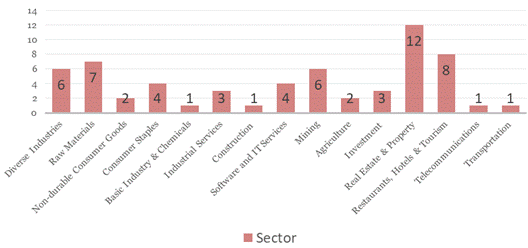


Figure 1: The sector experiencing Audit Report Lag in 2022


Mahendra and Widhiyani on the other hand, discovered an alternative viewpoint, indicating that an increased number of audit committee members has a favorable effect and directly lengthens the ARL process. This is in opposition to research from [3] and [4], who discovered that since the audit committee’s function is monitoring and auditors carry out the financial report preparation procedure, the number of audit committee members has no bearing on ARL.


The work rules for the audit committee stipulate that a minimum of three (3) meeting must be held annually. According to [5], audit committee meetings have a detrimental effect on ARL, which is consistent with the findings of [6]. The contrary conclusion was reached by [7], who claimed that there is no relationship between ARL and the number of audit committee meetings.


There are reasons for auditor delays in providing opinions, as stated in the Public Accountant Standard (SPAP). Auditors need appropriate time to report on all activities. Gathering data through examinations, perceptions, interviews and confirmations serves as a reference for forming views on financial statements. This can lead to a challenging situation where auditors must balance working on audit reports according to schedules and conducting audits in line with standards and regulations.


The Indonesia Stock Exchange (BEI) mandates all listed public companies to publish their financial reports annually within the given deadline. The expectation is that financial statement users, especially external parties like shareholders, can use this information for consideration and decision-making. However, the reality is that many listed companies in BEI are late in publishing financial reports, leading to penalties and fines. This delay can impede the work of management and investors in making decisions.


Theoretical Review

Theoretical Foundation

Agency Theory: Agency theory is a theory that explains the relationship involving management and stakeholders in a company. Management acts as an agent for activities on behalf of stakeholders and has the authority to make decisions according to [8]. A company often encounters agency problems because the relationship between management and shareholders lacks information congruence. Asymmetric Information is the uneven distribution of information between management and shareholders, arising because management understands internal information about the company's future more than the information available to shareholders.


Divide the groups into two types: Adverse selection and moral hazard. Adverse selection is information asymmetry where one party involved in business activities obtains more information than the other. This occurs because management understands the future situation of the entity more than shareholders.


Moral hazard is an action unknown to shareholders carried out by management, which can be caused by the separation of ownership, preventing stakeholders from directly monitoring the capacity and quality of company management. Principal-agent problems in a company's management and shareholders can be reduced by involving an unbiased third party. This third party is an external auditor who acts as an intermediary between management and shareholders, controlling management to act in the interest of shareholders by minimizing the misuse of shareholder trust through violations. Agency theory is employed to assist audit committees in identifying issues that arise between management and stakeholders. With the presence of an independent audit committee, it can serve as a safeguard against fraudulent financial reporting by company management, leading to a reduction in ARL. This is to evaluate the performance of management reporting financial statements that can be used by both internal (company) with the external (investors) parties in decision-making [9].


Auditing

Audit is an action carried out by individuals with competence and independence to collect data and evaluate the evidence to determine and report the conformity between the existing information and the pre-established criteria, as stated by [10]. 


Audit is a systematic and critical examination by an auditor who possesses competence and independence in the financial statements prepared by the management. The intention is to provide an opinion that is in accordance with the fairness of the report, according to Agoes. Based on several definitions, it can be concluded that an audit is a systematic examination of a company's internal controls, aiming to protect and secure against fraud committed by certain parties within the company


Audit Report Lag

The audit report lag, which shows how long the auditor will need to complete the audit, is the difference between the closing date of a company’s financial reporting and the date the auditor’s opinion is published in the audited financial statements. The period of time between the conclusion of a company’s financial reporting year and the date when the independent auditor’s report is made public is known as audit report lag, according to.


The time difference between the financial statement date and the independent auditor's report date signals the duration of the audit completion by the auditor. Auditor delays in completing the audit may be due to the characteristics and complexity of the company, audit risks and characteristics of the public accounting firm, as mentioned by Rusmin.


The longer the ARL, the more adverse effects it will have on the company. If unreasonable delays occur, where the reporting of presented information is reduced or loses its authenticity, it is expected that the company will fulfill its obligation to issue financial statements in a timely manner according to regulations.


According to [11], there are three (3) reasons why financial report disclosure is delayed. These are as follows: ARL is the amount of time that passes between the end od a company’s financial reporting period on one (1) day and the external auditor’s signature on the audit report lag. The days between the closing date of a company’s financial reporting book in one (1) period and the date the stock exchange receives the report are known as the preliminary lag. The days between the closing date of a company’s financial reporting book in one (1) period and the date the stock exchange receives the audited financial report published in the stock exchange.


Audit Committee

An audit committee, led by the board of commissioners, performs its duties with integrity, aiming to guide and oversee the supervisory functions of the board of commissioners, as stated by Arief Effendi. The primary activities of the audit committee involve overseeing and evaluating internal financial controls, according to [12]. It serves as a benchmark for the governance system of public companies, with the main task of overseeing financial reporting and disclosure to enhance trust in the credibility of financial statements, internal control policies and risk management, according to Omer et al.


A selected group of individuals from a larger group is tasked with specific duties to assist and support auditors in maintaining their independence from management, as mentioned by Tugiman. In conclusion, the audit committee is a group of individuals formed by the board of commissioners with the aim of reducing the auditor's burden in carrying out their tasks and responsibilities related to company management, with the hope that effectiveness can be achieved in management.


The concept of responsibility evaluates the independence and impartiality of external audits, checks the correctness of external audits, evaluates the appropriateness of costs and promotes a sufficient internal control system and financial statement transparency. As per [13] it entails getting ready the audit committee’s tasks and obligations.


Competence of Audit Committee Members (X1)

Competence is a skill that is mandatory and must be mastered by the audit committee, involving a profound understanding of auditing, accounting and internal control systems used within the company. Competence indicates the achievement of an understanding that enables an audit committee to conduct a thorough audit. The audit committee is required to comprehend and assess the company's financial statements. Within the audit committee, financial experts are categorized into two definitions: narrow, where financial professionals are divided into accounting and non-accounting and broad, where financial experts are not differentiated based on their accounting competence, according to Abernathy et al. NYSE mandated the standards for audit committee members, where an audit committee must have the expertise to understand financial statements and at least one (1) member must have proficiency in accounting and finance. 


Number of Audit Committee Members (X2)

Number of audit committee members is required to consist of a minimum of three (3) individuals, including a chairman and other members are external individuals with independence and experience in finance and accounting according to Saifi and Hidayat. The audit committee is tasked with assisting external auditors in examining financial reports, with the hope of shortening the publication period of audited financial reports according to Hadiprajitno. In Bapepam-LK no KEP-643/BL/2012 regulation no IX.15, it is explained that the audit committee's member structure is chaired by an Independent Commissioner with at least three (3) members drawn from independent commissioners of the company and external parties [14].


Audit Committee Meeting Frequency (X3)

The frequency of audit committee meetings is the number of meetings that must be held as a reference and means to discuss and maintain the company's financial reports and formulate and resolve issues that occur by holding meetings at least three (3) to four (4) times in a period according to POJK [15]. The audit committee can hold executive meetings with external members of the audit committee invited as needed. The external parties referred to are commissioners, senior management, chief internal auditor and external auditor. Generally, each meeting has a duration of 3-4 hours, so the audit committee must be able to use this time effectively.


Hypothesis Development

The appropriate composition and competence are factors causing the creation of an audit committee with a high level of effectiveness. Therefore, it is important for the board of commissioners to appoint individuals with formal qualifications, experience and personal characteristics that match the requirements. The more balanced the skills and experience possessed, the more likely the tasks performed will be effective and efficient. Factors influencing the competence and experience of audit committee members are based on the size, nature and complexity of the company. Commonly, audit committee members must have knowledge of accounting and finance as they are considered more effective in monitoring financial reporting mechanisms and effective internal controls. In agency theory, the functions of the audit committee and auditors with high competence can provide high-quality financial reports and shorten ARL, allowing investors or financial statement users to make decisions to invest or not in the company, maintaining the relationship between management and stakeholders.


ARL is negatively impacted by the audit committee’s competence. Nehme, claims that the expertise and roles possessed by audit committee members expedite the gap during financial report inspections. According to Hassan and Pratiwi et al., the experience of audit committee members demonstrates that the involvement of financial professionals in audit committees has a detrimental effect on ARL. The ARL can be shortened with the abilities that audit committee members possess because it makes it easier for external auditors to work during the examination:


H1: The competence of the audit committee has a negative effect on audit report lag


The audit committee was established in order to support, uphold and keep an eye on the operations and output of the business management. This is essential to the understanding of agency theory because the transfer of power from the principle to the agent may result in disparities in demands and interests that give rise to the possibility of financial reporting fraud by the agents. According to Solvia Novita, the number of audit committee members has a negative impact on ARL because the more members there are, the more effectively and efficiently the company can present financial statements, which is directly influenced by internal factors. 


Having more audit committee members will shorten ARL because it will make management oversight more effective. The member audit committee is appointed to indicate that stakeholders want to know the company's capacity with informative and timely information, so the quantity of audit committee members has a negative role in ARL according to Durand.


H2:  The number of audit committee members has a negative effect on audit report lag


Meetings held by the audit committee at least three of four times a year demonstrate the efficacy of the committee in monitoring the company’s internal controls and financial reporting procedures. Meeting of the audit committee are detrimental to ARL [16]. The more often audit committee members hold meetings, the smaller the likelihood of errors reported, thus leaning towards a shorter external auditor implementation. In agency theory, the more frequent audit committee meetings, the more effective communication and supervision can reduce conflicts between management and stakeholders, minimizing the potential risk of management acting in their own interests. With more frequent communication through audit committee meetings, management becomes more responsible in decision-making and transparent in financial reporting.


The number of audit committee meetings has a negative effect on ARL because the more frequent meetings are held, the potential for fraud and misrepresentation in financial reporting is minimized according to [17]. The same results were obtained in the research by Anugrah and Laksito [18]. Frequent meetings have a negative effect on ARL.


H3: Audit committee meeting frequency has a negative effect on audit report lag.


Conceptual Framework

This study aims to examine the factors causing ARL using independent variables, as seen in the Figure 2 conceptual framework.
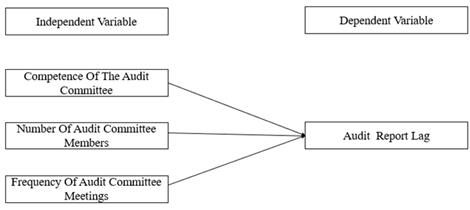


Figure 2: Conceptual Framework


Based on the provided conceptual framework, it can be concluded that this study consists of two variables: independent variables (X) comprising X1 Audit Committee Competence (ACC), X2 Number of Audit Committee (NAC), X3 Frequency of Audit Committee Meetings (FACM) and the dependent variable (Y) is audit report lag.

MATERIALS AND METHODS

Research Method

Type of Research Used

The data used in this study are secondary data obtained from financial reports and annual reports of property and real estate companies listed on the Indonesia Stock Exchange (IDX) for the period 2020-2022.


Population and Sample

The sampling technique involves using secondary data obtained from the Indonesia Stock Exchange (IDX) through purposive sampling, where data is selected based on specific tests determined for specific purposes and objectives according to Ghozali. This study applies three criteria as benchmarks for selecting research samples:


  • Property and real estate companies listed on the Indonesia Stock Exchange for the period 2020-2022

  • Companies providing complete annual reports from 2020-2022

  • Companies with complete data needed for the research


Dependent Variable

This is a variable that needs to be explained by the independent variables as supporters according to Ghozali. The dependent variable in this study is the audit report lag that occurs in property and real estate companies. Audit report lag is the difference between the end of the fiscal year and the date of financial report submission. The measurement of audit report lag according to [19]:


Audit report lag = Audit report submission date – financial report submission date


Independent Variables

Independent variables are variables that influence other variables. The study uses four independent variables: competence, number of members, frequency of meetings.


Determining a construct as a variable that can be calculated is the operational definition according to Supomo, which contains the researcher's method of operationalizing the construct so that it can be replicated by subsequent researchers in the same way or developed for improvement.


Audit Committee Competence (X1)

The indicator used in this study is the ability possessed by members of the audit committee obtained from education pursued at the university as an economics graduate majoring in accounting or an accountant. This variable is measured as the audit committee's competence compared to the number of audit committees [20]:


Number of Audit Committee Members (X2)

The required number of audit committee members is adjusted to how complex the company is. The more complex a company, the more audit committee members are needed. The number of audit committee members is considered to meet the requirements of auditors in terms of examining financial reports, thus shortening the ARL time [21]:


JAKA = Number of Audit Committee Members


Frequency of Audit Committee Meetings (X3)

The frequency of audit committee meetings is the number of meetings held by the audit committee. Audit committee meetings can shorten ARL because the more frequent meetings held by the audit committee, the more effective the financial report design, resulting in shorter external audit completion [22]:


FRKA = Frequency of Audit Committee Meetings


Analysis Technique

Data analysis is the interpretation of the results of processed data that have been collected. Data analysis is carried out using Statistical Package for Social Science (SPSS) with classic assumption tests and multiple linear regression analysis.

RESULTS

Descriptive Statistics 

Competence of the Audit Committee

Over the course of three years, 165 samples from 55 different companies were used. KKA displays the following values: a maximum of 1, a minimum or lowest of 0.333, an average of 0.73094 and a standard deviation of 0.21399. There is one member having experience in a finance and accounting, as shown by the variable’s average value of 0.73094. Companies have complied with OJK Regulation No.55/PJOK.04/2015, which mandates that at least one audit committee member have experience in finance and accounting. This is evident from the variable’s minimal value. This is calculated as 1 member with financial experience divided by 3 (the total number of audit committee members) or as 0.333 derived from the audit committee’s competence divided by the number of audit committee members (Table 1).


Number of Audit Committee Members

The value of independent variable JAKA are as follows: 2 or 2 people at the minimum, 4 or 4 people at the maximum, 2.99 or 3 people on average and 0.3312 as the standard deviation. The data suggests that, on average, companies have three members on their audit committee. This average value indicates that the company has complied with OJK regulations, specifically OJK Regulation No. 55/PJOK.04/2015, which mandates that every company have three members on their audit committee, with one member serving as the chairman and two members as committee members.


Table 1: Descreptive Statistics

Descriptive Statistics


Model

N

Min

Max

Mean

Std Dev

KKA

165

0,333

1,000

0,73094

0,21399

JAKA

165

2

4

2,99

0,312

FRKA

165

0

12

5,07

2,463

ARL

165

41

239

104,53

32,07

Source: Results of SPSS Analysis (2023)


Frequency of Audit Committee Meetings

The number of meetings the audit committee holds serves as the independent variable FRKA gauge. Its values range from 0 to 12, with an average of 5.07 and a standard deviation of 2.463. This suggests that audit committee meetings are held by corporations, on average, five times a year. These findings show that, generally speaking, businesses adhere to OJK Regulation No.55/PJOK.04/2015, which mandates that the audit committee meet four times a year or every three months. This does not comply with the requirements of the OJK standards because the minimum value of 0 indicates that there are still companies that do not hold meetings once a year.


Audit Report Lag

The number of days between the closing date of the company’s financial statements, which is December 31 and the date of the audit report’s issuance, is the dependent variable, or audit report lag. Its values range from 41 to 239, with an average of 104.53, a maximum of 239 and a standard deviation of 32.07. This show that ARL affects businesses on average, the average value is 104.53- or 105-days ARL. OJK Regulation No.55/PJOK.04/2015 state that 90 days following the date of the annual financial statements, or the end of the third month, is the deadline for reporting audit reports.


Classical Assumption Test

Normality Test

In this study, the Kolmogorov-Smirnov (K-S) non-parametric statistical test is used to test the normality of residuals.


Based on Table 2, the result of the normality test of residuals using the non-parametric Kolmogorov-Smirnov (K-S) statistical test shows a significance level of 0.200. This result indicates that the residual values are normally distributed or meet the classical assumption of normality because the Asymp. Sig. (2-tailed) value is above 0.05.


The calculation results of the tolerance values in Table 3 indicate that there is no independent variable with a tolerance value less than 0.10, indicating that there is no correlation between independent variables with values greater than 95%.


Heteroskedasticity Test

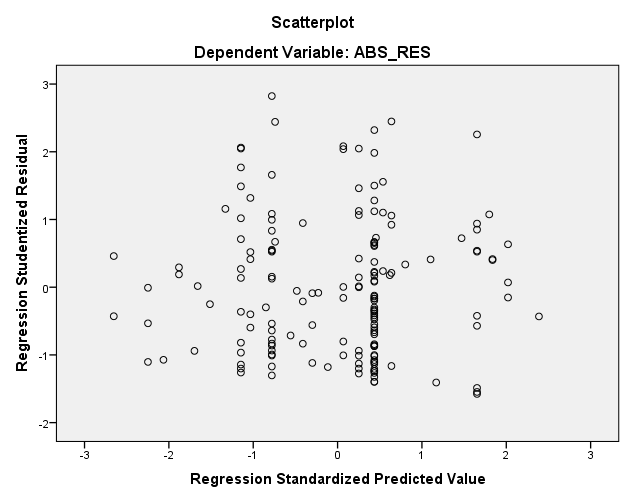
In this study, the Glejser test and ScatterPlot graph are used to test for heteroskedasticity.


Table 4, all independent variables are found to be non-significant. This indicates the absence of heteroskedasticity or homoskedasticity in the regression model.


The scatterplot graph shows that the points scatter with an unclear pattern above and below the zero on the Y-axis. Therefore, the conclusion is that there is no issue or heteroskedasticity in the regression model (Figure 3).


Table 2: Normality Test

One-Sample Kolmogorov-Smirnov Test

Model

Unstandardized Residual

Test Statistic

0,061

Asymp. Sig. (2-tailed)

0,200

Exact Sig. (2-tailed)

0,541

Source: Results of SPSS Analysis (2023)


Table 3: Multicollinearity Test

Coefficientsa


Model

Tolerance

VIF

Explanation

KKA

0,861

1,161

No Multicollinearity Detected

JAKA

0,948

1,055

No Multicollinearity Detected

FRKA

0,904

1,106

No Multicollinearity Detected

Source: Results of SPSS Analysis (2023)


Table 4: Heteroskedasticity Test

Independent Variables

Sig.

KKA

0,315

JAKA

0,866

FRKA

0,552

Source: Results of SPSS Analysis (2023)


Figure 3: Scatterplot Results


Autocorrelation Test

From the autocorrelation test results in the Table 5, a DW value of 2.011 is obtained. The DW value proves that with n = 165, k = 3, DU = 1.7825 is obtained, so (4-du) = 2.2175. Thus, the DW value (2.011) falls between the DU = 1.7825 and (4-du) = 2.2175 / does not autocorrelation.


Hypothesis Testing

Multiple Linear Regression

Based on the above (Table 6) multiple linear regression analysis, the model equation can be expressed as follows:


Y = 103.241 + (2.185) X1 + (1.187) X2 + (-0.759) X3


Based on the results of the regression equation above, the following conclusions can be drawn:


  • The ARL will be 103.241 if all independent variable values are constant, as the constant value (a) is obtained to be 103.241. ARL will be 103.241 unit if variables KKA, JAKA and FRKA have no effect on it

  • Since the value of the variable KKA is 2.185, an increase of 2.185, an increase of 2.185 will occur in ARL if the competence variable grows by one unit while the other independent variables stay constant


Table 5: Autocorrelation Test

Model

DB

2,011


Source: Results of SPSS Analysis (2023)


Table 6: Multiple Linear Regression Analysis

Coefficients


Model


Unstandardized Coefficient

Standardized

Coefficient

Beta

Std. Error

Beta


(Constant)

103,241

1,245


KKA

2,185

0,635

0,191

JAKA

1,187

0,415

0,152

FRKA

-0,759

0,054

-0,766

Source: Results of SPSS Analysis (2023)


Table 7: F- Test

Anova


Model 

F

Sig.

Regression

71,236

0,000

Source: Results of SPSS Analysis (2023)


Table 8: T- Test

Coefficientsa

Model

Unstandardized Coefficient

T

Sig.

Beta

Std. Error


Constant

103,241

1,245

82,922

0,000

KKA

2,185

0,635

3,440

0,001

JAKA

1,187

0,415

2,861

0,005

FRKA

-0,759

0,054

-14,102

0,000

Source: Results of SPSS Analysis (2023)


Table 9: Coefficient of Determination Test (R²)

Model

R

R Square

Adjusted R. Square

1

0,755

0,57

0,562

Source: Results of SPSS Analysis (2023)


  • The JAKA variable has a value of 1.187, if it grows by one unit while the other independent variables stay the same, the ARL will also increase by 1.187

  • Since the value of the variable FRKA is -0.759, an increase of one unit will result in a 0.759 drop in the ARL under the assumption that all other independent variables stay constant


F-Test

A significance value of 0.000 or less than 0.05, was derived froom the significance test results of F in the Table 7. As a result, it can be said that the model passes the goodness of fit test and the hypothesis is accepted. As a result, it is thought that the regression model is appropriate for use as a basic analytical reference.


From the t-test results, the testing of the first hypothesis can be summarized as follows:


  • Hypothesis Testing 1: According to the first hypothesis, KKA negatively effects ARL. Based on the Table 8, competency has a regression coefficient of 2.185 and a significance of 0.001. the coefficient is considered significant when the p-value is less than 0.001 at the significance threshold of α = 0.05. This finding, however, contradicts the theory that KKA has a detrimental impact on ARL. Consequently, the first hypothesis is disproved

  • Hypothesis Testing 2: According to the second hypothesis, JAKA negatively affects ARL. Based on a review of the table, 1.187 is the regression coefficient with a significance level of 0.005 for the numbers of members. The coefficient is considered significant when the p-value is less than 0.005 at the significance threshold of α = 0.05. This finding, however, is inconsistent with the theory that JAKA negatively affects ARL. As a result, the second theory is disproved

  • Hypothesis Testing 3: This study’s third hypothesis states that FRKA has a detrimental effect on ARL. Based on the table, we can observe that the regression coeffficient for meeting frequency is -0.759, with a significance level of 0.000. The significance that is taken into account when α = 0.05 and the p-value is 0.000. It follows that the third hypothesis is true and it can be concluded that FRKA has a detrimental effect on ARL


Coefficient of Determination Test (R²)

Test results in the Table 9, a value of 0.562 is obtained, which means that the ARL variable by 56.2% can be influenced by the variables of competence, the number of committee members and the frequency of committee meetings, while 43.8% of the audit report lag variable is influenced by other independent variables not included in the study.

DISCUSSION

Discussion and Data Analysis Results

The Influence of Audit Committee Competence on Audit Report Lag

The regression findings show that the coefficient value of KKA is 2.185, which points in the direction of ARL in a positive direction. It may be concluded from partial testing that KKA has a positive and significant influence on ARL, rejecting the first hypothesis, because the significance of the KKA variable is 0.001, meaning the value is less than 0.05. This finding contradicts research by Nehme, Hassan and Pratiwi et al. which demonstrated the detrimental effects of KKA on ARL. Agency theory states that members of the audit committee with more education and professional experience to manage the business’s finances and operations. But there could be conflicts of interest between agents and principals, which means a capable audit committee is needed as a supervisor.


The result show that KKA has a favorable impact on ARL, which is consistent with Utami, findings that longer ARL are caused by the diversity of viewpoints among audit committee members, which increases the competency of audit committee members in accounting and finance. Research from [23,24] further supports this, indicating that a committee with experience in accounting and finance can prolog the audit period.


The Influence of the Number of Audit Committee Members on Audit Report Lag

The coefficient value of JAKA is 1.187, indicating a favorable orientation towards ARL, according to the regression data. Based on partial testing, it can be concluded that JAKA has a positive and significant influence on ARL, rejecting the second hypothesis. The significance of the JAKA variable is 0.005, meaning the value is less than 0.005. This finding runs counter to research by Solvia Novita and Durand, which indicated that JAKA negatively affects ARL.


According to agency theory, the audit committee plays a role in overseeing and assisting principals in monitoring agents. An increase in the number of JAKA tends to slow down the company's ability to present financial reports promptly, as it becomes ineffective when only a few members have the necessary expertise or knowledge. The increased number of JAKA makes the monitoring function of management's financial policies less effective, leading to a decline in management performance. Many JAKA can add to the conflicts in the company's management, making it less effective and the audit report cannot be completed faster, resulting in a longer ARL.


The result showing a positive and significant influence of JAKA on ARL is consistent with the findings of Lajmi and Yab, stating that JAKA has a positive effect on ARL. This is consistent with the explanation that the characteristics of contemporary audit committees, such as JAKA, indirectly affect ARL but will influence financial accounting, transactions and financial reports in the future.


The Influence of the Frequency of Audit Committee Meetings on Audit Report Lag

The regression findings show that FRKA coefficient value is -0.759, pointing in the opposite direction of ARL. The third hypothesis is accepted since partial testing indicates that the FRKA variable’s significance is 0.000, or that the value is less than 0.05. This suggests that FRKA significantly and negatively affects ARL.


According to agency theory, more frequent audit committee meetings will increase the tasks and responsibilities performed, including the supervision and review of the company's financial reports. High FACM will improve communication and cooperation among audit committee members, helping in decision-making related to agency and principal issues. This will lead to faster completion and publication of audited financial reports, resulting in a shorter ARL. This is consistent with the study by Hastuti and Meiranto, indicating that frequent audit committee meetings will help the committee solve problems related to overseeing the financial report preparation process and management to prevent data manipulation.

CONCLUSION

The following are the study’s conclusions, which are based on the analysis and hypothesis testing done on 55 property and real estate businesses listed on the Indonesia Stock Exchange (IDX) between 2020-2022:


  • The research results, using hypothesis testing (t-test), do not provide evidence that Audit Committee Competence KKA has a significant negative impact on ARL. Thus, first hypothesis is rejected. This suggests that having more audit committee members with competence in accounting and finance may prolong ARL due to differences in opinions arising from varying perspectives

  •  The research results, employing hypothesis testing (t-test), do not support the idea that the Number of Audit Committee Members JAKA has a significant negative impact on ARL. Hence, second hypothesis is rejected. This indicates that a larger number of audit committee members may lead to a lack of focus and less participation compared to a smaller group, making it challenging to reach a consensus and make decisions

  • The research results, using hypothesis testing (t-test), confirm that the Frequency of Audit Committee Meetings FRKA has a significant negative impact on ARL. Therefore, Hypothesis 3 is accepted. This implies that frequent audit committee meetings serve as a tool for coordination and communication among committee members in fulfilling their supervisory roles. If the audit committee conducts regular meetings, it enhances communication and effectiveness, potentially shortening ARL by minimizing misstatements in financial reports


Recommendations

Recommendations for this study include:


  • For future research, to obtain more comprehensive information, researchers may not only rely on company annual reports but also consider obtaining data from the IKAI to supplement the required data

  • For future studies, additional independent variables can be introduced to measure the effectiveness of the audit committee along with other factors that may impact the ARL more comprehensively

REFERENCES
  1. Daratika, D. "Pengaruh Audit Tenure dan Ukuran Perusahaan Terhadap Audit Report Lag Dengan Reputasi KAP sebagai Variabel Moderasi." Jom Feb, vol. 1, no. 1, 2018, pp. 1. http://investasi.kontan.co.id/

  2. Firmansyah, R. and Amanah, L. "Pengaruh profitabilitas, good corporate governance, leverage, dan firm size terhadap audit report lag." Jurnal Ilmu Dan Riset Akuntansi, vol. 9, no. 3, 2020, pp. 1–20.

  3. Verawati, N. and Wirakusuma, M. "Pengaruh Pergantian Auditor, Reputasi Kap, Opini Audit, Dan Komite Audit Dalam Audit Delay." E-Jurnal Akuntansi, vol. 17, no. 2, 2016, pp. 1083–1111.

  4. Rahma, A.A. et al. "Pengaruh Struktur Modal, Profitabilitas dan Size Perusahaan Terhadap Ketepatan Waktu Pelaporan Keuangan Pada Perusahaan Manufaktur." Jurnal Benefita, vol. 4, no. 2, 2019, pp. 210. https://doi.org/10.22216/jbe.v4i2.3698

  5. Sari, R. R. and Ghozali, I. "Faktor – Faktor Pengaruh Audit Report Lag." Diponegoro Journal of Accounting, vol. 3, no. 2, 2014, pp. 960–968.

  6. Faishal, M. and Hadiprajitno, P.B. "Pengaruh Mekanisme Good Corporate Governance Terhadap Audit Report Lag." Diponegoro Journal of Accounting, vol. 4, no. 4, 2015, pp. 1–11.

  7. Rianti, N.L.P.A.E. and Sari, M.M.R. "Karakteristik Komite Audit dan Audit Delay." E-Jurnal Akuntansi Universitas Udayana, vol. 6, no. 3, 2014, pp. 488–508.

  8. Jensen, M.C. and Meckling, W.H. "Theory of the firm: Managerial behavior, agency costs and ownership structure." Corporate Governance: Values, Ethics and Leadership, vol. 3, 2019, pp. 77–132. https://doi.org/10.4159/9780674274051-006

  9. Pramaharjan, B. "Faktor Faktor Yang Berpengaruh Terhadap Audit Report Lag Pada Perusahaan Manufaktur." Diponegoro Journal of Accounting, vol. 4, no. 4, 2015, pp. 254048.

  10. Arens, A.A. et al. "Auditing and Assurance Services." Pearson Education, 2014, pp. 1–850. <www.bea.gov>

  11. Widhiasari, N.M.S. and Budiartha, I.K. "Pengaruh Umur Perusahaan, Ukuran Perusahaan, Reputasi Auditor, dan Pergantian Auditor Terhadap Audit Report Lag." E-Jurnal Akuntansi, vol. 15, no. 1, 2016, pp. 200–228.

  12. Meidiyustiani, R. and Suryani. "Pengaruh Struktur Modal, Profitabilitas dan Ukuran Perusahaan terhadap Nilai Perusahaan." Management & Accounting Expose, vol. 2, no. 1, 2021, pp. 1–9. https://doi.org/10.36441/mae.v2i1.92

  13. Rahmina, L.Y. and Agoes, S. "Influence of Auditor Independence, Audit Tenure and Audit Fee on Audit Quality of Members of Capital Market Accountant Forum in Indonesia." Procedia - Social and Behavioral Sciences, vol. 164, 2014, pp. 324–331. https://doi.org/10.1016/j.sbspro.2014.11.083

  14. Farahdillah, D.A. "Faktor-faktor yang Berpengaruh terhadap Audit Report Lag pada Perusahaan yang terdaftar di Bursa Efek Indonesia." Diponegoro Journal of Accounting, 2019, pp. 1–18.

  15. Ihsanul, F. and Salma, T. "Pengaruh Karakteristik Komite Audit Terhadap Audit Report Lag." Jurnal Eksplorasi Akuntansi, vol. 1, no. 3, 2019, pp. 995–1012. http://jea.ppj.unp.ac.id/index.php/jea/issue/view/9

  16. Raweh, N.A.M. et al. "Audit Committee Characteristics and Audit Report Lag: Evidence from Oman." International Journal of Accounting and Financial Reporting, vol. 9, no. 1, 2019, pp. 152. https://doi.org/10.5296/ijafr.v9i1.14170

  17. Pemayun, C.I.M.P. and Astika, I.B.P. "Karakteristik Komite Audit Pada Audit Report Lag." E-Jurnal Akuntansi, vol. 31, no. 1, 2021, pp. 152. https://doi.org/10.24843/eja.2021.v31.i01.p12

  18. Kurniawan, K.F. and Mutmainah, S. "Pengaruh Karakteristik Komite Audit Terhadap Ketepatan Waktu Pelaporan Keuangan Perusahaan." Jurnal Akuntansi Dan Governance Andalas, vol. 3, no. 1, 2020, pp. 30–49.

  19. Tannuka, S. "Pengaruh Ukuran Perusahaan, Profitabilitas, Solvabilitas, Likuiditas, Dan Ukuran Kap Terhadap Audit Report Lag." Jurnal Muara Ilmu Ekonomi Dan Bisnis, vol. 2, no. 2, 2019, pp. 353. https://doi.org/10.24912/jmieb.v2i2.1312

  20. Kusumaningtyas, M. and Farida, D.N. "Pengaruh Kompetensi Komite Audit, Aktivitas Komite Audit Dan Kepemilikan Institusional Terhadap Manajemen Laba." Jurnal Akuntansi Indonesia, vol. 4, no. 1, 2016, pp. 66. https://doi.org/10.30659/jai.4.1.66-82

  21. Wandrianto, R. et al. "Karakteristik Komite Audit Dan Audit Report Lag: Studi Empiris Di Indonesia." Jurnal Riset Akuntansi Dan Keuangan, vol. 9, no. 2, 2021, pp. 325–336. https://doi.org/10.17509/jrak.v9i2.29607

  22. Arifin, A.A., et al. "Pengaruh Ukuran, Kompetensi Dan Frekuensi Rapat Komite Audit Terhadap Ketepatan Waktu Penyampaian Laporan Keuangan Dengan Reputasi Auditor Sebagai Variabel Moderasi." Jurnal Akuntansi, Perpajakan Dan Auditing, vol. 1, no. 1, 2020, pp. 66–85. https://doi.org/10.21009/japa.0101.05

  23. Arista, K.N.S. et al. "Audit Delay Pada Perusahaan Manufaktur Di Bursa Efek Indoneisa." 20, vol. 3, 2022, pp. 267–278.

  24. Rohmana, D.R. and Amanah, L. "Analisis Determinan Audit Delay." Jurnal Ilmu Dan Riset Akuntansi, vol. 10, no. 1, 2021, pp. 1–23.
License
CC BY-NC-ND
Creative Commons Attribution-NonCommercial-NoDerivatives 4.0 International License
Analysis of the Impact of Audit Committee Characteristics on Audit Report Lag in Property and Real Estate Companies Listed on the Indonesia Stock Exchange for the Period 2020-2022 © 2026 by Erika Fransiska, Syarif M. Helmi, Sari Rusmita licensed under CC BY-NC-ND 4.0
All papers should be submitted electronically. All submitted manuscripts must be original work that is not under submission at another journal or under consideration for publication in another form, such as a monograph or chapter of a book. Authors of submitted papers are obligated not to submit their paper for publication elsewhere until an editorial decision is rendered on their submission. Further, authors of accepted papers are prohibited from publishing the results in other publications that appear before the paper is published in the Journal unless they receive approval for doing so from the Editor-In-Chief.
Himalayan Journal of Economics and Business Management open access articles are licensed under a Creative Commons Attribution-Share A like 4.0 International License. This license lets the audience to give appropriate credit, provide a link to the license, and indicate if changes were made and if they remix, transform, or build upon the material, they must distribute contributions under the same license as the original.
Recommended Articles
Research Article
Influence of Leadership on Poverty Reduction in the Devolved Government in Trans-Nzoia County, Kenya
...
Published: 30/06/2021
Download PDF
Research Article
Modelling Structure Job Quality, Job Design and Job Satisfaction
...
Published: 30/08/2022
Download PDF
Research Article
The Constitutional and Legislative Basis for Considering the Taxable Capacity of Taxpayers in Iraqi Tax Legislation
Published: 05/05/2025
Download PDF
Research Article
Proposed Digital Marketing Strategy to Enhance Engineering Consultancy Company Revenue
Published: 30/04/2024
Download PDF
Flowbite Logo
Najmal Complex,
Opposite Farwaniya,
Kuwait.
Email: support@himjournals.com

Useful Links
Order Hard Copy
Privacy policy
Terms and Conditions
Refund Policy
Others
About Us
Team Members
Contact Us
Online Payments
Join as Editor
Join as Reviewer
Subscribe to our Newsletter
Follow us
MOST SEARCHED KEYWORDS
scientific journal
 | 
business journal
 | 
medical journals
 | 
Scientific Journals
 | 
Academic Publisher
 | 
Peer-reviewed Journals
 | 
Open Access Journals
 | 
Impact Factor
 | 
Indexing Services
 | 
Journal Citation Reports
 | 
Publication Process
 | 
Impact factor of journals
 | 
Finding reputable journals for publication
 | 
Submitting a manuscript for publication
 | 
Copyright and licensing of published papers
 | 
Writing an abstract for a research paper
 | 
Manuscript formatting guidelines
 | 
Promoting published research
 | 
Publication in high-impact journals
Copyright © Himalayan Journals . All Rights Reserved.