This research aimed at testing and analyzing the value relevance of Corporate Social Responsibility (CSR) disclosure in ethical perspective with agroindustrial companies in Indonesia. The research samples, collected using purposive sampling method, consisted of 48 observations on the agroindustrial companies in the period of 2017-2019 listed at BEI. The research employed a multiple regression analysis method. SCSR was measured using the Islamic Social Reporting (ISR) developed by Othman et al. [1], composed of 6 themes and the relevance was measured with corporate value measured using Tobin’s Q. The hypothesis test results showed that SCSR did not significantly affect value relevance. Investors lacked concern about the company’s social responsibility activities in their investment decision. The extent of SCSR disclosure was evidently not used by investors to consider their investment decision. The research results showed that CSR disclosure in annual reports could not be taken as a signal by the companies to attract investors to invest their fund in the company’s stock since it was deemed not to give certainty of future profit prospects. Investors were worried that many SCSR activities would increase the costs and reduce the return they would gain.
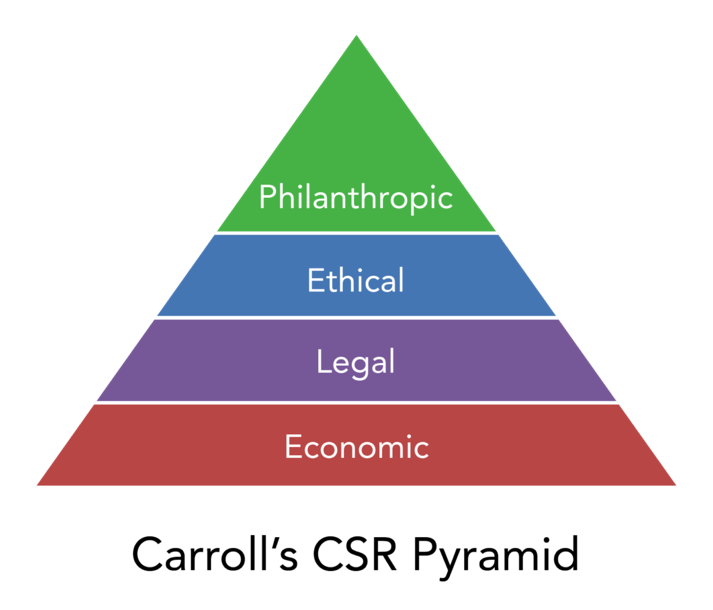
In general, the emphasis of corporate responsibility is focused on the economic and legal aspects. However, in line with the business development and existing environmental issues, companies are also required to account for social and environmental aspects based on ethics. The implementation of Corporate Social Responsibility (CSR) is expected to be a medium for companies to realize a sustainability development through creating social impact to improve the quality of life and environment that are useful to the stakeholders. The legitimacy theory explains that for stakeholders’ legitimacy, a company needs to perform SCSR activities as its form of legal responsibility for its compliance with the Indonesian government’s regulations. Legitimacy may be deemed as equalization of perception or assumption that any of an entity’s acts are desired, appropriate or pursuant to socially developed norm system, values, belief and definition [2]. CSR considers a company as a moral agent with the company's success parameters of prioritizing moral principles and ethics that will benefit the people [3]. This conforms to the concept of ethical responsibility in Carroll’s pyramid [4] as illustrated in the Figure 1.
Indonesia is a country with the majority of and largest Muslim population in the world. Islam has become the basis in various scientific concepts, including CSR. Limited Liability Company that is the legal subject governmental regulations such as Law No. 40 of 2007 is a company operating business activity in the field of and/or related to natural resources, such as companies in industrial, forestry, oil and gas, mineral and coal mining, electricity, agricultural and other fields related to natural resources, including agroindustrial companies. CSR application in Islam must be based on ethics and in accordance with sharia. Study on Sharia Corporate Social Responsibility (SCSR) is a concern for the Indonesians who tend to view business processes from an Islam perspective. Siregar [5] states that agroindustrial companies in Indonesia have applied CSR, contributing to surrounding people and environment, especially in economic and educational sectors. The CSR application by the agroindustrial companies, especially oil palm companies in Indonesia, uses the Indonesian Sustainable Palm Oil (ISPO) standards [6]. Similarly to the green investors who assess companies by considering issuer’s (company) concern based on its CSR application, Muslim investors also consider the application of the sharia framework concept by the Indonesia agroindustrial companies, in this case related to SCSR.
Nawatmi [7] states that some business ethical principles that conform to Al-Qur’an are:
It is prohibited for a business to use evil processes
It is prohibited for a business to contain riba elements
business activities are to have social function.

Figure 1: Carroll’s Pyramid
Source: Carroll [4]
Islam does not allow a person to work by justifying all means to achieve his/her desired purpose, such as cheating, fraud, riba and any other evil or haram acts. Islam restricts between what is allowed and what is not allowed (halal or haram). The restrictions are ethics. There are some sharia business ethics that must be implemented in business activities, including tauhid, justice, free will, responsibility, good faith, mutual aid, free from riba and not performing haram business.
SCSR is different from CSR in the Western World’s perspective. SCSR refers more to tassawur (world view) and epistemology based on Al-Qur’an and As-Sunnah. Wahyuddin [8] adds that SCSR prioritizes the interest of al-dharuriyyah, followed by al-hajiyyah and al-tahsiniyyah. SCSR is divided into three concepts, namely spirituality, rahmatan lil’alamin and ukhuwah islamiyah. Based on the explanation, it is important to assess agroindustrial companies’ CSR application in Islamic perspective. This is supported by Irmadariyani et al. [9], stating that Sharia’s Corporate Social Responsibility also gives value to companies. The results of research conducted by Irmadariyani et al. [10] even show that SCRS applications positively affect a company's financial and non-financial performance. The Indonesia Government has not specifically regulated and obligates the Indonesian companies to apply SCSR. However, the research conducted by Irmadariyani et al. [9] shows that SCSR empirically, positively and significantly affects the value of companies that use Price Earnings Ratio (PER) and Tobin’s Q as proxy. This is also confirmed by Indiriawati [26] that ICSR leads to incremental value of companies that use Price to Book Value (PBV) as proxy. This research aimed at testing and analyzing the Indonesian agroindustrial companies’ Sharia Corporate Social Responsibility (SCSR) disclosure in ethical perspective.
Sharia Corporate Social Responsibility (SCSR)
Sharia corporate social responsibility (SCSR). The concept used in this research was one developed by Irmadariyani et al. [9], namely Sharia Corporate Social Responsibility (SCSR). The synthesis of the sharia corporate social responsibility (SCSR) concept is shown in Figure 2.
The SCSR concept in this research was developed from SET [11], stakeholder theory [12] and business ethics [13].
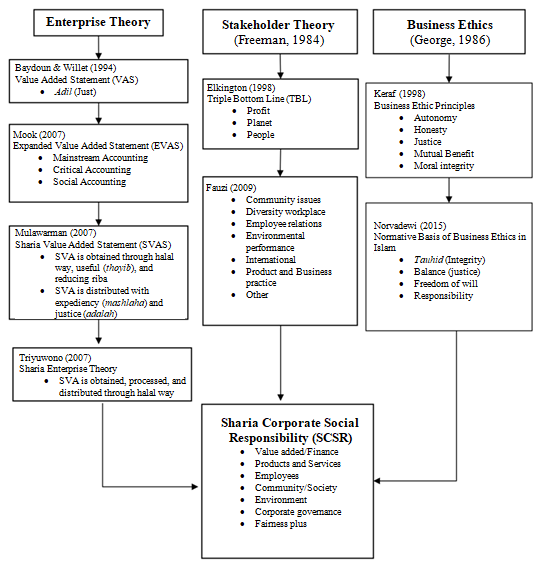
Figure 2: Synthesis of Sharia Corporate Social Responsibility (SCSR) Concept
Source: Development for Dissertation Research
SET was developed from the enterprise theory showing that a company is separated from its owner, thus it does not only prioritize the shareholders’ welfare, but should also make the society and other stakeholders prosper.The concept of welfare, according to the enterprise theory, is value added, while SET defines welfare as sharia value added covering economic welfare, mental welfare and spiritual welfare. In this research, sharia value added is declared as corporate financial performance for company’s economic welfare and non-financial performance for mental and spiritual welfare. Figure 2 shows that the SCSR concept in this research is the derivative of combination between SET, stakeholder theory and business ethics. Based on the definition above, a proposition was built that SCSR is SCSR activities conducted by a company based on ethics that benefits the company and the stakeholders as the form of submission to Allah SWT.
The stakeholder theory assumes that a company operates not only to meet its interest, but should also benefit the stakeholders [12]. The stakeholder theory shows that corporate survival depends on the stakeholders. A company carried out SCSR activities in effort to gain stakeholders’ support. According to Elkington [25], in order to survive, a company must pay attention to profit, people and the planet (3P) known as the triple bottom line (TBL). TBL states that for survival, a company must attempt to gain profit, give welfare to the people and keep the environment (planet) reserve.
Value Relevance
Francis and Schipper in Puspitaningtyas [14] state there are four approaches to understand value relevance in accounting information, namely:
Fundamental analysis approach, that accounting information cause changes in market price and detects stock price deviation
Prediction approach, that accounting information is declared relevant if it is useful to predict company’s prospective future performance
Relevance value information realization approach, that accounting information is declared relevant if used by investor to determine stock price. This approach implies that value relevance is measured based on market reaction to new information
Value relevance measurement approach, that value relevance of accounting information contained in financial statements is measured with its capability to catch or summarize other business and activity information
Information is declared having value relevance if it can affect related parties’ decision making in the capital market [15]. Value relevance shows the benefit or use of information disclosed by a company. Likewise, SCSR information disclosure is expected to benefit the stakeholders in their decision making. Value relevance can be measured, among others, with stock price movement associated with SCSR disclosure proxied with corporate value [16].
Signaling Theory
According to Brigham and Houston [17], signal is an act taken by corporate management to give investors a hint of how the management views the company’s prospect. Furthermore, with favorable prospects, the company tries to avoid selling its shares and using new capital with other means such as debt. A company with a less favorable prospect will tend to sell its shares. The signaling theory explains why an entity’s manager has a voluntary incentive to report information to the capital market even if there is no provision demanding so. The hypothesis that Sharia corporate social responsibility (SCSR) positively affects value relevance is well-supported by several compelling arguments. Signaling Theory, as proposed by Brigham and Houston [17], provides further insights into this relationship. According to this theory, companies engage in signaling, which involves actions taken by corporate management to provide investors with hints about how the company views its future prospects. When a company anticipates favorable prospects, it seeks to convey this to investors, aiming to deter the sale of shares and reduce the need for additional capital, such as debt. Conversely, when a company anticipates less favorable prospects, it may opt to sell shares. This theory illuminates why managers are inclined to voluntarily report information to the capital market, even when there are no regulatory provisions mandating such disclosures.
In the context of SCSR, a company actively demonstrating its commitment to ethical and socially responsible practices, including adherence to Sharia principles, is effectively signaling its commitment to long-term sustainability, ethical behavior and responsibility to stakeholders. This signaling has the potential to attract a broader investor base, including those who prioritize investments that align with their ethical values. As investors increasingly consider non-financial factors in their decision-making, SCSR can serve as a powerful signal that the company's prospects are not only financially sound but also ethically responsible. Moreover, this ethical signaling is likely to appeal to a growing segment of the investment community that seeks both financial returns and ethical alignment. As a result, SCSR positively influences the value relevance of the company, enhancing its reputation, loyalty of investors and competitive advantage while meeting the ethical expectations of stakeholders.
Hypothesis Development
The signaling theory shows how a company should give signals to financial statement users. SCSR information disclosure in corporate annual report is one way a company uses to give a good signal, showing that the company has a good management in managing the stakeholders, increasing corporate performance, financially and non-financially. CSR information disclosure is expected to mitigate asymmetry of information for investors in their decision making, thus it will affect corporate value. The most important information used by investors as the main consideration in their decision making is value relevance measured from corporate value information. The information approach to the decision usefulness theory explains that investors will try to predict the future profit of the investment carried out through relevant, not only accounting information. The information relevance is used by investors for their consideration in investment decision making. One of the many types of information highlighted is regarding the implementation of corporate social responsibility activity. A company that performs SCSR is deemed able to align stakeholders’ interest and corporate interest for Allah SWT’s blessing. We may assume that corporate annual report disclosure will give a good management signal to stakeholders, including investors. In line with the signaling theory, a company of good quality will deliberately give signals to the market so that the good news will improve its corporate value. The researches showing that CSR affects corporate value were conducted by Bidhari et al. [18], Bolton [19], Gherghina et al. [20], Mukhtaruddin et al. [21], Gherghina and Vintila [22] and Ding [23].
In today's global business landscape, there is a pronounced shift towards ethical and socially responsible practices. Companies that actively engage in SCSR not only contribute to this evolving trend but also cultivate a reputation as ethical and socially responsible entities. As investors increasingly consider non-financial factors in their decision-making, SCSR can attract a broader investor base seeking not only financial returns but also alignment with ethical values. Moreover, SCSR is often associated with a long-term sustainability focus, making companies more resilient and stable, which inherently enhances their value relevance. Companies embracing SCSR practices can also gain a competitive edge through a positive reputation, customer loyalty, risk mitigation and regulatory compliance. Regulatory support in some regions further promotes SCSR, providing a conducive environment that bolsters the value relevance of participating companies. Lastly, meeting the expectations of investors and stakeholders regarding environmental, social and governance (ESG) considerations, including those guided by Sharia principles, enhances a company's value and relevance. In summation, the positive impact of SCSR on value relevance emerges from its alignment with current ethical and social responsibility trends, its attractiveness to investors, its contribution to sustainability, competitive advantage, regulatory support and the fulfillment of stakeholder expectations. These factors collectively suggest that SCSR is an influential driver of both financial and ethical value. Therefore, Hypothesis H1 of the research was:
H1: Sharia corporate social responsibility positively affects value relevance
The research population was agroindustrial companies listed at the Indonesia Stock Exchange. The years of observation were 2017-2019. The samples were collected using purposive sampling method, under the sampling criteria as follows:
Agroindustrial companies listed at the Indonesia Stock Exchange in 2018 and/or 2019
Agroindustrial companies that issued annual report and going report in 2018 and 2019
Agroindustrial companies that issued financial statement in 2018 and/or 2019
Companies with complete necessary data
The independent variable was Sharia Corporate Social Responsibility (SCSR) measured using the Index Social Reporting (ISR) developed by Othman et al. [1], consisting of 6 themes, namely:
Finance and Investment
Products and Services
Employees
Society
Environment
Corporate Governance. Based on the sample criteria
16 companies were obtained in 2017, 17 companies in 2018 and 15 companies in 2019, thus there were totally 48 observations in this research.
![]()
Explanation:
SCSRj = level of sharia corporate social responsibility of company j
nj = number of SCSR items for company j
Xij = dummy variable: 1 = if SCSR item it is disclosed; 0 = if SCSR item it is not disclosed. Thus, 0 < SCSRj < 1.
The dependent variables were value relevance and information content. Value relevance refers to the research conducted by Gumanti [24] measured with the corporate value proxied by Tobin’s Q formula:
![]()
Table 1: Results of Descriptive Statistics
| Variable | N | Minimum | Maximum | Mean | Standard deviation |
| Q | 48 | 0.877 | 7.542 | 2.315 | 1.675 |
| ISR | 48 | 0.313 | 0.745 | 0.581 | 0.118 |
| Size | 48 | 20.21 | 31.18 | 29.07 | 2.226 |
| ROS | 48 | 2.476 | 1.368 | 0.024 | 0.568 |
Source: Processed data, 2020
Table 2: Multiple Linear Regression Analysis
| Variable | Regression Coefficient | Sig. |
| Constant | 1.408 | |
| SCSR | 1.942 | 0.358 |
| Size | -0.008 | 0.941 |
| ROS | 0.815 | 0.067 |
Source: Processed data, 2020
Explanation:
Q = corporate value
EMV = equity market value
Below is the regression equation used to test the effect of SCSR on value relevance with Corporate Size and Profitability Rate as control variable:
Qit = a1 + b1SCSRit + b2SIZE + b3ROS + e
Descriptive statistics are an overview of research data. The descriptive statistics used in this research were minimum value, maximum value, mean value and standard deviation.
After completing the classical assumption tests, it was to perform statistical test of multiple regression analysis to test the hypothesis that Sharia corporate social responsibility positively affects value relevance, with the results as follows:
Based on the Table 1 of regression analysis results above, the following regression equation is obtained:
Q = 1.408 + 1.942ISR – 0.008Size +0.815ROS + e
Based on Table 2, all of the variables were independent, that SCSR have significance level each of 0.358. This significance level was higher than 0.05, which meant that the research’s independent variable did not affect value relevance proxied using corporate value (Tobin’s Q). The same also took place with the control variable, firm size and return on sales. The significance levels obtained were 0,941 and 0,067, higher than 0.05, which means that firm size and return on sales as the control variable also did not affect value relevance proxied using corporate value (Tobin’s Q).
Investors demonstrated a limited concern for a company's social responsibility initiatives when making investment decisions. The extent of Shariah Corporate Social Responsibility (SCSR) disclosure appeared to have little impact on investors' decision-making processes. The study's findings indicate that CSR disclosures in annual reports did not serve as a decisive factor in attracting investors to invest in a company's stock, primarily due to the perceived lack of certainty regarding future profit prospects. Investors harbored concerns that an emphasis on SCSR activities might increase operational costs and potentially reduce their expected returns on investment.
The extent to which Shariah Corporate Social Responsibility (SCSR) disclosure was made did not seem to exert a substantial influence on the decision-making processes of investors. The research findings suggest that, in the eyes of investors, CSR disclosures contained in annual reports did not serve as a decisive or pivotal factor in attracting their investment in a company's stock. This outcome may be attributed to the perceived lack of a direct link between SCSR activities and the certainty of future profit prospects. Investors often prioritize financial performance indicators when making investment decisions and may view SCSR as a secondary consideration.
Furthermore, investors expressed concerns that an excessive emphasis on SCSR activities could potentially raise operational costs for companies. The additional costs associated with adhering to ethical or social responsibility standards might not align with investors' primary goal of achieving optimal returns on their investments. Consequently, this concern may have contributed to the relatively subdued importance assigned to SCSR disclosures in their investment decision-making process.
The lack of emphasis on Shariah Corporate Social Responsibility (SCSR) in investment decisions aligns with the Efficient Market Hypothesis (EMH), which suggests that investors might believe that SCSR information is already incorporated into stock prices. Furthermore, investors' reservations about SCSR may relate to the Risk-Return Tradeoff concept, where they perceive SCSR activities as introducing additional risks and uncertainties. This financial-focused approach reflects the influence of traditional financial indicators and the principal-agent relationship, in which managers are expected to act in the best interest of shareholders, as outlined in Agency Theory.
The hypothesis test results show that SCSR does not significantly affect value relevance. This research shows that investors lack attention to company’s social responsibility activities in their investment decision making. The extent of SCSR disclosure is evidently not used by investors to consider their investment decision. The research results show that SCSR disclosure in an annual report cannot be taken as a signal by a company to attract investors to invest their funds in corporate shares. Investors do not react only by observing a company’s SCSR implementation. The signal given by a company, trying to give some information of its SCSR implementation, is evidently unable to be a positive signal to attract investors to make investment. Investors also do not pay attention to SCSR to support their investment decision making, since this is deemed not to give certainty of prospective future benefit. Investors are actually concerned that more SCSR activities will increase the costs, that will eventually reduce the return. In addition, investors assume that SCSR is the form of social responsibility that a company must carry out in accordance with Law No. 40 of 2007 requiring a company that uses natural resources to carry out social responsibility, thus SCSR does not affect value relevance.
Othman, R. et al. Determinants of Islamic Social Reporting Among Top Shariah-Approved Companies in Bursa Malaysia. Research Journal of International Studies, 12(October), 4–20.
Kirana, R.C. (2009). Studi Perbandingan Pengaturan Tentang Corporate Social Responsibility di Beberapa Negara dalam Upaya Perwujudan Prinsip Good Corporate Governance. Universitas Sebelas Maret.
Fauzan. (2011). Corporate Social Responsibility dan Etika Bisnis (Perspektif Etika Moral Immanuel Kant). Jurnal Ekonomi Modernisasi, 7(2), 115–133.
Carroll, A.B. (1991). The Pyramid of Corporate Social Responsibility-Toward the Moral Management of Organizational Stakeholders. Business Horizon.
Siregar, E.Z. (2019). Kontribusi Agroindustri Kelapa Sawit terhadap Kesejahteraan Masyarakat Melalui Program Corporate Social Responsibility. Jurnal At-Taghyir Jurnal Dakwah Dan Pengembangan Masyarakat Desa, 1(2), 68–84.
Anwar, R. et al. Pencapaian Standar Indonesian Sustainable Palm Oil (Ispo) Dalam Pengelolaan Perkebunan Kelapa Sawit Di Kalimantan Timur/Achievement of Indonesian Sustainable Palm Oil Standards of Palm Oil Plantation Management in East Borneo Indonesia. Jurnal Littri, 22(1), 11–18.
Nawatmi, S. (2010). Etika Bisnis dalam Perspektif Islam. Fokus Ekonomi (FE), 9(1), 50–58.
Wahyuddin. (2016). Islamic Corporate Sosial Responsibility (ICSR): Kajian Teoritis. Jurnal Ekonomi Dan Bisnis Islam, 1(1).
Irmadariyani, R. et al. Empirical Investigation of the Role of Sharia’s Corporate Social Responsibility on the Relationship Between Firm Size and Profitability. International Journal of Scientific and Technology Research, 8(7), 18–22.
Irmadariyani, R. et al. The Role of Non-Financial Performance in the Relationship between Shariiah Corporate Social Responsibility and Corporate Value. International Journal of Innovation, Creativity and Change, 10(11).
Triyuwono, I. (2007). Mengangkat “Sing Liyan” Untuk Formulasi Nilai Tambah Syariah. Simposium Nasional Akuntansi X AS 01.
Freeman, R. E. (1984). Strategic Management: A Stakeholder Approach. Boston: Pitman.
De George, R.T. (1986). Theological Ethics and Business Ethics. Journal of Business Ethics, 5(6), 421–432.
Puspitaningtyas, Z. (2012). How Accounting Information is Useful for Investor? Proceeding of International Conference 2012, 350–354. Jakarta: University Industry Business Linkage.
Deegan, C. (2014). Financial Accounting Theory (4th ed.). McGraw-Hill Education (Australia) Pty Ltd.
Scott, W.R. (2015). Financial Accounting Theory (7th ed.). Pearson Canada Inc.
Brigham, E.F. and Houston, J. F. (2001). Dasar-Dasar Manajemen Keuangan (8th ed.). Jakarta: Salemba Empat.
Bidhari, S. C. et al. Effect of Corporate Social Responsibility Information Disclosure on Financial Performance and Firm Value in Banking Industry Listed at Indonesia Stock Exchange. European Journal of Business and Management, 5(18), 39–46.
Bolton, B.J. (2013). Corporate Social Responsibility and Bank Performance.
Gherghina, S.C. et al. An Empirical Research on The Relationship between Corporate Social Responsibility Ratings and US Listed Companies’ Value. Journal of Economics Studies and Research, 1, 1–11.
Mukhtaruddin, Y. et al. Earning Management, Corporate Social Responsibility Disclosure and Firm’s Value: Empirical Study on Manufacturing Listed on IDX Period 2010-2012. Net Journal of Business Management, 2(3), 48–56.
Gherghina, S.C. and Georgeta, V. (2016). Exploring the Impact of Corporate Social Responsibility Policies on Firm Value: The Case of Listed Companies in Romania. Economics and Sociology, 9(1), 23–42.
Ding, L. (2014). A Study on Relation of Corporate Social Responsibility and Corporate Financial Performance or Corporate Value: Empirical Evidence from Listed Real Estate Companies. International Journal of Business and Social Science, 5(8).
Gumanti, T.A. (2011). Manajemen Investasi: Konsep, Teori, dan Aplikasi. Jakarta: Mitra Wacana Media.
Elkington, J. (1997). Cannibals with Forks: The Triple Bottom Line of 21st Century Business. Oxford: Capstone Publishing.
Indiriawati, F. (2019). The Incremental Value of Islamic Social Reporting: Evidence from Companies Listed in Jakarta Islamic Index. Journal of Economics and Business, 2(3).