Purpose: Current existing social impact measurement tools only covers poverty measurement, while women’s empowerment have also become critical for measuring company’s financing impact to the society, in this case Bank Nusa Syariah (BNS), in order to support the realization of SDGs and to align with BNS’s business philosophy of “Do Good Do Well”, a business approach that integrates financial performance with a commitment to social responsibility. This paper aims to develop a simple, up-to-date and scalable social impact measurement tool for ultra-micro financing products that target the women productive underprivileged segment that could measure for both household welfare and women’s empowerment. Methodology: The research primarily focuses on identifying indicators that accurately reflect household welfare levels and women's empowerment level within households. A key aspect of this investigation involves the development of a predictive model, serving as a user-friendly tool for Bank Nusa Syariah. Leveraging public data from Indonesia's Statistical Bureau (Biro Pusat Statistik or BPS), specifically the Survei Sosial Ekonomi Nasional (SUSENAS) 2020 and employing methodologies like Principal Component Analysis (PCA), Weight of Evidence (WoE), Information Value (IV) and Logistic Regression, this predictive model aims to measure both household welfare and the level of women’s empowerment based on selected indicators. Findings: The predictive model plays a crucial role in the development of the Household Welfare (HW) Score, enabling the simultaneous measurement of both household welfare and women's empowerment levels. By incorporating various socio-economic and ownership indicators, the HW Score offers a comprehensive understanding of the economic status and living conditions of the targeted segment. The analysis not only provides insights into the distribution of wealth, access to essential amenities, digital and technology savviness and women’s empowerment but also reveals a positive correlation between higher Household Welfare Scores and enhanced Women's Empowerment Index. A higher score on the Household Welfare Score signifies improved economic status and better living conditions, indicating enhanced women's empowerment within households. This insight underlines the interconnectedness of economic prosperity and women's empowerment, emphasizing the dual impact of financial well-being on the overall welfare of the household. Practical Implications: Financial institutions that operate in micro-enterprise financing with a similar target segment can easily use this measurement tool to measure and monitor the improvement of customers’ household welfare level and women’s empowerment level. Originality/value: The limitations of existing poverty measurement tools in the market, such as the absence of indicators and measurements related to women's empowerment and an outdated baseline that does not consider the post-pandemic context, underscore the need for an innovative approach. This paper brings forth a distinctive contribution to the field in two key aspects. Firstly, it addresses the contextual uniqueness by incorporating both household welfare and women’s empowerment indicators into the measurement tools. This novel approach aligns with the specific needs of Bank Nusa Syariah (BNS), offering a more comprehensive evaluation of the impact of ultra-micro financing products on the productive underprivileged women segment. Secondly, the paper utilizes the latest post-COVID-19 dataset as a baseline for the analysis, providing an updated perspective that reflects the current socio-economic landscape. Beyond resolving the current challenges faced by BNS, this Household Welfare (HW) Score presents a valuable and scalable solution for broader implementation, offering similar financial institutions operating in comparable segments an effective tool to measure both household welfare and women's empowerment.
Keywords
Social Impact Measurement
Household Welfare
Women’s Empowerment
Ultra-Micro Financing
Predictive Model
Digital Integration
INTRODUCTION
Bank Nusa Syariah, a Sharia Bank dedicated to serve the ultra-micro segment for productive underprivileged women, recognizes the importance of not only focusing on the company’s financial performance but also understanding and addressing the social impact of their financing products. In their efforts to effectively target this market and contribute to poverty alleviation and women's empowerment, Bank Nusa Syariah acknowledges the need for simple and reliable tools.
By utilizing these tools, Bank Nusa Syariah aims to measure the social impact of their ultra-micro financing products accurately. This measurement will specifically focus on the positive changes brought about in terms of poverty alleviation and women's empowerment within the targeted segment. Recognizing the limitations of current poverty measurement tools, such as the Simple Poverty Scorecard by Scorocs, LLC., which rely on outdated data from SUSENAS 2016. Other poverty measurement tool such as Poverty Probability Index (PPI) developed by Innovations for Poverty Action (IPA), which have not included women’s empowerment related indicators [1], Bank Nusa Syariah seeks to overcome these limitations both for the lack of women’s empowerment indicators, while taking into accounts the post-pandemic effects of COVID-19.
Bank Nusa Syariah understands that to effectively address the needs of the women productive-poor segment, it is crucial to have up-to-date, simple and scalable tools that accurately capture the social impact of their financing products. By conducting this research and developing new measurement tools, Bank Nusa Syariah aims to enhance their understanding of the impact of their ultra-micro financing products, contribute to poverty alleviation and empower women within the targeted segment.
Business Issue
The business problem addressed in this study is the lack of effective social impact measurement tools for ultra-micro financing products targeting the women productive pre-prosperous segment. Existing poverty measurement tools are outdated and limited to measuring poverty, failing to adequately capture the relationship between women's empowerment and poverty within the context of these products. As a result, financial institutions, including Bank Nusa Syariah, face challenges in accurately assessing the impact of their products on poverty alleviation and women's empowerment. Therefore, there is an urgent need to develop comprehensive and reliable measurement tools that can provide a simple, up-to-date, accurate and scalable approach to understanding the social impact and effectiveness of ultra-micro financing products in improving the welfare and empowerment of women in this specific segment.
Research Objective, Scope and Limitation
The objective of this study is to conduct an in-depth exploration to determine the most updated, simple and easily applicable measurement tools that can be widely implemented to assess the impact of ultra-micro financing products on the improvement of welfare and women's empowerment.
The scope of this research will be focused on the identification of the key indicators that effectively measure poverty levels and women's empowerment at household level. The research will also explore the relationship between women's empowerment and poverty in the specific context of ultra-micro financing products. Furthermore, it will identify suitable tools for measuring the impact of these financing products on welfare improvement and women's empowerment.
The research will utilize data from Biro Pusat Statistik (BPS), i.e. Survei Sosial Ekonomi Nasional (SUSENAS) 2022, literature review and quantitative analysis. It's also important to note that the analysis conducted in this research is based on the most up-to-date data available at the time of the study. This ensures that the findings reflect the current landscape and provide relevant insights.
Literature Review
Microfinance Operations
Microfinance is a financial service approach that aims to provide access to affordable and appropriate financial products and services to low-income individuals who typically lack access to traditional banking services. It involves the provision of small loans, savings accounts, insurance and other financial products tailored to the specific needs of individuals in underserved communities.
One popular and effective approach within microfinance is the operationalization of group financing products. According to [2], group financing involves organizing borrowers into small groups, creating a supportive environment that promotes financial inclusion and enhances repayment rates.
Below are some overview of how group financing is typically operationalized within microfinance:
Group Formation
The first step in operationalizing group financing is the formation of borrower groups. These groups are often referred to as Self-Help Groups (SHGs) or Solidarity Groups. According to [3]. Members of the group are usually from the same community or have some social connections, which helps build trust and a sense of collective responsibility.
Group Dynamics and Peer Support
Group members jointly assume responsibility for loan repayments. They act as social guarantors for each other, eliminating the need for traditional collateral. The close-knit nature of the group fosters peer support and social cohesion, encouraging timely loan repayments and reducing the risk of default. As discussed in [4], the combination of support and peer pressure from the group provides borrowers with sufficient motivation to meet the terms of their loans.
Savings and Financial Services
Alongside loans, group financing often includes encouraging members to save regularly. Microfinance institutions may facilitate the establishment of group-based savings accounts where members contribute a portion of their income. This helps promote a savings culture, build financial resilience and create a pool of funds that can be used for future investments or emergencies.
Loan Disbursement and Repayment
Once the groups are formed and trained, microfinance institutions disburse loans to individual members. These loans are typically small in amount and tailored to the specific needs of borrowers. Repayments are typically made in frequent installments, often aligned with the borrowers' income streams. Group members monitor each other's repayments and provide support to ensure timely and consistent repayments.
Borrower Training and Capacity Building
Before disbursing loans, microfinance institutions provide training to group members. This includes financial literacy education, entrepreneurship skills and general business management training. The purpose is to enhance the borrowers' understanding of financial concepts, build their capacity to manage funds effectively and empower them to make informed financial decisions.
Regular Meetings and Social Development Activities
Group members meet regularly, usually on a weekly, bi-weekly, or monthly basis, to discuss loan repayments, savings and other financial matters. According to [5], these meetings also serve as a platform for sharing experiences, knowledge and providing mutual support. Microfinance institutions may also use these gatherings to deliver additional training, workshops, or social development initiatives aimed at improving the overall well-being of the group members.
The operationalization of group financing within microfinance has proven successful in promoting financial inclusion, empowering borrowers and facilitating sustainable economic development. This approach has been widely implemented by microfinance institutions worldwide, helping individuals and communities’ access financial services, start or expand businesses and improve their living conditions.
Household Welfare
Poverty is defined as the condition of a household whose income or consumption expenditure is below a certain threshold, known as the poverty line. As such, Women’s empowerment and poverty are closely related concepts. According to [6], it mentioned the effect of women’s empowerment on poverty reduction and focuses on household deprivation, in terms of education, health and standard of living. The research outlines that increased women’s access to education, asset ownership, decision-making power on children’s health and education and access to medical facilities, have caused a significant decline in income poverty and multidimensional poverty. However, gender violence, taking resources against women’s will and preventing women from working outside, have caused a considerable decline in per capita income and an increase in income poverty and multidimensional poverty.
According to Mohammad Yunus, the 2006 Nobel laureate, the initial goal of microfinance was to assist low-income households in escaping poverty. The microfinance revolution has played a vital role in addressing poverty in Asia by providing substantial credit flow to low-income groups without collateral, particularly those underserved by financial institutions [7]. The microfinance institutions facilitate households' exit from poverty by empowering rural women to engage in various small-scale entrepreneurial activities through a variety of schemes and initiatives [8].
The relationship between microfinance and poverty can also be observed through the impact of financing in increasing per capita expenditure [9]. This implies that as expenditures rise, the likelihood of falling below the poverty line diminishes since expenditure is a frequently used poverty metric, including in Indonesia. Micro financial services such as lending and savings programs, insurance, self-employment development, skills enhancement, education, marketing, managerial capacity building and social mediation, including financial literacy and healthcare, all play crucial roles in ensuring social security and reducing poverty [10].
Research conducted by [11] in Indonesia, investigating the relationship between Islamic microfinance and poverty measured by household income, demonstrates that Islamic microfinance significantly contributes to policy achievement and a new economic model in wealth creation. This is achieved through the enhancement of socio-economic well-being among the poor and low-income communities, particularly women. It also plays a central role in creating employment opportunities for women, especially those with lower levels of education.
Women’s Empowerment
Women’s empowerment is a complex and multidimensional concept that involves the expansion of women’s ability to make strategic life choices in a context where this ability was previously denied to them, according to [12]. Women’s empowerment can be measured along various dimensions, such as economic, social, political, legal, psychological and cultural. Different frameworks have been developed to identify and analyze the different aspects of women’s empowerment. According to [13], who offers a useful definition of empowerment, it encompasses the ability to formulate strategic choices and to control resources and decisions that affect important life outcomes. Women’s empowerment also requires a fundamental shift in perceptions, or “inner transformation,” that enables women to define self-interest and choice and to challenge the status quo. Women’s empowerment is both a development objective in itself and a means to promote growth, reduce poverty and improve governance. It is also a human right that should be respected and protected by all.
Microfinance, in this context, enables women to participate in the economic market by establishing small and micro enterprises. Consequently, they have the opportunity to earn independent income, contribute to household expenses and play a vital role in household decision-making. Additionally, microfinance institutions enhance their sustainability by applying low-interest rates [14]. Previous studies have emphasized the essential role of microfinance institutions in enhancing women's participation in the economy and their involvement in household decision-making, as outlined in the research conducted by [15, 16].
In another study, it was revealed that microfinance programs targeting underprivileged women have a positive impact on women's empowerment, enhancing their entrepreneurial skills in impoverished communities and increasing their involvement in family decision-making, as evident in research conducted by [17,18].
Similar study also revealed that microfinance has a positive impact on income, expenditure and savings. This leads to an improvement in asset structure, increased access to livestock and micro-machines, family wealth and family savings, as well as decision-making in education, enhanced mobility, communication skills, the ability to voice concerns, self-confidence, increased political participation to promote gender equality and more [18]. Microfinance aims to empower women and promote gender equality because it allows women to access financial capital, establish their micro and small enterprises and earn income that helps them contribute to household expenses [14]. The research also suggests that microfinance has played a significant role for poverty reduction, promoting sustainable development and encouraging poor women to become more economically independent.
MATERIALS AND METHODS
Data Collection Method
In the data collection phase of this study, the main source of data will be the public data from Statistical Bureau of Indonesia, Badan Pusat Statistik (BPS), for the year 2022, specifically the Socio-Economic Survey (SUSENAS 2022). Utilizing data from 2022 is crucial as it allows us to capture the post-pandemic effects of COVID-19 on household poverty and women's empowerment, providing more up-to-date and relevant insights for the study. The SUSENAS 2022 dataset contains a wide range of variables and information relevant to the research objectives.
Possible variables to be considered include household income, consumption patterns, assets, education levels, health status, environmental factors, women's participation in decision-making, financial autonomy, self-confidence and social participation. These variables are essential in capturing various dimensions of household well-being and women's empowerment, making them relevant for assessing the impact of ultra-micro financing products on poverty alleviation and women's empowerment.
Household income, consumption patterns and assets are conventional indicators of poverty, while education, health and environmental factors provide a broader context of well-being. On the other hand, variables related to decision-making, financial autonomy, self-confidence and social participation offer insights into the level of women's agency and empowerment within the household and community.
By examining these variables in the SUSENAS 2022 data, we can gain a comprehensive understanding of poverty levels and women's empowerment within households targeted by Bank Nusa Syariah's ultra-micro financing products. The analysis of these variables will enable us to develop a more robust and comprehensive social impact measurement tool for assessing the effectiveness of these products in addressing poverty and promoting women's empowerment. Ultimately, this research aims to contribute to the development of improved financial products and services that cater to the needs of productive pre-prosperous women, thus supporting their journey towards a better quality of life.
Data Analysis Method
Predictive analytics is a powerful statistical and data analysis technique that will be used in this study at Bank Nusa Syariah to gain valuable insights into the impact of ultra-micro financing products on welfare improvement and women's empowerment. The following predictive analytics methods will be employed:
Principal Component Analysis (PCA) for measuring Women's Empowerment
Principal Component Analysis is a statistical technique that is used to reduce the dimensionality of large datasets while retaining as much of the original variation as possible. According to [19], PCA is a type of factor analysis that seeks to identify patterns in the correlations between variables. It does this by transforming the data into a new coordinate system that is aligned with the principal components of the data.
PCA is a widely used statistical technique for dimensionality reduction and data visualization. It aims to transform a large set of correlated variables into a smaller set of uncorrelated variables, called principal components, while retaining most of the original information. This reduction in dimensionality helps simplify the data and makes it easier to interpret and analyze.
The main idea behind PCA is to identify the directions in the data along which there is the most variation. These directions are known as principal components and they are ordered based on the amount of variance they explain in the data. The first principal component explains the most variance, the second principal component explains the second most and so on. By selecting a smaller number of principal components, we can effectively capture the essential information from the original data.
After obtaining the principal components, a composite index can be constructed by combining these components with appropriate weights. The weights are determined based on the contribution of each principal component to the total variance in the data. By combining the principal components, the composite index represents a reduced-dimensional representation of the original variables, capturing the most significant patterns of variation in the data.
Weight of Evidence (WOE) and Information Value (IV) for Indicators Identification from SUSENAS 2022 Data
Weight of Evidence (WOE) and Information Value (IV) are statistical techniques that are used to analyze the predictive power of independent variables in relation to the dependent variable. According to [20], WOE is a measure of the separation of binary classification (e.g. event or non-event, etc.), while IV is a measure of the predictive power of an independent variable. WOE and IV techniques are widely used in various topics, such as good or bad credit rating, identifying households within the productive pre-prosperous women segment and those outside of it. In this study, WOE and IV will be employed to assess the predictive power of different indicators from the SUSENAS 2022 data in distinguishing between the two groups. The WOE measures the strength of association between an indicator and the target variable (e.g., low income/poor vs high income/affluent), while the IV measures the overall predictive power of the indicator. A more detail of WOE and IV calculation is provided as below.
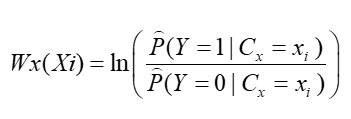
Suppose that target variable is binary response which is defined as households that fall below poverty line for value 1 (event) and vice versa 0 (non-event). For an explanatory variable, it has a set of attributes of Cx. Let x1,x2,x3,…,xLx also denote Lx categories associated with Cx. Then the transformation of X as WOE variable, to be denoted by Wx, is carried out by assigning a value to Wx in each category xi, as shown in the equation below:
Equation 1 Weight of Evidence (WOE)
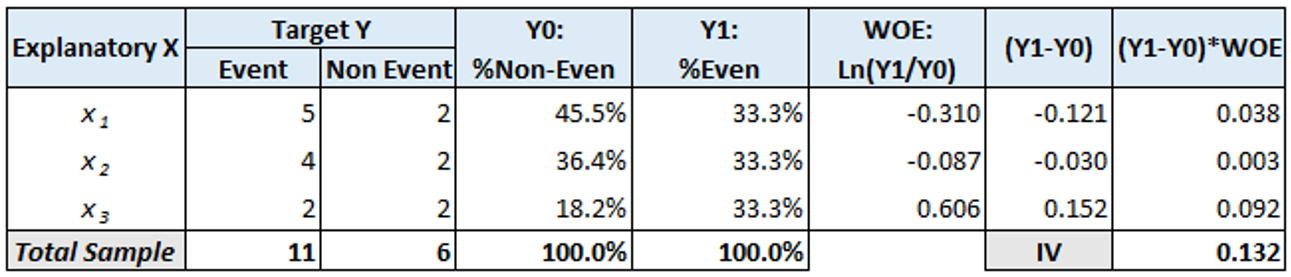
To gain a firm understanding of Weight of Evidence (WOE), the following are illustrative examples of how to calculate WOE and IV (Table 1).
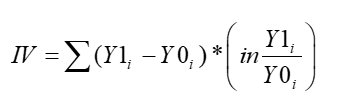
Then, the above IV calculation can be notified as follows:
(2)
Equation 2 Information Value (IV)
By applying these methods, the study can identify the most relevant and informative indicators that effectively differentiate the target segment, aiding in the precise targeting of financial products and services.
Logistic Regression for Social Impact Measurement Tools Development
According to [21], Logistic regression is a statistical method used to model the relationship between a binary outcome (e.g., improved welfare and women's empowerment) and one or more independent variables (e.g., the identified indicators from WOE and IV analysis). It is used to analyze the relationship between a dependent variable and one or more independent variables. The independent variables, also known as predictor/explanatory variables or features, can be continuous or categorical.
The primary goal of logistic regression is to predict the probability of the occurrence of the binary outcome based on the values of the independent variables.
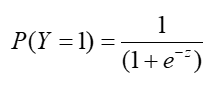
The logistic regression model uses the logistic function, also known as the sigmoid function, to model the relationship between the independent variables and the probability of the binary outcome. The logistic function has an S-shaped curve, which allows it to map any real-valued number to a value between 0 and 1. The formula for the logistic function is as follows:
(3)
Equation 3 Logistic Regression
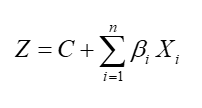
where, is the probability of the binary outcome being 1, e is the base of the natural logarithm and Z is the linear combination of the independent variables and their respective coefficients. The linear combination Z can be notified as:
(4)
Equation 4 linear combination of logistic regression with X represent the sets of explanatory variables and b as the coefficient for the corresponding independent variables.
In logistic regression, the coefficients of the independent variables are estimated using maximum likelihood estimation, which aims to find the values of the coefficients that maximize the likelihood of observing the actual outcomes given the predicted probabilities.
It is important to note that logistic regression assumes that the relationship between the independent variables and the log-odds of the binary outcome is linear. Additionally, logistic regression assumes that the observations are independent and that there is little or no multicollinearity among the independent variables. If these assumptions are violated, the validity of the logistic regression model may be compromised and alternative modeling techniques may be more appropriate.
In this study, logistic regression will be used to develop social impact measurement tools. By building a predictive model using relevant indicators as input variables, the study can estimate the probability of achieving the desired outcome (e.g., improved welfare and women's empowerment) based on the presence of specific indicators. The logistic regression model will serve as the basis for creating a practical and scalable social impact measurement tool that can assess the effectiveness of ultra-micro financing products in contributing to welfare improvement and women's empowerment among the target segment.
In the context of the study related to women's empowerment, the sample criteria used include household members of the female gender within the age range of 10-54 years. Thus, there are 417,012 respondents distributed across all provinces in Indonesia. The variables used in this analysis make use of both original and derived variables with the aim of obtaining a more representative picture of the population. To obtain variables that can depict the level of women's empowerment, the Principal Component Analysis (PCA) method is employed to analyze these variables. By iterating the PCA method on these variables, the analysis recommends 10 variables that can depict the condition of women's empowerment in Indonesia, which will then serve as the basis for the formation of a composite index formula for women's empowerment.
Each attribute/value of these variables is assigned a score for the purpose of calculating the composite index value. The following are the variables recommended to depict the condition of women's empowerment.
Asset Ownership
Asset ownership in SUSENAS includes ownership of 12 types of items which considered as asset, such as a 5.5 kg or more LPG cylinder, Refrigerator/Fridge, Air Conditioner (AC), Water heater, Landline telephone (PSTN), Computer (PC)/Laptop/Tablet, Gold/Jewelry (minimum 10 grams), Motorcycle, Boat, Motorboat, Car, Flat-screen television (minimum 30 inches) and Land. For each item or asset owned by the respondent will be assigned a value of 1, thus the total value for this variable is 12.
Education Level
To simplify the analysis yet still capture the actual value, levels of education in SUSENAS are being grouped into 4 groups of education level and each of the corresponding groups assigned by a value, as a conversion for the composite index formula calculation:
Elementary School, with value 1, includes Paket A, SDLB, SD, MI and SPM/PDF Ula
Junior Middle School, with value 2, includes Paket B, SMP LB, SMP, MTs and SPM/PDF Wustha
Senior High School, with value 3, includes Paket C, SMLB, SMA, MA, SMK, MAK, SPM/PDF Ulya
Higher Education, with value 4, includes, D1-D4, S1-S3 and Pendidikan Profesional
Bank Account Ownership
SUSENAS defined Bank Account Ownership as ownership of savings accounts, whether individual join accounts, in a Bank, Financial Institution, or Koperasi.
Access to Financing Product
Access to financial products is information closely related to Bank Nusa Syariah, as a bank that serves financing products for the underprivileged productive women segment. This variable can be used as one of the references to determine the level of awareness and ownership of financing products by customers. The information covered in the SUSENAS data for ownership/access to financing products includes Kredit Usaha Rakyat (KUR), Financing from Commercial Bank other than KUR, Financing from Bank Perkreditan Rakyat (BPR), Financing from Koperasi Individual Loans with Interest, Pawnshops, Leasing Companies, Village-Owned Enterprises (BUMDES), Loan from Fintech and Others.
Nutritious Food
According to a report by the Food and Agriculture Organization of the United Nations (FAO) in [22], meat, eggs and milk offer crucial sources of much-needed nutrients which cannot easily be obtained from plant-based foods. These foods provide a range of important micronutrients such as protein, fats and carbohydrates and micro-nutrients that are difficult to obtain from plant-based foods in the required quality and quantity. SUSENAS record whether respondents have consumed each of those nutritious foods in the last 7 days. Each item will be assigned a value of 1, thus the total value for this variable is 3.
Decent Home
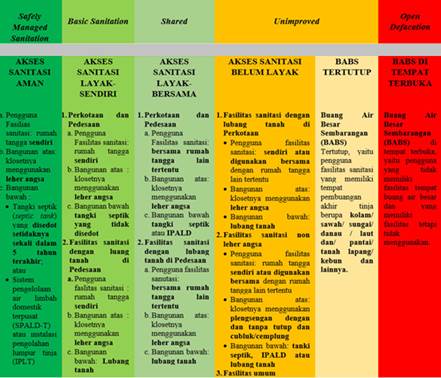
Adequate housing is a human right that encompasses not only physical shelter, but also access to basic services, security of tenure, affordability, habitability, accessibility, location and cultural adequacy, according to Sustainable Development Goals (SDGs). As elaborated by National Housing Water and Sanitation Services (NAWASIS) in [23]. Decent and affordable housing within the framework of SDG monitoring uses five criteria, they are (1) durability of housing; (2) sufficient living space; (3) access to improved water; (4) access to adequate sanitation; and (5) security of tenure. Considering the availability of data in Indonesia, the operational definition of each component of suitable housing based on national indicators is as follows (Table 2).
Adequate Sanitation is presented in Table 3, which refers to SUSENAS 2022 dataset.
As a proxy for security of tenure, the current calculation conducted by the government is limited to households with ownership status of homes/dwelling places that are self-owned. Households are categorized as having security of tenure if the proof of ownership is in the form of a Certificate of Land Ownership (SHM) under the name of the head of the household (ART), SHM not under the name of the head of the household, or certificates other than SHM (SHGB, SHSRS). Meanwhile, other proof documents (Girik, Letter C, etc.) are still categorized as less secure proof of ownership.
Table 2: Decent Home Criteria (Indonesia adopted from SDGs)
Indicator
Criteria
Durability of Housing
The most widely used roofing materials are tiles, concrete, wood/shingles, and corrugated metals.
The most common building materials for walls are brick/GRC board, plaster, bamboo weave/wire, wood/boards, and wooden posts
The most common floor materials for houses are marble/granite, ceramic, parquet/vinyl/carpet, tiles/terracotta/terrazzo, wood/boards, and cement/red bricks
Sufficient Living Space
The floor area per capita is ≥ 7.2 square meters
Access to improved water
The main sources of drinking water include tap water, piped water, retail piped water, yard faucets, public hydrants, protected water, and rainwater harvesting. Protected water includes drilled wells/pumps, protected wells, and protected springs. For households using packaged drinking water, they are categorized as having proper access to drinking water. The water source for bathing/washing comes from tap water, drilled wells/pumps, protected wells, protected springs, and rainwater
Access to adequate sanitation
Adequate sanitation is associated with household sanitation criteria, mainly related to household sanitation facilities
Table 3: Adequate Sanitation Criteria
The indicator of security of tenure continues to be monitored but has not yet become a calculated indicator and is outside the criteria for decent housing in the SDGs. Therefore, in this study, the Decent Home criteria only consider four criteria for decent housing, excluding the indicator of security of tenure. For each category/indicator that meets the criteria for decent housing, a value of 1 will be assigned, resulting in a total value of 4 for this variable.
Access to Social Security
Multiple social security is covered in the SUSENAS, whether respondent have access to or own social security, which includes Jaminan Kesehatan Nasional (JKN), Jaminan Pensiun, Jaminan Hari Tua (JHT), Jaminan/Asuransi Kecelakaan Kerja (JKK), Jaminan/Asuransi Kematian and Pesangon Pemutusan Hubungan Kerja (Pesangon PHK).
Technology Savviness
In this study, the measurement of technology savviness utilizes information in SUSENAS related to access to the Internet. Respondents will be assigned a value of 1 if they have ever accessed the internet (including Facebook, Youtube, Instagram, Whatsapp and other social media or messaging apps) in the last 3 months.
Labor Participation
Women’s participation in the Labor or Workforce is measured based on their status or level at their main occupation. Each of the corresponding attributes in the variables will be assigned by a value, as a conversion for the composite index formula calculation:
Self-entrepreneur, assigned with value of 6
Entrepreneurs who employ temporary laborers/unpaid laborers, assigned with a value of 5
Entrepreneur who employs permanent laborers/paid laborers, assigned with value of 4
Blue collar laborer/employee, assigned with value of 3
Freelancer/Professionals, assigned with value of 2
Family employee/unpaid laborer, assigned with value of 1
No occupation, assigned with value of 0
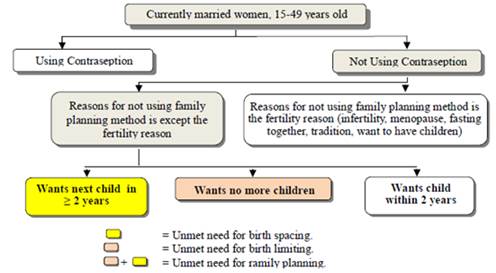
Figure 1: Criteria for unmet need in family planning
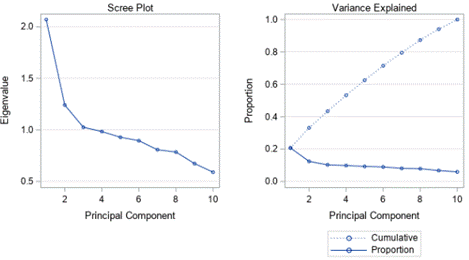
Figure 2: Scree Plot and Variance Explained by Principal Component
Family Planning
In the context of family planning, The Indonesia Government is using indicator of unmet need, which refers to the percentage of women who are sexually active and want to avoid pregnancy but are not using any method of contraception, based on definition from World Health Organization (WHO) in [24]. It is a measure of the ability of women to achieve their desired family size and birth spacing. Unmet need complements the contraceptive prevalence rate by indicating the additional extent of need to delay or limit births. It is a rights-based measure that helps determine how well a country’s health system and social conditions support the ability of women to realize their stated preference to delay or limit births.
According to [25], unmet need for family planning indicators can be derived from SUSENAS data. Figure 1 shows how to derive unmet need indicators from SUSENAS dataset.
In conversion to the composite index, derived variables used in the analysis as below, along with the corresponding assigned value for each attribute:
Unmet Space, unmet need for birth spacing, assign value of 1
Unmet Limit, unmet need for birth limiting, assign value of 1
Unmet Plan, assign value of 1 for either Unmet Space or Unmet Limit, 0 otherwise
Female Met Plan, a negation of Unmet Plan, assign value of 1 if Unmet Plan value is 0
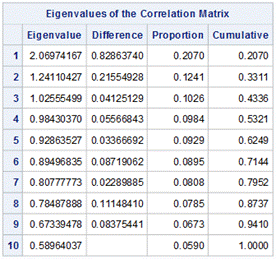
The PCA method applied to the 10 variables above resulted in an Eigen Values table of the Correlation Matrix among variables. In the Table 4, it can be observed that the First Principal Component has the highest EigenValue, explaining 20.7% variance in the data. In this study, the author chooses to utilize the First Principal Component to formulate the composite index, considering its highest portion value to explain the variance in data compared to other Principal Components. Additionally, it also facilitates the practical use of the composite index formula from a business perspective, as it involves a straightforward linear formula.
The Scree Plot for Eigenvalues and Variance Explained of the 10 Principal Components is shown in the Figure 2.
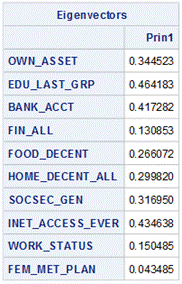
The Eigenvector of the First Principal Component is shown in Table 5.
In the construction of the composite index, these EigenValues can be used as coefficients for each variable, so that the formula for the Women’s Empowerment Index is obtained as follows:
WM Index = (34×Asset Owned)
+(46×Education Level)
+(42×Bank Accounts Owned)
+(13×Financing Product Owned)
+(27×Nutritious Food Score)
+(30×Decent Home Score)
+(43×Internet Access Ever)
+(32×Social Security Owned)
+(15×Labour Participation Level)
+(4xFemale Met Plan)
Equation 5 Women's Empowerment Index (WM Index)
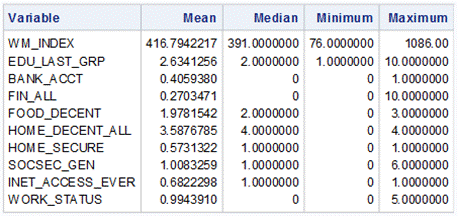
SUSENAS 2022 data shows that for the female population in Indonesia, the average Women’s Empowerment Index is 417. The average values per category at the national level can be seen in the following Table 6.
Based on Table 6, at the national level, in the Education Level category, women on average complete their education up to junior high school. In terms of financial inclusion, less than half of the female population (40.6%) already have savings accounts in banks and other similar financial institutions and only have less than 1 financing product from banks and other similar financial institutions. Regarding nutritious food, Indonesian women on average consume 2 out of 3 types of basic nutritious food. For the criteria of decent housing based on SDGs, on average Indonesian women meet 3 out of 4 criteria for decent housing, with 57.3% of Indonesian women having legally valid homes. In terms of technology savvy, 68% of Indonesian women have accessed the internet in the last 3 months, which includes social media and messaging apps. In addition to this analysis, related to Women’s Participation at Workforce, only 31.4% have jobs or similar activities that generate income for the households.
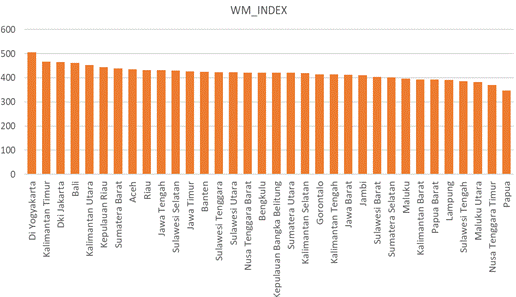
When viewed based on Areas/Provinces in Indonesia, the Top 3 Provinces for the Women’s Empowerment Index (WM Index) are earned by DI Yogyakarta, followed by East Kalimantan and DKI Jakarta. While the Bottom 3 Provinces for WM Index are earned by Papua, followed by East Nusa Tenggara (NTT) and North Maluku (Figure 3).
Household Welfare Score
The ultimate objective of this study is to construct a social impact measurement for Bank Nusa Syariah that could cover both customers’ household welfare and women’s empowerment. This section will cover identification of most significant variables/indicators to household welfare and the score formula to predict and measure the level of household welfare in the context of poverty.
Table 4: Eigen Value of the Correlation Matrix
Table 5: EigenVector
Potential Indicators
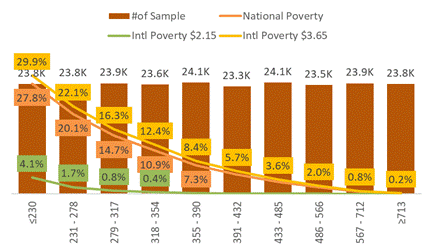
In the context of household welfare, the dataset used in this analysis is SUSENAS 2022 which aggregated at household level. By employing Weight of Evidence (WoE) and Information Value (IV), the 269 information treated as independent variables from SUSENAS are being analyzed, in order to identify best predictive indicators for the dependent/target variables. For this study, the target variables are defined as respondents who fall within the lowest 10% percentile (Decile 1) of expenditure per capita. Considering both National and International Poverty threshold, this decile acts as the nearest point to cover all the poverty threshold (Table 7).
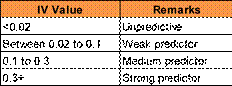
With Decile 1 as target variable, the IV values for independent variables are ranging from 0 to 0.727. According to [20], there is a ‘rule of thumb’ in selecting most significant variables based on IV value for model development (Table 8).
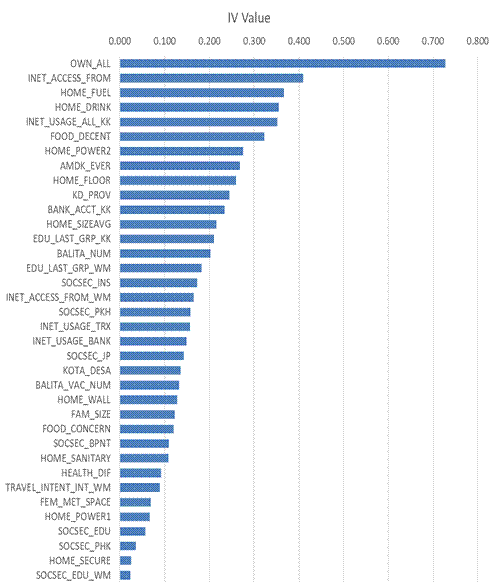
Variable selection then continued by checking its multi-collinearity amongst variables. Those variables with low multicollinearity are then used as the input variables for model development. There are 36 out of 269 variables which cover multiple topics related to poverty and women’s empowerment (Figure 4).
Figure 3: Women's Empowerment Index by Province
Figure 4: IV value for the selected variables
Table 6: Statistics for Variables in the WM Index
Table 7 Expense per Capita for Poverty Threshold
Table 8: IV Value for Variable Selection
Table 9: Selected Variable in the Model
Predictive ModelA
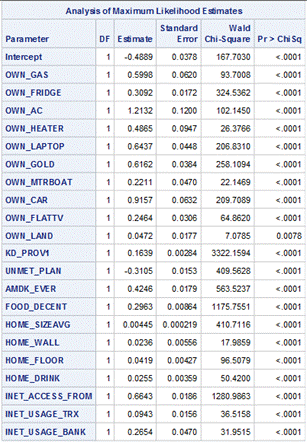
Selected variables from the previous stage are then analyzed using Logistics Regression, in order to develop the predictive model for household welfare, in the context of poverty alleviation. The original SUSENAS dataset is then divided into two sets of data, 70% sample used as train dataset in developing the model, while the rest of 30% sample used for model validation dataset. The logistics regression extracting 21 most significant variables in the model, as represented in Table 9.
Column Estimates in the above table will be used as coefficients for each variable. By adjusting the coefficient through multiplication by 100 for each variable’s coefficient and manually adjusting to get a minimum of 0 value, the score for Household Welfare Score (HW Score) can be represented by the below formula:
HW Score=32+(60×OWN_GAS)
+(31×OWN_FRIDGE)
+(122×OWN_AC)
+(49×OWN_HEATER)
+(65×OWN_LAPTOP)
+(62×OWN_GOLD)
+(23×OWN_MTRBOAT)
+(92×OWN_CAR)
+(25×OWN_FLATTV)
+(5×OWN_LAND)
+(17×KD_PROV1)
+(-32×UNMET_PLAN)
+(43×AMDK_EVER_GAS)
+(30×NUTRITIOUS FOOD)
+(HOME_SIZE_AVG)
+(3×HOME_WALL)
+(5×HOME_FLOOR)
+(3×HOME_DRINK)
+(67×INET_ACCESS_FROM)
+(10×INET_USAGE_TRX)
+(27×INET_USAGE_BANK)
Equation 6 Household Welfare Score (HW Score)
Detail elaboration for variables included in the model as follows (Table 10).
Table 10: Detail variable in the model
Variable Group
Variable Name
Description
Behavior towards poverty rate
Asset Ownership
OWN_GAS
Binary variables indicating ownership of LPG cylinder 5.5 kg or more
Own item, lower poverty rate
OWN_FRIDGE
Binary variables indicating ownership of Refrigerator/Fridge
Own item, lower poverty rate
OWN_AC
Binary variables indicating ownership of Air Conditioner (AC)
Own item, lower poverty rate
OWN_HEATER
Binary variables indicating ownership of Water Heater
Own item, lower poverty rate
OWN_LAPTOP
Binary variables indicating ownership of Computer (PC)/Laptop/Tablet
Own item, lower poverty rate
OWN_GOLD
Binary variables indicating ownership of Gold/Jewelry
Own item, lower poverty rate
OWN_MTRBOAT
Binary variables indicating ownership of Motorboat
Own item, lower poverty rate
OWN_CAR
Binary variables indicating ownership of Car
Own item, lower poverty rate
OWN_FLATTV
Binary variables indicating ownership of Flat TV
Own item, lower poverty rate
OWN_LAND
Binary variables indicating ownership of Land
Own item, lower poverty rate
Demographic
KD_PROV1
Discrete variable, represent province Code grouped by poverty level
In general, Indonesia west area tend to have better poverty rate than east area
Women Empowerment
UNMET_PLAN
Discrete variable, represent the unmet family planning
unmet plan condition, higher poverty rate
Nutritious Food
AMDK_EVER
Binary variable, represents the ever use of bottled drinking water.
ever consume, lower poverty rate
FOOD_DECENT
Discrete variable, represents the consumption of nutritious food, i.e. meat, milk, and egg.
more consume, lower poverty rate
Adequate Housing
HOME_SIZEAVG
Continues variable, represent home space area per capita
lower average home area, higher poverty rate
HOME_WALL
Encoded discrete variable, represent material for the widest wall of the house
Better material, lower poverty rate
HOME_FLOOR
Encoded discrete variable, represent material for the widest floor of the house
Better material, lower poverty rate
HOME_DRINK
Encoded discrete variable, represent type of the source of household drinking water
Better type of drinking water, lower poverty rate
Tech & Digital Savviness
INET_ACCESS_FROM
Discrete variable, represents # of media accessed for internet
more media for internet access, lower poverty rate
INET_USAGE_TRX
Discrete variable, represent the use of internet for goods and services
ever use for goods and services, lower poverty rate
INET_USAGE_BANK
Discrete variable, represent the use of internet for banking transaction
ever use for banking trx, lower poverty rate
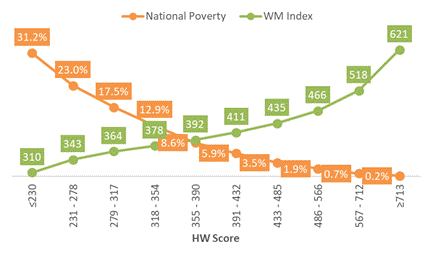
Figure 5: Poverty Rate by HW Score Decile
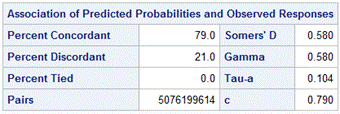
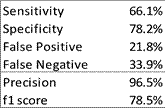
The AUC score is a popular performance metric used in logistic regression to measure the discriminatory power of a model. The area under the Receiver Operating Characteristic (ROC) curve, namely Area Under Curve (AUC), is a plot of the true positive rate against the false positive rate for different probability thresholds. The AUC ranges from 0 to 1, with higher values indicating better model performance. An AUC score greater than 0.7 is considered to be a good indicator of model performance (Table 11).
Based on the performance monitoring both on train and validation dataset, the model is able to differentiate well for those respondents who fall below the poverty threshold, with the AUC of 0.79 (c-value).
The higher the score, the lower probability for respondents to fall below Figure 5 poverty threshold.
Social Impact Measurement Tool
The construction of the HW Score involved assigning weighted values to different indicators, creating a numerical representation of the household's overall welfare. Simultaneously, the Women's Empowerment Index utilized a composite of indicators related to women's empowerment within the household. The relationship between these two indices was explored and shown in Figure 6.
Table 11: Model Performance for AUC and confusion matrix
Figure 6: Women's Empowerment towards Household Welfare
Based on the analysis, it has been detected that a higher score on the Household Welfare Score corresponds to an improved economic status, better living conditions and heightened women's empowerment within households. This indicates a positive correlation between higher Household Welfare Scores and higher Women's Empowerment Index, suggesting that households with better economic well-being are also more likely to exhibit enhanced women's empowerment. Conversely, a lower score on the Household Welfare Score indicates a lower economic status and diminished women's empowerment within the household. This insight underlines the interconnectedness of economic prosperity and women's empowerment, emphasizing the dual impact of financial well-being on the overall welfare of the household.
To operationalize the Household Welfare Score and gather insightful data from the field, a carefully crafted questionnaire is essential. This questionnaire aims to capture nuanced details related to the economic well-being of households as well as women’s empowerment and their engagement with Bank Nusa Syariah's financial products.
Below are the key questions based on HW Score, which have been aligned with typical SUSENAS questionnaires, in order to obtain a simple questionnaire for Bank Nusa Syariah’s field team.
Province of current residence of the customer?
____________________________________________
Self-completion, no need to ask the customer
How many family members live in this house?
________________________________________
What is the floor area of the house building?
___________________________________________
In square meters.
What is the main building material for the widest wall of the house?
Choose one of the answers below. Check the box:
Brick
Bamboo/wire woven plaster
Wood/board
Bamboo weaving
Batang Wooden sticks
Bamboo
Other
What is the main building material for the widest floor of the house?
Choose one of the answers below. Check the box:
Marble/granite
Ceramics
Parquet/vinyl/carpet
Tiles/terrazzo
Wood/board
Cement/red brick
Bamboo
Land
Other
What is the main water source used by the household for drinking?
Choose one of the answers below. Check the box:
Branded bottled water
Refill water
Piped water
Drilled well/pump
Covered well
Uncovered well
Covered spring
Uncovered spring
Surface water (river/lake/reservoir/pond/irrigation)
Rainwater
Other
Do you own the following items?
Check the box for each item owned by the customer:
Gas cylinder 5.5 Kg or more
Refrigerator
Air conditioner
Water heater
Computer/Laptop/ Tablet
Gold/Jewelry (Minimum 10 Grams)
Motorized boat
Car
Flat screen television (Minimum 30 Inches)
Land
In the last week, have you or your family consumed the following food or drinks?
Check the box for each food/drink consumed by the customer:
Bottled drinking water
Meat
Milk
Eggs
In the last 3 months, where did you use the internet?
Check the box for each place where the customer accessed the internet:
Own home
Not at own home
Workplace/office
School/campus building
Public place
In moving condition (such as accessing through mobile devices, such as phones, etc.)
Not using/accessing the internet
In the last 3 months, what was your purpose for using the internet?
Getting information about goods and services
Financial facilities (e-banking)
Other
For female family members aged 15-49 who are currently or have ever been married and are currently not using contraception for reasons other than fertility, are they:
Planning to have children later (³2 years), or
Not planning to have children
Check the Box for Each Affirmative Response
By aligning the questionnaire with the Household Welfare Score, Bank Nusa Syariah's field team can efficiently collect relevant data that provides a holistic view of the impact of financial products on the well-being of underprivileged women. This information will not only validate the effectiveness of the products but also guide future initiatives for more targeted and impactful interventions.
As for the deployment part, the integration of the survey questionnaire into Bank Nusa Syariah's ALPHA mobile application plays a critical role in gaining seamless implementation through digital integration. This involves creating a dedicated user-friendly module for field officers. This module not only brings benefit from cost-effective perspective, it enhances survey accuracy at the same time, while also ensuring data security through encryption as well. Automated reporting and seamless integration with back-end systems contribute to efficient data management. This initiative aims to streamline social impact measurement, enabling quick insights and informed decision-making.
Furthermore, the information gathered from the questionnaire can be utilized in measuring customer welfare throughout different financing cycles, by conducting the survey at each point of financing disbursement to customers. The Household Welfare Score provides a simple measurement for the company, while the tailored questions will provide nuanced insights into the evolving needs and circumstances of Bank Nusa Syariah's customers. This method not only serves as an evaluative tool but also as a dynamic feedback mechanism, fostering a client-centric approach.
CONCLUSION
This section summarizes the insights derived from the whole aspect of this research, which is the Social Impact Measurement Tool.
Women’s Empowerment Indicators
Incorporating variables related to women's empowerment, such as ownership of specific assets, internet access, unmet plan and consumption patterns, has allowed for a comprehensive evaluation of the empowerment levels within the studied households. This is crucial for understanding the multi-dimensional nature of empowerment beyond financial considerations.
Analysis of Household Welfare Score
The utilization of the Household Welfare Score, incorporating various socio-economic and ownership indicators, provides a comprehensive understanding of the economic status and living conditions of the targeted segment. The analysis has revealed insights into the distribution of wealth, access to essential amenities and other significant factors that contribute to household welfare.
Relationship between HW Score and WM Index
The research findings underscore a significant positive correlation between the Household Welfare Score (HW Score) and Women's Empowerment Index (WM Index). A higher HW Score consistently aligns with a higher WM Index, indicating a symbiotic relationship between improved household welfare and increased levels of women's empowerment. This correlation emphasizes the interconnectedness of economic well-being and women's empowerment within the studied context.
Digital Integration for Seamless Execution
The proposed digital integration of the survey questionnaire into Bank Nusa Syariah's ALPHA mobile application emerges as a pivotal aspect for seamless survey execution. This integration not only streamlines the data collection process, but also enhances the efficiency and accuracy of social impact measurement, while considered beneficial from a cost-effective perspective at the same time. This digital approach presents an opportunity for financial institutions to modernize their data collection methods, ensuring more timely and informed decision-making in line with their CSR initiatives.
Challenges and Opportunities
Identification of challenges, such as unmet family planning and gaps in internet access, presents opportunities for targeted interventions. Addressing these challenges is crucial for promoting holistic well-being and empowerment.
Broader Utilizations
The Household Welfare Score, developed through this research, presents a valuable tool not only for Bank Nusa Syariah but also for other similar institutions aiming to assess and enhance the impact of their programs on underprivileged segments. Similar financial institutions can leverage the Household Welfare (HW) Score to enhance their social impact measurement and better tailor their CSR program and fund allocation. The adoption of a comprehensive household welfare index, the use of digital tools and integration into decision-making processes are key recommendations for similar financial institutions aiming to enhance their impact on the welfare and empowerment of their target demographics.
Cull, Robert and Jonathan Morduch. "Microfinance and Economic Development." World Bank Group, 2017.
Nagarajan, S. and P. Ponnusamy. "Mainstreaming Women Self-Help Groups to Promote Social and Solidarity Economy." UN Inter-Agency Task Force on Social and Solidarity Economy, 2018.
Mainsah, Emmanuel, et al. "Grameen Bank: Taking Capitalism to the Poor." Emerging Financial Markets, Columbia Business School, vol. 4, 2003.
Khandker, Shahidur, Baqui Khalily and Zahed Khan. Is Grameen Bank Sustainable? Human Resources Development and Operations Policy, The World Bank, 1994.
Wei, Wei, et al. "The Influence of Women’s Empowerment on Poverty Reduction in the Rural Areas of Bangladesh: Focus on Health, Education and Living Standard." Environmental Research and Public Health, vol. 18, no. 3, 2021, pp. 1338–1381.
Hasan, Nida, et al. "Evaluating the Role of Microfinance Institutions in Enhancing the Livelihood of Urban Poor." Journal of Economic and Administrative Sciences, Emerald Publishing Limited, 2022.
Student, V.D. and Namratha R. "Challenges of Microfinance Towards Urban Poverty with Special Reference to Hassan District." Research Journal of Applied Science, Medwell Publications, 2020.
Miled, Khadija Ben and Jamel-Eddine Ben Rejeb. "Microfinance and Poverty Reduction: A Review and Synthesis of Empirical Evidence." Procedia - Social and Behavioral Sciences, Elsevier, 2015.
Ledgerwood, Joanna. Microfinance Handbook - An Institutional and Financial Perspective: Sustainable Banking with The Poor. Washington, D.C., The World Bank, 1999.
Machmud, Ahmad. "Sharia Microfinance and Poverty Reduction in Indonesia." Proceedings of the 2nd International Conference on Economic Education and Entrepreneurship, 2017.
Malhotra, Anju, et al. Measuring Women’s Empowerment as a Variable in International Development. Gender and Development Group, The World Bank, 2002.
Kabeer, Naila. "Gender Equality and Women's Empowerment: A Critical Analysis of the Third Millennium Development Goal." Millennium Development Goals, 2005.
Al-Shami, Ahmed, et al. "The Effect of Microfinance on Women’s Empowerment: Evidence from Malaysia." Asian Journal of Women's Studies, 2016.
Cooke, Ebenezer F. and Felix Amuakwa-Mensah. "Microfinance Loans, Women’s Economic Empowerment and Poverty: A Case Study of Baobab Microfinance Company." Journal of Development Effectiveness, 2021.
Murshid, Nadine Shaanta. "Microfinance Participation and Women's Decision-Making Power in the Household in Bangladesh." Journal of Social Service Research, 2018.
Muneer, Fariha and Faheem Khan. "Impact of Qard-al-Hasan (Interest-Free Loan) Program in Reducing Multidimensional Poverty: Evidence from Southwest Bangladesh." International Journal of Islamic and Middle Eastern Finance and Management, 2022.
Weber, Olaf and Ahsan Ahmad. "Empowerment Through Microfinance: The Relation Between Loan Cycle and Level of Empowerment." World Development, Elsevier, 2014.
Jolliffe, Ian. Principal Component Analysis. Canterbury, 2013.
Zou, Xiaojian, et al. "Logistic Regression Model Optimization and Case Analysis." IEEE 7th International Conference on Computer Science and Network Technology (ICCSNT), 2019.
Agustina, Dewi Nur, Anik Kurnia and Asep Djuraidah. "Profile Analysis of Unmet Need for Family Planning Indicators Using SDKI and Susenas Data." Proceedings of International Conference on Research, Implementation and Education of Mathematics and Sciences, Yogyakarta State University, 2015.
License
Creative Commons Attribution-NonCommercial-NoDerivatives 4.0 International License
All papers should be submitted electronically. All submitted manuscripts must be original work that is not under submission at another journal or under consideration for publication in another form, such as a monograph or chapter of a book. Authors of submitted papers are obligated not to submit their paper for publication elsewhere until an editorial decision is rendered on their submission. Further, authors of accepted papers are prohibited from publishing the results in other publications that appear before the paper is published in the Journal unless they receive approval for doing so from the Editor-In-Chief.
Himalayan Journal of Economics and Business Management open access articles are licensed under a Creative Commons Attribution-Share A like 4.0 International License. This license lets the audience to give appropriate credit, provide a link to the license, and indicate if changes were made and if they remix, transform, or build upon the material, they must distribute contributions under the same license as the original.
Recommended Articles
Research Article
Influence of Leadership on Poverty Reduction in the Devolved Government in Trans-Nzoia County, Kenya
Kinisu Sifuna,
...
Peter Simotwo
Published: 30/06/2021
Download PDF
Cite
x
APA
Sifuna, K., Lwangale, D. W., Simotwo, P., Sifuna, K., Lwangale, D. W. & Simotwo, P. (2021). Influence of Leadership on Poverty Reduction in the Devolved Government in Trans-Nzoia County, Kenya. Himalayan Journal of Economics and Business Management, 2(1), None-None.
MLA
Sifuna, Kinisu, et al. "Influence of Leadership on Poverty Reduction in the Devolved Government in Trans-Nzoia County, Kenya." Himalayan Journal of Economics and Business Management 2.1 (2021): None-None.
Chicago
Sifuna, Kinisu, David W. Lwangale, Peter Simotwo, Kinisu Sifuna, David W. Lwangale and Peter Simotwo. "Influence of Leadership on Poverty Reduction in the Devolved Government in Trans-Nzoia County, Kenya." Himalayan Journal of Economics and Business Management 2, no. 1 (2021): None-None.
Harvard
Sifuna, K., Lwangale, D. W., Simotwo, P., Sifuna, K., Lwangale, D. W. and Simotwo, P. (2021) 'Influence of Leadership on Poverty Reduction in the Devolved Government in Trans-Nzoia County, Kenya' Himalayan Journal of Economics and Business Management 2(1), pp. None-None.
Vancouver
Sifuna K, Lwangale DW, Simotwo P, Sifuna K, Lwangale DW, Simotwo P. Influence of Leadership on Poverty Reduction in the Devolved Government in Trans-Nzoia County, Kenya. Himalayan Journal of Economics and Business Management. 2021 Jan;2(1):None-None.
Download PDF
Research Article
Modelling Structure Job Quality, Job Design and Job Satisfaction
Moch Nurhadi,
...
Avi Sunani
Published: 30/08/2022
Download PDF
Cite
x
APA
Nurhadi, M., Bisyri Effendi, M., Saiful Ulum, A. & Sunani, A. (2022). Modelling Structure Job Quality, Job Design and Job Satisfaction. Himalayan Journal of Economics and Business Management, 3(2), 1-4.
MLA
Nurhadi, Moch, et al. "Modelling Structure Job Quality, Job Design and Job Satisfaction." Himalayan Journal of Economics and Business Management 3.2 (2022): 1-4.
Chicago
Nurhadi, Moch, Moch Bisyri Effendi, Achmad Saiful Ulum and Avi Sunani. "Modelling Structure Job Quality, Job Design and Job Satisfaction." Himalayan Journal of Economics and Business Management 3, no. 2 (2022): 1-4.
Harvard
Nurhadi, M., Bisyri Effendi, M., Saiful Ulum, A. and Sunani, A. (2022) 'Modelling Structure Job Quality, Job Design and Job Satisfaction' Himalayan Journal of Economics and Business Management 3(2), pp. 1-4.
Vancouver
Nurhadi M, Bisyri Effendi M, Saiful Ulum A, Sunani A. Modelling Structure Job Quality, Job Design and Job Satisfaction. Himalayan Journal of Economics and Business Management. 2022 Jul;3(2):1-4.
Download PDF
Research Article
The Constitutional and Legislative Basis for Considering the Taxable Capacity of Taxpayers in Iraqi Tax Legislation
Hussein Kamel Wadaa
Published: 05/05/2025
Download PDF
Cite
x
APA
Wadaa, H. K. (2025). The Constitutional and Legislative Basis for Considering the Taxable Capacity of Taxpayers in Iraqi Tax Legislation. Himalayan Journal of Economics and Business Management, 6(1), 1-10.
MLA
Wadaa, Hussein Kamel. "The Constitutional and Legislative Basis for Considering the Taxable Capacity of Taxpayers in Iraqi Tax Legislation." Himalayan Journal of Economics and Business Management 6.1 (2025): 1-10.
Chicago
Wadaa, Hussein Kamel. "The Constitutional and Legislative Basis for Considering the Taxable Capacity of Taxpayers in Iraqi Tax Legislation." Himalayan Journal of Economics and Business Management 6, no. 1 (2025): 1-10.
Harvard
Wadaa, H. K. (2025) 'The Constitutional and Legislative Basis for Considering the Taxable Capacity of Taxpayers in Iraqi Tax Legislation' Himalayan Journal of Economics and Business Management 6(1), pp. 1-10.
Vancouver
Wadaa HK. The Constitutional and Legislative Basis for Considering the Taxable Capacity of Taxpayers in Iraqi Tax Legislation. Himalayan Journal of Economics and Business Management. 2025 Jan;6(1):1-10.
Download PDF
Research Article
Proposed Digital Marketing Strategy to Enhance Engineering Consultancy Company Revenue
Alfarisy, K. A.,
Wandebori, H.
Published: 30/04/2024
Download PDF
Cite
x
APA
K. A., A. & H., W. (2024). Proposed Digital Marketing Strategy to Enhance Engineering Consultancy Company Revenue. Himalayan Journal of Economics and Business Management, 5(1), 1-18.
MLA
K. A., Alfarisy, and Wandebori, H.. "Proposed Digital Marketing Strategy to Enhance Engineering Consultancy Company Revenue." Himalayan Journal of Economics and Business Management 5.1 (2024): 1-18.
Chicago
K. A., Alfarisy, and Wandebori, H.. "Proposed Digital Marketing Strategy to Enhance Engineering Consultancy Company Revenue." Himalayan Journal of Economics and Business Management 5, no. 1 (2024): 1-18.
Harvard
K. A., A. and H., W. (2024) 'Proposed Digital Marketing Strategy to Enhance Engineering Consultancy Company Revenue' Himalayan Journal of Economics and Business Management 5(1), pp. 1-18.
Vancouver
K. A. A, H. W. Proposed Digital Marketing Strategy to Enhance Engineering Consultancy Company Revenue. Himalayan Journal of Economics and Business Management. 2024 Jan;5(1):1-18.
Maulidy, R., Hermawan, P., Maulidy, R. & Hermawan, P. (2024). Social Impact Measurement Tool for Ultra-Micro Financing Products Targeting Productive Underprivileged Women: A Case Study at Bank Nusa Syariah. Himalayan Journal of Economics and Business Management, 5(1), 1-16.
MLA
Maulidy, Rizky, et al. "Social Impact Measurement Tool for Ultra-Micro Financing Products Targeting Productive Underprivileged Women: A Case Study at Bank Nusa Syariah." Himalayan Journal of Economics and Business Management 5.1 (2024): 1-16.
Chicago
Maulidy, Rizky, Pri Hermawan, Rizky Maulidy and Pri Hermawan. "Social Impact Measurement Tool for Ultra-Micro Financing Products Targeting Productive Underprivileged Women: A Case Study at Bank Nusa Syariah." Himalayan Journal of Economics and Business Management 5, no. 1 (2024): 1-16.
Harvard
Maulidy, R., Hermawan, P., Maulidy, R. and Hermawan, P. (2024) 'Social Impact Measurement Tool for Ultra-Micro Financing Products Targeting Productive Underprivileged Women: A Case Study at Bank Nusa Syariah' Himalayan Journal of Economics and Business Management 5(1), pp. 1-16.
Vancouver
Maulidy R, Hermawan P, Maulidy R, Hermawan P. Social Impact Measurement Tool for Ultra-Micro Financing Products Targeting Productive Underprivileged Women: A Case Study at Bank Nusa Syariah. Himalayan Journal of Economics and Business Management. 2024 Jan;5(1):1-16.


 Download PDF
 Download XML