This study examined the effect of globalization on organizational staffing using Administrative Staff College of Nigeria (ASCON), Topo-Badagry, Lagos State as a study. Global forces like technology, information communication, culture and politics are transforming organizations worldwide, though the level of transformation varies from organization to organization. In order to measure the level of effect which globalization has on staffing processes in ASCON, both the independent variable (technological advances) and dependent variables (recruitment, selection and induction) were operationalized, and to answer the questions in this study, three hypotheses were formulated and tested using simple percentage frequency distribution with the aid of Statistical Package for Social Sciences (SPSS) software. A sample size of 172 senior staff on grade levels 08 and above were determined from the total population of 302 senior staff in ASCON. The study used a descriptive survey design method and data were collected using questionnaires and structured interviews. The outcome of the study indicated clearly that technological advances have no effect on recruitment, selection and induction process in ASCON. The study concluded that for ASCON to attract competitive skills and talents, there is a need to upgrade its staffing processes with the latest technology and also partner with stakeholders in other public service training institutions of the world.
Keywords
Effect
Globalization
Organizational
Staffing
Administrative Staff College of Nigeria
INTRODUCTION
National economies across the globe have taken a new dimension as a result of the transformation in technology, information communication, transportation and culture among other factors brought about by globalization. Since globalization is a non-stop economic process, individuals including organizations both government and non-governmental are always on the lookout for new processes or innovations and so the economic and power structure of the world is never stagnant. It is clear that in the creation of innovations not only technology is important, but also people, culture and communication [1]. In essence, globalization is aimed at the diffusion of cultures, commerce and communication of countries of the world in order to bring about homogenization [2]. Another goal of globalization is to reveal the interconnectedness within and across regions of the world due to the growing social, economic, political networks, education, information, and communications technology of different groups of people.
The integration of the global economy is now allowing the free flow of trade and investment, financial and human capital, knowledge, ideas, talents and skills to other regions of the world. Such a free flow to other regions takes cognizance of competitive advantage for cost and quality. Today, Toyota cars shipped from Japan to North America among other continents are outsourced to different countries across the globe for design and assemblage. The gasoline shipped from Nigeria through oil tanker to the republic of Togo has been refined somewhere in Yemen by a refinery owned by a Canadian. This type of movement across the continent is typical of globalization and global integration. The free flow of human capital across national boundaries has made it possible for organizations to attract skills and talents needed for competitive advantage from different cultures and ethnicities [3]. Generally, globalization is the growing economic interdependencies of countries worldwide through the increasing volume and variety of cross-border transactions in goods and services and of international capital flows, as well as through the rapid and widespread diffusion of technology and information [4].
The transformation brought about by global forces affects both human and organizational components and activities. These components and activities are operational within organizational settings. Amuno [5] identified these components of Human Resource Management (HRM) as recruitment, selection, training and development, compensation and performance appraisal among others. All these components are regarded as staffing. The task of staffing specifically is concerned with filling managerial and non-managerial positions. Filling jobs positions is done across domestic, international and global organizations and to Dessler [6], it is an exercise that is traditionally been the heart of international and global human resource management.
Staffing is inevitable and crucial due to its significance in determining the quality and quantity of employees that are required to fill existing positions of any organization. To ensure that the right quality and quantity of workforce is acquired, staffing processes like human resource planning, recruitment and selection among others are deployed. The primary goal of these processes is to attract, maintain and retain the workforce [7]. The global transformation via technology, information communication, culture, regulation, religion, etc has influenced staffing processes by upgrading them from what they used to be to a modernized system that has integrated both technology and information communication to allow organizations attracts skills, talents, ideas and knowledge located among different cultures across national boundaries for competitive advantage.
With the rise of globalization, Nigeria as a nation is now interacting with diverse stakeholders and partners across its borders in order to strengthen and boost its economy. To achieve this, Nigeria is now transferring the technology of the developed societies and deploying advance information communication to harness skills and talents that will not only be exported but contribute to the development of its domestic economy for comparative and competitive advantage. Though, the cost of transferring and acquiring these technologies remain a major challenge [8].
Organizations in Nigeria are also affected by the global transformation, as their operational processes and procedures are modified and upgraded by the influence of advanced technology, information communication, transportation and culture among others. Staffing being an organizational process that determines the quantity and quality of workforce, the transformation in the process is currently facilitating to attract skills, talents, ideas and knowledge located across the globe to enhance organizational operations and activities. In the same vein, Karasek said the transformation of technology and information technology by business enterprises is now giving rise to e-human resource functions like e- recruitment and selection that deploys software like Zoho Recruit(ZR) used by departments and staffing agencies to track job openings, resumes, contact candidates and filter the candidates based on organizational needs, without missing a talent and also Electronic Tests and Assessments(ETAs) and Electronic Interviews(EIs) for examining and assessing applicants [9].
The Administrative Staff College of Nigeria (ASCON) cannot be excluded from the massive changes and transformations brought by globalization which is affecting organizational processes, procedures and practices. Since ASCON determines the quantity and quality of its workforce for managerial and non-managerial positions through staffing process, it is evident that technological changes and transformations have effect on the process which the study seeks to investigate.
Statement of the Problem
In as much as globalization has brought about new processes, procedures and innovations to enable national economies and organizations acquire the competencies for competitive advantage, the challenge still remains that skills and talents needed by organizations to compete across national boundaries are in short supply. This has also weakened the capacity of such organizations to catch- up with the global trend. Based on data from 22 countries and 12 industries, a World Economic Forum (WEF) study predicted that vast talent gaps between the supply and demand of highly skilled workers would appear by 2020 [10]. ASCON has penetrated selected countries in West and East Africa while countries in North and South Africa have not been penetrated due to lack of competencies and skills gap. The inability to acquire modern technologies like Zoho Recruit and Electronic Test and Assessment to upgrade the recruitment and selection processes that will facilitate in attracting the required skills and talents located in other parts of the world remains a challenge to most organizations that need these skills and talents for competitive advantage. To attract the needed skills and talents, ASCON is now faced with the challenge of acquiring and installing the latest technology that will facilitate this attraction. With the free flow of human capital, organizations today are faced with the challenge of managing skills and talents from different cultural backgrounds. Since ASCON has not been attracting foreign skills and talents, managing skills and talents from diverse cultures will become a major challenge. Few graduates from developing countries of the world are qualified to work in other regions of the world. According to the McKinsey Global Institute, only 13% to 19% of 33 million university graduates in developing countries are suitable to work in a multinational company due to their lack of language skills, low quality of educational system and lack of cultural fit. Therefore, only a fraction of these graduates is willing or able to relocate to foreign countries for employment [11].
ASCON workforce are mostly graduates from Nigerian universities who are limited to the Nigerian environment without having experience of other cultures including other basic skills that are hindering them of operating in other regions of the world. It is as a result of these problems that this research study seeks to investigate and find out the effect of globalization on staffing in ASCON where skills and talents are required for competitive advantage and global participation.
Objectives of the Study
The main objective of this study was to examine the effect of globalization on organizational staffing using the Administrative Staff College of Nigeria (ASCON), Topo-Badagry as a study. The specific objectives of the study Were
To examine the effect of technological advances on recruitment process in ASCON
To examine the effect of technological advances on selection process in ASCON
To examine the effect of technological advances on induction process in ASCON
Significance of the Study
Organizations, human resource experts and planners including researchers stand to benefit tremendously from this study.
Organizations are now becoming globally inclined with high demand of skilled, talented, experienced and knowledgeable human capital that will facilitate their participation at the global market, therefore, shortage in supply of these skills, talents and experiences among the workforce is a wake- up call for organizations in this category to change, upgrade and modernize their processes of recruitment, selection, induction, training and development among others in order to meet up with the global demand.
Human resource experts and planners who are responsible for anticipating vacancies and planning on how these vacancies can be filled would be privileged to understand how globalization affects human resource planning, recruitment and selection among other processes of staffing.
Researchers who are intending to carry out studies in the area of globalization and staffing would have a full grasp of the concepts with relevant literature to extract from.
Research Questions
The following research questions were formulated:
What is the effect of technological advances on recruitment process in ASCON
What is the effect of technological advances on selection process in ASCON
What is the effect of technological advances on induction process in ASCON
Hypotheses
To achieve the objectives of this study, the following null hypotheses (Ho) were formulated for testing:
Hypotheses 1 Ho: Technological advances have no significant effect on recruitment process in ASCON
Hypotheses 2 Ho: Technological advances have no significant effect on selection process in ASCON
Hypotheses 3 Ho: Technological advances have no significant effect on induction process in ASCON
Scope of the Study
The study covered the Administrative Staff College of Nigeria (ASCON), Topo- Badagry, Lagos State, which focused on officers on grade levels 08 and above comprising of Directors, Deputy Directors, Assistant Directors and Middle level officers.
For the content scope, the study covered globalization and staffing with emphasis on technological advances, recruitment, selection and induction.
Limitations of the Study
In the course of this study, the following limitations were encountered:
As at the time of questionnaire administration, majority of ASCON staff were on annual leave and therefore, it became difficult to reach out to those officers who were on leave to complete the questionnaire which affected the response rate
Officers who collected the questionnaires delayed in completing them, and therefore, the analysis to put up the report was also delayed
Operationalization of Variables
The study constituted two variables, the independent variable(globalization) and dependent variable (staffing).
X= Independent Variable (Globalization)
Y= Dependent Variable (Staffing)
Y=f(X)
X(x1)
Where
x1 : Technological advances
Y : (y1, y2, y3)
Where
y1 : Recruitment
y2 : Selection
y3 : Induction
This means, the study deployed technological advances as a variable of globalization while recruitment, selection and induction were deployed as variables of staffing.
Literature Review
The conceptual framework on globalization and staffing including theories and other issues were discussed to facilitate the understanding of the study.
Conceptual Framework
Globalization: The world is fast becoming a global village, a metaphor that is often invoked to depict global interdependence and the increasing interaction among and the integration of economic activities of human societies around the world [12]. Homogeneous and heterogeneous are characterized process of globalization, it is double-edged. On the one hand the world tends to be more and more homogenized through changes of technology, involving nations, communities and people in a globalized system of knowledge and information exchange and markets for goods and finance [13]. On the other hand, the process of globalization can also be characterized as heterogeneous referring to the plurality of socio-cultural embedded practices and interpretations people express and apply in an increasingly globalized everyday life [14-15].
In concrete terms, globalization is the intensification of cross-border trade and increased financial and foreign direct investment flows among nations, promoted by rapid advances in and liberalization of communication and information technology [16].Thus, globalization conjures the picture of a borderless world with greater economic integration that enhances the living standards of people across the globe.
Powell and Uchayakumar [17] defined globalization as a process in which goods and services including capital move freely within and among nations. Held [18] argued that globalization is the increasing extent, intensity, velocity and impact of world inter-connectedness. Such inter-connectedness has existed for some hundreds of years and if the increase can be traced, one can argue that there is an ongoing transformation from economics to politics and migration to culture and law which is creating a new kind of world order. Globalization to Hirst and Grahame [19] is the increasing flows of trade and investment between parts of the world and between countries. World Bank summarizes the definition of globalization as the observation that in recent years a quickly rising share of economic activity in the world seems to be taking place between people who live in different countries rather than the same country [20]. Volberda et al. [21] opined that globalization is the increasing economic interdependence among countries and their organizations as reflected in the flow of goods and services, financial capital and knowledge across country borders. They further argued that globalization is a product of a large number of firms competing against one another in an increasing number of global economies. Armstrong contributed in defining globalization to mean the process of international economic integration in worldwide markets. It involves the development of single international markets for goods or services accompanied by an accelerated growth in world trade [22]. He said any company that has economic interests or activities’ extending across a number of international boundaries is a global company. Macaver observed that globalization is both a phenomenon and process by which national economies are increasingly integrated and dependent on one another. He further said it is the inter-linking or integration of national economies into an interdependent global economy whereby communication, finance and production are organized on a global scale [23].
It is important to note at this point that globalization and internationalization are two different concepts, though many misinterpret and use these terms interchangeably. Hollensen clearly distinguished between globalization and internationalization. Globalization reflects the trend of firms buying, selling and distributing products services in most countries and regions of the World while internalization is doing business in many countries of the world but often limited to certain regions [24].
From the definitions above, globalization can be seen as the interaction between nations and organizations in exchange of goods, services, ideas, knowledge, materials, etc. It involves the removal of cross-border trade barriers, elimination of distance and the similarity in culture which has made it possible for countries worldwide to interconnect, interrelate and interdepend on each other. Globalization also means greater co-ordination between governments, greater interaction of non-governmental groups across frontiers, and the increased power of multinational corporations (MNCs) against states as well as increased interactions of cultures beyond the control of states or established cultural authorities.
Origin of Globalization
The history of globalization is an ongoing debate among scholars and writers. Though several scholars situate the origins of globalization in the modern era, others regard it as a phenomenon with a long history. Some authors have argued that stretching the beginning of globalization far back in time renders the concept wholly inoperative and useless for political analysis. Therefore the history of globalization to some scholars follows five (5) sequential stages namely; Archaic globalization, Proto-globalization, Modern globalization, Aftermath of World-War I: Collapse of globalization and Post-World War II: Globalization resurgent.
Many people consider globalization a modern phenomenon, but according to Friedman [25], the modern phenomenon is its third stage. The first stage of global development is what Friedman called “Globalization 1.0,” started with Columbus’s discovery of the New World which ra between 1492 to about 1800. Driven by nationalism and religion, this lengthy stage was characterized by how much industrial power countries could produce and supply. “Globalization 2.0,” from about 1800 to 2000, was disrupted by the Great Depression and both World Wars and was largely shaped by the emerging power of huge, multinational corporations. Globalization 2.0 grew with the European mercantile stock companies as they expanded in search of new markets, cheap labor, and raw materials. It continued with subsequent advances in sea and rail transportation. This period saw the introduction of modern communications and cheaper shipping costs. “Globalization 3.0” began around 2000, with advances in global electronic interconnectivity that allowed individuals to communicate as never before. In Globalization 1.0, nations dominated global expansion. Globalization 2.0 was driven by the ascension of multinational companies, which pushed global development. In Globalization 3.0, major software advances have allowed an unprecedented number of people worldwide to work together with unlimited potential.
Facets of Globalization
Two major facets of globalization exist as identified and described by Hill [26], globalization of markets and globalization of production.
Globalization of Markets
Globalization of markets refers to the merging of historically distinct and separate national markets into one huge global market place. That is when separated national markets are being brought together as one. Today, CoCa –Cola of American origin is sold and shipped to Africa, Asia, Europe, Austria, etc. The size of a company is not a condition to benefit and facilitate from the globalization of markets. In the developed countries like United States, nearly 90% of firms that export products are small businesses employing less than 100 people. In Germany for example, which is the world’s largest exporter, a staggering 98% of small and mid-sized companies have exposure to international markets via exports or international production.
The most global markets currently are not markets for consumer products where national differences in tastes and preferences are still often important enough to act as a brake for globalization but markets for industrial goods and materials that serve a universal need of the world over. These include the markets for commodities such as aluminum, oil and wheat. For industrial products such as microprocessors, computer memory chips, commercial jet aircrafts, etc.
Firms operating at the global market in order to gain competitive advantage compete each other as they move from nation to nation. A typical example is Coca-Cola competing with Pepsi, competition between Ford and Toyota, rivalry between Nokia and Samsung mobile. As firms move around competing with each other, in return they accumulate assets that give them an edge and competitive advantage in other national markets, including their marketing strategies, product operating strategies and brand name among others.
Globalization of Production
The globalization of production refers to the sourcing of goods and services from locations around the globe to take advantage of national differences in the cost and quality of factors of production such as labour, energy, land and capital. By so doing companies turn to lower their overall cost structure or improve the quality or functionality of their product offering, thereby allowing them to compete more effectively. Take for instance the Boeing 777, a commercial jet airliner. Eight Japanese suppliers make parts for the fuselage, doors and wings, a supplier in Singapore makes the doors for the nose landing gear, and three suppliers in Italy manufacture wing flaps and so on. In total, 30% Boeing 777 by value was built by foreign companies while subsequent Boeings are strategizing for higher percentage of foreign companies in building their airlines.
Apart from the manufacturing enterprises, services too are outsourced with the advantage of modern communication technology. Today, hospitals in the United States outsource some radiology work to India, where images from Magnetic Resonance Imaging (MRI) scans and the like are read at night while U.S. physician sleep and the results are ready for them in the morning.
Drivers of Globalization
Globalization never emerged on its own, it rooted from what some scholars called factors, forces, emergent and drivers of globalization because they warranted the interconnectivity and the global interaction. Though, the forces and drivers have been presented differently by different authors and scholars. Such drivers and forces of global integration as identified by Parvatiyar and Segal-Horn cited in Hollensen [24] are discussed below:
Removal of Trade Barriers: The removal of barriers which has been in existence for ages such as tariffs (imports taxes) and non-tariff (safety regulations) that has imposed series of hurdles to cross- border trade and investment, deregulation has occurred at all levels (national, regional and international) reducing the time, cost, and complexity of trading across boundaries.
Global Accounts/Customers
As customers are spread across global with high level of rationality in their procurement activities, they expect suppliers provide them with global services to meet their unique global needs. Often this may consist of global delivery of products, assured supply and service systems, uniform characteristics and global pricing that require managing a global account.
Relationship Management and Networking Organizations
As nations and organizations move to the global market, it is becoming increasingly necessary to rely on a network of relationships with external organizations so as to preempt competition, also working with internal units located in various parts of the world. Business alliances and network relationships help to reduce market uncertainty. Organizations need to network in order to foster their operations for competitive advantage.
Standardize Worldwide Technology
Like in the past where advanced products and services were only developed for the government and defence, today, it has been scaled down for consumer applications where consumer and industrial goods are function of modern technology that meets global requirements and standards.
Worldwide Markets
The concept of “diffusions of innovations” from the home country to the rest of the world tends to be replaced by the concept of worldwide markets. Worldwide markets are likely to develop because they can rely on world demographics. For example, if a marketer targets its products or services to the teenagers of the world, it is relatively easy to develop a worldwide strategy for that segment and draw up operational plans to provide target market coverage on a global basis. This is evident in soft drinks, clothing, and sports shoes.
Global Village
The world population now shares commonly recognized cultural symbols, where similar products and services can be sold to similar group of customers in almost all countries of the world. Example, as Coke is being sold in Nigeria, is also sold in Japan and as Nike sport wears are sold in Iraq, they are also sold in Russia.
Worldwide Communication
The internet network that facilitates communication has also made it easier for e-business, e-commerce and e-culture among others connecting the world and inter-relating regions across the world. With the global communication Nigerians can now bid for auctioned cars in the United States of America.
Global Cost Drivers
As nations and organizations locate regions and continents across the global to produce at lower cost in terms of labour, energy and time, the cheaper cost of production drives them around the globe. Today, Aliko Dangote has been able to locate cheaper technical know-how from India and Indonesia that made him prominent among the world industrialist.
Kotabe and Helsen said, the term globalization has been fashioned out of what used to be international and multinational. They said the change from international and multinational to globalization has been necessitated by some forces such as, the demand for business opportunities to explore, the rapid technological transformation and finally the proliferation of the internet and electronic commerce [27].
Other two macro factors that facilitate the trend toward great globalization are firstly, the decline in barriers to the free flows of goods, services and capital that have occurred since the end of World War II. Secondly, the technological change, particularly the dramatic developments in recent years in communication, information processing and transportation technologies [26].
Institutions of Globalization
As markets and production globalized with business activity transcending national borders, institutions are needed to help manage, regulate, and police the global market place and to promote the establishment of multinational treaties to govern the global business system. To perform these functions, such institutions were set up: These institutions have diverse scope, some regulate and govern globally, others regulate on inter –regional basis while some regulate on regional basis. Below are these institutions:
The World Trade Organization (WTO)
The World Trade Organization (WTO) formally known as General Agreement on Tariffs and Trade (GATT). World Trade Organizations (WTO) is primarily responsible for policing the world trading system and making sure member countries adhere to the rules laid down in trade treaties signed by WTO member states. WTO is also responsible for facilitating the establishment of additional multinational agreement between WTO member states. WTO has promoted the lowering of barriers to cross-border trade and investment. GATT was only responsible for trade in goods while WTO is responsible for trade in goods and services.
The International Monetary Fund (IMF)
IMF was established in 1944 by 44 nations that met at Bretton woods, New Hampshire. The IMF was established to maintain order in the international monetary system. IMF is often seen as the lender of last resort to nation-states whose economies are in turmoil and currencies are losing value against those of troubled states, including Argentina, Indonesia, Mexico, Russia, South Korea, Thailand, and Turkey. Though, IMF loans come with Strings attached, however, in return for loans, the IMF require nation-states to adopt specific economic policies aimed at returning their troubled economies to stability and growth.
The World Bank
World Bank was also established the same time with IMF in 1944. World Bank was originally set up to provide loan money for Europe’s reconstruction. The purpose of thebank was for infrastructural development such as building of Dams or roads. The Shiroro in Kaduna, the Kanji dam in Niger state and the Narmada Dam Project in India were sponsored by World Bank. The bank also provides loans for investment projects such as water and sanitation, natural resource management, education and health. It also lends for adjustment projects which are to support governments undertaking policy reforms, such as improved public sector management. World Bank and IMF are sister institutions.
The United Nations (UNs)
United Nations was established in 1945 by 51 countries committed to preserving peace through international cooperation and collective security. Today, nearly every nation in the world belongs to the United Nations with a total number of 191 member countries. Nations that join UN must agree with their charter. According to the charter, UN has four purposes: to maintain international peace and security, to develop friendly relations among nations, to cooperate in solving international problems and in promoting respect for human rights and to be a centre for harmonizing the actions of nations. UN is best known for peacekeeping role, one of the organization’s central mandates is promotion of higher standard of living, full employment for its member countries.
United Nations Conference on Trade and Development (UNCTAD)
The primary goal of UNCTAD is to further the economic growth and development of the developing countries through trade and other means. It is concerned with obtaining increased resources essential to the achievement of self-sustained growth of the emerging nations. One of its main objectives is to secure remunerative, equitable and stable prices for primary products from developing countries. UNCTAD is a permanent agency of the United Nations General Assembly.
United Nations Regional Economic Commissions (UNREC)
There are four regional economic commissions that come under the jurisdiction of the United Nations Economic and Social Council. They are:
Economic Commission for Europe (ECE)
Economic Commission for Asia and the Far East (ECAFE)
Economic Commission for Latin America (ECLA)
Economic Commission for Africa (ECA)
The United States is a member of the first three agencies. Each of these commissions studies the economic problems of their respective regions and recommends courses of action to governments on matters concerned with economic development and trade promotion.
The Group of 8 (G8)
The G8 is the organization of eight most power industrialized nations comprising the United States, Canada, Great Britain, Germany, Italy, Japan, France and Russia. In their summit, they create policies on global issues like economic growth, crisis management, global security, energy and terrorism.
Organization for Economic Cooperation and Development (OECD)
To further the expansion of world trade on a multinational, non-discriminatory basis in accordance with international obligations is the primary object of the OECD. Through its Trade Committee, the OECD conducts regular examinations of commercial policy problems facing member countries in their relations with each other and with other countries. The OECD has been very active in its efforts to bring about a harmony of tax, fiscal and other policies among member countries
Inter-American Economic and Social Council (IA-ECOSOC)
IA-ECOSOC provides a forum to the Organization of American States (OAS) including countries of Latin America and the United States for discussion of economic and social problems of member nations. The IA-ECOSOC meets once every year and its agenda almost always includes an item on trade policy.
Benefits and Problems of GlobalizationBenefits
Gains of globalization are stated and discuss below:
Removal of Cross-border Trade Barriers: Nations, organizations and individuals now move freely to any region of the world to produce, sell and distribute without trade restrictions such as tariffs and quota that were keeping them from moving. Example is the Chinese investors spread across the continent for infrastructural development
Reduction of Cost: The production cost incurred by European and American companies have drastically reduced because firms now locate regions for cheap and low cost of labour, energy, materials, etc for their production. Nokia phone has its headquarters in Finland but manufacture its Phones in China, Korea, Malaysia, etc. While Sony electronic in Japan also manufacture in Taiwan, Indonesia, Malaysia and Singapore
Job Opportunities: As firms in search of low cost of production locates a region for its production, the nationals of the host countries benefit by gaining employment. Example is the Chinese Construction Engineering Company Corporation (CCECC) building roads and rail lines across Nigeria
Transfer of Technology:Global integration has created the avenue to move technology to where it is required in order to facilitate production of goods and services. Dangote Cement factory in Gboko, Benue State, transferred the Indian technology for reconstruction of the factory machines for its production
Worldwide Businesses: The internet has connected regions to facilitate electronic services and productions. From America, Shell Petroleum Development Company monitor its operation in a subsidiary in Algeria, Nigeria and Saudi-Arabia. Medical consultations are being made through web
Facilitation of Travels: Global integration has made easier for members of European Union to move freely to other regions with their integrated passport known as European Union Passport which African countries are now agitating for
Problems
The challenges of globalization discussed below cannot be ignored.
Unemployment and Loss of Income: The removal of trade barriers allows firms to move production and manufacturing activities to countries where wage rates are much lower as experienced by United States and United Kingdom leaving poorer Americans worst off with drastic fall in their income
Abuse of Labour Policies and Environment Regulations: As these barriers are removed, firms in advance countries of the world move to developing countries of the world that lack adequate regulations to protect labour and environment. This also increases the cost of production and manufacturing of firms operating in were labour policies and environmental regulations are regulated putting them at disadvantage at the global market
Lack of Sovereignty: the integration has now shifted power away from national economies that controls their economy by policies crafted by unelected bureaucrats under the platform of WTO, UN, IMF and EU. This has made the stronger countries stronger and weaker countries weaker
Increase in Poverty: The free movement witnessed by most countries such as Afghanistan, Cambodia, Libya, Sudan, Nigeria and Congo among others, never impacted positively on their economy and technology but left their conditions worse off, reasons being totalitarian government, poor economic policies and high indebtedness of these countries [26]
Staffing
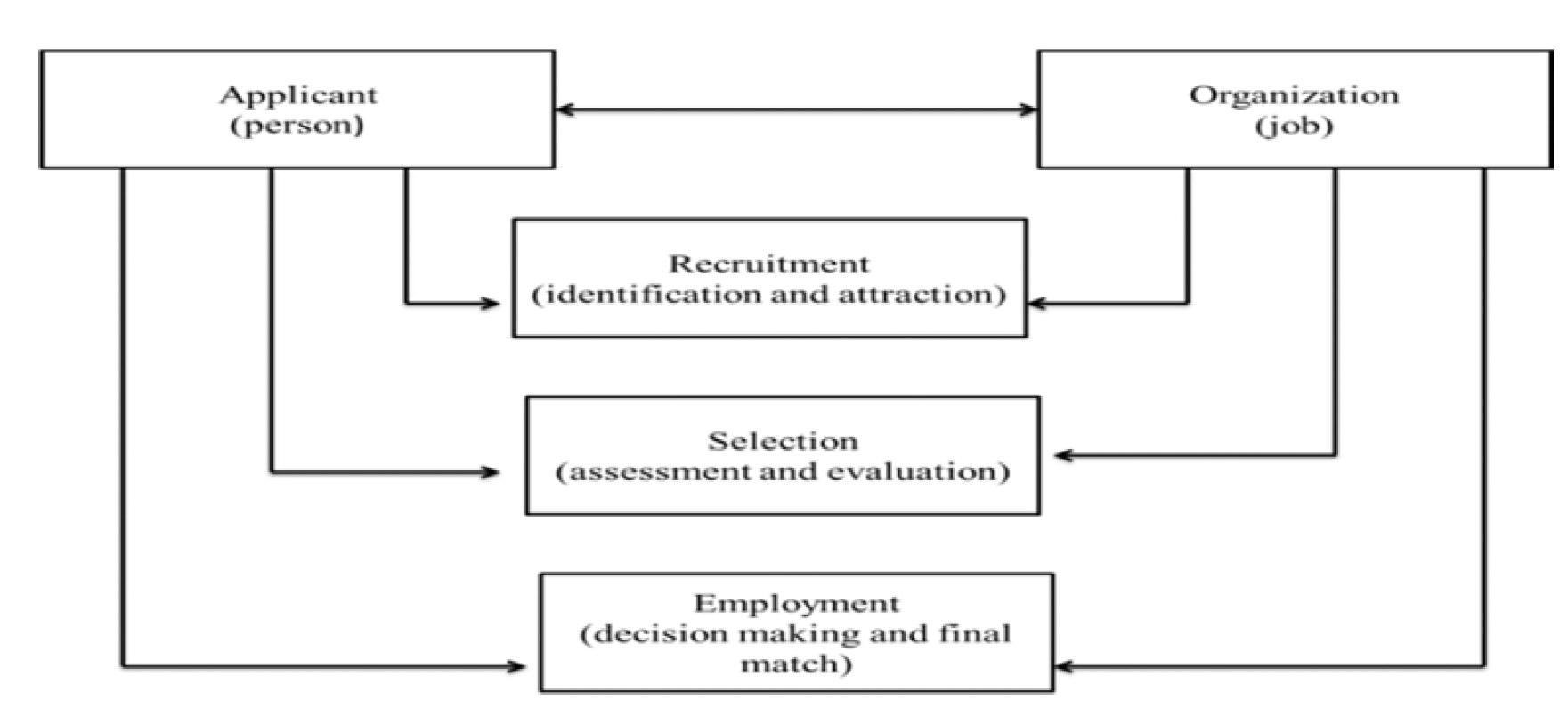
Generally, staffing cannot be discussed without mentioning Human Resource Management (HRM) because it constitutes a key component and aspect of HRM. Human Resource Management as a concept has been perceived differently by different authors and writers. According to Armstrong, HRM is defined as a strategic, integrated and coherent approach to the employment, development and well-being of the people working in organizations [22]. HRM in practice is concerned with all aspects of how people are employed and managed in organizations. It covers activities such as strategic HRM, human capital management, corporate social responsibility, knowledge management, organization development, resourcing (human resource planning, recruitment and selection and talent management), performance management, learning and development, reward management, employees’ relations, employee well-being and health and safety and the provision of employee services. In the same vein, Dessler perceived HRM as a process of acquiring, training, appraising and compensating employees, and attending to their labour relations, health and safety and fairness concerns [6]. Therefore, the two definitions incorporate staffing variables which has established that staffing is a component of HRM (Figure 1).
Figure 1: Staffing System Components Model
Source: Henenman and Judge [7]
It is against this background that Schnieder [28] viewed staffing as the processes involved in identifying, assessing, placing, evaluating and developing individuals at work.” That these processes operate in the acts of recruiting, selecting, appraising ad promoting individuals. Schnieder said staffing organizations adds breadth and scope to these processes and implies the impact of the characteristics of the organizations on the process themselves, on the development of people, and on the eventual contribution individuals make to the attainment of organizational goals. The objective of staffing procedures is to identify people willing and able to do a job. Therefore, the following two points must be kept in mind when staffing. Firstly, staffing procedures of an organization invariably constitute the first contact most people have with the organization. Therefore, the ways in which the staffing processes are carried out may be an important determinant of people’s attitudes toward the organizations. Secondly, staffing procedures are designed to identify people who will be able and willing to do a job well, it is of extreme importance to remember that the issue is to identify how well a person will perform in a particular organizational context. Therefore, the long-range design of the staffing process itself is based on the context of the working environment which includes job and organizational characteristics.
Chruden and Arthur [29] perceived staffing to be the process of analyzing present and future needs for human resources and of obtaining personnel to meet these needs”. That effective staffing includes the developing and maintaining of adequate sources of human resources from which applicants may be recruited and selected.
They said based on Civil Rights Movement and government legislation, recruitment no longer can be considered as being solely a process of locating those applicants most qualified for the job. Neither can it involve any policies or practices that may serve to discriminate against women and members of minority groups who previously might not have been considered for employment. Instead, recruitment must include positive efforts to seek out qualified applicants from these groups and to help them to qualify for employment through special training programmes.
Heneman and Judge [7] opined that staffing is a critical organizational function concerned with the acquisition, deployment and retention of the organization’s workforce of sufficient quantity and quality to create positive impacts on the organization’s effectiveness. The implication of this definition is that any organization must have staffing systems that guide the acquisition, deployment and retention of its workforce. Acquisition activities involve external staffing systems that govern the initial intake of applicants into the organization. These involve planning for the numbers and types of people needed, establishing job requirements in the form of the qualifications. Deployment refers to the placement of new hires in the actual jobs they will hold, something that may not be entirely clear at the time of hire, such as the specific work unit or geographic location. Deployment also encompasses guiding the movement of current employees throughout the organization through internal staffing systems that handle promotions, transfers, and new project assignments. Internal staffing systems mimic external staffing systems in many respects, such as planning for promotion and transfer vacancies, establishing job requirements and job rewards, recruiting employees for promotion or transfer opportunities, evaluating employees’ qualifications, and making job offers to employees for new positions. Retention systems seek to manage the inevitable flow of employees out of the organization. Sometimes these outflows are involuntary on the part of the employee, such as through layoffs or the sale of a business unit to another organization. Other outflows are voluntary in that they are initiated by the employee, such as leaving the organization to take another job (a potentially avoidable turnover by the organization) or leaving to follow one’s spouse or partner to a new geographic location (a potentially unavoidable turnover). Of course, no organization can or should seek to completely eliminate employee outflows, but it should try to minimize the types of turnover in which valued employees leave for “greener pastures” elsewhere.
In summary, staffing is an aspect of Human Resource Management which constitutes an inevitable exercise and activity required of any organization to plan for the number and quality of workforce that can drive its goals and objectives. This simply means, for every organization with workforce, such organizations have no choice than to identify the existing vacancies within managerial and non-managerial positions and then plan to fill these vacancies with the right set of people with the right job.
Staffing System Components Model
This model was developed by Henenman and Judge in 2003. It is systematic in nature and tries to manage the flow of people from outside into and within the organization, as well as retaining them. The core staffing process has several components that represent steps and activities that occur over the course of these flows. Staffing begins with a joint interaction between the applicant and the organization. The applicant seeks the organization and job opportunities within it, and the organization seeks applicants for job vacancies it has or anticipates having. But the applicant and the organization are thus involved as “players” in the staffing process from the very beginning, and they remain joint participants in the process. The applicant attempts to identify organizations with job opportunities through activities such as reading advertisements, contacting an employment agency, mass mailing résumés to employers, and so forth.
Gradually, recruitment activities phase into the selection stage and its accompanying activities. Now, the emphasis is on assessment and evaluation. For the organization, this means the use of various selection techniques (interviews, application blanks, and so on) to assess applicants KSAOs (knowledge, skills, abilities and other characteristics) and motivation. Data from these assessments are then evaluated against job requirements to determine the likely degree of person/job match. At the same time, the applicant is assessing and evaluating the job and organization on the basis of the information gathered from organizational representatives (e.g., recruiter, manager with the vacancy, and other employees), written information (e.g., brochures, employee handbook), informal sources (e.g., friends and relatives who are current employees), and visual inspection (e.g., a video presentation, a work site tour). This information, along with a self- assessment of KSAOs and motivation, is evaluated against the applicant’s understanding of job requirements and rewards to determine whether a good person/job match is likely.
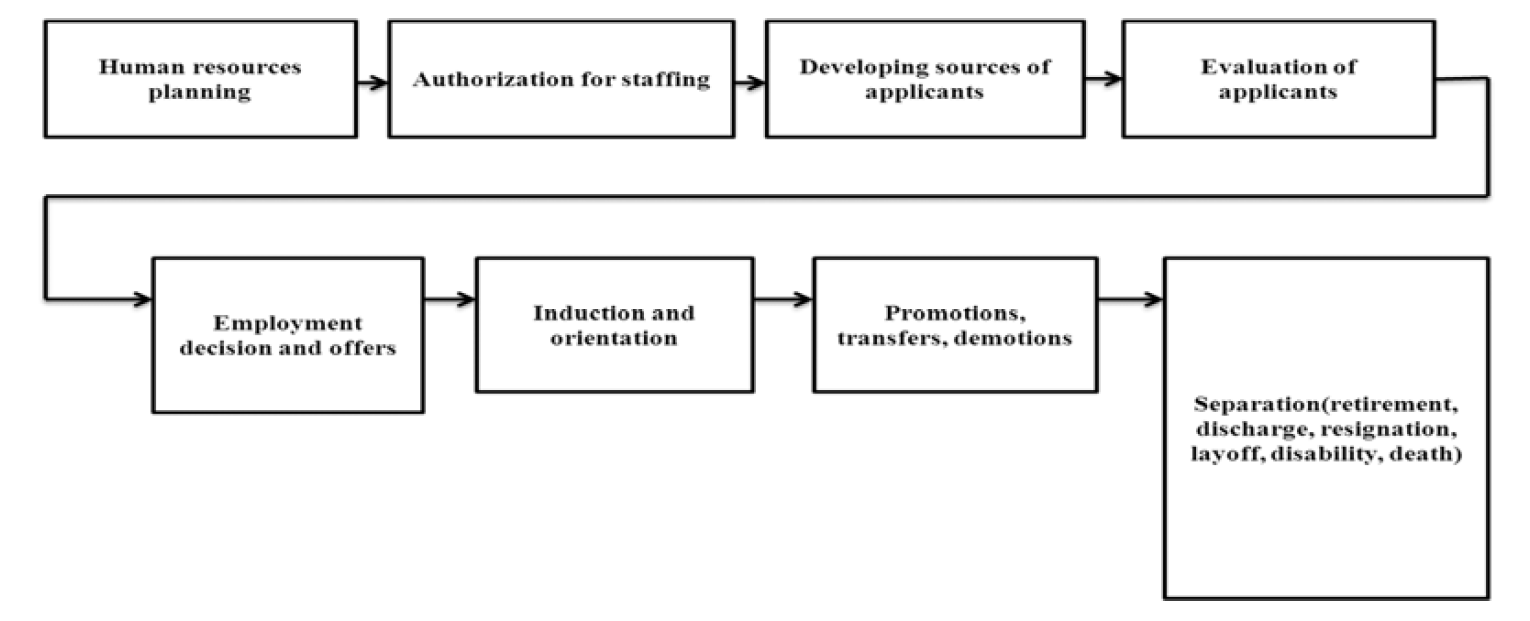
The last core component of staffing is employment, which involves decision making and final match activities by the organization and the applicant. The organization must decide which applicants to continue with the process and which to reject. This may involve multiple decisions over successive selection steps or hurdles. Some applicants ultimately become finalists for the job. At that point, the organization must decide to whom it will make the job offer, what the content of the offer will be, and how it will be drawn up and presented to the applicant. Upon the applicant’s acceptance of the offer, the final match is complete, and the employment relationshipis formally established (Figure 2).
Figure 2: Staffing Process
Source: French, W.L. [30]
For the applicant, the employment stage involves self- selection, a term that refers to deciding whether to continue in the staffing process or drop out. This decision may occur anywhere along the selection process, up to and including the moment of the job offer. If the applicant continues as part of the process through the final match, the applicant has decided to be a finalist. His or her attention now turns to a possible job offer, possible input and negotiation on its content, and making a final decision about the offer. The applicant’s final decision is based on overall judgment about the likely suitability of the person/job match.
The implication of this model is that, it ensures that both applicant(s) and organization(s) interact with each other with the aid of core staffing components to meet their needs. And as they interact, they become familiarized with each other, as applicants gets to know the purpose of the organization, the organization also knows the capability of the applicant. Another implication is that the core staffing components depends on each other because as vacancies are declared, recruitment is authorized and as recruitment is completed, selection exercise begins, and the outcome determines the employment decision. Finally, the interaction between the applicant and organization is mostly influenced by technological tools like internet, mobile phones, etc.
Importance of Staffing
The task of filling vacancies and positions across organization is becoming interesting to both local and international based organizations. Since such organizations must compete to gain and capture market shares, no weapon can be deployed except humans who through staffing process can be attracted, maintained and retained to facilitate organizational operation geared towards the attainment of organizational goals. In stating the relevance of staffing, Heneman and Judge [7] said a macro view of staffing is often lost or ignored because most of the day- to- day operations of staffing systems involves micro activities that are procedural, transactional, and routine in nature. While these micro activities are essential for staffing systems, they must be viewed within the broader macro context of the positive impacts staffing can have on organization effectiveness. Therefore, the task of staffing offers numerous benefits such as ensuring that organizations gets the right people for the right job at the right time, giving job satisfaction because employees are assigned to the right job, ensuring that organizations align individuals with organizational strategy, assisting organizations to identify workers needs and provides avenue for familiarizing new staff with organizational culture.
Staffing Process
The task of getting the right people to fill positions in today’s organization is scientific and systematic in nature because logical steps, stages and processes are being followed before, during and after such staff are hired to the point of exiting the organization. It is in this direction that French [30] said the staffing process is a flow of events that results in the continuous assignment of human resources to all organizational positions at all levels. This process includes the following sub-process i human resource planning, authorization for staffing, developing sources of applicants, evaluation of applicants, employment decisions and offers, induction and orientation, transfers, demotions, promotions and separations. French said this process is the flow of human resources into, within and out of the enterpriseThe above process is systematic in nature, because of the stages involved. The human resource planning is charged with the responsibility of determining vacancies and how such vacancies will be filled. The authorization for staffing is simply the approval by the organization to recruit, select, etc. developing of sources of applicants decides whether applicants will be employed within the organization or outside the organization. Evaluation of applicants is the general assessment and test conducted to pick applicants with the required knowledge, skill and attitude. Employment decision and offer is when the successful applicants are finally considered by the organization for employment. Induction and orientation is a stage where the newly employed staffs are exposed to the norms, culture and tradition of the organization. Promotion, transfer and demotion is the rising and elevating of staffs who are hardworking, moving of staff to different departments to acquire experience and ensuring that those that cannot abide by rules and regulations are punished by occupying positions below their normal level or position. Finally, employees retire from the organization after spending the stipulated period, discharged for incompetent, resign for other appointments, etc.
Schuster [31] postulated that staffing process is a flow of activities that results in the continuous staffing of organizational positions. And that the aim of staffing process is to locate, identify and acquire the human resources necessary to achieve organizational objectives. Therefore, the basic elements of the staffing process are manpower planning, recruitment, selection and placement.
Yalokwu [32] said the staffing of an organization for managerial and non- managerial positions consists of four sequential steps namely, recruitment, selection, training and development and performance appraisal.
Therefore, discussing the processes is of choice whether to broaden or narrow them. Staffing processes are made up of elements such as manpower planning, recruitment, selection, induction, training and development, performance appraisal, compensation, and others.
Manpower planning
Manpower planning otherwise called Human Resources (HR) planning or human resource anticipation according to French [30] consists of the sub- process which is an integral part for effective managing the staffing process. This sub-process includes an analysis of the levels of skill in the organization (skills inventory), an analysis of current and expected vacancies due to retirements, discharges, transfers, promotions, sick leaves, leaves of absence, etc. In addition, French stated that human resource planning is a comprehensive ongoing process. Pattern cited in French [30] argued that human resource planning is the process by which a firm insures that it has the right number of people, and the right kind of people, in the right places, at the right time, doing things for which they are economically most useful.
Cole [33] observed that planning the resources of the organization is a key responsibility of every senior manager. Therefore, it is important to ensure that sufficient numbers of the appropriate caliber of people are available to the organization in pursuit of its objectives. Every organization has to make some attempts to acquire, train, re-deploy and dismiss employees in the course of its activities. The Department of Employment cited in Cole [33], human resource planning is a strategy for the acquisition, utilization, improvement and retention of an enterprise’s human resources. Finally, Cole said human resource planning will be taken to mean any rational and planned approach for ensuring recruitment of sufficient and suitable staff, retention in the organization, optimum utilization of staff, improvement of staff performance and disengagement of staff, as necessary.
Recruitment
After successful HR planning, a situation where vacancies exist, with shortage of workers, recruitment exercise becomes inevitable. Recruitment is concerned with attracting a pool of applicants. These applicants can be locally pooled together for domestic organizations or internationally pooled for global organizations. Recruitment as a concept has no universally accepted definition. According to Amuno [5], recruitment can be defined as the process of attracting qualified people to apply for positions within an organization. In addition, recruitment can be done internally using current employees of the organization or externally, using applicants who have not worked with the organization before. In the same direction, Yalokwu [32] perceived recruitment to be the process of attracting qualified personnel to fill specific jobs. Recruiting according to Mathis and Jackson is the process of generating a pool of qualified applicants for organizational jobs.
Selection
Selection and recruitment are two different processes in the staffing exercise because HR professionals and experts are more thorough and painstaking at this stage. Picking from the pool who to offer employment is a sensitive task that requires experience and selective ability, also taking into consideration employment regulations and laws. It is in this connection that Yalokwu [32] said selection is the process of choosing the right candidate from a pool of applicants and is aimed to achieve a good match between the job requirements and the candidate’s knowledge, skills and motives.
Induction
As soon as jobs are offered, the tag of an applicant automatically changes to employee. That change from applicant to employee, takes such an employee to a new environment where his/her need to familiarized and acquainted for the benefit of understanding how the environment operates. Introducing and initiating an employee will be discussed extensively under this section. Armstrong [22] defined induction as the process of receiving and welcoming employees when they first join a company and giving them the basic information they need to settle down quickly and happily and start work. The aim is to smooth the preliminary stages when everything is likely to be strange and unfamiliar to the starter, establishing quickly a favourable attitude to the organization in the mind of new employees so that they are more likely to stay, obtain effective output from the new employee in the shortest possible time and reduce the likelihood of the employee leaving quickly.
Employees who join the organization newly need to be handled with care because their first impression last for a long period of time. It is the same impression that will determine whether they stay or move to other organizations. When employees move to other organizations, after one month of employment, it amounts to waste of resources and staff turnover which affects productivity. Giving employees new orientation is a means of empowering them to do what is expected of them and doing it well. And therefore, induction stage in staffing process remains essential and vital and should not be ignored.
The way and manner in which employees are introduced, initiated and inducted into organizations varies from organization to organization. Armstrong [22] identified five stages employees pass through to have new orientation about the organization namely; reception, documentation, company induction, introduction to the workplace, formal induction course, and on-the-job induction training. This means, induction can take place at different levels in the organization.
Training and Development
Both new and existing employees, non-managerial and managerial staff, non-technical and technical staff needs training and development because the competitive pressure being witnessed by organizations today require employees whose knowledge and ideas are current, and whose skills and abilities can deliver results. The influence of globalization on organization has make training inevitable and more critical than before. Therefore, as new employees require training to acquire knowledge in order to build capabilities to carry out the expected task, managers and management also need training and development to boost their leadership skills and experiences including problem solving and decision –making skills in order to excel in their leadership positions. In the same vein, Yalokwu [32] said in the past, it was wrongly assumed that training was meant for non-managerial staff only, but since the advent of information technology and knowledge economy characterized by technological changes and attendant re-engineering of organizational structures and rationalization of employment, training has come to take a wider meaning as any other level of employee may need one kind of training or another in the course of his career and work life.
Therefore, training and development are two different concepts, though many use them interchangeably. According to Skinnetz cited in Yalokwu [32], training is defined as “a short-term process utilizing a systematic and organized procedure by which non-managerial personnel learn technical knowledge and skills for a definite purpose”. Cascio viewed training to consist of planned programs designed to improve performance at the individual, group, and /or organizational levels. Mathis and Jackson argued that training is a process whereby people acquire capabilities to aid in the achievement of organizational goals Finally, [22] perceived training as the application of formal processes to impart knowledge and help people to acquire the skills necessary for them to perform their jobs satisfactorily.
On the other hand, Yalokwu [32] defined development as referring broadly to the nature and direction of change induced in employees as a result of educational and training programmes. He further said, training and development is a continuous phenomenon, as training emphasizing technical and manual skills at one extreme and development emphasizing philosophical and creative skills at the other extreme. To agree with Yalokwu, Mathis and Jackson stated that development is broader in scope and focuses on individuals gaining new capabilities useful for both present and future jobs. In the same vein, Armstrong [22] opined that development is concerned with ensuring that a person’s ability and potential are grown and realized through the provision of learning experiences or through self-directed (self-managed) learning. It is an unfolding process that enables people to progress from a present state of understanding and capability to a future state in which higher –level skills, knowledge and competencies are required [22].
In conclusion, training is low level knowledge oriented and a means of bridging knowledge gap that has been identified to enhance performance while development is experienced oriented that seeks to arm top management with the conceptual skills in solving problems and taking decisions in order to excel in their leadership positions as they advance in their career.
Performance Appraisal (PA)
Organizations generally give priority to performance maximization to achieve efficiency and effectiveness in order to actualize organizational goals. Where employees cannot perform up to expected and set standards, the attainment of goals and objectives become difficult and the competitiveness of the organization is weakened and threatened. Performance appraisal can also mean employee rating, employee evaluation, performance review, performance evaluation and results appraisal. According to Amuno [5], performance appraisal is the process of Human Resource Management that involves a continuous judgment of the behaviour and performance of staff. He further said PA is the process of evaluating employee performance with a view towards improving it. That is to mean it is a diagnostic tool for assessing employee performance against set objectives and identifying their potentials for improvement and development. Cole [33] observed that PA is carried out within a practical context, which is essentially the day-to-day business of the enterprise aimed at assessing employee’s performance in carrying out the general duties of his or her role, together with any specific targets that have been set and the assessment of a person’s suitability for promotion, either generally or with specific job in mind. In appraisal situation, employees are entitled to ask what aspect of their job are being assessed and against what criteria. Employees will also want to know the process of appraisal will be carried out and what opportunities they themselves will have to contribute to it. In most cases the appraisal is conducted by the employee’s immediate manager, but for some management posts, the appraisal may involve the manager’s own staff and colleagues known to be 360-degree appraisal.
Another definition offered by Mathis and Jackson is that PA is the process of evaluating how well employees perform their jobs when compared to a set of standards, and then communicating that information to those employees. They concluded that PA is widely used for administering wages and salaries, giving performance feedback and identifying individual employee strengths and weaknesses. Yalokwu [32] concluded by saying PA is a judgment process about an individual’s past and present performance against the background of a given work environment and about potential future contribution to an organization. He also said the difficulties in the appraisal process and series of complaints made the Federal Government of Nigeria to set up a committee in the Federal Public Review Commission otherwise known as Udoji Commission to review the country’s performance appraisal system. It was the outcome of this commission that gave rise to change from a confidential reporting system of performance appraisal to an open one. The Open Reporting System (ORS) that allows the employees to participate in the rating process is wide spread and used in other countries too.
Performance appraisal as a tool for assessing and evaluating employees has the following objectives:
To identify the strengths and weaknesses of individual employees and see that such strengths are judiciously utilized and maximize while the weaknesses are minimize
A tool that helps individual employees understands their roles and functions relating to their specific jobs
It is a feedback mechanism that provides information for decision concerning promotion, transfer, payment/reward and punishment
It is a diagnostic tool for identifying training and development gaps
Enhances communication between superior and subordinates
It encourages participation and teamwork
It is considered as a means for instilling the principle of accountability and making individual employees responsible
provides standards and criteria for measuring such standards
it enables organizations align employees with its goals and objectives
it enables superiors to predict, explain, describe and modify individual employees
Compensation
Compensation is a sensitive element of staffing process and one of the most important factors influencing relations between management and the workers. In fact, compensation is tool and mechanism organizations deploy to attract and retain qualified employees. This compensation received by employees can be financial and non-financial compensation or benefits. This benefit is of significant important to employees not only what the money can buy but psychologically what it will provide the employees in terms of status and recognition within and outside the organization. In the same vein, Chruden and Arthur [29] stated that money represents a quantifiable measure of employee’s worth as they are sensitive about the amount of pay, they receive in return for their contributions on the job and how this amount compares with other employees are receiving for their contributions. Schuster [31] also contributed to this end by saying the reward system is a crucial element of the work environment as both the organizational climate and the reward system communicate much to each employee about the organization in which he or she is working. The reward system determines the basis on which individuals in an organization will be able to satisfy their personal needs. Therefore, the reward systems that incorporates all the benefits and rewards entitled to an employee is called total reward.
Compensation can now be said to mean the financial and non-financial, the monetary and non-monetary, the intrinsic and extrinsic rewards put in place or designed by organizations to encourage positive behaviours among employees that will pursue the goals and objectives defined by the organization. For organizations to remain competitive, they need to develop reward packages and systems that satisfy people. These reward packages and systems incorporate both monetary and other rewards to attract, motivate, and retain employees. The success of a pay system depends on linking organizational objectives and strategies to compensation so that individuals are encouraged to work in a manner that benefits the organization and its stakeholders.
An accurate compensation system that is error free is geared towards achieving such objectives:
Legal Compliance with all Appropriate Laws and Regulations: As stipulated by the Civil Rights Act, which mandated employers to remunerate and compensate employees under their control appropriately. That the efforts exerted on any given job should be equal and commensurate with the benefits
Cost Effectiveness for the Organizations: It must be recognized that labour costs are contingent not only upon the amount of money paid out for wages but also upon the productivity gained from employees in return. Thus, the labour of employees who are paid the highest wage rates may be less costly if their contributions on the job equals or exceeds the amount of their pay. Conversely, the labour of employees who are paid the lowest wage rates may be costlier if their performance is worth less than the amount of their pay
Internal and external equity among individuals: Ensuring that employees within the organization receive benefits that can be equated with another employee performing the same task and on the same level. And also, the ability to compare what employees of other organizations are receiving with the same task and job
Communicating Salary Decisions Effectively: Employees through effective compensation programme, get informed on what their entitlements and benefits are as relate to their jobs. What they intend getting is predictable
Enhanced Recruitment, Retention and Motivation: An effective benefit system is of advantage to organization to attract qualified applicants, retain them and induce them to pursue organizational goals
Performance Recognition and Management: A good compensation system sees that employees who have done exceedingly well are commended and rewarded. This approach sustains performance in the long-run
Theoretical Framework
Scholars have developed and propounded series of theories that relates to this study. These theories in totality give a clear understanding of globalization and staffing.
Network Theory
This theory is of theview that relationships and connections within domestic organizations is a bridge that connects them to international and global organizations [24]. The basic assumption in the network approach is that international firm cannot be analyzed as an isolated actor but has to be viewed in relation to other actors in the international environment [24]. Actors are autonomous and linked to each other through relationships, which are flexible and may alter accordingly to rapid changes in the environment. The glue that keeps the relationships together is based on technical, legal and personal ties. Another assumption in the network model is that the individual firm is dependent on resources controlled by other firms. The companies get access to these external resources through their network positions. Since the development of positions takes time and depends on resource accumulations, a firm must establish and develop positions in relation to counterparts in foreign networks. To enter a network from outside requires that other actors be motivated to engage in interaction, something which is resource demanding and may very well be the result of interaction initiatives taken by other firms that are insiders in the network in the specific country. However, the chances of being the object of such initiatives are much greater for an insider. The network in a country may well extend far beyond country borders.
The implication of this theory is that for ASCON to sustain its operations, there is need to link and connect to its counterpart organizations that has the skills, talents and experience that will facilitate its operations within the domestic domains for international and global operations. And as ASCON network, its processes of hiring will also be upgraded to attract skills and talents that are required at the international and global market.
Transformation Theory
This theory was developed by Held, McGrew, Goldblatt and Perraton in [18]. They said the world is currently experiencing rapid changes in social, political, economic and technological spheres that have brought about massive transformation across states and organizational processes. This has enabled government across the globe to become outward looking to seek and pursue comparative strategies to construct international regulatory regimes in order to manage cross-border issues that surface regularly on national agendas. Apart from governments and states transformation, new pattern of economic activities has also emerged for organizations to adjust to the global trends of handling economic operations. The innovations and inventions in technology which is the fundamental instrument of transformation is also changing organizational faces, as their operational processes, procedures and methods are being upgraded to advanced technology.
The implication of this theory is that organizations are changing and their processes and procedures are transforming from the traditional outlook that restricted them from having competitive edge to more advanced technology that is modernizing their processes for a competitive and comparative advantage. This transformation has significantly affected the human resource department across organizations which are now a portal for electronic recruitment, electronic selection, electronic induction etc. This means ASCON as an organization, its processes and procedures of operations particularly the staffing processes must be transformed from the manual process to a modernized system that can attract and select high skilled workforce who can facilitates its competitive advantage within the domestic market and the international and global arena.
Empirical Review
Onodugo [34] examined the impact of globalization on key areas of human resources management among Nigerian organizations which revealed that many Nigerian organizations have changed their human resource policies as a result of global factors, as most highly skilled staff have left Nigerian organizations in search of greener pastures overseas and most Nigerian organizations within the sectors investigated have reviewed their income and compensation structure upward so as to retain their staff and cope with the scramble for few existing skilled personnel. A sample size of 385 personnel was determined from the total population of 13,446 of the selected 8 multinational firms from oil, banking and manufacturing sectors. Survey design method was used and data were collected using questionnaire and structured interview and data collected was analyzed using SPSS. This study was limited to mobility of skilled staff in relations with income and compensation.
Also Veeran [35] investigated the impact of globalization on human resource management policies and procedures in the South African Public Service and revealed that for the South African Public Service to compete globally, public servants must be trained and developed to handle issues on a global scale, public institutions should have the flexibility to respond to complex and rapidly changing global circumstances and that all personnel should understand and relate to the varied international cultures. A total population of 90 comprising of Directors- General, Chief Directors, Directors, middle management and lower management were selected as sample size while data were collected using face-to- face interviews and through e-mails by means of structured questionnaires. This study was limited to training and development.
The above studies were limited to compensation, training and development, neglecting other components of staffing like recruitment, selection and induction which this study seeks to examine.
Historical Background ofthe Administrative Staff College of Nigeria (ASCON)
According to Haruna [36], the exit of the Colonial Masters after independence left a gap in the Nigerian public service. The regions tried to fill these by sponsoring their candidates to various institutions abroad both for development and job-related training. In line with this quest, the Federal Government set up a commission to carry out a survey of the training needs of the Federal Civil Servants. The commission was headed by Professor C. P. Wolle, a senior consultant in Public Administration in the University of Ife, Ile-Ife (now called Obafemi Awolowo University). The white paper of the commission was published in April, 1969. Among the various recommendations was the establishment of an Administrative Staff College. It stated that the government should provide for the development of senior executives in all cadres. The college to be set up was to be independent of the Universities but co-operating with them in every way possible. In the final analysis, the Administrative Staff College of Nigeria (ASCON) was set up and commenced operations on the 1st of June, 1972. It was incorporated in 1973 by decree 39 of the Federal Military Government now ASCON Act with the following objectives:
To provide higher management training for the development of senior executives for the public and private sectors of the economy
To provide and arrange for a comparative study and investigation of the principles and techniques of management and administration for exchange of ideas and experiences and for promotion of a better understanding between persons concerned with management and administration in the various spheres of national life
To conduct research into problems of management and administration arising in different spheres of national life
To award and grant scholarship or travel fellowship for research in public administration and allied subjects
To establish and maintain a library
To undertake, organize and facilitate study courses, conferences, lectures, seminars and the like, and to promote the aforesaid objectives; and
To undertake and provide for the publication of journals and research papers and books in furtherance of the aforesaid objectives
Today, ASCON has eleven (11) faculty departments that include the library. Others are
Leadership Development and Legislative Studies Department (LDLSD)
Local Government Studies Department (LGSD)
Management Consultancy Studies Department (MCSD)
Business Enterprise Management Studies Department (BEMSD)
Public Administration Studies Department (PASD)
Computer and Information Studies Department (CISD)
Economic and Financial Studies Department (EFSD)
Management Studies Department (MSD)
Gender Studies Department (GSD)
Planning, Research and Publication Department (PRPD)
The non-faculty, that is the support services include Department of Human Resource, Department of General Services and Corporate Affairs, Finance and Accounts Department and Procurement Department.
ASCON is governed by a board to which the Director-General reports. At the apex, it is supervised by the Head of the Civil Service of the Federation.
METHODOLOGY
The research study adopted descriptive survey design to generate primary data from the use of questionnaire and interview while secondary data were generated from relevant textbooks, journals, government publications and internet. The survey research design was deployed to allow the researcher make more reliable conclusions on effect of globalization on staffing in ASCON. Since it was difficult to cover all organizations in Nigeria, ASCON was selected for the study with a total population of three hundred and two (302) senior staff from grade levels 08 and above [37].
The simple random sampling method which ensure that each member of the senior staff selected were represented and the stratified random sampling method which concentrated only on the senior staff in all the departments in ASCON were deployed.
The sample size of 172 respondents was derived from the total population of 302 staff to participate in the survey by filling and returning the questionnaire. This sample size was derived using Taro Yamane sample size determination technique:
Where
N : The desired sample size
N : Population size
1 : Constant
E : Allowable error of margin = 5%
The questionnaire designed was based on 5- point Likert scale (strongly agree, agree, undecided, disagree and strongly disagree) to measure opinions of respondents on the content scope (globalization and staffing). The questionnaire was divided into two sections. Section A (demographic response) and section B (study content response). Interview was also conducted using a structured interview guide to validate responses from the returned questionnaire.
Data Analysis
Data for the study was analyzed using tables and simple percentage for frequency distribution with the aid of Statistical Package for Social Sciences (SPSS) software to answer key research questions and formulated hypotheses. Out of the 172 questionnaires administered to different grade levels across the departments, sections and units, 142 were retrieved, this represents a response rate of 82.5%.
Research Question 1
What is the effect of technological advances on recruitment process in ASCON
Hypotheses One
H0: Technological advances have no significant effect on recruitment process in ASCON
H1: Technological advances have significant effect on recruitment process in ASCON
Table 1 presents data on the significant effect of technological advances on recruitment process in ASCON. Out 142 respondents, 4 respondents representing 2.8% strongly agreed with the statement thattechnological advances have significant effect on recruitment process in ASCON, 24 respondents representing 16.9% agreed with the statement, 9 respondents representing 6.3% were indecisive of the statement, 63 respondents 44.4% disagreed with the statement, 41 respondents representing 28.9% strongly disagreed with the statement and 1 respondents representing .7% failed to indicate in any of the options provided. This shows that majority of the respondents were of the view that technological advances have no significant effect on recruitment process in ASCON.
Table 1: Technological Advances Have Significant Effect on Recruitment Process in ASCON
Parameters
Frequency
Percent
Cumulative Percent
Valid
Strongly agree
4
2.8
2.8
Agree
24
16.9
19.9
Undecided
9
6.3
26.2
Disagree
63
44.4
70.9
Strongly disagree
41
28.9
100.0
Total
141
99.3
-
Missing
Value
1
0.7
-
Total
142
100.0
-
Source: Field survey, 2017
Research Question Two
What is the effect of technological advances on selection process in ASCON?
Hypotheses Two
H0: Technological advances have no significant effect on selection process in ASCON
H1: Technological advances have significant effect on selection process in ASCON
Table 2 presents data on significant effect of technological advances on selection process in ASCON. Out of 142 respondents, 3 respondents representing 2.1% strongly agreed with the statement that technological advances have significant effect on selection process in ASCON, 34 respondents representing 23.9% agreed with the statement, 5 respondents representing 3.5% were indecisive of the statement, 62 respondents representing 43.7% disagreed with the statement, 36 respondents representing 25.4% strongly disagreed with the statement and 2 respondents representing 1.4% failed to indicate from any of the options provided. This implies that technological advances have no significant effect on selection process in ASCON.
Table 2: Technological Advances Have Significant Effect on Selection Process in ASCON
Parameters
Frequency
Percent
Cumulative Percent
Valid
Strongly agree
3
2.1
2.1
Agree
34
23.9
26.4
Undecided
5
3.5
30.0
Disagree
62
43.7
74.3
Strongly disagree
36
25.4
100.0
Total
140
98.6
-
Missing
Value
2
1.4
-
Total
142
100.0
-
Source: Field survey, 2017
Research Question Three
What is the effect of technological advances on induction process in ASCON?
Hypotheses Three
H0: Technological advances have no significant effect on induction process in ASCON
H1: Technological advances have significant effect on induction process in ASCON
Table 3 presents data on the significance of technological advances on induction process in ASCON. Out of 142 respondents, 14 respondents representing 9.9% strongly agreed with the statement that technological advances have significant effect on induction process in ASCON, 41 respondents representing 28.9% agreed with the statement, 8 respondents representing 5.6% were indecisive of the statement, 48 respondents representing 33.8% disagreed with the statement, 30 respondents representing 21.1% strongly disagreed with the statement and 1 respondent representing .7% failed to indicate from any of the options provided. This shows that majority disagreed that technological advances have effect on induction process in ASCON.
Table 3: Technological Advances Have Significant Effect on Induction Process in ASCON
Parameters
Frequency
Percent
Cumulative Percent
Valid
Strongly agree
14
9.9
9.9
Agree
41
28.9
39.0
Undecided
8
5.6
44.7
Disagree
48
33.8
78.7
Strongly disagree
30
21.1
100.0
Total
141
99.3
-
Missing
Value
1
0.7
-
Total
142
100.0
-
Source: Field survey, 2017
DISCUSSION
The percentage from Table 1-3 of the analysis showed clearly that in answering the three research questions, technological advances have no effect on recruitment, selection and induction in ASCON. Table 1 above agreed with the null hypotheses (Ho) which says “technological advances have no significant effect on recruitment process in ASCON” and disagreed with the alternate hypotheses (H1) that says “technological advances have significant effect on recruitment process in ASCON”. Table 2 also agreed with the null hypotheses (Ho) which says “technological advances have no significant effect on selection process in ASCON” and disagreed with the alternate hypotheses (H1) that says “technological advances have significant effect on selection process in ASCON”. Finally, Table 3 agreed with the null hypotheses (Ho) which says “technological advances have no significant effect on induction process in ASCON” and disagreed with the alternate hypotheses (H1) that says “technological advances have significant effect on induction process in ASCON”. The outcome of this study is contrary to the views of Karasek [9] who said the transformation of technology and information technology by business enterprises is now giving rise to e- human resource functions like e-recruitment and selection to deploy software for attracting skills and talents.
Reccommendations
Based on the research findings, the following recommendations were made:
Upgrade Recruitment Process and Acquire Recruitment Software
ASCON should upgrade to computerized system of recruitment where Human Resource Planners can advertise vacancies to be filled by external applicants using ASCON website instead of advertising such positions only in the national newspapers. The idea is to have a pool of qualified applicants located in different parts of the world to compete for the existing positions.
ASCON should deploy Human Resource Information System expertise that can assist in procuring and installing recruitment software that can carry out the tracking of applications from applicants and at the same time filtering them based on the skills and talents needed by ASCON.
Upgrade Selection Process and Acquire Selection Software
ASCON should upgrade from pen and paper-based method to computer-based method testing to assess its applicants for both skills required to occupy positions and proficiency in computer operations. Having a modernized system of selection is important because it determines the quality of applicant to be hired at the end of the exercise.
ASCON should note that recruitment software serves a different purpose from selection software and therefore, procuring selection software will enable ASCON assess and examine its applicants using different platforms.
Interactive Website
ASCON should have an active and interactive website to enable applicants assess vacancies and make clarifications on issues relating to recruitment, selection other information that will enable them have in-depth knowledge of ASCON.
Partnership Programmes
ASCON should partner with stakeholders across other public service and administrative institutes from other countries to utilize opportunities like staff exchange and sabbatical programmes among others to have access to skills that are in short supply rather than limiting to the guidelines provided by the Federal Civil Service Commission for appointment and employment.
REFERENCE
Mzee, P.K. The context of globalization and human resource need and strategy for developing countries – the case of African countries. Creative Commons Attribution License, 2012.
Olubukola, S.A. “The negative impact of globalization on Nigeria.” International Journal of Humanities and Social Science, vol. 2, no. 5, 2012.
Kapoor, B. Impact of globalization on human resource management. Cal State University State, 2012.
Shenkar, O. et al.International business. John Wiley & Sons, 2004.
Amuno, J. Human resource management: lecture module. Crawford University, 2016.
Dessler, G. Human resource management. 12th ed., Prentice Hall, 2011.
Heneman, H.G. et al.Staffing organizations. 4th ed., Mendota House, 2003.
Kabir, H.D. “Globalization and the challenge for Nigeria’s development.” Microeconomics and Macroeconomics, vol. 1, no. 1, 2012, pp. 12–19.
Karasek, A. “Information technologies in human resources management – selected examples.” International Journal of Social, Behavioral, Educational, Economic, Business and Industrial Engineering, vol. 9, no. 6, 2015.
World Economic Forum. Global talent risk – seven responses. 2011.
McKinsey Global Institute. The emerging global labor market: part I – the demand for offshore talent in services. 2005.
Ajayi, S.I. “What Africa needs to do to benefit from globalization.” International Journal of Finance and Development, vol. 38, no. 4, 2001, pp. 6–8.
Knox, P. et al.The geography of the world economy. Arnold Press, 1998.
Giddens, A. The consequences of modernity. Polity Press, 1990.
Giddens, A. Modernity and self-identity: self and society in the late modern age. Polity Press, 1991.
Aninat, E. “Surmounting the challenges of globalization.” International Journal of Finance and Development, vol. 39, no. 1, 2002, pp. 4–7.
Powell, J.A. et al. “Race, poverty & globalization.” Poverty and Race Research Action Council, vol. 9, no. 3, 2000.
Held, D. et al.Global transformations: politics, economics and culture. Polity Press, 1999.
Hirst, P. et al. “The future of globalization.” Journal of the Nordic International Studies Association, vol. 37, no. 3, 2002, pp. 247–265.
World Bank. Globalization, inequality, and poverty since 1980. 2001.
Volberda, H.W. et al.Strategic management – competitiveness and globalization: concepts and cases. Cengage Learning, 2011.
Armstrong, M. Armstrong’s handbook of human resource management practice. 12th ed., Kogan Page, 2012.
Macaver, O.J. International business and techniques: lecture module. Crawford University, 2016.
Hollensen, S. Global marketing. 4th ed., Prentice Hall, 2007.
Friedman, T.L. “It’s a flat world, after all.” New York Times Magazine, 2005.
Hill, C.W.L. Global business today. 5th ed., McGraw-Hill, 2008.
Kotabe, M. et al.Global marketing management. 2nd ed., John Wiley and Sons, 2001.
Schneider, B. Staffing organizations. 10th ed., Goodyear Publishing Company, 1976.
French, W.L. The personnel management process: human resources administration. 4th ed., Houghton Mifflin Company, 1978.
Schuster, F.E. Contemporary issues in human resource management: cases and readings. Reston Publishing Company, 1980.
Yalokwu, P.O. Fundamentals of management. 2nd ed., African Centre for Management and Education, 2006.
Cole, G.A. Personnel and human resource management. 5th ed., Continuum Publisher, 2002.
Onodugo, V.A. Impact of globalization on human resources management in Africa. 2012.
Veeran, P. The impact of globalisation on human resources management policies and procedures in the South African public service. Cape Peninsula University of Technology, 2012.
Haruna, A. Staff development and transfer of learning in selected public. 2015.
ASCON. Nominal roll. 2017.
License
Creative Commons Attribution-NonCommercial-NoDerivatives 4.0 International License
All papers should be submitted electronically. All submitted manuscripts must be original work that is not under submission at another journal or under consideration for publication in another form, such as a monograph or chapter of a book. Authors of submitted papers are obligated not to submit their paper for publication elsewhere until an editorial decision is rendered on their submission. Further, authors of accepted papers are prohibited from publishing the results in other publications that appear before the paper is published in the Journal unless they receive approval for doing so from the Editor-In-Chief.
Himalayan Journal of Economics and Business Management open access articles are licensed under a Creative Commons Attribution-Share A like 4.0 International License. This license lets the audience to give appropriate credit, provide a link to the license, and indicate if changes were made and if they remix, transform, or build upon the material, they must distribute contributions under the same license as the original.
Recommended Articles
Research Article
Influence of Leadership on Poverty Reduction in the Devolved Government in Trans-Nzoia County, Kenya
Kinisu Sifuna,
...
Peter Simotwo
Published: 30/06/2021
Download PDF
Cite
x
APA
Sifuna, K., Lwangale, D. W., Simotwo, P., Sifuna, K., Lwangale, D. W. & Simotwo, P. (2021). Influence of Leadership on Poverty Reduction in the Devolved Government in Trans-Nzoia County, Kenya. Himalayan Journal of Economics and Business Management, 2(1), None-None.
MLA
Sifuna, Kinisu, et al. "Influence of Leadership on Poverty Reduction in the Devolved Government in Trans-Nzoia County, Kenya." Himalayan Journal of Economics and Business Management 2.1 (2021): None-None.
Chicago
Sifuna, Kinisu, David W. Lwangale, Peter Simotwo, Kinisu Sifuna, David W. Lwangale and Peter Simotwo. "Influence of Leadership on Poverty Reduction in the Devolved Government in Trans-Nzoia County, Kenya." Himalayan Journal of Economics and Business Management 2, no. 1 (2021): None-None.
Harvard
Sifuna, K., Lwangale, D. W., Simotwo, P., Sifuna, K., Lwangale, D. W. and Simotwo, P. (2021) 'Influence of Leadership on Poverty Reduction in the Devolved Government in Trans-Nzoia County, Kenya' Himalayan Journal of Economics and Business Management 2(1), pp. None-None.
Vancouver
Sifuna K, Lwangale DW, Simotwo P, Sifuna K, Lwangale DW, Simotwo P. Influence of Leadership on Poverty Reduction in the Devolved Government in Trans-Nzoia County, Kenya. Himalayan Journal of Economics and Business Management. 2021 Jan;2(1):None-None.
Download PDF
Research Article
Modelling Structure Job Quality, Job Design and Job Satisfaction
Moch Nurhadi,
...
Avi Sunani
Published: 30/08/2022
Download PDF
Cite
x
APA
Nurhadi, M., Bisyri Effendi, M., Saiful Ulum, A. & Sunani, A. (2022). Modelling Structure Job Quality, Job Design and Job Satisfaction. Himalayan Journal of Economics and Business Management, 3(2), 1-4.
MLA
Nurhadi, Moch, et al. "Modelling Structure Job Quality, Job Design and Job Satisfaction." Himalayan Journal of Economics and Business Management 3.2 (2022): 1-4.
Chicago
Nurhadi, Moch, Moch Bisyri Effendi, Achmad Saiful Ulum and Avi Sunani. "Modelling Structure Job Quality, Job Design and Job Satisfaction." Himalayan Journal of Economics and Business Management 3, no. 2 (2022): 1-4.
Harvard
Nurhadi, M., Bisyri Effendi, M., Saiful Ulum, A. and Sunani, A. (2022) 'Modelling Structure Job Quality, Job Design and Job Satisfaction' Himalayan Journal of Economics and Business Management 3(2), pp. 1-4.
Vancouver
Nurhadi M, Bisyri Effendi M, Saiful Ulum A, Sunani A. Modelling Structure Job Quality, Job Design and Job Satisfaction. Himalayan Journal of Economics and Business Management. 2022 Jul;3(2):1-4.
Download PDF
Research Article
The Constitutional and Legislative Basis for Considering the Taxable Capacity of Taxpayers in Iraqi Tax Legislation
Hussein Kamel Wadaa
Published: 05/05/2025
Download PDF
Cite
x
APA
Wadaa, H. K. (2025). The Constitutional and Legislative Basis for Considering the Taxable Capacity of Taxpayers in Iraqi Tax Legislation. Himalayan Journal of Economics and Business Management, 6(1), 1-10.
MLA
Wadaa, Hussein Kamel. "The Constitutional and Legislative Basis for Considering the Taxable Capacity of Taxpayers in Iraqi Tax Legislation." Himalayan Journal of Economics and Business Management 6.1 (2025): 1-10.
Chicago
Wadaa, Hussein Kamel. "The Constitutional and Legislative Basis for Considering the Taxable Capacity of Taxpayers in Iraqi Tax Legislation." Himalayan Journal of Economics and Business Management 6, no. 1 (2025): 1-10.
Harvard
Wadaa, H. K. (2025) 'The Constitutional and Legislative Basis for Considering the Taxable Capacity of Taxpayers in Iraqi Tax Legislation' Himalayan Journal of Economics and Business Management 6(1), pp. 1-10.
Vancouver
Wadaa HK. The Constitutional and Legislative Basis for Considering the Taxable Capacity of Taxpayers in Iraqi Tax Legislation. Himalayan Journal of Economics and Business Management. 2025 Jan;6(1):1-10.
Download PDF
Research Article
Proposed Digital Marketing Strategy to Enhance Engineering Consultancy Company Revenue
Alfarisy, K. A.,
Wandebori, H.
Published: 30/04/2024
Download PDF
Cite
x
APA
K. A., A. & H., W. (2024). Proposed Digital Marketing Strategy to Enhance Engineering Consultancy Company Revenue. Himalayan Journal of Economics and Business Management, 5(1), 1-18.
MLA
K. A., Alfarisy, and Wandebori, H.. "Proposed Digital Marketing Strategy to Enhance Engineering Consultancy Company Revenue." Himalayan Journal of Economics and Business Management 5.1 (2024): 1-18.
Chicago
K. A., Alfarisy, and Wandebori, H.. "Proposed Digital Marketing Strategy to Enhance Engineering Consultancy Company Revenue." Himalayan Journal of Economics and Business Management 5, no. 1 (2024): 1-18.
Harvard
K. A., A. and H., W. (2024) 'Proposed Digital Marketing Strategy to Enhance Engineering Consultancy Company Revenue' Himalayan Journal of Economics and Business Management 5(1), pp. 1-18.
Vancouver
K. A. A, H. W. Proposed Digital Marketing Strategy to Enhance Engineering Consultancy Company Revenue. Himalayan Journal of Economics and Business Management. 2024 Jan;5(1):1-18.
Terna, I. P. (2021). Effect of Globalization on Organizational Staffing: A Study of the Administrative Staff College of Nigeria (ASCON), Topo-Badagry, Lagos State. Himalayan Journal of Economics and Business Management, 2(1), 1-18.
MLA
Terna, Iorhen P.. "Effect of Globalization on Organizational Staffing: A Study of the Administrative Staff College of Nigeria (ASCON), Topo-Badagry, Lagos State." Himalayan Journal of Economics and Business Management 2.1 (2021): 1-18.
Chicago
Terna, Iorhen P.. "Effect of Globalization on Organizational Staffing: A Study of the Administrative Staff College of Nigeria (ASCON), Topo-Badagry, Lagos State." Himalayan Journal of Economics and Business Management 2, no. 1 (2021): 1-18.
Harvard
Terna, I. P. (2021) 'Effect of Globalization on Organizational Staffing: A Study of the Administrative Staff College of Nigeria (ASCON), Topo-Badagry, Lagos State' Himalayan Journal of Economics and Business Management 2(1), pp. 1-18.
Vancouver
Terna IP. Effect of Globalization on Organizational Staffing: A Study of the Administrative Staff College of Nigeria (ASCON), Topo-Badagry, Lagos State. Himalayan Journal of Economics and Business Management. 2021 Jan;2(1):1-18.


 Download PDF
 Download XML