The Indonesian banking industry is undergoing a global transformation, driven by the rise of digitalization, and catalysed by industrial revolution 4.0. Bank BERKARYA stands as a notable player in this transformation, embarking on a comprehensive journey towards digitalization.One of the most important areas of change is in the core banking system which is the foundation of a bank's operations that being support by IT core banking team. However, a deeper analysis exposes a significant gap and inefficiencies. This research delves into the specific challenges faced by the IT Core Banking team in effectively managing core banking projects, utilizing PMBOK knowledge area as the primary references.Employing a case study methodology, the research combines interviews, data analysis, and literature reviews to provide a comprehensive understanding of the issues. Key findings emphasize quality as the priority of core banking.The dominant challenges identified include challenges in managing project scope and requirements, as well as challenges in prioritization. To address these challenges, three strategic business solutions are proposed: strategic demand management, an internal team solution forum, and a robust quality framework.
Keywords
Core Banking
Project Management
PMBOK
Scope Management
Demand Management
Internal Solution Forum
INTRODUCTION
The Indonesian banking industry is undergoing a global transformation, driven by the rise of digitalization and catalysed by industrial revolution 4.0. This transformative wave has ushered in a paradigm shift in the banking landscape, characterized by changes in customer expectation, quality improvement of banking products and services with data utilization, the emergence of the new partnership with big-tech and start-up companies, as well as changes on the operational model into a digital business model. Bank BERKARYA stands as a notable player in this transformation, embarking on a comprehensive journey towards digitalization. One of the most important areas of change is in the core banking system that being support by IT core banking team. The core banking system is the foundation of a bank's operations. However, managing a core banking project is a complex and challenging undertaking. Digital transformation is one of the contextual factors, alongside another context being the recent merger and core banking consolidation undergone by Bank BERKARYA. This research will explore these challenges in more detail and propose a number of recommendations to improve the efficiency and effectiveness of project management in the core banking team at Bank BERKARYA.
Business Issue
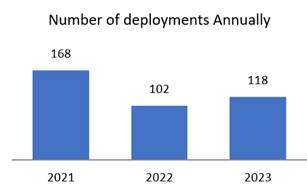
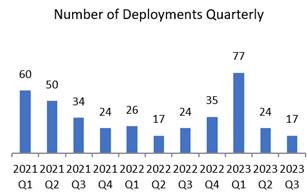
The core banking system is the foundation of a bank's operations. It is responsible for processing all the bank's transactions, managing customer accounts and providing other essential services. A well-functioning core banking system is essential for a bank's success. Figure 1 and 2 showing high number of deployments made by IT Core Banking team. The average 129 deployments annually or 35 deployments quarterly underscores the pivotal role of CBS in driving innovation and maintaining a competitive edge.
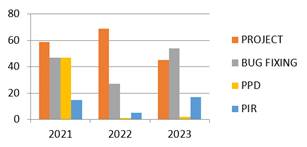
However, a deeper analysis exposes a significant gap. Figure 3 showing that the deployments is not only planned projects, but also consist of bug fixing, Patching Data (PPD) and Pos-Implementation Resolution (PIR).
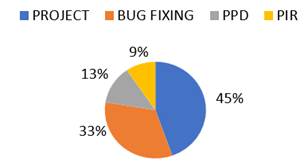
Breakdown statistics as shown by Figure 4 above indicate that only 45% of these deployments are classified as planned projects, while the remaining 13% PPD, 9% PIR and 33% defect bug fixes. Moreover, 2% of deployments result in rollbacks, indicating a noteworthy rate of failure. Additionally, a concerning aspect is the high occurrence of project dropped or postponement each year. This intricate web of issues points towards a pressing need for strategic intervention in optimizing IT core banking project management to enhance efficiency and effectiveness of project lifecycle.
This research will investigate the challenges faced by the IT Core Banking and propose solutions to improve the project management that defined as two research questions:
What are the specific challenges faced by IT Core Banking team in managing core banking projects?
What strategies can be recommended to the IT Core Banking team be mitigate the identified challenges and facilitate successful core banking project deliveries?
Figure 1: Number of deployments annually
Figure 2: Number of deployments quarterly
Figure 3: Deployment category annually
Figure 4: Summary deployment 2021-2023
The research will be based on a case study of the team, interviews with team members, user and management and a review of the literature on project management. The author believes that this research will be of value to the IT Core Banking, as it will help them to improve their project management practices and achieve their goals. The research will also be of value to other banks and organizations that are facing similar challenges.
Theoretical Foundation
Failure of core banking may impact to great financial losses, customer skepticism and investigation by regulatory authorities. Here are the generalize characteristics of typical core banking application identified by Kooijmans et al. [1]: Access to large databases with the bank’s operational data, a significant amount of interfaces between the core banking systems and other systems in the bank’s IT ecosystem, significant batch processing schedules in certain frequencies, high security, high availability within the agreed service hours, audit trails, performance, scalability, smart business logic, significant application portfolio, strict maintenance windows. Rahman and Qi [2] identified some factors of CBS implementation challenges: consensus on requirements, the role of employees, vendor capabilities and credentials, the software flexibility, user friendliness, capability to meet requirements, employee skill set required and data migration.
A project is a temporary endeavor undertaken to create a unique product, service, or result. Project management is the application of knowledge, skills, tools and techniques to project activities to meet the project requirements. It is accomplished through the appropriate application and integration of the project management processes that enables organizations to execute projects effectively and efficiently [3] define ten knowledge fields or areas of specialization that are commonly employed when managing projects: Project Integration Management, Project Scope Management, Project Schedule Management, Project Cost Management, Project Quality Management, Project Resource Management, Project Communication Management, Project Risk Management, Project Procurement Management, Project Stakeholder Management.
Conceptual Framework
The foundation of project success lies in the comprehensive fulfilment of key knowledge areas. This research centres, but not limited to the integral aspects of project scope management, project schedule management and project resource management within the realm of IT core banking. These knowledge areas are pivotal in understanding and addressing the challenges faced by the IT Core Banking team, offering a structured approach to optimizing the project lifecycle. The insights derived from the examination of project scope management, project schedule management and project resource management in IT core banking projects holds broader implications.
MATERIALS AND METHODS
Data Collection and Data Analysis Methods
This study will adopt qualitative research. The primary data will be collected through in-depth interview. The respondent is divided into three clusters or groups that are: Group of IT Core Banking team members, Group of IT Business Enablement, Group of IT Leader. The selection of these three distinct respondent groups is strategic, aiming to capture a comprehensive spectrum of perspectives within Bank BERKARYA, thereby enriching the research findings with nuanced insights from various organizational levels and roles. Secondary data is also used on this research using Bank BERKARYA’s internal documents such as Jira and Confluence. Beside internal documents, this research will also using previous research as second literature to be a benchmark for the analysis of this research. Cresswell [4] provide a clear step to do the data analysis starting with organize and prepare data and read through all data, coding, define themes and description, interrelating themes/description and interpretating the meaning of themes/descriptions.
RESULTS
Major Finding
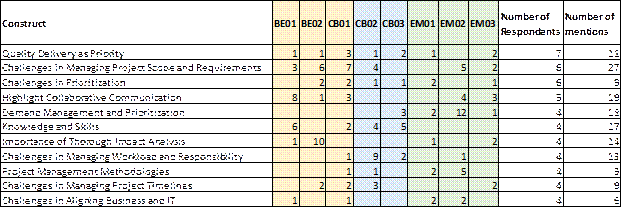
There are 72 key quotes or points of discussion and 11 of them are considered to become the major findings shown in Figure 5 Major Findings below.
DISCUSSION
The primary focus on quality delivery in core banking encapsulates five identified challenges and five strategic recommendations. The subsequent section will conduct an in-depth examination of Quality delivery as a priority, Challenges in managing project scope and requirements, challenges in prioritization, collaborative communication and demand management and prioritization.
Quality Delivery
The finding on “Quality Delivery as Priority” in IT core banking of Bank BERKARYA aligns with established principles of project management. According to Project Management Institute [3], Project Quality Management processes are geared towards achieving stakeholders' objectives and concurrently facilitating continuous improvement initiatives within the performing organization. Although, Tassey [5] on his survey finding that there is no bug-free software which is distributed in all phases: 5% in requirements, 40% in coding/unit testing, 45% in integration, 5% in beta testing and 5% in post-product release. Additional notes on post-product releases bugs, it aligns with what have been presented in business issue that IT Core Banking deployments is also consist of PIR and bug fixes.
Basu [6] stated that it is generally accepted that the minimum success criteria of projects are that they should complete to time to budget and to quality. Basu, managing quality in projects: An empirical study, [6] and Backlund and Sundqvist [7] reinforce the universal definition of quality as the consistent conformance to customer expectations. Managing projects and quality have a lot in common, with a similar purpose to satisfy customers’ and stakeholders’ needs and requirements, that has been expressed in many ways such as conformance to requirements, fitness for use, aimed at the needs of the consumer. In his work, Kirikova et al. [8] further elaborate on the essential quality aspects of IT project quality management, emphasizing the quality of the product, the quality of the process and the quality of materials (inputs to the process). Basu [9] underscores the importance of a comprehensive quality management strategy.
Challenges in Managing Project Scope and Requirements
Scope creep is a common challenge encountered by project practitioners across various industries and sectors globally, rather than being confined to a specific field. According to a report from the Project Managemen Institute [10], approximately 12% of all projects experience failure, with over 34% of attributed to scope creep.Mirza et al. [11] insights underscore the foundational importance of a well-defined project scope, attributing many project failures to the lack of understanding or definition of project and product scope at the project’s outset. Scope changes need to be curtailed or, failing that, controlled, for they have the potential to destroy not only the morale on a project, but the entire project. Mirza et al. [11] identifies four pivotal project scope issues: being unclear, partial, temporary, or unshared. Ajmal and Al-Yafei[12] reinforces the significance of managing project scope as a fundamental solution to eliminate ambiguity and uncertainty in projects that play a key role in achieving a project’s goals. A poorly defined scope is often the main reason behind project failure due to the tendency to add features and functionalities to project scope without addressing the effects on project boundaries, or without customer approval that negatively affects time, cost and quality or risk of a project.
Figure 5: Major Findings
Ajmal and Al-Yafei[12] categorizes factors behind scope creep, including project complexity, uncertainty, interrelated tasks, complex specifications, unexpected risk occurrence, gaps in communication and poor involvement of customers. Additionally, Marnada et al. [13] contribute insights specific to agile project management, noting that an unreasonable and unsystematic change request can result in a poorly defined goal and it was necessary to measure the quality and completeness of the scope.
Challenges in Prioritization
Aligning with the finding of this research, Bukhsh et al. [13] emphasize the difficulty in prioritizing tasks with the increasing number of requirements and growing pool of stakeholders with diverse interests. Similarly,Lehtola and Kauppinen [15] highlights the challenges in prioritization, noting that what may be important in one release or to a specific customer might not hold the same significance in the next release or to another customer. Prioritization, as they assert requires complex decision-making involving a combination of domain knowledge and proficient estimation skills. Lehtola et al. [16] further emphasize the importance of prioritizing requirements, particularly in the context of high customer expectations, tight timelines and limited resources. The information about priorities becomes crucial for purposes such as ignoring the least important requirements, resolving conflicts and planning. The findings identified by Lehtola et al. [16] align with those in this research, highlighting the ambiguous nature of requirements prioritization, the informal and individual-dependent nature of prioritization practices, the multi-phase nature of prioritization, the limited knowledge of developers about customer preferences and the influence of various factors on the priority of a requirement.
Highlight Collaborative Communication
Finding on this research relate to the collaborative communication categorized as a recommendation because of how critical this point to the success of the projects. It aligns with findings in previous literatures. Research from Clarke [17], Ruuska and Vartiainen, [18] and Alvarenga et al. [19], underscore the critical role of communication in project success. Clarke [17] specifically highlight that lack of communication stands as the primary reason for the failure of many change projects to meet their expectations. Whether considering written and oral, formal and informal, vertical and horizontal, or internal and external dimensions, communication emerges as a multifaceted competency integral to project teams and broader networks Ruuska and Vartiainen, [18]. Furthermore, Alvarenga et al. [19] found that communication, commitment and leadership are the key competencies for project managers, with communication ranking highest. The benefits of effective communication extend beyond mere information exchange; they encompass motivation, reduction of non-productive efforts, error prevention, uncertainty management, team synergy and confidence building.
Demand Management and Prioritization
This finding aligns with the literature's emphasis on strategic demand management, which involves allocating resources to benefit the enterprise and improving relationships between IT and business partners Cramm [20]. Alonso and Caro [21] divides into three types: strategic demand, tactical demand and operational demand. These types are crucial components in the systematic allocation of resources to align IT performance with organizational strategic planning Quichiz and Oré [22]. Quichiz and Oré [22] add that the critical success factors for demand management, as per frequency listed on the primary items, include aligning business with IT, setting strategic initiative business areas, leadership for business alignment with IT and alignment with the IT project portfolio. Moreover, Alonso et al. [23] underscores the importance of event-based decision-making processes and a life cycle approach to investment, ensuring that projects are selected, prioritized and funded based on their potential risk-adjusted value in alignment with organizational strategic objectives. Project prioritization emerges as a key element in effective IT demand management, ensuring that project goals and scope are clearly defined and responsibilities are assigned for the success of the project Alonso et al. [23]. Moisiadis [24] emphasizes that prioritization is the setting of ranks or ratings of importance to a set of requirements, providing necessary information for negotiations and decisions on which requirements to focus upon. This approach resolves conflicts, balances stakeholder expectations, measures agreement and disagreement and aids in ongoing analysis, modeling and validation.
Summary of Discussion
Table 1 showing the main points of major findings based on interview and second literature review.
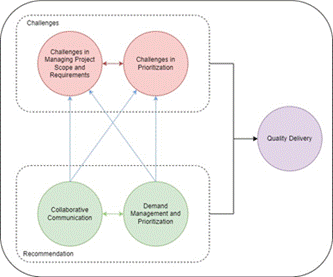
This section will be further elaborate the correlation between the major findings illustrated in diagram below (Figure 6) that showing each construct are interdependence one to another. Despite the unwavering commitment to prioritizing quality as the central focus, the pursuit of excellence encounters two significant challenges: the intricate management of project scope and requirements and the complexities associated with effective prioritization. However, in the face of these challenges, there emerges strategic recommendations, collaborative communications, ad demand management and prioritization. The strategic recommendations act as a shield, fortifying the commitment to quality delivery.
The need to align priorities with dynamic project requirements and scope is a common thread. Issues such as changes in scope and the lack of detailed requirements can significantly impact the prioritization process. Unexpected changes in project scope may lead to disruptions that require a reassessment of priorities. Balancing business expectations and IT capabilities becomes challenging when managing evolving project scopes. Collaborative communication is a foundational element that supports effective decision-making and alignment with key initiatives, which are crucial components in the demand management and prioritization processes
Table 1: Summary of Findings and Second Literature Review
Construct
Interview Findings
Second Literature Review
Quality Delivery as a Priority
Consensus by 7 respondents.
Quality is crucial for stable core banking operations, as mentioned by various roles.
Aligns with PMBOK's emphasis on quality in project management
Universal definition of quality as conformance to customer expectations. Basu [6], Backlund and Sundqvist [7]
Essential quality aspects in IT project quality management Kirikova
Importance of a comprehensive quality management strategy Basu [12]
Challenges in Managing Project Scope and Requirements
Challenges include lack of detailed requirements and frequent changes.
Impact on timelines and project progress due to changes in scope.
Scope creep is a common challenge in project management. Project Managemen Institute [10]
Project failures often attributed to unclear project scope Mirza et al. [11], Ajmal et al. [12]
Aligns with PMBOK's project scope management
Challenges in Prioritization
Challenges include unexpected disruptions and the need to balance priorities.
Conflict between business expectations and IT capabilities
Difficulties in prioritizing tasks due to increasing requirements and diverse stakeholder interests. Bukhsh et al. [14]
highlighting the ambiguous nature of requirements prioritization, informal, multi-phase, limited knowledge, influence of various factors Kirikova et al. [8]
Collaborative Communication
Effective interaction within and between teams
Importance of clarity, collaboration, and transparency
Critical role of communication in project success Clarke [17], Ruuska and Vartiainen [18], Alvarenga et al. [19]
Lack of communication is a primary reason for project failure Clarke [17]
Communication, commitment, and leadership are key competencies for project managers Alvarenga et al. [19]
Demand Management and Prioritization
Introduction of DMF for comprehensive project view and prioritization.
Emphasis on prioritizing projects based on importance to the bank and identifying Key Project Initiatives (KPIs).
Strategic demand management benefit the enterprise and improving relationships between IT and business partners Cramm [20]
Critical success factors for demand management include aligning business with IT and leadership for business alignment Quichiz and Oré [22]
Project prioritization is key in effective IT demand management Alonso et al. [23]
Figure 6: Relation of Major Findings
Business Solution
Addressing the challenges identified in the preceding sections requires practical and actionable business solutions to ensuring quality delivery in its IT core banking projects. Throughout the implementation of these business solutions, collaborative communication will be a thread that binds the initiatives together. Here are the proposed business solutions:
Strategic Demand Management
This strategic approach serves as a gatekeeper for incoming project requirements, mandating clear definition and transparency in scope and requirements through legally binding mechanisms such as BRD or approved backlog forms. This protocol aims to foster a focus on business value and alignment with KPIs. It applied not only for new requirements but also on change requirement process.
Implement an Internal Team Solution Forum
Internal Team Solution Forum will be tailored within the CBS team. This forum will facilitate collaborative discussions and enhance decision-making process. The idea is to organize regular inception-style internal meetings where senior team members collaboratively assess incoming requirements. Discussions will include estimations of effort, feasibility assessments and comparisons with other requirements to determine priority.
Figure 7: Implementation Plan
Then prioritize them and have commitment on the prioritized ones. Aligned with the strategic demand management approach, this requirement need to be continuous monitored, ensuring that adjustments can be made promptly based on changing project dynamics or business needs.
Building a Robust Quality Framework
This initiative involves the development of well-defined quality criteria applicable to all deliverables. Integral to this framework is the appointment of Quality Champions within the CBS team, tasked with challenging and ensuring the quality of deliverables. Establishing a culture of continuous improvement is pivotal, achieved through regular quality forums, self-assessments and learning sessions. Emphasis is placed on the incorporation of feedback loops to identify areas for enhancement and refinement.
Implementation Plan
The following implementation strategy on Figure 7 can be used, based on business solution mentioned above. It also defined the priority to show the importance level of them. The most priority to be executed is to define clear requirements protocol, design forum structure and define quality criteria, then followed by the others.
CONCLUSION
The overarching priority observed throughout this exploration is the unwavering commitment to quality delivery in IT core banking. The specific challenges faced by IT Core Banking team are managing project scope and requirements and challenge is the prioritization. Additional other challenges found are managing workload and responsibility, managing project timelines and challenges in aligning business and IT.
From the dominant challenges that was mentioned, the proposed solutions and recommendations will be strengthening collaborative communication and implement demand management and prioritization.
Acknowledgment
The authors would like to appreciate respondents who agree to participate and follow the study protocol patiently.
Author Contributions
All authors contributed equally to the writing of this paper. All authors read and approved the final manuscript.
Conflict of Interest
There are no conflicts of interest.
REFERENCES
Kooijmans, A.L. et al. A Transformation Approach to Smarter Core Banking. IBM Redbooks, 2012.
Rahman, M.A. and X. Qi. "Core Banking Software (CBS) Implementation Challenges of e-Banking: An Exploratory Study on Bangladeshi Banks." Journal of Administrative and Business Studies, vol. 2, no. 4, 2016, pp. 208–215.
Project Management Institute. A Guide to the Project Management Body of Knowledge (PMBOK Guide). 6th ed., Project Management Institute, Inc., 2017.
Cresswell, J.W. Research Design: Qualitative, Quantitative and Mixed Methods Approaches. 4th ed., SAGE Publications, Inc., 2014.
Tassey, G. The Economic Impacts of Inadequate Infrastructure for Software Testing. 2002.
Basu, R. "Managing Quality in Projects: An Empirical Study." International Journal of Project Management, vol. 32, no. 1, 2013, pp. 178–187.
Backlund, F. and E. Sundqvist. "Continuous Improvement: Challenges for the Project-Based Organization." International Journal of Quality & Reliability Management, vol. 35, no. 7, 2018, pp. 1306–1320.
Kirikova, M., J. Grundspenkis and A. Stasko. "Towards Respecting Systems of Systems in IT Project Quality Management." Baltic Journal of Modern Computing, vol. 11, no. 1, 2023, pp. 134–149.
Basu, R. Managing Quality in Projects. Gower Publishing, 2012.
Project Management Institute. Pulse of Profession 2021: Beyond Agility. Project Management Institute, 2021.
Mirza, M.N. et al. "Significance of Scope in Project Success." Procedia Technology, vol. 9, 2013, pp. 722–729.
Ajmal, M. et al. "Exploring Factors Behind Project Scope Creep - Stakeholders Perspective." International Journal of Managing Project in Business, vol. 13, no. 3, 2020, pp. 483–504.
Marnada, P. et al. "Agile Project Management Challenge in Handling Scope and Change: A Systematic Literature Review." Procedia Computer Science, vol. 197, 2022, pp. 290–300.
Bukhsh, F.A. et al. "A Systematic Literature Review on Requirement Prioritization Techniques and Their Empirical Evaluation." Computer Standards & Interfaces, vol. 69, 2020.
Lehtola, L. and M. Kauppinen. "Empirical Evaluation of Two Requirements Prioritization Methods in Product Development Projects." In Software Process Improvement, Edited by T. Dingsøyr, vol. 3281, Springer, Berlin, Heidelberg, 2004.
Lehtola, L. et al. "Requirements Prioritization Challenges in Practice." In Product Focused Software Process Improvement, edited by F. Bomarius and H. Iida, vol. 3009, Springer, Berlin, Heidelberg, 2004.
Clarke, A. "A Practical Use of Key Success Factors to Improve the Effectiveness of Project Management." International Journal of Project Management, vol. 17, no. 3, 1999, pp. 139–145.
Ruuska, I. and M. Vartiainen. "Critical Project Competences - A Case Study." Journal of Workplace Learning, vol. 15, 2003, pp. 307–312.
Alvarenga, J.C. et al. "The Project Manager Core Competencies to Project Success." International Journal of Managing Projects in Business, vol. 13, no. 2, 2020, pp. 277–292.
Cramm, S. Maturing Your Demand Management Practices. 2016.
Alonso, I. A. and J. C. Caro. "Results, Case Study of Strategic IT Demand Management in Organizations - Exploratory." Procedia Technology, vol. 9, 2013, pp. 900–909.
Quichiz, L.P. and S.B. Oré. "IT Demand Management in Organizations: A Review." In Proceedings of the 8th International Conference on Computer Modeling and Simulation (ICCMS '17), Association for Computing Machinery, 2017.
Alonso, I.A. et al. "Project Prioritization as a Key Element in IT Strategic Demand Management." In Innovations and Advances in Computer Sciences and Engineering, edited by T. Sobh, Springer, Dordrecht, 2009.
Moisiadis, F. "The Fundamentals of Prioritising Requirements." In Proceedings of the Systems Engineering, Test and Evaluation Conference (SETE '2002), 2022.
License
Creative Commons Attribution-NonCommercial-NoDerivatives 4.0 International License
All papers should be submitted electronically. All submitted manuscripts must be original work that is not under submission at another journal or under consideration for publication in another form, such as a monograph or chapter of a book. Authors of submitted papers are obligated not to submit their paper for publication elsewhere until an editorial decision is rendered on their submission. Further, authors of accepted papers are prohibited from publishing the results in other publications that appear before the paper is published in the Journal unless they receive approval for doing so from the Editor-In-Chief.
Himalayan Journal of Economics and Business Management open access articles are licensed under a Creative Commons Attribution-Share A like 4.0 International License. This license lets the audience to give appropriate credit, provide a link to the license, and indicate if changes were made and if they remix, transform, or build upon the material, they must distribute contributions under the same license as the original.
Recommended Articles
Research Article
Influence of Leadership on Poverty Reduction in the Devolved Government in Trans-Nzoia County, Kenya
Kinisu Sifuna,
...
Peter Simotwo
Published: 30/06/2021
Download PDF
Cite
x
APA
Sifuna, K., Lwangale, D. W., Simotwo, P., Sifuna, K., Lwangale, D. W. & Simotwo, P. (2021). Influence of Leadership on Poverty Reduction in the Devolved Government in Trans-Nzoia County, Kenya. Himalayan Journal of Economics and Business Management, 2(1), None-None.
MLA
Sifuna, Kinisu, et al. "Influence of Leadership on Poverty Reduction in the Devolved Government in Trans-Nzoia County, Kenya." Himalayan Journal of Economics and Business Management 2.1 (2021): None-None.
Chicago
Sifuna, Kinisu, David W. Lwangale, Peter Simotwo, Kinisu Sifuna, David W. Lwangale and Peter Simotwo. "Influence of Leadership on Poverty Reduction in the Devolved Government in Trans-Nzoia County, Kenya." Himalayan Journal of Economics and Business Management 2, no. 1 (2021): None-None.
Harvard
Sifuna, K., Lwangale, D. W., Simotwo, P., Sifuna, K., Lwangale, D. W. and Simotwo, P. (2021) 'Influence of Leadership on Poverty Reduction in the Devolved Government in Trans-Nzoia County, Kenya' Himalayan Journal of Economics and Business Management 2(1), pp. None-None.
Vancouver
Sifuna K, Lwangale DW, Simotwo P, Sifuna K, Lwangale DW, Simotwo P. Influence of Leadership on Poverty Reduction in the Devolved Government in Trans-Nzoia County, Kenya. Himalayan Journal of Economics and Business Management. 2021 Jan;2(1):None-None.
Download PDF
Research Article
Modelling Structure Job Quality, Job Design and Job Satisfaction
Moch Nurhadi,
...
Avi Sunani
Published: 30/08/2022
Download PDF
Cite
x
APA
Nurhadi, M., Bisyri Effendi, M., Saiful Ulum, A. & Sunani, A. (2022). Modelling Structure Job Quality, Job Design and Job Satisfaction. Himalayan Journal of Economics and Business Management, 3(2), 1-4.
MLA
Nurhadi, Moch, et al. "Modelling Structure Job Quality, Job Design and Job Satisfaction." Himalayan Journal of Economics and Business Management 3.2 (2022): 1-4.
Chicago
Nurhadi, Moch, Moch Bisyri Effendi, Achmad Saiful Ulum and Avi Sunani. "Modelling Structure Job Quality, Job Design and Job Satisfaction." Himalayan Journal of Economics and Business Management 3, no. 2 (2022): 1-4.
Harvard
Nurhadi, M., Bisyri Effendi, M., Saiful Ulum, A. and Sunani, A. (2022) 'Modelling Structure Job Quality, Job Design and Job Satisfaction' Himalayan Journal of Economics and Business Management 3(2), pp. 1-4.
Vancouver
Nurhadi M, Bisyri Effendi M, Saiful Ulum A, Sunani A. Modelling Structure Job Quality, Job Design and Job Satisfaction. Himalayan Journal of Economics and Business Management. 2022 Jul;3(2):1-4.
Download PDF
Research Article
The Constitutional and Legislative Basis for Considering the Taxable Capacity of Taxpayers in Iraqi Tax Legislation
Hussein Kamel Wadaa
Published: 05/05/2025
Download PDF
Cite
x
APA
Wadaa, H. K. (2025). The Constitutional and Legislative Basis for Considering the Taxable Capacity of Taxpayers in Iraqi Tax Legislation. Himalayan Journal of Economics and Business Management, 6(1), 1-10.
MLA
Wadaa, Hussein Kamel. "The Constitutional and Legislative Basis for Considering the Taxable Capacity of Taxpayers in Iraqi Tax Legislation." Himalayan Journal of Economics and Business Management 6.1 (2025): 1-10.
Chicago
Wadaa, Hussein Kamel. "The Constitutional and Legislative Basis for Considering the Taxable Capacity of Taxpayers in Iraqi Tax Legislation." Himalayan Journal of Economics and Business Management 6, no. 1 (2025): 1-10.
Harvard
Wadaa, H. K. (2025) 'The Constitutional and Legislative Basis for Considering the Taxable Capacity of Taxpayers in Iraqi Tax Legislation' Himalayan Journal of Economics and Business Management 6(1), pp. 1-10.
Vancouver
Wadaa HK. The Constitutional and Legislative Basis for Considering the Taxable Capacity of Taxpayers in Iraqi Tax Legislation. Himalayan Journal of Economics and Business Management. 2025 Jan;6(1):1-10.
Download PDF
Research Article
Proposed Digital Marketing Strategy to Enhance Engineering Consultancy Company Revenue
Alfarisy, K. A.,
Wandebori, H.
Published: 30/04/2024
Download PDF
Cite
x
APA
K. A., A. & H., W. (2024). Proposed Digital Marketing Strategy to Enhance Engineering Consultancy Company Revenue. Himalayan Journal of Economics and Business Management, 5(1), 1-18.
MLA
K. A., Alfarisy, and Wandebori, H.. "Proposed Digital Marketing Strategy to Enhance Engineering Consultancy Company Revenue." Himalayan Journal of Economics and Business Management 5.1 (2024): 1-18.
Chicago
K. A., Alfarisy, and Wandebori, H.. "Proposed Digital Marketing Strategy to Enhance Engineering Consultancy Company Revenue." Himalayan Journal of Economics and Business Management 5, no. 1 (2024): 1-18.
Harvard
K. A., A. and H., W. (2024) 'Proposed Digital Marketing Strategy to Enhance Engineering Consultancy Company Revenue' Himalayan Journal of Economics and Business Management 5(1), pp. 1-18.
Vancouver
K. A. A, H. W. Proposed Digital Marketing Strategy to Enhance Engineering Consultancy Company Revenue. Himalayan Journal of Economics and Business Management. 2024 Jan;5(1):1-18.
Pahirawan Putra Amkristianto, M., F. Firman, A. & Yudoko, G. (2023). Optimizing It Core Banking Project Management at Bank Berkarya. Himalayan Journal of Economics and Business Management, 4(2), 1-7.
MLA
Pahirawan Putra Amkristianto, Martintyas, Aries F. Firman and Gatot Yudoko. "Optimizing It Core Banking Project Management at Bank Berkarya." Himalayan Journal of Economics and Business Management 4.2 (2023): 1-7.
Chicago
Pahirawan Putra Amkristianto, Martintyas, Aries F. Firman and Gatot Yudoko. "Optimizing It Core Banking Project Management at Bank Berkarya." Himalayan Journal of Economics and Business Management 4, no. 2 (2023): 1-7.
Harvard
Pahirawan Putra Amkristianto, M., F. Firman, A. and Yudoko, G. (2023) 'Optimizing It Core Banking Project Management at Bank Berkarya' Himalayan Journal of Economics and Business Management 4(2), pp. 1-7.
Vancouver
Pahirawan Putra Amkristianto M, F. Firman A, Yudoko G. Optimizing It Core Banking Project Management at Bank Berkarya. Himalayan Journal of Economics and Business Management. 2023 Jul;4(2):1-7.


 Download PDF
 Download XML