Contents
Download PDF
pdf Download XML
840 Views
353 Downloads
Share this article
Research Article | Volume 4 Issue 1 (Jan-June, 2023) | Pages 1 - 5
The Influence of the Solo Data System on Service Quality Improvement at the Surakarta City Population and Civil Registry Service
 ,
 ,
 ,
1
Master of Management Study Program, Faculty of Economics and Business. University of 17 August 1945 Semarang, India
Under a Creative Commons license
Open Access
Received
Dec. 3, 2022
Revised
Jan. 9, 2023
Accepted
Jan. 22, 2023
Published
Feb. 7, 2023
Abstract

The implementation of the Solo Data system is the biggest innovation that has been carried out by the City of Surakarta. Each region has the role of the Department of Population and Civil Registration to help provide satisfactory public services to the audience. Prior to Solo Data, public services provided more often took place face-to-face, which was time-consuming and also less efficient. Lots of people criticize the form of public services provided by the Department of Population and Civil Registration. The purpose of this study is to analyze the Solo Data system that is applied in an effort to improve service quality. The object determined by the researcher is in the area of ​​Surakarta City or what is known as the city of Solo. The results of the study prove that there have been major changes in the service system provided since the existence of Solo Data. Through the role of Solo Data, the public can obtain information and data online. The role of technology in public services makes it easy for people to access information about the city of Surakarta more effectively. In addition, the public does not need to spend time and energy visiting the Office of the Population and Civil Registration Service in order to obtain services.

Keywords
INTRODUCTION

Law 23 of 2014 regarding regional government in article 1 paragraph 2 to 3 divides the government into regional government and local government. The two differences lie in the administration of regional autonomy which involves leadership. The article also explains the preparation of development plans within the regions with the authority to draw up plans and the authority to coordinate planning. Basically, to be able to obtain good planning, we need data that can be used as a tool to anticipate future problems [1].


According to Sutejo et al. [2]the government still pays little attention to the services provided by the population and civil registration services. In fact, the government's role is very important to be able to provide facilities in perfecting programs related to data in information systems related to population and human welfare. Data is one of the important needs for regional stability and progress. However, problems regarding data continue to be obstacles that the state cannot resolve [1]. One example is the difficulty to access data.


Law Number 25 of 2005 concerning the National Development Planning System explains that the essence of development planning is an activity in determining the direction of policies that suit the needs of the community using various methods and systematic flow of activities by looking at the quality of the resources owned. Based on this understanding, Tjokrowinoto explains that development planning consists of two important aspects, namely the activity of formulating development plans and as a process that will determine the success of development.


The problem to be discussed in this study is regarding the role of the Solo Data system in improving the quality of service to the people of Surakarta. As is known, the city of Surakarta or known as the city of Solo is a beautiful city but is still lacking in providing services in the field of development data. Over time, each region will implement the use of technology due to technological developments in human life. In this case, the Solo government is trying to launch innovations in public services that are integrated in the management of development data by forming the Solo Data application [3]. 


Kuncorowati and Winarni [1] argue that the Surakarta government has formed innovations to influence changes in performance within the government. As is known, the performance of public services is one of the concerns needed to provide welfare in life. The role of Solo Data to be published in 2019 is one of the projects that can help build a unified data system to facilitate the provision of services to the public [1]. In this view, it appears that the government has paid attention to the public service system by developing a new application, namely Solo Data.


Changes to the Regional Long-Term Development Plan, the Regional Medium-Term Development Plan and the Regional Government Work Plan, that: "The preparation of regional development plans uses data and information on regional development plans and spatial plans."


Even though data has been regulated in such a way as to the importance of data in the regional development planning process, in fact there are still many data needed for regional development that are incomplete and scattered among each regional apparatus and rarely updated. In Indonesia, planning agencies, in this case the Regional Development Planning Agency (Bappeda), face serious problems in collecting data from regional apparatuses due to:


  • weak coordination between Bappeda and regional apparatuses

  • lack of funding and limited personnel in managing data

  • the central government does not yet have sufficient instruments to measure development needs and substantive achievements of development programs and activities carried out by local governments as well as limited human resources


Article 274 of Law Number 23 of 2014 and its amendments state that regional development planning is based on data and information managed in the Regional development information system. The Regional Development Information System which is under the management of the Ministry of Home Affairs hereinafter referred to as SIPD which facilitates the data, planning and evaluation components.


The global open data movement started by advocating openly available government data however, for open data to have a real impact, there are at least three basic things that need to be emphasized, namely: publication of open data by the government, conversion of data into actionable information by intermediaries, and the use of this information by government officials, citizens, and others.


Case studies of open data initiatives in developing countries reveal at least three emerging impacts: increased government transparency and accountability; innovation and economic development; and greater inclusion and empowerment of citizens. This impact depends on a number of factors, one of which is the availability of single open data. It is clear that the impact of open data depends on partnerships and collaboration, the quality of public open data infrastructure, clear open data policies, and the responsiveness of governments.


The next research was conducted by Sandiasa and Agustana with the title "Reform of Administration and Bureaucracy of Local Government in Improving the Quality of Public Services in the Regions." The research aims to examine about the importance of regional government administrative and bureaucratic reform and public service reform in improving the performance of local government. The results of the research conclude that regional government administrative and bureaucratic reform can be realized in three ways, namely first is


  • strengthening government regulations and policies

  • implementation of e-government and e-governance, which can encourage public openness and transparency 

  • collaboration between governments "collaborative governance", can strengthen governance in the regions, redefining the relationship between the center and the regions, regions with other regions in the territorial bond


This reform was implemented to improve the quality of local government public services, encourage public participation and trust in local governments. 


In another dimension, data is not solely a product of the government. Data can be generated by citizens. The idea behind citizen-generated data is for citizens to not only be passive consumers of information, but active producers, users, and intermediaries of data. There is evidence of the value of citizen-generated data for better delivery of development projects. Crowd-mapping initiatives have contributed to a better understanding of the nature and scale of social problems such as corruption, harassment and voter turnout. The detailed, real-time data provided by citizens enables governments to make more evidence-based decisions, for example regarding urban infrastructure. Besides that, research has documented the impact of citizen-generated data projects on government policy and practice in areas including measuring education outcomes and improving community water supplies. Citizen-created data initiatives often face significant barriers to scaling, including requirements for a robust data collection infrastructure and ensuring that data production is continuous and citizens are committed to providing data.


Regarding the one data policy that was initiated by the Central Government in 2019 with the enactment of Presidential Regulation Number 39 of 2019, it was initiated by the Surakarta City Government in 2020, including by integrating regional development data management through the "One Data Surakarta City" system. This system is an innovation service the public to integrate regional development data management from various relevant and accountable data sources, so as to create a "One Data" (Single Data System) that is easily accessible to the public.


One Surakarta City Data is essentially a mandate from the Mayor of Surakarta Regulation Number 28 of 2019 concerning Guidelines for Implementing E-Government, which is further confirmed by Surakarta Mayor Regulation Number 21 of 2020 concerning One Surakarta City Data. The issuance of this Surakarta Mayor Regulation is intended to optimize the performance of the Surakarta City Government apparatus in the context of administering government and providing services to the community, which needs to be supported by the use of adequate, effective, efficient and sustainable information and communication technology. Utilization of information and communication technology can be carried out in an efficient and effective manner for all regional apparatuses.


As is well known, One Data Indonesia is useful for realizing the integration of development planning, implementation, evaluation and control, so it needs to be supported by data that is accurate, up-to-date, integrated, accountable, easy to access and share, as well as carefully managed, integrated and sustainable. In order to obtain data as mentioned above, it is necessary to improve the governance of data produced by the government through the implementation of One Data Indonesia. To ensure this, Presidential Regulation Number 39 of 2019 mandates One Indonesian Data to be carried out based on the following principles: 


  • Data produced by Data Producers must meet Data Standards

  • Data generated by Data Producers must have Metadata

  • Data produced by Data Producers must comply with Data Interoperability rules

  • Data generated by Data Producers must use Reference Codes and/or Master Data. One Regional Level Indonesian Data is a regional government data management policy to produce accurate, up-to-date, integrated data that is accountable, easily accessible, and can be shared between the central and regional governments


From the explanation of the elements above, the theory of empowerment emerges which is seen as an alternative meaning to development. To realize the eight main conditions above, Mahbub UI Haq offers 4 (four) important components in human development, namely:


  • Equality in obtaining opportunities (equal access to opportunity)

  • Sustainability means that future generations must be able to enjoy the same opportunities as the present generation

  • Productivity, this requires investment in developing the quality of human resources (HR) and macroeconomic set-ups to facilitate human resource development

  • Empowerment which translates to that people have choices for their own interests, so they must be able to influence decisions related to their lives


The Solo Data application is an application implemented to realize Solo Agreed on One Data in helping poverty alleviation. Solo Data is applied with the aim of improving the quality of planning that is more valid, effective and able to improve the welfare of the community. In the Solo Data application, there is support from 18 other applications that are capable of providing population data such as E-SIK. The development of Solo Data itself is assisted by several organizations such as the population and civil registration service, the education office, the health service, the social service and many more [3].


On the Solo Data website, there are 6 menu features that can be accessed. These six features provide Regional Medium-Term Development Plans (RPJMD), Sustainable Development Goals (SDG's), Local Government Implementation Reports (LPPD), Minimum Service Standards (SPM), Regional Government Information Systems (SIPD), and Surakarta in Figures (SDA) [4]. Through innovation, this research wants to analyze the role of the Solo Data system in improving service quality in the Surakarta area.


Support for the implementation of e-government in Surakarta City as stipulated in Surakarta Mayor Regulation Number 28 of 2019 concerning Guidelines for Implementing E-Government, is manifested in the stipulation of Surakarta Mayor Regulation Number 21 of 2020 concerning One Surakarta City Data. This Mayor Regulation is a quick response to the issuance of the Presidential Regulation of the Republic of Indonesia Number 39 of 2019 Concerning One Indonesian Data. This is a government data governance policy to produce data that is accurate, up-to-date, integrated, accountable, and easily accessible and shared between Central Agencies and Regional Agencies through compliance with Data Standards, Metadata, Data Interoperability, and using Reference Codes and Master Data.


Referring to the formulation of the problem that has been described in the previous section, there are two objectives to be achieved from this research. The objectives of this study are


  • To analyze the implementation of Surakarta Mayor Regulation Number 21 of 2020 concerning One Surakarta City Data as the Basis for Regional Development Planning

  • analyzing the challenges encountered in implementing One Data for Surakarta City as the Basis for Regional Development Planning


So, based on this view, the purpose of this study was to analyze the form of service quality improvement in the implementation of the solo data system located at the Department of Population and Civil Registration in the city of Surakarta. It is hoped that this research can provide benefits to readers in the form of increased knowledge regarding the relatively new solo data system.


MATERIALS AND METHODS

This study uses a quantitative approach. The quantitative approach is one that uses surveys as a means of collecting data [5]. A researcher using a quantitative approach must choose the problem he or she wishes to investigate before starting to collect data by surveying participants. The variable X in this study is the solo data system. While the dependent variable Y is the quality of service. The population set is for the people of Solo who have or have heard of the solo data system.


In collecting data, researchers used primary and secondary data sources. Primary data sources are defined as data sources obtained from the researchers themselves where the researchers collect the necessary data themselves with the help of respondents through a questionnaire survey. While secondary data is data obtained through the internet, journals, books and so on as a tool to support research results from the data collected [6].

RESULTS AND DISCUSSION

Validity Test

Researchers use a Likert scale to determine the nature of the respondents with the following criteria:


  • Scale 1           :               Strongly Disagree

  • Scale 2           :               Disagree

  • Scale 3           :               Neutral

  • Scale 4           :               Agree

  • Scale 5           :               Strongly Agree


The results of the validity test showed that each question used was valid because the Pearson correlation results obtained were above 0.3 (Table 1).


The results of the reliability test showed that the three variables were reliable because the Croncbach's alpha value obtained was above 0.6 (Table 2).


Based on the results of regression testing, it can be seen that there is an influence between the solo data system on improving service quality. This can be seen from the sig value of 0.002 <0.05 with an F value of 7.391(Table 3).


Innovation by using Solo Data is carried out to adapt to technological developments and facilitate the public to be able to access the data they want to obtain. This is because the use of technology by involving websites makes it easier for individuals to be able to access it without the need to visit the Department of Population and Civil Registration. The role of Solo Data can also provide information regarding the analysis of cooperatives and MSMEs that affect the SMART Economy. On the Solo Data website, there is a map of Indonesia that can be used to see development [4].               


Table 1: Validity Test Results Using Pearson Correlation

Variable

Pearson Correlations

Information

X1.1

0.806

Valid

X1.2

0811

Valid

Y1.1

0.831

Valid

Y1.2

0.789

Valid


Table 2: Reliability Test

Variable

Cronbach's Alpha

Information

X variable

0.838

Reliable

Y variable

0839

Reliable


Table 3: Influence Test

ANOVAa
ModelSum of SquaresdfMean SquareFSig.
Regression12.57526,2887.3910.002b
residual40.837480.851  
Total53.41250   

A: Dependent Variable: Service Quality b: Predictors: (Constant), Solo Data System


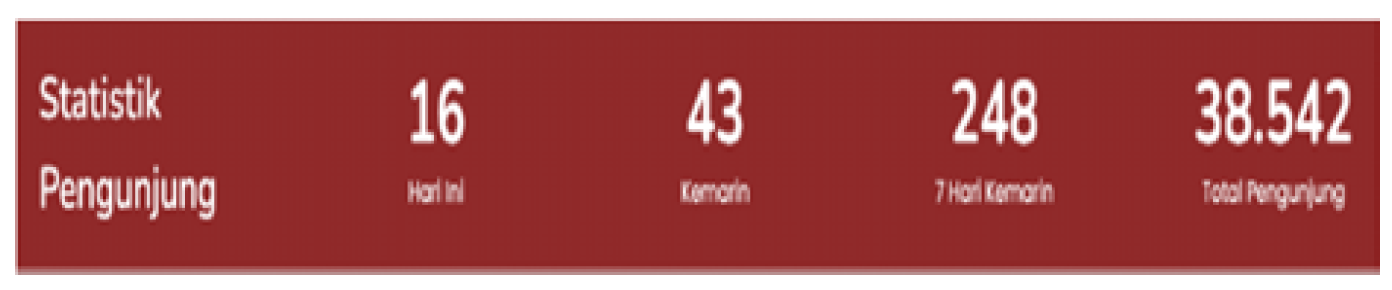
One of the feature innovations provided by Solo Data is a visitor menu that displays visitor data. This data on the number of visitors is used to analyze the system innovated through Solo Data. Total website visitors get as many as 38,542 in one month. Basically, good administrative services must be able to provide stable and effective functions. Every public service implemented by the Indonesian state is more often done personally or face to face. This makes public services less acceptable to the public. According to Eva and Fithriana [7], a good service must show positive quality and be able to provide convenience to the people who want to use it.


According to Kuncorowati and Winarni [1], Solo Data's digital transformation has a difference and is able to improve service quality. One of them is that before Solo Data existed, Surakarta still input data one by one humanly, but since the Solo Data innovation, regional officials have started to share data using an electronic database system to make input easier so that it can be seen by many people. Some of the problems that were still felt before the existence of Solo Data were because the data was still not optimal enough and there was no opportunity to easily update development data. However, since Solo Data, there have been major changes such as the use of single data in planning strategies for regional development and making it easier for people to be able to find information online.


Improving the quality of public services is very important to be able to attract the attention of the community. Even though Solo Data is a new website that was formed in 2019, this website has helped the community in obtaining effective and fast public services. Sofianto [8] supports this statement by emphasizing that within the government structure, it is necessary to improve the quality of the services provided so that they can be faster, easier and also of higher quality. The role of technology-based services is very important to implement because technology provides several conveniences in government performance, especially for the Surakarta area. In the results of observations made, it appears that the existence of Solo Data can help provide appropriate guidance in accordance with laws and regulations.


Even though there are so many obstacles and challenges in implementing Solo Data, the government is able to overcome this by providing information, education and communication to the public. Through the communication delivered, the public can be more aware of the use of Solo Data and better understand the use of Solo Data in their lives. According to Solihat and Nursanti  [9], factors that can influence the success of the implanted program are communication and resources. Communication plays a role as a tool to convey information to the audience. Communication plays a role in implementing notification and guidance on policies that will be implemented by the government. Meanwhile, the role of resources such as staff to answer audience or community questions is also one of the factors that influence the success of the program.


Based on this view, Solo Data provides a very informative feature because there is a very good use of the user interface. In addition, four choices are given on the menu, making it easier for the audience to access the data they want. The Surakarta government has also implemented a separate menu as data access which is placed on the home section. The many access options make it easier for the public to be able to view statistical data which are divided into six options. Even if they don't log in, the public can still access the data they need. This is because the login feature is used only for internal Solo Data and account creation is done internally so people don't abuse it. As an application that plays an important role for the country,


Along with the development of technology, the government will always improve the quality of website use so that it can continue to grow and not make it difficult for the community. Solo Data has features that are easy for all generations to understand, such as the younger and older generations. An innovation made by the government must be usable and easily understood by individuals from all walks of life. Understanding to use innovation by applying technology is very important because if not, innovation in public services will be in vain and cannot provide an increase in service quality. In using Solo Data, the public can access information from anywhere because they only need to use a signal and the internet through this.


Figure 1: Website Visitors

CONCLUSION

Based on the results of the study, it is known that there is an influence between the solo data system on improving service quality. The quality of service to the public is one of the important concerns that needs to be implemented by the state in order to provide convenience and prosperity for the community. In providing improvements to the quality of service to the public, innovation or development is needed so that it can be more different from the previous year.


The form of innovation that is carried out is to develop Solo Data as a website that can provide information to the public. On the Solo Data website, there are 6 menu features that can be accessed which consist of Regional Medium Term Development Plans (RPJMD), Sustainable Development Goals (SDG's), Local Government Implementation Reports (LPPD), Minimum Service Standards (SPM), Regional Government Information Systems (SIPD), and Surakarta in Figures (SDA). The six features provided are the best service quality development ever implemented by the City of Surakarta. This can be seen from the number of visitors every day, namely 16 visitors a day. The development of Solo Data is a development that can be said to be new because it is still under five years of development. Therefore,


The limitation of this research is the research method which only uses previous research. Therefore, suggestions that can be given for further research are to involve the views of the Population and Civil Registration Service and the public who often access the Solo Data website or who still don't know about Solo Data. The use of this interview can help educate the public about the use of Solo Data so that visitors can increase. Suggestions for the government are to develop websites that are more attractive to young people. If the contents of the website are more interesting and like the metaverse, this will attract the attention of young people. Even so, even the older generation can follow this change so they can still use it.

REFERENCE
  1. Kuncorowati, R.M. and A.T. Winarni. “Implementation of Solo One Data as a base in regional development planning for Surakarta City.” Journal of Administrative Media, vol. 3, 2021, pp. 58–65.

  2. Sutejo, D. et al. “Implementation of the law on population administration at the East Aceh District population and civil registry service.” Structuration: Scientific Journal of Master of Public Administration, vol. 2, no. 2, 2020, pp. 162–167, https://doi.org/10.31289/strukturasi.v2i2.56.

  3. Muhammad, H. “Solo City government integrates data management.” 2020, https://www.republica.co.id/ber ita/qfeqe6380/pemkot-solo-integrate-pengelolaan-data.

  4. Surakarta City Government. Solo data Surakarta. 2022, https://solodata.surakarta.go.id/.

  5. Indrasari, M. et al. “Customer loyalty: Effects of sales information system, marcomm, and brand ambassadors.” Journal of Communication Studies (Indonesian Journal of Communications Studies), vol. 3, no. 2, 2019, pp. 182, https://doi.org/10.25139/jsk.v3i2.1690.

  6. Amijaya, J. and H. Suprayitno. “Modeling the generation and attraction of motorcycle mode trips in the Gresik urban area in 2018.” Journal of Infrastructure and Facilities Asset Management, vol. 2, no. 0, 2018, pp. 1–10, https://doi .org/10.12962/j26151847.v2i0.4819.

  7. Eva, V. and N. Fithriana. “Efforts to improve population administration services with mobile cars (study at the Department of Population and Civil Registration of Batu City).” JISIP: Journal of Social and Political Sciences, vol. 8, no. 3, 2019, pp. 83.

  8. Sofianto, A. “Information technology-based service innovation in hospitals as a form of bureaucratic reform.” Journal of Research and Development of Central Java Province, vol. 18, no. 1, 2020, pp. 81–102, https://doi.org/1 0.36762/jurnaljateng.v18i1.811.

  9. Solihat, Y. and S. Nursanti. “Communication strategy to improve service of population and civil registration office of Karawang Regency.” Indonesiana Politics Journal, vol. 4, no. 1, 2019, pp. 138–145, https://doi.org/10.35706/ jpi.v4i1.1997.

License
CC BY-NC-ND
Creative Commons Attribution-NonCommercial-NoDerivatives 4.0 International License
The Influence of the Solo Data System on Service Quality Improvement at the Surakarta City Population and Civil Registry Service © 2026 by Hafidh Nur Wibisono, Heru Suhartono, Lina Fauzul, Gita Sugiyarti licensed under CC BY-NC-ND 4.0
All papers should be submitted electronically. All submitted manuscripts must be original work that is not under submission at another journal or under consideration for publication in another form, such as a monograph or chapter of a book. Authors of submitted papers are obligated not to submit their paper for publication elsewhere until an editorial decision is rendered on their submission. Further, authors of accepted papers are prohibited from publishing the results in other publications that appear before the paper is published in the Journal unless they receive approval for doing so from the Editor-In-Chief.
Himalayan Journal of Economics and Business Management open access articles are licensed under a Creative Commons Attribution-Share A like 4.0 International License. This license lets the audience to give appropriate credit, provide a link to the license, and indicate if changes were made and if they remix, transform, or build upon the material, they must distribute contributions under the same license as the original.
Recommended Articles
Research Article
Influence of Leadership on Poverty Reduction in the Devolved Government in Trans-Nzoia County, Kenya
...
Published: 30/06/2021
Download PDF
Research Article
Modelling Structure Job Quality, Job Design and Job Satisfaction
...
Published: 30/08/2022
Download PDF
Research Article
The Constitutional and Legislative Basis for Considering the Taxable Capacity of Taxpayers in Iraqi Tax Legislation
Published: 05/05/2025
Download PDF
Research Article
Proposed Digital Marketing Strategy to Enhance Engineering Consultancy Company Revenue
Published: 30/04/2024
Download PDF
Flowbite Logo
Najmal Complex,
Opposite Farwaniya,
Kuwait.
Email: support@himjournals.com

Useful Links
Order Hard Copy
Privacy policy
Terms and Conditions
Refund Policy
Others
About Us
Team Members
Contact Us
Online Payments
Join as Editor
Join as Reviewer
Subscribe to our Newsletter
Follow us
MOST SEARCHED KEYWORDS
scientific journal
 | 
business journal
 | 
medical journals
 | 
Scientific Journals
 | 
Academic Publisher
 | 
Peer-reviewed Journals
 | 
Open Access Journals
 | 
Impact Factor
 | 
Indexing Services
 | 
Journal Citation Reports
 | 
Publication Process
 | 
Impact factor of journals
 | 
Finding reputable journals for publication
 | 
Submitting a manuscript for publication
 | 
Copyright and licensing of published papers
 | 
Writing an abstract for a research paper
 | 
Manuscript formatting guidelines
 | 
Promoting published research
 | 
Publication in high-impact journals
Copyright © Himalayan Journals . All Rights Reserved.