Background: This study was conducted on the background of accidental injuries which have become a major issue currently in the developing world. The aims was to determine the whole extent of blunt abdominal injuries and to evaluate the whole management. Methods: This is a prospective study that was conducted in the 76 bedded trauma centre over a period of 2 years from December 2019 to December 2021. 101 patients with blunt abdominal injuries who presented to the casualty section of the hospital were selected for this study using inclusion and exclusion criteria. Results: Blunt abdominal trauma was mostly from RTA 58 (57.4%) followed by fall from heights. The remaining cases were due to other causes. The mean age of the patients was 24 years. There was 80 males and 20 female, male to female ratio 4:1. Conclusion: The establishment of a well-equipped trauma centre has contributed immensely in saving the life of patients with blunt abdominal injuries .With the modern equipment set up, monitoring of trauma patients is so well coordinated that most of the patients can survive with conservative management. Operative treatment is only relevant when necessary.
Keywords
Blunt
Abdomen
Trauma
INTRODUCTION
Abdominal trauma can either be penetrating or blunt. Gunshot and stab are examples of penetration abdominal trauma whereas common causes of blunt injury includes vehicle crashes, physical assault and fall from height with increasing activities associated with modernization and industrialization in developing countries trauma has become an issue. Nevertheless, trauma is the sixth case of morbidity and mortality worldwide and death from trauma is preventable. Head injury and long bone injury are mostly seen at trauma, then comes the abdomen in terms of hierarchy. Even hitherto unnoticed trauma to the abdomen can lead to deadly intra-abdominal bleeding especially if there is preventing underlying pathology.
It is estimated that 25% of all abdominal trauma requires abdominal exploration. Because of the danger related with inadvertently missing abdominal trauma injury, frequent evaluation and assessment with the involvement of imaging such as focused assessment with sonography in trauma (FAST) and contrast-enhanced computed tomography of the abdomen is advised. FAST and CECT can detect free fluid inside the peritoneum and pericardium and also injuries in the chest and abdomen.
Solid injuries to the spleen, liver and kidney with the attendant hemo peritoneum could present with signs of hemorrhagic shock and enteric injuries to the gut can become septic setting up inflammatory reactions in the abdomen.
MATERIALS AND METHODS
This study is prospective and analytical in nature. We were privileged to conduct this study in a 76 bedded UNIMEDTH trauma centre between June 2019 to June 2021. 101 patients who had blunt trauma to the abdomen were recruited for the study after excluding the following:
Polytrauma cases involving other regions of the body
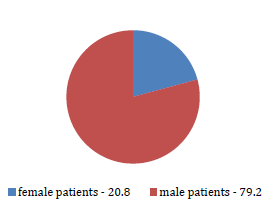
Figure 1: Male:Female Ratios in Blunt Injury to the Abdomen
Table 1: Age Distribution in Blunt Abdominal Trauma
Age groups
No of patients
16 – 20
3
21 – 30
41
31 – 40
24
41 – 50
19
51 – 60
8
61 and above
8
Total
101
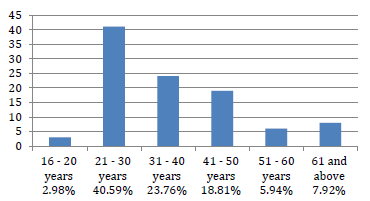
Figure 2: Age Distribution in Blunt injury to the Abdomen
Table 2: Mechanism of Injury
Mechanism of injury
No of patients
Percentage
RTA
59
57.4
Fall from height
25
24.7
Assault
11
10.9
Sport Injury
4
4
Fall of heavy objects on abdomen
3
3
Total
101
100%
Table 3: Imaging Protocol
Test
No of Patients
Result
Sensitivity %
Specificity %
Erect X-ray abdomen
101
Pneumoperitoneum 3
72
100
U S G Abdomen/Pelvis
89
Hemoperitoneum 70
Solid organ injury 68
76.1
93
C T abdomen and pelvis
81
Splenic injury 40
Hepatic injury 34
Pneumoperitoneum 3
94.26
97
All organ injury
Total No. of Patients
Selective Non-operative mgt
Failed non-operative mgt
Direct exp. Lap
Spleen
48
36/48 patients (75%)
4/36 patients (11%)
12 patients (25%)
Liver
40
36/40 patients (90%)
2/36 patients (6%)
4 patients (10%)
Hollow viscera
13
9/13 patients (70%)
8/9 patients (92%)
4 patients (30%)
Total
101
81/101 patients (80.2%)
14/81 patients (17%)
20 patient (20%)
Table 4: Estimate of Selective Non-Operative Management vs. Direct Exploratory Laparotomy
All organ injury
Total No. of Patients
Selective Non-operative mgt
Failed non-operative mgt
Direct exp. Lap
Spleen
48
36/48 patients (75%)
4/36 patients (11%)
12 patients (25%)
Liver
40
36/40 patients (90%)
2/36 patients (6%)
4 patients (10%)
Hollow viscera
13
9/13 patients (70%)
8/9 patients (92%)
4 patients (30%)
Total
101
81/101 patients (80.2%)
14/81 patients (17%)
20 patient (20%)
Table 5: Time of Presentation-Time from Incident to Hospitalization
Duration of Presentation
No. of Patients
%
< 1 hour
19
19.8%
1 – 24 hours
61
60.39
24 – 48 hours
11
10.89
>48 hours – 1 week
7
6.93
>1 week
3
2.97
Total
101
100%
Table 6: Symptoms/Signs
Symptoms
Signs
Pain abdomen – 89 (97%)
Abdominal tenderness 95 (96%)
Guarding 77 (78%)
Nausea – 78 (68%)
Rigidity 44 (45%)
Rebound tenderness 44 (45%)
Vomiting – 78 (68%)
Abdominal distension 25 (26%)
Signs of hypovolaemic shock 24 (25%)
Diminished bowel sounds 9 (10%)
Difficulty in breathing – 20 (20%)
Patients having both blunt and penetrating injuries
Patients who were dead before initial medical attention
Those cases that were referred to other hospitals
Data analysis was by SPSS version 23 (IBM incorporated Chicago USA).Of the 101 patients
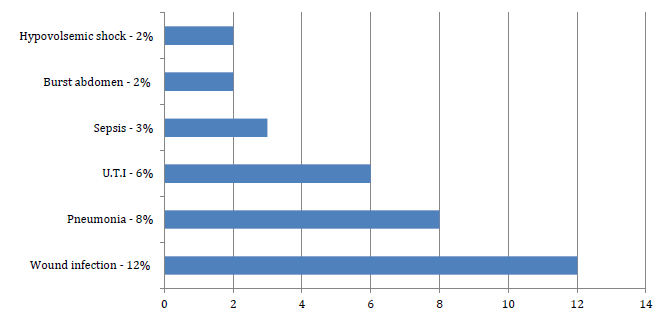
Figure 3: Showing Complications in the Management of Patients with Blunt Abdominal Injuries
with blunt abdominal trauma, there were 80 males and 21 females. Male: female ratio = 4:1
Procedures Done At Laparotomy on Injuries to Solid Organ, GIT, Diaphragm and Mesentery
Splenectomy
Repair procedures omental patch/primary closure
Resection and anastomosis
Diversion (iliostomy/colostomy)
Complications Encountered in the Management of Patients with Blunt Abdominal Injuries
Wound infection: 12%
Pneumonia: 8%
U.T.I: 6%
Sepsis: 3%
Burst abdomen: 2%
Hypovolaemic shock: 2%
AROS: 1%
DVT: 5%
DISCUSSION
Our work in this trauma centre analysis shows the pattern of intrabdominal injuries and its democracy and management. Males were mostly involved with blunt abdominal injuries in keeping with similar reports elsewhere [1]. The commonest age group of affected persons was 21-30 years (40%) and its relates similarly to studies done by Gad M.A. et al. [2-6].
Because of urbanization and associated increase in human traffic road traffic accident as depicted in our study is the commonest mechanism of injury for blunt abdominal trauma [7].
Our study also shows that the spleen was the most commonly injured abdominal organ. This finding was similar to most other studies. However some studies showed that the liver was the most commonly injured in blunt abdominal trauma.
Comparatively hollow visceral injury has higher incidence of laparotomy as a result of increased failure rate of selective no operative management (92%) as compared to the Spleen and liver 11 % and 6% respectively.
Wound infection was found to be the most common complication and this was in keeping with the work done by Rajkumar P.N. et al. Overall we lost 5 patients and all died from septicemia shock.
CONCLUSION
Our study indicated that males in their very young active life suffered mostly from blunt abdominal trauma. There is no doubting the fact that a well-structured trauma center is a sine qua non for effective management of blunt abdominal injury.
Trauma care for patients with blunt abdominal injury will require intensive care, ATLS protocol and ancillary imaging techniques inclusive of adequate clinical and monitoring devices and. All these will increase non-operative management and reduce operative management with inherent morbidity and mortality.
REFERENCE
Lone, G.N. et al. "An experience with abdominal trauma in adults in Kashmir." JK Pract., vol. 8, 2001, pp. 225–230.
Howes, N. et al. "Laparotomy for blunt abdominal trauma in a civilian trauma service." Afr J Surg., vol. 50, no. 2, 2012, pp. 30–32.
Gad, M.A. et al. "Incidence patterns and factors predicting mortality of abdominal injuries in trauma patients." Am J Med Sci., vol. 4, no. 3, 2012, pp. 129–13 4.
Asuquo, M. et al. "Penetrating abdominal trauma: experience in a teaching hospital, Calabar Southern Nigeria." Int J Clin Med., vol. 3, no. 5, 2012, pp. 426–430.
Mnguni, M.N. et al. "Abdominal trauma in Durban South Africa: factors influencing outcome." Int J Surg., vol. 97, no. 2, 2012, pp. 161–168.
Monzon-Torres, B.I. and M. Ortega-Gonzalez. "Penetrating abdominal trauma." S Afr J Surg., vol. 42, no. 1, 2004, pp. 11–13.
Mehta, N. et al. "An experience with blunt abdominal trauma: evaluation, management and outcome." Clin Pract., vol. 4, no. 2, 2014, p. 599.
License
Creative Commons Attribution-NonCommercial-NoDerivatives 4.0 International License
All papers should be submitted electronically. All submitted manuscripts must be original work that is not under submission at another journal or under consideration for publication in another form, such as a monograph or chapter of a book. Authors of submitted papers are obligated not to submit their paper for publication elsewhere until an editorial decision is rendered on their submission. Further, authors of accepted papers are prohibited from publishing the results in other publications that appear before the paper is published in the Journal unless they receive approval for doing so from the Editor-In-Chief.
Himalayan Journal of Medicine and Surgery open access articles are licensed under a Creative Commons Attribution-Share A like 4.0 International License. This license lets the audience to give appropriate credit, provide a link to the license, and indicate if changes were made and if they remix, transform, or build upon the material, they must distribute contributions under the same license as the original.
Recommended Articles
Research Article
Primordial Prevention of Coronary Artery Diseases
Ahmed Adil Ali,
...
Hassan Ali Noori
Published: 26/07/2026
Download PDF
Cite
x
APA
Ali, A. A., Hussien, H. A., Kareem, H. B., Sarhan, S. R. & Noori, H. A. (2026). Primordial Prevention of Coronary Artery Diseases. Himalayan Journal of Medicine and Surgery, 7(2), 1-6.
MLA
Ali, Ahmed Adil, et al. "Primordial Prevention of Coronary Artery Diseases." Himalayan Journal of Medicine and Surgery 7.2 (2026): 1-6.
Chicago
Ali, Ahmed Adil, Hamza Ali Hussien, Hassan Baqer Kareem, Sarhan Raad Sarhan and Hassan Ali Noori. "Primordial Prevention of Coronary Artery Diseases." Himalayan Journal of Medicine and Surgery 7, no. 2 (2026): 1-6.
Harvard
Ali, A. A., Hussien, H. A., Kareem, H. B., Sarhan, S. R. and Noori, H. A. (2026) 'Primordial Prevention of Coronary Artery Diseases' Himalayan Journal of Medicine and Surgery 7(2), pp. 1-6.
Vancouver
Ali AA, Hussien HA, Kareem HB, Sarhan SR, Noori HA. Primordial Prevention of Coronary Artery Diseases. Himalayan Journal of Medicine and Surgery. 2026 Jul;7(2):1-6.
Download PDF
Research Article
Impact of Gut-Liver Axis: Hepatic Biochemical and Metabolic Changes Associated with Chronic Gastritis in Iraqi Patients with Helicobacter Pylori
Noor Zuhair Bakheet N. Z.
Published: 20/02/2026
Download PDF
Cite
x
APA
N. Z., N. Z. B. (2026). Impact of Gut-Liver Axis: Hepatic Biochemical and Metabolic Changes Associated with Chronic Gastritis in Iraqi Patients with Helicobacter Pylori. Himalayan Journal of Medicine and Surgery, 7(1), 1-4.
MLA
N. Z., Noor Z. B.. "Impact of Gut-Liver Axis: Hepatic Biochemical and Metabolic Changes Associated with Chronic Gastritis in Iraqi Patients with Helicobacter Pylori." Himalayan Journal of Medicine and Surgery 7.1 (2026): 1-4.
Chicago
N. Z., Noor Z. B.. "Impact of Gut-Liver Axis: Hepatic Biochemical and Metabolic Changes Associated with Chronic Gastritis in Iraqi Patients with Helicobacter Pylori." Himalayan Journal of Medicine and Surgery 7, no. 1 (2026): 1-4.
Harvard
N. Z., N. Z. B. (2026) 'Impact of Gut-Liver Axis: Hepatic Biochemical and Metabolic Changes Associated with Chronic Gastritis in Iraqi Patients with Helicobacter Pylori' Himalayan Journal of Medicine and Surgery 7(1), pp. 1-4.
Vancouver
N. Z. NZB. Impact of Gut-Liver Axis: Hepatic Biochemical and Metabolic Changes Associated with Chronic Gastritis in Iraqi Patients with Helicobacter Pylori. Himalayan Journal of Medicine and Surgery. 2026 Jan;7(1):1-4.
Download PDF
Research Article
Effect of Land Degradation on Livelihood
Kemalo Abdulmalik,
Isreal Zewide
Published: 04/01/2024
Download PDF
Cite
x
APA
Abdulmalik, K. & Zewide, I. (2024). Effect of Land Degradation on Livelihood. Himalayan Journal of Medicine and Surgery, 5(1), 1-4.
MLA
Abdulmalik, Kemalo and Isreal Zewide. "Effect of Land Degradation on Livelihood." Himalayan Journal of Medicine and Surgery 5.1 (2024): 1-4.
Chicago
Abdulmalik, Kemalo and Isreal Zewide. "Effect of Land Degradation on Livelihood." Himalayan Journal of Medicine and Surgery 5, no. 1 (2024): 1-4.
Harvard
Abdulmalik, K. and Zewide, I. (2024) 'Effect of Land Degradation on Livelihood' Himalayan Journal of Medicine and Surgery 5(1), pp. 1-4.
Vancouver
Abdulmalik K, Zewide I. Effect of Land Degradation on Livelihood. Himalayan Journal of Medicine and Surgery. 2024 Jan;5(1):1-4.
Download PDF
Research Article
Awareness and Practices among Professional Healthcare Workers towards COVID-19 in Iraq
Yasir H Motlaq,
...
Zainab T. N M. Almuhannah
Published: 30/03/2024
Download PDF
Cite
x
APA
H Motlaq, Y., A Aqebian, E. & N M. Almuhannah, Z. T. (2024). Awareness and Practices among Professional Healthcare Workers towards COVID-19 in Iraq. Himalayan Journal of Medicine and Surgery, 5(1), 1-9.
MLA
H Motlaq, Yasir, Esraa A Aqebian and Zainab T. N M. Almuhannah. "Awareness and Practices among Professional Healthcare Workers towards COVID-19 in Iraq." Himalayan Journal of Medicine and Surgery 5.1 (2024): 1-9.
Chicago
H Motlaq, Yasir, Esraa A Aqebian and Zainab T. N M. Almuhannah. "Awareness and Practices among Professional Healthcare Workers towards COVID-19 in Iraq." Himalayan Journal of Medicine and Surgery 5, no. 1 (2024): 1-9.
Harvard
H Motlaq, Y., A Aqebian, E. and N M. Almuhannah, Z. T. (2024) 'Awareness and Practices among Professional Healthcare Workers towards COVID-19 in Iraq' Himalayan Journal of Medicine and Surgery 5(1), pp. 1-9.
Vancouver
H Motlaq Y, A Aqebian E, N M. Almuhannah ZT. Awareness and Practices among Professional Healthcare Workers towards COVID-19 in Iraq. Himalayan Journal of Medicine and Surgery. 2024 Jan;5(1):1-9.
Obonna, G., Obonna, M. & Obonna, C. (2022). Blunt Abdominal Trauma in a Typical Trauma Centre in Southwestern Nigeria. Himalayan Journal of Medicine and Surgery, 3(2), 1-4.
MLA
Obonna, G.C., M.C. Obonna and C.I. Obonna. "Blunt Abdominal Trauma in a Typical Trauma Centre in Southwestern Nigeria." Himalayan Journal of Medicine and Surgery 3.2 (2022): 1-4.
Chicago
Obonna, G.C., M.C. Obonna and C.I. Obonna. "Blunt Abdominal Trauma in a Typical Trauma Centre in Southwestern Nigeria." Himalayan Journal of Medicine and Surgery 3, no. 2 (2022): 1-4.
Harvard
Obonna, G., Obonna, M. and Obonna, C. (2022) 'Blunt Abdominal Trauma in a Typical Trauma Centre in Southwestern Nigeria' Himalayan Journal of Medicine and Surgery 3(2), pp. 1-4.
Vancouver
Obonna G, Obonna M, Obonna C. Blunt Abdominal Trauma in a Typical Trauma Centre in Southwestern Nigeria. Himalayan Journal of Medicine and Surgery. 2022 Jul;3(2):1-4.


 Download PDF
 Download XML