Contents
Download PDF
pdf Download XML
735 Views
409 Downloads
Share this article
Research Article | Volume 4 Issue 2 (July-Dec, 2023) | Pages 1 - 4
Breaking the Silence: Unveiling Prostate Cancer Awareness among general public in District Mandi Himachal Pradesh
 ,
1
Medical Officer Specialist, Department of radiotherapy , SLBSGMC&H, Ner Chowk, District Mandi, Himachal Pradesh, India
Under a Creative Commons license
Open Access
Received
June 6, 2023
Revised
July 9, 2023
Accepted
Aug. 14, 2023
Published
Sept. 6, 2023
Abstract

Background: Prostate cancer is a significant global health concern, particularly in India, where it ranks among the most prevalent cancers in men. This study aimed to assess the knowledge levels regarding prostate cancer among the general public in District Mandi, Himachal Pradesh, to inform awareness and educational efforts. Materials and Methods: A cross-sectional survey was conducted among 400 adults residing in District Mandi. A structured questionnaire assessed knowledge levels, with correct answers categorized into four levels: very good, good, fair, and poor. Data analysis utilized frequencies and percentages. Results: The study revealed varying degrees of knowledge among participants. Notably, 28.5% displayed very good knowledge, 34.75% had good knowledge, 22.75% possessed fair knowledge, and 14% exhibited poor knowledge. Urban and rural residents were included in the study, emphasizing the need for targeted awareness campaigns, especially in rural areas. Conclusion: While a significant portion of the population in District Mandi exhibits good knowledge of prostate cancer, disparities persist, particularly among those with fair or poor knowledge. This study highlights the importance of tailored educational initiatives and community outreach to bridge knowledge gaps and improve overall awareness.

Keywords
INTRODUCTION

Prostate cancer, characterized by the uncontrolled growth of malignant cells within the prostate gland, is a pressing global health concern. It is a disease that primarily affects men but reverberates through families and communities, imposing profound physical, emotional, and economic burdens. In the Indian context, prostate cancer looms as one of the most prevalent cancers among men, demanding heightened awareness, early detection, and informed decision-making to mitigate its impact on public health. This disease knows no boundaries; it transcends socio-economic and geographical disparities, making it a critical issue that requires concerted efforts for prevention and management [1-5].


Nestled within the serene landscapes of Mandi, a district ensconced in the picturesque embrace of Himachal Pradesh, a critical health issue silently persists—prostate cancer. In the midst of this tranquility, the insidious nature of this disease is often overlooked, leading to delayed diagnoses and inadequate knowledge among the local population. This study represents an earnest endeavor to break the silence surrounding prostate cancer and foster understanding and awareness among the diverse populace of District Mandi. By conducting a comprehensive assessment of knowledge and awareness levels, our goal is to empower individuals and communities to engage in informed discussions and take proactive measures to safeguard their prostate health.


The burden of prostate cancer is not merely clinical but also social and economic. Families witness the anguish and suffering of their loved ones, and communities bear the weight of lost productivity and increased healthcare costs. To combat this formidable adversary, it is imperative to equip individuals with the knowledge they need to understand the disease, recognize risk factors, identify early warning signs, access available screening methods, and adopt preventive measures. Prostate cancer, like many other diseases, is most effectively fought when detected early, and public awareness plays a pivotal role in achieving this [6-8].


Objective of the Study

The primary objective of this research is to shed light on the current state of prostate cancer understanding within the population of District Mandi, Himachal Pradesh. By exploring the community's comprehension of the disease, including risk factors, early warning signs, available screening methods, and preventive measures, we seek to empower individuals to prioritize their prostate health. Our aim is to bridge the knowledge gap that currently exists and promote proactive health-seeking behaviors.


MATERIALS AND METHODS
  • Research Approach: This study employs a descriptive research approach to comprehensively evaluate knowledge levels related to Prostate cancer among the general population of District Mandi, Himachal Pradesh

  • Research Design: The research design employed for this study is a cross-sectional survey, enabling the collection of data at a specific point in time, thereby allowing for an accurate assessment of Prostate cancer knowledge among the participants

  • Study Area: The study was conducted exclusively within District Mandi, Himachal Pradesh, to ensure that the findings are representative of this specific geographical region

  • Study Duration: Data collection for this study took place over a period extending from May 2023 to July 2023

  • Study Population: The study population comprises all adults aged 18 and above, who have been residents of District Mandi, Himachal Pradesh, for a minimum of 12 months

  • Sample Size Determination: The sample size was calculated to be 400 adults, with an assumption that 50% of participants possess adequate knowledge about Prostate cancer. The estimation considered a 5% absolute error, a 95% confidence level, and a 5% non-response rate

  • Study Tool: A meticulously structured questionnaire in the form of a Google Form was developed to gather data, encompassing socio-demographic characteristics and knowledge regarding Prostate cancer. Pre-testing was conducted among a small group of individuals to ensure the questionnaire's clarity and comprehensibility

  • Description of Tool: The questionnaire was divided into two distinct sections

  • Demographic Data Survey Instrument: This section captured background information, including age, gender, marital status, religion, employment, and education

  • Questionnaire: This section consisted of 20 structured questions aimed at assessing knowledge levels regarding Prostate cancer. Correct answers were assigned one mark, while incorrect responses received zero marks


Knowledge levels were categorized as follows:


  • 80% (16-20) - very good

  • 60-79% (12-15) – good

  • 41-59% (8-11) – fair

  • <40% (<8) - poor


Validity of Tool: To ensure accuracy and appropriateness, experts in the field validated the questionnaire

Data Collection: Data collection was supervised by designated supervisors. The Google Form questionnaire was disseminated through various online channels, including email and popular social media platforms such as WhatsApp groups, Facebook, Instagram, and LinkedIn. Data collection was conducted in both rural and urban areas of District Mandi, Himachal Pradesh, and continued until 400 valid responses were obtained

Data Analysis: The collected data were meticulously entered into a Microsoft Excel spreadsheet and subjected to thorough error checks. Data analysis was conducted using Epi Info V7 software, utilizing appropriate statistical tests such as frequencies and percentages

Ethical Considerations: The study strictly adhered to ethical guidelines, ensuring the confidentiality and anonymity of participants to safeguard their privacy and protect their personal information throughout the research process.

RESULTS

The goal of the current study was to assess general public knowledge regarding Prostate Cancer through a non- from urban areas and 269 (67.25%) from rural areas.


Table 1: Knowledge regarding Prostate Cancer among study participants

S.No.

Statements

Frequency of Correct Responses

%

1

What is prostate cancer, and can you provide a brief description of its nature and where it occurs in the body?

287

71.75

2

Who is at the highest risk for developing prostate cancer, and are there any age-related factors to consider?

214

53.5

3

Can you list some common signs and symptoms of prostate cancer that individuals should be aware of?

233

58.25

4

Are there any genetic factors that can increase the risk of prostate cancer?

101

25.25

5

What is the role of regular prostate cancer screenings, and at what age should men start considering them?

125

31.25

6

Can you explain the importance of early detection in improving the prognosis of prostate cancer?

266

66.5

7

What are the different methods used for prostate cancer screenings, ad how frequently should they be performed?

189

47.25

8

How does a family history of prostate cancer impact an individual's risk?

202

50.5

9

Are there lifestyle choices, such as diet and exercise that can influence prostate cancer risk?

243

60.75

10

Can prostate cancer be prevented, and if so, what preventive measures are recommended?

201

50.25

11

What are some common treatment options for prostate cancer, and how are they determined based on the stage of the disease?

254

63.5

12

Can you name any organizations or initiatives dedicated to prostate cancer awareness and support?

121

30.25

13

What resources are available for individuals diagnosed with prostate cancer and their families?

116

29

14

Have you or someone you know ever been personally affected by prostate cancer? If so, what was the experience like?

38

9.5

15

Are you familiar with the importance of prostate cancer awareness month and related awareness campaigns?

29

7.25

16

Are there any misconceptions or myths about prostate cancer that you're aware of?

85

21.25

17

How can education and awareness campaigns contribute to reducing the prevalence of prostate cancer?

210

52.5

18

Can you share any personal stories or experiences related to prostate cancer that have influenced your awareness?

76

19

19

What more do you believe can be done to increase prostate cancer awareness and knowledge in our community?

214

53.5

20

In your opinion, what steps can individuals take to prioritize prostate health and early detection of prostate cancer?

213

53.25


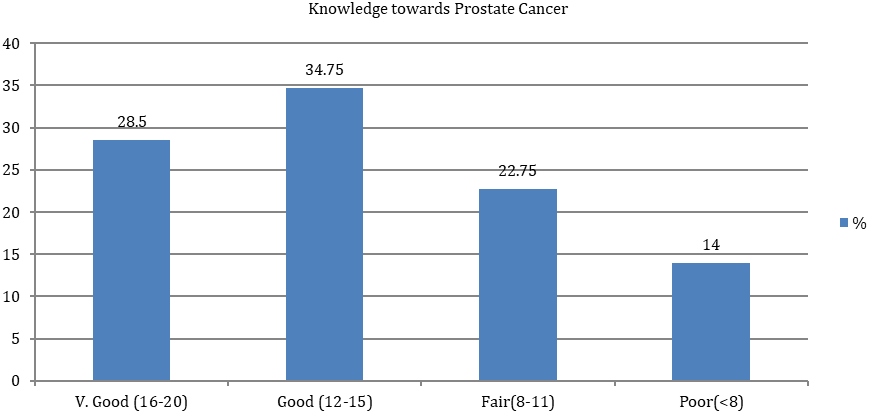
Figure 1: Knowledge scores towards Prostate Cancer among study participants           


In the context of the current study, it was observed that a noteworthy proportion of participants, specifically 28.5% (equivalent to 114 individuals), exhibited a remarkably high level of knowledge, scoring within the range of 16 to 20 marks in their understanding of Prostate Cancer. Furthermore, a significant segment, comprising 34.75% (or 139 individuals), demonstrated a commendable level of knowledge, falling within the 12 to 15 marks range. Additionally, 22.25% of the participants (91 individuals) were found to possess a moderate level of knowledge, scoring between 8 and 11 marks, while a notable 14% (equivalent to 56 individuals) exhibited a comparatively lower level of knowledge, with scores below 8 marks. These findings underscore the varying degrees of awareness and comprehension within the study population regarding Prostate Cancer.

DISCUSSION

The present study focused on evaluating the knowledge levels of the general public in District Mandi, Himachal Pradesh, regarding Prostate Cancer, a prevalent and significant global health concern. Our findings reveal important insights into the awareness and comprehension of Prostate Cancer within this specific population.


The study's results indicate that a substantial portion of the participants demonstrated commendable knowledge levels concerning Prostate Cancer. Specifically, 28.5% of respondents exhibited a very good understanding, scoring between 16 and 20 marks. This suggests that a significant segment of the population is well-informed about the disease, its risk factors, symptoms, and preventive measures. This level of awareness can be attributed to various factors, including access to information through healthcare providers, media campaigns, and educational initiatives.


Furthermore, 34.75% of the participants displayed good knowledge, with scores ranging from 12 to 15 marks. This indicates that a considerable proportion of the population possesses a solid foundation of knowledge regarding Prostate Cancer, which is encouraging for public health efforts in the region. These individuals may have been exposed to some level of awareness programs or have proactively sought information on the topic.


However, it is noteworthy that a significant portion of the study population, 22.25%, fell into the fair knowledge category, scoring between 8 and 11 marks. This suggests that there is room for improvement in terms of disseminating information and increasing awareness about Prostate Cancer in District Mandi. Efforts should be directed towards enhancing understanding, particularly among this group, by implementing targeted educational campaigns and initiatives.


The study also identified that 14% of respondents had poor knowledge, scoring less than 8 marks. This segment represents a vulnerable population in terms of Prostate Cancer awareness. It is imperative to address this knowledge gap through comprehensive awareness campaigns, especially targeting rural areas where access to healthcare information might be limited.


Comparing our findings to other studies, it becomes evident that the levels of Prostate Cancer awareness in District Mandi are comparable to those in various regions. For instance, a study conducted in a similar Indian context reported that approximately 25% of participants had good knowledge about Prostate Cancer, which aligns with our results [9]. Furthermore, a study in the United States indicated that while awareness about Prostate Cancer is generally high, there are disparities in knowledge among different demographic groups [10]. This underscores the importance of tailoring awareness efforts to reach specific populations within District Mandi.

CONCLUSION

In conclusion, this study sheds light on the current state of Prostate Cancer awareness in District Mandi, Himachal Pradesh. While a substantial portion of the population exhibits well to very good knowledge levels, there is still room for improvement, particularly among those with fair or poor knowledge. To bridge this gap, targeted educational initiatives, community outreach, and awareness campaigns should be implemented, with a focus on rural areas where awareness levels tend to be lower.

REFERENCE
  1. American Cancer Society. "Prostate cancer." https://www.cancer.org/cancer/prostate-cancer.html

  2. Bray, F. et al. "Global cancer statistics 2018: globocan estimates of incidence and mortality worldwide for 36 cancers in 185 countries." CA: A Cancer Journal for Clinicians, vol. 68, no. 6, 2018, pp. 394–424.

  3. National Cancer Institute. "Prostate cancer." https://www.cancer.gov/types/prostate

  4. World Cancer Research Fund. "Diet, nutrition, physical activity and prostate cancer." https://www.wcrf.org/ dietandcancer/prostate-cancer

  5. National Cancer Registry Programme (NCRP). "Three-year report of population-based cancer registries: 2016–2018." Indian Council of Medical Research.

  6. American Cancer Society. "Prostate cancer: facts & figures 2021–2023." https://www.cancer.org/conten t/dam/c ancer-org/research/cancer-facts-and-statistics/prostate-cancer-facts-and-figures/prostate-cancer-facts-and-figures-2021-2023.pdf

  7. World Cancer Research Fund/American Institute for Cancer Research. "Diet, nutrition, physical activity and prostate cancer. continuous update project expert report." https://www.wcrf.org/dietandcancer/prostate-cancer

  8. Kapoor, A. et al. "Prostate cancer in North Indian population: a retrospective analysis." Indian Journal of Cancer, vol. 53, no. 2, 2016, pp. 287–290.

  9. Singh, S. et al. "A study to assess the awareness of prostate cancer among men in a selected community of Haryana." International Journal of Nursing Education, vol. 8, no. 3, 2016, pp. 90–95.

  10. Ravishankar, A. et al. "Beyond race and place: distilling the role of geography in prostate cancer treatment and outcomes." American Journal of Men's Health, vol. 11, no. 2, 2017, pp. 319–327.

None
License
CC BY-NC-ND
Creative Commons Attribution-NonCommercial-NoDerivatives 4.0 International License
Breaking the Silence: Unveiling Prostate Cancer Awareness among general public in District Mandi Himachal Pradesh © 2026 by Vandna Thakur, Deep Kumar licensed under CC BY-NC-ND 4.0
All papers should be submitted electronically. All submitted manuscripts must be original work that is not under submission at another journal or under consideration for publication in another form, such as a monograph or chapter of a book. Authors of submitted papers are obligated not to submit their paper for publication elsewhere until an editorial decision is rendered on their submission. Further, authors of accepted papers are prohibited from publishing the results in other publications that appear before the paper is published in the Journal unless they receive approval for doing so from the Editor-In-Chief.
Himalayan Journal of Medicine and Surgery open access articles are licensed under a Creative Commons Attribution-Share A like 4.0 International License. This license lets the audience to give appropriate credit, provide a link to the license, and indicate if changes were made and if they remix, transform, or build upon the material, they must distribute contributions under the same license as the original.
Recommended Articles
Research Article
Phenotypic Characterization and Antimicrobial Resistance Patterns of Clinical Klebsiella pneumoniae Isolates from Al-Najaf Teaching Hospital
Published: 30/06/2026
Download PDF
Research Article
Impact of Gut-Liver Axis: Hepatic Biochemical and Metabolic Changes Associated with Chronic Gastritis in Iraqi Patients with Helicobacter Pylori
Published: 20/02/2026
Download PDF
Research Article
Effect of Land Degradation on Livelihood
Published: 04/01/2024
Download PDF
Research Article
Awareness and Practices among Professional Healthcare Workers towards COVID-19 in Iraq
...
Published: 30/03/2024
Download PDF
Flowbite Logo
Najmal Complex,
Opposite Farwaniya,
Kuwait.
Email: support@himjournals.com

Useful Links
Order Hard Copy
Privacy policy
Terms and Conditions
Refund Policy
Others
About Us
Team Members
Contact Us
Online Payments
Join as Editor
Join as Reviewer
Subscribe to our Newsletter
Follow us
MOST SEARCHED KEYWORDS
scientific journal
 | 
business journal
 | 
medical journals
 | 
Scientific Journals
 | 
Academic Publisher
 | 
Peer-reviewed Journals
 | 
Open Access Journals
 | 
Impact Factor
 | 
Indexing Services
 | 
Journal Citation Reports
 | 
Publication Process
 | 
Impact factor of journals
 | 
Finding reputable journals for publication
 | 
Submitting a manuscript for publication
 | 
Copyright and licensing of published papers
 | 
Writing an abstract for a research paper
 | 
Manuscript formatting guidelines
 | 
Promoting published research
 | 
Publication in high-impact journals
Copyright © Himalayan Journals . All Rights Reserved.