A Study to Assess the Effectiveness of Planned Teaching Program on Knowledge Regarding Health Hazards of Sweetened Beverages and Fast Food Consumption Among Adolescents in Selected Schools of Kullu, Himachal Pradesh
Diksha Kumari
1
,
Upma Sharma
2
1
M.Sc. Nursing, Child Health Nursing, India
2
Murari Lal College Of Nursing, Oachghat, Solan Himachal Pradesh (India)
Introduction: The children of today will be the adult of tomorrow, central to this vision of the future, focusing on today’s children and educating them to change their behavior towards healthy eating pattern is necessary. Preventive approach to maintain good health with specific education can be greater benefit for the children to prevent mental and physical ailment. Aim: To assess the effectiveness of planned teaching program on knowledge regarding health hazards of sweetened beverages and fast food consumption among adolescents in elected schools of Kullu, Himachal Pradesh. Settings and Design: A pre-experimental study was conducted in 2021 in selected schools of Kullu, Himachal Pradesh sample of 60 adolescents students were selected using non-probability purposive sampling technique. Pre-test was conducted and on same day planned teaching program was administered. After relapse of seven days, post test was conducted using self structured questionnaire. Result: The finding showed that mean pre test knowledge score was 9.73±4.843 and posttest mean knowledge score was 25.77±2.801 with mean difference of 16.04 .paired “t” test was applied and the value of “t” was 35.652, P is <0.001 which was found to be significant and effectiveness seen in knowledge level of 85.90%, which interpreted that majority of adolescents students has gained knowledge to good knowledge regarding health hazards of sweetened beverages and fast food consumption.
Keywords
Teaching Progra
Health
Fast Food
INTRODUCTION
Next to air we breathe and water we drink, food has basic to our existence. Food is necessary for growth and development. Our health depends on what we eat daily. Now in these days most people like fast food and it is very popular among adolescent [1]. Adolescence is a period of transition, between childhood and adulthood. Adolescence is a time of rapid physical, cognitive, social and emotional maturation as boys prepare for manhood and girls prepare for womanhood [2].
The World Health Organization (WHO) defines an adolescent as any person between ages 10 and 19[3]. Adolescence, which literally means “to grow into maturity”, is generally regarded as the psychologic, social, and maturational process initiated by the pubertal changes[4].
The rapid and extensive increase in height, weight, muscle mass of adolescence is accompanied by increased nutritional requirements. The caloric and protein requirements during this time are higher than at almost any other time of life. As a result of this increased anabolic need, the adolescent is highly sensitive to caloric restrictions[5].
Objectives
To assess the pre test knowledge regarding health hazards of sweetened beverages and fast food consumption among adolescents in selected schools of Kullu; Himachal Pradesh.
To assess the post test knowledge regarding health hazards of sweetened beverages and fast food consumption among adolescents in selected schools of Kullu, , Himachal Pradesh.
To assess the effectiveness of planned teaching program regarding health hazards of sweetened beverages and fast food consumption among adolescents in selected schools of Kullu, , Himachal Pradesh.
To determine the association of post-test knowledge regarding health hazards of sweetened beverages and fast food consumption among adolescents with their selected attributes.
MATERIALS AND METHODS
Research Approach
Quantitative approach
Research Design
pre-experimental
Setting of the Study
K.D. Star Sen. Sec. School Bashing, Kullu (Himachal Pradesh)
Study Population
Adolescent students
Sample Size
60
Sampling Technique
Purposive sampling technique
Inclusion Criteria
Subjects present at the time of data collection
Subjects willing to participate in the study.
Adolescents of age group between 14-19 years.
Exclusion Criteria
Any health condition restricting the subject’s ability to respond correctly.
DESCRIPTION OF TOOL
It consists of two sections:
Section A
Related to socio demographic detail of the students.
Section B
Structured knowledge questionnaire to assess the knowledge regarding sweetened beverages and fast food consumption. It consists of 30 multiple choice question with four options. One option is the correct response and it carries one mark. The other three incorrect responses carry zero mark. The total score is 30 for 30 items. To interpret the level of knowledge the score is classified as in Table 1.
RESULTS
The data was collected and analyzed by applying descriptive and inferential statistics. The findings revealed that out of 60 adolescents, majority of adolescents 25(41.7%) were in 16-17 years of age. 36(0%) were females. 43(71.7%) were from rural area. 20(33.3%) were in the 11th class. 30(50%) subjects belong to nuclear family. 31(51.7%) were in the lower middle class. As per BMI, 37(61.7%) in the range of 18.5-24.9.
Table 1: Criteria measure for level of knowledge
Score
Percentage
Interpretation
21-30
67-100%
Good knowledge
11-20
34-66%
Average knowledge
Up to 10
Up to 33%
Poor knowledge
Table 2: Frequency and percentage wise distribution of adolescents according to their demographic variables
Variables
Options
Frequency
Percentage
Age
14-15 Years
23
38.3%
16-17 Years
25
41.7%
18-19 Years
12
20%
Gender
Male
24
40%
Female
36
60%
Area of residence
Urban
17
28.3%
Rural
43
71.7%
Class of studying
9th class
9
15%
10th class
15
25%
11th class
20
33.3%
12th class
16
26.7%
Type of family
Joint family
25
41.7%
Nuclear family
30
50%
Extended family
5
8.3%
Socioeconomic status
Upper class
2
3.3%
Upper middle class
21
35%
Lower middle class
31
51.7%
Upper lower class
6
10%
Lower class
0
0%
BMI
Below 18.5
18
30%
18.5-24.9
37
61.7%
25.0-29.9
5
8.3%
30.0-34.9
0
0%
35.0-39.9
0
0%
Above 40
0
0%
The analyzed data were organized according to the objectives and presented under the following sections:
SECTION I
Frequency and percentage wise distribution of adolescents according to their demographic variables.
SECTION II
Assess the pretest knowledge regarding health hazards of sweetened beverages and fast-food consumption among adolescents.
SECTION III
Assess the posttest knowledge regarding health hazards of sweetened beverages and fast-food consumption among adolescents.
SECTION IV
To assess the effectiveness of planned teaching programme on knowledge regarding health hazards of sweetened beverages and fast-food consumption among adolescents.
SECTION I
Description of demographic characteristics of adolescents
SECTION II
Assess pretest knowledge regarding health hazards of sweet beverages and food consumption among adolescents.
SECTION III
Assess the posttest knowledge regarding health hazards of sweetened beverages and fast food consumption among adolescents.
SECTION IV
To assess the effectiveness of planned teaching programme on knowledge regarding health hazards of sweetened beverages and fast-food consumption among adolescents.
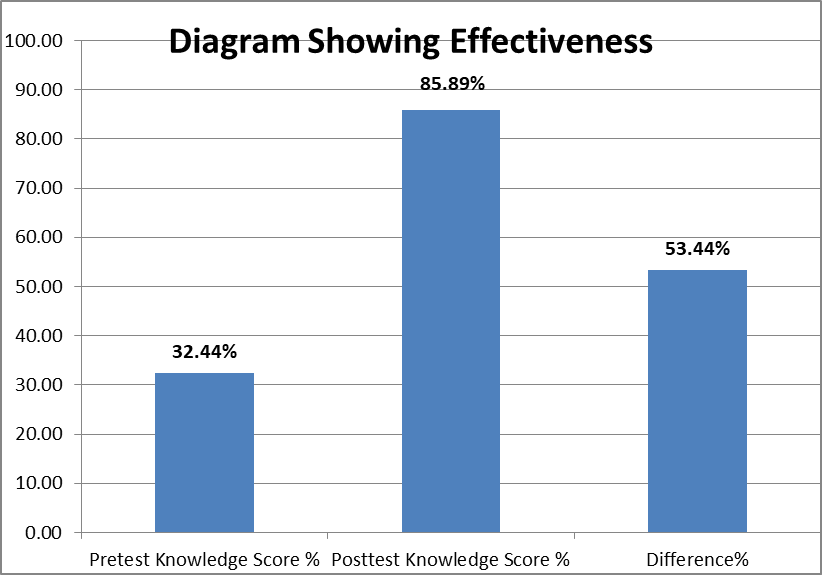
Pretest mean knowledge score was 9.73±4.843 which was 32.40% of total mean knowledge score percentage. In posttest mean knowledge score was 25.77±2.801 which was 85.90% of total mean knowledge score percentage. The difference in pre-test and post-test mean knowledge score was 53.50% which explains the efficiency of planned teaching program on enhancing knowledge score of the adolescents.
The calculated paired T test value for pretest and posttest knowledge score was 35.652. There is no significant association between the knowledge of adolescents regarding health hazards of sweetened beverages and fast food consumption and their demographic variables such as age, gender, area of residence, class of studying, type of family, socioeconomic status and BMI. The calculated chi-square value was less than the table values at the 0.05 level of significance.
Table 3: Frequency and percentage wise distribution of adolescents according to their pretest level of knowledge (N=60)
CRITERIA MEASURE OF PRETEST KNOWLEDGE SCORE
Score Level
Frequency
Percentage (%)
Poor.(0-10)
37
61.7
Average .(11-20)
23
38.3
Good.(21-30)
0
0
Maximum Score=40 Minimum Score=0
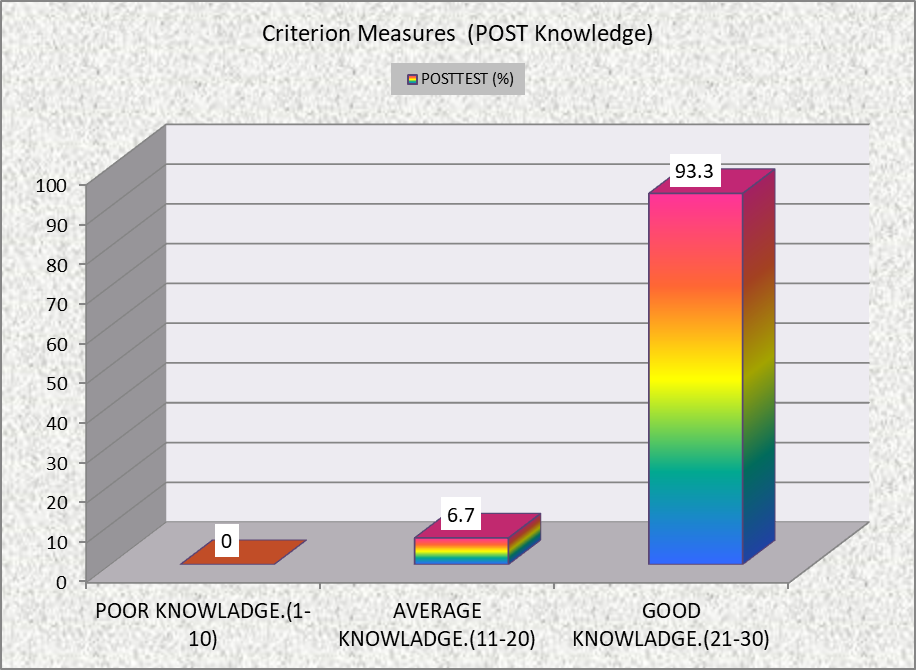
Figure 1: Percentage distribution of adolescents according to their level of knowledge score in posttest
Figure 2: Diagram illustrating the pretest and posttest knowledge score and mean difference of planned teaching program regarding health hazards of sweetened beverages and fast food consumption
DISCUSSION
The demographical variable in the present study showed that, majority of the adolescents 41.7% belonged to age group 16-17 years of age. According to age majority of students 60% of were female. As per their area of residence, majority of student 71.7% is from rural area. As per their academic status, majority of the students 33.3% belonged to 11th class. As per their type of family, majority of students 50% belonged to nuclear family. As per their socio-economic status, majority of the students 51.7% belonged to lower middle class. As per BMI, majority of the students 61.7% were in the range of 18.5-24.9.
Similar socio demographic distribution was reported by Lalnunthara. R, Kumar NVR Jyoticonducted a study to assess the demographic profile and consumption patterns of fast foods among college students in Lunglei Town, Mizoram, and this study revealed that around 40% male respondents and around 60% of female respondents belonged to urban area. Over 45% of the respondents parents were Government servants and 17.33% of the respondents’ parents were businessman and self-employed. Most of the respondents belonged to middle class families. Nearly 88% of the respondents have larger families with five or more number of family members[7].
The present study revealed that the difference in mean knowledge score percentage for pre-test and post-test was 16.03%.The post-test mean was 25.77 and the standard deviation was 2.801.
In a similar study by Rathod Suchitarani, Pawar Priyankawho conducted a study to assess the effectiveness of planned teaching program on knowledge and attitude regarding health hazards of fast food consumption among adolescents. The gain in knowledge score was statically significant at P<0.05 level. The finding revealed that the PTP on health hazards of fast food consumption was effective in increasing the knowledge regarding health hazards of fast food consumption among adolescents.
IMPLICATIONS
The findings of the study suggest many implications for the nursing research, nursing practice, nursing administration and nursing education.
Nursing Practice
The findings of the study will help the nurse in following ways:
Pediatrics nurse play an important role in educating children regarding health hazards of fast foods either in community or in the hospital.
School health nurse should conduct training program for school teachers and parents to promote the nutritional status of the children. School health program regarding health hazards of fast foods should be emphasized on students through pamphlets, pictorial; presentation and handouts.
As per Government order, the school should take necessary action against vending machines near the school and also not to provide fast food shop inside the school.
Nursing Education
The nurse educators have the responsibility to update the knowledge of nursing students on knowledge and awareness about effects of fast foods on health.
In service education program like short term courses can be conducted to prepare the nurses to gain current knowledge regarding health hazards of fast food.
Nurse educators when planning and instructing nursing students, should create the awareness of children’s eating pattern and this should be the part of the curriculum under the subject of nutrition. The curriculum should include the importance of health education.
Nursing Administration
Nurse administrator arranges for conferences, continuing education program and seminars related to health hazards of fast food consumption.
In addition, pamphlets, handouts and booklet should be kept in the schools about the hazards of fast food consumption.
The nurse administrator should take active part in developing protocol and providing health education to the children.
Nursing Research
Research on innovative methods of creating awareness, preparation of teaching material associated with health hazards in children will create awar
The study will be a reference for the research scholars.
The findings can be baseline for the further studies to improve the body of knowledge in nursing.
CONCLUSION
It is concluded that planned teaching program was effective in increasing the knowledge on sweetened beverages and fast food consumption among adolescents and effective method of giving information to people. This method helps for easy understanding and gives more awareness about effects of fast food on health among adolescents. The findings revealed that knowledge of adolescents regarding sweetened beverages and fast food consumption was poor and average before implementation of planned teaching program but knowledge level increased to good after implementation of planned teaching program. Difference in mean percentage was 16.04%.
REFERENCE
Narayana Health. “Importance of Balanced Diet in a Healthy Lifestyle.” Narayana Health Blog, November 2019, https://www.narayanahealth.org/blog/importance-of-balanced-diet-for-a-healthy-lifestyle/.
Hockenberry, J., and D. Wilson. Wong’s Essentials of Pediatric Nursing. Elsevier, 2021.
Csikszentmihalyi, Mihaly. “Adolescence.” Encyclopaedia Britannica, February 2021, https://www.britannica.com/science/adolescence. Accessed March 2021.
Marcdante, J., and R.M. Kliegman. Nelson Essentials of Pediatric Nursing. Elsevier, 2019.
Soliman, A., et al. “Growth and Puberty in Chronic Illness.” Indian Journal of Endocrinology and Metabolism, vol. 18, suppl., November 2014, pp. S39–S47. https://www.ncbi.nlm.nih.gov/pmc/articles/PMC4266867/.
Seo, H.S., et al. “Factors Influencing Fast Food Consumption Behaviors of Middle-School Students in Seoul: An Application of Theory of Planned Behaviors.” Nutrition Research and Practice, vol. 5, no. 2, April 2011, pp. 169–178. https://doi.org/10.4162/nrp.2011.5.2.169.
Mishra, R., et al. “A Study to Assess the Effects of Educational Intervention on Awareness Regarding Health Hazards of Junk Food Consumption among Engineering Students.” IP International Journal of Medical Paediatrics & Oncology, 2021. https://doi.org/10.18231/j.ijmpo.2021.015.
License
Creative Commons Attribution-NonCommercial-NoDerivatives 4.0 International License
All papers should be submitted electronically. All submitted manuscripts must be original work that is not under submission at another journal or under consideration for publication in another form, such as a monograph or chapter of a book. Authors of submitted papers are obligated not to submit their paper for publication elsewhere until an editorial decision is rendered on their submission. Further, authors of accepted papers are prohibited from publishing the results in other publications that appear before the paper is published in the Journal unless they receive approval for doing so from the Editor-In-Chief.
Himalayan Journal of Nursing and Midwifery open access articles are licensed under a Creative Commons Attribution-Share A like 4.0 International License. This license lets the audience to give appropriate credit, provide a link to the license, and indicate if changes were made and if they remix, transform, or build upon the material, they must distribute contributions under the same license as the original.
Recommended Articles
Research Article
General public Knowledge, Attitude and Practices Regarding COVID-19: a Cross-Sectional study in Himachal Pradesh
Hanish Kumar Rana,
...
Badal Katoch
Published: 10/07/2022
Download PDF
Cite
x
APA
Rana, H. K., Katoch, R. & Katoch, B. (2022). General public Knowledge, Attitude and Practices Regarding COVID-19: a Cross-Sectional study in Himachal Pradesh. Himalayan Journal of Nursing and Midwifery, 1(2), 1-4.
MLA
Rana, Hanish K., Riya Katoch and Badal Katoch. "General public Knowledge, Attitude and Practices Regarding COVID-19: a Cross-Sectional study in Himachal Pradesh." Himalayan Journal of Nursing and Midwifery 1.2 (2022): 1-4.
Chicago
Rana, Hanish K., Riya Katoch and Badal Katoch. "General public Knowledge, Attitude and Practices Regarding COVID-19: a Cross-Sectional study in Himachal Pradesh." Himalayan Journal of Nursing and Midwifery 1, no. 2 (2022): 1-4.
Harvard
Rana, H. K., Katoch, R. and Katoch, B. (2022) 'General public Knowledge, Attitude and Practices Regarding COVID-19: a Cross-Sectional study in Himachal Pradesh' Himalayan Journal of Nursing and Midwifery 1(2), pp. 1-4.
Vancouver
Rana HK, Katoch R, Katoch B. General public Knowledge, Attitude and Practices Regarding COVID-19: a Cross-Sectional study in Himachal Pradesh. Himalayan Journal of Nursing and Midwifery. 2022 Jul;1(2):1-4.
Download PDF
Review Article
Prevention of Extravasation Non-Cytotoxic Agents (Review Study)
Batool Kadham Hussin
Published: 20/10/2022
Download PDF
Cite
x
APA
Hussin, B. K. (2022). Prevention of Extravasation Non-Cytotoxic Agents (Review Study). Himalayan Journal of Nursing and Midwifery, 1(2), None-None.
MLA
Hussin, Batool K.. "Prevention of Extravasation Non-Cytotoxic Agents (Review Study)." Himalayan Journal of Nursing and Midwifery 1.2 (2022): None-None.
Chicago
Hussin, Batool K.. "Prevention of Extravasation Non-Cytotoxic Agents (Review Study)." Himalayan Journal of Nursing and Midwifery 1, no. 2 (2022): None-None.
Harvard
Hussin, B. K. (2022) 'Prevention of Extravasation Non-Cytotoxic Agents (Review Study)' Himalayan Journal of Nursing and Midwifery 1(2), pp. None-None.
Vancouver
Hussin BK. Prevention of Extravasation Non-Cytotoxic Agents (Review Study). Himalayan Journal of Nursing and Midwifery. 2022 Jul;1(2):None-None.
Download PDF
Research Article
Self-Care Practices in Primary Dysmenorrhea among Nursing Students at AL- Diwaniyah Governorate
Fadia Hussein Ali,
Haider Abd AL Ameer Twair Hamad
Published: 30/03/2024
Download PDF
Cite
x
APA
Ali, F. H. & Hamad, H. A. A. A. T. (2024). Self-Care Practices in Primary Dysmenorrhea among Nursing Students at AL- Diwaniyah Governorate. Himalayan Journal of Nursing and Midwifery, 3(1), None-None.
MLA
Ali, Fadia H. and Haider Abd A. A. T. Hamad. "Self-Care Practices in Primary Dysmenorrhea among Nursing Students at AL- Diwaniyah Governorate." Himalayan Journal of Nursing and Midwifery 3.1 (2024): None-None.
Chicago
Ali, Fadia H. and Haider Abd A. A. T. Hamad. "Self-Care Practices in Primary Dysmenorrhea among Nursing Students at AL- Diwaniyah Governorate." Himalayan Journal of Nursing and Midwifery 3, no. 1 (2024): None-None.
Harvard
Ali, F. H. and Hamad, H. A. A. A. T. (2024) 'Self-Care Practices in Primary Dysmenorrhea among Nursing Students at AL- Diwaniyah Governorate' Himalayan Journal of Nursing and Midwifery 3(1), pp. None-None.
Vancouver
Ali FH, Hamad HAAAT. Self-Care Practices in Primary Dysmenorrhea among Nursing Students at AL- Diwaniyah Governorate. Himalayan Journal of Nursing and Midwifery. 2024 Jan;3(1):None-None.
Download PDF
Research Article
Knowledge Regarding Cardio Pulmonary Resuscitation in Pregnant Women among Registered Nurses Working in Selected Hospitals of Shimla
Sangeeta Devi,
Pooja Rani Sood
Published: 18/02/2022
Download PDF
Cite
x
APA
Devi, S. & Rani Sood, P. (2022). Knowledge Regarding Cardio Pulmonary Resuscitation in Pregnant Women among Registered Nurses Working in Selected Hospitals of Shimla. Himalayan Journal of Nursing and Midwifery, 1(1), 1-4.
MLA
Devi, Sangeeta and Pooja Rani Sood. "Knowledge Regarding Cardio Pulmonary Resuscitation in Pregnant Women among Registered Nurses Working in Selected Hospitals of Shimla." Himalayan Journal of Nursing and Midwifery 1.1 (2022): 1-4.
Chicago
Devi, Sangeeta and Pooja Rani Sood. "Knowledge Regarding Cardio Pulmonary Resuscitation in Pregnant Women among Registered Nurses Working in Selected Hospitals of Shimla." Himalayan Journal of Nursing and Midwifery 1, no. 1 (2022): 1-4.
Harvard
Devi, S. and Rani Sood, P. (2022) 'Knowledge Regarding Cardio Pulmonary Resuscitation in Pregnant Women among Registered Nurses Working in Selected Hospitals of Shimla' Himalayan Journal of Nursing and Midwifery 1(1), pp. 1-4.
Vancouver
Devi S, Rani Sood P. Knowledge Regarding Cardio Pulmonary Resuscitation in Pregnant Women among Registered Nurses Working in Selected Hospitals of Shimla. Himalayan Journal of Nursing and Midwifery. 2022 Jan;1(1):1-4.
Kumari, D. & Sharma, U. (2022). A Study to Assess the Effectiveness of Planned Teaching Program on Knowledge Regarding Health Hazards of Sweetened Beverages and Fast Food Consumption Among Adolescents in Selected Schools of Kullu, Himachal Pradesh. Himalayan Journal of Nursing and Midwifery, 1(1), 1-5.
MLA
Kumari, Diksha and Upma Sharma. "A Study to Assess the Effectiveness of Planned Teaching Program on Knowledge Regarding Health Hazards of Sweetened Beverages and Fast Food Consumption Among Adolescents in Selected Schools of Kullu, Himachal Pradesh." Himalayan Journal of Nursing and Midwifery 1.1 (2022): 1-5.
Chicago
Kumari, Diksha and Upma Sharma. "A Study to Assess the Effectiveness of Planned Teaching Program on Knowledge Regarding Health Hazards of Sweetened Beverages and Fast Food Consumption Among Adolescents in Selected Schools of Kullu, Himachal Pradesh." Himalayan Journal of Nursing and Midwifery 1, no. 1 (2022): 1-5.
Harvard
Kumari, D. and Sharma, U. (2022) 'A Study to Assess the Effectiveness of Planned Teaching Program on Knowledge Regarding Health Hazards of Sweetened Beverages and Fast Food Consumption Among Adolescents in Selected Schools of Kullu, Himachal Pradesh' Himalayan Journal of Nursing and Midwifery 1(1), pp. 1-5.
Vancouver
Kumari D, Sharma U. A Study to Assess the Effectiveness of Planned Teaching Program on Knowledge Regarding Health Hazards of Sweetened Beverages and Fast Food Consumption Among Adolescents in Selected Schools of Kullu, Himachal Pradesh. Himalayan Journal of Nursing and Midwifery. 2022 Jan;1(1):1-5.


 Download PDF
 Download XML